
Predicting NFL's 2017 Surprise Impact Rookies
With the NFL draft complete and minicamps underway, rookies are expected to take the ball and run with it.
The spot each was drafted in becomes less pertinent with every passing day as the pendulum tilts toward a player's on-field performance.
An old rule of thumb used to exist in the NFL: A first-round pick should start in his first season. A second-round selection should do the same by the end of his second campaign. A third-round acquisition has three years to crack the lineup. Anything past that is a bonus.
But the majority of teams today are built on young players' inexpensive contracts. Thus, incoming talents are being pushed onto the field at a far more rapid pace so organizations can maximize their investments.
First-, second- or third-round selections are supposed to make a rookie impact, and they'll get every opportunity to earn a role. However, later picks or even undrafted free agents often provide as much, if not more, value—even early in their careers.
It's often best to look at positions that don't hold the highest value, such as running back, nickel corner, offensive and defensive interior, etc., when looking for such rookies. These performers are driven down draft boards despite being quite talented.
Ten rookies, selected on the third day of the draft, have been targeted as potential surprise impact performers in year one due to their skill sets and situations. Each should outperform initial expectations.
RB Joe Williams, San Francisco 49ers
1 of 10
Not a single collegiate running back played better during the final seven games of the 2016 campaign than Utah's Joe Williams.
Even so, multiple NFL organizations were wary of the talented runner, because he quit on his team earlier in the season. Those franchises, including the San Francisco 49ers, didn't understand the young man or what he had to endure earlier in life.
Williams dealt with depression, anxiety and guilt for a long period due to the unfortunate death of his sister from acute myocarditis, per USA Today's Tom Pelissero. After years of struggling with these issues, Williams became mentally and physically exhausted. As a result, he finally decided to get help.
"I had to get my life in order," he told The MMQB's Peter King. "My mental health was far more important. I was going to do more damage by playing than walking away. I saw a psychiatrist who helped me get my life, not my football, on track."
The running back did nothing football-related for a month as he concentrated on healing. Upon Williams' return to the Utes, he was a new man. He ran for 1,332 yards during the bulk of Utah's Pac-12 schedule and bowl game.
New 49ers head coach Kyle Shanahan saw something special in Williams and pressured general manager John Lynch to draft him in the fourth round.
"I'm telling you right now: If we don't get him, I'll be sick," Shanahan said before the draft, per King. "I will be contemplating Joe Williams all night."
The 5'11", 205-pound back with 4.41-second 40-yard dash speed can be the next middle- to late-round running back to produce at a high level in Shanahan's zone-heavy run scheme.
RB Samaje Perine, Washington Redskins
2 of 10
The Washington Redskins were effective running the ball in 2016. The offense tied for seventh in the league with an average of 4.5 yards per carry. The team returns its top rusher in Rob Kelley, too. Fat Rob became a bit of a folk hero as he developed into Washington's lead back and accumulated 704 yards in 2016. Despite his emergence, something was still missing in the team's ground attack.
According to ESPN.com's John Keim, Kelley averaged 2.41 yards per carry in the red zone and only 1.16 yards after first contact. The offense finished 29th in red-zone touchdown efficiency, per NFL.com's Mark Dulgerian.
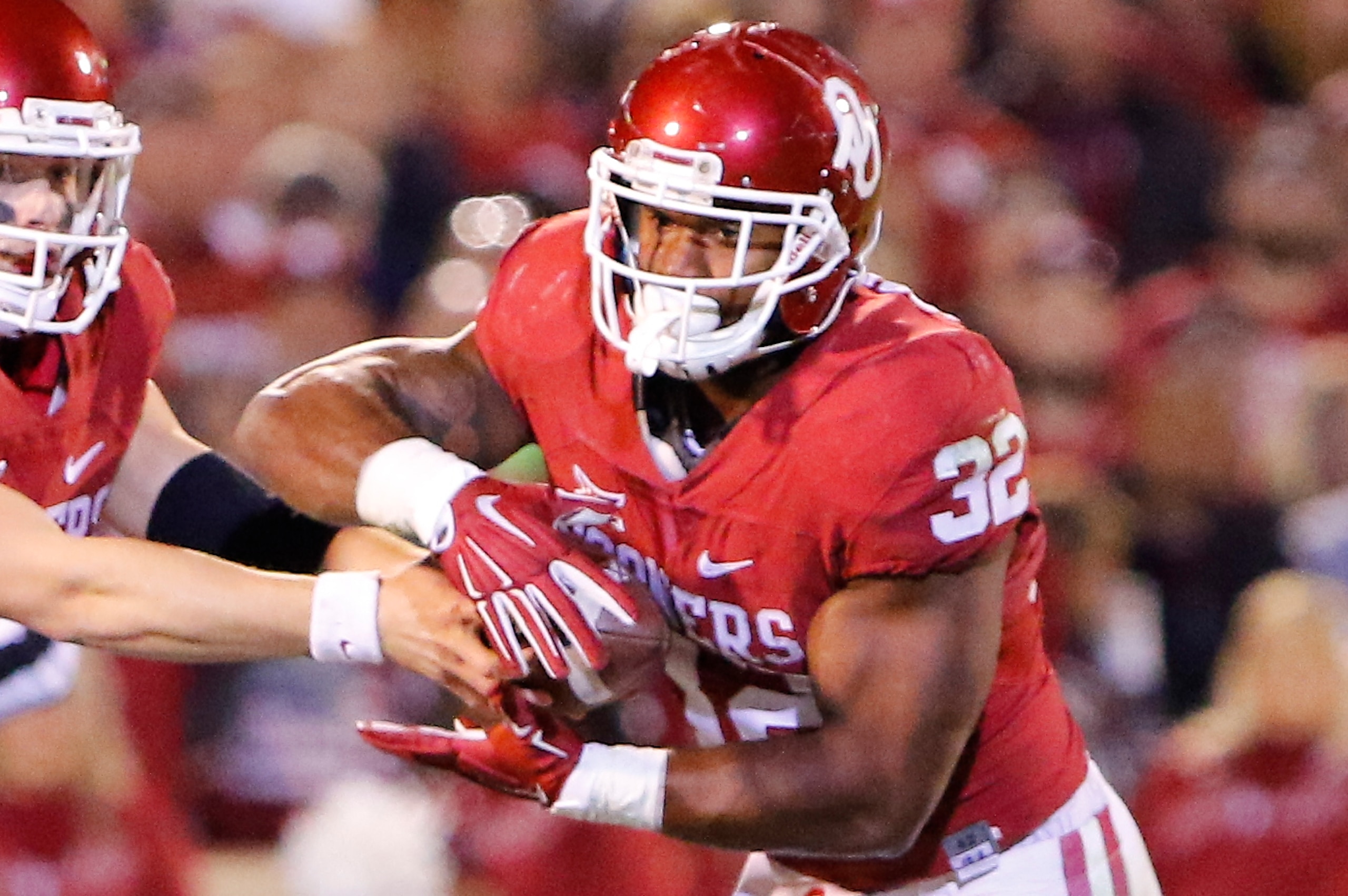
Enter this year's fourth-round pick, Samaje Perine. In three seasons with the Oklahoma Sooners, the 233-pound back ran for 4,122 yards and 49 touchdowns. Like Kelley, Perine doesn't have ideal top-end speed, yet he repeatedly showed an ability to break big plays with runs of 66 or more yards in each campaign. He also holds the FCS record with 427 rushing yards in a single game.
"He's gifted, man," Oklahoma offensive coordinator Lincoln Riley told Keim. "His strength shows up and his vision shows up and he has a great feel for getting the ball in the end zone. ... He has a great skill set for it and I would think he'd be an impact guy in that scenario."
Perine's production did decrease in each of his three seasons, which is a primary reason for his draft-weekend slide. But the Sooners backfield was loaded with Joe Mixon taking away reps, and Perine suffered a leg injury that forced him to miss three games last season.
Despite any concerns, the 21-year-old back's combination of size (5'11", 233 lbs), strength, production and approach appealed to Washington's front office and coaching staff.
"I don't think he gets enough credit for once he gets outside that ability to run over people, stiff-arm people [and] still make people miss," Washington head coach Jay Gruden said, per Keim. "We know how strong he is [30 reps on bench at the combine]. Just a total package is really what we liked."
No one should be surprised if Perine overtakes Kelley as Washington's starting running back.
WR Josh Reynolds, Los Angeles Rams
3 of 10
The Los Angeles Rams will enter the 2017 campaign without a true No. 1 target in the passing game, but the organization might have found one in the fourth round of this year's draft.
Josh Reynolds has the physical tools and ability to develop into Jared Goff's favorite receiver soon.
Last year's first- and second-leading receivers, Kenny Britt and Brian Quick, signed as free agents with the Cleveland Browns and Washington Redskins, respectively. With their departures, the team needs to replace 109 receptions for 1,566 yards.
Some of those targets will go to Robert Woods, whom the team signed to a five-year, $34 million deal. But he's best operating out of the slot. The same can be said of this year's third-round pick, Cooper Kupp. Tavon Austin doesn't consistently win on the outside, either.
This leaves a massive hole at X-receiver.
Reynolds has the size (6'3", 194 lbs) and speed (4.52-second 40-yard dash) to consistently threaten defenses vertically. The Texas A&M product scored at least one touchdown in his final eight games. He also made a catch of 35 or more yards in nine of the team's 13 contests—including a 92-yard reception against the Arkansas Razorbacks.
The rookie's abilities to track the ball, position his body and come down with difficult receptions, particularly in the red zone, make him an intriguing option in an offense that needs to develop a full complement of wide receivers to maximize Goff's potential.

.jpg?w=2560 "Cardinals Giants Football")
.jpg?w=2560 "Jets Dolphins Football")
TE Jordan Leggett, New York Jets
4 of 10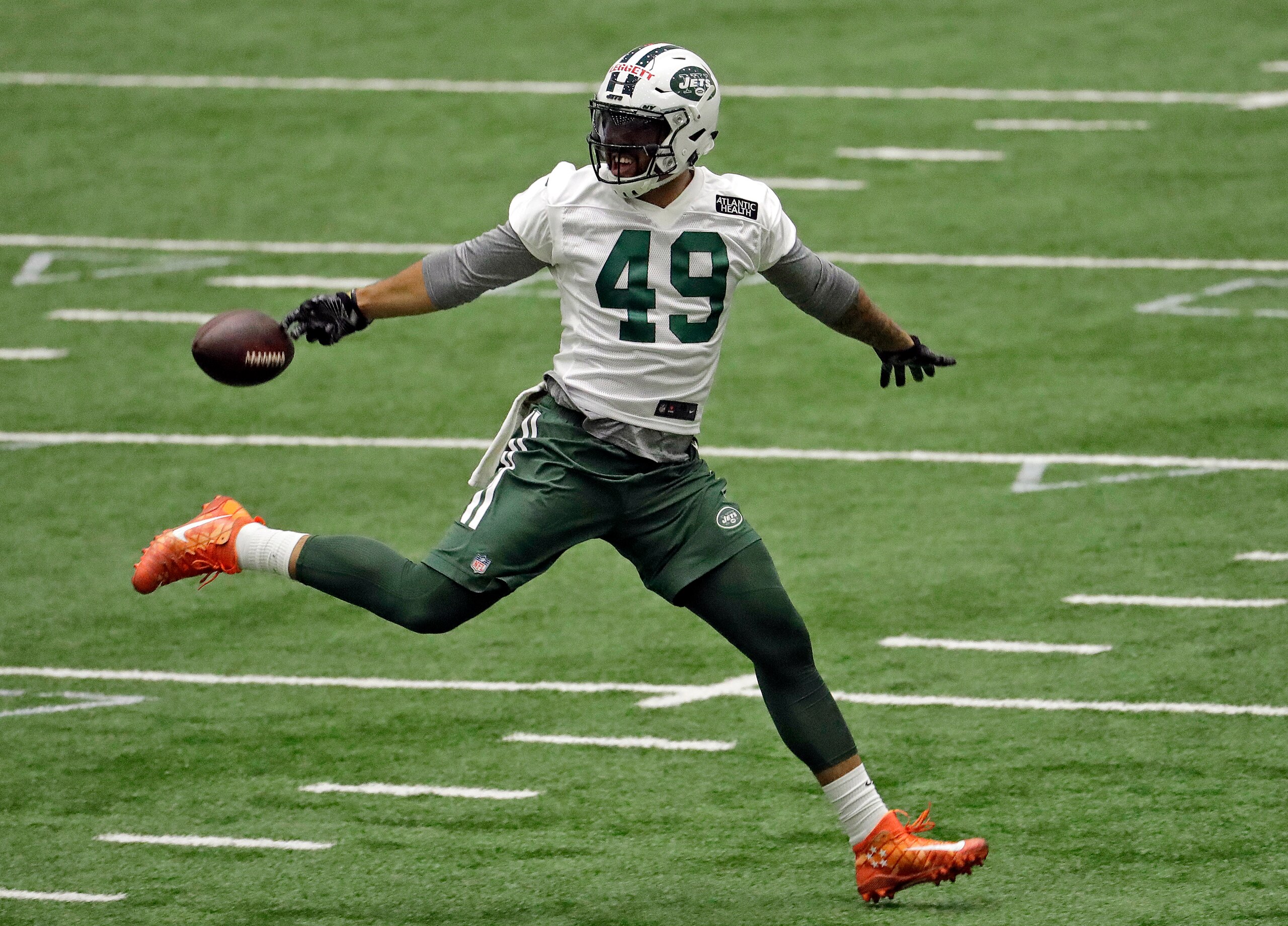
The New York Jets haven't had a tight end eclipse 400 yards since the 2011 campaign when Dustin Keller led the team in receiving. The position has been nonexistent in the offense over the last two campaigns.
While later-round tight ends like the San Francisco 49ers' George Kittle and Minnesota Vikings' Bucky Hodges could become big contributors in their respective situations, Jordan Leggett has the potential to completely redefine the Jets' offensive approach.
Austin Seferian-Jenkins is the only real competition to prevent Leggett from cracking the starting lineup. Even if Leggett doesn't become a conventional starter, his ability to create mismatches as a move tight end should be used in multiple formations and plays.
"[Y'all] have seen the film," Leggett said after being drafted, per ESPN.com's Rich Cimini. "At Clemson, I played everywhere. I played H-back, I played on the line, I played slot receiver, I played wideout."
Last season, Leggett finished second behind first-round pick Evan Engram in receiving yardage by a tight end among this year's draft class. The 6'5", 258-pound target caught 46 passes for 736 yards and seven touchdowns.
A modern tight end with the ability to line up in numerous spots and create pressure on a defense by rolling its coverage to his side will only make the team's wide receiver corps more effective. The Jets lack explosive options outside the numbers, and Leggett's presence can create more space for those targets to operate. Plus, the Clemson product can develop into a security blanket for whichever quarterback eventually starts in the Big Apple.
Leggett won't provide much as an in-line option or blocker, and there were questions about his commitment early in his career; hence his fifth-round status. His skills as a receiver, however, have been lacking in the Jets offense for a long time.
OG Isaac Asiata, Miami Dolphins
5 of 10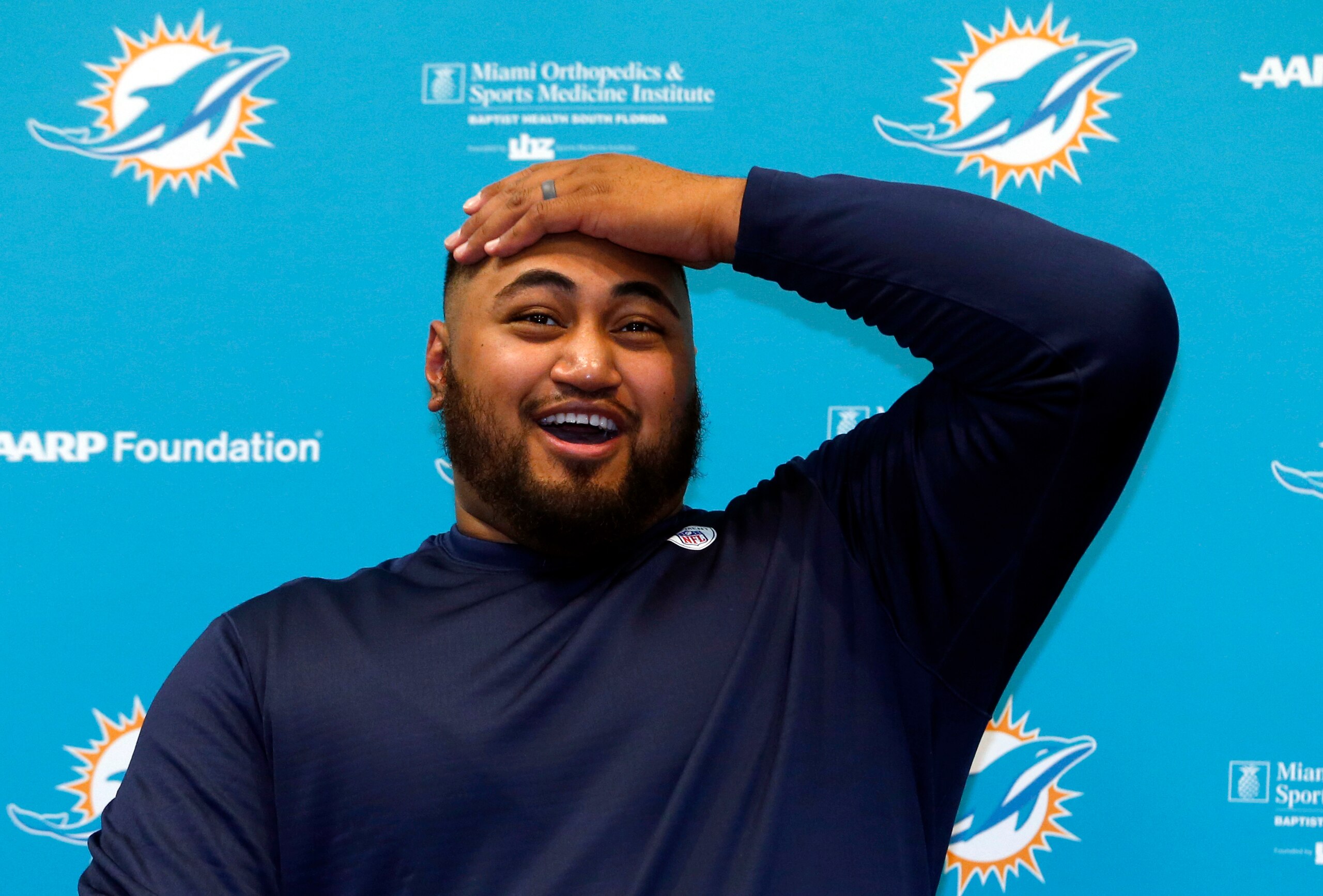
Big. Mean. Nasty. Physical.
All of these words can be used to describe Miami Dolphins guard Isaac Asiata, and they're all reasons he should be counted among the team's starting front five during his rookie campaign.
"I love being here and I'm a very cheerful guy, but don't get it twisted," Asiata said after being drafted in the fifth round, per the Palm Beach Post's Hal Habib. "When it's time to put the helmet on and strap it up and go, that's not me anymore.
Asiata isn't a typical rookie. He's 24 years old, married and served an LDS mission after redshirting as a freshman. His game isn't typical, either. The 6'3", 323-pound lineman displays the ability to overwhelm defenders at the point of attack, yet he's nimble enough to regularly pull from his guard position, locate defenders on the hoof and provide devastating blocks in space.
The Utah product is also extremely strong. He tied Auburn's Carl Lawson for the most reps (35) on the bench press at the NFL combine. But it's his on-field mentality that everyone seems to love.
"On the field, he's a nasty prick," Dolphins general manager Chris Grier said after drafting him in the fifth round, per the Post's Joe Schad.
Since the Dolphins built their identity around a big, physical offensive line for Jay Ajayi to run behind, Asiata fits the mold.
The Morris Trophy winner as the Pac-12's best offensive lineman fell in the draft due to health concerns regarding one of his knees, according to Draft Analyst's Tony Pauline. But the Dolphins organization once took a similar chance on Ajayi, and it worked out nicely.
With only veteran Ted Larsen standing in Asiata's way, the Dolphins coaching staff should lean toward starting the bigger, more physical lineman at left guard.
DT Jaleel Johnson, Minnesota Vikings
6 of 10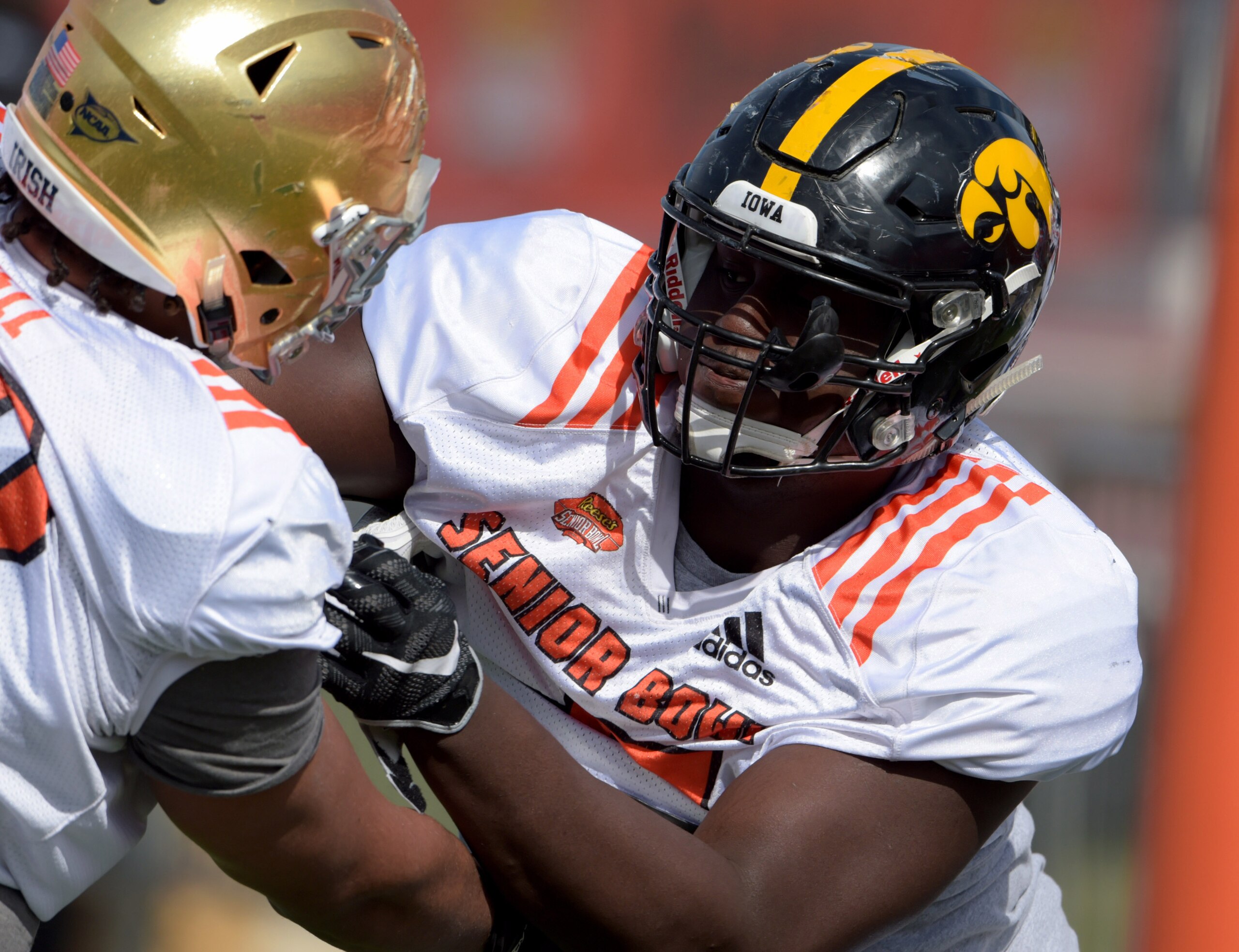
The Minnesota Vikings chose Iowa defensive tackle Jaleel Johnson at the top of the fourth round with the knowledge former first-round pick Sharrif Floyd may not return to form after last season's knee injury.
According to USA Today's Tom Pelissero, Floyd underwent surgery last year to repair a meniscus tear only to have the nerve that controls his quadriceps muscle disrupted. At the time of the story's posting March 30, the nerve still hadn't recovered and threatened Floyd's career.
"Sharrif is rehabbing, has seen some of the best doctors in the country, will continue to rehab and hopefully, this will heal sooner than later," Floyd's agent, Brian Mackler, said at the time.
With Floyd's uncertain status, an opening can be found along the Vikings' defensive front. Johnson is more than capable of filling said role.
At 6'3" and 316 pounds, Johnson is stout at the point of attack. He's also quite active as he works tirelessly to shed blocks and re-establish the line of scrimmage. As a senior, the defensive tackle led the Hawkeyes with 10 tackles for loss and 7.5 sacks. According to Pro Football Focus, the Big Ten product ranked 11th among draft-eligible interior defenders with 27 quarterback hurries.
"We felt very strongly those big defensive linemen were going to go early, and we felt what we'd seen at Iowa, his flexibility to play nose tackle and under tackle," general manager Rick Spielman said about Johnson's selection in the fourth round, per the Minneapolis Star Tribune's Andrew Krammer. "... We felt he gives us some flexibility and some pass-rush ability in line."
A veteran such as Tom Johnson or Shamar Stephen will likely fill the starting void next to Linval Joseph if Floyd's situation doesn't improve, but Jaleel Johnson should be counted upon as an immediate part of Minnesota's defensive line rotation this fall.
DT Carlos Watkins, Houston Texans
7 of 10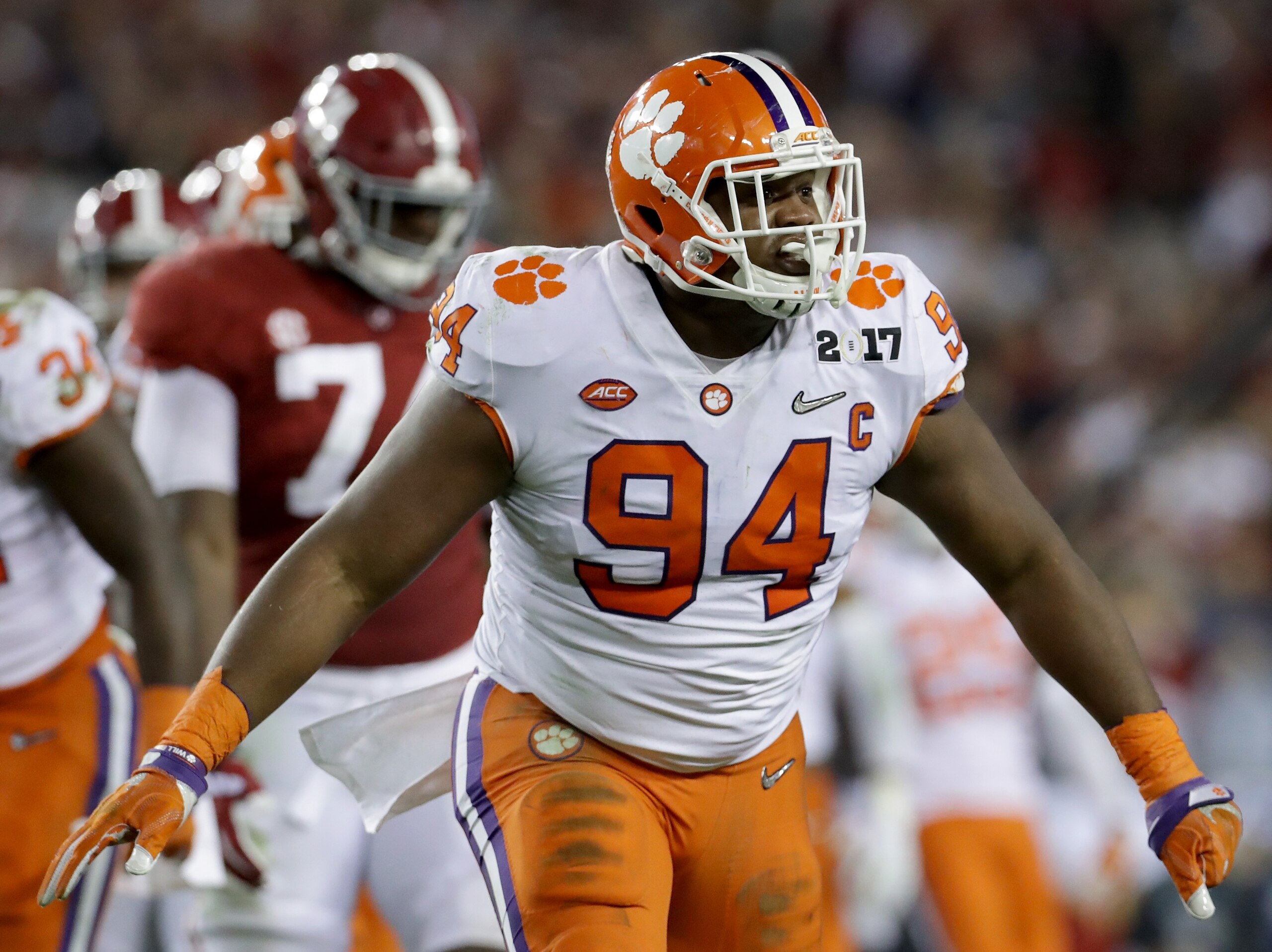
A rookie doesn't need to earn a starting designation to provide an early impact, especially in today's defensive sub-package-heavy world.
Carlos Watkins isn't projected to start along the Houston Texans' talented front. Even with Vince Wilfork's likely retirement, D.J. Reader will take over at nose tackle with J.J. Watt, Christian Covington and Joel Heath flanking him.
Reader primarily serves as a run-stuffer, though, with the team looking to find more explosive interior defenders. Watkins was a far more disruptive player during his time at Clemson. The second-team All-American led the Tigers with 10.5 sacks and tied for the team lead with 13.5 tackles for loss in 2016.
"This guy is a guy that we feel can come in here with a lot of hard work and good coaching here, can fill a couple of different roles for us," head coach Bill O'Brien said of the fourth-round pick, per Scout.com's Patrick Starr. "He can play on the inside in a couple of different of packages for us."
At 6'3" and 309 pounds, Watkins is an ideal fit as an interior pass-rusher in nickel or dime fronts.
According to NFL Draft Scout, the defensive tackle posted a 5.01-second 40-yard dash, 28-inch vertical jump and nine-foot broad jump. Each of those numbers would have qualified among the top-10 defensive tackles who performed full workouts at the NFL combine, per NFL Combine Results.
Once Watkins joins Watt, Jadeveon Clowney and Whitney Mercilus, he can thrive in pass-rush situations, because no offense is going to concentrate on the rookie. Instead, he can feast on one-on-one matchups instead of having the protection shifted in his direction.
LB Carl Lawson, Cincinnati Bengals
8 of 10
Once upon a time, Carl Lawson was viewed as a potential first-round talent.
A lengthy injury history and concerns over his ability to be anything more than a pass-rush specialist forced him into the fourth round where the Cincinnati Bengals used the 116th overall pick to select the Auburn product.
The Bengals showed philosophical flexibility with the selection, because he doesn't fit what the organization prefers in its edge defenders.
Five of the team's seven defensive ends are 6'4" or taller. The coaching staff loves its long, lanky pass-rushers. Lawson is 6'2" and 261 pounds with 31.5-inch arms.
Exceptions are often made in extraordinary circumstances, and Lawson is an extraordinary natural edge-rusher. His 45 quarterback hurries in 2016 ranked fifth among draft-eligible pass-rushers, per Pro Football Focus. The Georgia native has a lighting-quick first step with the strength and pad level to turn the edge against most offensive tackles.
In order to find a role for the talented defender, the team will use him as a hybrid linebacker.
"Right now he's working half as a linebacker and half as an end in nickel situations," Bengals defensive coordinator Paul Guenther said, per the Dayton Daily News' Jay Morrison. "I've always said the more you can do the better."
The more Lawson proves he's capable of, the more he can expect to be on the field. As a nickel rusher, he'll rotate with Carlos Dunlap and Michael Johnson, but he'll garner more reps if he becomes comfortable playing strong-side linebacker in 4-3 alignments.
LB Nate Gerry, Philadelphia Eagles
9 of 10
Every team seems to be looking for the next Deone Bucannon or Mark Barron to be its version of a "Money" 'backer. As defenses trend toward smaller performers capable of working in space, more safeties will be converted to linebacker.
In Nate Gerry's case, he'll return to his previous position. The Philadelphia Eagles already list the 6'2", 218-pound defender as a linebacker on the team's official roster.
"The reason I would say he can convert from safety to linebacker is, I think, the mental toughness and the physicality he plays with," Eagles vice president of player personnel Joe Douglas said, per the Argus Leader's Mick Garry. "But to me he wasn't just a safety that can play down in the box. He was an athletic guy who can range all over the field, and I think you're going to see that range, even more so, at the linebacker position."
Gerry made three starts as a linebacker during his freshman campaign with the Nebraska Cornhuskers. Once he moved back to the secondary, the two-time team captain became an integral part of the blackshirt defense. In his next three seasons, the South Dakota native amassed 241 total tackles, 19 defended passes and 13 interceptions.
In Gerry's senior year, the only safety to receive a better grade from Pro Football Focus was LSU's Jamal Adams, whom the New York Jets selected with the sixth overall pick. What's even more surprising is the fifth-round pick also graded as the nation's second-best safety in coverage behind Colorado's Tedric Thompson.
Yes, Gerry is a hammer against the run, but he's athletic with 4.58-second 40-yard-dash speed. He shows some stiffness in the hips, though—which is one reason he slid in the draft and will move to linebacker.
Jordan Hicks and Nigel Bradham are established along the Eagles' second line of defense, but Mychal Kendricks' future remains uncertain after he was almost traded to the San Francisco 49ers, per former ESPN analyst Adam Caplan (via CBS Philly). As a result, Gerry can immediately contribute as a nickel linebacker and special teams ace.
CB Damontae Kazee, Atlanta Falcons
10 of 10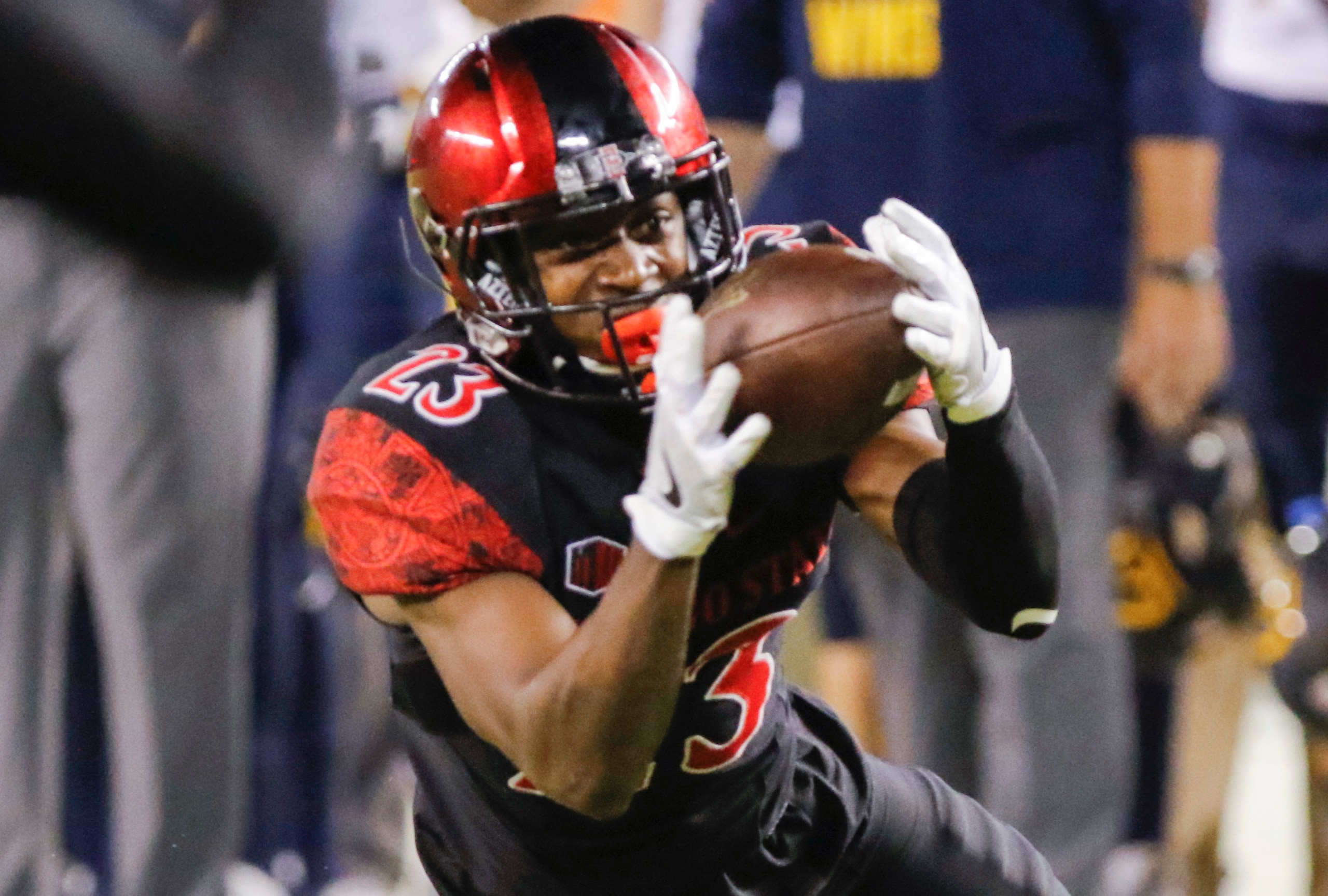
Too many talented football players are downgraded because they don't fit certain physical standards. Damontae Kazee is a prime example.
Kazee is a ball hawk in the truest sense. The two-time Mountain West Defensive Player of the Year started 41 games and snagged a San Diego State record 17 interceptions. The California native also broke up 30 passes and forced six fumbles during his collegiate career.
The problem is he's only 5'10" and 184 pounds with just shy of 31-inch arms. Because he's smaller than ideal, an exceptional performer fell into the third day of the draft.
The Falcons plan to use Kazee in a variety of manners, though.
"He's got versatility," general manager Thomas Dimitroff said when asked about the team's initial fifth-round pick, per the Falcons official site. "He's a guy we see as potential safety or nickel guy, not necessarily an outside corner."
Atlanta's secondary already features cornerbacks Desmond Trufant, Robert Alford and Brian Poole. That's a tremendous trio in coverage. However, Trufant suffered a season-ending shoulder injury last year and may take time to round into form. Also, Kazee can serve as the team's dime corner opposite Poole, who had an outstanding rookie campaign covering the slot.
Defensive coordinator Marquand Manuel may consider the possibility of using more three-safety looks instead of relying so heavily on the team's nickel package. Kazee can then be moved all around the field as a chess piece to match up against multiple targets.
The fact the Falcons staff believes it can play Kazee in multiple roles provides an idea of the team's eagerness to get him on the field. The Mountain West product is a natural in zone coverage and a feisty competitor. His presence provides even more quality depth for a young, ascending defense.

.jpg?w=2560 "Ward Nearly Walks Out of Presser ▶️")
