

Winners and Losers of 2017 NFL Franchise Tag Deadline
It's deadline day across the National Football League.
At 4 p.m. ET on Wednesday, the deadline came and went for NFL teams to assign the franchise tag to pending free agents they wish to retain.
It's an annual happening that's a bit of a win and loss for both player and team.
Teams don't have to worry about their stars leaving (even a non-exclusive franchise tag requires the surrender of two first-round picks if the tagging team chooses not to match an offer—a sky-high price that no NFL team is realistically going to pay), but the cost of that security is a fat, fully guaranteed one-year deal.
For the players, that big one-year deal looks good in the short-term. But it's just that—short-term. There's a reason why many players grouse about being tagged—the lack of long-term financial security.
Of course, there's more to the tag than just these trade-offs. With the entirety of that player's salary hitting the cap all at once, tagging a player can send ripples up and down an NFL roster, affecting how that club approaches free agency in a big way.
With those factors in mind, let's take a look back at the players who were (and in some cases were not) tagged and see which teams made shrewd moves...
Or ones they'll live to regret.
Winner: Arizona Cardinals
1 of 10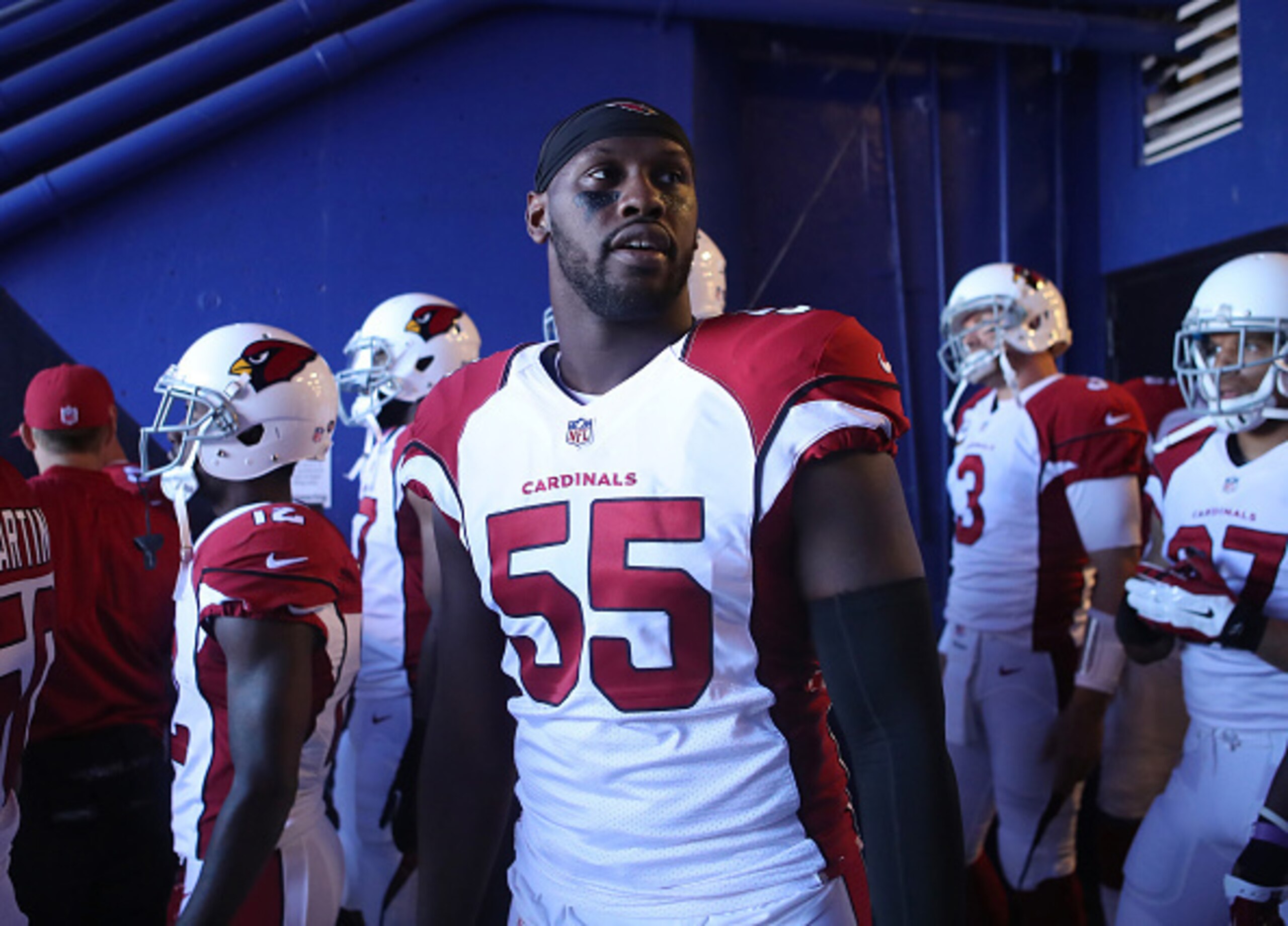
It's rather hard to call the Arizona Cardinals "winners" for tagging outside linebacker Chandler Jones.
It's not because of anything he did or didn't do in his first season with the Redbirds, but because Jones getting the tag was as foregone as conclusions get.
After all, the Cardinals didn't trade a Day 2 pick and guard Jonathan Cooper to the New England Patriots to just rent Jones for a season. Especially not after the 27-year-old piled up 11.5 sacks in 2016.
As John Weinfuss of ESPN.com reported, Jones insists those numbers are just the beginning:
"It’s getting familiar with the defense. I’m new here, and I’m not trying to use that as an excuse for low sack numbers, but I feel once I get a year under my belt I’ll be more familiar with the defense, and I’ll know what plays I can take shots on and make inside moves on and things of that nature. And that will definitely increase my stats, for sure.
"
There's a downside to this. Using the tag on Jones precluded Arizona from using it on veteran defensive end Calais Campbell, and his loss would be a huge blow to the Cardinals defense.
But this was still a no-brainer move.
Loser: New York Giants
2 of 10
Listen, I get why the Giants tagged Jason Pierre-Paul, a move that could net the seven-year veteran almost $17 million in salary in 2017.
It was a resurgent Giants defense that keyed New York's run to the playoffs last year. And Pierre-Paul played a part in that, tallying seven sacks and showing flashes of the dominant player he was before losing part of his right hand in a fireworks accident.
However, for the third time in four years, Pierre-Paul missed at least four games, this time thanks to a sports hernia. The 28-year-old is believed to be angling for a deal in the neighborhood of the five-year, $85 million whopper that Big Blue handed Olivier Vernon a year ago.
And if what Pierre-Paul told reporters after the season, per Paul Schwartz of the New York Post, is any indication, he isn't a bit happier about being tagged this time than he was in 2015.
“I’m not playing on no one-year deal. I’ve proved it," he said. "I’ve showed it. There is not really another guy like me out here doing it with 7 ½ fingers still.’’
Sure, the Giants can still work out an extension, but Pierre-Paul's agent indicated the two sides aren't close to an agreement.
“Obviously we’re talking, but nowhere near a deal,’’ Doug Hendrickson said.
So, to recap, the Giants just dropped $17 million on an angry, injury-prone end who has recorded double-digit sacks just twice in seven NFL seasons.
It also leaves a Giants team that needs help all over the offensive side of the ball with over $40 million in average annual salary tied up in just three starters on the defensive line.
I get why the Giants tagged Jason Pierre-Paul.
I just don't think they should have done it.
Winner: Pittsburgh Steelers
3 of 10
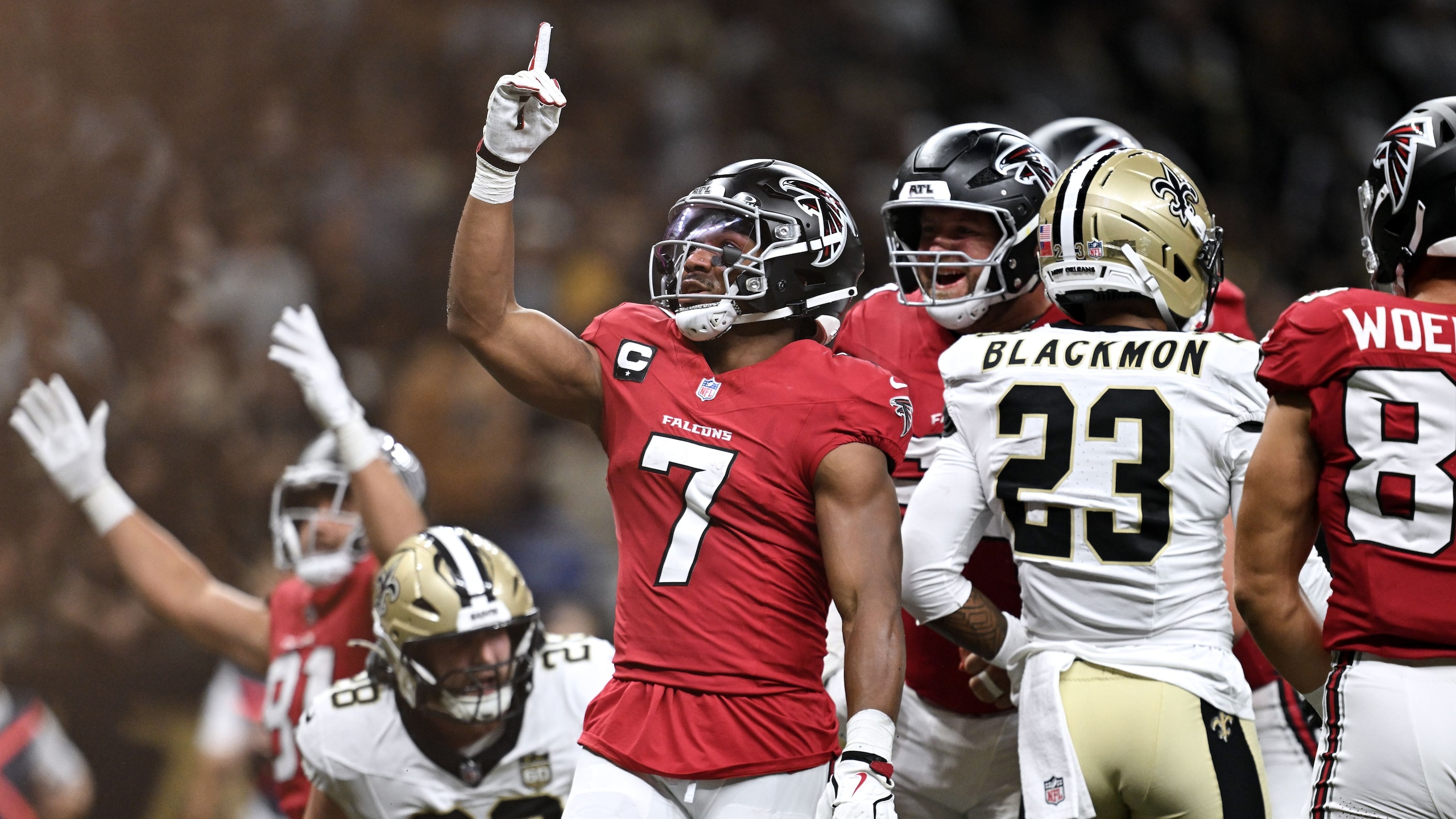
It's been a good week for Steelers quarterback Ben Roethlisberger.
In the past several days, the Steelers have locked up their two biggest offensive stars. For wide receiver Antonio Brown, it was via a long-term extension that makes him the NFL's highest-paid wideout.
For tailback Le'Veon Bell, it was via a franchise tag that will pay him about $12.7 million in 2016.
That's a fat salary for a running back—over $4 million more a season than the NFL's second-highest paid player at the position.
It's also the wisest move Pittsburgh general manager Kevin Colbert could have made.
When Bell is on the field, he's a unique talent. In 2016, he became the first tailback in NFL history to average over 100 rushing and 50 receiving yards a game.
But Bell began the 2016 season on suspension and ended it injured on the sidelines. Both have been themes that have permeated his four years in the league.
Colbert insisted to Gerry Dulac of the Pittsburgh Post-Gazette that the Steelers still want to lock Bell up long-term.
“Our intention has always been, and he understands this, to sign him to a long-term deal,” Colbert said. “But we acknowledge we have the at-hand business of [signing] the free agents we have. Le’Veon won’t be placed on the back burner, but other business will be happening at this time.”
Don't be surprised if that delay in getting a deal done lasts as long as it takes for Bell to assuage doubts about his durability and discipline.
As it should.

Loser: Los Angeles Rams
4 of 10
Last year at this time, the Los Angeles Rams faced a difficult decision. Two young cornerbacks were about to hit free agency, and the team had but one franchise tag.
Rams GM Les Snead settled on tagging Trumaine Johnson, while Janoris Jenkins left for the greener pastures of the Big Apple.
If 2016 was any indication, um...oops.
Per Pro Football Focus, Jenkins finished the season as the NFL's seventh-ranked corner, helping the G-Men make the playoffs and earning a trip to the Pro Bowl.
Johnson, on the other hand, backslid in an uneven fifth year, finishing 35th.
That's not terrible, mind you. It just doesn't scream, "pay me almost $16 million in 2017," which is what the Rams will do if Johnson plays out his second straight tag.
Snead told Gary Klein of the Los Angeles Times the Rams weren't about to risk losing a starter at the position for a second straight year.
“We like what Trumaine offers," Snead said, "and we don’t want him to leave the building.”
That's understandable given the demand for even semi-competent cornerbacks in today's NFL.
But Johnson's hefty salary in 2017 only serves to highlight Snead's apparent gaffe the year before.
Winner: Los Angeles Chargers
5 of 10
There hasn't been much positive buzz surrounding the Los Angeles Chargers since they announced their move up the coast. Everything from the team's owner to logo has been lambasted by the media and angry fans in San Diego.
However, in the case of edge-rusher Melvin Ingram, a Chargers front office that's been known to be, um, frugal (see the Joey Bosa fiasco last year) did the right thing and opened the checkbook.
Chargers general manager Tom Telesco told Ricky Henne of the team's website that paying Ingram just over $14 million on the franchise tag in 2017 was an easy call:
"He was a priority for us this offseason. Pass rushers are so important. With Melvin, every year he’s been in the league we’ve seen improvement. Last year he did a really, really nice job for us not only as a pass rusher, but he made a lot of plays in the run game. We know going into next year we’ve got Melvin here, and we’ll keep working on a long term deal to keep him beyond 2017.
"
It's not a move without at least a modicum of risk. Ingram is one of the better young pass-rushers in the NFL many casual fans haven't heard of, but after five years of rushing the quarterback standing up, Ingram could be asked to play a different role in Gus Bradley's 4-3 "under" front.
However, Ingram seems an excellent fit for the "Leo" spot in that defense, the Chargers (if they choose) can now wait a year to see how he fits in the scheme and Los Angeles (that still feels weird) isn't a team who can afford to let young, homegrown talent walk out the door if it can help it.
Credit where it's due.
The logo still needs work, though.
Loser: Washington Redskins
6 of 10
It's understandable that the Washington Redskins franchise-tagged Kirk Cousins a second straight time. He's an above-average player at the most important position in the NFL.
If they didn't want to pay him $24 million, there are half a dozen teams who gladly would.
The problem I have with their decisions so far regarding their quarterback is that it appears they aren't at all sure whether they want Cousins.
And now they've painted themselves into a corner.
Publicly, as Master Tesfatsion of the Washington Post wrote, Redskins head coach Jay Gruden is still saying all the right things:
"It’s very important to have your quarterback in place. We know how important that position is in pro football. To have a guy here that’s been developing in the system here for the last two years, we take very seriously. We see his progress. We see the progress that he’s gonna make. We’re excited about that. We’d love to have a long-term deal done, obviously, and hopefully that will get done in the near future, but we do like where he’s going with his game. We feel good about having him as a Redskin for a long time.
"
If that's the case, though, why—according to ESPN.com's John Keim—was their best offer to Cousins last year $16 million a season with only $24 million in guarantees?
That's less than Brock Osweiler got from the Houston Texans.
Brock.
Osweiler.
If the Redskins aren't sold on Cousins as the long-term answer at quarterback, why apply the exclusive rights tag? The non-exclusive option offers both right of first refusal and two first-rounders as compensation if Washington balked.
News flash...they aren't getting more than that in a trade. The "Robert Griffin III" haul they reportedly covet, according to Mike Florio of Pro Football Talk, isn't happening. Not when teams know they can wait the Redskins out until 2018, when a third straight tag would cost Washington a staggering $34 million and change.
All the Redskins have done to this point is weaken their bargaining position with both a player some report doesn't want to be there and potential trade partners if those reports are true.
That gets them listed with the losers.
Winner: Carolina Panthers
7 of 10
From a purely statistical standpoint, defensive tackle Kawann Short did the same thing as most of his teammates on the Carolina Panthers in 2016: He disappointed.
After exploding for 11 sacks in the Panthers' run to the Super Bowl in 2015, Short saw that number fall by nearly half last season. Still, the 28-year-old was PFF's third-ranked interior lineman in 2016 (trailing only Aaron Donald and Ndamukong Suh), so it's little surprise the Panthers slapped the tag on their best defensive lineman.
Last year, the Panthers took a similar path with cornerback Josh Norman, only to watch negotiations on an extension quickly degenerate to the point that Carolina GM Dave Gettleman rescinded that tag.
As Scott Fowler wrote for the Charlotte Observer, Short admitted being tagged wasn't something he looked forward to, but it also wasn't a situation that would produce another nasty impasse.
“Everybody would like to avoid (the tag),” Short said. “If it happens, it happens. I can’t come here and cuss out the organization because it happened. I need to be professional about the whole situation.”
However, we'll see if Short still feels that way in a couple months if extension talks don't go anywhere—especially since he's believed to be seeking upwards of $5 million more a season (per Marc Sessler of NFL.com) than the $13.5 million he'd make under the tag in 2017.
In any event, I'd bet my next paycheck there's no take-backs with this tag.
Gettleman's been down that road.
It didn't work out so well.
Loser: Houston Texans
8 of 10
By all indications, the Houston Texans still have every intention of re-upping young cornerback A.J. Bouye after his career 2016.
At least that's what head coach Bill O' Brien told reporters, according to Rotoworld.
"A.J. is a very important part of our team," O'Brien said. "He's a guy that has really worked hard to improve his own skill set."
However, in choosing not to apply the franchise tag to Bouye, all general manager Rick Smith has accomplished is increasing the odds that for the second straight year he signs off on a big-money boondoggle—if the Texans re-sign him at all.
Per Aaron Wilson of the Houston Chronicle, Bouye is expected to command $12-14 million a season on a long-term deal. In other words, Houston will essentially save nothing in terms of annual salary versus the cost of tagging him.
And that's assuming that a bidding war doesn't drive his asking price up.
This, for a 25-year-old player who entered last season a role player. Bouye ended the year ranked ninth among NFL corners according to Pro Football Focus, but it's still just one year.
Use the tag, and Smith could have bought an extra "prove it" season. If Bouye backed last year up, the Texans could ink him long-term. If he regresses, the team wouldn't be out millions in sunk guarantees.
Now it's either commit big bucks to an unproven young player or watch him walk out the door. Create a hole in a playoff-caliber defense that ranked first in the NFL in 2016 or roll the dice on another huge contract.
Good to see he's learned from the Brock Osweiler debacle.
Winner: Kansas City Chiefs
9 of 10
Want to know the easiest way to make the "winners" list in an article about the franchise tag deadline?
Avoid using it altogether by re-upping your best candidate before the deadline even arrives.
That's what the Kansas City Chiefs were able to accomplish with star safety Eric Berry. As Marc Sessler of NFL.com reported, Berry inked a six-year, $78 million extension earlier this week that makes him the NFL's highest-paid safety.
Both sides had plenty of motivation. After playing under the tag in 2016, Berry indicated earlier this month that he wasn't about to take that path again this season.
"I want to end my career in Kansas City," he said. "I want to play there. I love the city, I love the vibe, I love my teammates. I really look at them more than teammates. We've been through a lot and they supported me a lot. And the organization. But I don't feel comfortable playing under the franchise tag this year."
Yes, $40 million is a lot of guaranteed money for a safety. But Berry is in his prime and equally adept at both run support and pass coverage. Safeties with that skill set have seen their value increase of late.
Berry's also a model citizen, one of the team's most popular players and a key component of a defense that spurred the Chiefs to the AFC West title in 2016.
Add in the storybook ending to Berry's tale of recovery from cancer, and everyone's a winner in this deal.
Free barbecue for everyone! Eric's buying!
He can afford it.
Loser: Cleveland Browns
10 of 10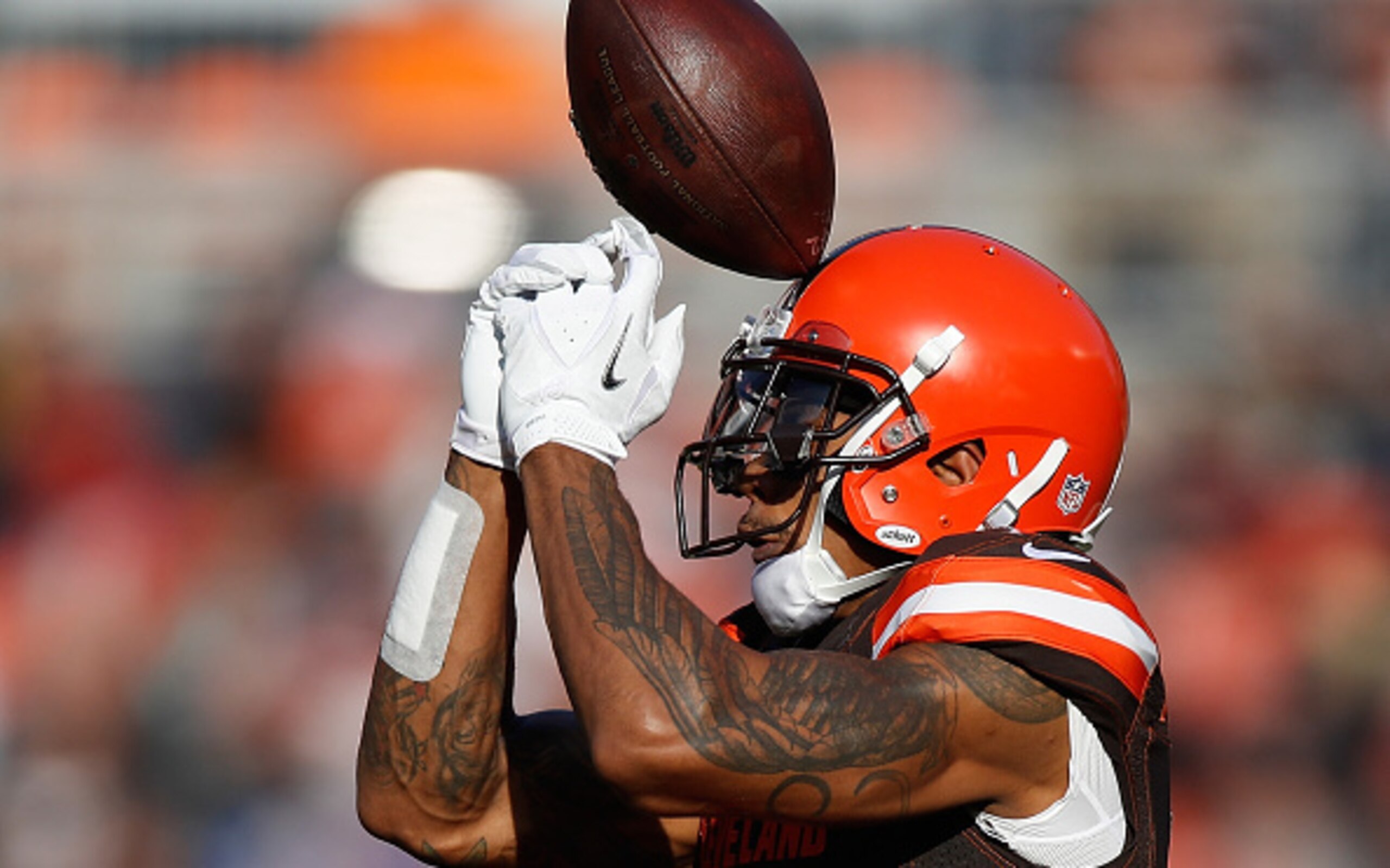
The Cleveland Browns have more salary-cap space than any team in the National Football League. Over $100 million in wiggle room.
The Browns also have (arguably, at least) less talent than any team in the National Football League.
And yet, in the latest stroke of brilliance by the brain trust at the Factory of Sadness, the Browns decided not to apply the franchise tag to wide receiver Terrelle Pryor after he led the team in receiving yards in 2016.
As Mary Kay Cabot wrote for Cleveland.com, general manager Sashi Brown indicated the Browns would like to have Pryor back, while maintaining that it wouldn't be the end of the world if he left.
"We'd like to have Terrelle back, and that's a priority for us," Brown said. "That said, we're not going to panic if he's not back, also. But he's a good player, works hard, we think he fits in our system, had a lot of success with our coaches, so we think this is a great place for him to continue his career."
So, just out of curiosity...when would be a good time to panic?
Pryor was one of the precious few bright spots on a one-win football team last year. To say that he was head-and-shoulders better than every other pass-catcher on the dumpster fire of a team that was the 2016 Browns is an understatement.
And now every team in the NFL with a hole at wideout is soon going to be able to ask Pryor and his agent (Drew Rosenhaus, because God hates Cleveland) how he'd feel about winning more than once a calendar year.
Yes, almost $16 million is a lot to pay a player who not too long ago washed out of the NFL as a quarterback. But it's one year—for a team bereft of playmakers and swimming in cap space.
They could have easily afforded to absorb that salary and asked Pryor to duplicate last year's success, all while protecting their best offensive weapon.
Instead, the penny-wise and pound-foolish Browns did what they always seem to do.
They blew it.

.jpg?w=2560 "Rams Eagles Football")
.jpg?w=2560 "Grading WWE Raw 🔠")


.jpg?w=2560 "2 NFL Officials Suspended")
