

Steph Curry's Secrets to Success: Brain Training, Float Tanks and Strobe Goggles
You’ve probably seen the viral video.
Steph Curry dribbles a basketball with one hand and with his other tosses a tennis ball back and forth with his trainer. This is just one in a long series of his typical, elaborate dribbling drills—only he’s also wearing some sort of goggles, the lenses of which seem to be flashing black. Curry uses them through all kinds of different drills; they’re a favorite tool for his trainer, Brandon Payne, who says that the goggles are one of the biggest reasons why Curry smashed the three-point record and became the first unanimous league MVP in history.
TOP NEWS

Lakers HC: Bronny Hasn't Played Well
Porzingis' Statement on Health Issue

Ranking Best Shooters 📊
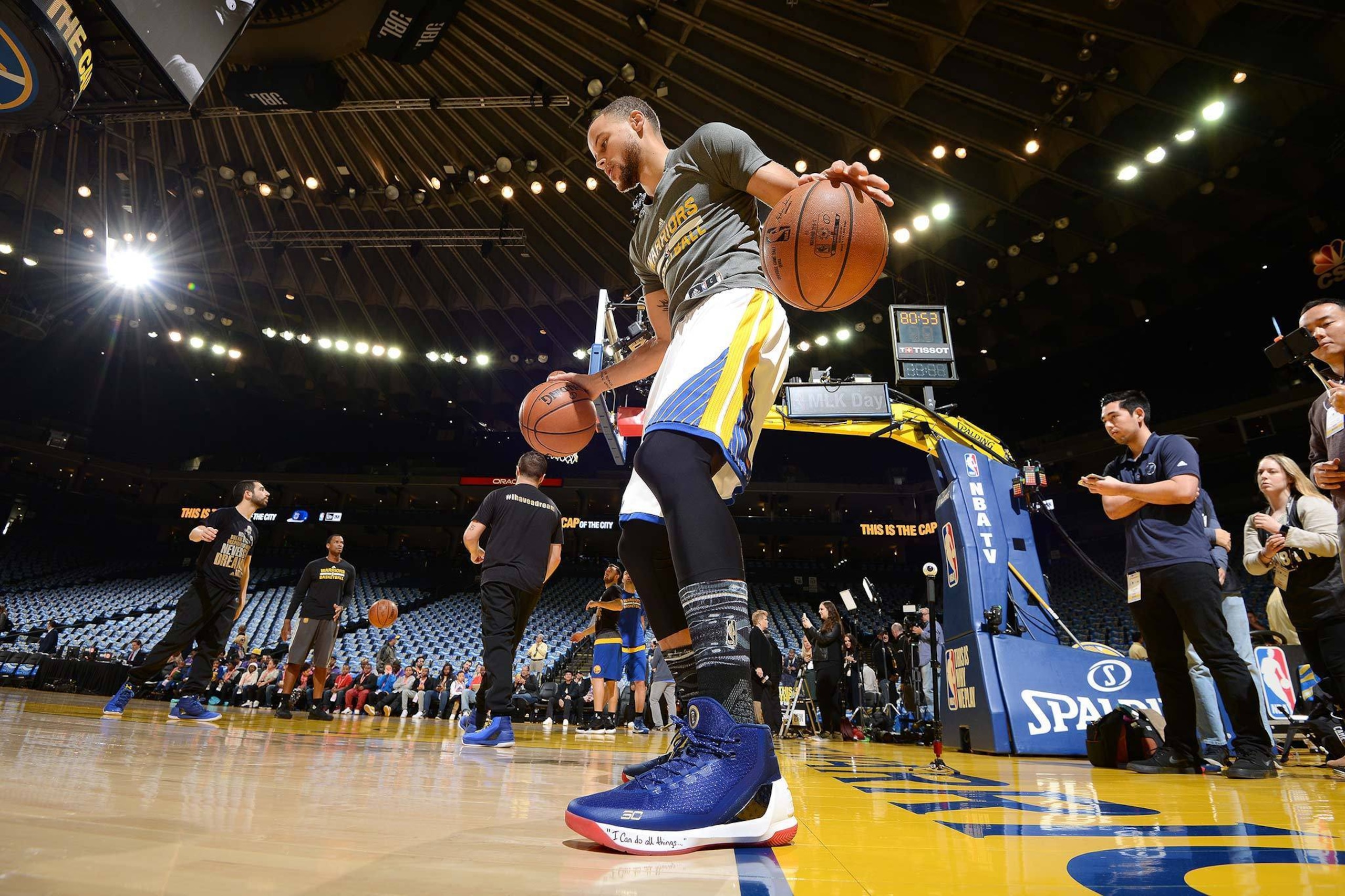
The goggles, however, are just an aspect of a greater philosophy that drives Curry and Payne’s training. Curry began working out with Payne in 2011 during the NBA lockout, driving an hour south of his home in Charlotte to Fort Mill, South Carolina, and Payne’s bland-looking warehouse, home to his private coaching business, Accelerate Basketball. It was here that Steph Curry started to become STEPH CURRY. Now Curry flies Payne to Oakland all the time so they can work out; Payne spends weeks if not months on the road with him. And all of this is because, in addition to his savvy strength training and physical conditioning, Payne is one of pro basketball’s foremost experts in what he calls “neurocognitive efficiency.”
Payne and Curry are a good fit because, the way Payne puts it, “So much of it comes down to the intelligence level of the player. You have to have players who can look past the drill, who can understand the multiple layers of benefit that each drill gives them. And Steph is that kind of guy.”
Curry is even better than Payne imagined, because he is uniquely intelligent, curious and unafraid to (a) ask questions, and (b) try new things.
And man, has he tried things. Three of his primary experiments are the goggles, a high-tech training tool used during shooting and agility drills called FITLIGHT and a sensory deprivation chamber.
Perhaps even more telling than the stuff he’s using is why he’s using it—but first, the stuff itself.
The goggles came to Curry from Sensory Performance Technology, and were called the Eclipse. They are an updated version of the Nike SPARQ Vapor Strobes—Nike discontinued the product a few years ago. One of the main guys working on their development was Herb Yoo, Nike’s director of innovation. When Nike shut SPARQ down, he left and started a new company, Senaptec, to build more of the same. He has a saying: The eyes are the window to the brain. And his whole idea is to build better vision by building a stronger brain. Yoo says, “You may have heard coaches, or analysts in the media, say, ‘Oh, that athlete has great vision.’ But what does that really mean? They don’t know. They’re using the term vision as this umbrella term. But...better athletes have better visual skills.”
Like Curry, let’s look past the surface down to the multiple layers of it all. Great vision comes down to astonishing science: We experience our five senses because of specialized cells throughout our body called sensory receptors, which transmit everything you feel, hear, smell, taste and see to your brain.
Of all the sensory receptors we have, 70 percent are in our eyes alone.
That’s 260 million (130 million per eye) receptors taking information in through the eyes and sending it to the brain, by way of 2.4 million nerve fibers.
This adds up to our eyes sending our brain 109 gigabytes of data every second.
Most of us can process that—and a lot of it is selectively ignored by our brain—but it’s the athletes who can process that the fastest who are among the greatest.
Take Babe Ruth. In 1921, researchers from Columbia University’s psychology department performed some studies on the Great Bambino, and they found that he had one of the most remarkable sets of eyes—and one of the most athletic brains—in existence at the time. He processed visual information 12 percent faster than normal men, and compared to the normal man, Babe’s visual perception occurred 150 percent faster.
The world seems to move in slow motion for such athletes because their brain is working at warp speed.
By making the brain do more with less, the strobe goggles are a way to make the brain more easily reach said warp speed when one’s vision is clear.
The FITLIGHT system is a bunch of palm-sized discs on poles—or just stuck on the wall, or placed on the floor—that Payne sets up during drills. It was inspired by Erik Veje Rasmussen, a handball legend in Denmark who had this idea to devise a system that could measure and train reaction time, speed, agility and coordination. Beyond sports, FITLIGHT has partnerships with the United States military. Their goal is basic: Connect what the eye sees to what the brain thinks and how the body reacts.
Payne sometimes places the FITLIGHT discs on the side as Curry goes through dribbling drills, or on the court, where Payne puts them in different spots, then controls them using a wireless remote. Each disc can be set to eight different colors, and Curry has to make certain moves and take certain shots based on what colors he sees. They’ll start with two to three reads, then push up to five to six in one drill. Payne says, “It’s incredibly overloading, when you’ve got that many decisions to make.”
Their workouts shift day to day, and of course, they do much more than just train with the FITLIGHT system, but that sort of sensory overload—overwhelming the mind with stress while forcing quick decisions, often by complementing FITLIGHT and other drills with the strobe goggles—is the way toward neurocognitive efficiency.
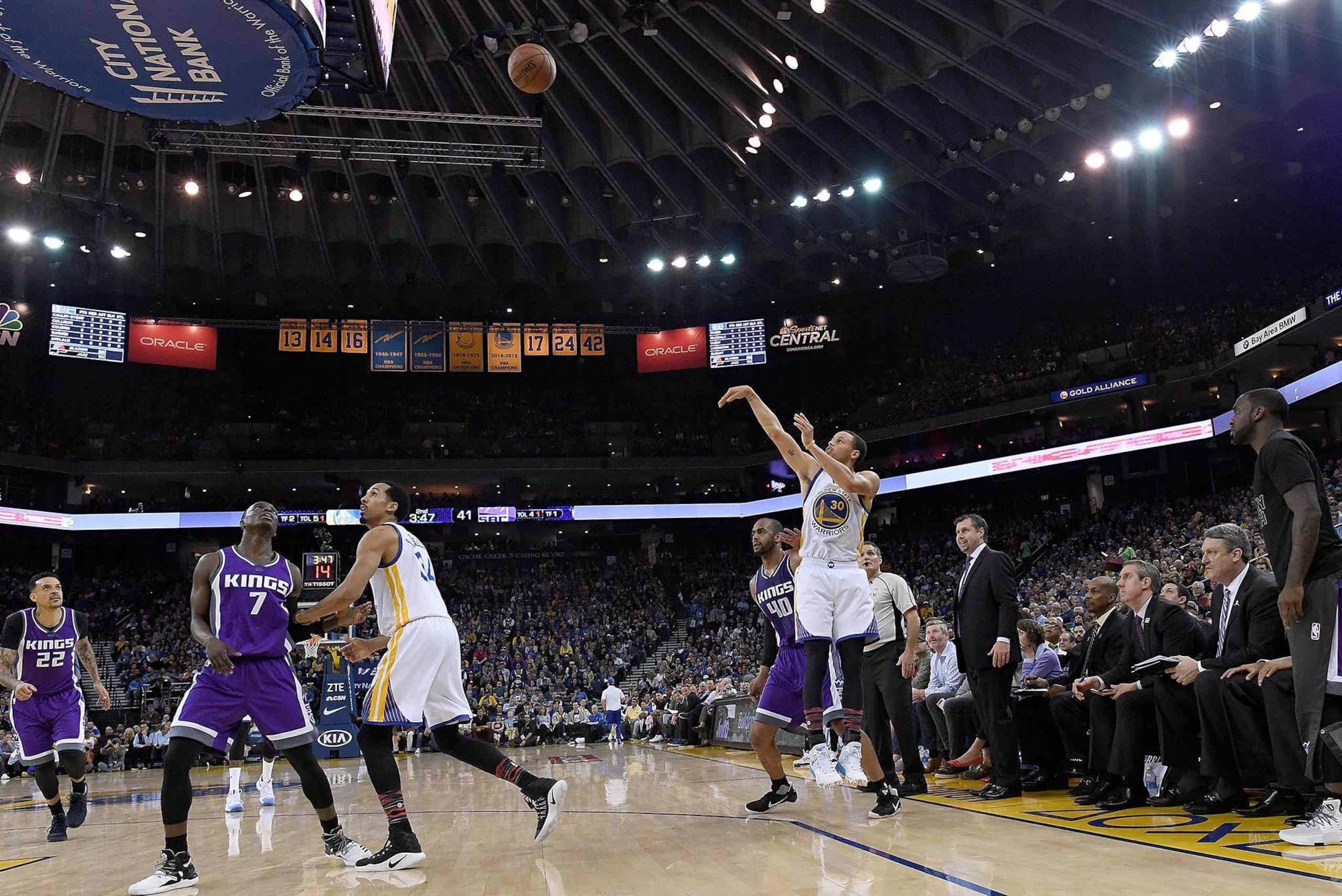
Say they do a seven-spot shooting drill. Curry has to make, say, eight out of 10 shots at a certain spot before moving to the next.
They don’t count the shot as a make unless Curry not only makes the shot, but reads the lights correctly, too. “That’s a pretty tough drill that frustrates him,” Payne says. “I know when I’ve frustrated him, I’m doing my job, because he is not gonna stop until he beats it. And trust me, frustrating that guy is getting tougher and tougher to do.”
For all this cutting-edge training, however, Curry needs time to download what he’s learning, or just unwind after a hard week or two. That’s much easier said than done in this frenetic, always-plugged-in modern world of ours, where distraction is no further away than the phone/computer in our pockets.
Naked in the dark and floating in space, however, you see, hear and feel nothing for as long as you want. You’re not really in space. You’re lying in a big tub filled with skin-temperature water and a thousand pounds of Epsom salt.
This is a sensory deprivation chamber, also known as a float tank. The idea is to completely remove any and all physical sensation, leaving only you and your mind.
Curry got into such float tanks before the 2015 season after the Warriors’ new head of physical performance and sports science, Lachlan Penfold, told the team to check it out. Curry got hooked. He told ESPN in 2015 that he goes for a good float at least once a week, typically at Reboot Spa in San Francisco. (In the ESPN feature, Curry wore swim trunks, but hardcore floaters know the best way to float is naked.)
The magnesium in the salt is good for sore muscles, and spending an hour or two suspended weightless decompresses the spine and eases out tension. Moreover, the time spent taking in literally nothing seems to be fantastic for your mind. (Your brain goes from taking in more than 100 gigabytes of data to virtually zero.)
Curry doesn’t go too deep about it—all he’s said is that he likes the chance to relax, “to get away from the demands and all the stimuli we have in the world in our lives.” But to go deep about it: Research has found that a sensory deprivation experience rivals that of a meditation expert reaching a peak meditative state.
Some critics see videos of, say, Curry dribbling while wearing those strobe goggles, and they hear Payne talk about “neurocognitive efficiency,” and they say stuff like, All you need is a basketball and a court and a hoop, and All training is brain training.
Payne’s experience with them provides us with an example of what many people like him go through. He says, “Basketball coaches, for the most part, I equate to the far radical religious right. They’re so close-minded, and they want to do it the way it’s always been done. … The phrase of death around here in my office is, This is just how we’ve always done it...because ‘how we’ve always done it’ is not as good as how we can do it today.”
It’s almost impossible to imagine now, but the criticism faced by Payne and Curry and those of their ilk is exactly how the cynics of yore talked about physical training.
The way athletes back then pursued a stronger, better, faster body, now the Steph Currys of the world pursue a stronger, better, faster brain.
And the real kicker here is that not only is Curry far from alone; what he is doing is far from all there is to do. Athletes the world over are using all sorts of various machines, equipment and software to do everything from testing their brainpower to inserting themselves into virtual worlds wherein they can train with all the mental stress and fear and challenges that they would face in the arena. Some of these are substances that walk a fine legal gray line. Some are devices that send electricity into your skull. And some of these things can literally look at your brain in action and sync it with your smartphones. The brain, in the palm of the hand.
From hundreds of trainers like Payne and athletes like Curry and scientists and businessmen trying to help them all, there echoes a common and thrilling refrain: In the words of Herb Yoo, who at Nike saw all the world has to offer these athletes, “There’s acceleration training, there’s speed training, there’s plyometrics—a lot of options in the physical space. They’ve been maxed out. ...The sensory cognition, that neuro, is the new frontier. This is really the next phase of human performance.”
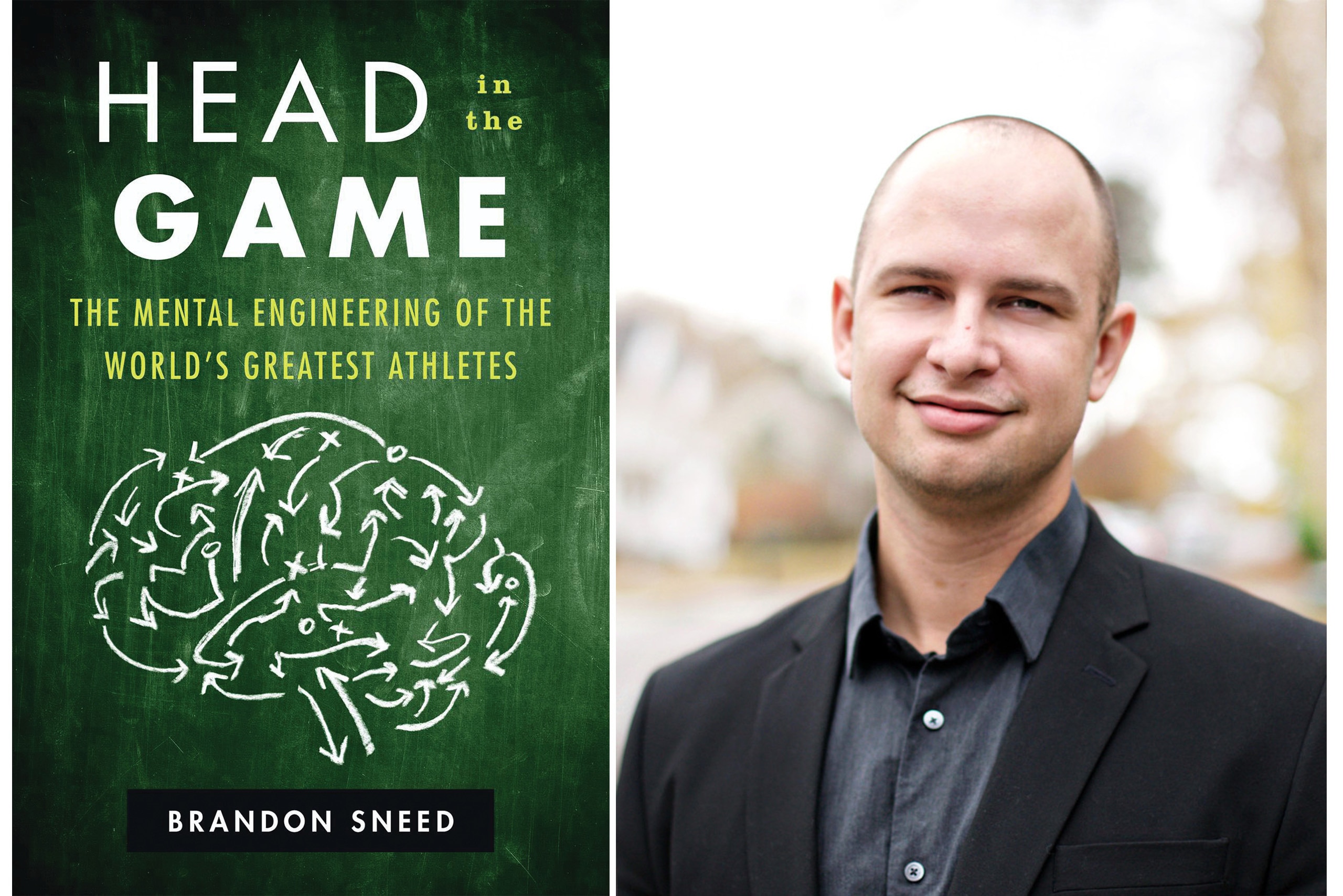
This has been excerpted from Head In The Game: The Mental Engineering of the World's Elite Athletes by Brandon Sneed. Copyright 2017 by Brandon Sneed. Used by permission of Dey Street Books, a division of HarperCollins Publishers. All right reserved. Visit headinthegamebook.com.
Brandon Sneed is a writer-at-large for B/R Mag. His writing has also appeared in Outside, ESPN The Magazine, SB Nation Longform, and more, and has received mention in The Best American Sports Writing. His website is brandonsneed.com. Follow him on Twitter: @brandonsneed.

.jpg?w=2560 "Top Trade Targets Entering Week 6")


.png?w=2560 "Muncy Sums Up NLCS Offense 💩")

