

The Most Versatile Offensive Weapons in College Basketball in 2016-17
Being a great scorer is one thing, but the best offensive players in college basketball contribute to the production in multiple ways. That includes being able to make baskets from all areas—and with great accuracy—as well as get to the line and enable others to score with their passing.
Such versatility is desired but not easy to come by, as only a handful of players in the country average at least 12 points and three assists per game and do so with strong efficiency numbers. Of that select group, the players below are the ones we consider the most versatile for how they've gone about getting their points and creating for others during the 2016-17 season.
Jaylen Adams, St. Bonaventure
1 of 9
St. Bonaventure has two prolific scorers in junior guards Jaylen Adams and Matt Mobley, a duo that has combined for 48 percent of the Bonnies' production this season. Mobley's production after transferring from Central Connecticut State has been a pleasant surprise, but it's Adams who remains the Bonnies' most versatile scorer.
In addition to averaging 22.3 points per game, which ranks 11th in the country, the 6'1" Adams also leads the Atlantic 10 at 6.2 assists per game. That's while shooting 47.9 percent overall and 40 percent from the three-point line and hitting 81.3 percent of his free throws.
Adams is coming off a season-low seven points in a win over George Mason on Jan. 7, a game he had to leave early because of an ankle injury that has sidelined him for the past two contests. He still managed to dish out seven assists before getting hurt, and in his absence St. Bonaventure shot only 39.6 percent in an 11-point loss at Richmond. In those two games he's missed, the Bonnies turned it over 32 times, compared to 12.3 per game with Adams at the point.
St. Bonaventure was able to win its most recent game without Adams but can't expect to make a run in the A-10 without him.
Jamel Artis, Pittsburgh
2 of 9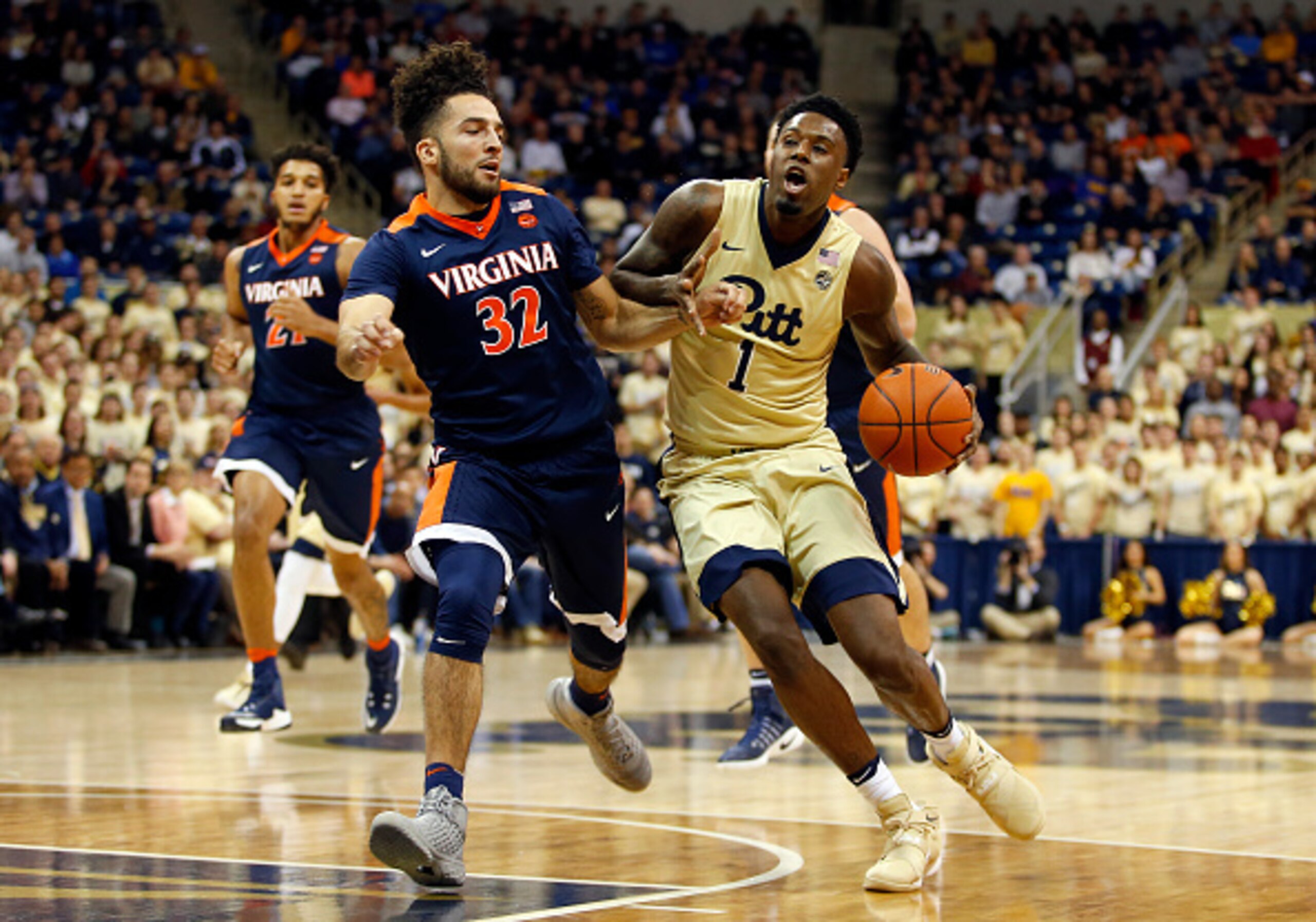
Like St. Bonaventure, Pittsburgh has a pair of potent scorers in seniors Jamel Artis and Michael Young, both of whom average better than 20 points per game. The biggest difference, though, is Artis and Young are listed as forwards, yet they're tied for the team lead in assists per game at 3.2.
Why pick Artis over Young, then? Besides having the higher scoring rate, 22.4 per game compared to 20.9, Artis takes nearly as many shots from outside the three-point line as he does inside it and thus is a much tougher player to defend.
The 6'7" Artis has hit 50 threes and is shooting 46.3 percent, tops in the ACC, while also draining 58.5 percent of his two-pointers. He's also a 70.9 percent foul shooter.
The improved outside shooting has been the biggest change in Artis' skill set since his freshman year, when he was 8-of-27 from deep and averaged just 4.9 points per game. This season he's hit at least four threes on six occasions, including making seven (in addition to 8-of-9 twos) in scoring 43 in a loss at Louisville last week.
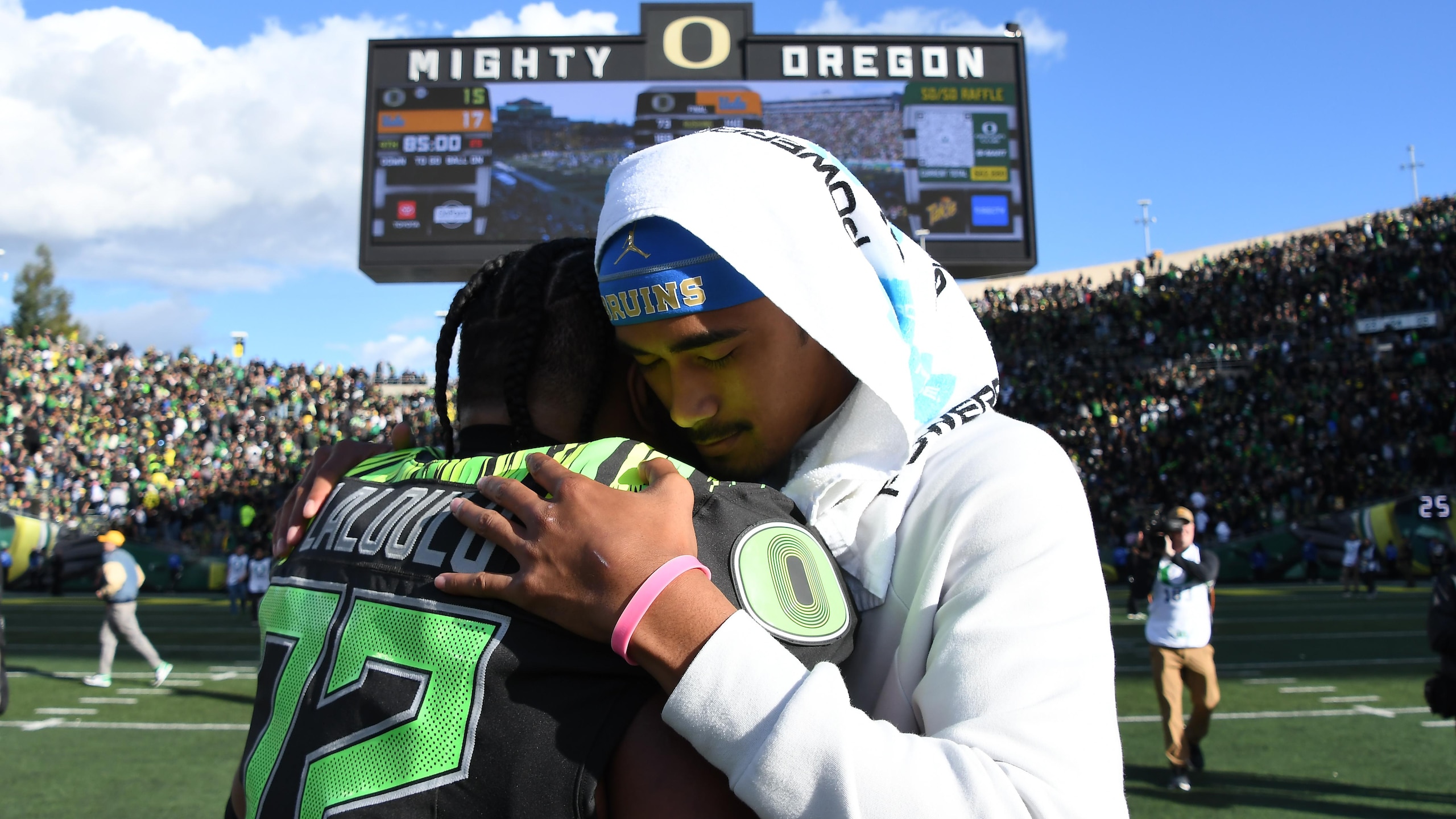
Lonzo Ball, UCLA
3 of 9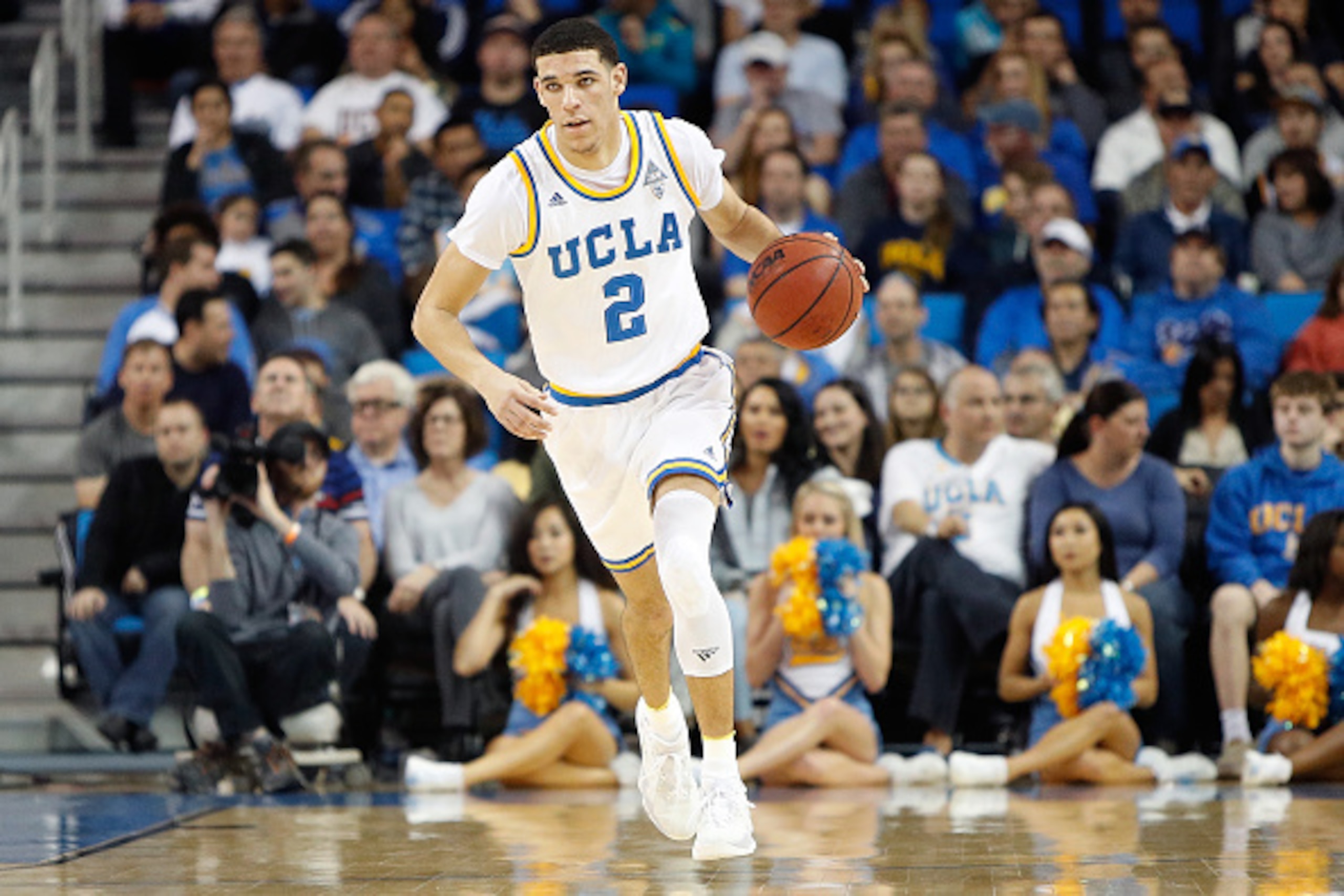
It's somewhat unique to have a team's most versatile offensive player be only its third-leading scorer, but then again few clubs are as loaded with scoring talent. If Bryce Alford, TJ Leaf and others weren't playing for UCLA, there's no doubt Lonzo Ball would be averaging more than his 14.6 points per game, but because of their presence (as well as that of Isaac Hamilton and Aaron Holiday), there's not much need for the electric freshman guard to do so.
Instead, Ball has been able to show off his entire array of abilities so far in 2016-17, sometimes sticking more to creating while other times getting more involved on the scoring end. That's made everyone else around him better and is a big reason the Bruins are 18-1 this season after winning just 15 games a year ago.
Ball dishes out eight assists per game, second-most in Division I, with four of his five double-doubles coming via points and assists. He's only turned it over 43 times in 674 minutes.
When Ball needs to score, he seemingly always can. He shoots 53 percent overall with a stellar 67.6 percent rate on two-pointers thanks to his great driving ability, and when defenders play off him to prevent such drives, he pulls up and hits threes from all over at a 43 percent rate.
Mo Evans, Fort Wayne
4 of 9
Not familiar with Mo Evans? This is understandable since his team's biggest win in program history was also one of the worst of his career. The 6'0" senior guard scored a season-low nine points on 4-of-15 shooting, making just one of eight three-pointers before fouling out in Fort Wayne's overtime upset of Indiana back in November.
Take that game out and Evans is averaging 19 points per game and shooting 52.8 percent from three. He's at 50.4 percent for the season, which ranks sixth in the country, and his 68 makes are tied for fourth-most in Division I.
Evans isn't just a jump-shooter, though, as he shoots 49.4 percent overall and has made 91.2 percent of his foul shots. And when not scoring he's dishing out 5.4 assists per game.
While Evans didn't shine in the Mastodons' big win over Indiana, he has the rest of the year—a big reason Fort Wayne is 14-5 and only a game out of first place in the Summit League.
Markelle Fultz, Washington
5 of 9
Watch a Washington game and you'll see a team that should be much better than 8-9 considering it may have the No. 1 overall pick in the 2017 NBA draft doing anything and everything for it. Markelle Fultz is listed by DraftExpress as the top pick in its latest mock draft by virtue of the tremendous play he's put forth as a freshman.
The 6'4" guard is the country's top-scoring freshman and 13th overall at 22.2 points per game, but that only begins to tell his story. Fultz is also Washington's leading assist man, at 6.1 per game and is also second on the team in rebounds, blocks and steals. It's very much like how it was for Ben Simmons last year at LSU, and Simmons parlayed that individual dominance into being the first pick in the 2016 draft.
Fultz takes 16.6 shots per game and shoots 48.4 percent overall along with 41.3 percent from three, and while there are other strong shooters on the team, they seem to stand around and watch when Fultz goes off. Washington is 2-8 when Fultz takes 15 or more shots in a game and also 0-5 when he has four or fewer assists.
Josh Hart, Villanova
6 of 9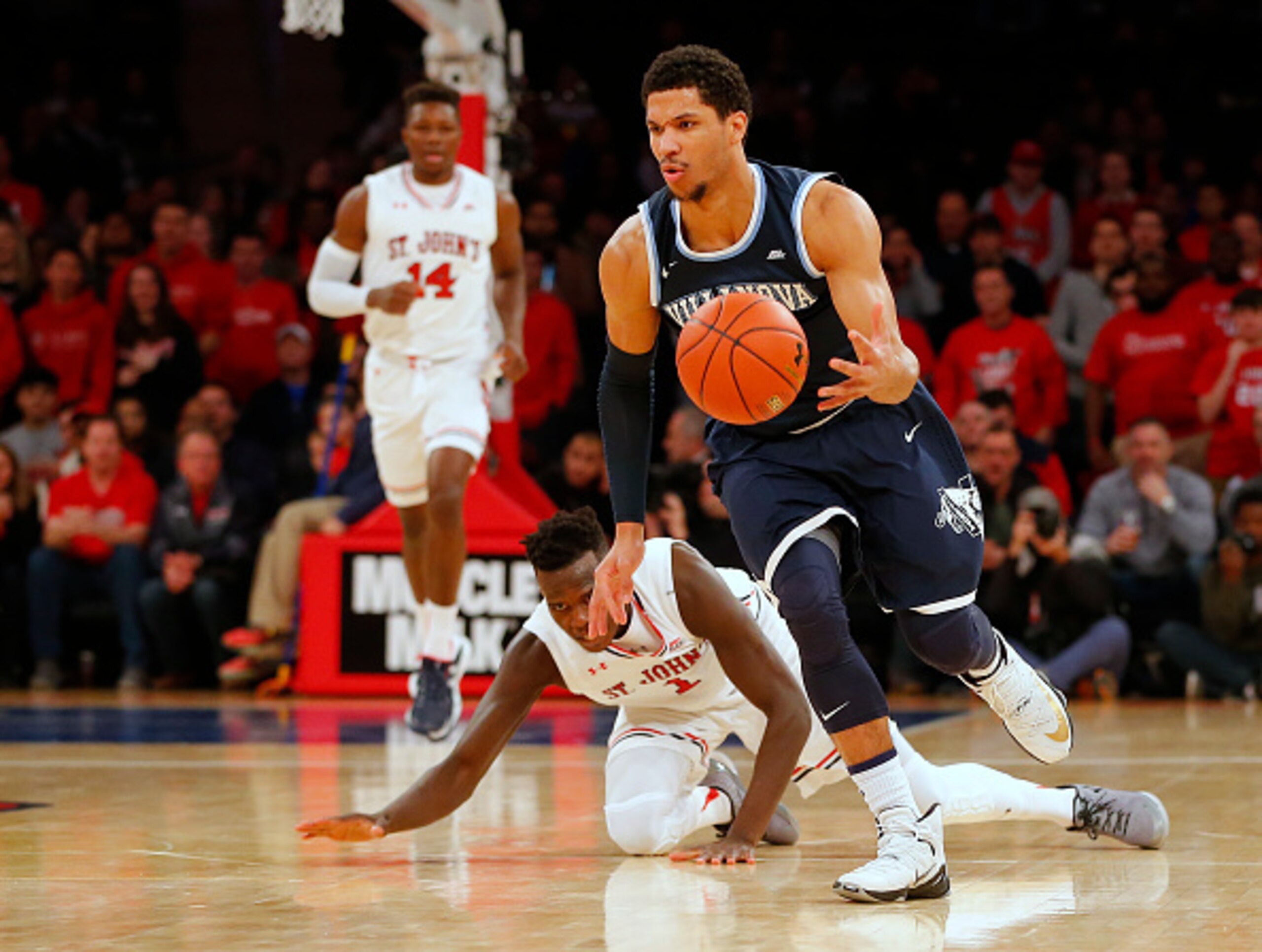
The best player on the best team in the country—The Villanova Wildcats are the defending national champs and returned to No. 1 in the Associated Press rankings, so no need to debate this topic—isn't just their leading scorer. He's also the one capable of doing the most things with the ball in his hands, something we've seen throughout his career but most noticeably in the past two seasons.
The 6'5" guard is averaging 18.8 points per game after a scoring 11 in Monday's blowout win over Seton Hall, though he also added four rebounds, three assists and four steals. Hart only made one of five three-point attempts but is at 37.1 percent for the season along with 52.7 overall from the field while chipping in 3.6 assists per game.
Hart also has 28 offensive rebounds, second-most on the Wildcats, helping the team shoot 50.2 percent from the field and rank in the top 10 nationally in offensive rating.
And let's not forgot Hart's reliability at the foul line, where he shoots 78.7 percent. That includes going 14-of-14 in an eight-point win over ACC leader Notre Dame in mid-December.
Marcus Keene, Central Michigan
7 of 9
How does one becoming the leading scorer in Division I, with what would be the highest season average in six years if it holds up? Taking a whole bunch of shots is a big part of the equation but so too is knowing where and when to launch.
Marcus Keene understands this, as his 343 field-goal attempts are third-most in Division I, but his 46.6 percent accuracy overall and 36.4 percent three-point rate indicates he's not just jacking it up and hoping it goes in. If he was he wouldn't be scoring 28.7 points per game, the highest a player has averaged since BYU's Jimmer Fredette scored 28.9 per game in 2010-11.
A junior guard who is liberally listed at 5'11", Keene sat out the 2015-16 season after transferring from Youngstown State. During that year off he worked on his strength and conditioning in order to "change his mindset from that of a shooter to that of a scorer," per Bleacher Report's Kerry Miller. The result has been better shot selection but also a greater willingness to go to the basket and draw contact.
Keene has taken 139 free throws in 17 games this season, eight more than in 54 total games at Youngstown State, and he's shooting 80.6 percent from the field.
Central Michigan scores 89 points per game, seventh-best in the country, and when Keene isn't taking the shots he's getting others good looks by averaging 5.2 assists per game.
Frank Mason III, Kansas
8 of 9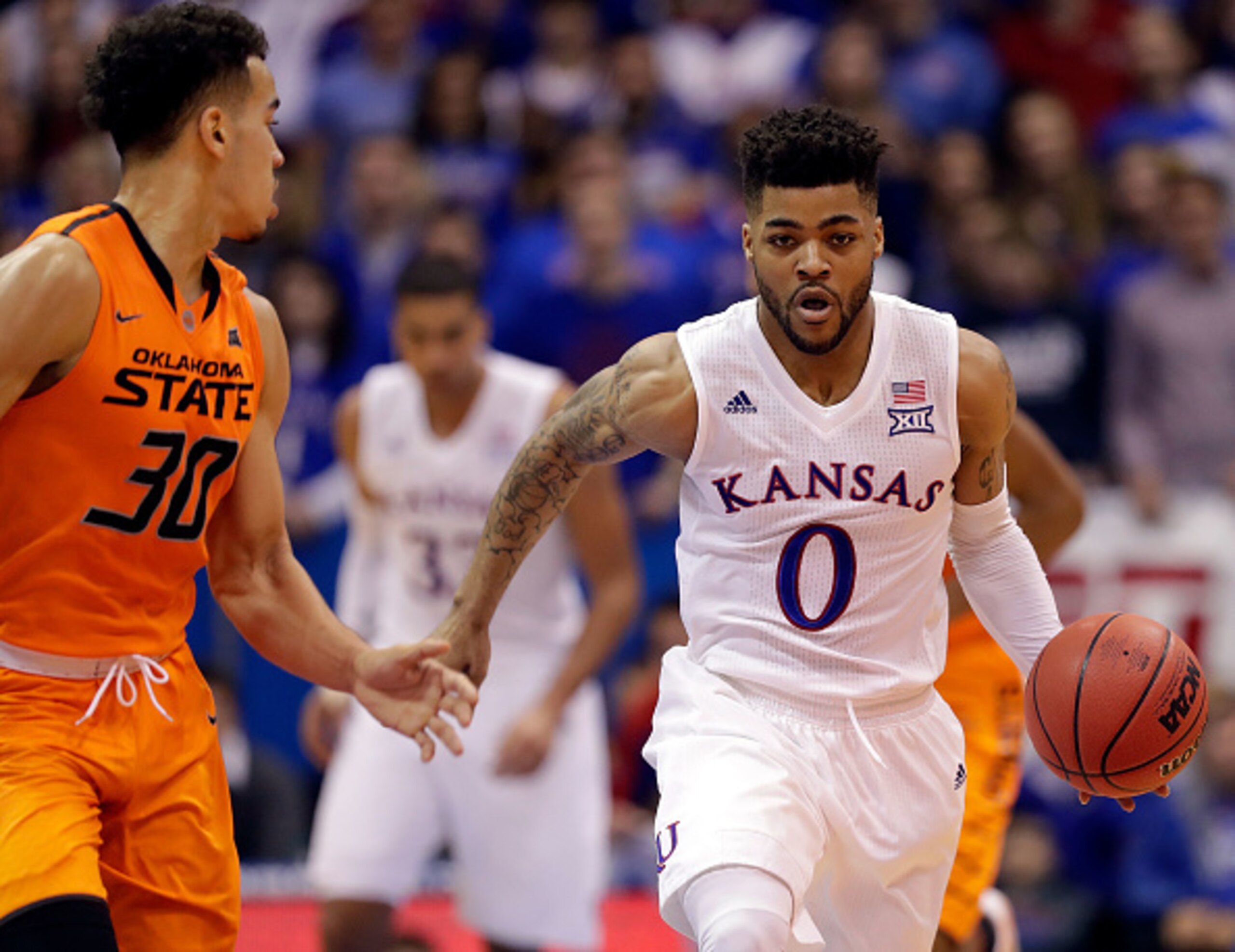
Kansas plays two point guards, and it's enabled it to win 17 consecutive games after losing its season opener. This approach doesn't just make it possible for multiple players to bring the ball up the court and set up the offense but also for one or both to move without the ball and force defenders to split their attention.
And in the case of Frank Mason III, it makes it possible for him to score at will no matter where he is on the court.
This season we've seen Mason raise his game far above that of his first three seasons with the Jayhawks, resulting in the 5'11" senior averaging 20.3 points along with 5.3 assists per game. Both are career highs, as are the 52.4 percent field-goal percentage and 53.9 percent three-point accuracy. On Monday he was 7-of-12 overall and 2-of-3 from outside en route to 16 points in a win at Iowa State, a total that was actually his fourth-lowest of 2016-17.
Mason has two 30-point games this season and five where he's made at least three shots from both two- and three-point range. There are also the five times he's made at least eight free throws thanks to his 74.1 percent foul-shooting rate.
Monte Morris, Iowa State
9 of 9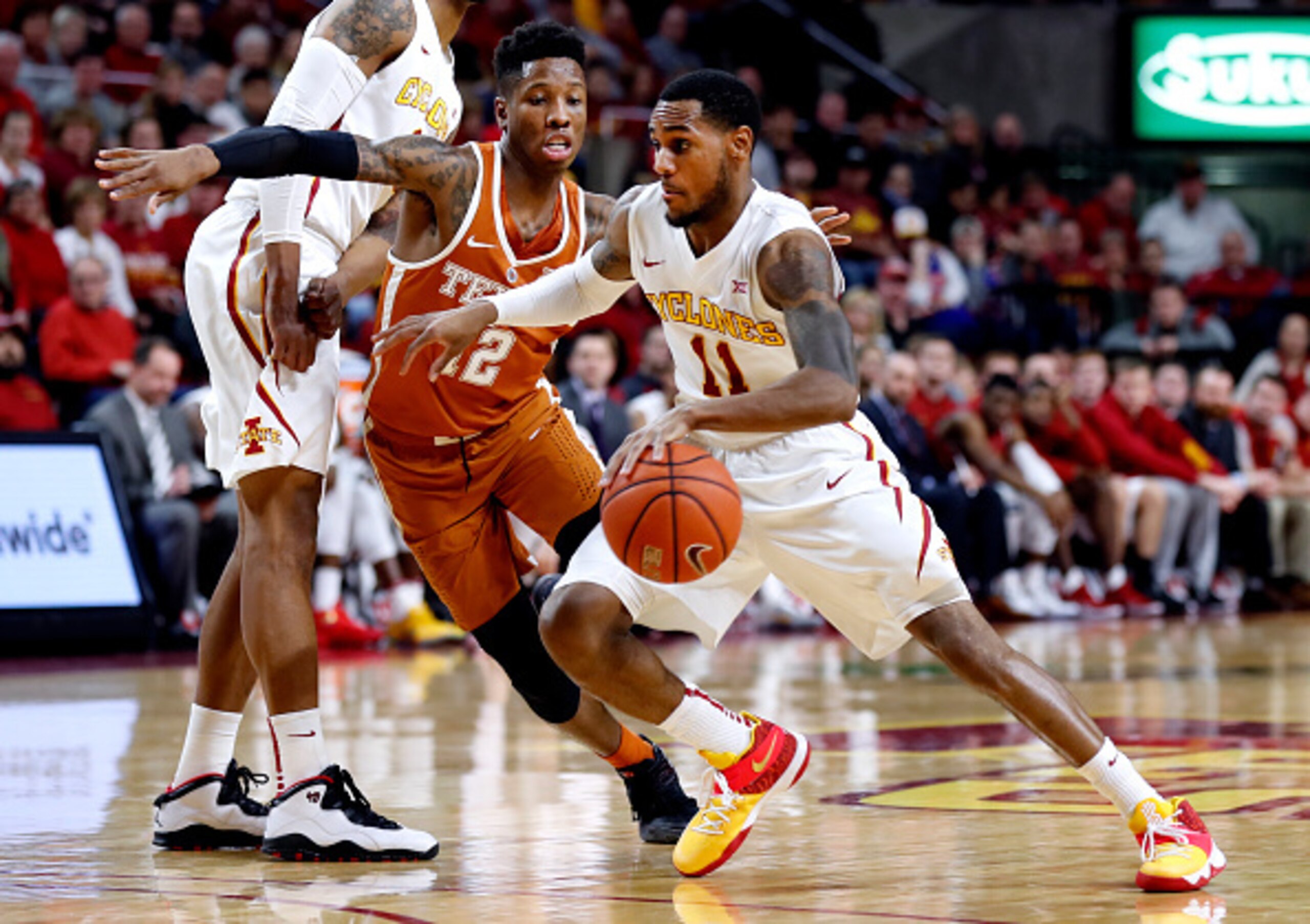
Monte Morris is going to finish with the best career assist-to-turnover ratio since the NCAA began tracking that statistic, but the way he's developed into a go-to scorer means his ball-handling won't be the only thing he's remembered for. And at least for this season, the senior guard's shooting and aggressiveness are standing out more than his passing and lack of mistakes.
Sitting at a career-best 15.9 points per game after scoring 23 on Monday against Kansas, the 6'2" Morris passed fellow senior Nazareth Mitrou-Long for the Cyclones' leading scorer. That's in addition to being their top assist man, at 5.9 per game, while shooting 47.5 percent overall and 41.5 percent from three.
He's also 34-of-42 from the foul line, one of the few ISU players willing to draw contact on a team that takes fewer than 16 free throws per game.
All statistics courtesy of Sports-Reference.com, unless otherwise noted. All recruiting information courtesy of Scout.com, unless otherwise noted.
Follow Brian J. Pedersen on Twitter at @realBJP.

.jpg?w=2560 "49ers Seahawks Football")
.jpg?w=2560 "Commanders OL HEATED After Tie ▶️")
.jpg?w=2560 "Buzz: MHJ Hired Agents for Trade")
.jpg?w=2560 "AD Trolls Bears WR on IG 😂")