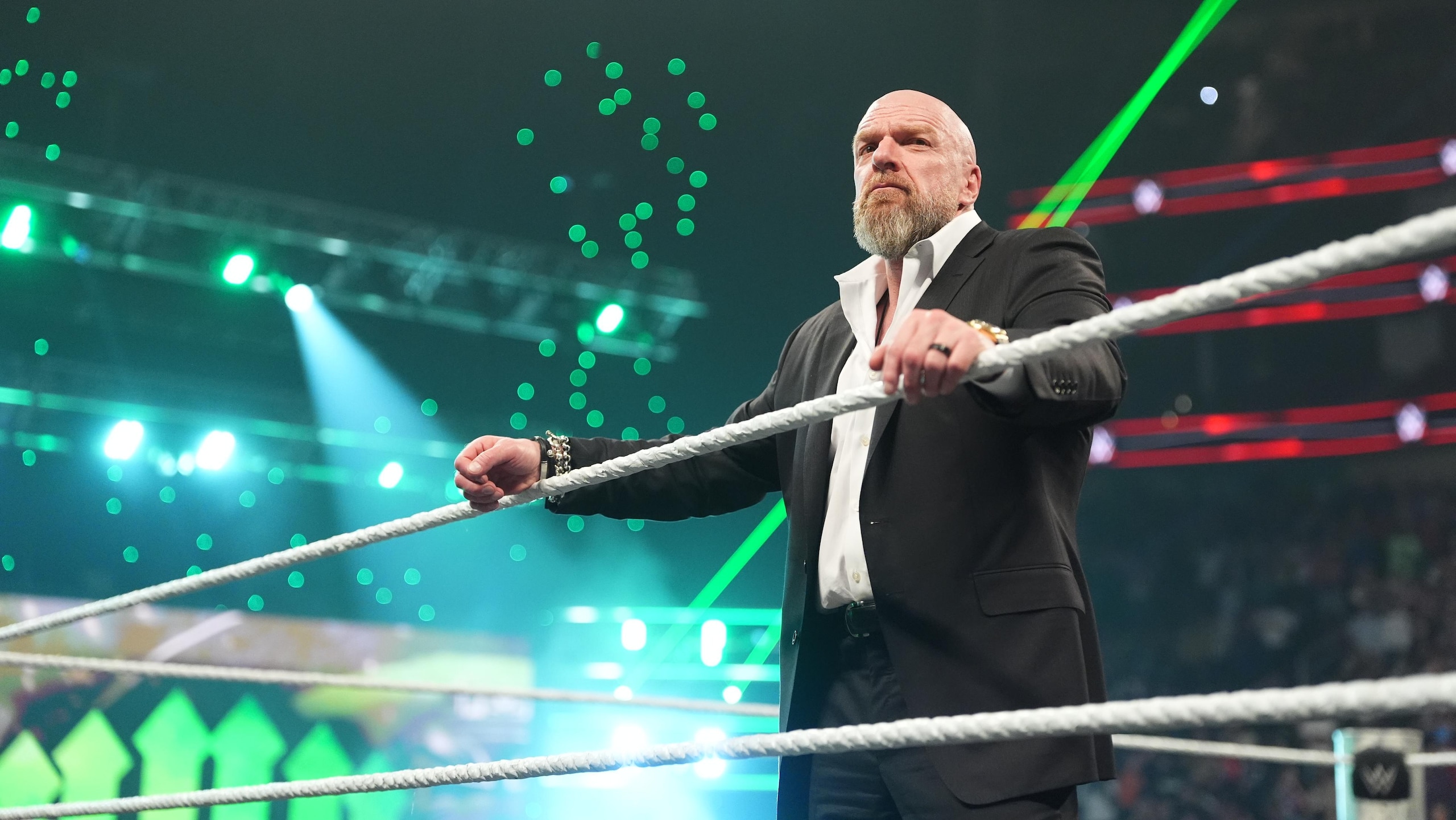
Analyzing the Evolution of WWE's Royal Rumble Match over the Last 30 Years
The WWE Royal Rumble has changed shape over the last three decades, adding layers to its basic structure.
The chaotic match that kicks off the year for WWE largely looks the same on the surface as it did in the late '80s. But the signature bout of the Royal Rumble pay-per-view is a deeper, more satisfying narrative showcase today.
A victory in the Rumble means far more than it did early on. The contest employs shock factor and drama via stats more effectively. And it has recently built in one thrilling moment of Houdini-level escape.
TOP NEWS
Raw and SmackDown Predictions 🔮
WWE's Most Untouchable Superstars
Latest Buzz on Solo, Bayley, More 👀
It's not surprising that the 30-man Battle Royal has changed so much, as it has had plenty of time to evolve. The event's origins date back three decades to 1987.
Before the first official Royal Rumble match in 1988, WWE had a trial run of sorts in St. Louis. The One Man Gang ultimately eliminated Junkyard Dog in front of 1,976 fans, per TheHistoryofWWE.com.
The winner of the Oct. 4 bout would earn a future world title shot, but WWE let the victor slip early. The One Man Gang's victory was announced during intermission, reportedly angering fans.
The event has come a long way since then, expanding its audience into the millions, increasing its significance and becoming one of the most anticipated contests on the WWE calendar.
Early Years
WrestleMania was a major show from its inception, an entertainment and wrestling extravaganza. The Royal Rumble emerged more slowly from the starting gate.
For years, it was more of an appetizer to WrestleMania. The event, and its signature match, didn't find its footing right away.
Not counting the St. Louis warm-up Rumble, the first one unfolded on Jan. 4, 1988, in Hamilton, Ontario. There were 15,000 in attendance that night, according to CageMatch.net.
The Royal Rumble had yet to make it to pay-per-view; it was instead a TV special on the USA Network.
Jim Duggan entered at No. 13 and went on to win after ousting One Man Gang, fittingly enough. Twenty wrestlers battled, as opposed to 30, which is the norm today.
The Rumble match wasn't the final match of the night. Instead, The Islanders vs. The Young Stallions headlined the show.
That speaks volumes about the Rumble's place in WWE at the time: It was an amusing side attraction. Describing the 1988-1991 editions of the event, Arda Ocal of the Baltimore Sun wrote, "The Rumble match itself was an afterthought in these years."
The field increased to 30 wrestlers in 1989, and the match headlined the next few events, but victory on that night still wasn't yet monumental. Big John Studd won in 1989. Hulk Hogan was victorious in both 1990 and 1991.
The match was missing a prize. It was too easy to forget about Studd's and Hogan's wins shortly after they occurred. There was little reason to stretch out the celebration past the night of the victory itself.
The Addition of Stakes
After two controversial finishes to Hogan's title matches with The Undertaker, on-screen president Jack Tunney vacated the WWF Championship. The gold would then go to the man who emerged from the 1992 Royal Rumble.
This was a first for the event.
A tangible prize now awaited the winner. That bolstered the bout, turning it from fun diversion to title fight.
The high stakes, the stars involved and Ric Flair's memorable, dramatic speech after his victory made the 1992 edition of the Battle Royal the most compelling one yet.
WWE couldn't put the title up for grabs at the Rumble again, but it did increase the significance of winning the whole thing.
Beginning in 1993, the Royal Rumble winner earned a championship match at WrestleMania.
Yokozuna was the first to benefit from this stipulation. His Rumble win netted him a clash with Bret Hart at WrestleMania IX for the WWF World Heavyweight Championship.
Lex Luger, Shawn Michaels and "Stone Cold" Steve Austin would soon follow in Yokozuna's steps.
The Royal Rumble became a play-in game of sorts for the WrestleMania main event. As a result, the match became more thrilling, and its importance to the calendar increased.
The ticket to the WrestleMania marquee also became a dramatic tool in between the Rumble and The Show of Shows.
In 1996, Michaels put his world title match opportunity on the line against Owen Hart at In Your House 6. Triple H risked his WrestleMania X8 championship bout at No Way Out against Kurt Angle in 2002. Rey Mysterio did the same four years later at No Way Out against Randy Orton.
This route added a layer to the Road to WrestleMania, offering WWE a chance to tease a change in the headline bout or alter it.
Impact on Stars
The Rumble's effect on a wrestler's legacy has shifted over the years.
Early on, when the match had little history, it was a minor addition to one's resume. Studd's win in 1989 didn't alter his career much. When Hogan triumphed in 1990 and 1991, the wins were nearly afterthoughts compared to his title wins and WrestleMania successes.
Not surprisingly, the impact of the Royal Rumble increased after the bout's stakes shot up.
In 1992, Flair's win felt huge. The fact that the championship was up for grabs was key to that, but it also accentuated The Nature Boy's move from WCW to WWE. He wasn't just a part of McMahon's enterprise; he was its top dog.
Flair recalled his victory in his book, Ric Flair: To Be the Man, "The fans were leaping up and down, basking in the historic significance of the moment."
The 30-man match soon became a star-making vehicle.
Michaels' 1995 win helped establish him as one of WWE's giants. He had won the Intercontinental Championship before, but after the Rumble, he rose further up the card. The headline spot at the next two WrestleManias belonged to him.
The Rumble win signaled to the audience a shift in The Heartbreak Kid's position, as it would for many to follow.
The match likewise lifted Austin to new heights. His repeat wins in 1997 and 1998, followed by his third in 2001, signaled his dominance.
Winning the Rumble announced Chris Benoit's arrival to the main event in 2004. It jumpstarted Batista's rise to headliner status one year later.
More recently, WWE has taken a different approach with the Royal Rumble. It has been more a confirmation of established stars' positions rather than a game-changer for emerging ones.
In 2013 (John Cena), 2014 (Batista) and 2016 (Triple H), WWE went with Rumble winners who had already been world champions several times over. These weren't wrestlers in need of a means to climb the ladder; they had long roosted on the top rungs.
The Power of Numbers
Bret Hart entered the 1988 Royal Rumble first and lasted an impressive stretch by fending off the likes of Tito Santana and Jake Roberts. The Hitman made it 25 minutes and 40 seconds before Don Muraco ousted him, setting a record at the time, per TheHistoryofWWE.com.
Duggan got the win that night, but Hart claimed another prize—becoming the Rumble's Iron Man. This wasn't a feat WWE played up much in the bout's early years, but it would eventually prove to be a star-boosting accomplishment of its own.
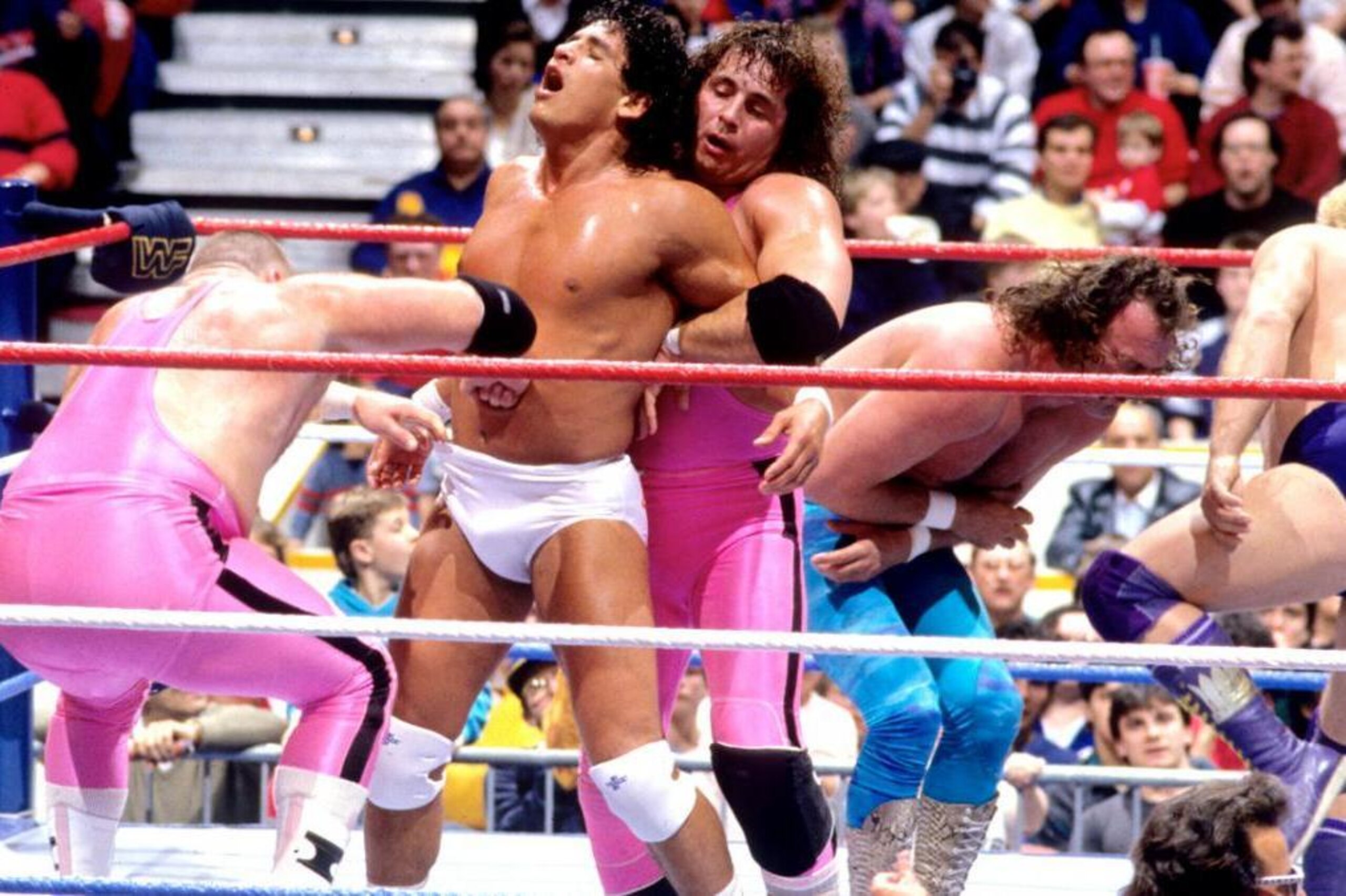
Ted DiBiase lasted nearly 45 minutes in 1990. Bob Backlund fought for more than an hour in 1993. CM Punk and Dolph Ziggler earned the Iron Man title in 2011 and 2013, respectively.
The Iron Man feat provided a subplot to the Rumble bout, allowing one Superstar to exhibit remarkable endurance. This became a more pronounced part of the match as the years went by, one that fans notice and celebrate.
Another accomplishment within the Rumble emerged in 1997, when Stone Cold tossed out 10 men en route to victory, per WWE.com.
Kane outdid that number by one in 2001. Roman Reigns surpassed that mark in 2014 with 12:
As the event's history grew, WWE wisely embraced the statistical side of the Rumble. It has added layers to the bout, allowing fans to watch for more than who ends up winning.
Surprise Arrivals
Mick Foley bewildered the audience at the 1998 Royal Rumble. The bruiser entered the bout three times, with each of his alter egos getting a chance at coming out on top.
Cactus Jack was the match's first entrant. After he failed to win, Mankind soon emerged. Dude Love would later follow, entering the Rumble at No. 28.
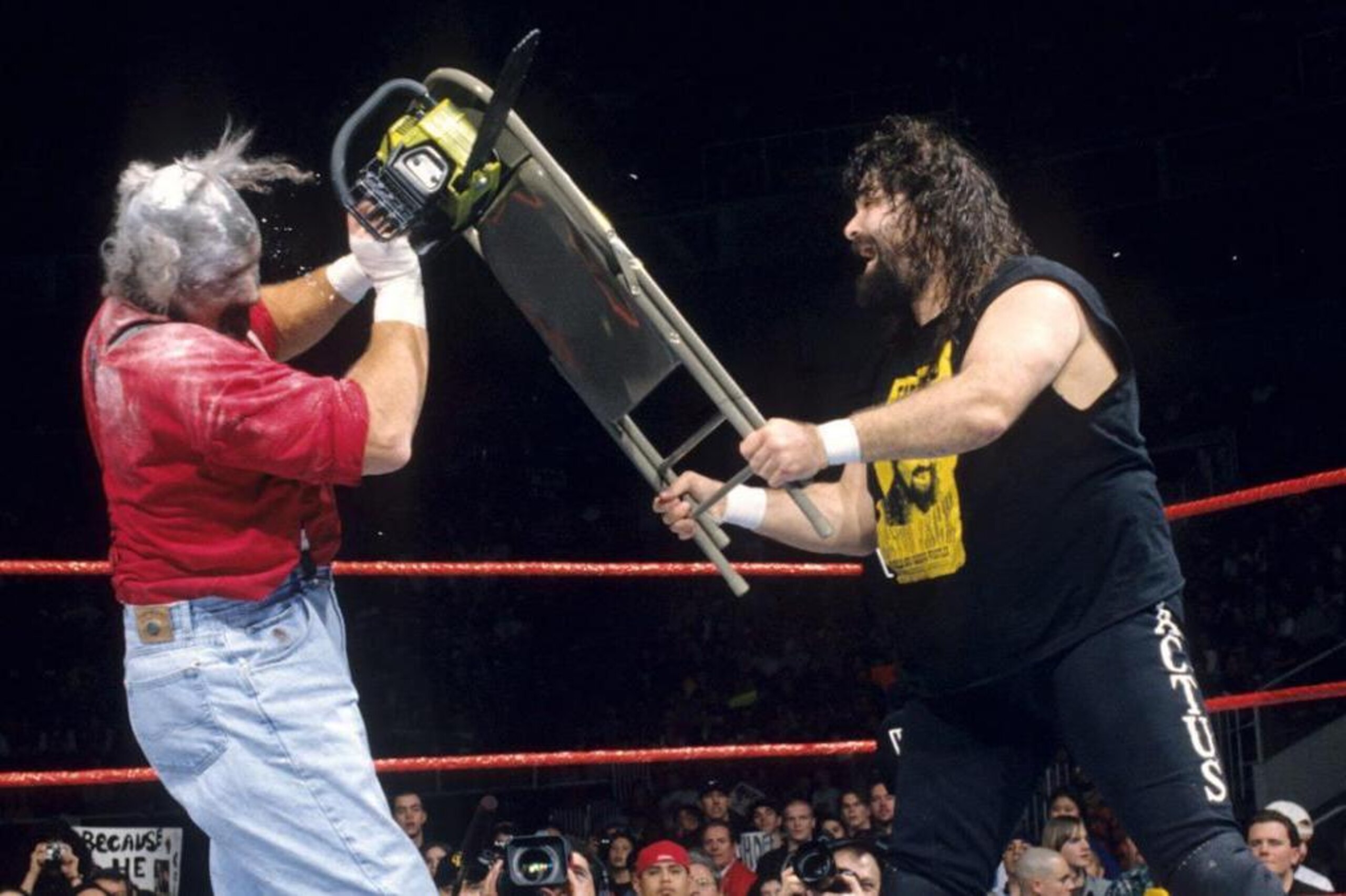
Up until that year, the Rumble hadn't infused surprises regarding who comprised the field. They would soon become regular occurrences, though.
In 2001, The Honky Tonk Man returned to appear in the Rumble. So did Haku (known as Meng in WCW), who made his way to WWE under strange circumstances.
As Stephen Randle wrote for Goliath, "Haku unexpectedly entered the Rumble despite having appeared on WCW television the week before, and suddenly the entire lineage of the WCW Hardcore title and all mentions of its existence was removed from WCW's website."
In 1999, Chyna's arrival came as no surprise, as she had won a qualifier Battle Royal to earn her spot, but it still made waves. The D-Generation enforcer became the first woman in WWE history to enter the match.
A woman didn't appear again in the Rumble until 2010, when Beth Phoenix tried her hand at the event. In 2012, Kharma showed up ready to punch everyone's lights out.
Unforeseen guests like these were normal in the 2000s and '10s.
NXT Superstars making their debut, wrestlers from other companies and blasts from the past showed up when the Royal Rumble timer went off. The Godfather, Kevin Nash and Bubba Ray Dudley all made appearances during recent editions of the event.
It's now expected that at least a couple of surprise names will emerge from the curtain. Surprise entrants have been a smart use of the Rumble's format. Since fans don't normally know who drew what number for the match, why not toss in a few curveballs to add to the action?
The Kofi Kingston Moment
John Morrison evaded defeat in spectacular fashion in 2011.
William Regal pushed him off the ring apron, seemingly sealing Morrison's fate. But the high-flyer's feet didn't touch the ground. Instead, he clung to the security barricade encircling the ring before leaping back onto the ring steps.
The Spider-Man imitation got the WWE world talking. Morrison's moment wasn't as important as Alberto Del Rio's win that night, but it found a place in the event's lore.
Kofi Kingston of The New Day followed up with a standout image and eye-catching save the following year to begin a pattern.
At the 2012 Rumble, Kingston avoided elimination by doing a handstand to make his way back into the ring. The next year, he bounced on a desk chair from the announce table to the ring to prevent his feet from touching the floor.
In 2014, he found himself stranded on the security barricade after Rusev slammed him on it. Kingston then soared from that spot to the ring, much to the delight of the crowd.
Kofi moments such as these have become a routine part of the Rumble match. Fans now wait to see what magic trick Kingston will pull off each year.
It's unclear whether WWE will keep going back to this well, either with Kingston or another star. But for now, it's yet another tradition of the event, a spectacle within the spectacle.
Booing and Backlash
Recent Royal Rumbles haven't ended with the kind of fireworks WWE has hoped to see. Instead, disappointment has plagued the bout.
It all begin in Pittsburgh in 2014, when WWE badly misread its audience.
Daniel Bryan was white hot, the everyman the fans clung to, the top-tier performer tearing down the house each night. WWE didn't make him the Rumble winner, though. He didn't even enter the 30-man match.
Instead, WWE crowned Batista, who had returned from a nearly four-year absence.
The Animal outlasted his foes, but when he stood in the corner to celebrate, fans vociferously booed him. Those in attendance wanted nothing to do with Batista's triumphant return, and they weren't alone.
Bryan earned massive cheers at future events, while Batista experienced jeers everywhere he went. In response, WWE eventually added Bryan to WrestleMania XXX's main event with both Orton and Batista.
The next year, the company made the same mistake—underestimating the WWE Universe's love for Bryan. Reigns became the star of the bout, fighting his way through The Authority's goons.
Even with beloved star The Rock at his side, Reigns still got the Batista treatment.
2016 didn't go quite as poorly, but Triple H's predictable win failed to light up the wrestling world. The then-46-year-old part-timer won his second Rumble and his ninth WWE title. That result set up a WrestleMania showdown with Reigns, against whom many fans still pushed back.
After years of shooting stars skyward at just the right moment, the Royal Rumble has become all about WWE pushing the wrong buttons. It's imperative for the company to realize that heading into 2017's event.
Lesnar's winning his second Rumble to lay the groundwork for a WrestleMania rematch with Goldberg likely won't impress fans. The 51-year-old Undertaker, who previously won in 2007, isn't the best option, either.
The audience will be hungry for fresh faces on the marquee and to see the next star elevated by the power of the Royal Rumble. They will be waiting for the next Michaels or Austin, the latest tale of a gladiator making his name in the 30-man battle.
.png?w=2560 "Early 2027 NFL Mock Draft ✍️")