Sorry, but Sidney Crosby Was Not Canada's Top Athlete in 2016
Earlier this week, a media panel unveiled its choice as the top Canadian athlete of 2016. To the chagrin of many in the hockey world, the honour went not to Pittsburgh Penguins captain Sidney Crosby but rather to Olympic swimmer Penny Oleksiak.
"Congratulations to Penny Oleksiak on being named Canada’s 2016 athlete of the year. #LouMarsh. pic.twitter.com/M0ST96UOft
— Team Canada PR (@TeamCanadaPR) December 13, 2016"
The panel had a good reason for the decision: Oleksiak, not Crosby, was the deserving winner of the Lou Marsh Trophy.
TOP NEWS

Mark Scheifele Landing Spots 📍

Every Team's Odds to Win the Cup 🏆

Ranking Top 10 NCAA Men's Hockey Players for 2026-27 Season
That isn’t meant as a slight to Crosby, who in 2016 added yet another brilliant year to an outstanding professional career.
Crosby won his first Conn Smythe as NHL playoff MVP, along with his second Stanley Cup. He was the leading scorer and MVP in the World Cup and won that tournament as part of a stacked Canadian entry. He scored a whopping 110 points in 92 total regular-season and playoff games at the NHL level, leading the league in production over that span.
And yet, as impressive as those accomplishments are, it’s necessary to keep them in perspective.

The talent level at the World Cup of Hockey was undeniable, but this isn’t some venerable, long-running event. Instead, it’s an on-again, off-again money grab with goofy teams tossed together by the NHL and the NHLPA that was basically ignored outside of Canada. That it’s been held just three times in 20 years and that the runner-up in the event was Team Some of Europe should be enough to press home its irrelevance.
Nor was Crosby’s NHL playoff run one for the ages. In 2008 he led the league in postseason points, with 27. In 2009, he led the league in postseason goals, with 15, and managed 31 points. In 2016, he had 19 points, one more than Nick Bonino and three back of the Penguins' team lead. His Conn Smythe victory was deserved, but he’s had better postseasons. Pittsburgh won based on its strength as a team rather than because of a superhuman effort from its captain.

Additionally, while 110 points in 92 games is a lot, it isn’t exactly unprecedented. In his last five healthy seasons, Crosby alone has beat that number on three previous occasions. If we reduce the field to regular-season games, Crosby’s 91 points are five fewer than fellow Canadian Jamie Benn managed between January 1 and December 15, 2015.
None of this is meant to diminish a great year. Crosby’s accomplishments were exceptional. They just weren’t exceptional enough to hand him the award for a third time
Hockey players already win the Lou Marsh more than any other athlete, which makes sense given Canada’s dominance of the sport. But it also means that to win the award, a hockey player has to do something truly special.
Take the last NHL’er to win the award: Carey Price in 2015. Price had been a first-team NHL All-Star and won the Hart, Ted Lindsay, Vezina and Jennings awards over the summer. Even by the standards of Patrick Roy and Martin Brodeur and the rest of Canada’s goalie pantheon, that was a year for the ages.
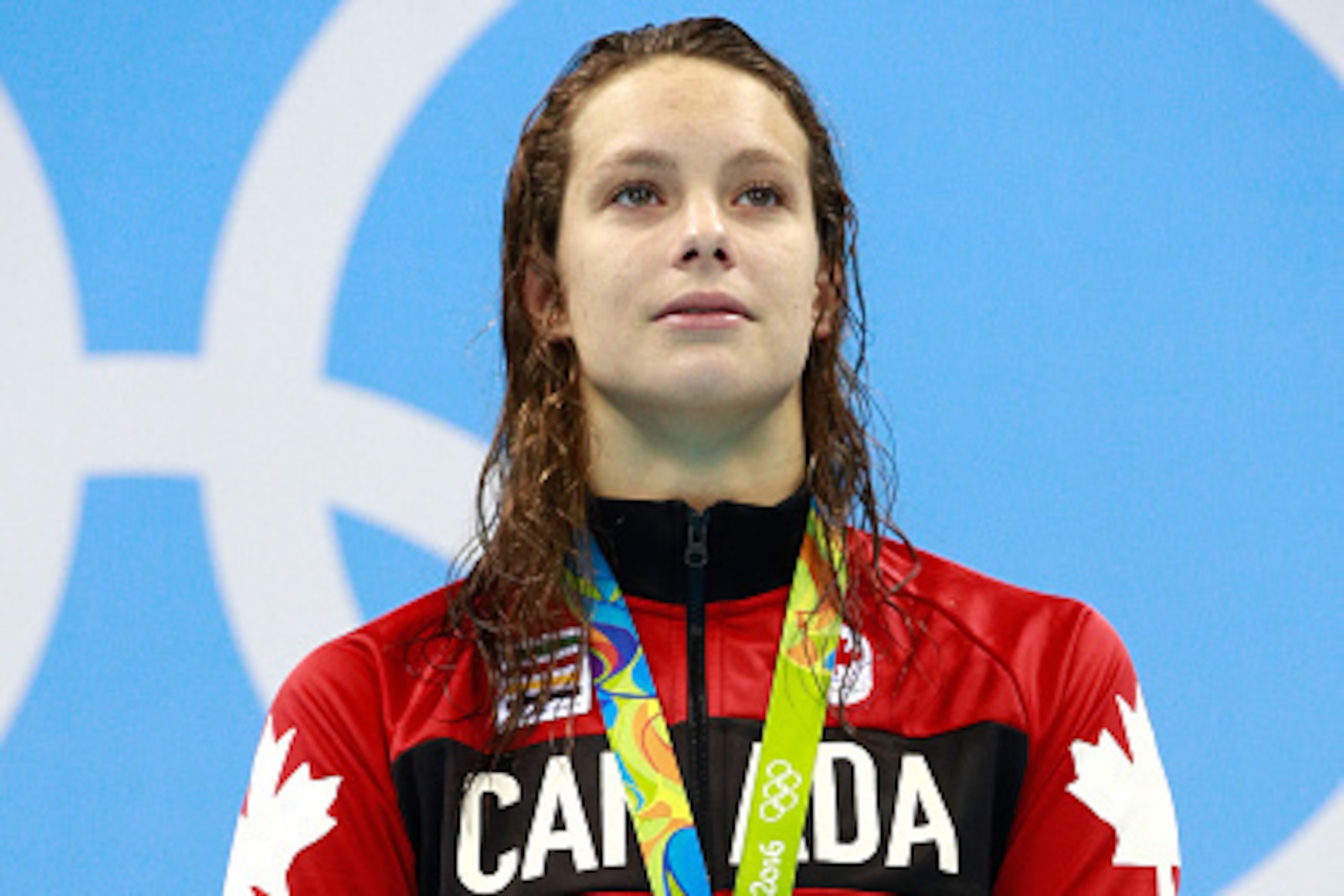
That, incidentally, is why Oleksiak deserves the award.
There were a lot of bad potential reasons to name Oleksiak the winner, many of which found their way to social media in the aftermath of the announcement. It could have been done to raise the profile of Canadian swimming or Oleksiak personally; after all, hockey and Sidney Crosby need no advertisement in Canada.
It could have been done to celebrate the spectacle of the Olympics or to preserve the rough gender parity of the award. Crosby could have been passed over on the rationale that he had won the award twice before. Oleksiak’s age (16) might also have been seen as a mark in her favour.
All of those reasons would have been bad. Sport isn’t a pure meritocracy, but it’s close, and competitive awards should be given out based on merit. The argument for Oleksiak—the only argument that she needs or that should be offered—is that she deserves it.
Oleksiak’s gold medal in swimming is by itself a rarity for Canada. If we exempt the 1984 Olympics (which were boycotted by the Communist world), Canada has won exactly two gold medals in swimming since 1912: Mark Tewksbury did it in 1992 (he would also win the Lou Marsh as Canada’s athlete of the year), and Oleksiak did it this year.
Yet that wasn’t all she did. Oleksiak would ultimately win four medals altogether, more than the Canadian swim team as a whole had won in any year since 1984 and more than any other individual Canadian swimmer ever. Canada holds exactly one Olympic record in swimming; it’s the one Oleksiak set in her gold-medal performance. She also set or helped set multiple national and world junior records with her performance.
Oleksiak followed up her performance at the Olympics with three medals at the International Swimming Federation’s (FINA) short course world championships.
Crosby’s 2016 was exceptional, but it wasn’t even the best calendar year of his career, let alone "the best year by a hockey player almost ever," as the Toronto Star’s Kevin McGran put it. Oleksiak, on the other hand, had the best year by a Canadian swimmer in living memory. This wasn’t a hard choice.
Statistical information courtesy of Hockey-Reference.com, Corsica.Hockey
Jonathan Willis covers the NHL for Bleacher Report. Follow him on Twitter for more of his work.



.jpg?w=2560 "NFL investigating 2 referees for separate viral exchanges")

.jpg?w=2560 "Report: Chiefs Contact Hill's Agent")
.jpg?w=2560 "OBJ Calls Out Giants 😳")
.jpg?w=2560 "Tyreek makes another cryptic post amid Chiefs rumors")