

Post to Post: Can Connor McDavid Win the Hart Trophy and Miss the Playoffs?
The question posed in the headline is one that the members of the Professional Hockey Writers Association may find themselves grappling with toward the end of the 2016-17 NHL season.
Edmonton Oilers centre Connor McDavid leads the NHL with 36 points, seven more than the second-place man, Nikita Kucherov. The Oilers, meanwhile, hold just a four-point edge on the final playoff spot in the Western Conference. A scenario where McDavid is the league's runaway scoring leader while the Oilers miss the playoffs is well within the realm of possibility.
There's no doubting McDavid's status as the front-runner for the award.

.jpg?w=2560 "NHL Trade Grades Connor Hellebuyck")
In terms of total points, nobody else in the NHL can even touch him. In terms of points per game, it's a two-man race between McDavid and the Pittsburgh Penguins' Sidney Crosby, with the key distinction being that Crosby's shooting percentage is nearly double his career average. That won't last, and when it falls off, the Penguins captain will have to pick up his points in other ways.
There's also no doubt that McDavid is uniquely valuable to the Oilers.
In Pittsburgh, Crosby has a rich supporting cast. When he steps off the ice, the Penguins can send out a line featuring Evgeni Malkin and Phil Kessel—both top-20 players in the NHL in terms of points per minute. That makes it harder for opponents to focus solely on Crosby. It also means that rules lawyers (the Hart famously going to "the player judged to be the most valuable to his team") have an extra wrinkle to ponder.
McDavid gets no such help. On a per-minute basis during five-on-five play, he scores twice as frequently as the next-best Oiler. Put another way, Pittsburgh's third-liners this year score as often per minute as the best of McDavid's supporting cast.
Barring injury or some other dramatic shift in those trends, the biggest threat to McDavid's candidacy is the performance of the other players on the Oilers roster. It's a rare thing to miss the playoffs in the NHL and win any major award.
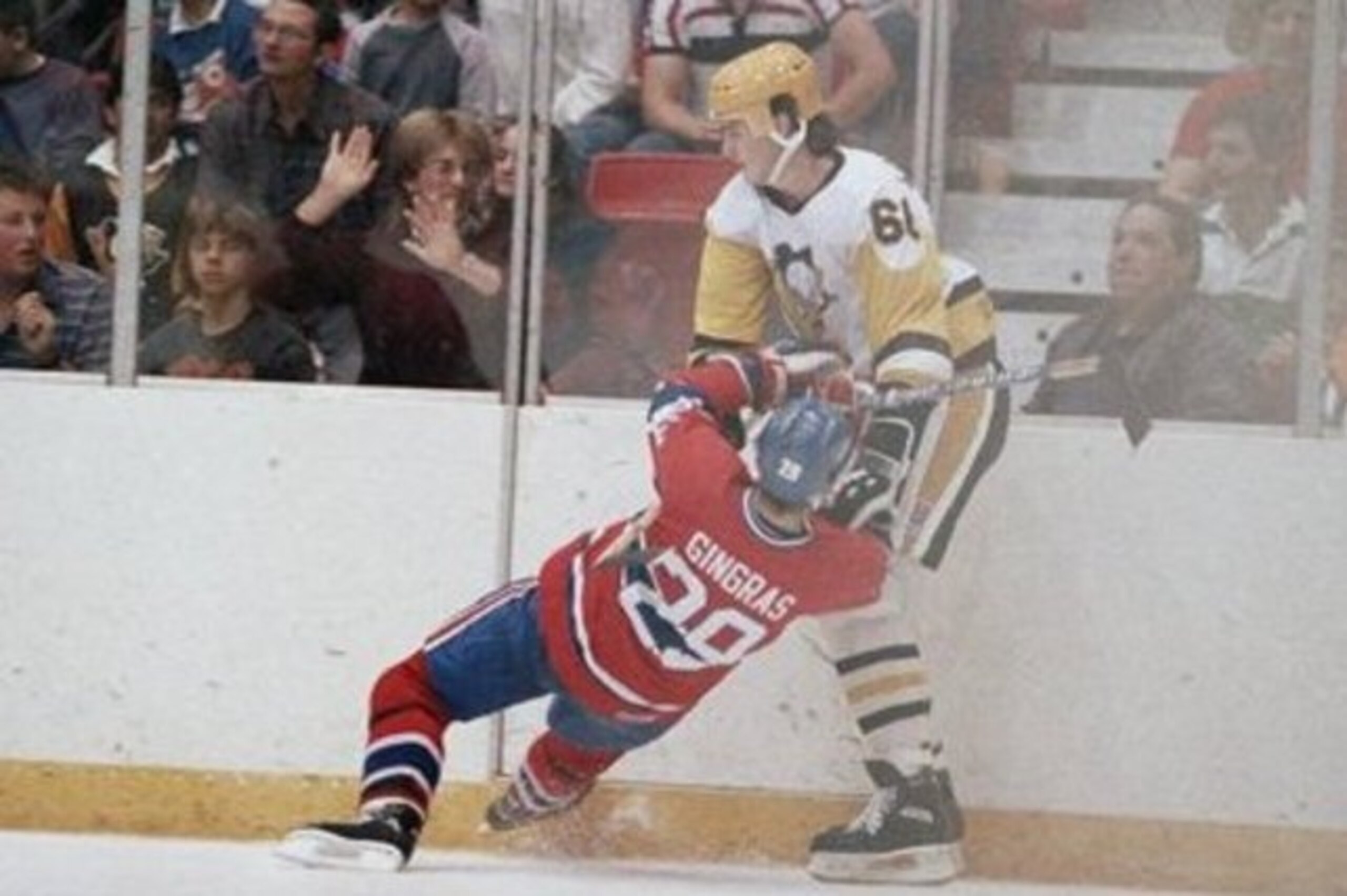
Fortunately for both McDavid and common sense, there is precedent. After two years as a second-team All-Star and Hart Trophy threat on a pair of lousy Penguins teams, Mario Lemieux finally won the MVP title in 1988 despite the failures of the roster around him. Voters decided not to punish him for the sins of Pittsburgh's management. It is to be hoped that, if faced with the same choice this year, PHWA members will make the same correct decision.
Eric Staal's Resurgence

Eric Staal is having a superb comeback season for the Minnesota Wild. He has 18 points in 25 games, putting him on a full-season pace right around the 60-point mark. It's never all that surprising to see a good player bounce back after an off year, but there are some interesting wrinkles to this case.
For one thing, Staal is being used as a power-play shooter. In years where he doesn't score a lot, Staal usually tries between 16 to 18 shots per hour during five-on-four play; this year, he's up to 22.
Staal is also benefiting from playing with finishers. Over the last two seasons, Staal and his linemates scored on just over six percent of their shots, which is fourth-line territory and speaks to the lack of talent the Carolina Hurricanes have had in recent years. In the seven previous seasons, that number was 8.6 percent, which is high-end second-line territory. It was always strange to see a centre as talented as Staal on a line which was so bad at finishing its chances.
Gerard Gallant's Dismissal

When Gerard Gallant was fired by the Florida Panthers a few weeks back, the first thing which came to mind was the dismissal of Denis Savard by the Chicago Blackhawks. Like Gallant, Savard was in his third season with the team at the time of his departure, and like Gallant, he had presided over a big uptick in his team's fortunes.
Where Gallant's Panthers had improved by 12 points and 19 goals between his first and second years, the jump under Savard was even bigger: Chicago improved by 61 goals and 17 points in the standings. In his third year with the team, Savard was dumped after just four games in favour of current head coach Joel Quenneville.
It's not a firing that gets talked about a lot because there's simply no argument against what the Blackhawks have done in the years since. Florida's embrace of analytics makes it an easy target whenever it makes a controversial choice, but the way to silence criticism is the same: win.
That's an easier objective to accomplish when coach and management are committed to the same blueprint.
Pierre-Luc Dubois' Slow Start

The Columbus Blue Jackets' selection of Pierre-Luc Dubois with the No. 3 pick at last summer's draft wasn't especially controversial. Although Jesse Puljujarvi (who slid to fourth) was generally seen as the consensus choice, Dubois had put together an excellent QMJHL season and was also firmly ensconced in the consensus top five.
His early results this year give at least some reason for concern, though.
Dubois had 99 points in 62 games last season (1.6 points per game) and led Cape Breton in scoring by a 20-point margin. This year, he has just 18 points through his first 20 games (0.9 points per game) and sits eighth on the Screaming Eagles' scoring list. That's an ugly drop for a player who should be dominant at the junior level.
The caveat is that he has some history of slow starts. In each of the last two seasons, his first 20 games were poor predictors for how he'd do the rest of the way:
- 2014-15: 14 points in first 20 games (0.7 points per game); 31 points in final 34 (0.9 points per game)
- 2015-16: 13 points in first 20 games (0.7 points per game); 86 points in final 42 (2.0 points per game)
In other words, patience is warranted.
Statistical information courtesy of Hockey-Reference.com and Stats.HockeyAnalysis.com.
Jonathan Willis covers the NHL for Bleacher Report. Follow him on Twitter for more of his work.




.jpg?w=2560 "Jonathan Taylor Landing Spots 📍")





