

NFL1000 Scouting Notebook: What Is Stefon Diggs' NFL Ceiling?
Welcome to Bleacher Report's NFL1000 Scouting Notebook, a weekly series where we'll use the power of the 16-man NFL1000 scouting department to bring you fresh insights into the league and explain some of the more interesting (and potentially controversial) grades we give players every week.
The full list of NFL1000 grades will be released Thursday, and we will attempt to preview some of what we are seeing in our film analysis here.
This week, we will go through a few hot topics, including Allen Robinson's first big week of the season and how a safety's job is harder than you may think, and scouts will answer questions on Todd Gurley, Vic Beasley and Blake Bortles. But first, let's start out with some film analysis of Vikings breakout wide receiver Stefon Diggs.
TOP NEWS
.jpg?w=2560 "Saints Lions Football")
Rap: Lions, LaPorta End Contract Talks
.jpg?w=2560 "Vikings Buccaneers Football")
Report: Baker May Miss Up to 6 Weeks
.jpg?w=2560)
EVERY Fantasy Football Update
What Is Stefon Diggs' Ceiling as an NFL Wide Receiver?
Written by Alex Kirby
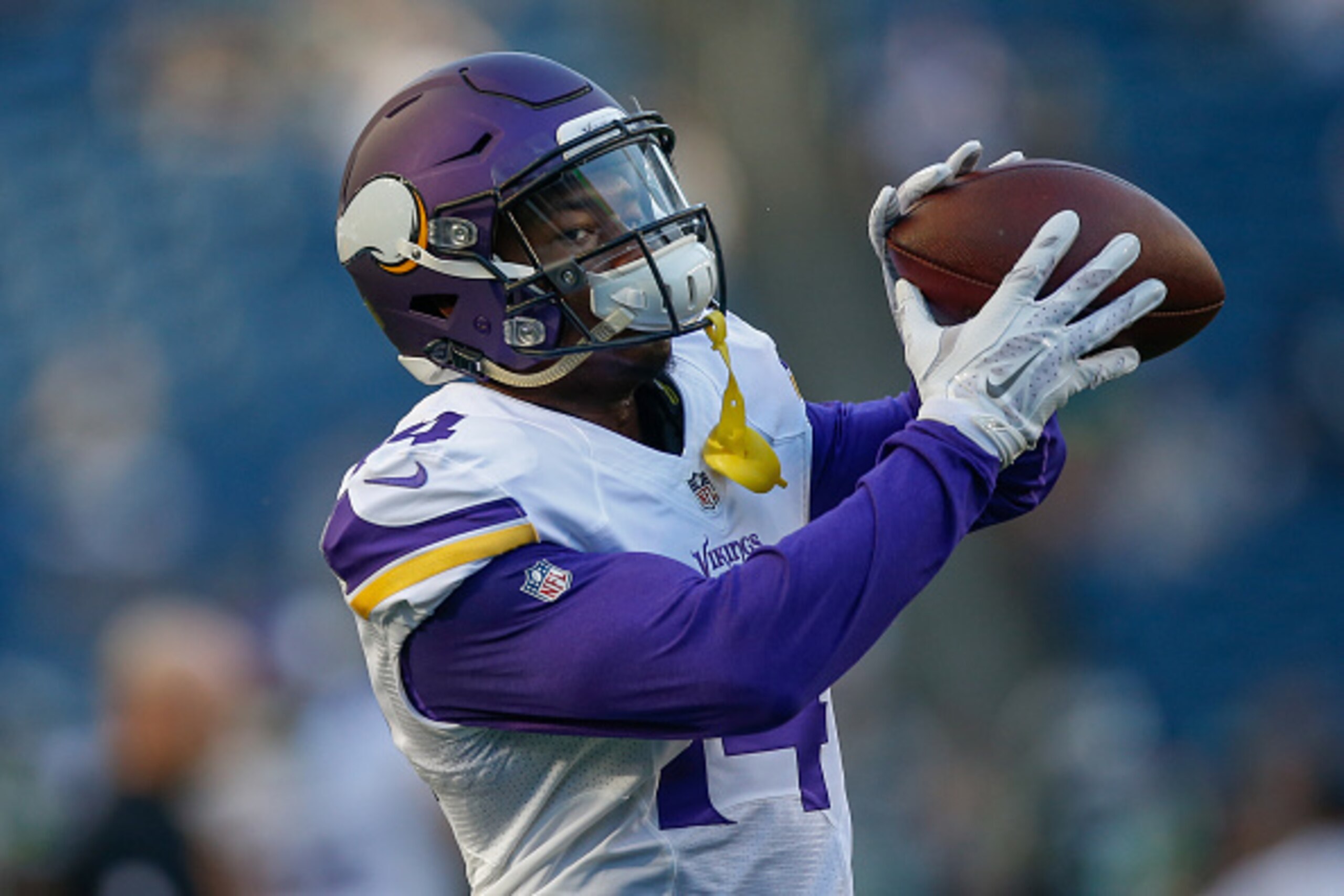
Stefon Diggs is in an unenviable position.
If you include all of the time spent in fall camp and the offseason with Teddy Bridgewater, he's on his third starting quarterback, and after the sudden departure of Norv Turner a couple of weeks ago, he's on his second offensive coordinator, all within the space of a couple of months.
It's been interesting to watch the evolution of the Vikings offense from Week 1 to now and track the way Diggs has been utilized in the process. In fact, examining how his role has changed could provide a window into why Turner decided it was best to step aside as offensive coordinator—to avoid the conflict in philosophies that was taking place on the Vikings staff between him and Mike Zimmer.
Early on in the season, Diggs spent a lot of time at Z and had several balls thrown his way down the field. Diggs has the ability to create a lot of separation at the top of a route, and when the ball is on target, his hands are as good as anyone's.
As the season has progressed, however, Diggs has begun seeing more action inside at the slot position, where he has seen less and less press coverage, and where he can terrorize nickel corners and linebackers dropping into zone coverage and leaving him lots of open space. He's moved away from the timing routes and option routes that require a lot of chemistry between him and the quarterback, and more to shallow crossing routes and pass routes that only require him to sit down underneath against a soft zone.
So where does he need to improve?
The reason Diggs has been running so few quick timing patterns underneath, like slant passes, is that he's had trouble against press coverage and gaining separation off the line. It's a big reason why Minnesota moved him to the slot and has him running more of the aforementioned routes.
Still, there's more.
The best receivers make their quarterbacks look even better and more accurate than they are. This is something that a guy such as A.J. Green does week in and week out, snagging passes that aren't always on target from Andy Dalton.
When you have someone like Sam Bradford throwing you the ball, you typically don't have to worry about accuracy. But if Diggs wants more opportunities to get open deep on scoring plays, he needs to get better at locating the ball in the air and creating a bigger target for whoever his quarterback is.
Let's take a look at one example where Diggs is running the same route against the same defense but has two different quarterbacks throwing it to him.
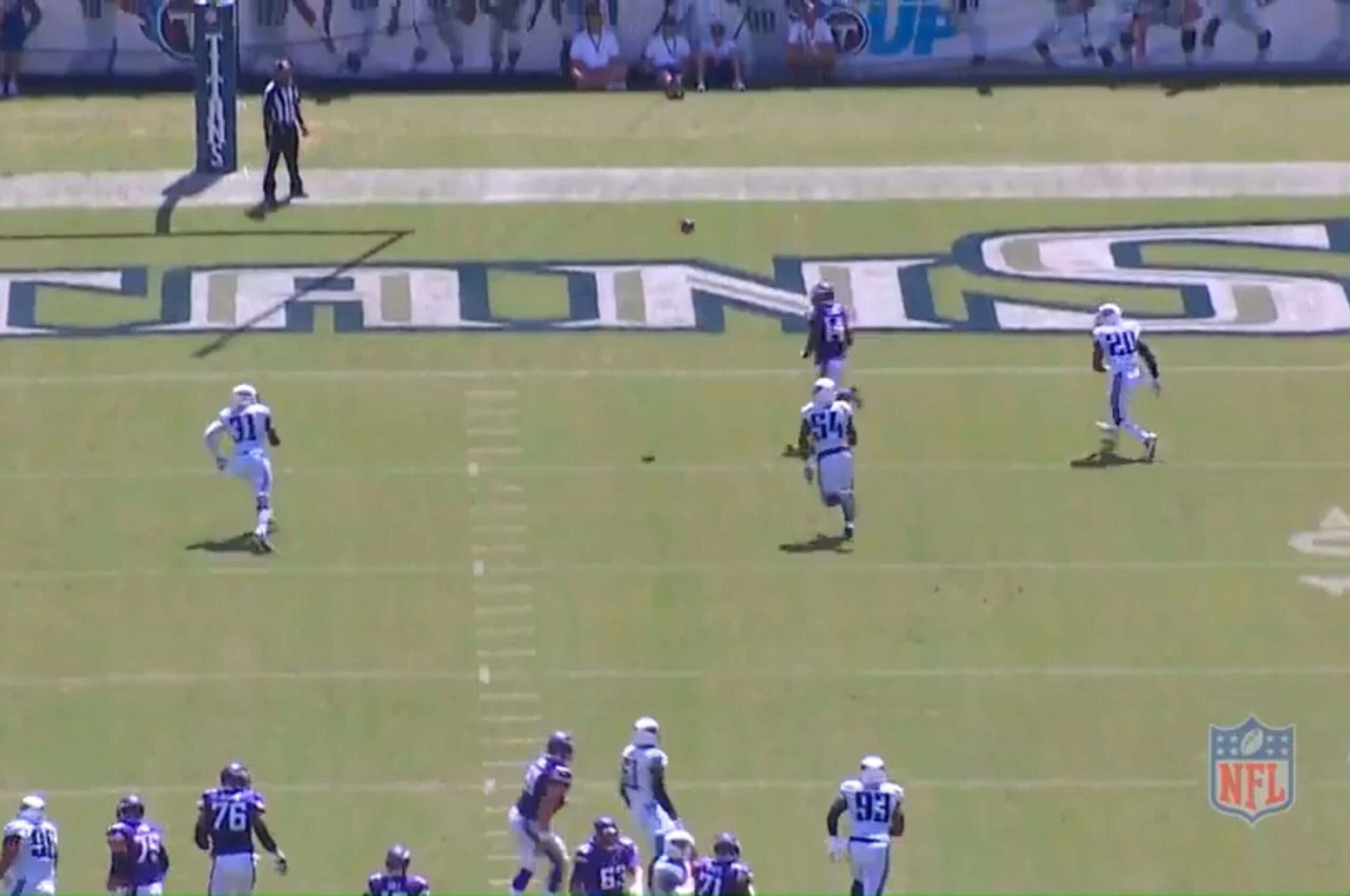
In this first play, Diggs is running the post route to the middle of the field, but the ball is thrown a bit too far to the inside. He's wide-open, but because Shaun Hill doesn't him the ball exactly where he wants it, Minnesota squanders a scoring opportunity against the Titans.
A lot of receiver coaches will teach their guys to let the quarterback "throw them open," and a big part of that is recognizing there will be some adjustment required on their part, especially at the top of the route once they make their break to the middle of the field.
Diggs needs to locate the ball as he's breaking to the middle of the field and adjust to the throw, as Hill wants to give himself a bigger margin for error against the secondary and doesn't want to try to throw a perfect pass if he doesn't have to.
Now let's look at this same route coming from Bradford against the Bears:

This time, the ball is placed much more accurately, closer to the break at the top of the route, almost equidistant from the hash and the numbers, and Diggs hauls it in.
As previously discussed, when you put the ball where it's supposed to be, Diggs will do the rest. Still, in the NFL, the pass isn't always going to be perfect.
The quarterback may be hurried, he may be on the run, or he may not be very good. Receivers who last a long time in this league learn to adjust to the ball while it's in the air, and they get good at catching passes that are less than accurate.
This is also why Diggs has been running few timing routes and why he's been running more of the straightforward crosses and the aforementioned sit-down-type routes.
Part of this has to do with the chemistry between Diggs and Bradford, who came to the Vikings late in the preseason, but another part of it is just youth and inexperience. As it stands now, Diggs has made a living eating up soft coverage underneath since Shurmur took over the offense two weeks ago, and he's specializing in what he does best.
Fortunately for Vikings fans, Diggs doesn't have any major physical limitations. He's as athletic as anyone, and his hands aren't a problem. All of the holes in his game can be fixed and improved through practice and experience.
So to answer the original question, his ceiling is as high as he wants it to be.
The All-22: A Safety's Job Is Tougher Than It Looks
Written by Mark Bullock
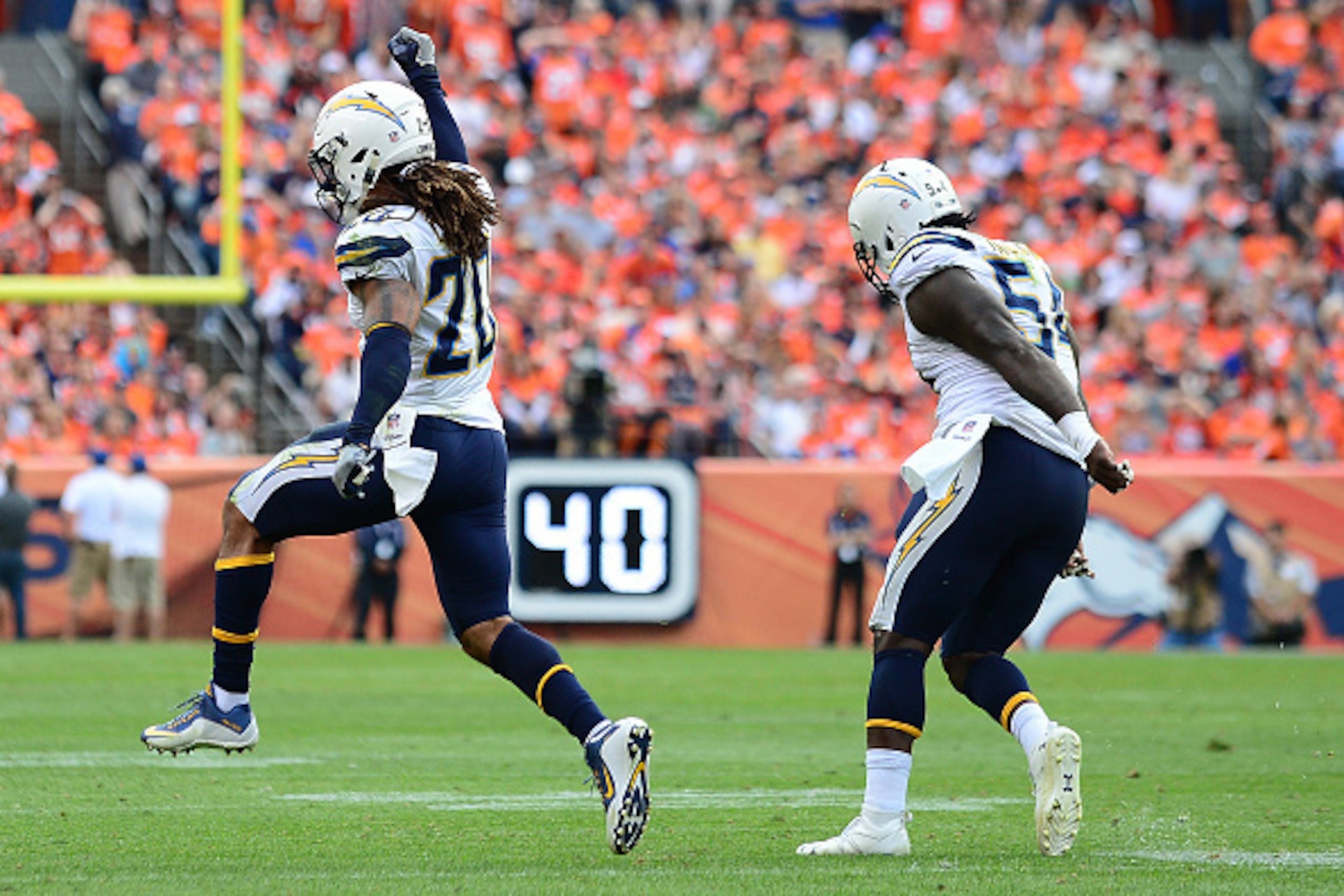
One of the most underrated and underappreciated positions in the NFL is safety. On defense, the shutdown cornerbacks and sack-getting pass-rushers get all the glory, while run-stuffing defensive linemen and linebackers are seen as essential building blocks of any great defense. But safeties are often overlooked despite often having some of the toughest assignments of any defender with no margin for error.
As the last line of defense, if the safety gets beaten, it likely results in a touchdown. Every player makes mistakes, but the ones safeties make are often that much more critical.
Chargers safety Dwight Lowery had a perfect example of just how tough a safety's job is in the NFL on Sunday against the Dolphins. In the second quarter, Miami lined up on the Chargers' 39-yard line. They wanted to take a deep shot off a play-action fake.
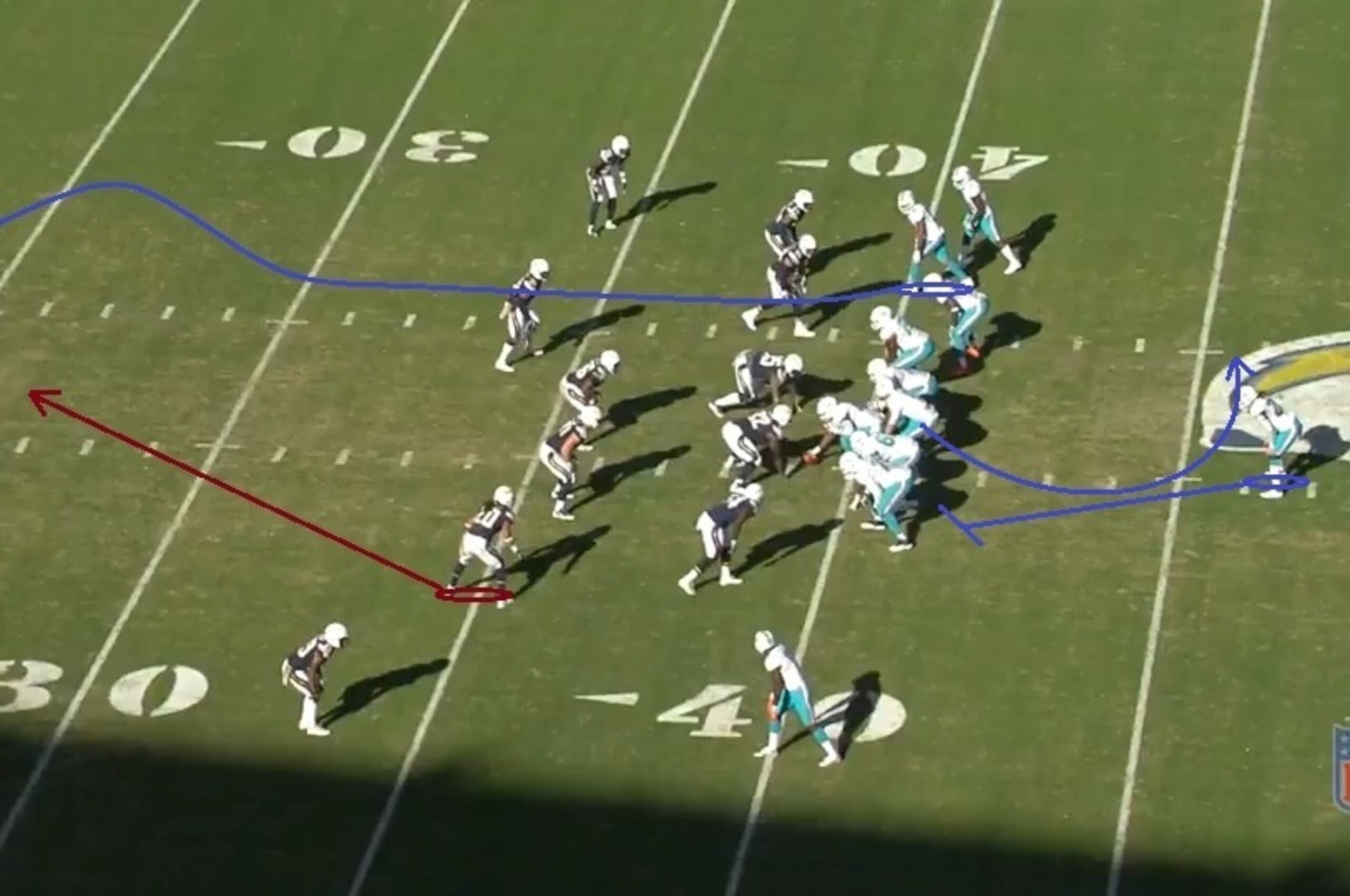
The Dolphins faked an outside run to the left, with wide receiver Kenny Stills running a corner-post route on the back side. Lowery lined up in the box, faking a blitz look. But his actual assignment was to cover the deep middle of the field, where Stills' route would take him.
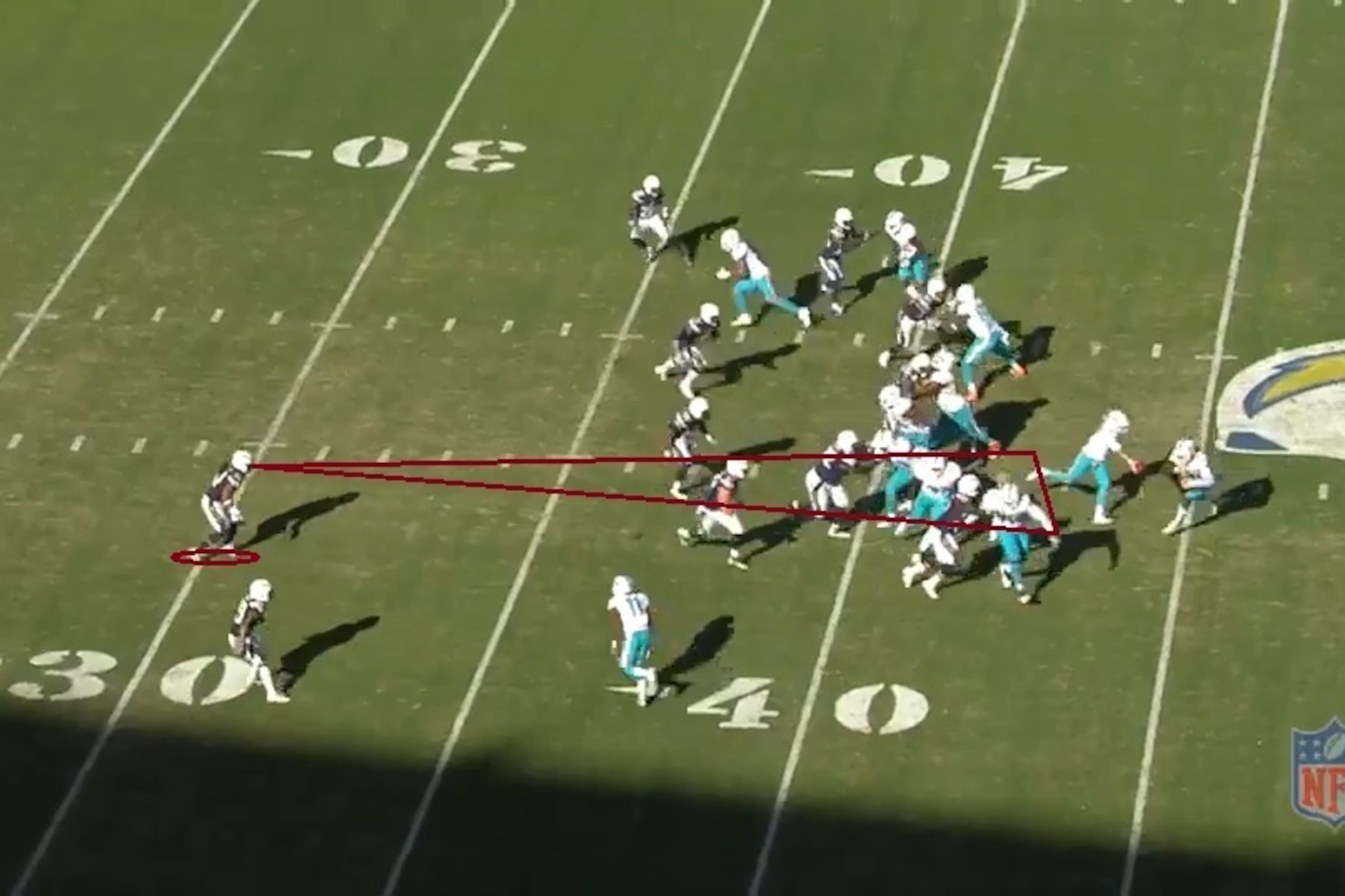
After the snap, Lowery looked to drop back to the deep middle of the field but hesitated for a fraction of a second as he looked into the backfield at the play-action fake. That froze him for half a second, which made it even harder for him to get back to his assignment.
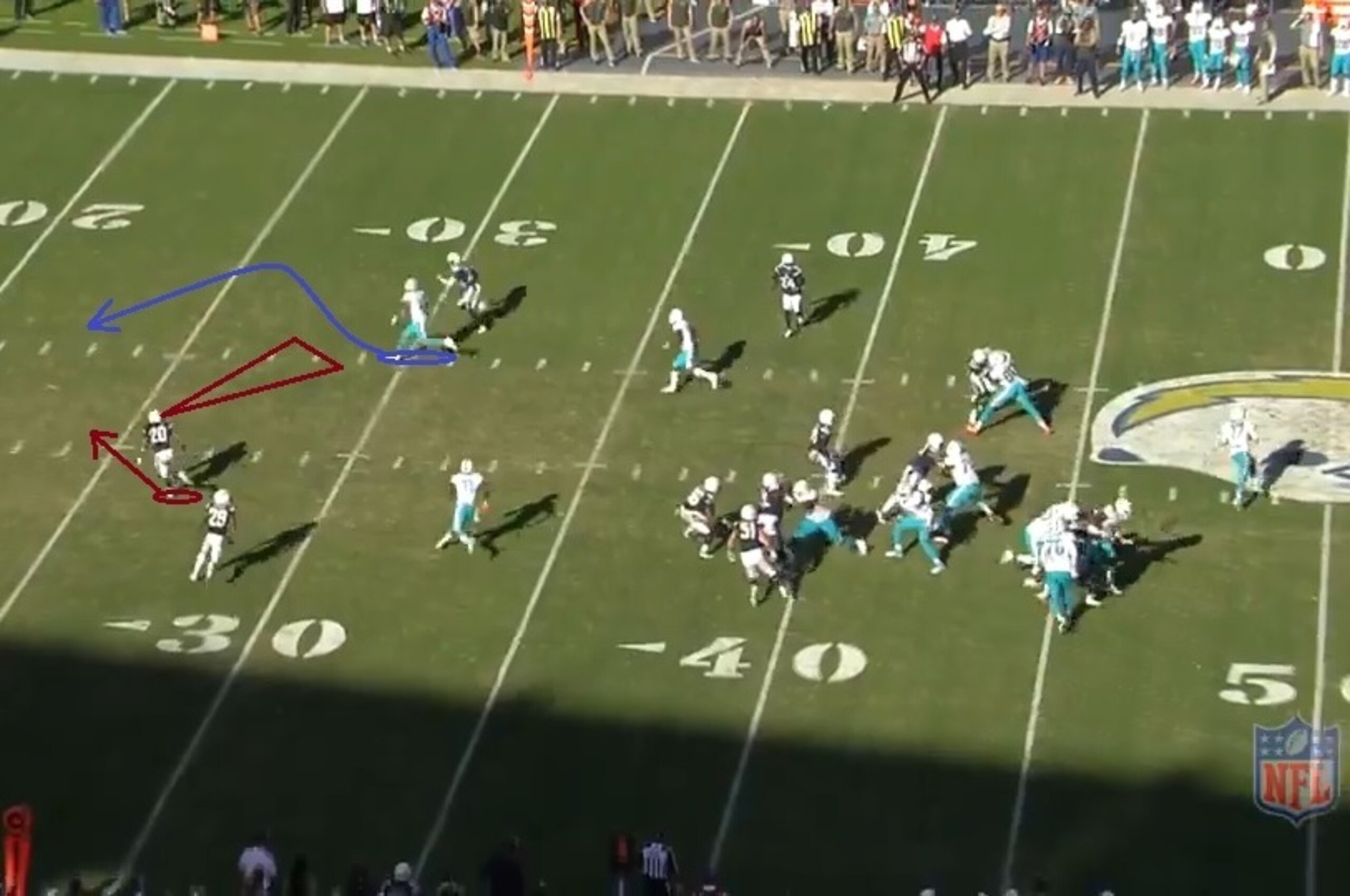
After he diagnosed the play-action fake, Lowery turned and sprinted back toward the deep middle section of the field. As he did that, he spotted Stills running deep, recognizing him as a threat.
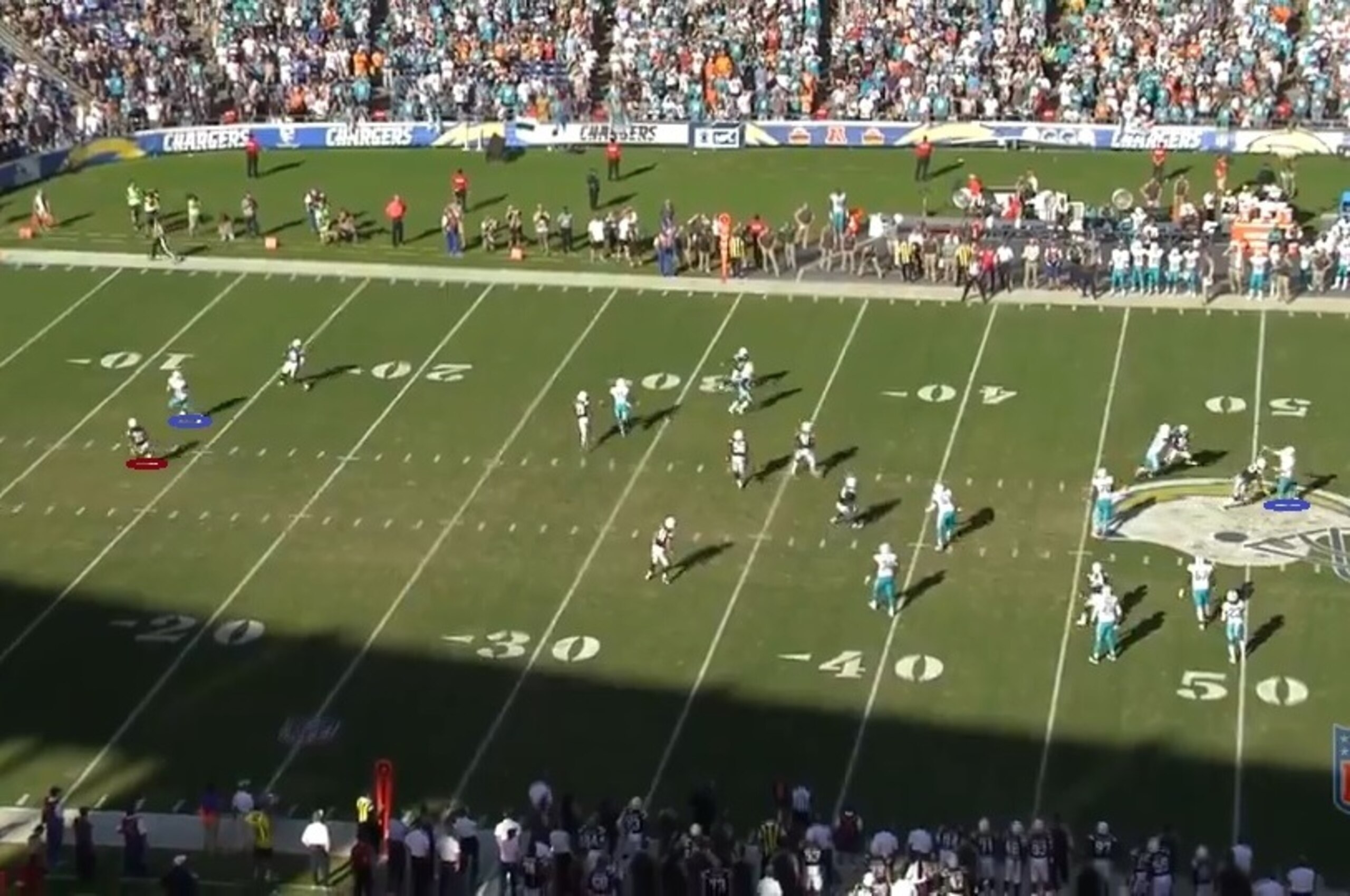
At the time quarterback Ryan Tannehill released his pass, Lowery had done a fantastic job to get back in position. Despite having to work from the opposite side of the field and having to diagnose a play-action fake, Lowery managed to run stride-for-stride with Stills.
But that's where Lowery made a mistake that cost him. Lowery felt he had the route secured and noticed the receiver looking back for the ball. Lowery decided to take his chance to play the ball.
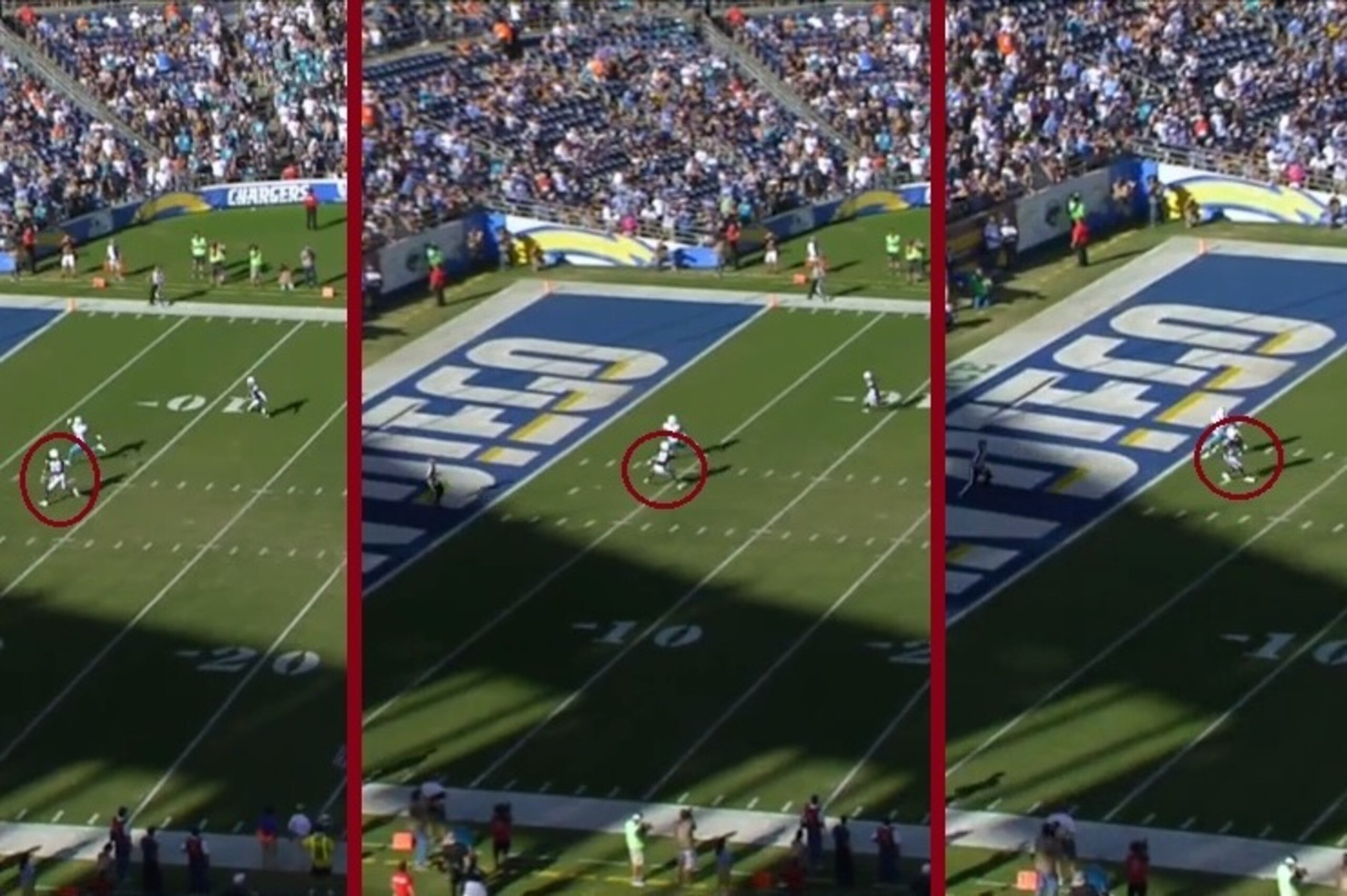
In doing so, Lowery flipped his hips, turning his back on Stills and losing his momentum that kept him running with the receiver. He misjudged the flight of the ball, not having enough depth as Stills ran behind him.
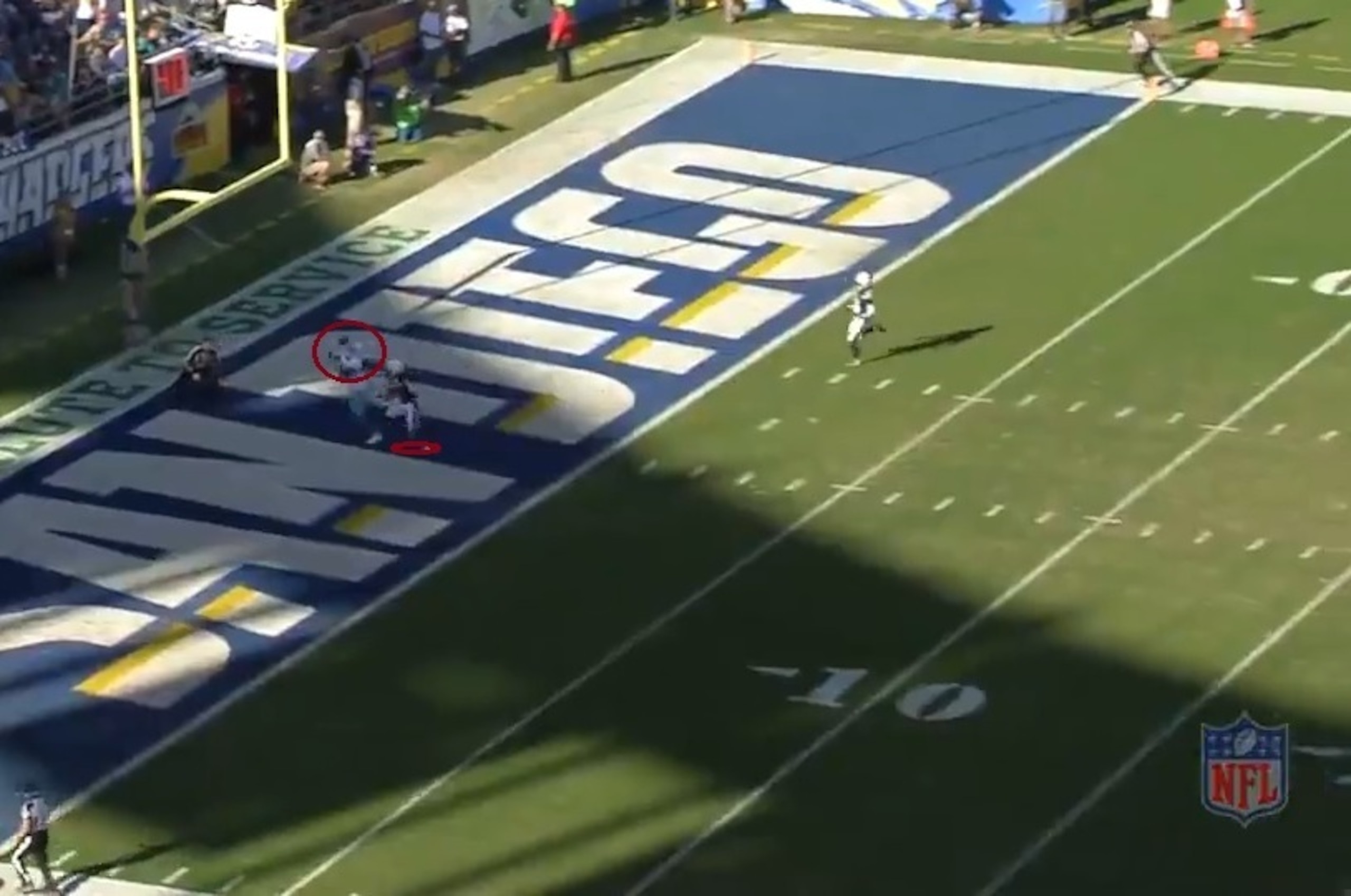
Lowery couldn't recover as the ball fell over his shoulder and into Stills' hands for a 39-yard touchdown.
It was a great play by the Dolphins that needed a superb throw from Tannehill. Stills deserves plenty of credit for tracking it down to secure the catch for the touchdown. But Lowery will be disappointed considering all of the work he did on the play, only to fall at the final hurdle. He made up so much ground, got himself in a good position and then misjudged the flight of the ball.
The life of a safety is not easy. This play was almost great from Lowery, but one mistake turned it into a terrible one. The margin for error is so small, and every mistake will be judged through an almost unfair expectation of perfection. Lowery was the unfortunate safety who paid the price here, but he won't be the last one to fall victim to a tough assignment.
Scouting with Schofield: Allen Robinson
Written by Mark Schofield
In 2015, Jacksonville Jaguars wide receiver Allen Robinson made the leap, asserting himself as one of the league's emerging offensive weapons. Robinson caught 80 passes for 1,400 yards and 14 touchdowns last season, and entering this year, he was considered to be the focal point for the young Jacksonville offense.
Through nine games this season, however, his numbers have slowed a bit. He is on pace to surpass his receptions from last season, with 48 catches so far, but he's well behind his yardage and touchdown pace. Looking at his tape, however, he is just as effective in each facet of the game as he was last year.
Angles and splits are not something often discussed when examining a wide receiver, but the way Robinson uses both tells the story of a nuanced, polished route-runner. When you add in his ability at the catch point and his skill after the catch, you are left with a talented receiver who can produce in this league for years to come.
Ask the Scouts
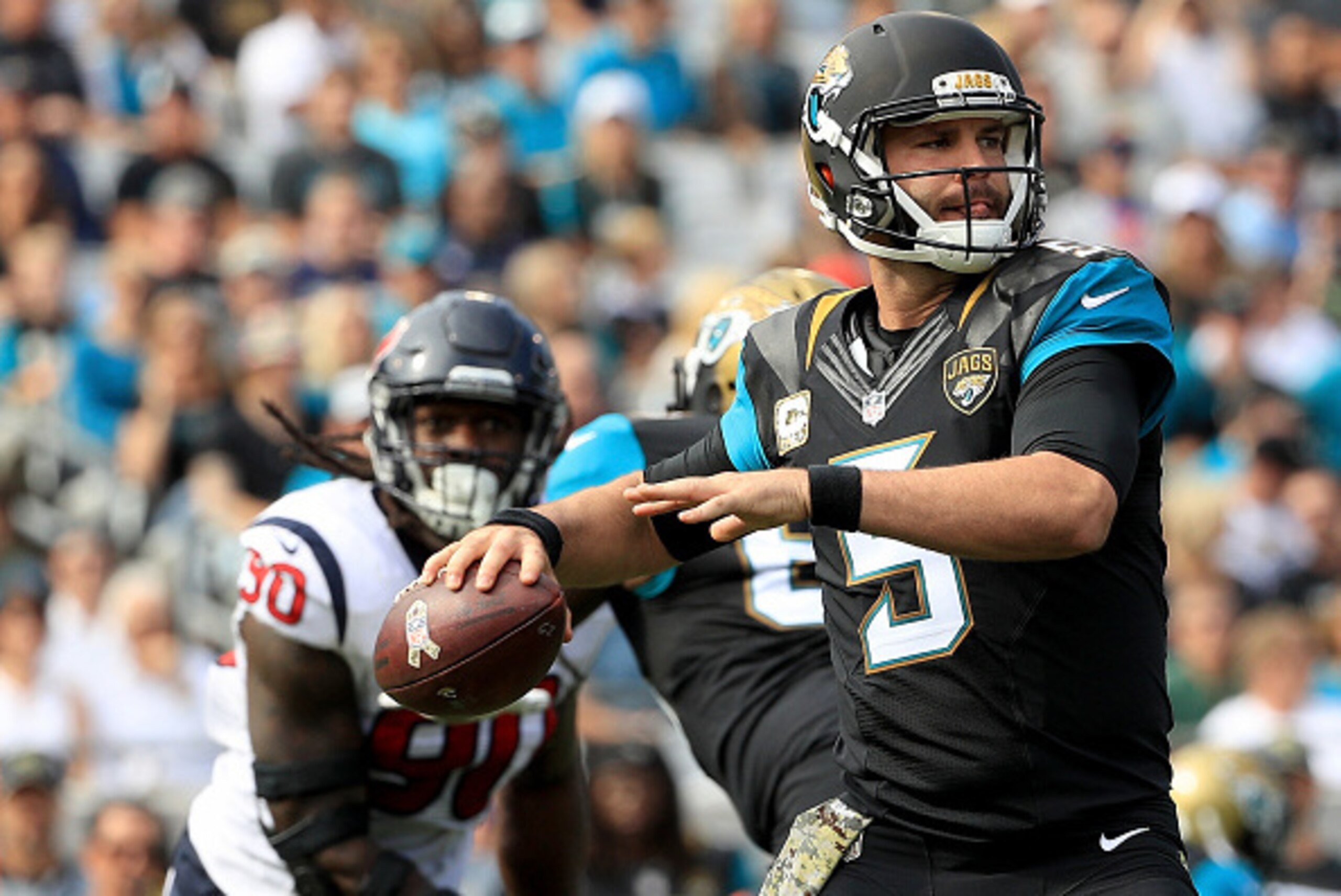
Question: Blake Bortles has ranked among the worst QBs in the league this year in NFL1000—and with good reason. This week, he's once again among the bottom five quarterbacks in the league. The Jaguars have dropped four in a row and are firmly out of the playoff race at 2-7. Should the Jaguars give Chad Henne a shot? Or is it in their best interest to see if Bortles can battle through these struggles?
Answer from Cian Fahey, QB Scout: The Jaguars should give Brandon Allen a chance. They know that Chad Henne is bad, and they know that Blake Bortles is bad. Allen might be bad too, but nobody knows for sure yet. Bortles has given us no reason to think he will turn around and become a good quarterback or even a capable one. Allen is a rookie who was picked in the latter rounds, though, so it's unlikely that a front office tied to its current starter would give him a shot.
Question: Vic Beasley is now tied for third in the NFL in sacks after getting two more against the Eagles this week. That brings him to 9.5 sacks on the season and 8.5 in his past six games. What have you seen from Beasley as a pass-rusher this year, and do you think this is a trend that should keep going? Or is this more of an aberration?
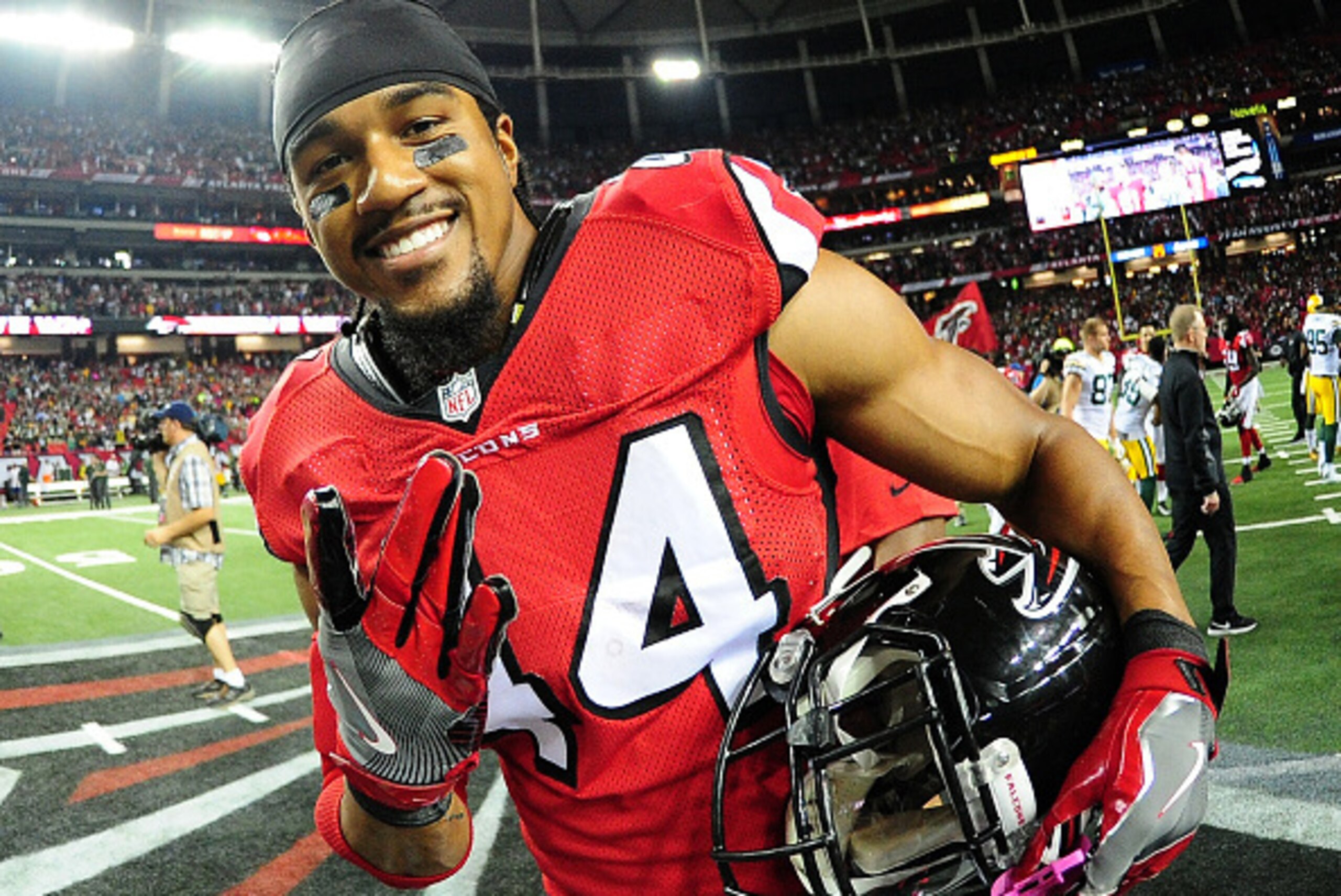
Answer from Justis Mosqueda, DE Scout: The biggest difference between Beasley last season and Beasley this year is the combination of his nonstop motor, his ability to land moves that are set up by his speed rush and the talent around him. All three of those things are giving Beasley a much better chance to flash production compared to his rookie season.
Remember, Beasley, with a torn labrum, still led the Atlanta Falcons in sacks in his first NFL season. The additions of Dwight Freeney and Derrick Shelby, even for just a half-season, along with the re-signing of Adrian Clayborn, have gone a long way in Atlanta's pressure packages. Beasley may not be making sacks with the level of difficulty of, say, Von Miller, but he's flying around sideline-to-sideline, and the Falcons' nickel and dime formations on third down, which feature mostly defensive ends on the line of scrimmage like the Seattle Seahawks, create more initial pressure and "cleanup" sacks for everyone involved.
If you want to see how far Beasley's effort has come along this season, he tackled Denver receiver Emmanuel Sanders from behind about 30 yards down the field. I don't think his production is a flash in the pan, especially considering his age (24) and athleticism.
Question: This past week, Jeff Fisher said publicly that the Rams need to get Todd Gurley the ball more. They did that this week by giving him 21 carries, but he still only managed 64 yards. The second-year running back is averaging a Trent Richardson-esque 3.1 yards per carry and hasn't broken a 20-yard run yet this season with 167 carries. Should we officially be concerned about Gurley's prospects as a franchise back? Or is this all on his offensive line?
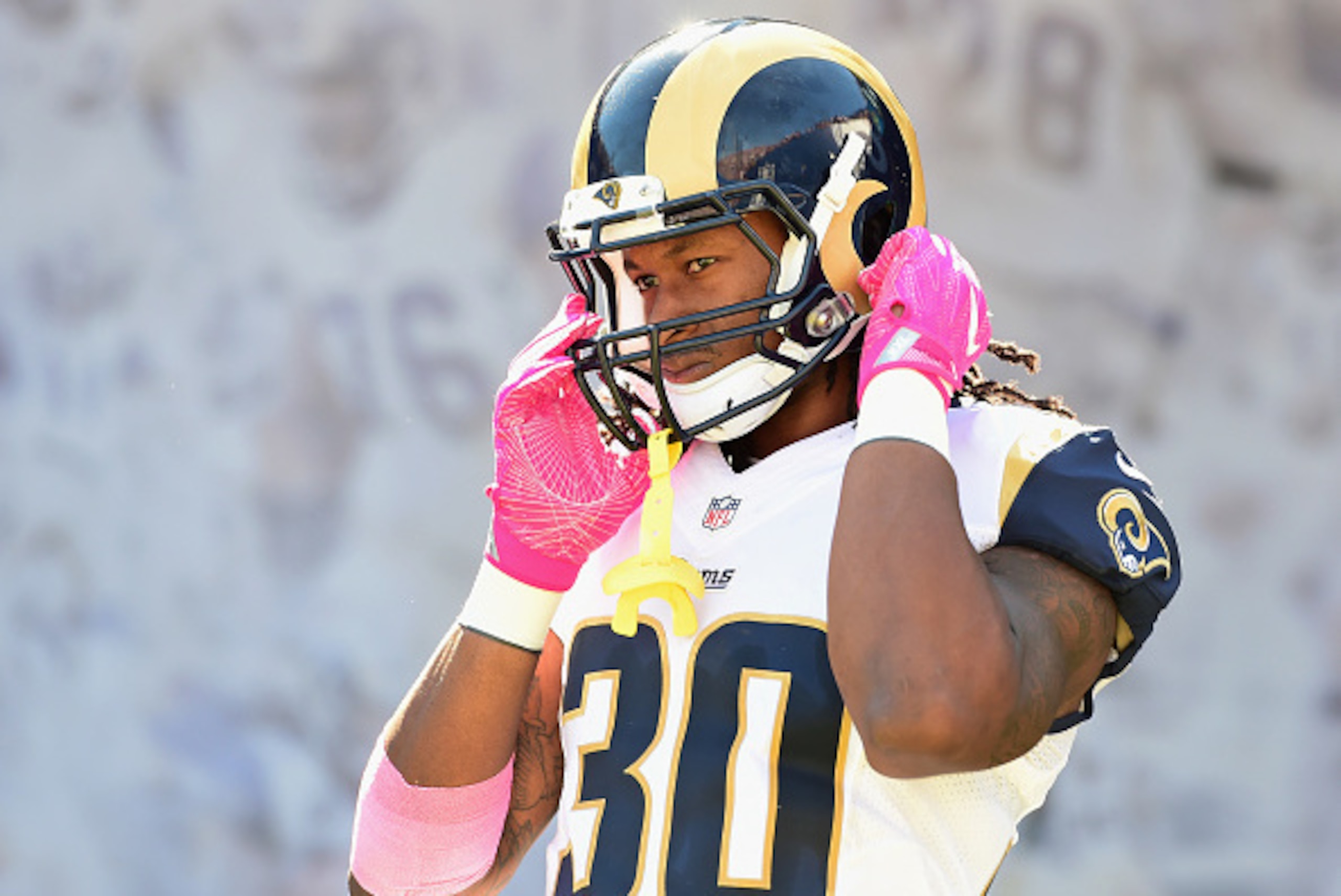
Answer from John Middlekauff, RB Scout: It's not easy to be a star runner on a team with a terrible quarterback and questionable blocking. Gurley still possesses the special attributes like speed, explosiveness and feet that made him one of the best prospects in years, but the offensive talent around him is not up to par. He rarely has any space because his linemen are being pushed around with relative ease. Meanwhile, the Rams passing game is one of the worst in the NFL. That is a terrible combination for any running back expected to be productive.
Now that the Rams have decided to start Jared Goff, we could see things improve if Goff really does live up to his billing as the no. 1 overall pick. However, if Goff struggles out of the gate, things could get worse for Gurley before they get better. Bottom line: The Rams offense is a disaster, and Gurley is the least of their worries.
.jpg?w=2560 "Commanders Eagles Football")
.jpg?w=2560 "Colts Commanders Football")

_0.png?w=2560 "Week 5 Winners & Losers 📊")
