How the Defencemen of the 2010 NHL Draft Class Became a Cautionary Tale
When Dylan McIlrath was selected 10th overall in the 2010 NHL draft by the New York Rangers, it was with the belief that he was going to be a high-end shutdown defenceman and intimidating physical presence, the kind of player every team wishes it had to put in a matchup role against another club’s star.
Instead, he ended up playing just 38 games in New York. His career with the team came to an end this week when it traded him to the Florida Panthers in exchange for not very much. But while there’s a temptation to harangue the Rangers for their selection and subsequent development of the player, the McIlrath story is just one chapter of a much larger tome.

The fact is that the first round of the 2010 draft is chalk full of blown picks spent on defencemen.
| Erik Gudbranson | FLA | 3 | 324 |
| Dylan McIlrath | NYR | 10 | 38 |
| Cam Fowler | ANA | 12 | 429 |
| Brandon Gormley | ARI | 13 | 58 |
| Derek Forbort | LAK | 15 | 28 |
| Jarred Tinordi | MTL | 22 | 53 |
| Mark Pysyk | BUF | 23 | 139 |
It’s inevitable that some mistakes will be made when drafting 18-year-olds, but the interesting thing about the 2010 draft is that it doesn’t appear the big errors were as much a result of poor assessment as they were clouded vision. Drafting teams knew what these players were; the problem was that they didn’t know the kind of defencemen they were going to need for the modern game.
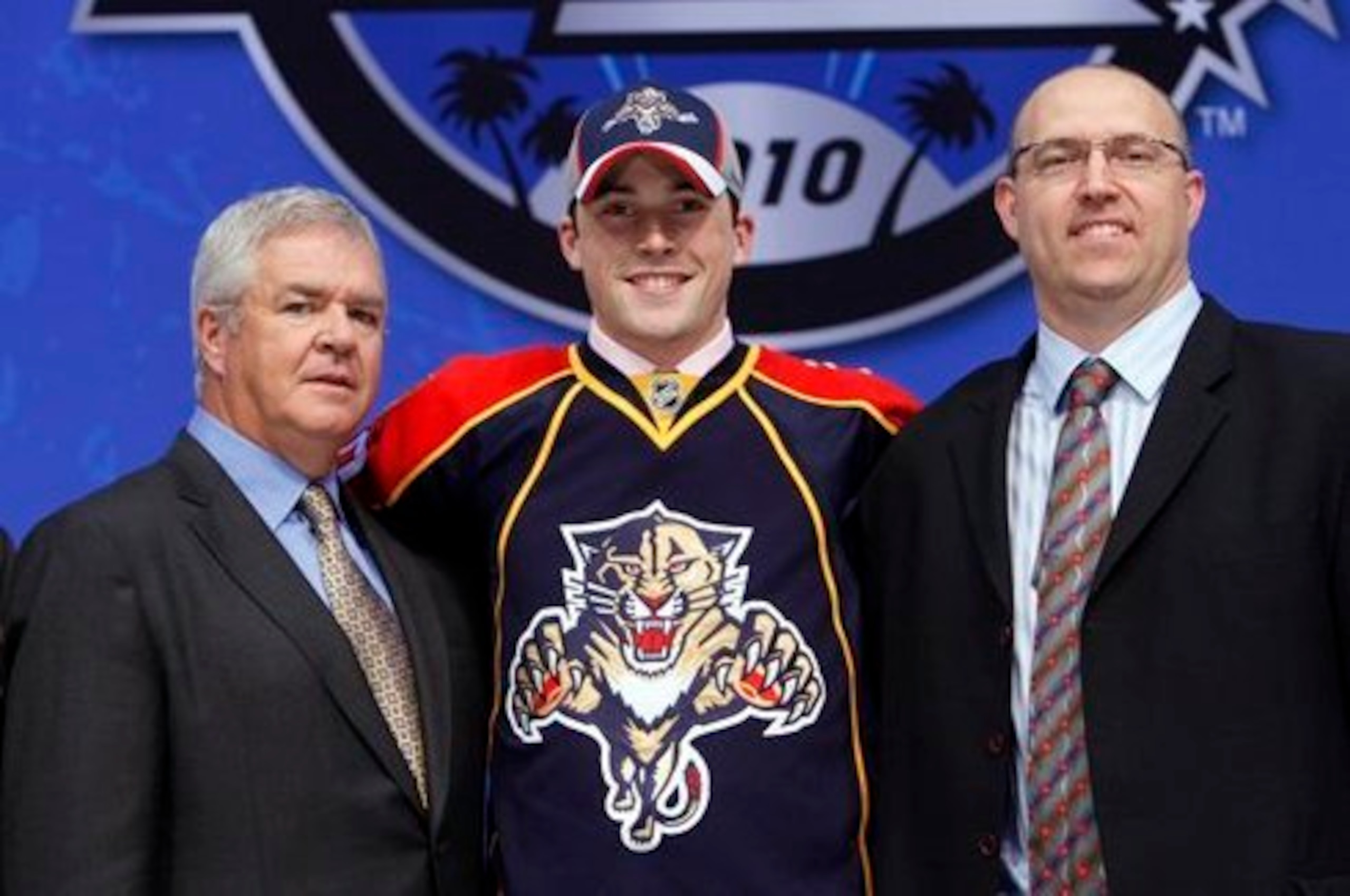
The battle between Cam Fowler and Erik Gudbranson at the top of the draft board exemplifies this beautifully.
Gudbranson was valued as a high-end shutdown defencemen. Offence was always listed as a question mark, but size, strength and competitiveness were not in doubt.
"We’re tired of teams coming to Florida and coming down there for a vacation and having easy games," then-Florida general manager Dale Tallon told TSN’s James Duthie after drafting Gudbranson. "With Erik and people like that in the lineup, it will be a lot tougher to play."
Fowler was almost Gudbranson’s precise opposite as a player. Pegged as an elite skater and strong offensive option, the trouble with Fowler was that he could be outmuscled in the defensive end.
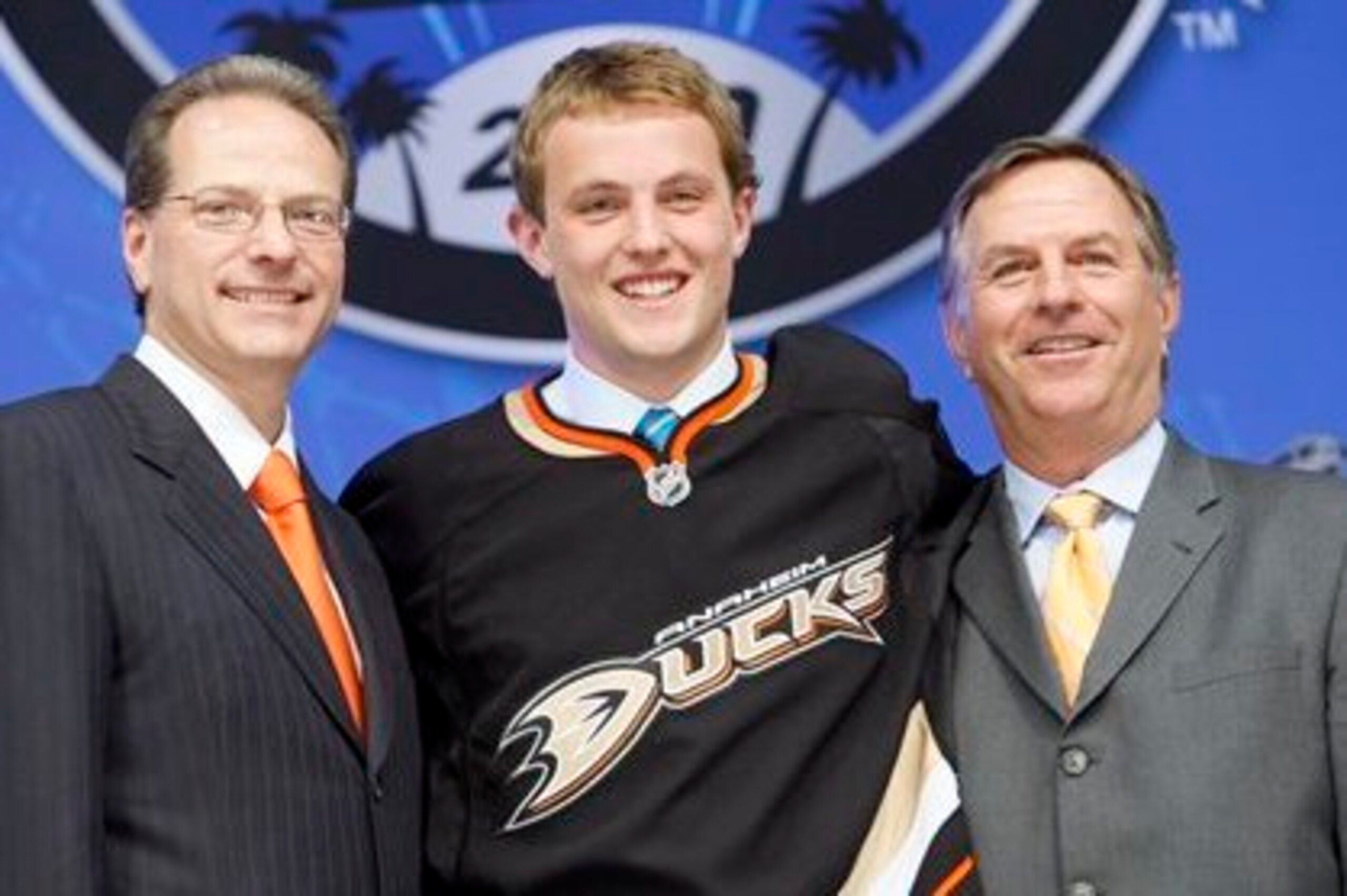
"I find sometimes you get so enamoured with the fact that he’s already an NHL-caliber skater that you forget his shortcomings," an unnamed scout was quoted as saying in The Hockey News 2010 Draft Preview. "I see an incredible skater who is really going to struggle if he doesn’t get more accountable away from the puck."
The choice between skating, puck-moving defencemen and hard-hitting shutdown types is one that NHL teams make all the time. At the 2010 draft, they leaned heavily to the bruisers.
Gudbranson ended up going third overall. McIlrath, a more extreme version of the same player-type, went next. McKeen’s Hockey described him in the lead-up to the draft as handling the puck "like a grenade," but his other skills were attractive. McIlrath was perhaps the most physical player in the draft, and his toughness was underscored at that year’s top prospects game when he pummeled fellow prospect Alex Petrovic:
Others followed. The first round would also include Derek Forbort, a project defenceman with an imposing 6'5" frame, as well as Jarred Tinordi, known for his mean streak and projected as a 230-pound player by THN.
Gudbranson has had the best career of the four. Vancouver paid a high price to acquire him this summer, and he’s currently averaging just a touch less than 20 minutes per game for the Canucks. The offence never developed, but he’s an NHL regular.
The others weren’t so lucky. McIlrath is hanging on to an NHL roster spot by the fingernails. Tinordi has been relegated to the AHL. Forbort made the Kings this year but has been disappointing in the early going, dragging down the on-ice shot metrics of every other defenceman he plays with.
The puck-movers have fared a little better.
It defies belief now, but Fowler fell to 12th overall in that year’s draft, behind Gudbranson and McIlrath. His early career has featured plenty of turbulence, but he currently sports 10 points in 15 games and leads Anaheim’s defence in average ice time at 24 minutes, 11 seconds.
The 13th pick, Brandon Gormley, was projected as a two-way defender but has been a bust. Mark Pysyk was the final defenceman selected in the first round of 2010, at 23rd overall, and has had a solid if unspectacular career. He’s averaging just under 17:00 per game for the Panthers after being acquired from Buffalo over the summer.
Perhaps the two best defencemen in the draft, though, came outside the first round, and both fit the puck-moving mold. Late-blooming John Klingberg didn’t go until the fifth round but has developed in leaps and bounds, though his development is enough of an outlier that it’s more a reminder to keep betting on skill in the later rounds just in case it pays off than it is anything else.

More interesting is Justin Faulk, who was well-regarded on draft day thanks to his work with the U.S. U-18 team. THN’s write-up on him mentions exceptional skating and offensive ability and even mentioned Kevin Shattenkirk as a comparable. He was also credited with being strong on the puck, but there was a problem.
"He’s a real solid, steady defenceman," a scout told THN. "You wish he was 6'2", but he’s a skilled player."
At the 2010 draft, every NHL team seemed to want a defenceman who was 6'2", or better yet 6'4", and the tougher they were the better those clubs liked it. Size and toughness are good, of course, but the problem was that teams repeatedly over-emphasized those qualities to a point where players with inferior puck skills were going in the first round and even in the top 10.
McIlrath and his cohorts are a cautionary tale. It’s good to be able to take the puck away from the other team, but a player who can’t then quickly transition to offence is going to find his career prospects sharply limited.
Statistical information courtesy of Hockey-Reference.com. The 2010 draft preview editions of The Hockey News and McKeen's Hockey were a valuable source of contemporary quotes.
Jonathan Willis covers the NHL for Bleacher Report. Follow him on Twitter for more of his work.

.jpg?w=2560 "Rap: Lions, LaPorta End Contract Talks")
.jpg?w=2560 "OBJ Calls Out Giants After Release")

.jpg?w=2560 "Report: Baker May Miss Up to 6 Weeks")
.jpg?w=2560 "EVERY Fantasy Football Update")