Urban Legends of the NFL: Mel Blount's Killer Pass Interference
No, Mel Blount never killed an opponent on the field.
There's an urban legend that Blount, a bone-crunching Hall of Fame Pittsburgh Steelers defensive back of the 1970s, actually delivered a fatal blow to a receiver (or several receivers) during a game. But let's not bury the lede to manufacture drama. Blount never killed another human soul, on the field or off. Just like Kentucky Fried Chicken never used mutant chickens. And no babysitter two towns over ever took LSD and cooked an infant while tucking a turkey into the bassinet.
Most of the urban legends in this series are old football saws that got embellished or mixed up over the years, but they are based on documented events. This one belongs squarely in the deep-fried rat territory.
TOP NEWS
.jpg?w=2560 "Saints Lions Football")
Rap: Lions, LaPorta End Contract Talks
.jpg?w=2560 "Titans Giants Football")
OBJ Calls Out Giants After Release
.jpg?w=2560 "Vikings Buccaneers Football")
Report: Baker May Miss Up to 6 Weeks
Which doesn't make it any less interesting. It may be silly to ask: Did Mel Blount kill a player (or two) on the field? But there is an important underlying question: Why do some people believe that Mel Blount killed a man on the field?
Very Hushed Up
Perform a web search for Mel Blount Killed a Man, and you will get pages of results. That's not surprising. Perform a web search for Mike Tanier Killed a Man, and you get pages of results (both may include lots of links back to this very article—how meta). But the Blount links will take you to semi-serious attempts to answer the question by Yahoo Answers, Answers.com, the tireless citizens of Reddit and other sites where no topic of discussion is too strange, obscure or ridiculous.
"I was watching Top Ten on the NFL Network, and they mentioned that he killed two players on the field during games," the thread on Yahoo Answers begins. "Is this actually true? If so, why didn't he get into trouble for it?"
The question refers to a statement made by Pittsburgh radio personality Mark Madden on the all-time greatest Steelers episode of NFL Top 10:
"A lot of people don't know this: Mel Blount killed two wide receivers during the 70s. Literally beat them to death. We didn't have all the different replays, all the different camera angles then that we do now. They just got these two guys, borderline players, not really missed, didn't make much money. Their families figured, 'Hey, we can do better. Don't press charges. Take the settlement from the league.' Very well-kept secret. Very hushed up.
"
While Madden speaks, highlights of Blount lighting up Raiders receiver Cliff Branch and Rams running back Larry Smith are shown. Branch and Smith are still alive.
Now Madden, like me, is drafted by NFL Network once or twice per year to sit in a studio and come up with interesting/informative/wacky sound bites to splice among highlights. Madden is one of the funnier personalities on the show, often taking potshots at the Raiders while finding inventive new ways to talk about Lynn Swann's performance in Super Bowl X or the Immaculate Reception.
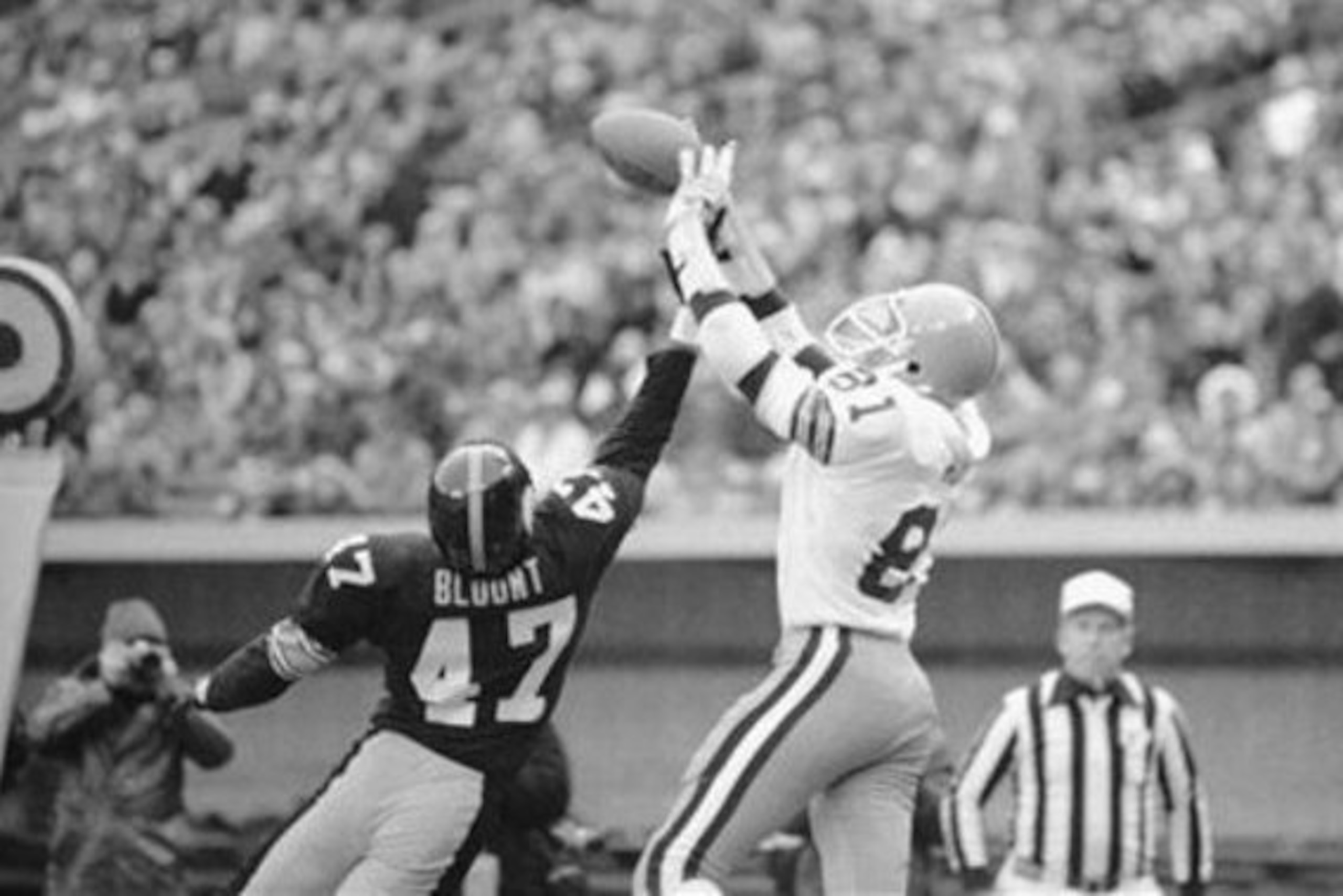
There are plenty of clues on the program that indicate Madden is kidding. The narrator introduces the segment as an "urban legend" and ends it as a "conspiracy theory" for example. Also, the murders and cover-ups of two human beings (whose families figure they can "do better") are laughed off in the middle of a football highlight reel, which should clue attentive viewers in to the fact that what they just heard was tongue-in-cheek.
When contacted to comment on whether he made up the Blount tale for the show or was passing on a talk-radio conspiracy theory he heard, Madden offered a terse "no comment."
Cue the X-Files music. Whatever its origins, Madden certainly popularized the legend.
A Reddit poster with the handle SW337 provided some background on the legend while debunking it (Warning: NSFW language):
"Steelers folklore? Mel Blount killed at least two players on the field. Police Stations across the country started using the term "Blount force trauma" when they were describing people hit very hard. In the late 70s, due to political pressure, the NFL added "The Mel Blount Rule" saying he wasn't allowed to kick so much ass. The Steelers were so upset about the rule they decided to win the next two Super Bowls in 1978 and 79.
The truth? No he did not, the guy who said it was being hyperbolic.
"
If you are curious, the word "blunt," used for a dull, unsharpened tool or weapon, dates back to Middle English. So "blunt force" was a concept 700 years before Mel Blount ever speared a receiver. According to the Internet Surname Database the name "Blount" comes from Anglo-Norman French, a version of the Old French word for "blond." Blount is actually the first name recorded in the Domesday Book, an English census by William the Conqueror in the 11th century. The two words have probably been punned together since before Shakespeare's time but do not share a common origin.
The Reddit debunker also says that the Mel Blount Rule came about because of "political pressure"; we'll get to that in a moment.
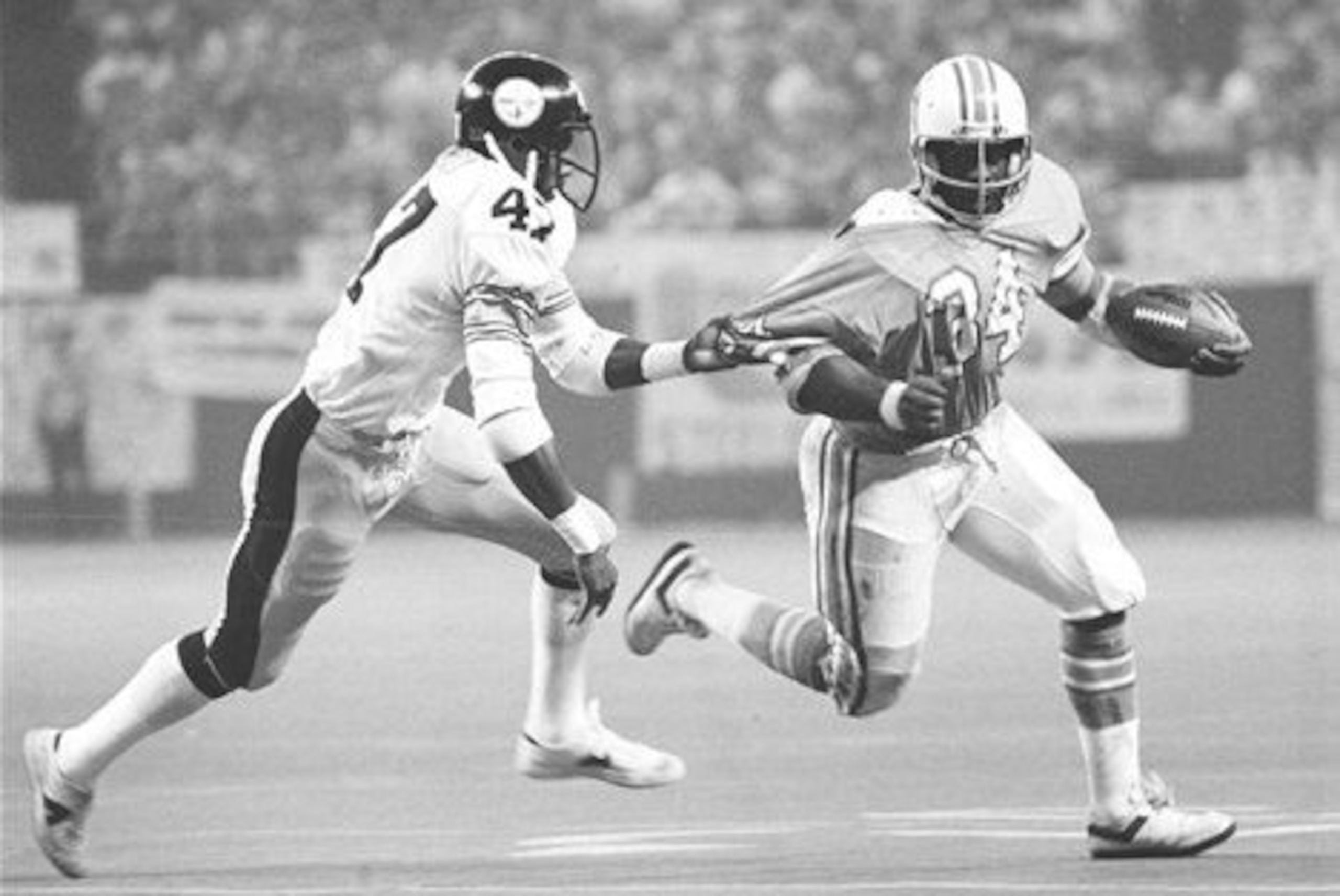
The way the Blount question is asked on Answers.com is particularly illuminating: "Did Mel Blount ever cause the death of a player on another team while playing with the Oakland Raiders?"
That's like asking how many animals Moses took with him on the ark. Blount played for the Steelers.
What we have here may be a case of conflated memories.
The Violent World of 1970s Football
To get under the hood of this legend, we need to examine how three different events can merge into one event after 40 years of confused memories and campfire tales.
The Death of Chuck Hughes
Chuck Hughes, a Lions wide receiver, is the only player to ever die on an NFL field during a game. Hughes, untouched, died late in a game against the Bears on October 24, 1971. He suffered a heart attack because of a blood clot after suffering abdominal injuries weeks earlier.
Blount has nothing to do with Hughes. But Hughes' death speaks to the violence of 1970s football. This highlight reel of the game, narrated by Howard Cosell, is also revealing. Cosell somberly acknowledges that Hughes lost his life during the game but then goes on with the highlight montage. It's hard to imagine a modern sportscaster handling death on the field in such an offhand way.
The Spiral Injury to Darryl Stingley
Raiders safety Jack Tatum collided with Patriots receiver Darryl Stingley in a preseason game on August 12, 1978. The force of the impact caused massive spinal damage, paralyzing Stingley for life. The play was not illegal at the time, so Tatum was not penalized.
As the earlier question about what Blount may have done while playing for the "Raiders" illustrates, some younger fans mix Blount up with Tatum. These are two defensive backs with "big hitter" reputations for legendary 1970s teams with black uniforms. If you were born the day Blount retired, you are 32 years old now, so many adults are too young to have clear memories of their careers. There are more examples of Blount getting credit or blame for the acts of Tatum and other 1970s defenders, but we'll get to them a little later.
The Mel Blount Rule
The NFL made a series of sweeping rule changes before the 1978 season to open up the passing game. One of those changes limited contact between defenders and eligible receivers to within five yards of the line of scrimmage. This became known as the Mel Blount Rule, as Blount was the most effective defensive back in the league at beating the tar out of wide receivers during every step of their pass routes.
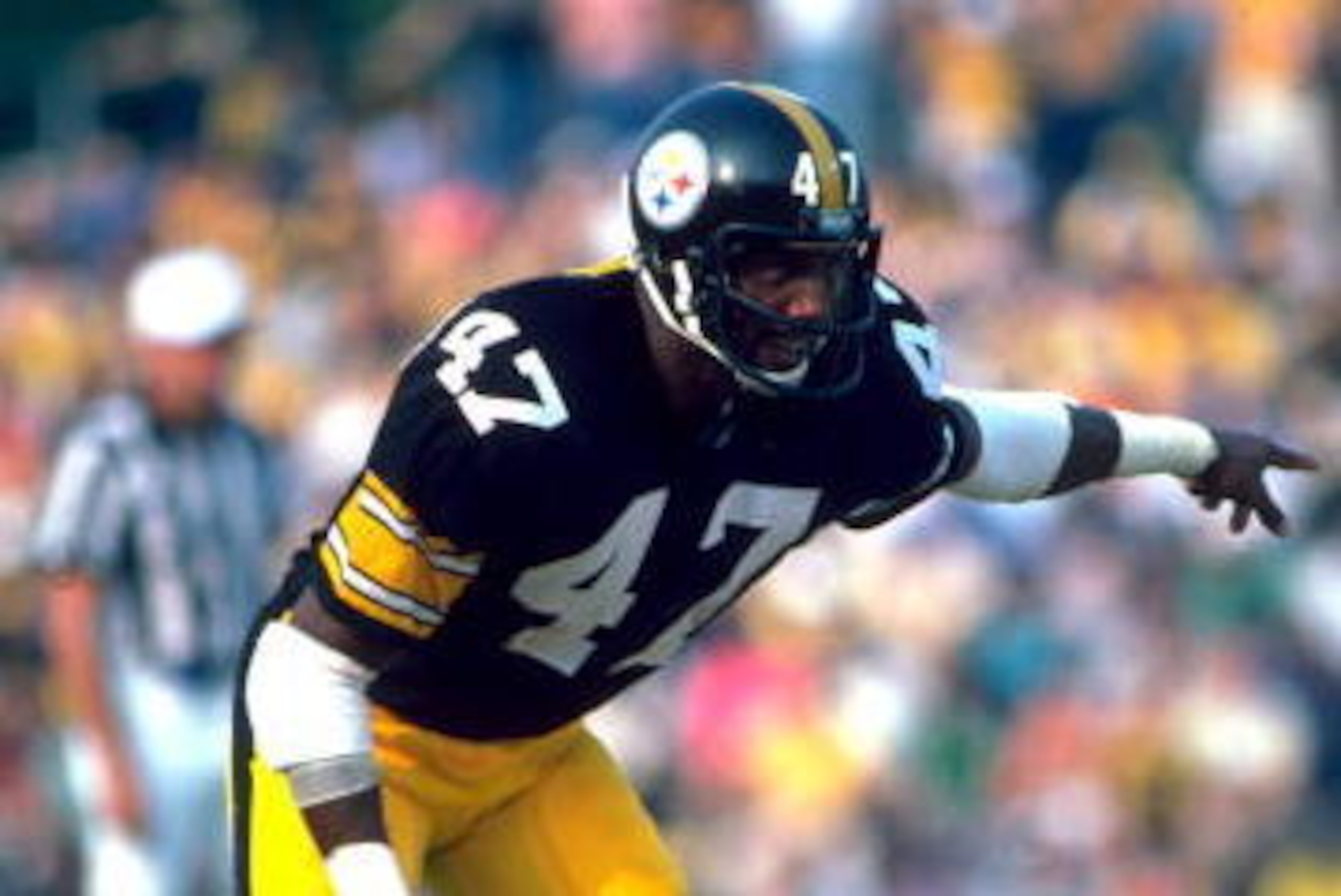
As Don Shula and others point out in this NFL Top 10 segment, the Mel Blount Rule was not a safety-oriented rule. It was designed to open up offenses after teams scored just 17.2 points per game in 1977, with no receivers gaining over 1,000 yards and no quarterbacks throwing for more than 3,000 yards. While other 1978 rule changes had a player-safety component—allowing offensive linemen to use their hands certainly made quarterbacking less dangerous—the five-yard "chuck" limitation did nothing to prevent helmet-to-helmet tackles, rib shots against leaping receivers or anything else to improve player safety except as a by-product of increasing pass production.
Saying the Mel Blount Rule was the result of "political pressure" is looking at 1970s events with 2016 eyes. No one cared back then that Blount (and Tatum and everybody else) was bodyslamming wide receivers. We just wanted more touchdowns. As for Tatum's hit on Stingley, check the dates carefully: It occurred after the Mel Blount Rule went into effect.
Fast-forward four decades from when these events all happened, and it's easy for them to run together. Didn't some old Raiders or Steelers guy kill or paralyze someone on the field in the 1970s? Yeah…it must be that guy they named the rule after, so he couldn't kill anyone else.
That's roughly how urban legends are born. Though we need to do due diligence here. As Madden pointed out, we didn't have all the replays and camera angles then that we have now. Did Blount ever deliver a hit so hard that people thought he killed the receiver? Did something happen to some "borderline player," perhaps in a preseason game, that history forgot?
Searching for Blount Truth
Just looking for a big Blount hit that might have started rumors about his killing a player yields interesting results.
Take this video of a collision that Minnesota Vikings receiver John Gilliam endured in Super Bowl IX that pops up when you search for big Mel Blount hits on YouTube. It sure looks like something that could cause mortal peril. Except that Glen Edwards is the one delivering the blow. Blount catches the deflected interception.
Edwards comes up again in a story about Golden Richards' broken ribs. This Blount Hall of Fame biography from 1989 claims that Blount broke Richards' ribs during a Steelers-Cowboys game. But other accounts such as this one and this one suggest that Edwards may have played a role in breaking Richards' ribs in Super Bowl XIII.
Blount sparred with Richards during the game, and Edwards ended up kneeling on top of him menacingly at the end of a play, so it's possible that Blount caused the injury, and Edwards exacerbated it. Still, there's a sense that anything vicious a Steelers defender did in the 1970s has suctioned itself to Blount's legend.
In fact, the big hit doesn't even have to be by a Steelers defender. Here is Jack Tatum walloping poor Sammy White in Super Bowl XI. No wonder younger fans and Answers.com users mix Tatum and Blount up. Even their highlights look alike.
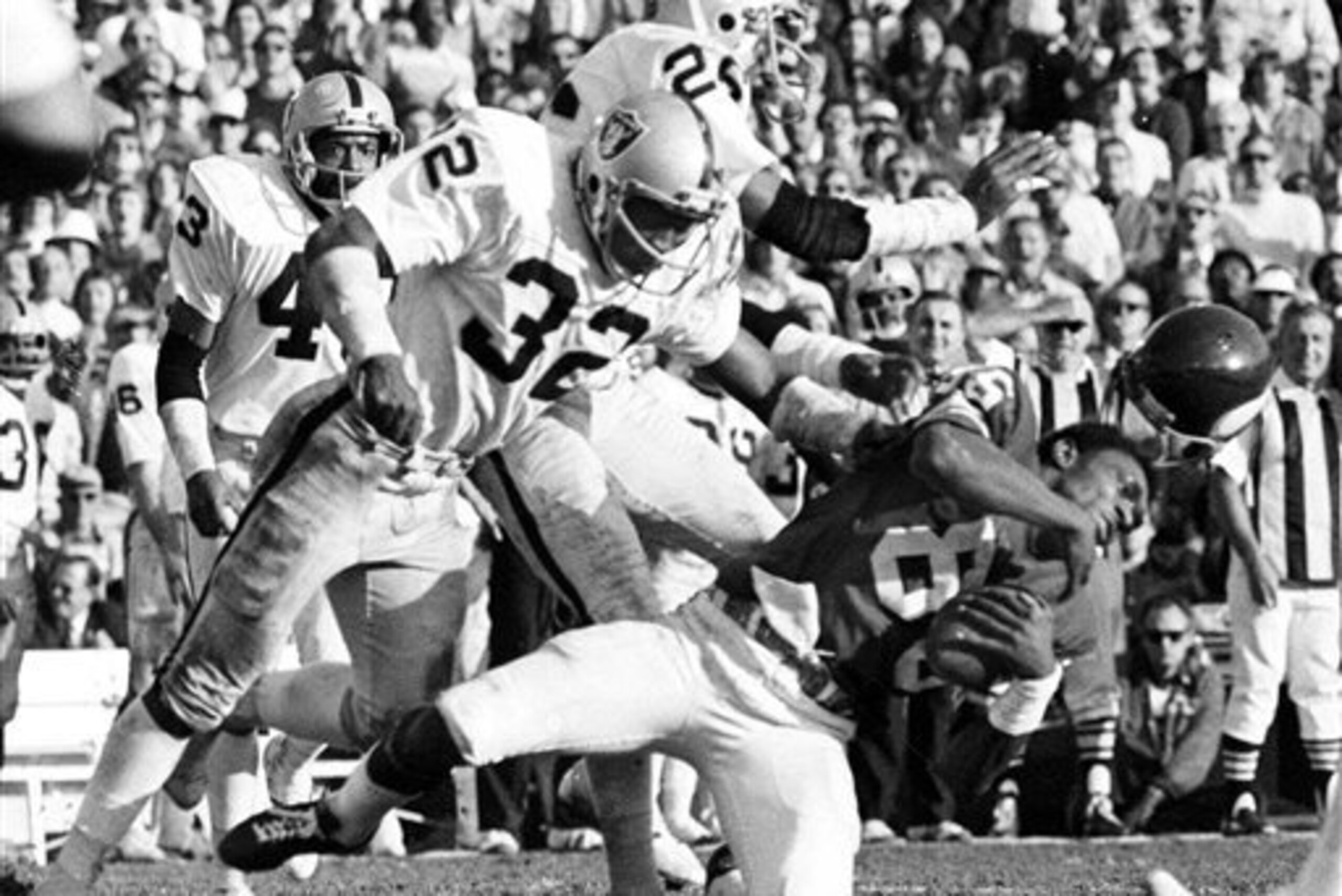
White survived Tatum and Blount to play until 1985, and is still alive and well, for the record.
In an effort to thoroughly investigate the origin of the Blount saga, I scoured Mark L. Ford's A History of NFL Preseason and Exhibition Games: 1960 to 1985 looking for noteworthy Blount plays or injuries in Steelers preseason games. Preseason games back then often took place at neutral sites, sometimes in front of sparse crowds and small press pools. Perhaps Blount walloped someone in one of those games, the stretcher came out, and a legend spread?
If so, the thorough Ford never mentioned it. Ford notes that Blount intercepted a pass in his rookie preseason debut in 1970, which was also Terry Bradshaw's debut. Then Blount disappears from the story.
Ford chronicles major preseason injuries each year. He notes deaths that coincided with preseason games, such as Vince Lombardi's two days before Packers and Redskins preseason games. He provides scores for Steelers preseason games held in Seattle, Tampa and Jacksonville, three neutral-site cities with no NFL football in those days. He notes Stingley, of course. But no "Blount force trauma."
Ford does mention a shooting that took place in the stands during a Steelers-Colts exhibition in Pittsburgh on August 4, 1973. According to the United Press International story of the incident, "A stocky young man dressed in all white wounded two fans with a .45 caliber automatic as a crowd of 50,000 persons watched the Pittsburgh Steelers defeat the Baltimore Colts 30-7 in a National Football League exhibition game Saturday night."
"Most of the fans were unaware of the shooting as they watched quarterback Terry Bradshaw lead Pittsburgh to victory by passing for one touchdown and running for another," the story ended. One of the victims, Charles "Chuck" Cooper, was the first African-American player drafted by the NBA in 1950; by 1977, he was a member of the Pittsburgh parks and recreation department who happened to attend a Steelers preseason game.
The shooting is included here because: a) the Chuck Cooper element of it is an amazing random tidbit; b) a shooting at a preseason game today would merit a little more than a 400-word wire story that ends with some quarterback stats; and c) NFL preseason games of the 1970s weren't played on dirt sandlots and ignored by the local media. If something important happened during a 1970s preseason game, even if it was in Shreveport, Louisiana, thousands of witnesses saw it, including local writers and wire services.
Blount delivered dozens of tooth-rattling hits throughout his career. Every highlight reel is sprinkled with them. He hurt some opponents. But there is no single, obvious blow delivered by Blount that would spark a legend about an on-field fatality.
If you know your folklore, you realize there doesn't have to be.
Cultural Process at Work
Dr. Simon Bronner is a Penn State professor, author of such books as Campus Traditions: Folklore from the Old-Time College to the Modern Mega-University and a football fan. He's an expert on contemporary folklore, which is the academic term for urban legends.

Scholars such as Bronner study the legends that have made the rounds at campfires and on Snopes.com with the same seriousness that they explore the tales of Hercules or John Henry. The stories may be legends, but "any folklorist will tell you that calling something a legend doesn't mean it's necessarily false," Bonner said.
"One way to look at them is not whether they are true or not but whether people believe them and need to tell them," Bonner explained.
"Often within the text, there's enough ambivalence or vagueness that the legends are asking for commentary about whether something could happen. Is it plausible? Is it truthful if not the truth?" So the druggie babysitter legend asks us to confront our parental anxieties and fears of the drug culture, and the stories of deep-fried rats and mutant chickens bring to light our worries about corporate indifference or science run amok.
Bonner had never heard the Blount legend. But he recognized its themes as soon as it was told to him.
"That's an easy one to interpret," he said. "Football is a violent sport. The fact that there haven't been deaths is something that people want to speculate about."
Contemporary folklore reflects contemporary anxieties. Football has become one of those anxieties, especially in light of both concussion and chronic traumatic encephalopathy awareness and increased coverage of violent off-field crimes by players in recent years. Some of us watch games fearing, subconsciously or consciously, that a big hit we cheer for might kill someone.
"People will say things in the frame of folklore that they may not want to broach in everyday speech," Bonner explained.
There may also be anxiety about the NFL itself. Huge, culturally important companies such as Disney and Coca-Cola often have lots of contemporary legends about evil secrets attached to them. "People are distrustful of this huge brand," Bonner said.
Especially when that brand—such as Disney, Coca-Cola and the NFL—is supposed to represent our society in some way. "There's a cultural investment in football as an American game that somehow reflects American values. There's a lot of pressure on football to not just be entertaining but to somehow be American."
So if we mix: a) a growing discomfort with football's violence with b) the NFL's reputation as a mighty corporate juggernaut capable of massive cover-ups, and then throw in c) the iconography of 1970s football, with men nicknamed "The Assassin" (Tatum) and "Hacksaw" (linebacker Jack Reynolds) roaming the field critically injuring opponents, you get the recipe for some contemporary folklore.
Then add some kernels of truth. A man did die on the field in that era. Another man did deliver a paralyzing blow. A third forced the NFL to make rule changes. Most people don't get their NFL history from books but from NFL Films clips that traffic in myth making. So the tales swirl together.
"It's not just spreading rumors or lies," Bonner said. "There's a cultural process at work here. Often, it's a cautionary tale."
Mike Tanier covers the NFL for Bleacher Report. Follow him on Twitter @MikeTanier.
.jpg?w=2560)