

NFL1000 Week 4 Scouting Notebook: Is Brian Hoyer the Bears' Answer at QB?
Welcome to Bleacher Report's NFL1000 Scouting Notebook, a weekly series where we'll use the power of the 16-man NFL1000 scouting department to bring you fresh insights into the game and explain some of the more interesting (and potentially controversial) grades we give players every week.
Let's start this week with a little film study and conceptual analysis on Brian Hoyer, who's currently experiencing a bit of a professional rebirth after one playoff game left him for dead.
The All-22: Bears Optimizing Hoyer for Success

.jpg?w=2560 "Falcons Saints Football")
.jpg?w=2560 "Rams Eagles Football")
The last time many of us saw Brian Hoyer try to play quarterback, he was throwing four interceptions and giving up a fumble to the Kansas City Chiefs in an epic 30-0 meltdown for the Houston Texans in last season's divisional round. Hoyer completed 15 of 34 passes for 136 yards, those four picks, no touchdowns and no completions of any distinction.
It was the second-worst ranked performance by any quarterback in the playoffs in the history of Football Outsiders' charting, which goes back to 1989. Only Kerry Collins' megafail in Super Bowl XXXV was worse. Given the all-time greatness of Baltimore's defense in the 2000 season, it could be argued that Hoyer's performance takes the cake.
Fast-forward to now, where Hoyer is enjoying unexpected success in his new home of Chicago. Against the Cowboys and Lions, Hoyer had 300-plus yards and threw two touchdowns and no interceptions in each game. Hoyer replaced Jay Cutler in Week 2 after Cutler suffered a sprained thumb, and head coach John Fox is intimating that Cutler isn't guaranteed the starting job upon his return.
"It's performance-based," Fox told reporters Monday. "So anybody that's performing well, I don't think we're going to be likely to change."
It sounds like an oddity to promote Hoyer over Cutler based on a couple of games, but it makes sense overall. Fox is a defensive coach—that's his background—and for the most part, defensive coaches prefer quarterbacks who are more mistake-proof than gifted but spiky in performance.
Cutler is the poster boy for those quarterbacks who have every possible physical attribute but drive their coaches nuts with mechanical flaws that lead to maddening inconsistency. The Bears signed Cutler to a contract extension two years ago, but according to OverTheCap.com, they'd only eat $2 million in dead money if they cut him in the 2017 league year.
The outline is there for Cutler's departure after this season. Question is, does Hoyer have a future beyond these two good games?
The design of Chicago's passing offense is one reason Hoyer is succeeding—offensive coordinator Dowell Loggains creates easy openings and encourages Hoyer to check down to them. Through those two games, Hoyer has attempted 13 passes over 20 yards in the air, completing four, for 144 yards, according to Pro Football Focus.
He's not overextending his abilities, as he did in that Chiefs loss when he was making horrid reads and overthrowing receivers by enormous measures. Hoyer's four touchdown passes have totaled 18 yards. Three of them have been to tight end Zach Miller, and you're more likely to see timing patterns like this drag route to Miller against the Cowboys than anything overtly spectacular.
The touchdown Hoyer threw to Eddie Royal against the Lions was trips right, featuring Royal on a crossing route with receiver Cameron Meredith and Lions cornerback Nevin Lawson caught in the middle. This isn't rocket science, but it doesn't need to be. It just needs to work. Hoyer simply rolls right until he sees an opening he likes, and he's got Alshon Jeffery running a crosser to the back of the end zone if that appeals to him.
Not everything Hoyer throws is out of the Alex Smith playbook. Loggains seems to have isolated the fact that his new quarterback diagnoses crossing routes against retreating safety coverage, and he's completed deeper passes to Royal, Meredith and Miller along those lines. Here's Meredith's 24-yard reception with 1:39 left in the game against the Cowboys. This is a simple recipe: Wait for the safeties to drop, diagnose your open areas and throw to where you expect the releasing receiver to be open.

Chicago faces the Colts in Week 5, and it's expected that Hoyer will start again. It helps that he's going against one of the least impressive pass defenses in the NFL (according to Football Outsiders' opponent-adjusted metrics, Indianapolis ranks 29th in pass defense), but it'll be intriguing to find out what happens in the stretch of games after that.
Chicago faces the Jaguars in Week 6 and then the Packers and Vikings. Both Green Bay and Minnesota present serious challenges to any quarterback looking to find his feet—the Packers with their multiple coverage concepts and the Vikings with their aggression and peerless execution.
If Hoyer can walk that gauntlet and emerge standing, he might just be what his team needs for the future.
Speaking of quarterbacks and their futures, here's NFL1000 Quarterbacks Scout Cian Fahey with a deep dive into Dak Prescott's first four regular-season games.
Scouting Spotlight: Dak Prescott
Dak Prescott was unspectacular over the first two weeks of the season. He allowed the Dallas Cowboys offense to remain functional while acting consistently in a limited capacity. For a mid-round pick, Prescott was playing very well. If he were a 10-year veteran, it would have been an unremarkable stretch of snaps.
Things changed for Prescott in Week 3. He transformed from a caretaker role into someone who was carrying the passing game by performing against pressure in the pocket, making good decisions with good timing and throwing the ball accurately to all levels. The Chicago Bears defense isn't a formidable opponent, but it outperformed expectations on the day. With Tyron Smith absent through injury and La'el Collins injuring himself early on, the Bears were able to get more pressure on Prescott than anticipated.
Responding to pressure well is something Prescott has done since he showcased his skill set in the preseason. He hadn't shown off an ability to throw with precision while diagnosing coverages and adjusting in the pocket. The Cowboys had used a play-action-heavy, simplified passing game to ease the pressure on the young quarterback. In Week 3 without his offensive linemen and in Week 4 without those same linemen and without Dez Bryant, Prescott changed from an overachieving rookie showing off competence to a potential star.
His Week 3 performance saw him set protections, audible play calls, mitigate pressure with his movement, deliver from condensed pockets and hit tight windows. My breakdown of that performance can be seen here. Prescott received an 81 rating for that performance in NFL1000 and was the second-highest-rated quarterback in Week 3.
His Week 4 performance wasn't as good because he was less consistent with his accuracy and should have had his first interception of the year with a misplaced pass early on. Overall, he still played well and was one of the protagonists for the Cowboys' victory.
For all of Prescott's success over the first three weeks, he had only thrown one touchdown pass in those three games. Touchdown passes can be misleading because not every touchdown pass is a difficult or even a good throw, while many good and difficult throws can be ruined by receiver error, officiating error or great defense. Sometimes throws are stopped an inch short of the end zone, and the difference between a touchdown stat and just another completion is nothing more than random timing or positioning.
For Prescott, this display will have felt particularly good because his touchdown throws were impressive.
In the above GIF, you can see Prescott find Terrance Williams for a touchdown down the right sideline. The rookie quarterback does two things that are impressive on this play. He recognizes the coverage to manipulate the deep safety with his eyes before understanding the positioning of the cornerback against his receiver down the right sideline.
By understanding the coverage, Prescott can keep the deep safety infield, creating a one-on-one outside. By understanding that the cornerback has turned the wrong way and can't locate the ball, he understands where to put it.
This pass is perfectly placed, perfectly timed and perfectly executed. Furthermore, he delivers the ball from just inside the far hash on the 26-yard line to the 2-yard line with ease.
For his second touchdown of the game, the Cowboys use a rolling pocket near the goal line in the hopes of creating a simple play for their quarterback. The 49ers play man coverage on the two receivers to the left side of the field. Brice Butler runs a sharp out route that sends him into space with his defender conceding ground behind. Prescott holds the ball until Butler comes out of his break. He doesn't throw with anticipation.
He hasn't done so often so far, but this situation likely wouldn't have called for an anticipatory throw, as it would have made the throw more difficult because he needed to fit the ball through a passing lane. Holding the ball forces Prescott to throw under pressure—something he does effectively while delivering an accurate fastball that gives Butler plenty of time to complete the catch in bounds.
Prescott has an impressive arm even though he spent most of this game throwing shorter passes. The passing game hasn't opened up much for the Cowboys outside of Week 3, when he repeatedly hit receivers downfield.
Butler should have caught another short touchdown during the fourth quarter. Prescott widens Williams' alignment to the top of the screen when he sees how the 49ers defense lines up. The 49ers have four players to potentially drop into coverage against the three receivers to that side of the field. Widening Williams' alignment allows him to run a slant while Cole Beasley runs out beneath him and Jason Witten runs a curl route inside of him.
If the 49ers had dropped all four defenders, Prescott would have had options to attack the coverage in different ways. Instead of dropping four defenders, the 49ers rush the fourth player, a linebacker, while playing one-on-one coverage across the field.
Prescott knows the routes to his left will need more time than his fade to the right side of the field. When the 49ers rush seven, his response is to turn to his right and throw a perfect fade pass to Butler just before the pass rush arrives.
Butler dropped it.
Rookies generally aren't expected to make adjustments before the snap. Whether it's an ability to kill plays to go from one to another, make slight adjustments in assignment and alignment, or make full-blown audibles, you can go through your rookie season without doing these things and escape criticism. It's impressive to see a mid-round rookie who wasn't prepared to start from the moment he was drafted repeatedly set protections and audible plays.
Prescott has done that over the past two weeks, and it hasn't resulted in success for just the passing game. In the above play, he audibles to the zone run that perfectly exploits the pre-snap alignment of the defense. Prescott sees the deep safety shaded to the left and can count three defenders against three blockers to his right.
Ezekiel Elliott runs through a hole that you can literally fit a truck through.
Prescott may still be a ways behind Tony Romo, but that says more about the quality of Romo than it does the rookie. Romo is a top-10 or top-five starter when healthy. What's obvious is that Prescott is leaps and bounds ahead of the replacements the Cowboys relied on without Romo last season. None of those quarterbacks would have altered play calls to stop the running game attacking the teeth of the defense, and none of them offered the same poise, intelligence or athleticism that Prescott offers.
Scouting with Schofield: Julio Jones' Big Day
Each week, NFL1000 receivers and tight ends scout Mark Schofield will break down a particular aspect of the previous week's NFL action with in-depth play review on video. Here, he explains exactly how Julio Jones was able to dominate the Panthers last Sunday...and how the Panthers decided to help him out.
It is difficult to put into words how impressive Julio Jones was Sunday against the Carolina Panthers, but I’m going to try. Jones was targeted 15 times and caught 12 passes for 300 yards and a touchdown against the Panthers, and he was nearly flawless on the afternoon.
The four plays highlighted in this video illustrate not just a wide receiver, but a master of his craft. Jones shows incredible skill off the line of scrimmage to beat press coverage in a number of ways, working both inside and out off the line.
Another incredible aspect to his game is how quickly he transitions from receiver to ball-carrier after the catch, seemingly exploding after the reception into a gear no one can anticipate to accelerate away from defenders. These four plays also highlight his ability to track the football downfield and over his shoulder to get to any pass in his general area. Jones is an incredibly talented receiver and was on full display against the Panthers.
Ask the Scouts
Each week, our scouts post interesting grades in their comprehensive film study. While most are easy to explain, some deserve a closer look. We've posed questions on the following grades from Week 3 to give you a more detailed look into our process.
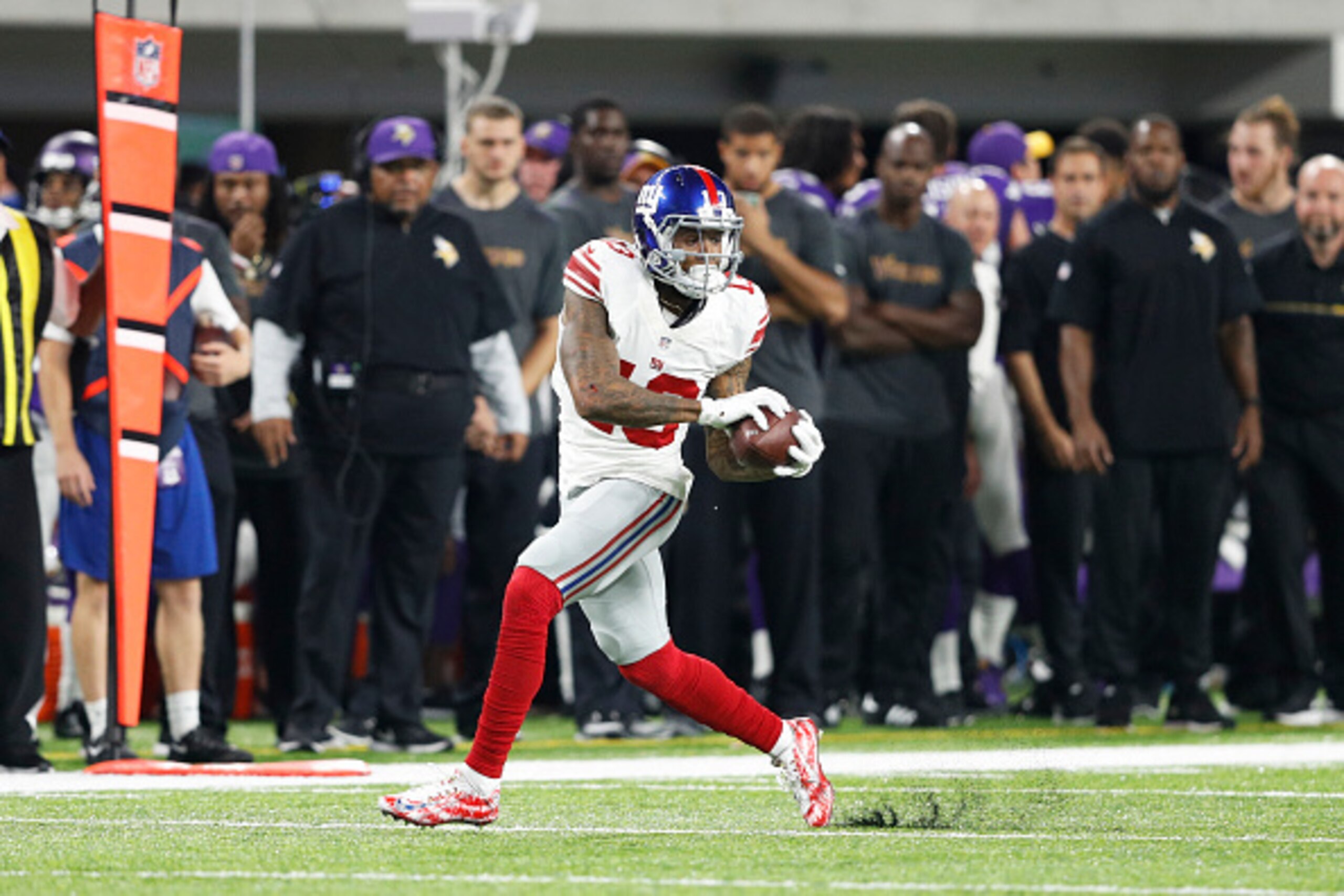
Question: Xavier Rhodes is your top-ranked cornerback this week (the fourth-highest player overall), and Odell Beckham Jr. is your 50th-ranked receiver, which make sense after Rhodes shut Beckham down and seemed to get in his head last Monday night. But is Rhodes a legit shutdown corner every week at this point, and how much of Beckham's oft-discussed attitude actually affects his game?
Mark Schofield, NFC Receivers and Tight Ends Scout: From my perspective, Rhodes had a very good night and entered this game with a plan to handle Beckham, and he executed it well. Looking at the tape, you see Rhodes uses off coverage a lot, giving Beckham quick stuff underneath but making sure to be in position for the deeper routes down the field.
A great example of this is on a double-move route in the fourth quarter. Rhodes starts this play in off coverage, and when Beckham tries the double move, the receiver doesn't fool the defender, and Rhodes maintains the relationship with Beckham as they go downfield. Rhodes also displayed great ability to click and close, which you'll need when using this style of play.
If you look at this deep comeback/curl route from Beckham with 30 seconds left in the first half, Rhodes is content to let the receiver run that route but breaks on the ball instantly and turns this into a contested catch situation. For my money, Monday night was more about Rhodes than Beckham.
There are certainly times when Beckham's issues show up on the field, in both good and bad ways. Not to play armchair psychologist too much, but watching him you get the impression that he's an ultra-competitive player who hates to lose. There are times when what is happening on the field impacts his game.
In particular, if you look at the interception from Rhodes in the third quarter, Beckham is running a post route. Now, there's some question as whether he's running the right route to begin with, as Eli Manning's throw seems to indicate that he expected his receiver to stay vertical. But as Beckham makes his cut, he seems more interested in shoving Rhodes on his break than he is in looking for the football. So that's probably the bad side of the coin.
But later in the game, on the long catch-and-run from running back Paul Perkins, Beckham chases the play down from the other side of the field to throw a block. This is a case of a hyper-competitive athlete who at times lets that hatred of losing spill over onto the field in both good and bad ways.
Kyle Posey, NFC Cornerbacks Scout: Even the best of the best players are going to "meet their match" at some point in the season, whether it's Joe Thomas, Von Miller or Luke Kuechly. In this case, it was more Xavier Rhodes winning than Beckham losing, and that's fine.
Rhodes is one of the few defensive backs in the league who can match Beckham's explosiveness (4.43 40-yard dash/11-foot broad jump/40.5-inch vertical). Unlike most corners, Rhodes can open up and run with Beckham, but he also has the speed when it comes down to changing directions to meet Beckham at the catch point. Usually the defenders that are fast enough to run with Beckham aren't physical enough to break up the pass if they are able to run stride for stride with him.
In Rhodes' case, he's often been labeled as too grabby early on in his career. There was a comeback route in the second quarter that is a great example of this, which you can watch here, that highlights all of Rhodes' skills in one play. Not many dudes in this league can jump that high, let alone have the awareness to rip the ball out and force an incomplete pass. Rhodes was targeted seven times, allowing three catches for only 23 yards, according to Pro Football Focus. Besides breaking up a pass, he threw in an interception for good measure. I'd say Rhodes won this battle.
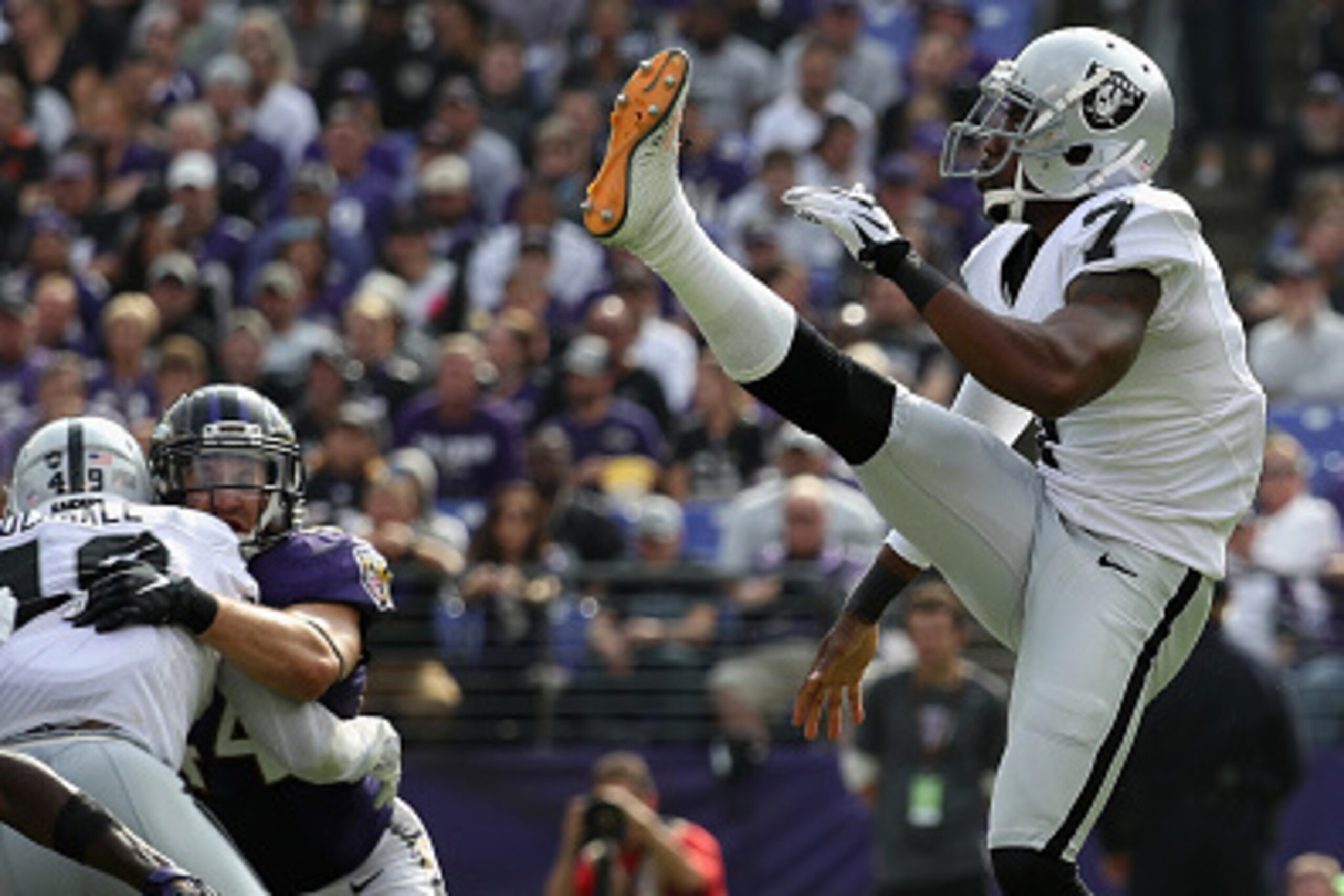
Question: Raiders punter Marquette King is really high up in your rankings this week—in fact, he's your 10th overall player in the NFL1000. Yes, he had a great game, but why on earth would a punter be ranked that highly no matter how good he was?
Chuck Zodda, Punters and Kickers Scout: Marquette King's Week 4 performance is likely to be one of the best punting performances you will ever see in a regular-season game. Why? With punting, there are four critical factors that a punter has control over: distance, hang time, direction and trajectory.
While distance is often measured in gross yardage, this statistic is not suitable for truly measuring the shift in field position created by a punter. Short-field punts negatively impact gross distance, even though the punter may accomplish the exact task he is handed by his coach. Target distance punted (TDP), which accounts for field position, provides a better metric, as it does not penalize a punter for pin-deep situations such as a punt from his opponent's 40-yard line.
On Sunday, King was significantly above the NFL average for the year, notching TDP of 110 percent compared to the NFL mark of 99 percent. This is the best mark for any punter this year with more than five punts in a game.
As far as hang time is concerned, King averaged 4.71 seconds of hang per kick (Per my own charting), nearly a quarter of a second above the NFL average (4.48 seconds) for the year. More importantly, the total was not skewed by one or two massive blasts, but rather a consistent stream of above-average punts, with the lowest hang time of 4.50 seconds still being greater than the NFL average for the year. Consistency is the hallmark of a great punter, and King produced excellent hang time on every single kick.
As far as directional ability, King placed five of his eight punts outside either the left or right numbers, showing proficiency to each side. One punt landed on the right numbers, with the last two boots just inside the right numbers, meaning every single punt forced the returner to move laterally. This also allows the coverage unit to close their coverage lanes more rapidly due to the sideline acting as a defender, reducing the potential for a big return.
Lastly, King also displayed proficiency with multiple trajectories, utilizing both nose-down technique for pin-deep kicks, stopping one punt on a dime at the Ravens 5-yard line, as well as blasting the traditional spiraling punts as far as 62 yards when called upon. The ability to change techniques depending on the trajectory and spin required in a given situation is an incredibly valuable skill set and has grown in popularity in recent years, largely due to the Australian influence on punting that has come up through the college game.
In short, many punters will display three of these traits consistently throughout a game. King showed all four, and he displayed them on every single kick. This is as fine of a punting performance as you will ever see.
Doug Farrar, NFL1000 Lead Scout: As far as putting a punter 10th overall, we do have a metric that adjusts for positional importance, and punters are relatively low in that regard. It would take an unbelievable performance for any punter to transcend that adjustment and show up as highly as King does this week, but that's exactly what happened.
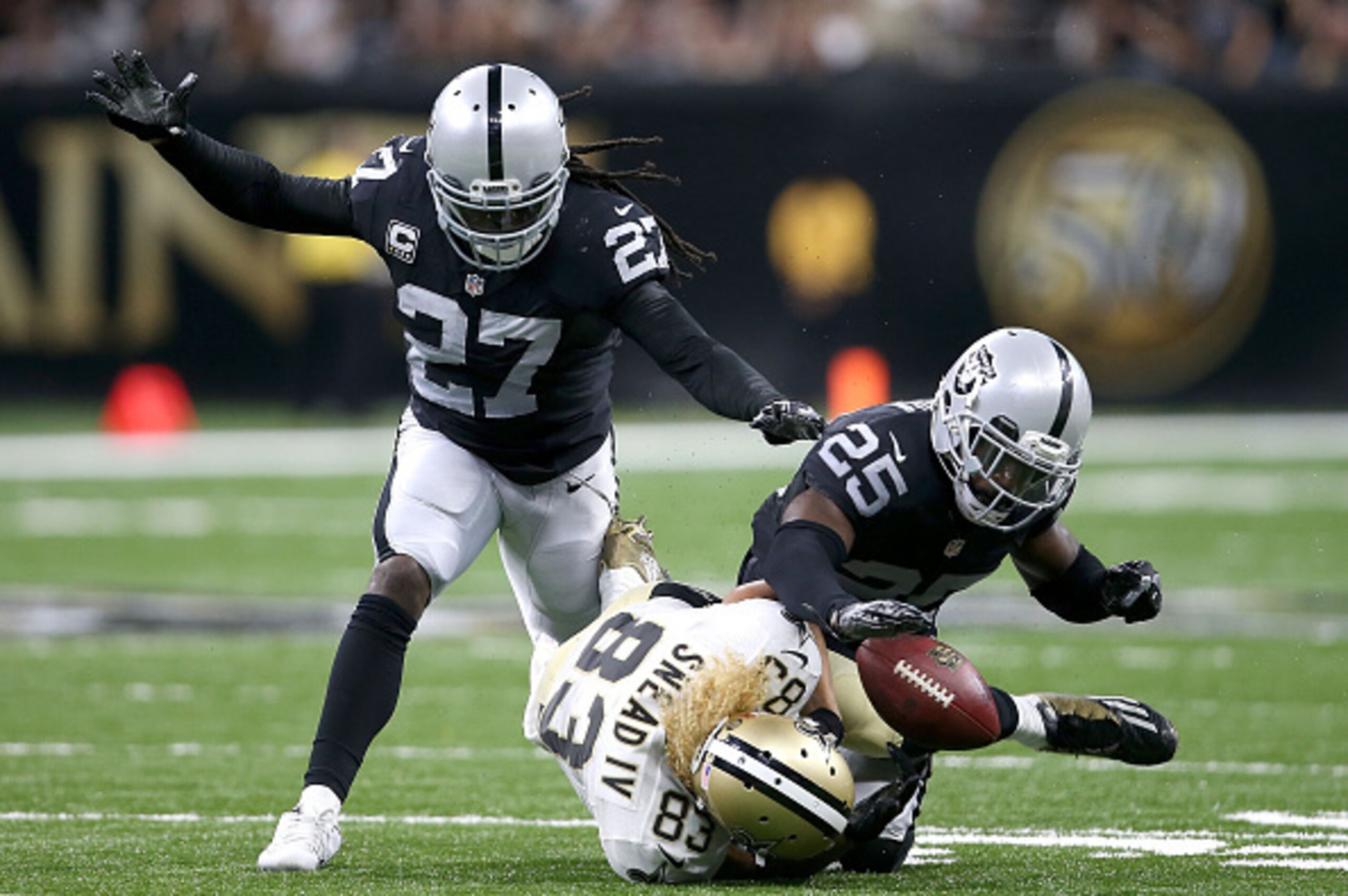
Question: Speaking of the Raiders, what bumped cornerback D.J. Hayden up from 93rd in Week 3 to fourth in Week 4?
Ian Wharton, AFC Cornerbacks Scout: D.J. Hayden's emergence came as a surprise after the former first-round pick showed little improvement through the first three weeks. Rookie Karl Joseph made his second start, and as the Raiders defense plays more man coverage with two-high safeties, the cornerbacks have played better. This includes Hayden. The slot specialist is a great athlete but has struggled reading routes and reacting efficiently in his career. That wasn't the case in Week 4, as he played with poise, anticipation and physicality.
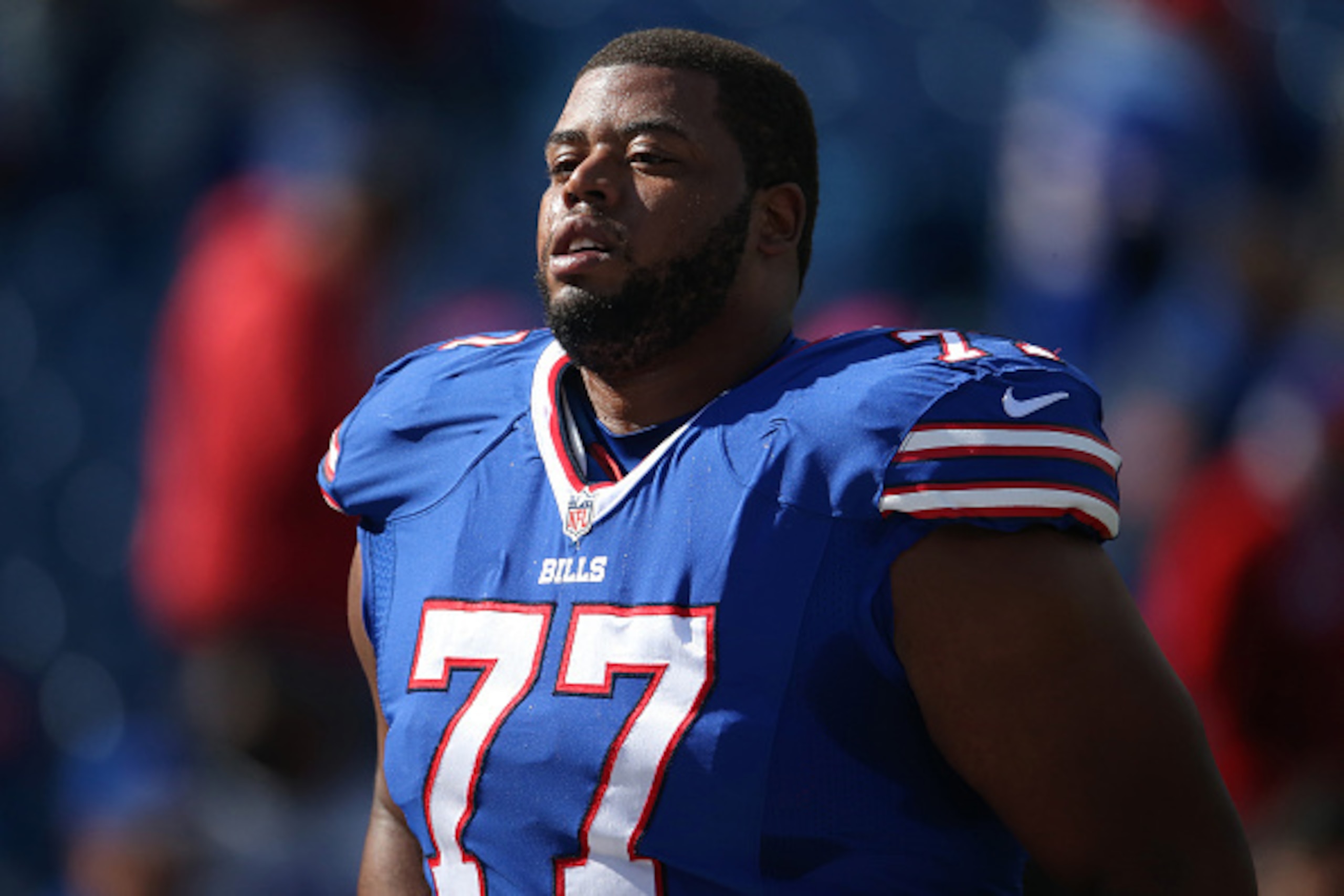
Question: This week, you have Buffalo's Cordy Glenn ranked second among left tackles, behind Washington's Trent Williams. Glenn isn't really a household name, even among O-line aficionados—why does he rank that highly?
Duke Manyweather, Offensive Tackles Scout: After starting Week 1 against Baltimore, Glenn missed Weeks 2 and 3 due to injury. To welcome him back in Week 4, he faced a red-hot Patriots D, who threw Dont'a Hightower, Chris Long, Jabaal Sheard and sometimes even Jamie Collins at him, yet Glenn was able to consistently anchor and recover when moved off his spot.
In the run game, Glenn flashed physical dominance at times. There were many angle-drive blocks and base blocks where Glenn got serious push at the point of attack. Glenn also showed ridiculous agility for his size on both reach blocks and backside cutoffs. Buffalo ran a ton of tackle-over plays, and Glenn would shift to the right side and still manage to win the edge. Buffalo ran 78 plays (39 pass attempts) and managed to surrender one pressure I noticed off film. (Pro Football Focus debited him with two.)
An impressive return for the big man.
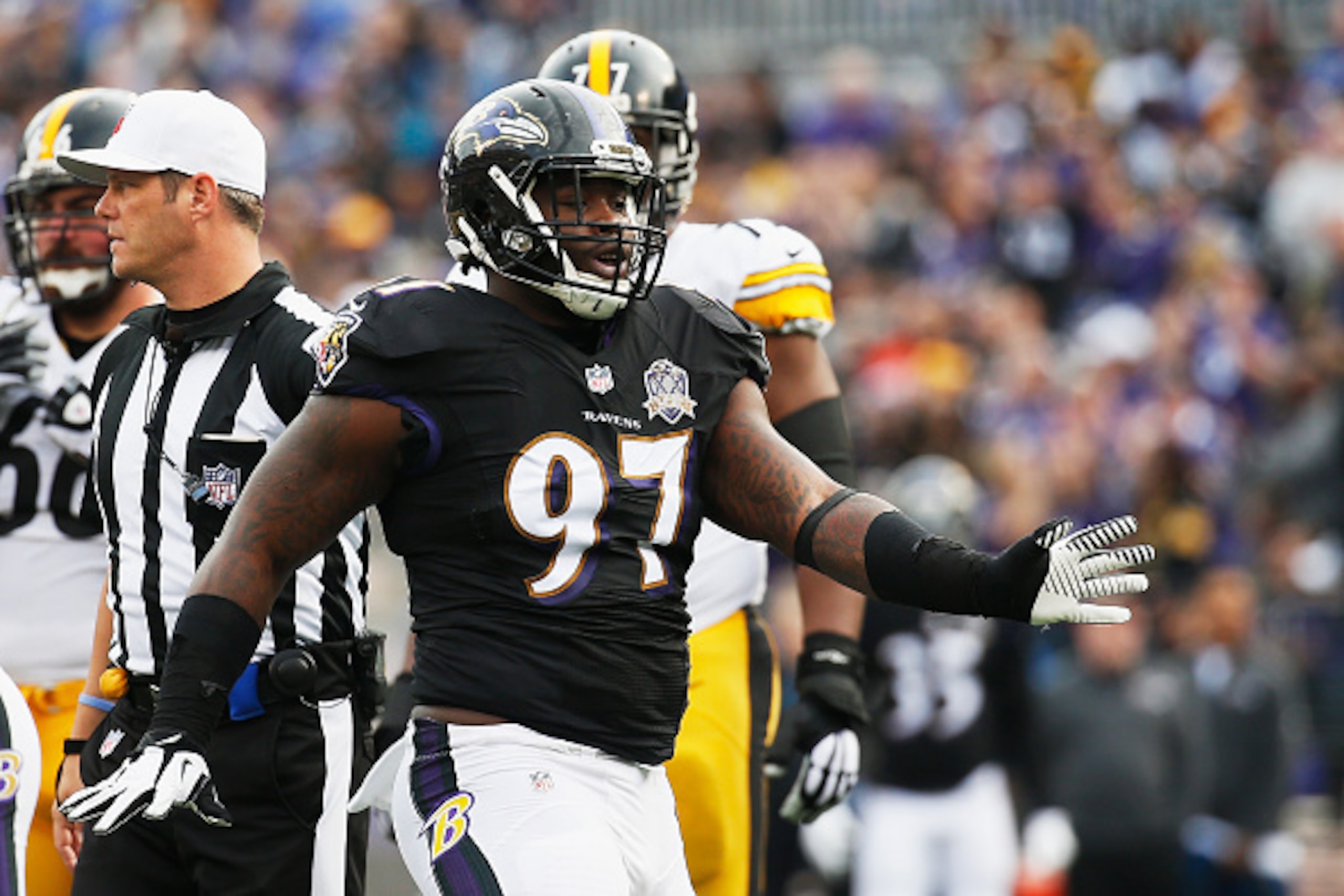
Question: You've had Baltimore defensive lineman Timmy Jernigan at the top of the 3-4 defensive end rankings, but he took a serious plummet in the Week 4 rankings—all the way down to 37th. What happened against the Raiders?
Joe Goodberry, AFC Defensive Ends Scout: In the previous three weeks to start the season, Baltimore's Timmy Jernigan was one of the most impressive defensive ends I've watched. He was extremely disruptive and won in various ways. In Week 4, Jernigan looked pretty average, in large part due to his main opponent, Oakland's Gabe Jackson. For the first time all season, I saw Jernigan's quickness neutralized by Jackson's strength, and when Jernigan tried using power, he couldn't budge Jackson.
There was one pass play in particular where Jernigan had perfect form on his bull rush—he had the leverage, hands inside, elbows locked out and his legs were driving. It looked like he was trying to push through a brick wall as he gained almost no ground on Jackson. The Raiders OG finished many snaps by throwing Jernigan to the ground.
Toward the end of the game, Jernigan was visibly frustrated. He even took a swing at Jackson and didn't give maximum effort on other plays. He was beaten physically and mentally. I'm excited to see how Timmy Jernigan responds after this thorough beating.
.jpg?w=2560 "Texans-Mixon Released Football")

.jpg?w=2560 "Grading WWE Raw 🔠")


.jpg?w=2560 "2 NFL Officials Suspended")
