Comparing college and international kids to seasoned NBA veterans before the draft is no easy feat—and it wasn't mine to complete this year. The task of measuring prospects against pros tends to yield more accurate results after summer league, once the youngsters in question have had a chance to strut their stuff against better competition.
That doesn’t mean finding existing molds is surefire. How a player performs against fellow rookies, sophomores and free agents in Orlando, Salt Lake City and/or Las Vegas is rarely reflective of what he’ll develop into later on.
Still, for the top 10 picks in the 2016 draft—listed here from top to bottom—these choices for best- and worst-case scenarios seem appropriate now that we’ve had a chance to sample their games on an Association-affiliated stage.
1. Ben Simmons, F, Philadelphia 76ers
1 of 10
Best Case: LeBron James
Ben Simmons might be the most talked-about prospect to enter the NBA since LeBron James in 2003. According to ESPN’s Ryan Feldman, Simmons’ predraft physical measurements were similar to James’:
"Simmons and James measured with the exact same wingspan (7-foot-1/4) prior to the NBA draft. At 6-foot-10, Simmons is two inches taller than James and has a two-inch advantage in standing reach. James had slightly lower body fat."
And, as it happens, Simmons and James now share an agent: Klutch Sports’ Rich Paul.
But Simmons' ability to handle and distribute like a point guard while inhabiting the body of a power forward makes him a potential LeBron successor. Simmons might already be one of the five to 10 best passers in basketball, without yet having set foot in a real NBA game. He spent his summer-league stints with the Philadelphia 76ers dishing dimes, both functional and flashy, to his often unsuspecting teammates.
Simmons, like James, forces those around him to keep their heads a-swivelin', lest they miss a golden opportunity to score. If Simmons uplifts the players around him even half as well as James has over the years, the 20-year-old Australian could be the league’s next superstar.
Worst Case: Josh Smith
It may be difficult to remember now—after putrid stints with the Detroit Pistons, Houston Rockets and Los Angeles Clippers—but once upon a time, Josh Smith was an athletic wing-forward who could defend multiple positions and initiate offense for the Atlanta Hawks.
The Sixers envision Simmons playing point guard full time down the line, according to head coach Brett Brown, per NBA.com's Scott Howard-Cooper. If he doesn’t grow into that role, he’ll still have the skills to set up teammates for easy scores, albeit not from up top, just as Smith did during his heyday in the ATL.
Both players are lefties with substandard shots, but if Simmons, who’s thus far been reluctant to let it fly, ever becomes as comfortable launching his own looks as Smith has long been, he’ll far outpace J-Smoove’s career prospects.
2. Brandon Ingram, F, Los Angeles Lakers
2 of 10
Best Case: Kevin Durant
You don’t have to be a basketball visionary to see glimpses of a young Kevin Durant. Brandon Ingram’s long, slender frame alone marks him as a potential successor to the now-Golden State Warriors superstar.
Durant said this Tuesday, per Lakers Nation's Serena Winters: "First person I can say, that I can look at him [and] feel like I'm looking in the mirror."
But as Ingram said at summer league: “It’s not about the body type. I think it’s about the skill level and what you can do on the basketball court. If you can score the ball, I think everything comes a lot easier for you.”
Ingram can certainly do that. He averaged 17.3 points during his lone season at Duke and put up 12.2 per game with the Los Angeles Lakers in Las Vegas, including 22 points during the team’s finale against the Utah Jazz.
Ingram has a long way to go compared to where Durant was upon entry into the league. But with another month-and-a-half until he turns 19, the rookie has plenty of time to turn his shooting ability over pretty much any defender into a Durant-esque weapon.
Worst Case: Tayshaun Prince
Ingram’s jump shot is already far more picturesque than Tayshaun Prince’s ever has been or likely will be. But even if the former's stroke isn’t any more effective in practice, he’ll still have the tools to shine on the defensive end.
Like Prince, Ingram has the length and lateral quickness to fend off perimeter players and block shots on the back end. Prince never grew to be much bulkier than Ingram but still managed to earn four All-Defensive nods during his prime years.
And while Prince was never an All-Star, he did put up strong numbers as the fourth offensive option on Detroit Pistons teams that went to six straight Eastern Conference Finals and back-to-back NBA Finals, with a ring in 2004 to boot.
3. Jaylen Brown, F, Boston Celtics
3 of 10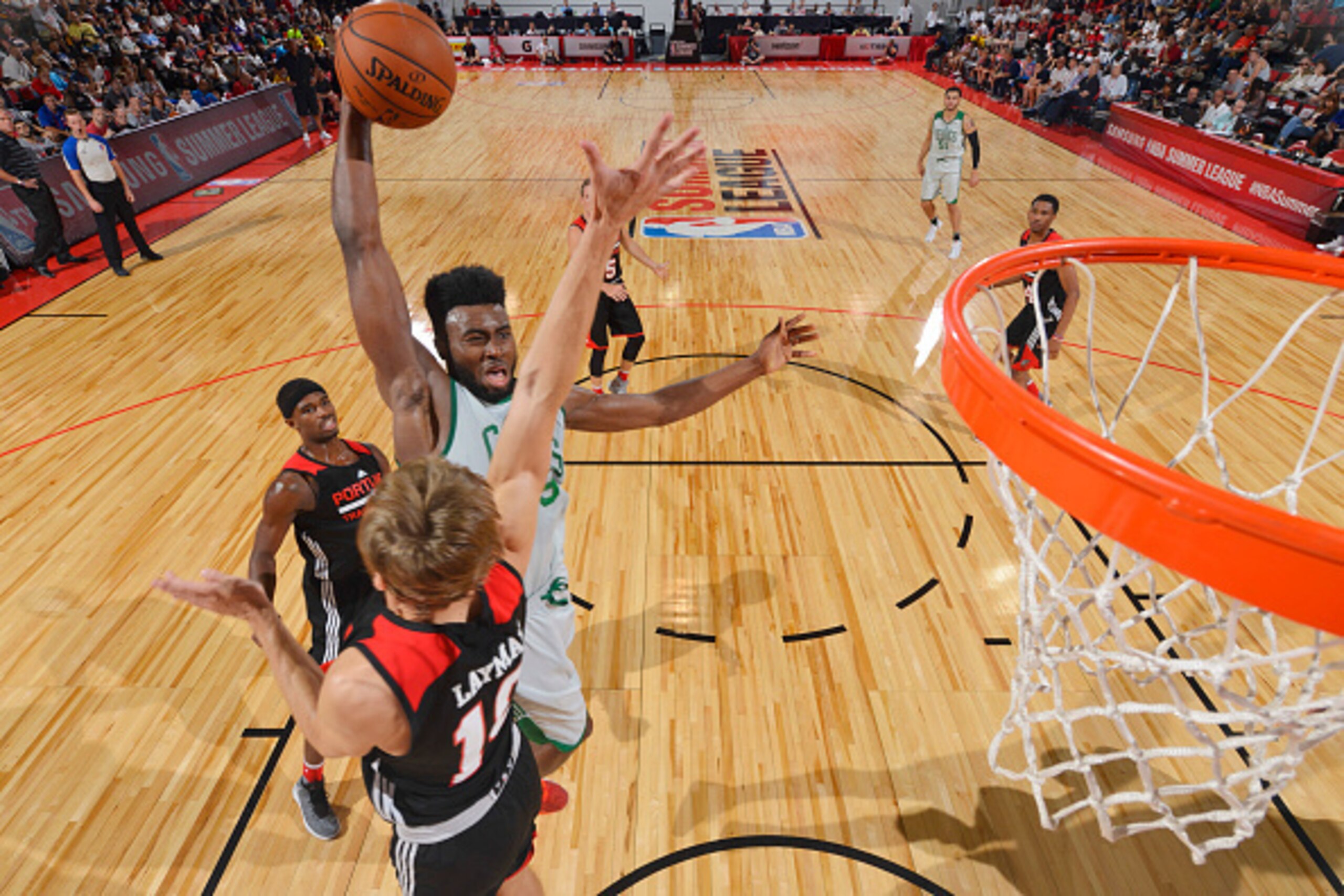
Best Case: Jimmy Butler
At 6’7”, 220 pounds, Jaylen Brown’s build is almost identical to Jimmy Butler’s. So too are the hallmarks of his game.
With a rock-solid frame, Brown can bully his way to the basket and body up opponents at multiple positions better than most 19-year-olds. The No. 3 pick out of Cal racked up more than 10 free-throw attempts per game this summer—a hair ahead of the 9.8 per game Butler logged in Las Vegas four years ago.
Neither player came into the pros as anything close to a knockdown shooter, and Butler has vacillated between poor and above-average through his five seasons with the Chicago Bulls. The Boston Celtics can only hope the same for Brown, who shot 32.4 percent from the field and 22.7 percent from three between stints in Utah and Nevada this month.
Brown and Butler may compare most favorably in the confidence that underpins their respective games. Brown isn’t as brash as Butler, but he is already self-aware enough to know how he can succeed immediately and what he’ll have to do to really shine later.
“Three years from now, I’ll look back and be in a good place,” Brown said at summer league.
Worst Case: Stanley Johnson
Physically speaking, Stanley Johnson might be even more of a dead ringer than Butler is. Johnson is at least 20 pounds heavier than Brown, but he brings similarly broad shoulders—and a comparable coiffure—to the court.
Skill-wise, everything that ties Brown to Butler also applies to Johnson: the bowling-ball basket attacks, the substandard jump shot, the defensive prowess on the perimeter and the confidence to both apply his strengths liberally and improve on his weaknesses.
Johnson, for his part, has been working hard this summer to hone his shooting form with the help of the Detroit Pistons’ coaching staff, albeit to little payoff during the Orlando Summer League.
Johnson could one day be as good as Butler currently is, just as that All-Star and All-Defensive status may be in store for Brown.



4. Dragan Bender, PF, Phoenix Suns
4 of 10
Best Case: Dirk Nowitzki
The temptation with Dragan Bender is to slot him in as the next Kristaps Porzingis—in part because both were No. 4 picks, but largely because they’re both slender 7-footers from Europe who can run the floor and shoot.
In some respects, Dirk Nowitzki might actually be a better mirror for Bender than for Porzingis. While Porzingis made his mark as a rookie by attacking the glass—particularly on the offensive end—Bender figures to find his footing beyond the arc. The Croatian teen had the green light to fire away from three during summer league and responded with 6.8 attempts per game, though the Phoenix Suns expect he’ll hit more than 26.5 percent of them.
“We want to turn him loose and shoot the open ones when they’re there,” Suns summer-league coach Nate Bjorkman said. “I’m telling you, he hit a couple of them tonight, and it’s just a matter of time when they start falling 40 percent of the time. He’s a very good shooter.”
Nowitzki turned out to be more than "very good," but only after shooting a paltry 20.6 percent from three as a rookie. Once Bender gets comfortable from 24 feet out, he too could use his height and range to change the game.
Worst Case: Meyers Leonard
So long as Bender can shoot and rebound a little bit, he should turn out no worse than Meyers Leonard. And, really, Leonard’s not that bad of a result.
Injuries, more than anything, have limited the former lottery pick’s development with the Portland Trail Blazers. When he has played, though, he's flashed a sturdy stroke (38.5 percent from three for his career) and an ability to bang on the boards (8.9 rebounds per 36 minutes over his career) that somewhat belies his 7'1" size.
If nothing else, Bender can take heart in the knowledge that, so long as he stays healthy and shows he can shoot the ball, he should be able to land a second contract that’s at least as lucrative as the four-year, $41 million pact Leonard recently inked with the Blazers.
5. Kris Dunn, PG, Minnesota Timberwolves
5 of 10
Best Case: John Wall
Speed. Power. Defense. Pinpoint passing in transition. Perimeter shooting that isn’t quite so accurate.
These qualities all describe John Wall’s game as much as Kris Dunn’s. Granted, Dunn isn’t quite the speedster Wall is—who is, really?—but he’s fast enough in the open floor to blur the lines between himself and the Washington Wizards All-Star. Dunn’s first step is plenty quick around bigger defenders, and at 6’4” and 205 pounds, he can physically overwhelm smaller guards.
Turnovers could be a concern, just as they were (and still are) for Wall, but that’s to be expected of any young point guard. If Dunn can hold his own defensively and hone his jump shot (35.4 percent from three, 69.3 percent on free throws at Providence), he could give the Minnesota Timberwolves good reason to part ways with Ricky Rubio much sooner than expected.
Worst Case: Elfrid Payton Jr.
Comparing Kris Dunn to Elfrid Payton Jr. might be a bit too close for comfort: Both are 6’4” point guards with suspect shots and strong defensive chops. Both were lottery picks born in the winter of 1994.
The biggest difference? Aside from their tonsorial preferences, Payton left school after three years, while Dunn stuck around for four.
For all his faults as a shooter (.435/.326/.589 shooting splits in year two), Payton is still a NBA starting point guard. And with Victor Oladipo off to Oklahoma City, Payton’s claim to the top ball-handling job for the Orlando Magic is even stronger than before. If he can carve out a place for himself in the NBA, surely Dunn can eventually do the same.
6. Buddy Hield, SG, New Orleans Pelicans
6 of 10
Best Case: Bradley Beal
You wouldn’t know it from looking at his summer-league stats, but Buddy Hield lands on the New Orleans Pelicans’ doorstep with many of the same shooter/playmaker credentials that made Bradley Beal the Washington Wizards' third pick in 2012.
Not that Hield’s Vegas struggles (32.7 percent from the field, 22.9 percent from three) weren't unusual for a star prospect being swarmed by opposing defenses. Back in his day, Beal shot 41.8 percent from the floor and 30 percent from deep in summer league.
“It was crazy, man,” Hield said. “It’s a different pace, something I’ve got to adjust to and learn.”
He should have an easier time getting the hang of the NBA game next to a star like Anthony Davis, much like Beal has done since joining forces with John Wall. So long as Hield can translate the threat of his jump shot from college to the pros, he could develop into the sort of strong second option Beal has become.
Worst Case: Courtney Lee
Courtney Lee’s career may not feature the flash or cash that’s come to define Beal’s, but it’s featured more than enough splash. Over the course of eight NBA seasons, Lee has hit 38.4 percent of his threes while playing for six different teams.
Those two numbers are tied to one another: Lee is no star, but as a serviceable three-and-D wing, his skills will always be in high demand. If Hield can hone his defensive skills, he too could hang around the Association for a decade or more.
And, perhaps, land his own four-year, $50 million deal with the New York Knicks down the line.
7. Jamal Murray, G, Denver Nuggets
7 of 10
Best Case: Stephen Curry
Only one freshman in NCAA Division I basketball history has hit more threes than the 113 Jamal Murray drained at Kentucky last season: Davidson’s own Stephen Curry.
Soon enough, Murray could make that company all the more appropriate.
Beyond the fact both were drafted seventh overall in their respective years, Murray and Curry defy categorization at a single perimeter position. Curry looks and handles the ball like a point but shoots and scores like a 2. Murray, on the other hand, is more on par with shooting guards size-wise but came up as a floor general.
“I’ve been playing the 2-guard at Kentucky, and I’ve been playing the 1 my whole life, so I’m pretty comfortable,” Murray said at summer league. “It’s just basketball. I don’t get into positions too much.”
And he shouldn't. Murray’s positional fluidity should allow him to thrive with the Denver Nuggets and within the basketball revolution Curry has sparked.
Worst Case: Brandon Knight
How well Murray handles being a shooter more than a ball-handler could dictate the extent of his NBA success.
If he’s cool with spending most of his time off the ball next to true point Emmanuel Mudiay, Murray should fit in just fine with the Nuggets. If he insists on being a primary offensive operator, despite plenty of evidence he shouldn’t be, then a future as the next Brandon Knight awaits him.
Not that there’s anything wrong with that, per se. Between his stats (17.1 points, five assists per 36 minutes for his career) and his salary (a five-year, $70 million deal with the Suns last summer), Knight is doing just fine. As far as ceilings are concerned, though, he seemed to hit his as a point guard a while ago.
Knight has never been particularly proficient in the pick-and-roll, for one. According to NBA.com, he scored 0.74 points per play (39th percentile among his peers) and turned it over 20 percent of the time in those sets.
If he were more amenable to playing off the ball, Knight might’ve already found his niche as a multiskilled, if somewhat undersized, 2-guard. Instead, he may continue wandering the league’s landscape for the job he wants.
8. Marquese Chriss, PF, Phoenix Suns
8 of 10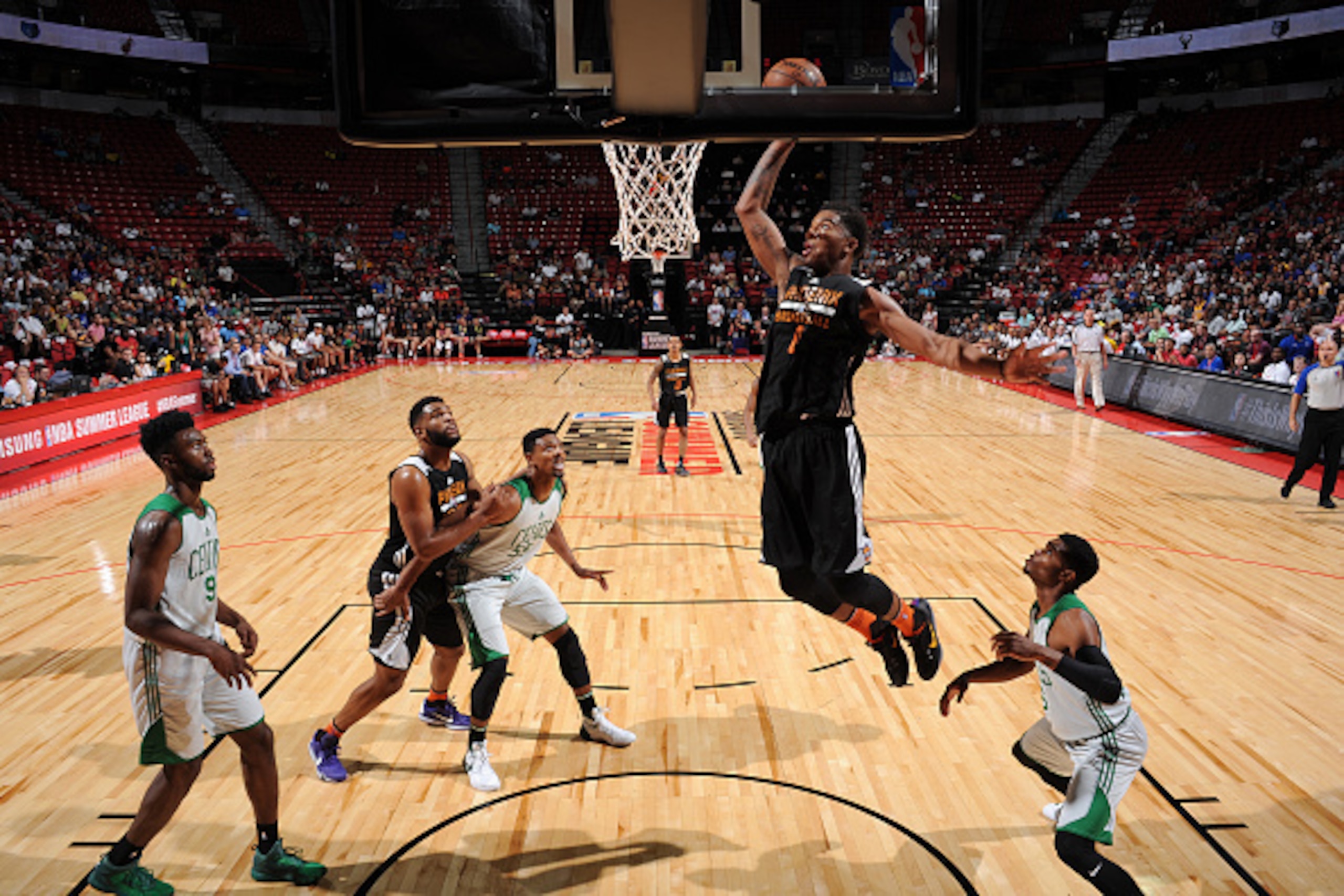
Best Case: Amar'e Stoudemire
Marquese Chriss is raw—perhaps more so than any other prospect to come out of this year’s draft lottery. The 6’9”, 225-pound Sacramento native didn’t pick up organized basketball until he was 14, when a shoulder injury all but ended his football career.
Chriss hasn’t left his football instincts behind, though. He flashed an intriguing outside game in college but, with his elite athleticism, Chriss is a rim-rattler. At summer league, he tried to dunk everything in sight, evoking images of a young Amar’e Stoudemire.
Once upon a time, Stoudemire was one of the game’s premier power forwards—a pick-and-roll finisher who fit perfectly next to Steve Nash in Phoenix. The Suns might now have Stoudemire’s successor, with the same desire to improve all around.
“I love coaching him [Chriss],” Suns coach Nate Bjorkman said. “You tell him something, he’s going to do it. He’s been great. Smart, bright, big-time future.”
If Chriss’ three-point shot and defensive prowess translate to the next level, his future could be just as bright as Stoudemire’s.
Worst Case: Marvin Williams
As The Ringer’s Jonathan Tjarks noted before the draft, Chriss’ profile, both stylistically and statistically, compares closely to that of Marvin Williams:
"Chriss is the better shot-blocker and Williams is the better shooter, but the ideal role for Chriss is similar to the one Williams has carved out for himself with the Charlotte Hornets. Williams was a tweener forward who wasn’t big enough to be a 4 or perimeter-oriented enough to be a 3.
Being the second overall pick in the 2005 NBA draft was a curse for much of his career, but the shifting tides of the league have created a niche for him; these days, Williams is a prototypical small-ball 4.
"
That’s a solid floor for Chriss, especially if his shooting holds up. Otherwise, he could end up like another handsomely rewarded free agent with ties to Charlotte, for his dunking and defense alone: newly minted Orlando Magic big man Bismack Biyombo.
9. Jakob Poeltl, PF/C, Toronto Raptors
9 of 10
Best Case: Jonas Valanciunas
Should the Toronto Raptors lose Jonas Valanciunas for some reason—be it injury, trade or a future foray into free agency—they may have a veritable clone in Jakob Poeltl at the ready.
The Austrian big man morphed into a bona fide low-post scoring threat during his sophomore season at the University of Utah. He averaged 17.1 points, 9.1 rebounds and 1.9 assists while demonstrating nifty footwork and deft touch around the rim—both staples of Valanciunas’ game—albeit without the benefit of a ranged jump shot.
Poeltl also projects as Valanciunas-like on the defensive end. Neither player has the hops or length to be a particularly potent shot-blocker (Poeltl logged 1.7 swats per game in college), but both can disrupt opposing offenses merely by being in the proper position.
Valanciunas is under contract through at least 2019, so there’s no great rush for Poeltl to replace him. But the 20-year-old has all the tools to step in for his Lithuanian counterpart down the line.
Worst Case: Zaza Pachulia
Zaza Pachulia could soon shoot up the ranks of bulky, ground-bound European bigs now that he’s slated as fifth wheel to the Golden State Warriors’ "Fantastic Four."
For now, he’s a fair floor for Poeltl. Pachulia’s never been quite as adept next to the hoop as Valanciunas and, to a lesser extent, Poeltl has proved to be. But the Georgian giant has always taken up sizeable swaths of space and all the rebounds that land within them.
Even if Poeltl’s back-to-the-basket skills are stifled in the NBA, he should still be big and strong enough to gobble up boards and putbacks the way Pachulia has for over a decade.
10. Thon Maker, F, Milwaukee Bucks
10 of 10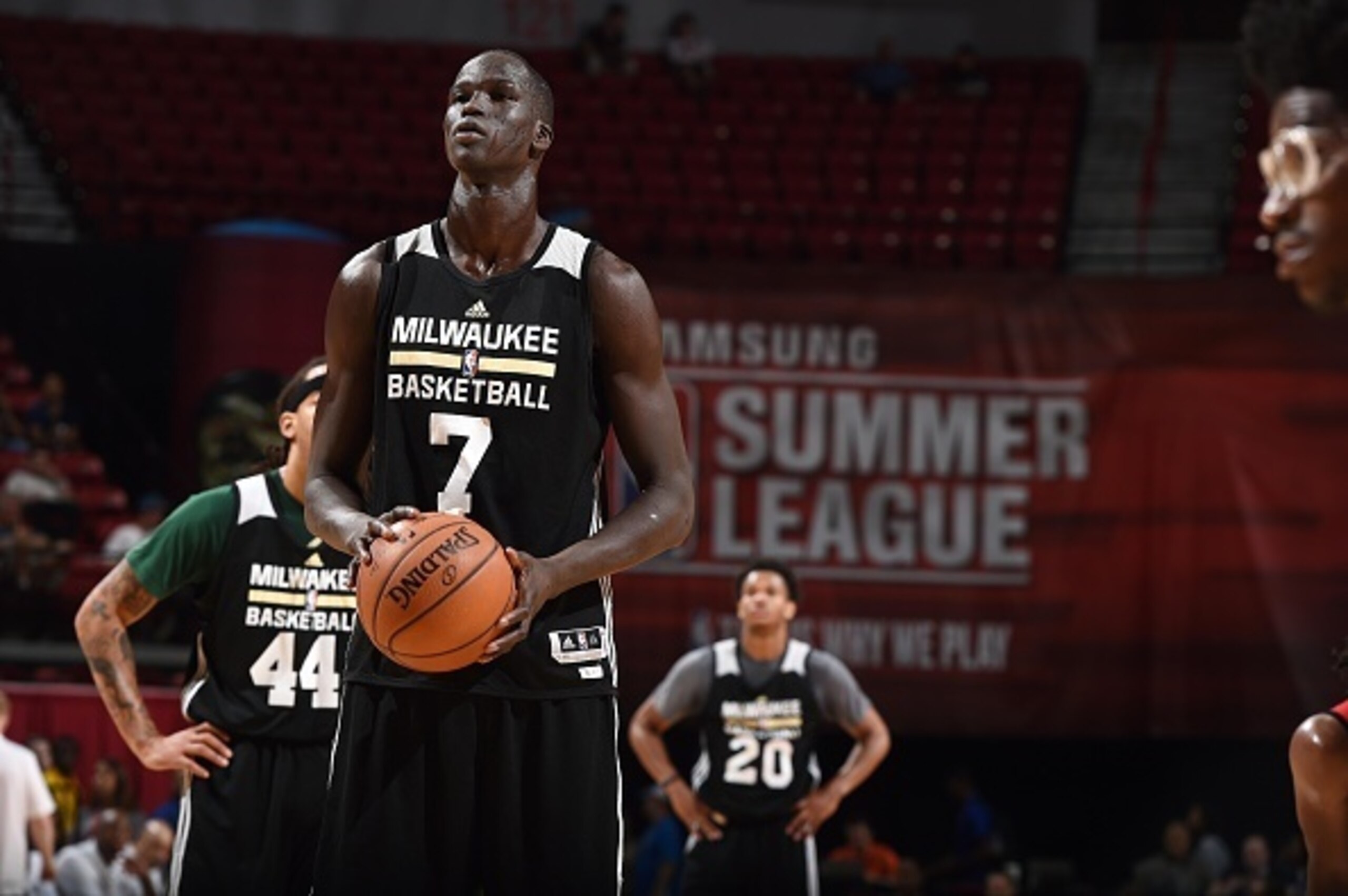
Best Case: Serge Ibaka
Thon Maker came on the YouTube AAU mixtape scene as a 7-footer with guard-like ball skills, but he doesn’t figure to make his mark in the NBA that way. Instead, it will be his touch as a shooter and length as a shot-blocker and rebounder that will carve out an initial niche.
That was the case in Las Vegas, where Maker hit 31.6 percent of his 3.8 threes per game while racking up 14.2 points and 9.6 rebounds for the Milwaukee Bucks.
Nobody combines those three elements in today’s NBA better than Serge Ibaka. The new Orlando Magic big man saw his shot suffer during his last season with the Oklahoma City Thunder, but he had drained better than 35 percent of his threes during each of the previous three campaigns. Likewise, Ibaka’s rim protection in 2015-16 wasn’t what it had been at its peak, when he was the league’s back-to-back block king.
Still, if Maker can put his fluid frame to use as a stretchy big on one end and a paint patroller on the other, he’ll settle in for a Bucks club that seems to be stockpiling length and athleticism at every position.
Worst Case: John Henson
John Henson, the "King of Limbs" himself, is another athletic Bucks piece. If Maker’s outside shot doesn’t follow to the Association, he could wind up as another Henson.
Both are exceedingly skinny 7-footers whose length allows them to contest shots and nab loose balls, even when outmuscled by thicker competitors.
Henson hasn’t yet established himself as a full-time starter in Milwaukee, and Maker could wind up as competition for his spot, especially if the Bucks find better uses for Henson’s contract. The former Tar Heel has a four-year, $44 million extension that kicks in this coming season.
All quotes were obtained firsthand unless otherwise noted.

.png?w=2560 "Week 8 Winners & Losers 📊")


.jpg?w=2560 "Jonathan Taylor Landing Spots")