Predators Fleece Canadiens in P.K. Subban Trade, Become Quiet Western Contender
On Wednesday, the Nashville Predators and Montreal Canadiens each committed to different visions of the future.
In Montreal, general manager Marc Bergevin doubled down on old-school hockey virtues. Shea Weber is a paragon of the old ways, a mammoth defenceman with exemplary defensive zone positioning, a cannon of a shot and who always hits to hurt.
The Predators went a different route. In P.K. Subban, they added a player who excels by the new metrics, Corsi and Fenwick, a quick and aggressive rearguard who occasionally takes risk in the hope of greater reward. They also got younger, banking that Subban in his prime will be a better player than Weber in his 30s.
TOP NEWS
Mark Scheifele Landing Spots 📍

Ranking Top 10 NCAA Men's Hockey Players for 2026-27 Season

Every Team's Odds to Win the Cup 🏆
It’s hard not to like Nashville’s decision, even while we must acknowledge Weber’s unique attributes.
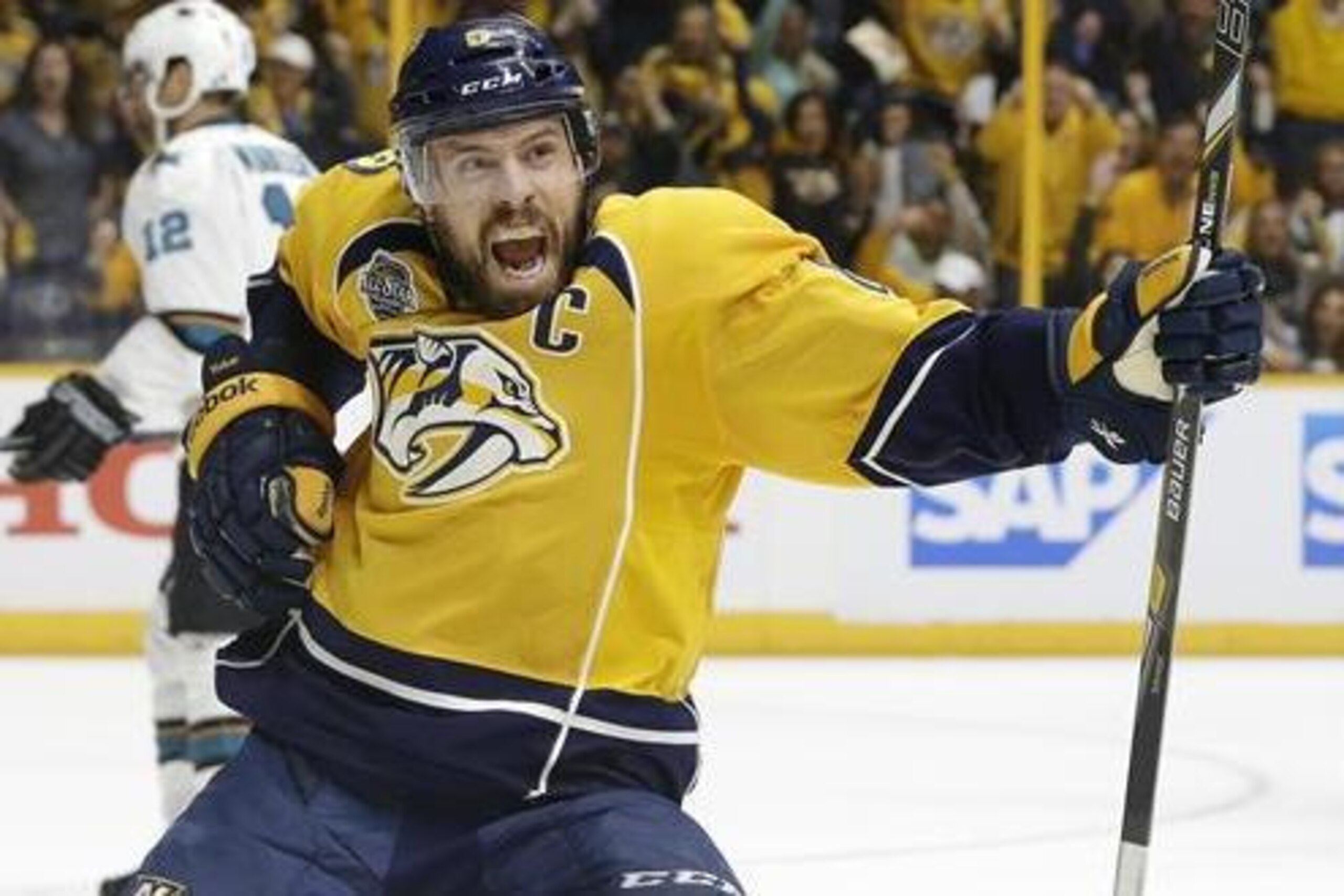
Weber, who is occasionally and mistakenly dismissed as second-rate by the odd extremist in the analytics community, is a good player. The things he does well are important. Watching him play, I’ve always been struck by how well he patrols the border of the scoring chance area in the defensive zone and how effective he is at using first his reach and then his body to prevent dangerous shots.
He’s also uncommonly good as a shooter in the offensive zone. His 80 power play goals since the 2005 lockout are more than any other defenceman, and he’s one of just three defencemen (sometimes forward Dustin Byfgulien and Erik Karlsson are the others) to average more than 0.2 goals per game over that span.
The trouble is in between those points. Shot metrics are heavily influenced by a player’s ability in a transition game, and that’s not a particular strength for Weber, as I wrote for B/R back in March:
"Weber has limitation as a puck-mover, which is part of the reason why [Roman] Josi's been a good partner for him. In my viewing, he mostly deferred to Josi on breakouts, settling for lower-risk lateral plays. When not under pressure, he passed fine, and a lot of the mistakes were 50-50-type plays in the neutral zone, where he chipped the puck out and hoped for the best rather than making a clean pass.
"
Subban is a different sort of player.
The area in which Subban excels is the same one in which Weber is unremarkable. Andrew Berkshire, an analytics writer for Sportsnet.ca, dug into the numbers of both players and highlighted the dramatic difference between the two:
"Subban is an elite transition player who moves the puck up ice with control better than almost anyone in the NHL, and again, Weber is nothing special there, as he relied on Roman Josi … Even in something as simple as completed passes, Subban’s numbers blow Weber’s out of the water.
"
One of the best things about the advent of analytics in hockey is that it has reopened the discussion about what really matters in a player.

For years, the almost unquestioned conventional wisdom was that the primary role of a defenceman is to play responsible defensive hockey. The newer school argues that if a player has to play defence, he’s losing, and that the cardinal principle is to get the puck and keep the puck.
It’s a principle that I’ve never seen expressed better than by Dave Tippett, the well-regarded head coach of the Arizona Coyotes. Speaking to Dan Bickley of the Arizona Republic, he illustrated it thusly:
"I'll give you an example. We had a player that was supposed to be a great, shut-down defenseman. He was supposedly the be-all, end-all of defensemen. But when you did a 10-game analysis of him, you found out he was defending all the time because he can't move the puck. Then we had another guy, who supposedly couldn't defend a lick. Well, he was defending only 20 percent of the time because he's making good plays out of our end. He may not be the strongest defender, but he's only doing it 20 percent of the time. So the equation works out better the other way. I ended up trading the other defenseman.
"
That, in a nutshell, is the argument for Subban. He may not be as polished in the defensive zone as Weber is, but he doesn’t have to be because any difference is more than compensated for by his superior ability to get the puck and advance it up the ice.
It’s an argument that’s heavily reinforced by virtually any statistical analysis.
Since the 2012 lockout, the Predators’ performance as a team has been virtually indistinguishable regardless of whether or not Weber has been on the ice. Their shot metrics actually fall a bit, and in terms of five-on-five goal differential, they go from scoring 50.6 percent of all goals without Weber to 50.9 percent of all goals with Weber. That he treads water in a tough minutes role isn’t a bad thing, but Subban does much better.
Over the same span, Montreal’s shot metrics improved dramatically the moment Subban stepped on the ice; they went from getting outshot 52-48 to outshooting by a 52-48 margin, an 8 percent swing. Goal results were equally dramatic:
- With Subban on the ice: 223 goals for, 187 goals against (54.4 percent of all goals were positive)
- Without Subban on the ice: 294 goals for, 297 goals against (just 49.7 percent of all goals were positive)
Subban’s collection of strengths and weaknesses is a better fit for the modern game than Weber’s, and if these two players were at similar points in their careers, this would be the kind of trade that might put Nashville over the edge. The Predators came within one game of knocking off the Sharks in last year’s playoffs. Despite a modest payroll, they aren’t that far off from competing for the NHL’s most coveted prize.
Incredibly, though, this move helps Nashville not just next season but for years to come. Weber turns 31 in the offseason and has 10 years left on his contract, committing Montreal to his age 31-40 seasons. Subban just turned 27; it’ll be four years until he’s at the same age as Weber, and when he gets there his contract will only have two seasons left to run.
Nashville got better today, better tomorrow and in all likelihood better for the next six years. If the Predators can get their goaltending nailed down, they could win the 2017 Stanley Cup.
Statistics courtesy of Hockey-Reference.com, NHL.com and Puckalytics.com. Salary information courtesy of GeneralFanager.com.
Jonathan Willis covers the NHL for Bleacher Report. Follow him on Twitter for more of his work.


.jpg?w=2560 "NFL investigating 2 referees for separate viral exchanges")

.jpg?w=2560 "Report: Chiefs Contact Hill's Agent")
.jpg?w=2560 "OBJ Calls Out Giants After Release")
.jpg?w=2560 "Tyreek makes another cryptic post amid Chiefs rumors")


.jpg?w=2560 "Greenlaw Talks Payton Exchange")