

Muhammad Ali, Head to Toe: There Will Never Be Another Boxer Like Him
Muhammad Ali was arguably the most influential and revered figure in American sports history. Sure, Babe Ruth was great, Michael Jordan was amazing and Jim Brown was, too. But Ali was so much more.
Ali was “The Greatest.”
There was never such a heavyweight boxer before he burst on the professional fight scene in 1960, and there has not been one since.
Ali was one of a kind.
“I would say that physically speaking, Ali is the model for the perfect heavyweight,” said Springs Toledo, boxing historian, essayist, HBO insider and author of In the Cheap Seats. “He was long and lithe and loosely muscled, which made for a smooth delivery of punches. His fast-twitch fibers were, and remained, extraordinary for a man that size. His facial features were rounded off; no angles…which meant that punches were more apt to slide off his face, which was rolling with and riding out punches anyway.”
The Fight City’s Lee Wylie, whose YouTube analysis has been lauded by HBO’s Jim Lampley (incidentally, Lampley also wrote the forward to Toledo’s latest collection of essays), agreed with Toledo’s assessment.
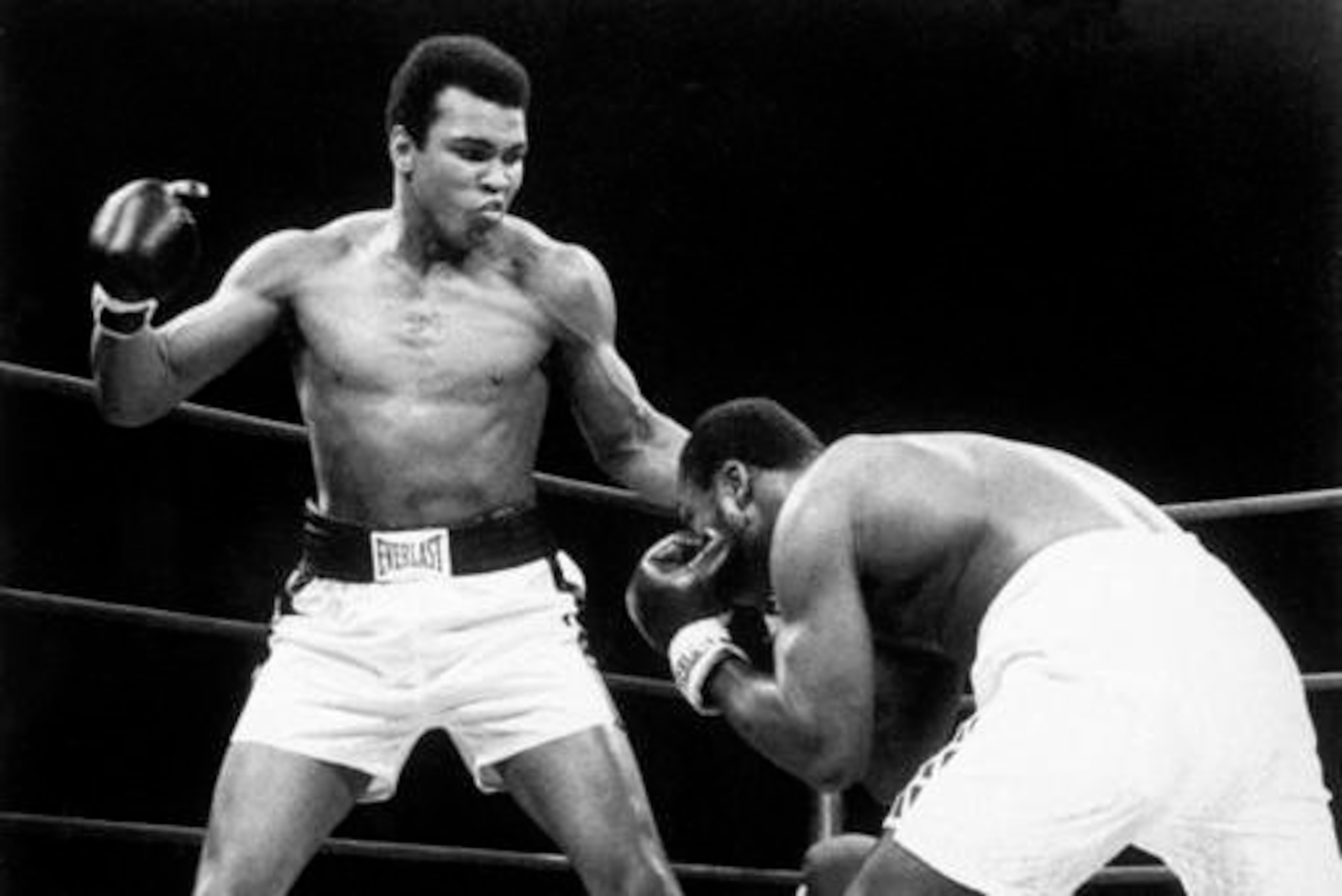
“Ali was an anomaly in terms of physicality and athleticism,” said Wylie. “Mike Tyson was more explosive, and Floyd Patterson may, in fact, have had faster hands. But neither was as big or as physically strong as Ali. Standing 6’3’’ and weighing 214 pounds in his prime, Ali was the most potent mix of size, speed and physical strength the heavyweight division has ever seen.”
Fair enough. But what made him so hard to beat? Is it something we can see on film? I don’t see it. Watching him in pre-exile form, defeating the likes of Patterson, George Chuvalo and Henry Cooper, there seems so much to criticize. He does so many little things wrong. He runs around the ring too much. He over-relies on his jab. He pulls straight back from the hips after he punches.
Sure, he was a great athlete. But what made him such a great fighter? The two do not always go hand in hand, after all. Boxing history is littered with great athletes who couldn’t fight a lick.
But Ali was not among their ranks.
Wylie agreed Ali was no technical marvel. Still, no one in the history of heavyweight boxing fought and beat as many great fighters as Ali. Patterson. Sonny Liston. Joe Frazier. George Foreman. With or without technical flaws, Ali bested them all, going 7-1 against four of the best heavyweights ever.
“Ali wasn’t as technically sound as Willie Pep, or even his stablemate, Willie Pastrano, for that matter," added Wylie. "I consider Pep to be the greatest out-fighter in boxing history, but Ali’s sense of distance and timing may have been second to none. During his most aesthetically pleasing performances, Ali would move gracefully around the ring, flicking out stinging jabs, and then raid with a combination when the opponent was between steps and unprepared.”
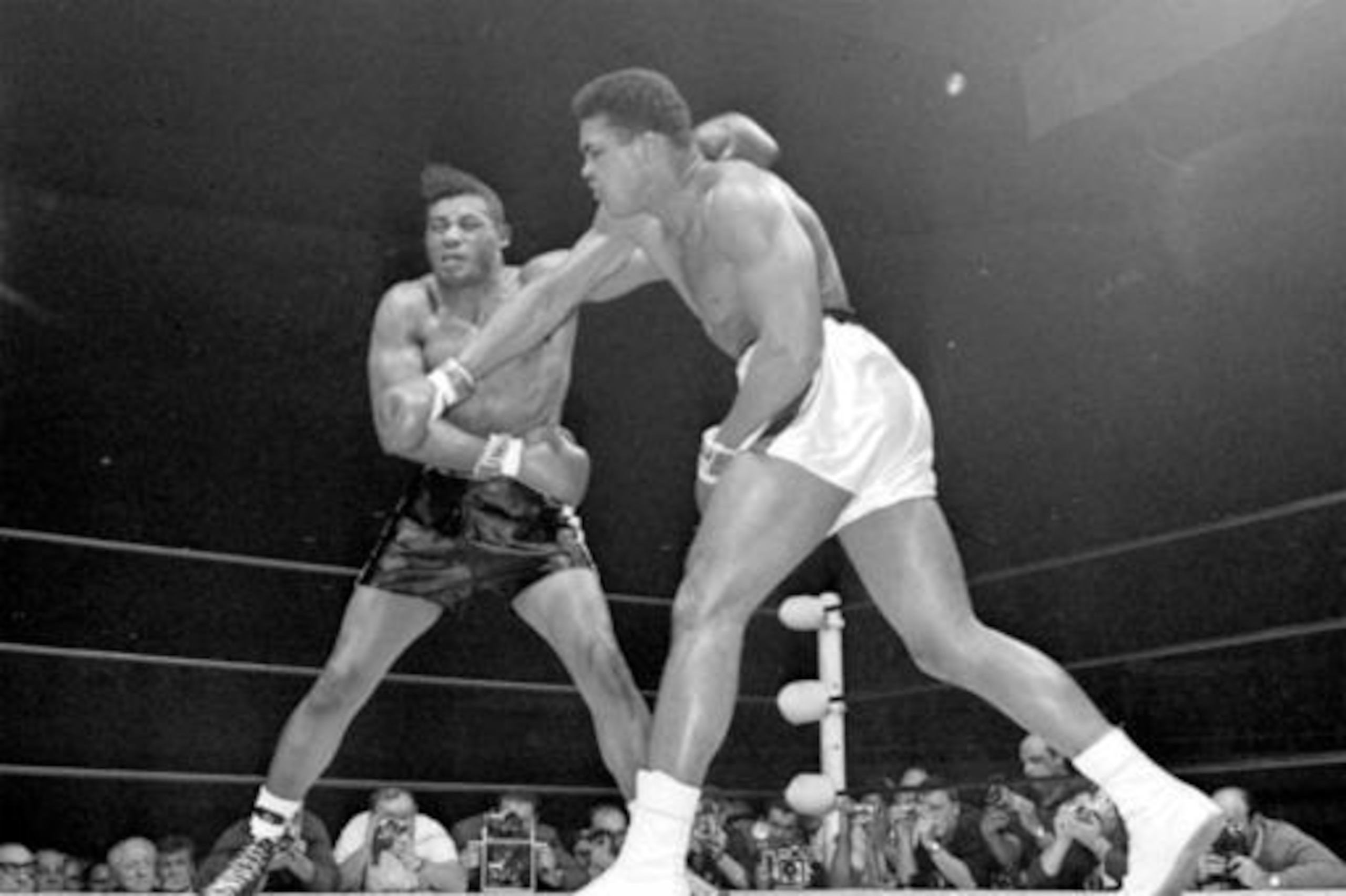
There is nothing like watching Ali at his best.
This witty, bombastic heavyweight champion who made trash-talking rhymes famous long before beef tracks became the norm in American music, was an artist of his craft. Ali’s ring work was poetry in motion.
How does he so effortlessly glide across the mat, dodging punches while landing his own? Are his feet even touching the ground? Does this man really weigh over 200 pounds?
“Bundini Brown's [float like a] butterfly and [sting like a] bee description is pretty apt,” said Toledo of Ali's corner man. “Ali had two styles over the course of his career. In the '60s, it was purely an athletic style—all legs and speed, timing and distance negotiation backed by psyche jobs he'd pull on opponents before the fights.”
Ali was a conscientious objector to the Vietnam War. He refused induction into the military in 1967 and was subsequently stripped of his title and banned from professional boxing. When he returned to boxing after a three-year hiatus, he was no longer as fleet of foot.
“At his best, it was his athleticism that set him apart—his legs, hand speed and his sense of timing and distance,” said Toledo.
As such, conventional boxing wisdom dictates he’d pay for over-relying on such gifts now that he wasn’t so fast and agile. Ali could still move, but gone were the effortless days of 12-round dances where Ali led and his opponent followed. Ali couldn’t be the butterfly as much anymore. He had to be the bee.
If you’ve followed boxing over the past 20 years or so, you’ve seen evidence of what typically happens when great fighters who rely on sheer athleticism start slipping down the inevitable slope of age.
Is there a better example than Roy Jones Jr.?
Without getting too into the minutia of the argument, Jones Jr. went from Superman to Jimmy Olsen in the blink of an eye. A fighter who once looked unbeatable was then getting knocked out by the likes of Glen Johnson.
But Ali? When he started slowing down, he didn’t miss a beat. In fact, the older, slower Ali went on to enjoy a heavyweight fighting career that will remain unrivaled for years to come. No one in the history of heavyweight boxing has a better resume against tougher opposition than Ali, and most of his toughest fights and opponents came after he returned to boxing in 1970.
How’d he do that?
"Athletic styles like Ali's have short primes because they rely on the powers of youth,” said Toledo. “However, he was bigger and stronger in the '70s, and so [he] realigned his style to include more clinching and leaning since he was in range far more often and didn't have the wheels he had in the '60s.”
If you’ve never watched Ali’s bouts against Frazier and Foreman, go find them on YouTube. Ali was as good a clincher as anyone who ever lived, and he was stronger and more fierce when close to his opponent than he is often given credit for.

Wylie noted the same. While Ali slowed down in the '70s, his best skills, according to Wylie, helped him navigate those rough waters like few had done before. Along with Ali's strength and grappling ability, Wylie pointed out the boxer's fast, accurate jab, his apt use of feints and rhythm changes, as well as his unparalleled sense of distance and timing.
Has there ever been a more successful punch than Ali’s counter right hand over an opponent’s jab?
“Ali was masterful at causing opponents to misjudge distance and fall short with an attack,” said Wylie. “By leaning forward at the waist and thus creating a false sense of distance, Ali could make an opponent misjudge distance and fall short with an attack almost at will. Thinking Ali was in range to be hit, the opponent would take the bait and lead with what is typically the longest weapon to the nearest target, the jab. Ali would then pull away from the jab and return fire with a right hand over the top while the opponent was reaching in and unable to recover. By manufacturing a scenario where a jab from the opponent was practically inevitable, Ali was able to anticipate, time, and counter an attack more easily."
Yet beyond his excellent physical traits, his artful skill set and mastery of getting in his opponents’ heads, there still seems to be something else beneath that made Ali such an unrivaled heavyweight power.
Is saying he had intangibles too cliche?
“Ali’s punch resistance and heart were just as important to his makeup as a fighter as his IQ, speed and athleticism were," said Wylie. "The same holds true for his eyes. This may seem like I'm stating the obvious here, but Ali’s eyes were always wide-open during the heat of battle. Ali had great visual awareness—he saw everything—and this aided his punch-anticipation immensely."
There is no shortage of things to dissect about Ali the fighter. Everything Toledo and Wylie said is valid. They are both smarter boxing men and better analysts than me. Ali was a transcendent fighter who augmented his skill set to enhance his greatest assets and accomplish as much or more than any other heavyweight.
He is the only three-time lineal world heavyweight champion, and only Joe Louis, who held the championship for nearly 12 years and 25 successful defenses, could lay claim to Ali’s status of being the best heavyweight ever.
Still, some things are more simple than we like to admit.

Two-time heavyweight champion George Foreman, who was seen as unstoppable when Ali handed him that now-famous loss in 1974, told Bleacher Report it wasn’t just one thing Ali did as a fighter that made him so great. Rather, it was all of it, and the whole of Ali—all that talent and skill bound together by dogged determination—was infinitely greater than the sum of its parts.
“Muhammad Ali was no bigger, stronger or punched harder than any other boxer,” said Foreman. “What made him special was his hidden determination. He’d never give up. I never faced anyone like him before nor did I after him.”
Even those who don't follow the sport acknowledge there will never likely be, at least in any of our lifetimes, another fighter who makes as indelible a cultural and historical impact as Ali. But what the devoted followers of the sweet science know is this: The same holds true from a purely boxing perspective.
There will never be another fighter like Ali.
Unless otherwise noted, all quotes were obtained firsthand.
.jpg?w=2560 "Hunter's Wife Calls Out Sharpe")

.jpg?w=2560 "Peyton Linked to Colts GM Job")
.jpg?w=2560 "Rams' New Kicker Placed on IR")