

NFL Players Who Can Make a Big Impact in Year 2 After Subpar Rookie Campaigns
Every NFL player develops at his own rate. Not every rookie is destined to make an instant impact; very few will. Yet too many give up on young players before they receive a legitimate chance to realize their potential.
In today's instant-gratification world, development can be a dirty word, but it does take time for young men to acclimate to the professional game for a multitude of reasons.
An understanding of a new system or role must factor into a young player's evaluation. Injuries tend to get in the way as well.
An old rule of thumb used to exist in the NFL: A first-round pick should start at some point in his first year. A second-round player should start in his second year. A third-round pick should be a starter by his third year. Anything after that point is a bonus.
However, some players need more time to fully integrate themselves into a different world. The leap from college to professional football is immense. Thus, players who underwhelmed as rookies still have the opportunity to make an impact early in their fledgling careers.
Bleacher Report identified eight of last year's draft picks who fell short of lofty expectations yet are prepared for breakthrough campaigns this fall. Each second-year player included should receive more playing time, benefit from an improved surrounding cast or experience better overall health/conditioning than a year ago.
In every situation mentioned, the young players should be placed in a position to succeed.
Just Missed the Cut
1 of 9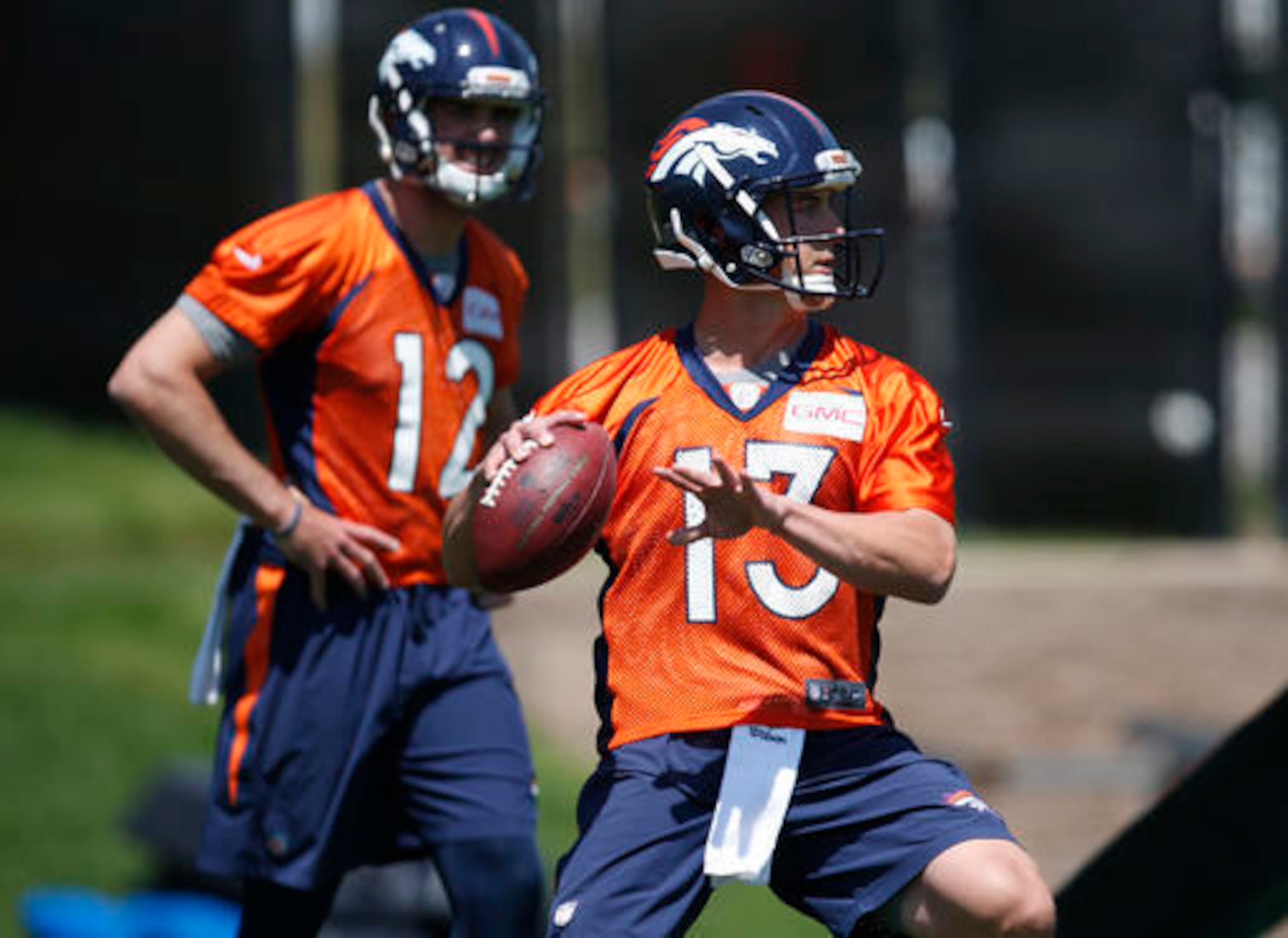
Not every player fits neatly into certain categories.
For example, it's difficult to say players disappointed during their rookie campaigns if they were late-round picks with few expectations placed upon them in the first place.
Miami Dolphins running back Jay Ajayi slid to the fifth round of last year's draft when concerns arose about the long-term health of a previously injured knee. The Boise State product played in the Dolphins' final nine games and flashed great potential, but no one fully expected him to take over as the starter with Lamar Miller in the lineup.
Miller signed with the Houston Texans in the offseason, and Ajayi will now be the team's new starter. Thus, an opportunity to break through during his second season is within his grasp.
On the flip side, some didn't even play during their rookie campaigns after being later draft picks, but they could start in Year 2.
Maybe the most controversial option is Denver Broncos quarterback Trevor Siemian. Per ESPN.com's Jeff Legwold, cornerback Chris Harris thinks the second-year gunslinger has a shot at the job.
"I think Trevor has a maturity to him," Harris said. "He's kind of the sleeper, I would say. ... Trevor knows the offense. He's very comfortable and can throw the ball too. We've also seen him make big plays in the preseason games under the lights. I wouldn't sleep on Trevor to win the job."
There are also those who disappointed despite their potential, yet they didn't quite make the list.
The Dolphins' DeVante Parker, Cleveland Browns' Cameron Erving, Pittsburgh Steelers' Bud Dupree, New York Jets' Devin Smith, etc., certainly could have done much more, but either the expectations or opportunities placed on them fell short of others who did make the list.
Injuries played a factor as well. The Jacksonville Jaguars' Dante Fowler Jr., Chicago Bears' Kevin White and Baltimore Ravens' Breshad Perriman never played a snap last year. They will be expected to produce during their pseudo-rookie campaigns.
Teams around the league will be looking toward last year's draft class in hopes one or two draftees will offer production after providing very little a year ago.
RB Ameer Abdullah, Detroit Lions
2 of 9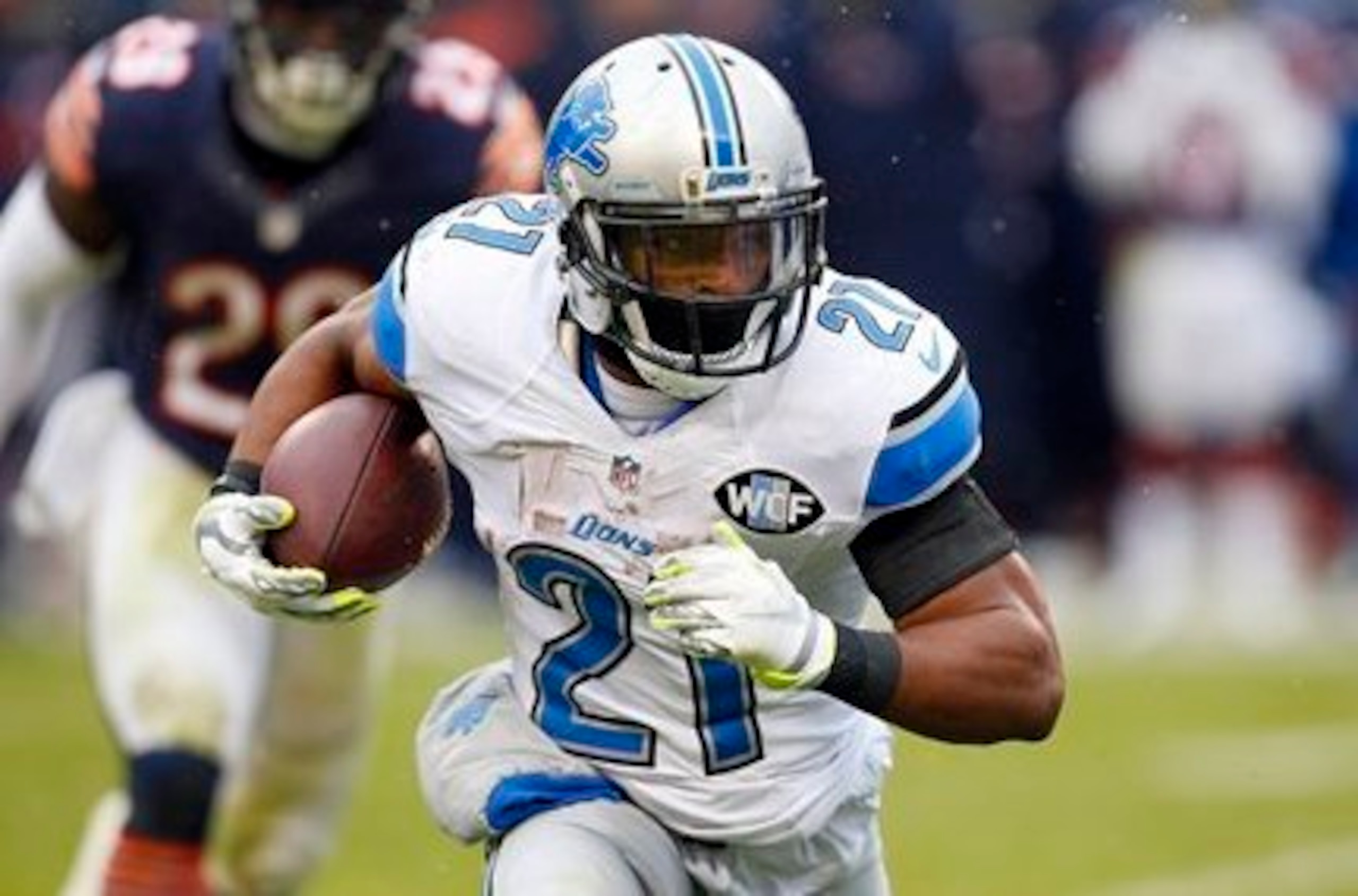
A year ago, Detroit Lions running back Ameer Abdullah was in consideration for the upcoming season's offensive rookie of the year. Instead, the former second-round pick managed only 597 rushing yards as part of the league's worst rushing offense.
Clearly, the team's new general manager, Bob Quinn, didn't view Abdullah or his running back brethren as the primary problem. The organization didn't make any significant running back investments in the offseason. Veteran Stevan Ridley signed a one-year deal worth less than $1 million, and rookie Dwayne Washington wasn't selected until the seventh round.
Instead, Quinn concentrated on reinforcing the offensive line. The team selected three offensive linemen in the draft, including first-round offensive tackle Taylor Decker. This infusion of talent joins a group that already featured Riley Reiff, Geoff Schwartz, Laken Tomlinson and Larry Warford.
Getting bigger and more physical in the trenches served as the offseason's primary goal.
It's now up to Abdullah to take advantage of the re-energized offensive line. The running back is currently dealing with a shoulder injury that required surgery in January, but Quinn told the Detroit Free Press' Dave Birkett that Abdullah will be "ready for training camp."
As well, with Calvin Johnson's retirement, the Lions might finally start to concentrate on running the ball. In four of the last five seasons, quarterback Matthew Stafford targeted Megatron at least 150 times. Some of those targets will now go to Marvin Jones and Golden Tate, but the running backs should benefit to a degree.
No excuses will be forthcoming after this season if the Lions running game doesn't produce. Quinn provided Abdullah with an opportunity to develop into the team's bell cow behind a revamped line. Maybe the Nebraska product can live up to the lofty expectations previously set before him.
RB Melvin Gordon, San Diego Chargers
3 of 9
A philosophical debate ensued last year as to whether any running back in today's game should be taken in the first round of the NFL draft.
No matter what side of the argument anyone supported, they were half right.
The St. Louis Rams selected Todd Gurley with the 10th overall pick, and the Georgia product earned NFL Offensive Rookie of the Year honors.
The San Diego Chargers, meanwhile, weren't as lucky. San Diego traded up to select Wisconsin's Melvin Gordon with the 15th pick. Gordon dealt with injuries, struggled from the start and never really adjusted to the pro game.
After rushing for only 3.5 yards per carry and 641 yards, Gordon appears to be the poster boy for a breakout sophomore campaign due to the expectations and opportunities placed before him. For that to happen, Gordon must show he can be the same explosive back everyone saw at Wisconsin despite microfracture surgery in January.
Gordon is expected to be fully healthy for training camp, according to ESPN.com's Eric D. Williams, and Chargers president of football operations John Spanos is pleased with the former first-rounder's recovery:
"We feel good about him being on track. Obviously, injuries are a very unfortunate part of this game. And he suffered one last year with the knee injury, and had the surgery. And when that happens, of course there's a timetable that’s created.
You follow along the timetable and hope that he's where he's supposed to be or ahead. And that's the case here. And to his credit, he has really attacked this rehab. He's worked very hard. He's been in here all of the time doing extra. And so given this stage and where he's supposed to be, I think it's very encouraging.
"
A fully healthy Gordon should benefit greatly from an offense not completely ravaged by injuries. Keenan Allen will back in the lineup after dealing with a bruised kidney. The organization added fellow wide receiver Travis Benjamin during free agency. The offensive line won't look like Swiss cheese with last year's starting five back along with the additions of veteran Matt Slauson and rookie Max Tuerk.
A bum knee might be the only thing that prevents Gordon from putting together his first 1,000-yard campaign.
.jpg?w=2560 "Commanders Eagles Football")
WR Phillip Dorsett, Indianapolis Colts
4 of 9
A year ago, when the Indianapolis Colts desperately needed help on defense and along the offensive line, general manager Ryan Grigson instead decided to select a wide receiver in the first round of the NFL draft.
At the time, Colts owner Jim Irsay rationalized the pick with the thought Dorsett's speed would create mismatches against opponents' third or fourth cornerbacks. This never came to fruition in 2015.
Dorsett played in 11 games and finished seventh on the team with 18 receptions for 225 yards and only one touchdown.
That said, the Miami product's speed didn't disappear after one subpar year, as Colts cornerback Vontae Davis told the Indianapolis Star's Gregg Dovel: "The guy's fast. He can fly. Being here as a Colt, I've never seen anybody that can run like this guy. We've got some fast receivers—T.Y. [Hilton], [Donte] Moncrief, they can run—but Dorsett…you can tell he has track speed."
It now comes down to using Dorsett's skill in an appropriate manner.
Veteran Andre Johnson is no longer in the lineup. The signing of CFL star Duron Carter didn't work out in the team's favor. Hilton, Moncrief and Dorsett are now the team's top wide receiver options.
Last year, Dorsett only played 215 snaps, according to Pro Football Focus. That number should dramatically increase during the upcoming season.
Not only will the second-year target benefit from more reps, but Andrew Luck will also return to the lineup. The Colts hope they don't have to rely on five different quarterbacks to get through an entire season like they did a year ago.
With increased opportunities and improved play from the game's most important position, Dorsett's speed can finally be a weapon for the Colts.
OT D.J. Humphries, Arizona Cardinals
5 of 9
The Arizona Cardinals' D.J. Humphries became the only non-injured first-round pick from last year's draft not to play in a single game as a rookie.
Considering the fact outside linebacker Markus Golden, running back David Johnson, nose tackle Rodney Gunther and wide receiver J.J. Nelson played such big roles in the team's success last season, it's even more damning for Humphries.
"It's been fun to see how people get so high on you and then get low on you," he said on Bickley and Marotta on Arizona Sports 98.7 FM. "You get drafted in the first round, you're the greatest thing since sliced bread. You don't play, you're garbage."
Humphries' inactivity resulted from two issues. First, the 22-year-old blocker lacked a mature approach coming into the league after declaring early for the draft. But the young lineman said the situation "humbled" him, according to AZCentral.com's Kent Somers. Second, the Cardinals had a pretty good right tackle alternative in Bobby Massie.
As the Florida product enters his second season, Massie no longer stands in his way after the veteran blocker signed a three-year, $18 million contract with the Chicago Bears. It's now Humphries' time to step into the starting lineup. He still has some work to do, though, according to Cardinals offensive coordinator Harold Goodwin, per ESPN.com's Josh Weinfuss.
"I don't think he's quite there," Goodwin said. "It's night and day from as far as last year being on the grass and this year. I'm not worried about D.J. from a physicality standpoint or a knowledge standpoint. I just want to make sure he's prepared, and I think he's going to be OK by the time the season starts."
Teams selected seven offensive linemen in the first round of the 2015 NFL draft. Humphries was by far the most athletic. If he's mentally prepared for a starting role, the Cardinals won't have any issues at offensive tackle.
NT Danny Shelton, Cleveland Browns
6 of 9
The Browns' recent history of drafting has been deplorable, and both of last year's first-round picks could have easily found themselves on this list. But nose tackle Danny Shelton was supposed to be the team's solution for years of poor run defense, while Cam Erving was drafted to be Alex Mack's eventual successor. Thus, expectations were far higher for the team's initial first-round pick than the one who came seven picks later.
Even with Shelton's massive presence in the middle, the Browns finished 30th overall in run defense. Because his weight ballooned over 360 pounds, last year's 12th overall pick never proved to be consistently effective. Instead, he played too high, got pushed around far too much for a man his size and only played 47.9 percent of the snaps last season, per Pro Football Focus.
A new commitment to conditioning should make Shelton look like a completely different player. Shelton started doing MMA training in the offseason, and he now weighs 335 pounds per the new coaching staff's request, according to the Orange and Brown Report's Fred Greetham.
Shelton discussed why it became important to improve his conditioning, per Greetham:
"Towards the end of the (2015) season, that's when my weight started getting out of hand and really, just taking the opportunity with Coach (Ray) Horton and Coach (Hue) Jackson coming in, taking the opportunity to show them a new player. Everybody has a fresh start with these new coaches, but I wanted to take advantage of the opportunity and start the change around the team with myself. When I was able to do that, to change my weight, drop the weight, it was more of me being accountable and me being able to sacrifice for the team and work for the betterment of the team.
"
A slimmed-down Shelton means a more mobile, flexible and explosive nose tackle for the Browns. While he may never develop into a true three-down defender, improved movement and pad level should make him far more effective in his second season than his first. As such, the team's run defense should finally see marked improvement.
DE Vic Beasley, Atlanta Falcons
7 of 9
A position switch for the Atlanta Falcons' Vic Beasley shouldn't worry the team's fans. Actually, it should have the opposite effect.
Last year, the Falcons used the eighth overall pick in the NFL draft to select the pass-rusher extraordinaire. Beasley led Atlanta in sacks last season, but he only managed four, including a nine-game sack-free stretch in the middle of the season.
For an organization that continues to struggle so much when it comes to putting pressure on quarterbacks, Beasley's rookie performance was disheartening even with the knowledge he played through a torn labrum.
Another reason he struggled is because he's an undersized defensive end. Opponents could run at Beasley and overwhelm him. He'll now move to outside linebacker, where he'll be used similarly to how the Denver Broncos utilize Von Miller.
Falcons linebackers coach Jeff Ulbrich assured ESPN.com's Vaughn McClure that Beasley's primary role will remain getting after the quarterback:
"The emphasis with Vic will still be pass rush. The emphasis will still be his nickel end stuff, will still be playing Sam as a blitzer. The majority of his meeting time will be devoted to that. The majority of his individual work pre-practice will be devoted to that. The majority of his practice reps will be devoted to that. And on Sundays, the majority of his reps will be devoted to that.
The Sam [linebacker] stuff, it's just another way to get one of our best athletes on the grass. It's not going to be anything that's going to take away from anything. And the beauty of it is, he's going to have a guy like Philip Wheeler or Tyler Starr or Ivan [McLennan] or others guys who are playing that Sam position that will be working with him. So, "Vic, you're tired? OK, get your break here." But on third down, that sucker's going to be on the grass.
"
With a fully functional shoulder, a game plan for his usage in place and a year of experience under his belt, Beasley should easily eclipse last year's four-sack performance and become far more of a presence off the edge in his second season.
OLB Eli Harold, San Francisco 49ers
8 of 9
Any time a new head coach takes over a team, players get a fresh start. The San Francisco 49ers needed one after the messy divorce from Jim Harbaugh and Jim Tomsula's failures.
Chip Kelly won't simply offer opportunities, particularly for young players; he will attempt to change an organization's entire culture.
For the last five years, Ahmad Brooks served as one of the team's starting outside linebackers. With each passing season, Brooks gets older and less effective off the edge. Fresh blood is needed.
The 49ers spent a third-round pick on Eli Harold a year ago, and the edge-rusher didn't register a sack after getting to the quarterback 17.5 times during his three collegiate seasons.
Two factors should work in Harold's favor during his second campaign. First, Harold received plenty of first-team reps during OTAs while Brooks dealt with a injury. Second, the young man is noticeably bigger and stronger this season after coming into the league at 247 pounds.
According to the 49ers' official site, the second-year outside linebacker now weighs 270 pounds. His increased mass should dramatically help him at the point of attack.
"I'm quite a bit stronger," Harold said. "I felt like, this is my job. This is what I do for a living, and so I have to take it seriously. I tried to put the right things in my body to help me out. I've got a great support system in Virginia. My family was cooking me the good meals."
Brooks might once again start for the 49ers this year, but Harold should expect a much bigger role this season compared to last.
"I'm just going to work hard and let the chips fall where they may," the former third-round pick added. "Whether I'm the starter or the third guy, I'm going to give it all I've got. I'm going to push those guys to get better so we can all be on the same page and help each other out."
CB Trae Waynes, Minnesota Vikings
9 of 9
Some NFL organizations won't hand a top-15 pick a starting position. If the incoming prospect isn't ready, he won't play. This is what happened in Minnesota after the Vikings used the 11th overall pick in the 2015 NFL draft to select cornerback Trae Waynes.
The Vikings had the luxury of multiple veteran cornerbacks already on the roster—Xavier Rhodes, Terence Newman and Captain Munnerlyn—who could still play at a high level, so head coach Mike Zimmer didn't need to rush the young defensive back into the lineup. Waynes played in 15 games and only started one.
The Michigan State product certainly showed flashes, but he never proved to be a consistent option. The coaching staff is expecting bigger things in 2016, though.
Defensive coordinator George Edwards described the expectations for Waynes in his second season, per Viking Update's Eric Oslund:
"We expect him to continue to compete. He's doing a good job this offseason, he seems to have recalled a lot from his first year. He's learned a lot. Just continue to work on the fundamentals and the techniques that we're working between the different concepts that we have coverage-wise in and to take the next step. Take the next step awareness-wise, competition-wise, being able to recall it when we get out here on the field and make plays.
I really think the biggest thing is him coming in and knowing and being confident in what we're trying to accomplish schematically, defensively and the different techniques that we ask him to play, as opposed to what he was doing in college. I think there was a learning curve there. Again, he approached it, he worked hard at it, he had limited reps last year, but we saw some good things when he was able to play.
"
Minnesota's secondary remains loaded, but Waynes will have more of an opportunity this season to see the field. Newman is still a reliable option, but Father Time will eventually catch up to the 37-year-old cornerback. This will allow Waynes to start opposite Rhodes sooner or later.
.jpg?w=2560 "Cowboys Giants Football")
.jpg?w=2560 "Grading WWE Raw 🔠")

.jpg?w=2560 "Follow WWE Raw 🇲🇽")