

Penguins vs. Sharks: Preview of Game 4 of the 2016 Stanley Cup Final
Game 3 of the 2016 Stanley Cup Final saw the San Jose Sharks overcome 1-0 and 2-1 deficits to pick up a crucial 3-2 win on an overtime goal by Joonas Donskoi (pictured above). The Penguins, however, still lead the best-of-seven series two games to one.
The Sharks hope to ride the momentum from that victory into a series-tying win in Game 4. The Penguins, meanwhile, will attempt to regain their two-game series lead and head back to Pittsburgh with a chance to win the Stanley Cup in five games.
Here's a look ahead to Game 4 of the 2016 Stanley Cup Final. We'll examine several key factors that could affect the outcome of this crucial match.
Feel free to voice your opinion on this topic in the comments section below.
Recap of Game 3
1 of 7
The Sharks avoided a 3-0 series deficit with a 3-2 overtime triumph over the Penguins.
In the first period, the Sharks once again got off to a slow start. Perhaps they felt the pressure of playing at home for the first time in a Stanley Cup Final.
For the third straight game, the Penguins opened the scoring. At 5:29 of the opening frame, defenseman Ben Lovejoy's point shot deflected off Sharks blueliner Roman Polak past goaltender Martin Jones.
Just over four minutes later, the Sharks evened the score when Justin Braun's wrist shot eluded a screened Matt Murray.
The second period was scoreless until the 19:07 mark. Winger Patric Hornqvist restored the Penguins' one-goal lead by deflecting another Lovejoy point shot past a partially screened Jones.
In the third, the Penguins killed off a four-minute high-sticking penalty to Nick Bonino when Joel Ward tied the game at 8:48 with a long slap shot that handcuffed Murray.
Both clubs pushed for the winning goal in regulation but came up empty. At 12:18 of overtime, Sharks forward Joonas Donskoi circled the Penguins net and beat Murray high on the short side for the game-winner.
No Substitute for Hard Work
2 of 7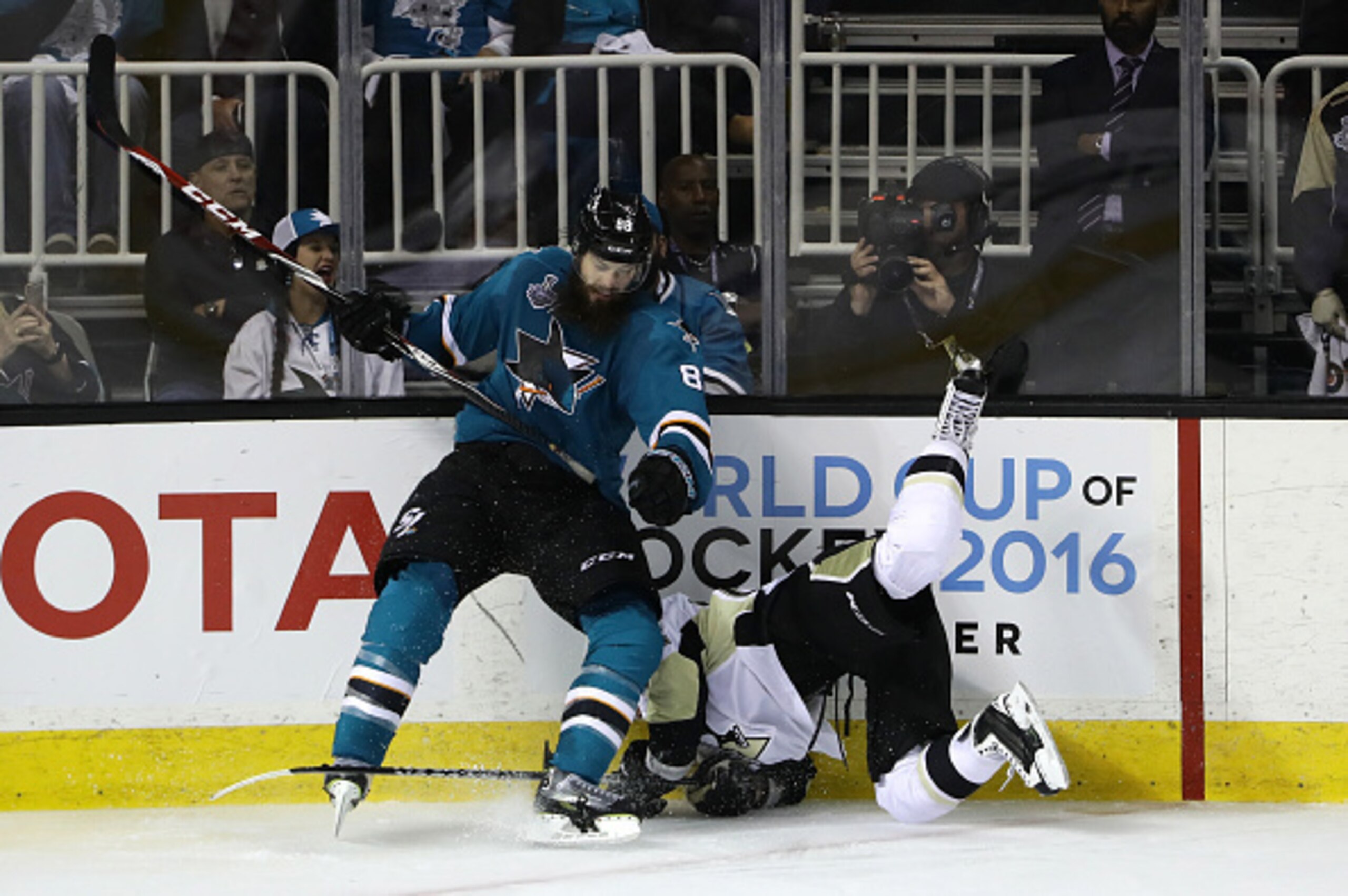
In Game 3, the Sharks' hardworking formula finally paid off in a consistent effort against the Penguins.
During the previous two games of this series, there were long stretches where the Penguins dominated the Sharks. In this match, however, the Sharks put forth an improved effort. Despite falling behind twice in this game, the Sharks never panicked or changed their game plan.
While the Penguins still outshot the Sharks by a wide margin (42-26), the latter had a 79-76 edge in shot attempts. The Sharks finally established a significant physical advantage, outhitting the Penguins 47-17. They had played with more discipline, taking just one penalty while the Penguins took three.
Center Joe Thornton and defenseman Brent Burns typified the Sharks' tireless effort in this game. Thornton picked up two assists and kept his cool throughout the game. Burns was a solid presence at both ends of the ice.
The Sharks have a win and some confidence entering Game 4. Don't expect much deviation from their game plan.
Slow Starts, Blown Leads
3 of 7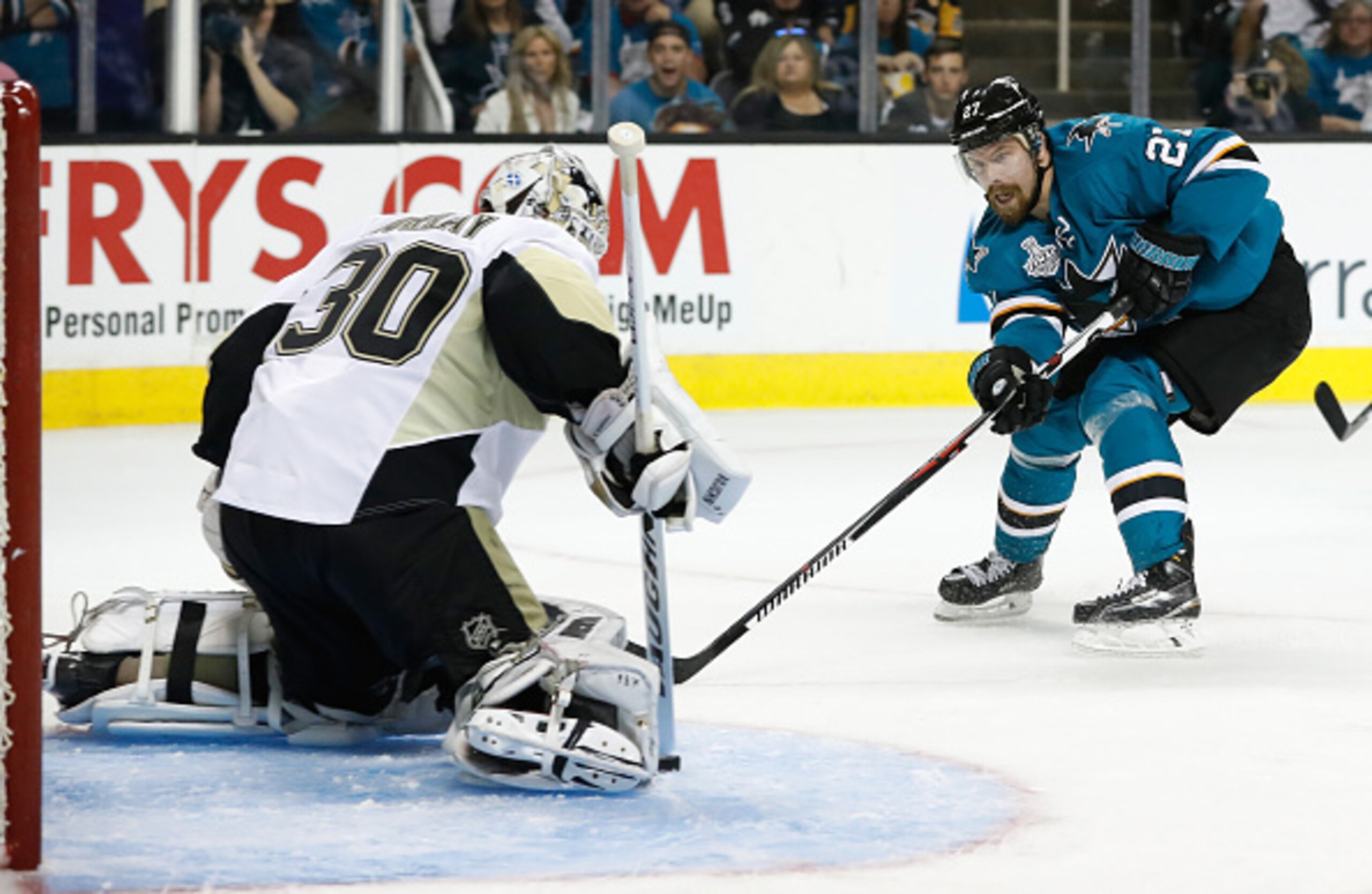
Game 3 saw the Sharks come out slowly in the first period, while the Penguins struggled to hang onto leads. These traits are ongoing trends in this series.
The Sharks' poor first-period effort in the opening game of this series was understandable. It was their first Stanley Cup Final game, and they were filled with nervous energy. That doesn't account for their sluggish start in Game 2.
To their credit, the Sharks needed less time to get into gear during the first period of Game 3. Still, they've yet to have a consistently strong opening-frame effort in this series.
The Penguins, meanwhile, keep struggling to hang onto a lead in this series. They were up 2-0 after the first period of the first game, only to see the Sharks rally back in the second to tie it. It took a late goal in regulation to clinch a win.
In Game 2, they couldn't hold a 1-0 lead and needed overtime to put away the Sharks. In Game 3, they blew 1-0 and 2-1 leads.
Throughout this series, the Sharks have never held a lead in regulation. The Penguins have failed to build upon that advantage.
The Sharks seem to be making progress in overcoming their penchant for listless starts. The Penguins still seek a way to protect their leads.
It will be interesting to see if either club can break these bad habits in Game 4.



Powerless Power Plays
4 of 7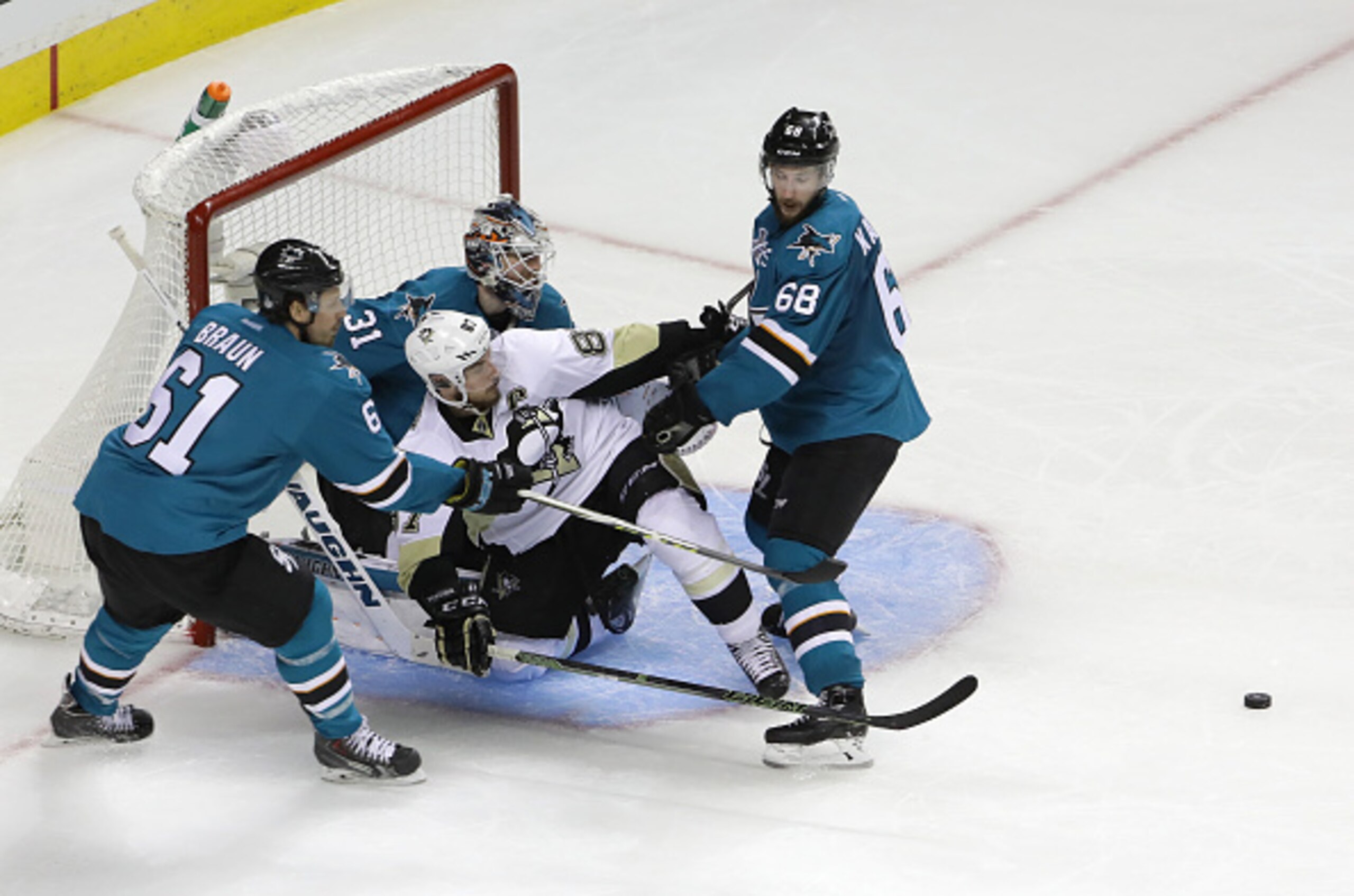
Power-play success played a crucial role in the Penguins and Sharks advancing to the Cup Final.
Sharks stars Logan Couture, Joe Pavelski and Brent Burns account for 13 of the Sharks' 18 power-play goals. That success partially explains why the trio are presently perched atop the playoff scoring race.
Of the 10 goals scored by Penguins right wing Phil Kessel prior to the Final, five came on the power play. Sidney Crosby tallied three, while Evgeni Malkin, Patric Hornqvist and Chris Kunitz each netted two.
In the Stanley Cup Final, however, power-play goals hard to come by for both teams.
The Sharks are the only team to tally a power-play goal in this series. That was Tomas Hertl's goal back in the second period of Game 1. Joel Ward's game-tying tally in Game 3 came at the end of a Sharks power-play and was counted as an even-strength goal.
At least the Sharks got something out of their power play. The Penguins fired blanks in six attempts with the man advantage.
As this series rolls on, the club that starts getting the most out of its power play could become the one that takes home the Stanley Cup.
Containing Crosby
5 of 7
In the first two games of this series, Penguins captain Sidney Crosby was a thorn in the Sharks' side. He had an assist in Game 1 and won a crucial faceoff that set up his club's overtime goal in Game 2.
In Game 3, the Sharks successfully kept the Penguins captain off the scoresheet.
Playing at home in this game also gave Sharks head coach Peter DeBoer the last line change. He used that advantage to get better matchups against Crosby's line.
The most crucial move was ensuring shutdown defenseman Marc-Edouard Vlasic was on the ice against Crosby whenever possible. Vlasic logged 25 minutes and 15 seconds of ice time, giving the Pens' top center little time and space to work his offensive wizardry.
Crosby wasn't the only Penguins star contained by the Sharks' checking in Game 3. Center Evgeni Malkin failed to garner a point. For the first time in this series, the vaunted HBK Line of Carl Hagelin, Nick Bonino and Phil Kessel didn't factor into the Penguins' scoring.
Keeping Crosby under wraps, however, remains crucial to the Sharks' hopes of tying this series. It won't be easy. The Penguins superstar remains a scoring threat whenever he's on the ice.
Given Vlasic's success against Crosby in Game 3, the Pittsburgh captain can expect to see more of San Jose's No. 44.
Matt Murray Needs a Bounce-Back Performance
6 of 7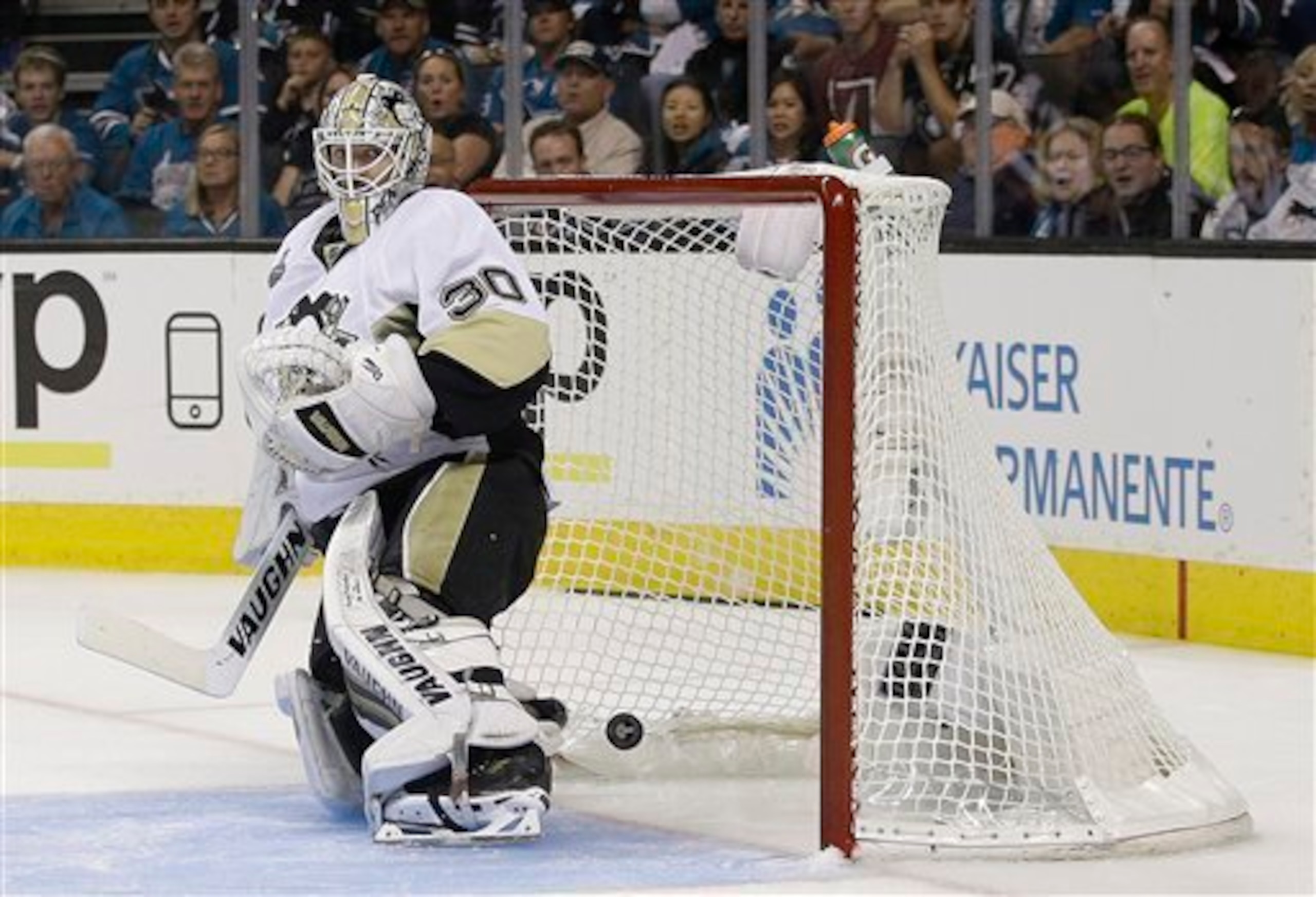
After solid performances in Games 1 and 2 of the 2016 Stanley Cup Final, Game 3 is one Penguins goaltender Matt Murray will try to forget.
Though the 22-year-old netminder made 23 saves, two of the goals he gave up looked like shots he should've shopped.
The first was Joel Ward's game-tying slapper in the third period. That shot handcuffed Murray, squirting between his left pad and trapper. It changed the momentum of the game.
On Joonas Donskoi's overtime tally, Murray was on his knees hugging the right post. Donskoi's shot beat Murray high on the short side, catching him off guard as it sailed over his right shoulder.
Statistically, it was Murray's worst game of the Final. He finished with an .885 save percentage.
Throughout the 2016 playoffs, Murray's shown he can bounce back from a bad game. After being benched in favor of Marc-Andre Fleury in Game 5 of the Eastern Conference Final, he backstopped the Penguins to four straight wins, two of them in this series.
If recent history is any indication, Murray should rebound with a solid performance in Game 4.
Malkin and Pavelski Are Due
7 of 7
Entering Game 4, Pittsburgh Penguins center Evgeni Malkin and San Jose Sharks center/right wing Joe Pavelski still seek their first points of this series.
Malkin entered this series with four goals and 11 assists for 15 points in 17 games. In the Eastern Conference Final, he collected six points over five straight games.
Pavelski, the Sharks captain, is this postseason's leading goal scorer (13). With 22 points, he's also tied for second among the scoring leaders with teammate Brent Burns.
Credit the tight checking of their opponents for shutting down these two talented forwards. Still, they're overdue to start cashing in offensively in this series.
Malkin and Pavelski are proven playoff performers. Whoever finally breaks their scoring drought first could tip the direction of this series in their team's favor.




.jpg?w=2560 "NFL investigating 2 referees for separate viral exchanges")
.jpg?w=2560 "OBJ Calls Out Giants 😳")



.jpg?w=2560 "Ward Nearly Walks Out of Presser 😳")
.jpg?w=2560 "Tyreek makes another cryptic post amid Chiefs rumors")