Penguins vs. Sharks: The Biggest Takeaways from Game 3 of the Stanley Cup Final
There's an old saying about the playoffs: A team is never really in trouble until it loses a home game. San Jose Sharks fans know the logic and wisdom in those words, but it still has to be troubling for them to see their team down two games to one in its first Stanley Cup Final.
Game 2 of the series went to overtime, with Sidney Crosby's set play being the difference. The talk between Games 2 and 3 generally centered on areas where the San Jose Sharks forwards were coming up short—namely turnovers, pressure and possession. San Jose's forwards were not getting enough zone time, and that was forcing the team's defensemen to deal with waves of Pittsburgh Penguins.
After two games, the Penguins had more shots (71 to 48), more goals and more wins than the Sharks. Pittsburgh was benefiting from great goaltending, timely shot blocks and an enormous number of turnovers on soft plays by San Jose.
In order to turn the series around, the Sharks needed to be more aggressive on the forecheck, worry less about the home-run pass and work toward getting the first lead in the series. Without it, San Jose would be down three games to none, and the series would effectively be over.
The final product was not a Rembrandt, but the Sharks prevailed—not by changing the possession game, but rather by getting timely scoring—and now we have a series.
Here are the top takeaways from Game 3 of the 2016 Stanley Cup Final.
San Jose Sharks: The Rise of Joonas Donskoi
1 of 5
Even the most rabid NHL fans didn't spend the day mulling the potential impact of Joonas Donskoi when he signed with the San Jose Sharks. The press release from the team was more detailed than most obscure signings—there was a quote from general manager Doug Wilson—but no one trumpeted his arrival.
In fact, there was no guarantee of an NHL job, as General Fanager shows, the contract was pretty basic beyond a solid performance bonus.
Donskoi won an NHL job with his strong forechecking ability, impressive speed and skill to play among the top nine forwards all season. His point total for the regular season saw him tie for No. 11 overall in points among rookies—and he ranks No. 2 among playoff rookies this spring.
He gave the Sharks something the team did not have in abundance—speed and dogged determination on the forecheck. A lot of the NHL sorties start with a chip into the defensive zone, followed by aggressive pursuit of the puck. San Jose has high-skill players up front, but many of the best forwards are not fast trains. Once possession is gained, these men can work their magic.
Donskoi is vital in that way, and last night, he came through with two points in the biggest hockey game ever played in San Jose. His goal in overtime reset the Stanley Cup Final, breathing new life into a Sharks team that still can't find level ground in possession and cannot make their power play work.
If the Sharks come back and win the Stanley Cup—and they can—the Donskoi goal will likely become one of the most important in team history. Donskoi delivered in the most difficult of circumstances, and in doing so, he went and got himself famous.
Pittsburgh Penguins: Shot-Blocking Their Way to a Stanley Cup?
2 of 5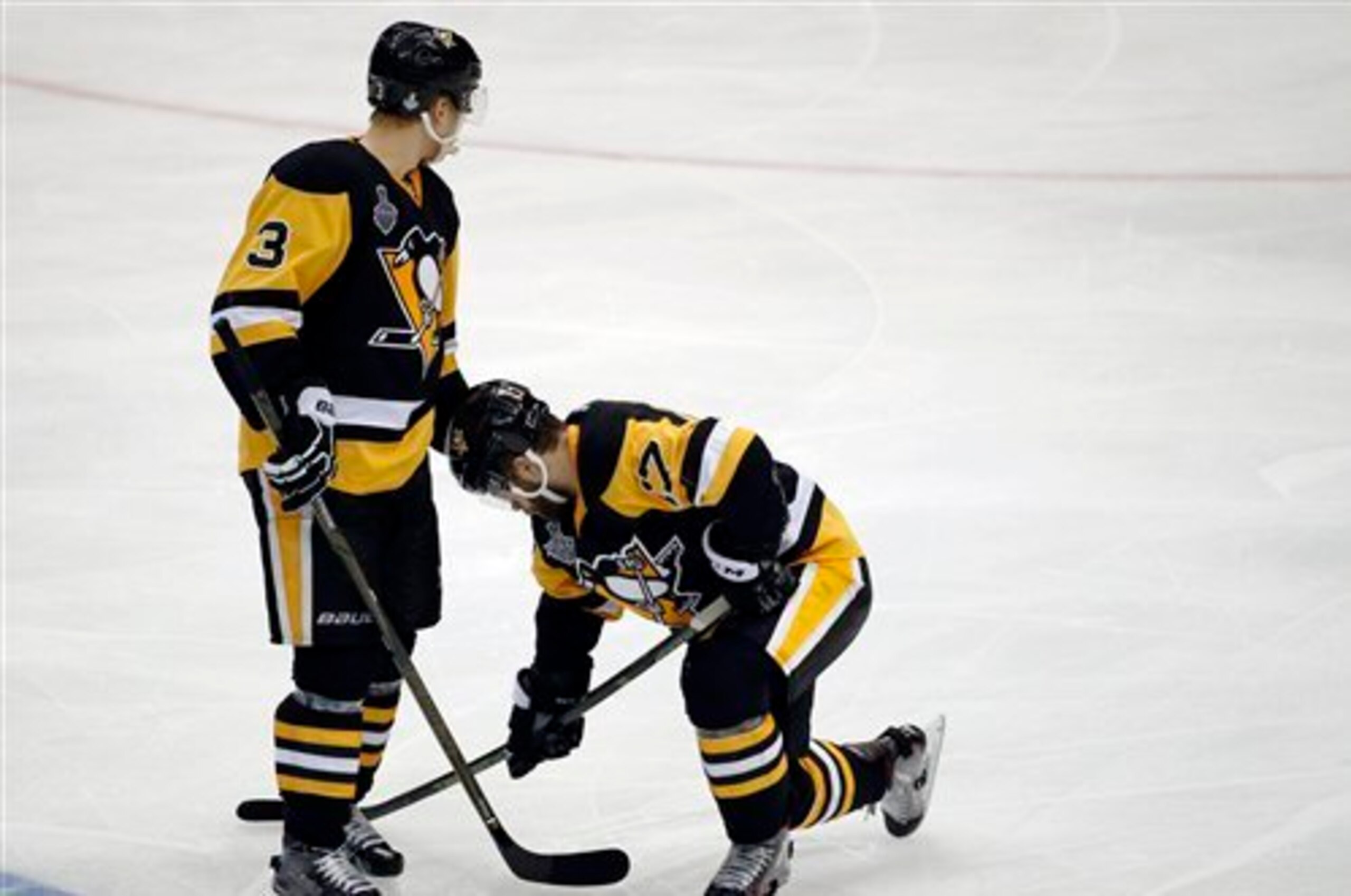
Although the Pittsburgh Penguins lost Game 3, they extended their string of dominant shooting performances. The Penguins had the edge in shots 42 to 26 during the game. Elliotte Friedman of Hockey Night in Canada tweeted that Pittsburgh is blocking a tremendous number of shots—effectively changing their style of play—and that ploy is working.
The shot-blockers in Game 3 came from every pay grade. Sidney Crosby, Phil Kessel, Patric Hornqvist and Nick Bonino were among the forwards who logged blocks, and defender Olli Maatta led the way with six.
Pittsburgh has been getting fantastic goaltending this spring. Matt Murray's .885 save percentage in Game 3 is only the sixth time he has fallen below .920 during the playoffs.
Adding shot-blocking to the defensive system—especially at the extreme level described by Friedman—should benefit the Penguins and boost their chances of hoisting another Stanley Cup.
San Jose Sharks: Is Joe Pavelski Slowing Down?
3 of 5
As the Stanley Cup Final approached, any list of potential Conn Smythe Trophy candidates would have had to include Joe Pavelski. He had 13 goals and 21 points in 18 games and was central to the success of the San Jose Sharks.
In the first three games of the series, Pavelski has zero points and just four shots on goal, despite averaging over 22 minutes per game. Slumps occur, and it is wildly unfair to point out Pavelski as a poor performer—San Jose wouldn't have reached the Stanley Cup Final without him—but could he be hurt?
Every player has a nick or bruise at this time of year. Pavelski did have some looks in Game 3 and may return to the scoresheet soon. Drew Remenda, who spent 18 seasons with the Sharks—13 as a broadcaster—has an interesting take on Pavelski's struggles via the Reporter:
"Joe Pavelski has not yet been able to escape the smothering pressure Pittsburgh is putting on him. It's causing him to pass when he'd normally shoot.
"
Whatever the issue, San Jose needs its best players to play like its best players in this series. Pavelski needs to score soon, and he likely will.



Pittsburgh Penguins: Incredible Contributions from Depth Players
4 of 5
When this season is over, hockey fans would do well to check out all of the talent housed by the Penguins, particularly their recent call-ups from the Wilkes-Barre/Scranton Penguins. Among the current Pittsburgh Penguins playing for the Stanley Cup are Conor Sheary—who has two goals in the Stanley Cup Final—and goalie Matt Murray, who has been a revelation.
The contributions of the Penguins' AHL affiliate do not stop there. Tom Kuhnhackl is averaging over 11 minutes a night in a checking role, Bryan Rust has scored some key goals down the stretch, and Derrick Pouliot and Oskar Sundqvist have drawn in for some games during the playoffs.
This kind of quality represents great work by Pittsburgh's procurement department. Sheary is an excellent example. He left UMass-Amherst and signed an AHL deal with Wilkes-Barre/Scranton, only receiving an NHL contract the following summer. NHL teams who work every angle—draft, college and junior free agency, and European free agency—are shopping in the largest pool available.
If the Penguins win the Stanley Cup, a lot of credit should go to the draft and development personnel.
San Jose Sharks: The Turning Point
5 of 5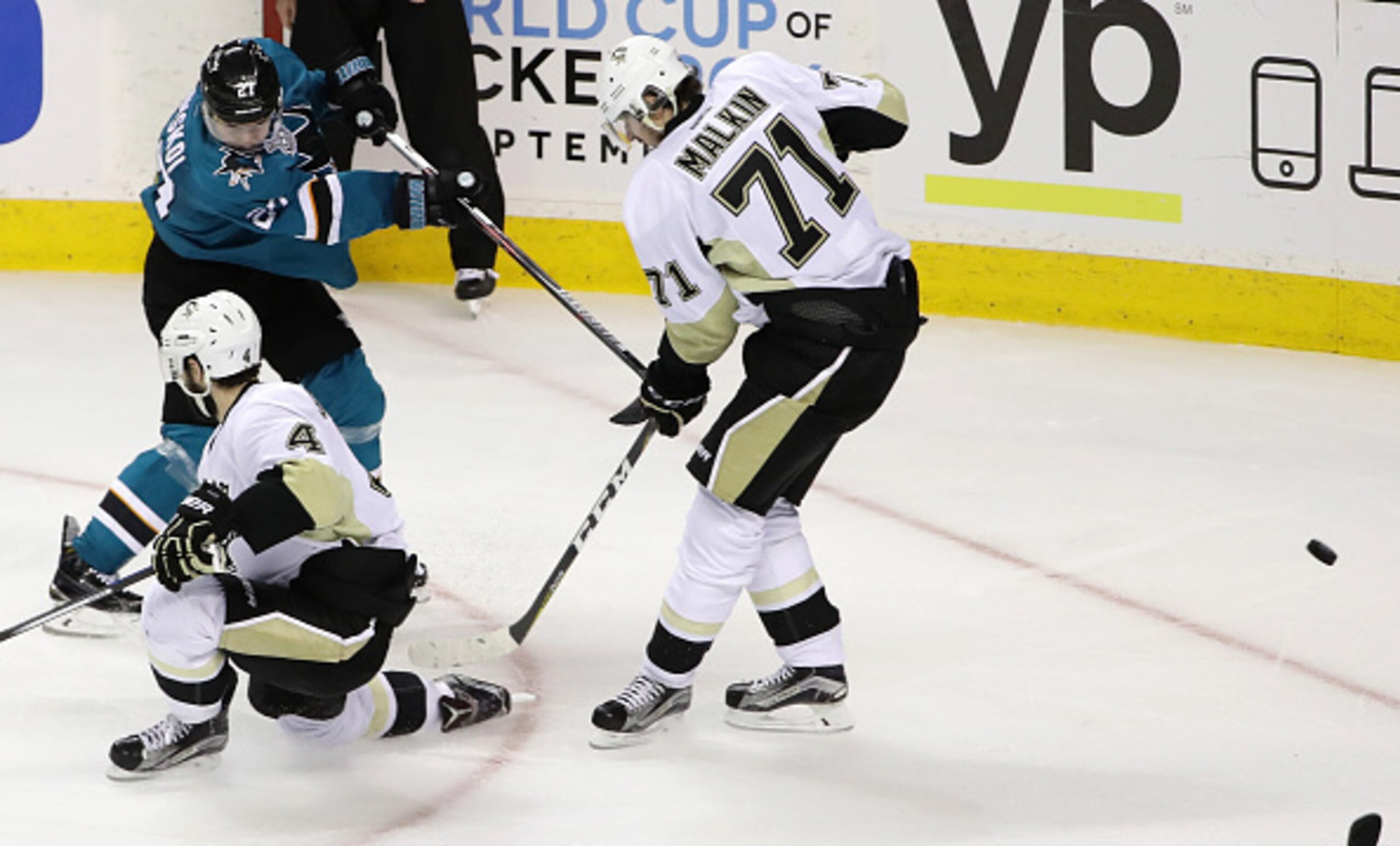
In what was a brilliant series of decisions, San Jose Sharks winger Joonas Donskoi corralled the puck courtesy a deft pass from Chris Tierney and drove behind the net.
Penguins center Evgeni Malkin had him marked, but there was a gap in coverage as Donskoi drove wide to the net front on the left side. Defender Justin Schultz closed the gap but could not get to the San Jose winger in time. Donskoi's shot found the net, and the Sharks were back in the series.
As Stanley Cup Final overtime goals go, the Donskoi marker involved more than the usual skill. Tierney's pass could have been averted, but it found the range. Donskoi would never have reached shooting position without a great deal of momentum, and finally he had the presence of mind to get the puck up as he shot.
San Jose has not had good fortune in overtime this spring, so the club was due. In point of fact, the flow of play clearly favored Pittsburgh in the game, but the hockey gods decided the Sharks would win on home ice. Donskoi may never score a bigger goal in his life.


.jpg?w=2560 "NFL investigating 2 referees for separate viral exchanges")

.jpg?w=2560 "Report: Chiefs Contact Hill's Agent")
.jpg?w=2560 "OBJ Calls Out Giants 😳")
.jpg?w=2560 "Tyreek makes another cryptic post amid Chiefs rumors")