No-Name Goalies Proving Big Salaries Don't Always Matter in NHL Playoffs
Brian Elliott, Matt Murray, Martin Jones, Andrei Vasilevskiy: Those were your four starting goalies as of Sunday as the NHL wended its way into the conference finals. Household names, any? Definitely not. In fact, none of them are even among the top 28 highest-paid goalies in the NHL, according to Spotrac.
In the recently concluded Western Conference semifinals between the Blues and Stars, Elliott played against two Dallas goalies, Kari Lehtonen and Antti Niemi, who combined pulled down $10.4 million in salary this season—$5.9 million for Lehtonen and $4.5 million for Niemi. The Blues paid $2.5 million to Elliott, and that's his salary for next season too.
TOP NEWS

BS Meter on Latest NHL Trade Rumors 🌡️
Best NHL Heritage Classic Jerseys 📋
Teams That Need Goalie Trade💡
In the first round of their series with the Rangers, the Penguins handily won with two no-name goalies making less than $625,000 each in Murray and Jeff Zatkoff, while the league's highest-paid goalie, Henrik Lundqvist at $8.5 million, struggled.
Jones outplayed higher-priced goalies— the Kings' Jonathan Quick and the Predators' Pekka Rinne—in getting the Sharks to the conference finals, while Vasilevskiy made Tampa Bay fans quickly forget, for one game anyway, the injury that forced starter Ben Bishop out in Game 1 against the Penguins.
It all just keeps proving how good the NHL goalie factory is these days.

Bigger equipment, more individualized coaching, better video analysis and better defensive systems executed by just plain better defensive players have all helped goalies do their job more proficiently.
But therein lies the paradox; if the system that produces goalies is so efficient, like so many Teslas off the assembly line, why throw too much money at them? If they can almost be poured into a cookie-cutter mold, baked for a while and, voila, the next competent goalie pops out ready for business, why should a team commit multiple years and multiple millions to players seemingly so easily replaceable?
No hockey person would say that goaltending has become any less important. As former player and current NHL Network analyst Dave Reid said, "It's still the most important position in the sport."
But finding a really bad goalie is hard to do these days. As FiveThirtyEight.com's Neil Paine listed in a 2014 chart, save percentages by goalies have increased dramatically since the NHL started keeping track of shots against in 1983-84. In '83-84, the average save percentage was .874. By 2014, the average had risen to .913.
There were 49 goalies who had save percentages of .910 or better in the regular season. In 1985-86, John Vanbiesbrouck won the Vezina Trophy as the league's best goalie with an .887 save percentage for the New York Rangers. Grant Fuhr of the Oilers won it in 1987-88 with an .881 SP. Hall of Famer Patrick Roy's career save percentage was .910.
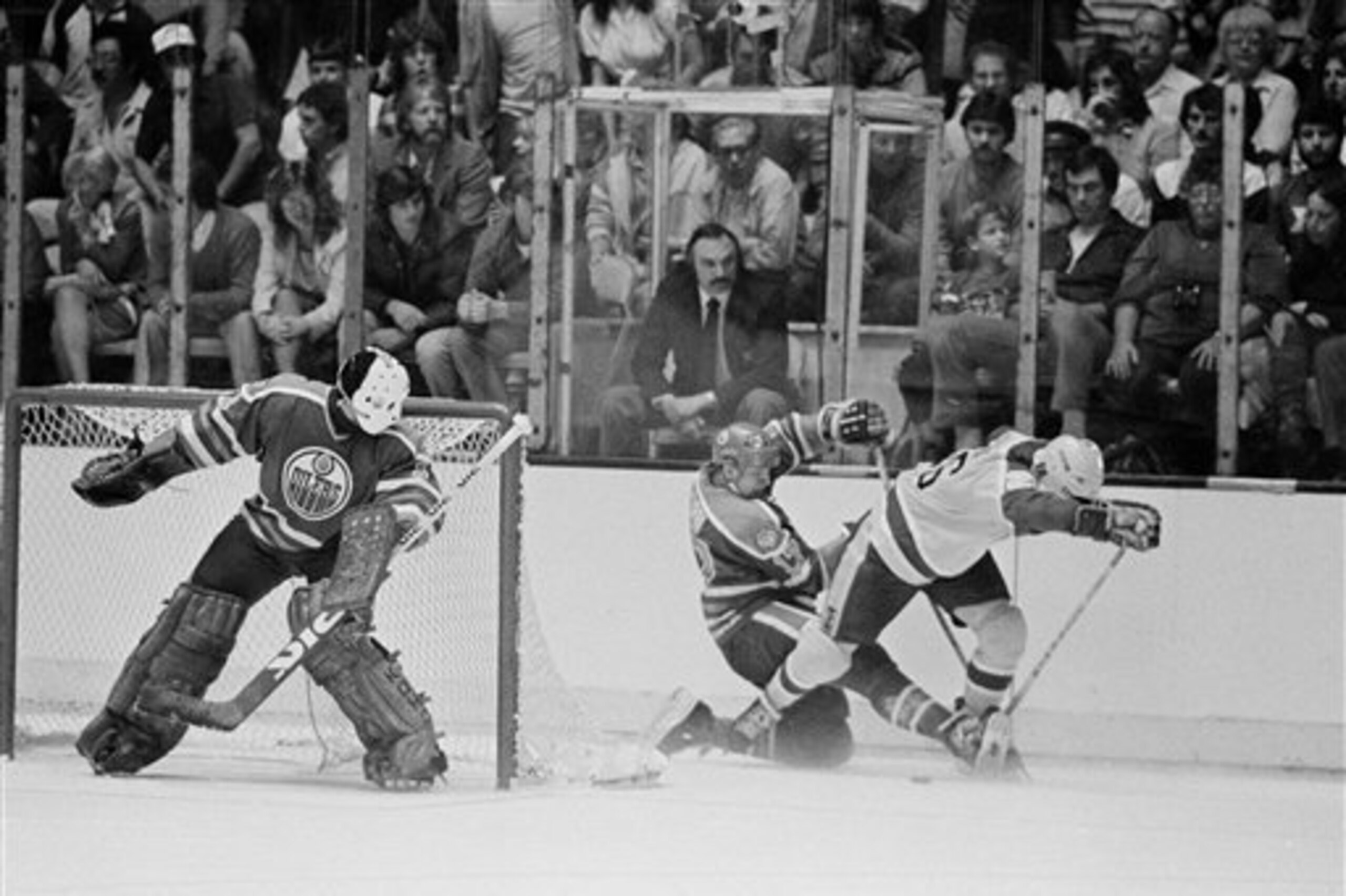
"If a goalie is .910 or lower nowadays, they're probably sitting on the bench or in the minors," Hall of Fame former coach Scotty Bowman said.
But what do you do when you've made that big commitment to your "goalie of the future," based on a good year or two, and things suddenly go south? For years, Detroit Red Wings general manager Ken Holland warned against overpaying goalies, preferring to spend his bigger dollars on top forwards and defense.
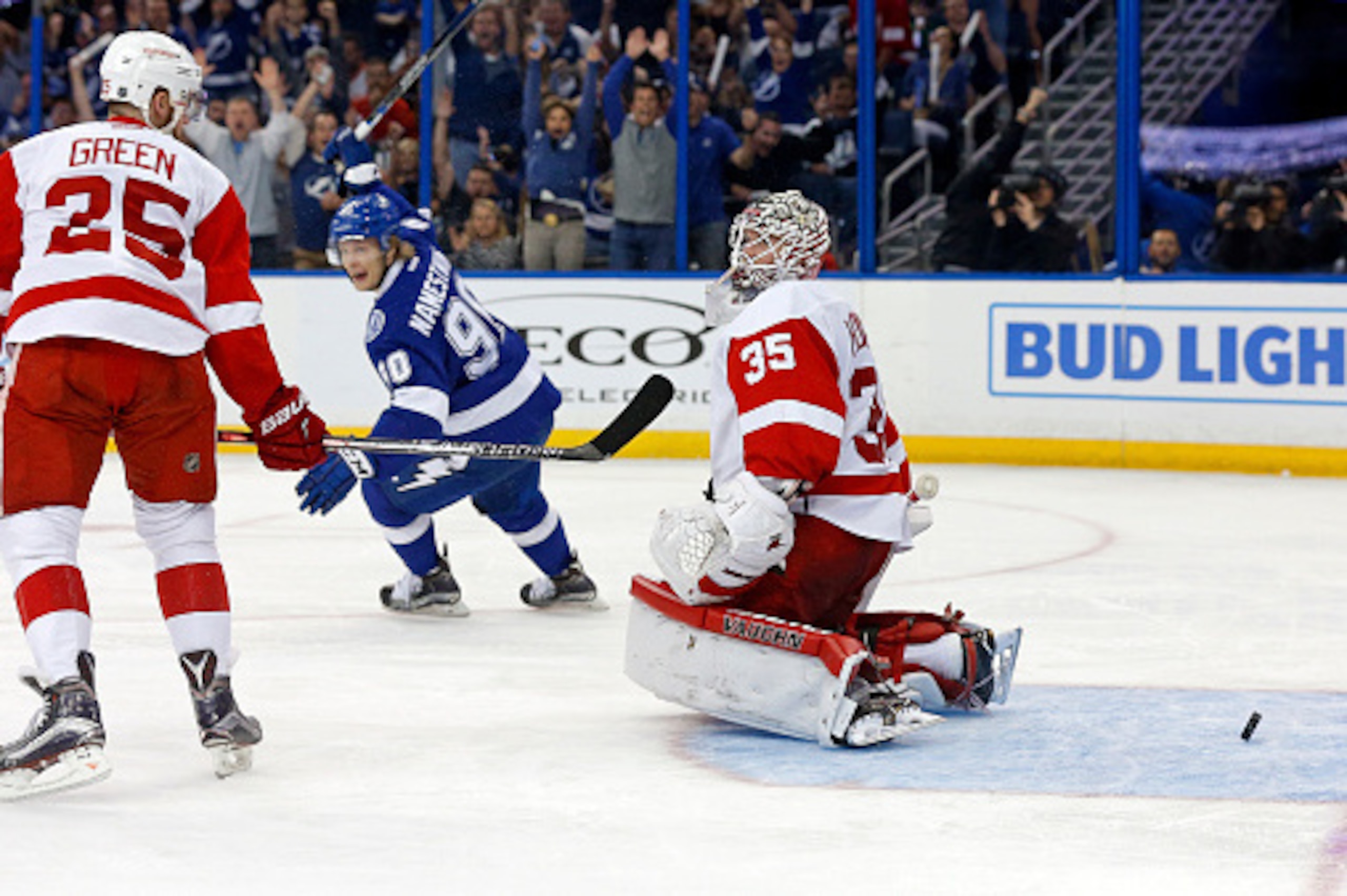
That worked, as goalies such as Chris Osgood and Mike Vernon won Stanley Cups. But in 2013, after a couple of good seasons from Jimmy Howard, Holland went against type and gave Howard a six-year, $31.8 million contract. That deal still has three years left on it, when Howard would be 35 upon its expiration.
Howard served mostly as backup to Petr Mrazek this season, posting a 14-14-5 mark, with a 2.80 goals-against and .906 save percentage. Howard was paid $5.3 million, while Mrazek earned $737,500. But now Mrazek's contract is up, and he'll want a substantial raise. It could create salary-cap headaches for Holland.
"It is a bit of a Catch-22 for the GMs," Reid said. "Your goalie has a big year or two, you've got to pay him. You can't just let him get away for nothing, and those guys need to be rewarded for performance just like anyone else.
"But it's so easy for them to fall out of favor, even after a few bad games, and go with the other guy. Then the new guy gets hot and you think they're invincible, and the cycle repeats again maybe in reverse. There's such a high standard for goaltending now. They're all good."
If Elliott keeps performing at the level he's displayed this season, especially in the playoffs (.929 save percentage after his first 16 games) and into the next, the Blues will be faced with having to give him a huge contract to stay, as he'll be an unrestricted free agent after the 2016-17 season.
But what about Jake Allen, the highly regarded current backup who has occasionally been the No. 1 guy at times the last couple of years? Elliott will be 33 in two years, while Allen only 27. It figures to be a tough choice for Blues management.
What happens with the Penguins, now up 2-1 in the Eastern Conference Finals, if the rookie Murray stays hot and wins a Stanley Cup? Where would that leave Marc-Andre Fleury, who has a cap hit of $5.75 million for three more seasons?
What if Vasilevskiy, a first-round pick in 2012, does the same in Tampa Bay? His contract, with a cap hit of $925,000, is up after next season. Bishop's contract is up after next year too, but he'll be an unrestricted free agent. Yet, he's only 29 now and a Vezina Trophy finalist.
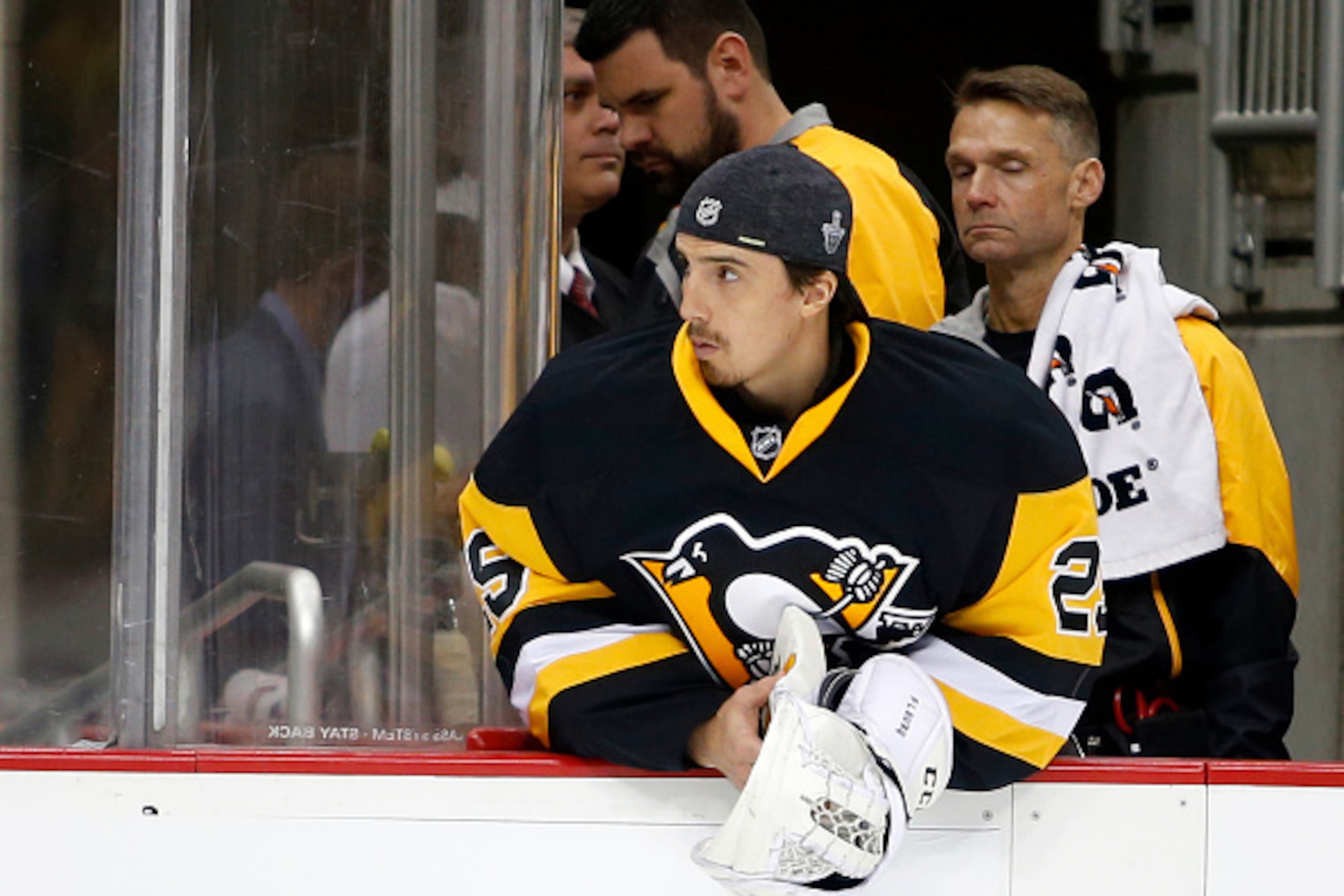
"GMs always worry that they might be letting stability go because the young guys behind them don't have much experience and aren't trusted," NBC and TSN analyst Ray Ferraro said.
Yet, as these playoffs have shown, it doesn't take much for the more experienced, higher-paid guys to quickly be forgotten.
"And next year, there will probably be a bunch of guys you've never heard of be the top dogs for a while," Bowman said. "It's almost to the point where you take the goaltenders for granted."
Adrian Dater covers the NHL for Bleacher Report.
Salary statistics provided by GeneralFanager.com.
.jpg?w=2560 "NHL Trade Grades Connor Hellebuyck")


.jpg?w=2560 "Latest Peyton-Colts Rumors")
.jpg?w=2560 "Ugly Jets Scoring Stat 😳")

.jpg?w=2560 "Landing Spots for Trade Candidates 📍")