Aggressive Blues Take Big Step on Road to Stanley Cup in Game 7 Rout vs. Stars
On Wednesday night, the St. Louis Blues scored six times to defeat the Dallas Stars in the seventh game of their second-round series. The win means that for just the third time since 1970, St. Louis will advance to the third round of the playoffs.
The Blues have learned some lessons along the way, and that knowledge was evident in Game 7.

TOP NEWS

BS Meter on Latest NHL Trade Rumors 🌡️

Best NHL Heritage Classic Jerseys 📋
Teams That Need Goalie Trade💡
Head coach Ken Hitchcock was paying attention when Dallas nearly blew its 3-0 lead over the Blues in Game 6, and when his team took a big lead in the first period of Game 7, he vowed it would not repeat the same mistakes the Stars had.
Asked by NBC’s Pierre McGuire midway through the second period about maintaining his team’s lead, Hitchcock had those lessons boiled down to a simple message.
"We’ve got to skate on the first touch," he said. "If we stand still and flip pucks, that’s exactly what Dallas did in [Game] 6. We’ve got to skate on first touch."
The Blues may not have executed that message to perfection, but they did more than enough.
It’s well-known that teams tend to surrender more shots when holding a lead (the commonly used term is "score effects"), but in the second period, St. Louis managed to score two goals despite a 3-0 lead, and the even-strength shots were just 11-9 in the Stars’ favour.
The Stars did manage to dominate play in the third period and got a bunch of power-play shots in the second, but on the whole, the Blues did a decent job of maintaining their lead without falling into the trap of playing "Katie bar the door" hockey.
Though Hitchcock cited the Stars as his object lesson, he also very well may have had the Blues' first-round performance against Chicago in mind.
In Game 7, St. Louis held a 2-0 lead over the Blackhawks just over halfway through the first period. Then the Blues surrendered 14 consecutive shots and the ‘Hawks scored two goals to even it up. The Blues managed to win, 3-2, with a third-period marker, but it was a close-run thing.
These details might seem like minutia, the kind of fine-tuning that coaches need to worry about and fans don’t, but there are some pretty interesting principles that can be drawn both from Hitchcock’s comment and from the Blues' performance.
The first is that Hitchcock isn’t afraid to do things that run counter to his reputation. Often pigeonholed as a defence-first, defence-second and defence-always coach, he’s obviously cognizant of the need to be aggressive even when playing with the lead.
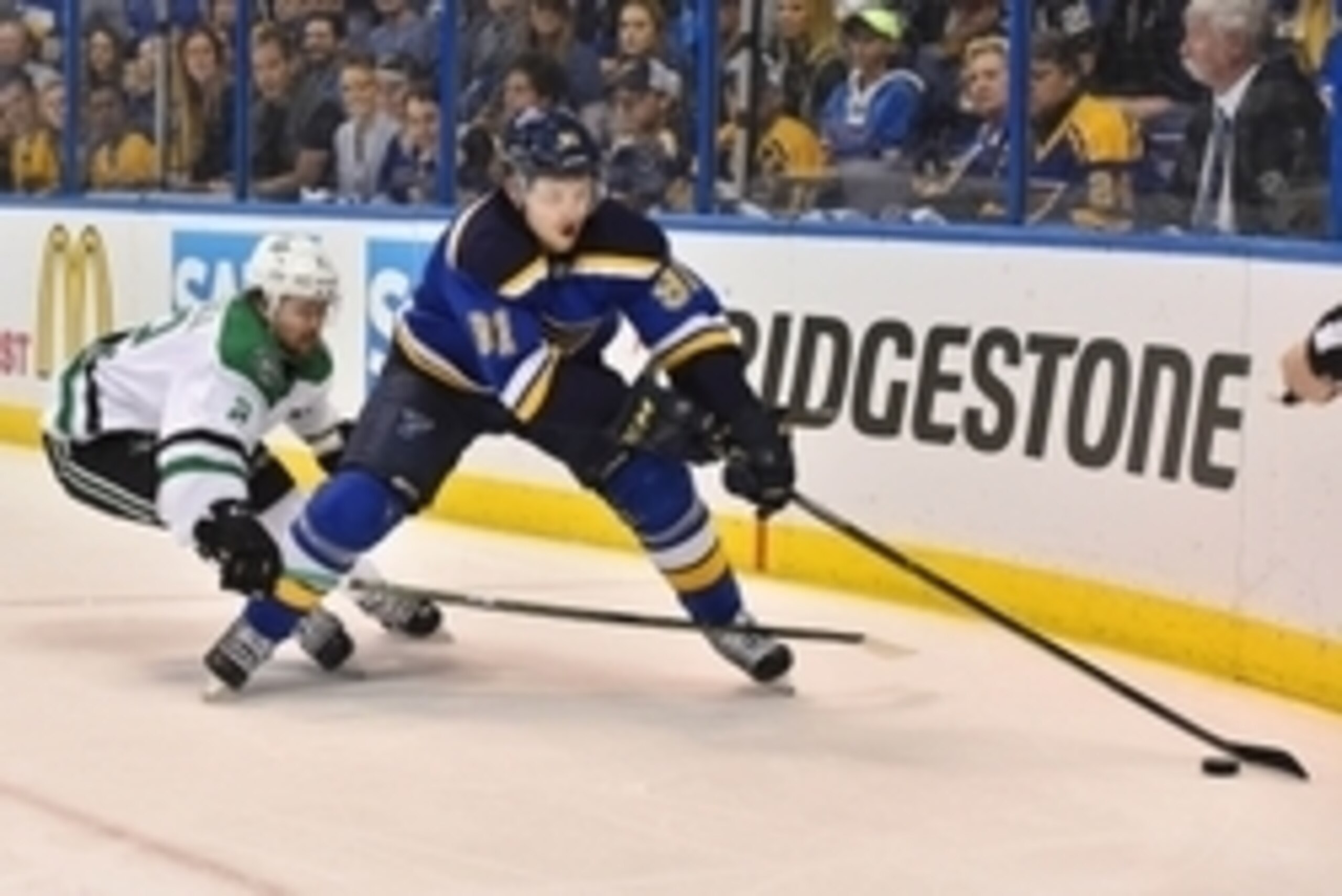
Like anyone with a successful career at hockey’s highest level, he’s also not afraid to adapt. The Blues did one thing against Chicago and found that it didn’t work, so they tried something else against Dallas. If we’re looking for reinforcement of that point, we might turn to star winger Vladimir Tarasenko.
Hitchcock was criticized for his reluctance to get Tarasenko on the ice in the first round. Tarasenko played fewer than 20 minutes in six of seven contests against the ‘Hawks, with the lone exception coming in Game 5, which went to double overtime (Tarasenko played 21:28).
Against Dallas, however, Tarasenko topped 20 minutes three times. Even in Game 7, where the Blues spent most of the night with a sizable lead, Tarasenko played 17:03—more than he’d played in five of the seven games against Chicago.
That makes St. Louis dangerous. After the first round, I was pessimistic about the team’s chances of going on a long run. The Blues had just come perilously close to blowing both big series and Game 7 leads against a relatively weak Blackhawks team, and the coach was underusing his most effective forward. But the team adapted, became more aggressive and put in a much-stronger performance against a better second-round opponent.
Those changes are good because they make the Blues better, but they’re also good because they show that even after 82 regular-season games, the team isn’t afraid to keep adapting. It enters the third round better prepared for whichever team wins the Pacific, along with a proven ability to change up the game plan if it stops working.
St. Louis is now one step closer to the Stanley Cup. Not only are the Blues just two rounds away rather than three, but they also look and play like a team with a realistic shot of winning it all.
Statistics courtesy of NHL.com and HockeyStats.ca
Jonathan Willis covers the NHL for Bleacher Report. Follow him on Twitter for more of his work.
.jpg?w=2560 "NHL Trade Grades Connor Hellebuyck")



.jpg?w=2560 "Latest Peyton-Colts Rumors")
.jpg?w=2560 "Ugly Jets Scoring Stat 😳")

.jpg?w=2560 "Landing Spots for Trade Candidates 📍")