

NHL Playoffs Roundup: How Far Will Insurgent Predators Go After Forcing Game 7?
In the film Master and Commander, the ship's captain tells his friend, a scientist, he can repay a debt by naming a shrub after him, specifically "something prickly and hard to eradicate." If any present-day botanists feel the need to name a plant after the 2015-16 Nashville Predators, they would do well to find one with those same qualities.
That's because the Predators were at it again Monday, posting a come-from-behind 4-3 overtime victory against the San Jose Sharks at Bridgestone Arena in Nashville, Tennessee.
It wasn't just that the Predators had to overcome 2-0 and 3-2 deficits. And it wasn't that they avoided being eliminated. It's the overarching pattern that those facts fit into.
TOP NEWS
Flyers Off to Wildly Lopsided Start 🫣
.jpg?w=2560 "Simon Edvisson Landing Spots")
Trade Landing Spots for Edvinsson 📍
Players That Will Dominate the Rumor Mill
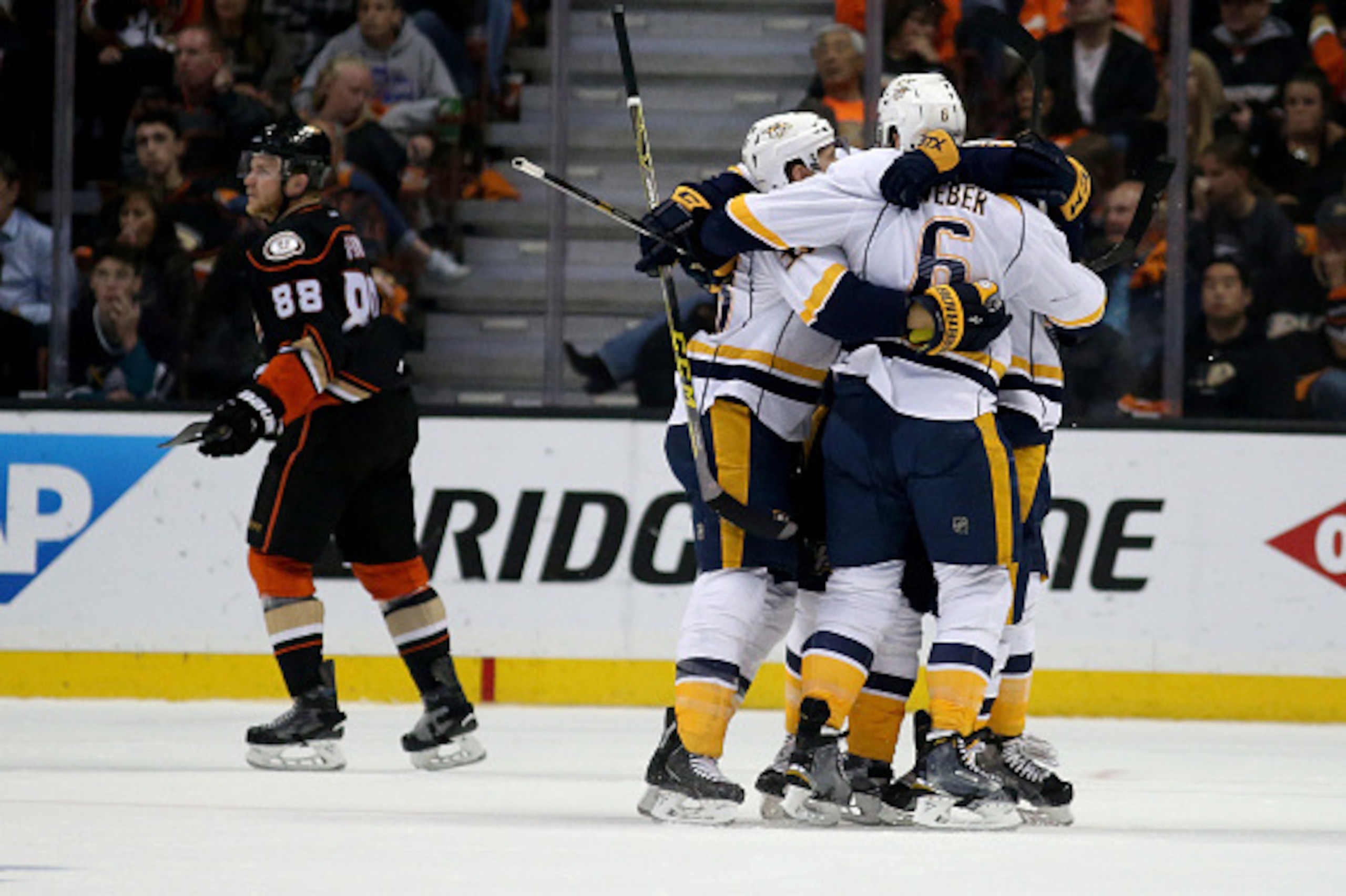
Let's rewind for a moment to the first round. In Game 5 of the series between Nashville and the Anaheim Ducks, the Ducks cruised to a lopsided 5-2 win on home ice to take a 3-2 series lead. The Preds scratched out a 2-1 edge in Game 6 and scored an empty-netter to seal the deal. Then in Game 7, they scored twice in the first and hung on for dear life, getting outshot 28-10 in the final two periods but clinching the series.
In the second round, the Predators have again come perilously close to the edge before fighting back. San Jose won the first two games of the series, and then Nashville tied it up. The Sharks were dominant in Game 5, posting a 5-1 victory to push the Preds to the brink of elimination. In Game 6, Nashville erased a 2-0 first-period deficit and trailed 3-2 with less than eight minutes to play in the third.
It would have been easy for the Predators to collapse after the goal that put them down 3-2, as San Jose capitalized on Nashville goaltender Pekka Rinne's ugly stumble to take the lead:
Less than three minutes later, however, the Predators came back with one of the postseason's prettiest goals:
Those two tallies highlighted a pair of trends that have followed Nashville all season. The first is, at times, goaltending has let the team down. Rinne, long regarded as a franchise cornerstone, posted an ugly .908 save percentage during the regular season. That ranked 27th among the league's 30 most used goalies—ahead of only the Kari Lehtonen/Antti Niemi duo in Dallas and Montreal's Mike Condon.
And yet, outside of save percentage, the Predators have been a frighteningly good team all season. The club was third in the NHL in score-adjusted Fenwick (53.6 percent), which measures all shots and blocked shots but doesn't penalize good teams for playing with the lead. All six of the other teams still active in the postseason ranked inside the top nine in that metric (the teams ahead of Nashville were Los Angeles and Anaheim).

Rinne has been inconsistent in the postseason—and often not good at all. His .913 save percentage is mediocre, and he allowed three goals on just 18 shots in what could have been a decisive Game 6—including that potentially back-breaking third-period marker.
So far, the Predators have overcome Rinne's unimpressive play. They succeeded in the regular season despite him (though they finished just seventh in the Western Conference), and they've persevered through two playoff rounds despite him. But if Rinne persists in posting multiple sub-.860 save-percentage contests in every round of the postseason, an opponent is going to take advantage.
On Monday, the Sharks didn't. But they were hardly the only team that failed to take advantage of an opportunity to advance.
Do the Blues Lack the Killer Instinct They Need to Win the West?
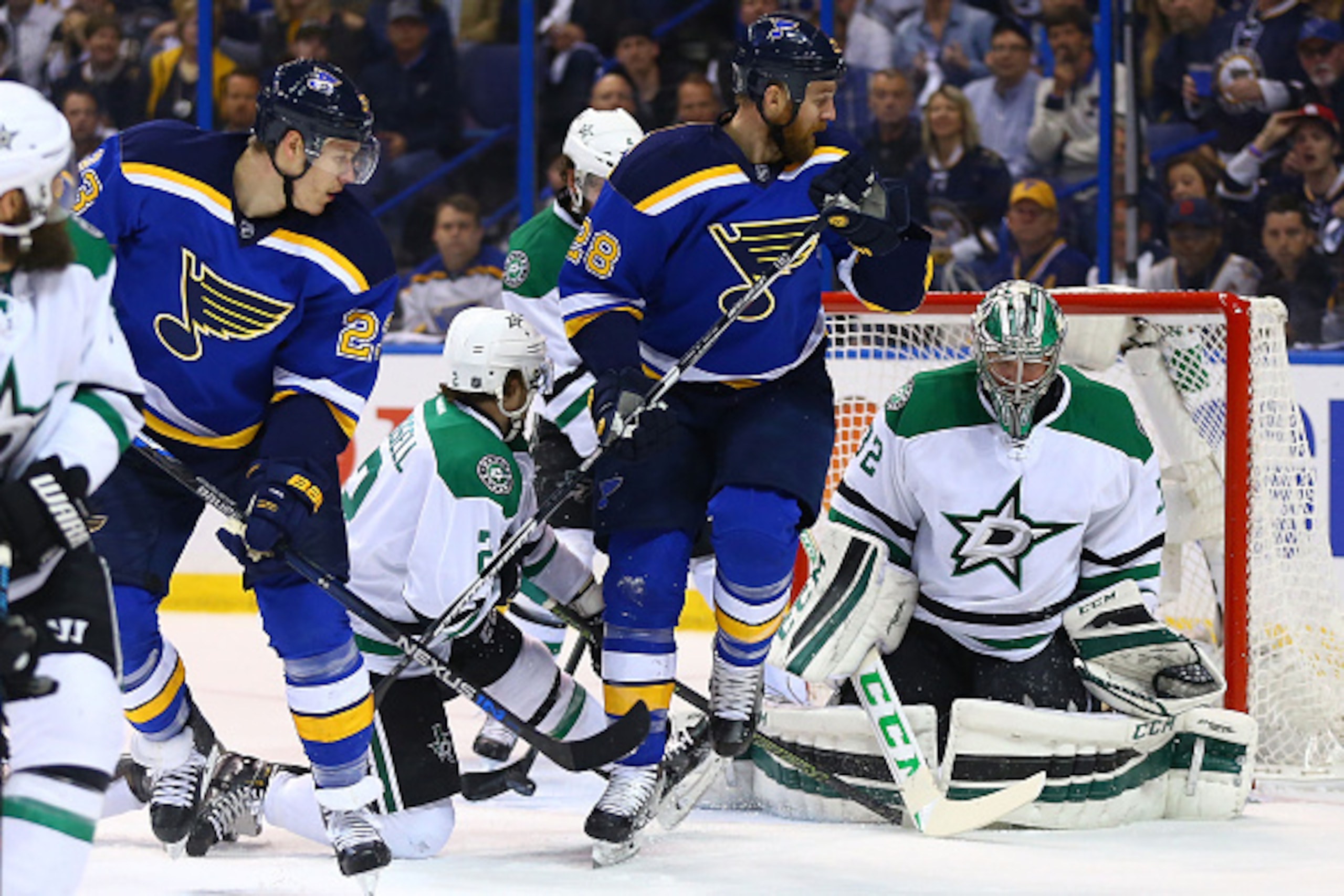
Once again, it appears the St. Louis Blues' ability to close out a playoff series is open to question.
In the first round, the Blues took a 3-1 lead in their series against the Chicago Blackhawks, which gave them up to three chances to eliminate their division rival. They needed all of them, losing twice before prevailing in a too-close-for-comfort Game 7.
On Monday, the Blues had a chance to eliminate the Dallas Stars at home and could have secured a berth in the Western Conference Final. They failed to do so and are headed to another Game 7 as a result.
This isn't necessarily a sign St. Louis can't or won't win it all. After all, the Los Angeles Kings won the Stanley Cup in 2014 after playing seven games in each of their first three postseason series—a run that included a series in which the Kings held a 3-1 lead over the Blackhawks before they allowed Chicago to tie things up and force a seventh game. There is some precedent for a champion to struggle to close out early series.
Additionally, the Blues were dominant for much of Monday's contest. This chart showcasing shot attempts, via hockeystats.ca, shows just that:
As head coach Ken Hitchcock told the team's official Twitter feed: "Once we got through the shock, we really played."
However, there's a reason why "dominate the shot count after falling behind by three goals" isn't a widely pursued NHL strategy. Each Dallas goal featured the kind of brain cramp we aren't used to seeing from the Blues, who—like most Hitchcock-coached teams—tend to be obsessively attentive to defensive detail.
Colton Parayko took an ill-advised shot from the point before the first goal—it was blocked and turned into a de facto turnover that led to a perfect shot from Mattias Janmark. The second goal was the result of a straight-up turnover, as goaltender Brian Elliott tossed the puck to Dallas defenceman Kris Russell.
The third goal? That's Jay Bouwmeester, veteran of 990 regular-season games, falling on his rear end. Scottie Upshall, another veteran, filled in for his downed team-mate but Jason Spezza's wicked move completely fooled him:
It's easy to read too much into little mistakes; every team makes them, and most goals come after a chain of errors. The trouble is, St. Louis has a history. In five years under Hitchcock, the Blues have twice won the Central Division—but prior to this postseason, they had not won a game in the second round. Combine that history with those little errors—and that nearly blown 3-1 lead in the first round—and it's easy to be jittery about St. Louis' prospects.
The good news for the Blues is, as in the first round, the team's strong play early on means it has multiple chances to close out the series. In the Game 6 aftermath, Hitchcock promised his squad would do all it could.
"We're going to compete like hell," he said, per the team's official Twitter feed.
Statistics courtesy of NHL.com, Natural Stat Trick and Puck on Net.
Jonathan Willis covers the NHL for Bleacher Report. Follow him on Twitter for more of his work.



.jpg?w=2560 "Weather Channel Trolls Texans-Titans 💀")




.jpg?w=2560 "Top Fantasy Waiver-Wire Adds 🔎")