Breaking Down How the 2016 Stanley Cup Will Be Won
There is no such thing as a working crystal ball. Even the best forecasters are going to be wrong if they forecast over a long enough period, whether they’re predicting world events, the weather or the winner of the Stanley Cup. Forecasters deal in probabilities, and in this specific example every game represents a chance for the players on the ice to overcome those probabilities.
To borrow a phrase, the race does not always go to the swift nor the battle to the strong, and that’s even when there’s no argument over who precisely is the strongest and the fastest.
TOP NEWS

BS Meter on NHL Trade Rumors 🌡️
Teams That Need Goalie Trade💡
Best NHL Heritage Classic Jerseys 📋
Still, those probabilities can tell us a lot. If we look back over the 10 Cup winners of the salary-cap era and see that nine of them share a certain trait, it becomes a lot easier to say that if your NHL club is to win the championship, it should also have that quality.
That’s what we’re going to do here: examine some of the common threads that tie champions together to see if we can identify the real contenders in the 2016 NHL postseason.
Scoring more goals than the other team is a good thing

As any four-year-old who ever played a hockey game knows, the objective of the sport is to score more goals than the other team. As a result, it should be no surprise that all of the clubs that have gone on to win the Cup have been rather good at doing that. With three-point games and shootouts and three-on-three overtime, the standings sometimes lie, but goal differential generally stays true.
Eight of the 10 salary-cap-era winners posted a regular-season goal differential that put them in the top eight of NHL teams in the seasons in which they won.
One exception is the 2009 Pittsburgh Penguins, a team that canned head coach Michel Therrien in favour of Dan Bylsma midseason. Although Pittsburgh finished ninth overall by goal differential, under Bylsma it was on pace to finish plus-95, which would have been the best total in the league.
The other is the 2012 Los Angeles Kings, who dismissed Terry Murray midseason and hired Darryl Sutter. Under Sutter they were on pace for a plus-26 goal differential, which would have been one shy of No. 8 Nashville in the NHL standings that year.
If we use that metric, we can safely eliminate the Red Wings (minus-13), the Islanders (plus-16) and the Rangers (plus-19) from consideration.
The Minnesota Wild have improved under their new coach, John Torchetti, the Flyers have gone on a late-season surge both by wins/losses and by goal differential, and the Blues are just three goals shy of the plus-26 mark that would put them in eighth place, so we can consider those clubs as passing with asterisks.
Shooting more shots than the other guys is good, too
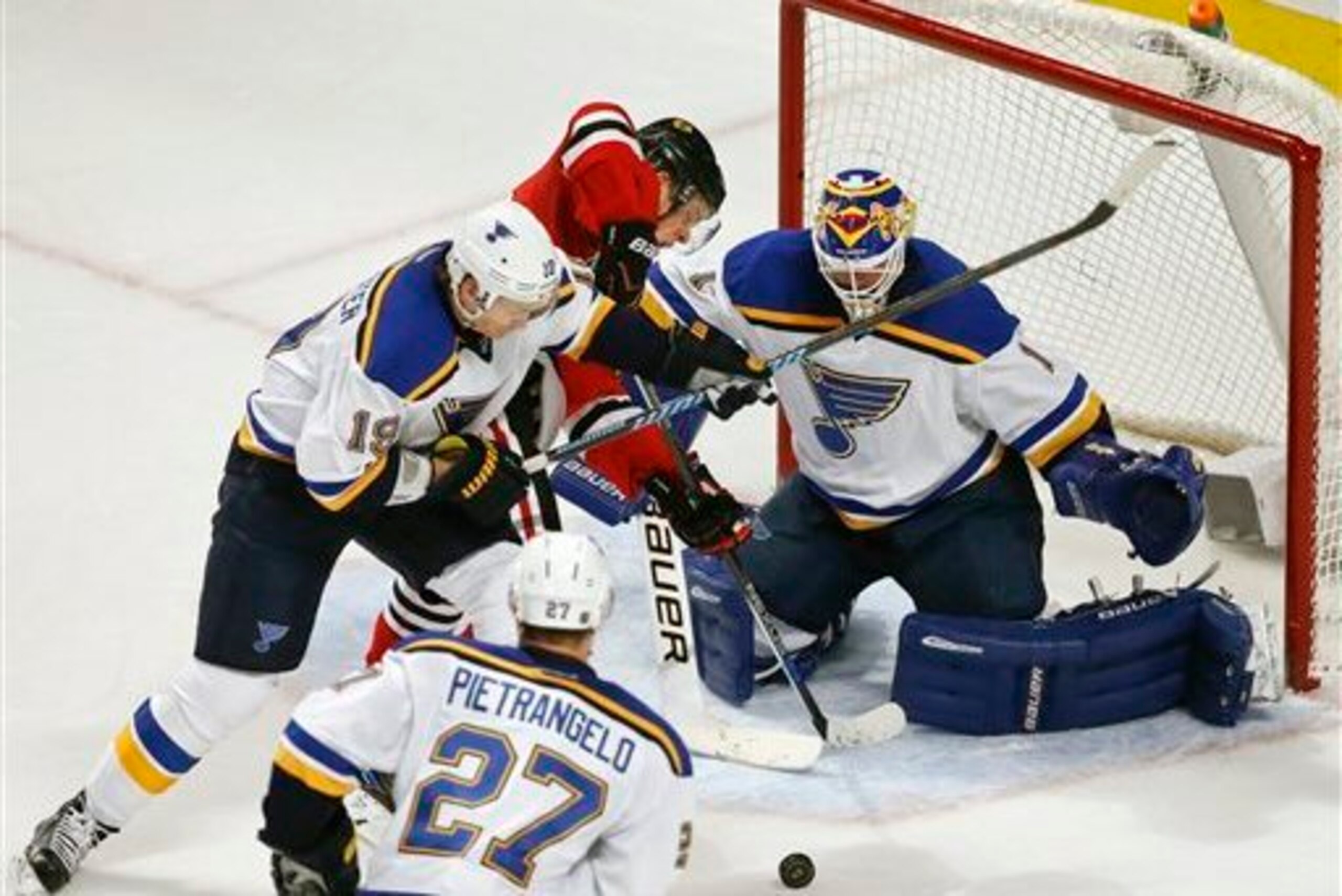
Closely tied to goal differential is even-strength shot differential. Shooting percentage and save percentage can fluctuate from series to series, but a team that dominates the shot clock at even strength always gives itself a chance to win.
Perhaps that’s why four of the last 10 champions have led the NHL in the Cadillac of shot metrics, even-strength score-adjusted Fenwick (which counts shots and missed shots and allows for score effects) while only two goal-differential leaders ended up winning it all. Seven of the 10 finished in the top five in the years they took the Cup.
Among the exceptions are the 2009 Penguins, who with Sidney Crosby, Evgeni Malkin and the coaching change we’ve previously considered were something of an aberration. The other two teams to run against the grain were Carolina in 2006 and Boston in 2011; it’s not a coincidence that both clubs were backstopped by Conn Smythe-winning goaltenders.
So it’s probably safe to eliminate a few more squads that don’t do well at this.
Our net sweeps up the Wild this time; the coaching change hasn’t altered their fortunes in this department. We also catch the Florida Panthers despite a late-season improvement. It’s tempting to give the Blackhawks, sitting in 12th, a pass, but they’ve been really good at this (first, first and fifth in the NHL, respectively) in the years they’ve won it all; so they’re out, too.
The Flyers have bulled their way into the top five late in the year, so they narrowly survive again. The Capitals, Lightning, Blues and Stars are all in the slots between sixth and 10th; we’ll add them to our list with asterisks.
Elite offensive players can cut through low-scoring games
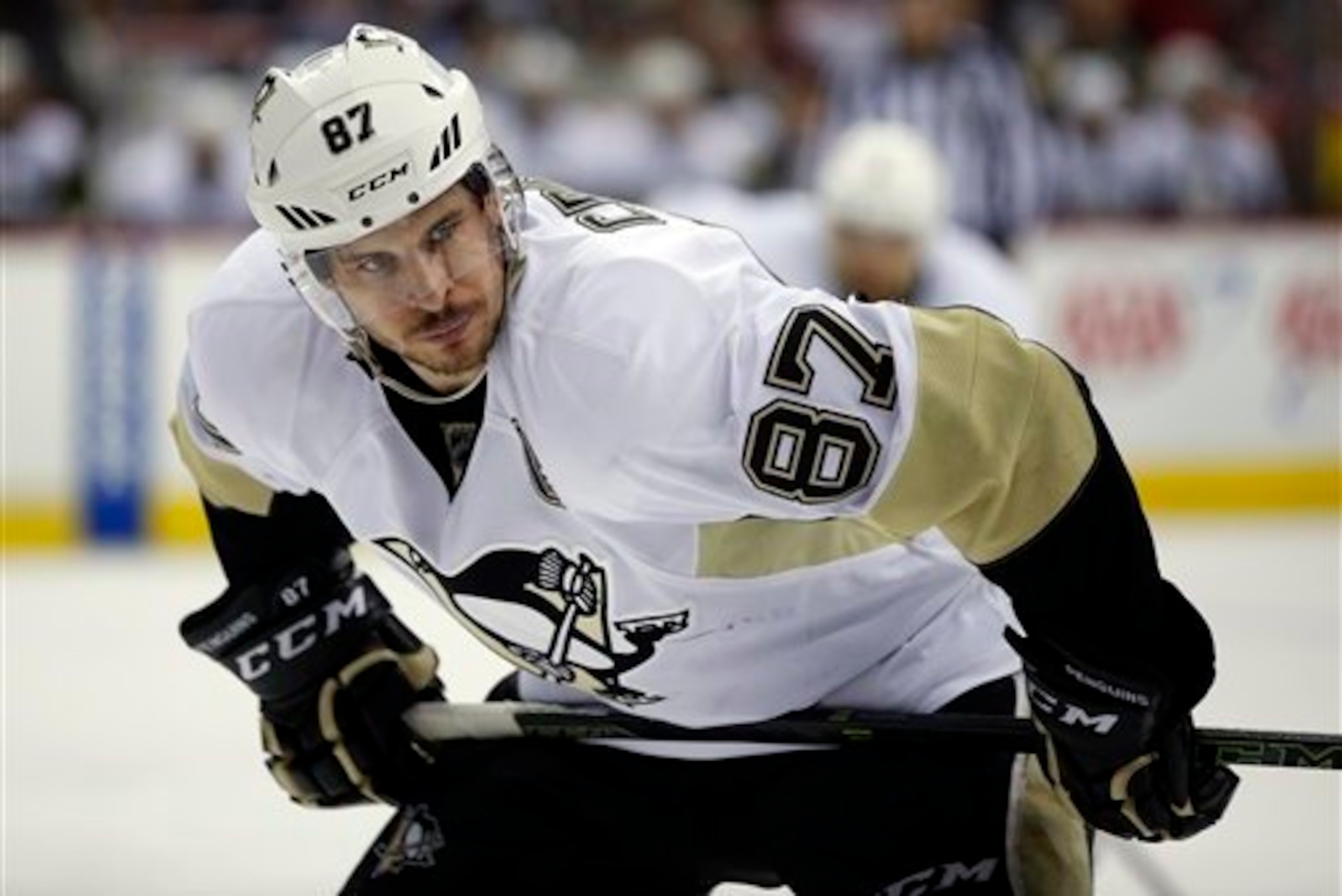
Having one player who can score no matter what comes in handy in the postseason, when goals can be hard to come by.
Seven of the last 10 champions have had at least one top-15 NHL scorer on the roster. Anze Kopitar finished 16th in 2014 when the Kings owned the Cup, and Patrick Kane was well over a point-per-game scoring pace before getting hurt for the 2015 Blackhawks; he came back in time for the postseason. Only the 2011 Bruins buck the trend.
This is bad news for the Flyers and Lightning, neither of whom have a top-15 scorer this year. It’s also a blow to the Ducks, who haven’t been getting that kind of production from stars Corey Perry and Ryan Getzlaf this season.
The Blues have Vladimir Tarasenko, the league’s 12th-best scorer, but the fact that they're barely clearing the bar here after coming up just shy in two previous sections finishes them for me.
This leaves us with five teams. The Penguins, Kings and Sharks have passed all our tests with flying colours, while the Stars and Capitals are in the mix but have somewhat underwhelming shot metrics.
A goalie doesn’t need to be great, but he needs to be good enough

Goalies can be hard to predict but are certainly capable of winning games and even series by themselves. A great one is an incredible asset, but recent history shows that the secret is to at least not have a lousy one.
Only one of our 10 champions have won the Cup while having a regular-season starter whose save percentage ranked in the bottom third among No. 1 goaltenders. The Blackhawks managed to pull it off, and they did it by casting incumbent starter Cristobal Huet aside in favour of rookie backup Antti Niemi in the postseason.
This eliminates the Stars from consideration, as both of their netminders fail the test (Kari Lehtonen and Niemi) fail this test. San Jose gets off with a warning; Martin Jones is just barely a top-20 starter by the numbers, and trade-deadline addition James Reimer is in the mix, too.
The road to the Cup

We have four teams remaining from our initial list of 16: two from the East and two from the West.
Out west, San Jose and Los Angeles both passed all the thresholds we established based on previous Cup winners. However, the Sharks barely cleared the goaltending hurdle, and their shot metrics come in behind the Kings both over the season as a whole and over the last 25 games. Goal differential is basically a draw, and San Jose has lost the last two playoff series it has contested against the Kings.
It’s hard to pick against L.A. here.
It’s a similar story in the East. Washington’s shot metrics came in just under the threshold we set, while Pittsburgh cleared the bar. Pittsburgh has better numbers in that department over both the season and the last 25 games.
Goal differential is in Washington’s favour, but since January 1 the Pens are plus-47 to the Caps’ plus-20. Additionally, Pittsburgh won the only playoff series we’ve seen so far between the Crosby Penguins and the Ovechkin Capitals (2009).
That sets us up for a Pittsburgh-Los Angeles final, and here we turn to another stat. Of the last 10 Cup winners, seven have come from the Western Conference, and the West has typically had the better record in head-to-head play against the East overall over the last decade prior to 2015-16.
On paper, it looks like Los Angeles is set to claim its third championship in five years.
At this point, it’s worth looping back to the caveat at the beginning. There are any number of ways this prediction could be upset, and there are nine or 10 teams that could plausibly play their way to the Stanley Cup and the immortality that comes with it.
They just have to beat the Kings, and each other, to get there.
Statistics courtesy of NHL.com, PuckOn.net, Hockey-Reference.com and ShrpSprts.com.
Jonathan Willis covers the NHL for Bleacher Report. Follow him on Twitter for more of his work.
.jpg?w=2560 "NHL Trade Grades Connor Hellebuyck")




.jpg?w=2560 "Latest Peyton-Colts Rumors")