NHL Playoff Odds 2016: Handicapping Every Team's Stanley Cup Hopes
The regular season is over. After an 82-game grind, the field of 30 NHL teams has been narrowed to 16—16 teams that now face a harrowing four-round ordeal during which they will need to beat every opponent they face in a best-of-seven series.
This slideshow attempts to tie some kind of odds to each team's chances of running this formidable gauntlet. It wasn't easy.
In the Pacific Division, the perennial contender Los Angeles Kings have faced a stiff challenge all season from their usual California rivals: the Anaheim Ducks and San Jose Sharks. By record or by goal differential in 2015-16, there's precious little to separate any of those teams. The Nashville Predators, crossing over from the tough Central Division, have been a little less impressive this season but have had a tougher schedule.
That tough schedule featured plenty of games against the trio of the Dallas Stars, St. Louis Blues and Chicago Blackhawks, with the first two teams well clear of 100 points and the third the most dominant club in the league over the last six seasons. The Minnesota Wild will hope to surprise higher-seeded opponents, as they have each of the last two seasons in the opening round of the postseason.
Out East, the Metropolitan division is clearly the one to watch, with the brilliant Washington Capitals and red-hot Pittsburgh Penguins the obvious contenders and the New York Rangers and Philadelphia Flyers each hoping for upset wins early.
The Atlantic lacks the same kind of obvious contender, but makes up for it by way of competitiveness. The Florida Panthers, Tampa Bay Lightning and crossover New York Islanders all finished within three points of 100 on the year, while the Detroit Red Wings can never safely be counted out.
What should we make of it all? The following slideshow breaks it down, with each team's odds based on both their own qualities and the difficulty of their road to the Stanley Cup. We'll also examine a reason to believe and a cause for concern for every team.
Minnesota Wild
1 of 16
Reason for Faith: Post-Yeo record
On February 13, the Wild made a coaching change by dismissing Mike Yeo and promoting AHL bench boss John Torchetti to the top job.
At the time, Minnesota owned a 23-22-10 record and was on pace for an 83-point season. Since the change, the Wild are 15-11-1, which translates to a 98-point pace over an 82-game campaign. That's not an earth-shattering run, but it would be competitive with teams like Chicago, Anaheim and Los Angeles—all generally regarded as legitimate contenders.
The Wild were also a minus-five team by goal differential under Yeo; since Torchetti's hiring, they are plus-15, a number that also puts them in good stead with Western Conference contenders.
Reason for Fear: Post-Yeo puck possession
Although the record has improved, the Wild aren't winning games on the back of dominant five-on-five play.
Since Torchetti took over, Minnesota has just a 47.1 percent score-adjusted Fenwick rating, a number that ranks 25th in the NHL over that span. No other Western Conference playoff team gets outshot by anything close to that ratio, and six of the eight Western playoff teams are better than 51 percent over that span.
It's hard to win four seven-game series while spending that much time in the defensive zone.
Stanley Cup Odds: 100-to-1
Detroit Red Wings
2 of 16
Reason for Faith: Pavel Datsyuk and Henrik Zetterberg
The Red Wings have a strong group of up-and-comers, but long-serving veterans still anchor their first two lines.
For years, having Henrik Zetterberg and Pavel Datsyuk has enabled the Wings to build both their first and second forward units around a high-end centre while at times loading up one exceptionally strong line for those moments when a goal was absolutely necessary.
If Detroit is to go on a postseason run, it will need both players to be in vintage form, creating the kind of matchup problems for opposing coaches that they have so effectively and for so long.
Reason for Fear: Goal differential
Of the 16 teams to qualify for the postseason, only the Dallas Stars have allowed more goals (230) than Detroit's (224), and in their defence, the Stars have a 56-goal lead on the Red Wings offensively. No team has a worse goal differential than Detroit's minus-13 rating.
That means every single team Detroit faces in the first three rounds of the postseason will have a better record of preventing goals against than the Red Wings do, and every team Detroit faces will have a better record of outscoring its opponents over an 82-game season.
That's a tough mountain to overcome.
Stanley Cup Odds: 50-to-1
Nashville Predators
3 of 16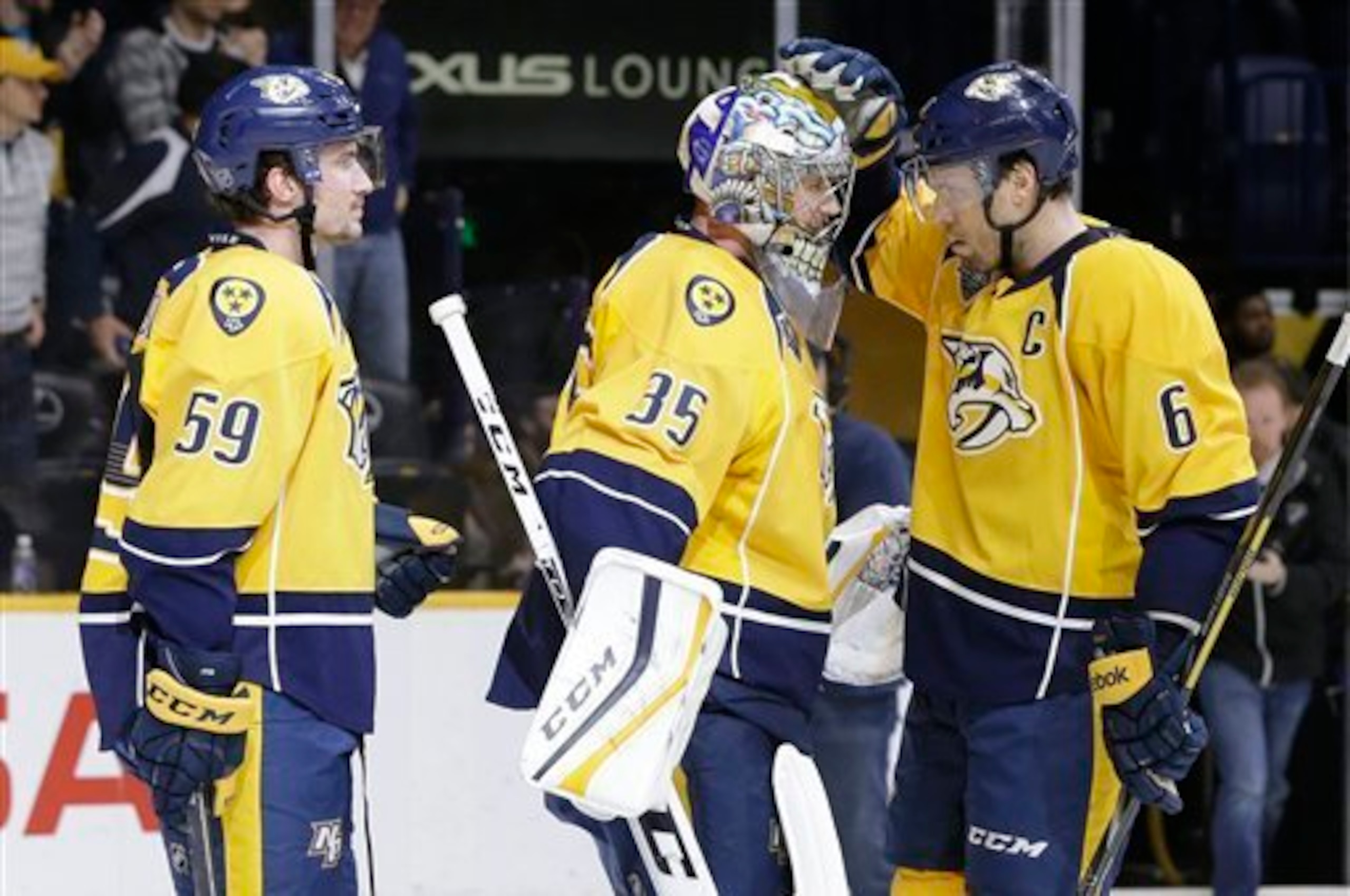
Reason for Faith: Strong puck possession
All year, the Predators have been an excellent team in terms of outshooting opponents at even strength, which is generally an excellent indicator of a team primed for postseason success. After all, five-on-five shot metrics go a long way toward explaining the success of the Kings and Blackhawks in recent years.
This year, the Predators are competitive with both teams.
My preferred metric is score-adjusted even-strength Fenwick, which measures shots and missed shots while not penalizing teams for being good at blocking opponents' attempts. Nashville outshoots its opposition, 54-46, on average by this number—the third-best total in the league.
Reason for Fear: Pekka Rinne
After starting the season brilliantly, Nashville's starting goalie went through a long slump and hovered around the .900 save percentage mark for three months from November to January. Over that span, the Preds won just 13 of 32 games in which Rinne played.
Rinne seemed to come around in February, and there was reason for considerable optimism. This Nashville team playing with Rinne at the top of his game could be considered a legitimate contender. Unfortunately, Rinne has been back to his .900 save percentage ways over March and April, and while the Predators are still winning hockey games (10-3-1 with Rinne in net since March 1) they can only keep doing that for so long.
If Rinne isn't a quality start in the postseason, Nashville isn't likely to last long.
Stanley Cup Odds: 30-to-1

.jpg?w=2560 "NHL Trade Grades Connor Hellebuyck")
Florida Panthers
4 of 16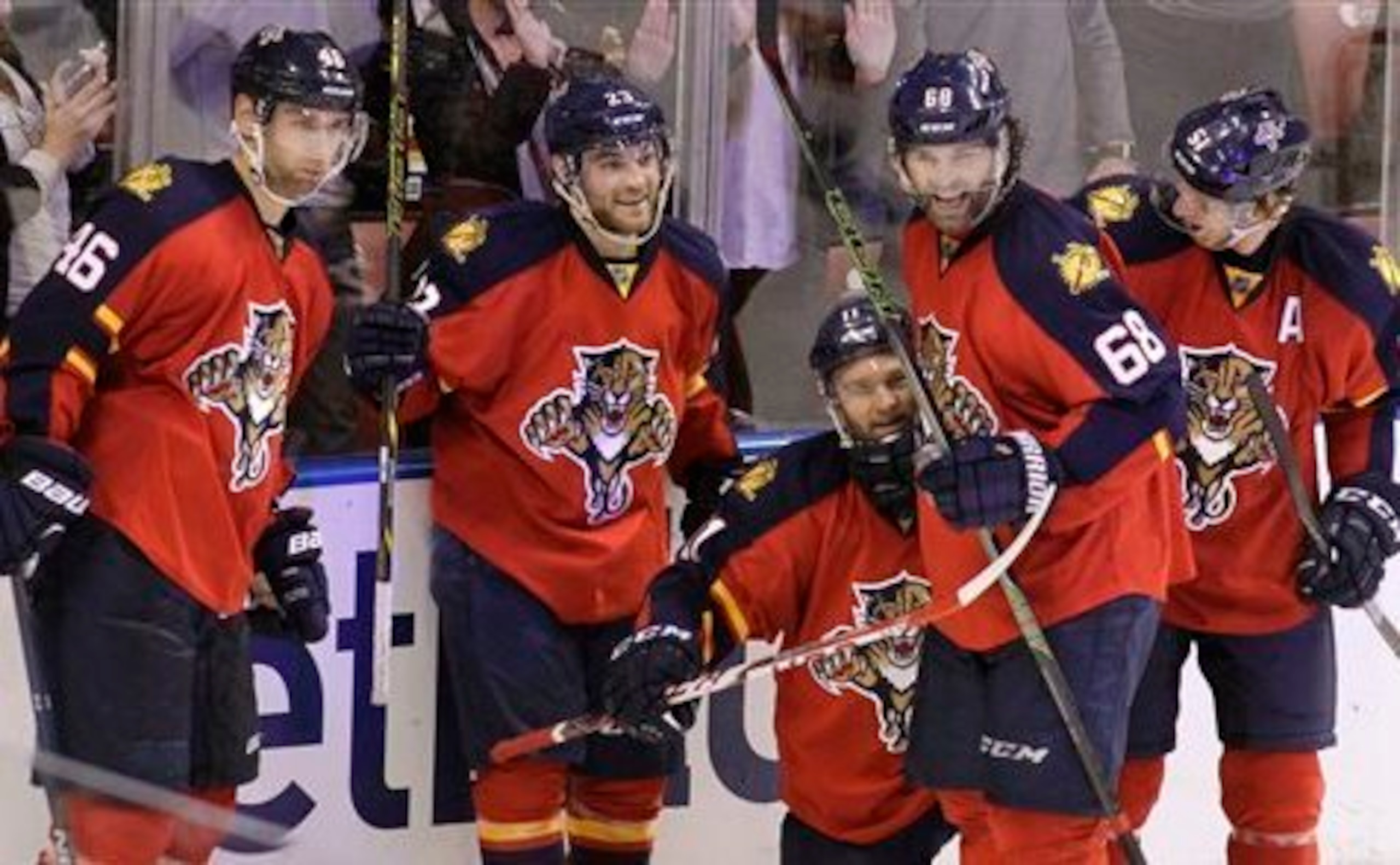
Reason for Faith: Even-strength goal differential
At five-on-five, no team in the NHL has done a better job of outscoring the opposition this year than the Florida Panthers. In that situation, Florida has tallied 56 percent of all goals scored, as opposed to just 44 percent for the opposition.
This is particularly important in the postseason, when penalties can be few and far between and teams often have to win games at even strength. That's something the Panthers have been doing all season.
Reason for Fear: Special teams
The flip side of the Panthers is that in a series with a lot of calls, they could find themselves in trouble quickly.
Florida has converted on just 17 percent of its power-play opportunities. That figure ranks the team 23rd in the NHL—among playoff clubs, only the Tampa Bay Lightning have been less successful.
Florida has been just as bad on the penalty kill, with the opposition converting on 20.5 percent of its power-play opportunities. Again, if we narrow our focus to playoff teams, only the New York Rangers and Minnesota Wild have been worse when down a man.
Stanley Cup Odds: 30-to-1
Philadelphia Flyers
5 of 16
Reason for Faith: Hot down the stretch
The Philadelphia Flyers have been brilliant late in the NHL season, going 15-6-4 over their past 25 games. Critically, though, they haven't been winning games through smoke and mirrors, instead relying on solid fundamentals.
Philadelphia is a team that has outshot its opposition at even strength over this 25-game run. In fact, among NHL teams, the Flyers rank fifth by score-adjusted Fenwick during that span, and in the East, only Pittsburgh can claim better shot metrics to close out the season.
Reason for Fear: Special teams
As good as Philadelphia has been at even strength, the team could be in trouble if it gets into a series with a lot of penalties.
Traditionally lethal on the man advantage, the Flyers have converted on just 18.1 percent of their chances this year, which puts them below the NHL average. They have been even worse when down a man. With a kill rate of just over 80 percent, Philadelphia ranks 23rd in the league in that discipline.
Perhaps it's just as well that the referees have a tendency to put their whistles away in the postseason.
Stanley Cup Odds: 25-to-1
San Jose Sharks
6 of 16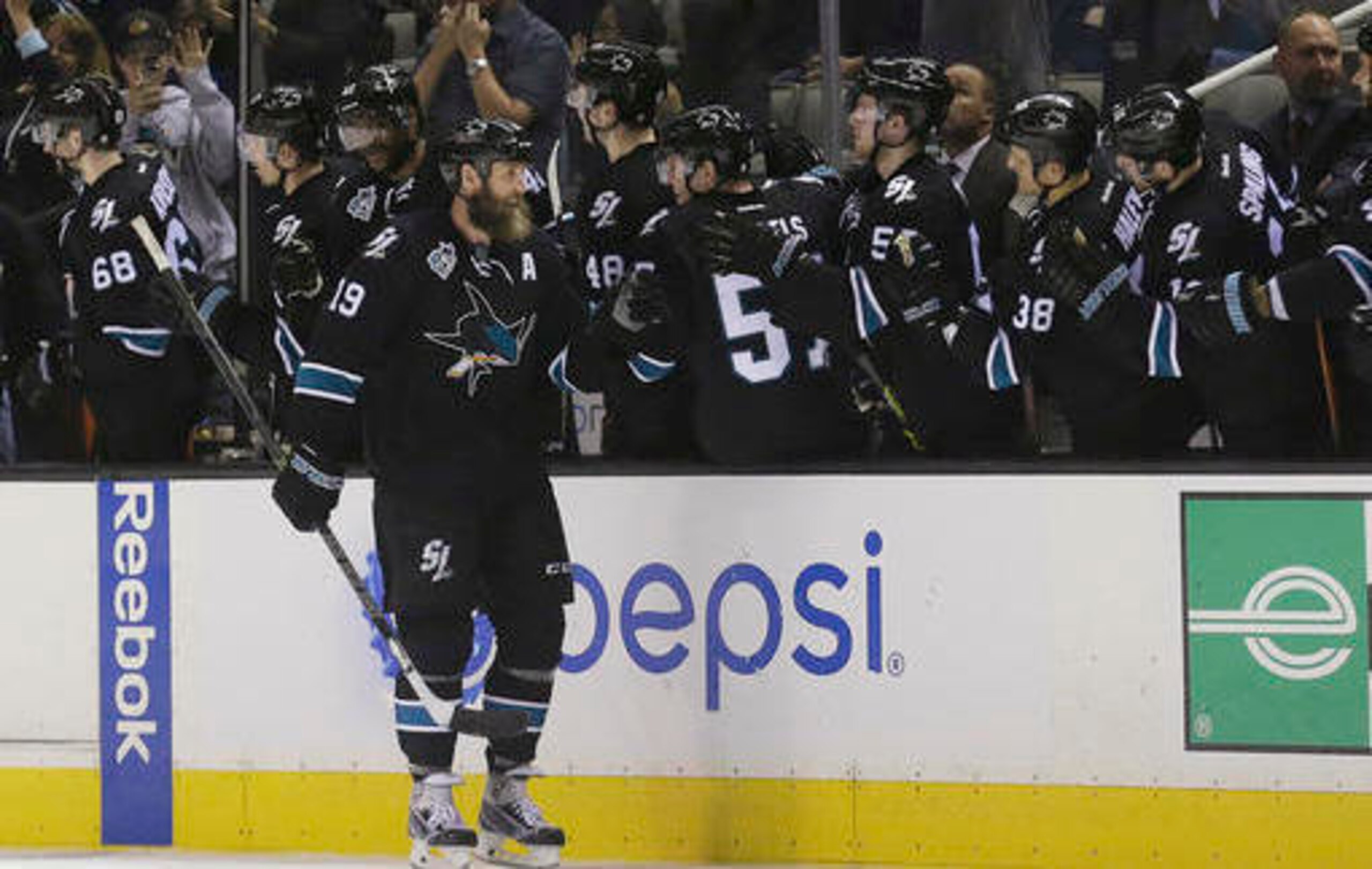
Reason for Faith: Strength down the middle
There's a prevalent theory that NHL teams should be built placing an emphasis on strength down the middle of the ice—at centre, on defence and in net. If that's the secret to success, the Sharks are in pretty good shape.
The team has had depth and quality at centre for years, with Joe Thornton, Joe Pavelski, Logan Couture and Patrick Marleau all capable of playing the position. Additions on defence and in net have improved the team in those other key areas, however.
Paul Martin has provided steady play on the blue line. He's added quiet efficiency to a top trio that includes a brilliant offensive specialist (Brent Burns) and a stifling shutdown rearguard (Marc-Edouard Vlasic). In net, Martin Jones has been competent all year in the starting job, while deadline addition James Reimer is 6-2-0 since arriving in California with a .938 save percentage.
Reason for Fear: The competition
That the Sharks are a good team is not in doubt. More open to question is their ability to get past division rivals Anaheim and Los Angeles and then whichever contender emerges from the Central Division.
For years, San Jose was a solid team that consistently won its division in the regular season but came up short in the playoffs. Twice, the team went to the conference final, and in those two series combined, it managed to win a single game against the eventual Western champion.
More recently, the Sharks have lost consecutive playoff series to the Kings and before that to St. Louis, failing to advance beyond the second round. This is a team that needs to show itself capable of knocking off the best teams in its conference.
Stanley Cup Odds: 25-to-1
New York Rangers
7 of 16
Reason for Faith: Henrik Lundqvist
New York has gone at least as far as the second round of the playoffs for four consecutive seasons, and the single biggest reason has been Henrik Lundqvist. His playoff save percentage over those four years was .931, .934, .927 and .928, respectively.
Any team that reliably gets .930 save percentage performances is going to be a threat, and the Rangers have won games and entire rounds where a team with merely good goaltending would have been sent home.
Reason for Fear: Shot metrics
No playoff team this year has been as poor at outshooting the opposition as the Rangers.
That’s not an academic concern. Three of the last four Stanley Cup winners have been either first or second in the league by score-adjusted Fenwick rating; the last team to win the Cup with a number below 51 percent was the Pittsburgh Penguins in 2009.
New York ranks 22nd in the NHL at 48.4 percent, well below the league average, and if it gets outshot like that in the playoffs, it’s going to be very, very difficult to win four rounds.
Stanley Cup Odds: 25-to-1
Tampa Bay Lightning
8 of 16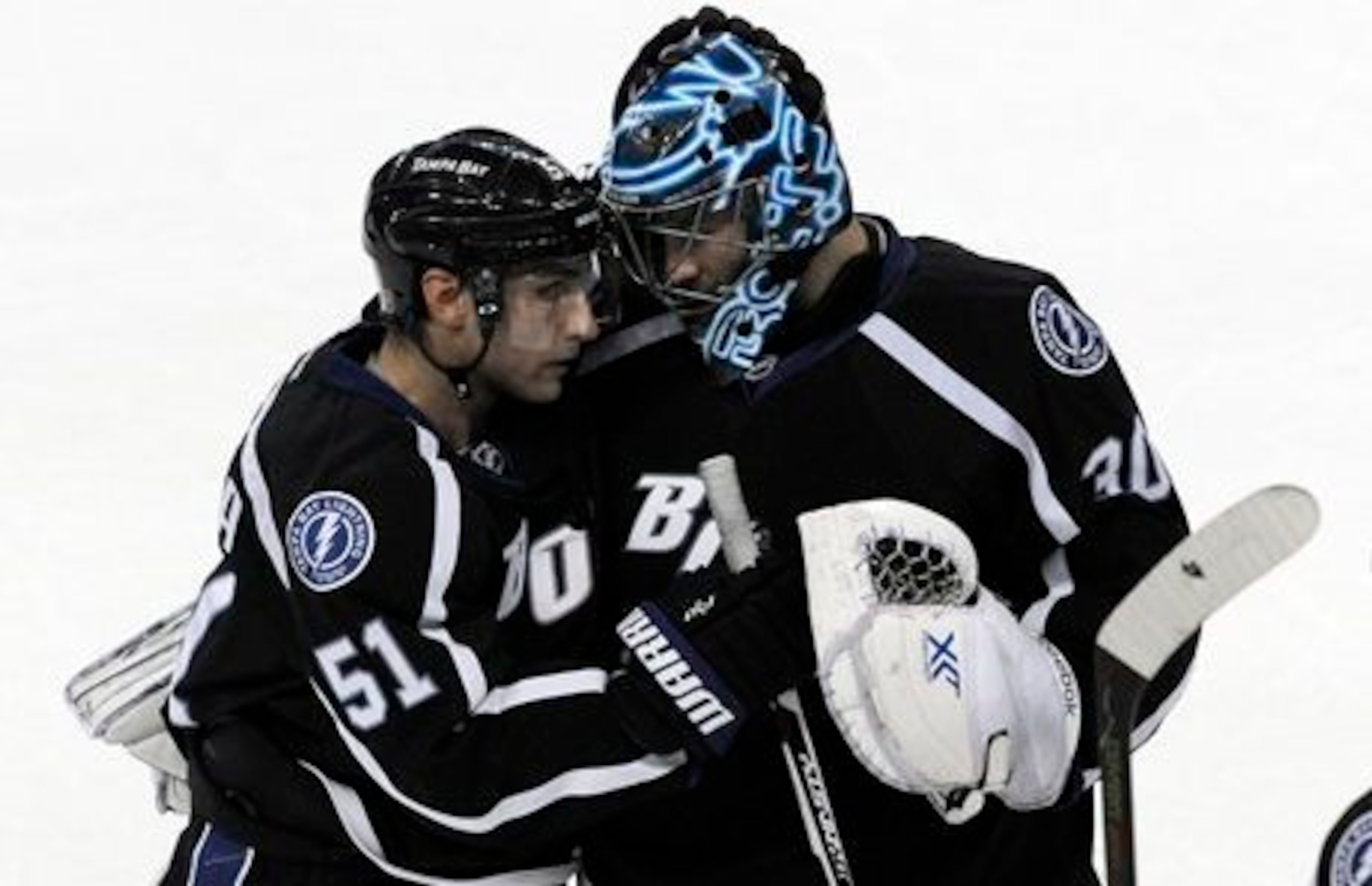
Reason for Faith: Ben Bishop
There are a lot of reasons to like the Lightning—a team that went to the Stanley Cup Final last year—but in the short term as the team battles adversity, one player stands above the others: goaltender Ben Bishop.
Bishop has been stellar for the Bolts this season. He's posted a career-best .926 save percentage, a number that should put him in the thick of the race for this year's Vezina Trophy. Add that performance to last year's .916 save percentage run for the Lightning, and he looks a lot like a guy who could steal a series.
Until the team gets healthy, it might need him to do so.
Reason for Fear: Injury
The official injury report on the Lightning team page is pretty ugly, listing four key contributors as being down and out on the eve of the playoffs:
- Anton Stralman (indefinite; broken leg)
- Steven Stamkos (one to three months; blood clot)
- Victor Hedman (day-to-day; upper body)
- Ryan Callahan (day-to-day; lower body)
On Saturday, the Bolts also lost Tyler Johnson after an ugly boarding play. His status is still unknown.
Stanley Cup Odds: 25-to-1
New York Islanders
9 of 16
Reason for Faith: Room for Improvement
The Islanders put together a 100-point season, a plus-16 goal differential and find themselves crossing over in the playoffs for the first two rounds to potentially face consecutive Atlantic division teams, none of which significantly outperformed them. The incredible thing is they did it while much of the roster put forth forgettable campaigns.
Ryan Strome imploded, falling from 17 goals and 50 points to eight and 28, respectively. Josh Bailey played 11 more games and scored nine fewer points. Anders Lee went from 25 goals to 15. Mikhail Grabovski and Nikolai Kulemin each came in under 30 points. Even John Tavares fell from 86 points to 70.
The point here is there’s a lot of room for individual players to be better, and given how good the Isles are already, a little bit of improvement could make them very formidable.
Reason for Fear: Injury
The Islanders are one of several teams facing an ugly collection of injuries.
On Friday, Newsday’s Arthur Staple reported that Lee would miss several weeks with a fractured leg. Then he compiled the rest of the injured list:
"The Islanders already were missing Travis Hamonic (knee), Mikhail Grabovski (concussion symptoms) and Jaroslav Halak (groin) long term and were without regulars Matt Martin, Cal Clutterbuck, Brian Strait and J-F Berube against the Rangers."
That list includes (among others) the team’s starting goalie, its No. 1 defenceman, three veteran forwards, and then add Lee to the pile. Staple noted that Halak and Hamonic were skating, but even if either player is ready for the start of the playoffs, it seems likely that he’ll be playing at less than 100 percent.
Stanley Cup Odds: 20-to-1
St. Louis Blues
10 of 16
Reason for Faith: Quality at all positions
Positionally, the Blues have the two great assets present in the vast majority of Cup-winning teams. They have top-end players who can drive results, and they have the kind of depth that allows them to win matchup battles.
Up front, Vladimir Tarasenko is one of the game's most formidable goal scorers. Alex Steen is a brilliant two-way winger who provides defensive responsibility while also scoring at a first-line pace. Centre Paul Stastny has caught fire down the stretch, Alex Pietrangelo and Kevin Shattenkirk headline the blue line, and goalie Brian Elliott is rocking a .930 save percentage. It's a lot.
But the depth is there, too. Jori Lehtera, David Backes and Patrik Berglund provide strength down the middle. Brilliant rookie Colton Parayko anchors the third defensive pair after showing himself capable of playing top-four minutes. Jake Allen has played 47 games and has a .920 save percentage.
That combination of quality and depth has helped St. Louis to an elite regular-season record this year.
Reason for Fear: History
Time and again, the Blues have not shown themselves capable of beating the best teams in the West, despite a deep and capable lineup.
Head coach Ken Hitchcock arrived in 2011-12, and the Blues have been excellent in the regular season and made the playoffs in each of the four years he has coached the team. They have all of one first-round series victory (over the San Jose Sharks) in that span.
Three times St. Louis has faced perennial contenders Los Angeles and Chicago; three times it has lost those series, going 4-12 overall in those games. Last year, the Blues didn't even make it that to one of those foes—Minnesota knocked them off in the first round.
As good a team as this, so far it hasn't proved itself capable of beating the best teams in the West in a seven-game series.
Stanley Cup Odds: 12-to-1
Dallas Stars
11 of 16
Reason for Faith: High-octane offence
Dallas has the ability to outscore its problems. No other team in hockey has been more potent offensively, with the Stars eclipsing even the league-leading Washington Capitals in the goals-scored department.
The top forward duo of Tyler Seguin and Jamie Benn is one of the best in the game, but the Stars offence doesn't end there. Second-line centre Jason Spezza scored 33 goals, and 11 of the team's 12 most-used forwards are in double digits in that department.
Dallas is a team with a top line that can go head-to-head with anyone, and it has an attack that comes in waves against the opposition's second, third and even fourth lines in those matchups. That has a lot of value come playoff time.
Reason for Fear: Unstable goaltending
Thanks to the summer signing of free-agent Antti Niemi, Dallas now has an almost prohibitively expensive tandem between the pipes. Niemi has two years left after this one at a $4.5 million cap hit, while partner Kari Lehtonen costs $5.9 million against the cap through 2018. Combined, that's more than $10 million spent.
That wouldn't be such a big deal if it meant the Stars were getting quality work in the crease, but that simply hasn't happened this season. Lehtonen, the incumbent, has an impressive 25-10-2 record but a spotty .906 save percentage. Niemi has been just the tiniest bit worse, with a .905 save percentage.
The Central Division is sending five teams to the postseason, and Dallas looks to be the weakest in goal.
Stanley Cup Odds: 10-to-1
Pittsburgh Penguins
12 of 16
Reason for Faith: Play under Mike Sullivan
Pittsburgh fans haven't forgotten 2008-09. That's the year the team dismissed Michel Therrien as head coach midseason and promoted Dan Bylsma from the head coaching job in the AHL. The Penguins caught fire after the coaching change, and they ultimately won the Stanley Cup.
The hope for the Pens is that history repeats itself.
Mike Johnston was dismissed after an ugly start to the year in which Pittsburgh went 15-10-3. Since his departure, promoted AHL bench boss Mike Sullivan has guided the team to a 33-16-5 record, and he also helped the club to what are by far the best even-strength shot metrics in the East.
The team's stars are scoring, the club itself routinely pins opponents in the defensive zone and its record has improved dramatically. Pittsburgh is a contender once again.
Reason for Fear: Injury
The Penguins just keep losing bodies.
In the club's final game of the season, a collision with Philadelphia Flyers forward Brayden Schenn forced goalie Matt Murray to leave. TSN's Frank Seravalli quickly tweeted a list of notable players injured for the Pens, which includes the following:
- Sidney Crosby
- Evgeni Malkin
- Kris Letang
- Marc-Andre Fleury
- Olli Maatta
- Beau Bennett
Some of those players will be back for Game 1 of the playoffs, but all are banged up to varying degrees, and some will certainly start the postseason in the press box.
Stanley Cup Odds: 9-to-1
Chicago Blackhawks
13 of 16
Reason for Faith: The Cup-winning core
The Blackhawks have earned the benefit of the doubt when it comes to postseason play. Three times in the last six seasons, Chicago has defeated all opponents and finished as Stanley Cup champions.
All of the really key pieces from those runs are still in place.
Up front, Jonathan Toews and Marian Hossa are back to take on the toughest opposing lines and beat them head-to-head. Patrick Kane still powers the man advantage and a lethal second unit, and he's enjoying a career year to boot. On defence, the brilliant trio of Duncan Keith, Niklas Hjalmarsson and Brent Seabrook remains intact and continues to be backstopped by goaltender Corey Crawford, who's also in the midst of a career year.
Those seven players have proved beyond doubt that they are a firm foundation for a true contender.
Reason for Fear: Puck possession
The Blackhawks have, generally speaking, been an analytics darling over their run at the top of the league. There are a lot of reasons for this, but even-strength shot metrics are the main one.
My preferred metric is score-adjusted Fenwick (which includes shots and missed shots five-on-five). Here's how the Blackhawks have fared relative to the rest of the league in their championship seasons:
This year, the Blackhawks have a score-adjusted Fenwick rating of 50.8 percent, which is just barely above break-even. They aren't as good at dominating territorially five-on-five as they have been in previous Cup-winning campaigns, and they have relied far more on special teams play than they typically do.
Stanley Cup Odds: 9-to-1
Anaheim Ducks
14 of 16
Reason for Faith: In the footsteps of Kings
After a dismal start to the season, Ducks head coach Bruce Boudreau dramatically altered his team's game plan, and the results have been spectacular.
Anaheim has long been compared to division rival Los Angeles, in large part because both teams place a lot of emphasis on size and strength in winning hockey games. The key difference is that the Ducks have not been as defence-oriented or as committed to winning territorial battles at five-on-five in recent years.
Boudreau changed all that. The Ducks now sit second in the NHL (to the Kings) in terms of score-adjusted Fenwick, and they are also one of a handful of NHL teams to allow less than 200 goals on the year. L.A. has shown that approach works in the postseason, and the Ducks' embrace of it bodes well for their own playoff chances.
Reason for Fear: Offensive struggles
Although the Ducks have responded well to adversity by playing a stronger two-way game, the team hasn't yet been able to turn around its scoring problems.
No Western Conference playoff team has scored fewer goals than Anaheim, and it's worth asking how the team is going to produce when it comes up against teams like the Kings in the postseason.
The one bit of good news for the Ducks in this department is that their offensive struggles are heavily driven by a low five-on-five shooting percentage (6.5 percent, the third-worst number in the NHL). That may not sound like good news, but shooting percentage is notoriously fickle; this is the kind of number that could shift dramatically in the postseason without really surprising anyone.
Stanley Cup Odds: 9-to-1
Los Angeles Kings
15 of 16
Reason for Faith: Puck-possession dominance
The Los Angeles Kings are known for a lot of things, including size, physical play and a devotion to defensive detail. They're also known for dominating territorial play at five-on-five, as they fire far more shots at opposition goalies than they allow on Jonathan Quick.
Before missing the playoffs in 2015, the Kings won two Stanley Cups and went to the Western Conference Final in the span of three years, winning 10 playoff series in all. Here's how they fared by my preferred shot metric, score-adjusted Fenwick (which includes shots and missed shots) over that run:
Those numbers actually understate the Kings' record a little bit, because Darryl Sutter only took over as head coach halfway through 2011-12. Over his 49 games behind the bench, Los Angeles actually led the league in score-adjusted Fenwick.
The Kings are up to their old tricks this year. Their 56.4 percent score-adjusted Fenwick is the best total in the NHL this season by some distance.
Reason for Fear: Defensive depth
The top end of the Kings' blue line is fantastic. Drew Doughty is an elite player and one of a handful of defencemen in the conversation for best in the league. Jake Muzzin, long underrated, is starting to get the attention he deserves as the Kings' No. 2 rearguard.
After that, things get a little iffy. Alec Martinez is day-to-day, per Kings insider Jon Rosen, and he has been shaky this year when not paired with Muzzin. Brayden McNabb, likewise, has been largely ineffective without Doughty.
That's half of the top four, and the situation gets more troubling down the line. Castoffs Rob Scuderi and Luke Schenn don't inspire confidence, Jamie McBain has been Mr. Press Box for the Kings and Matt Greene has played all of three games this year.
This is a team that could be just one bad injury away from having a single truly reliable defenceman.
Stanley Cup Odds: 8-to-1
Washington Capitals
16 of 16
Reason for Faith: A dominant regular season
The Capitals have been absolutely dominant over the course of the regular season. They started brilliantly, played exceptionally well through the heart of the schedule and have only slowed down long after they clinched the Presidents' Trophy.
There's a tendency to discount the importance of finishing first overall in the NHL, but it's been a pretty good indicator of success during the salary-cap era.
Of the 10 teams to finish first overall during the regular season, two have gone on to win the Cup, which doesn't sound great until one realizes that the average playoff team has a 6 percent chance of winning the Cup and the average Presidents' Trophy winner has won 20 percent of the time. Similarly, five of 10 winners have gone at least as far as the third round; a team finishing first overall is twice as likely as the average playoff team to go on a deep run.
Winning in the regular season guarantees nothing, but any team that good over 82 games needs to be recognized as a contender.
Reason for Fear: Unspectacular even-strength shot metrics
Washington has won games for a lot of reasons this season. The power play has been brilliant, the penalty kill has been truly exceptional, shooters have made their shots and Braden Holtby and Philipp Grubauer have dramatically outperformed NHL-average starters and backups, respectively.
What the Capitals haven't done is dominate on the shot clock. At eleventh overall by score-adjusted Fenwick league-wide, they're fine but not exceptional.
That may not matter, because Washington is so good at other things, but it does leave the team vulnerable. Penalties are called more infrequently in the playoffs, which reduces the importance of special teams. Shooting and save percentage are famously mercurial—one bad series in those departments, and the Caps could find themselves eliminated from the postseason.
Stanley Cup Odds: 7-to-1





.jpg?w=2560 "Latest Peyton-Colts Rumors")