

Strengths and Weaknesses for Every 2016 NHL Playoff Team
The 2015-16 NHL season is about to start its second act. The top 16 teams have survived the regular season and are set to embark on a bracketed playoff run. The teams hope they can last into June as they cross off every win in the quest for 16 more.
When it comes to these remaining squads, there is plenty to look at—especially when you look at clubs like the Presidents' Trophy-winning Washington Capitals. It's difficult to find any weaknesses on a team that is loaded with offensive talent, shows a commitment to team defense and has a goaltender who may have been the best in the entire league this season.
But we'll offer up what we can as far as potential stumbling blocks for the Caps and every other team in the 2016 Stanley Cup playoffs.
Going team by team in the Eastern and Western Conferences, we'll examine the strengths and weaknesses that could come into play over the next week-and-a-half of the first round and throughout the postseason as the 16 are pared down to eight, then four, then the final two before a new Stanley Cup champion is crowned.
Buckle up, because by the looks of these teams, it's going to be a wild ride.
Click ahead to take a look at what the top 16 have to offer.
Washington Capitals
1 of 16
Regular-season finish: First in Metropolitan Division, first in Eastern Conference
First-round matchup: vs. Philadelphia Flyers
Strengths
The Washington Capitals literally did everything well this season. Thanks to the likes of 50-goal scorer Alex Ovechkin and players like Nicklas Backstrom, Evgeny Kuznetsov, T.J. Oshie, Justin Williams, Andre Burakovsky and Marcus Johansson, the Caps finished second in the league in offense with a 3.02 goals per game average.
Because of a total team commitment to defense and a stellar goaltender in Braden Holtby, they had the second-best GAA (2.33). Both special teams units ranked top five as well, with the power play coming in fifth at 21.9 percent and the penalty kill clicking at a second-best 85.2 percent.
This team is arguably the deepest in the playoffs, with a versatile group of forwards on the third and fourth lines that will allow them to take advantage of matchups.
Weaknesses
The ability to deal with pressure in the playoffs is something the Capitals have yet to overcome in previous postseason opportunities. Every group is different on a year-to-year basis, but the troubles have remained the same when it comes to closing out a series when the pressure mounts. The players will be forced to answer questions on the topic routinely, which can be a distraction.
Florida Panthers
2 of 16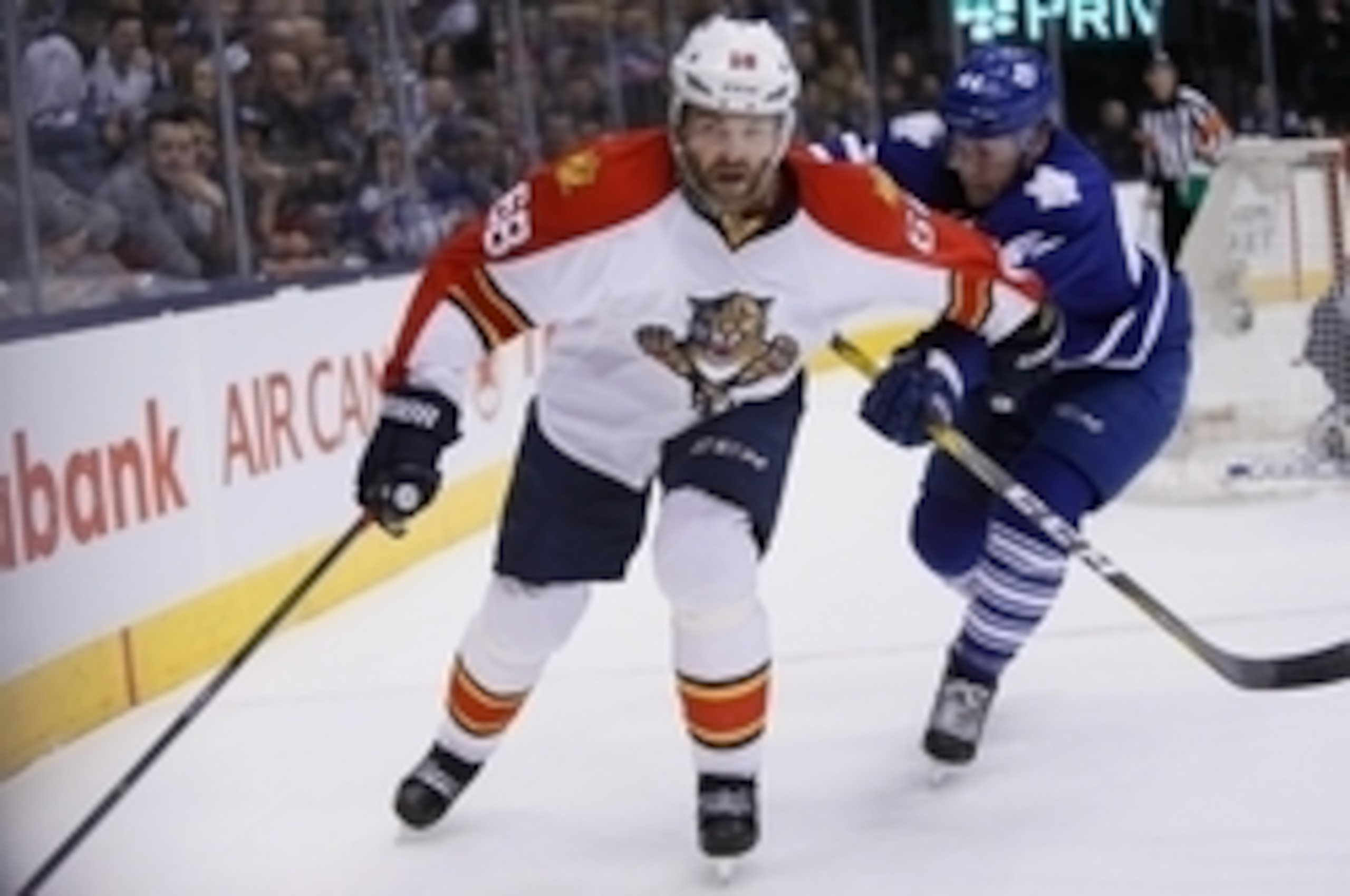
Regular-season finish: First in Atlantic Division, second in Eastern Conference
First-round matchup: vs. New York Islanders
Strengths
Hunger is something the playoff-starved Florida Panthers have shown all season. With veterans like Jaromir Jagr and Roberto Luongo guiding the way for young stars in the making—Aleksander Barkov, Jonathan Huberdeau, Vincent Trochek and Reilly Smith—there's a nice blend of enthusiasm and experience.
The Panthers weren't a powerhouse scoring club, but they did finish eighth with 2.83 goals per game and were bolstered by the trio of Jagr, Barkov and Huberdeau—a line that gets it done in all areas of the ice with arguably one of the best top trios in the league this year.
Luongo was a big reason the Panthers finished with the seventh-best GAA at 2.44.
Weaknesses
Two of the team's most relied-upon players are long in the tooth. Luongo is 37 and Jagr is 44. The grind of a playoff run that goes beyond the first round is something they will have to prove they can handle. Other key players like Huberdeau, Barkov and sophomore Aaron Ekblad have no playoff experience at all. Their first-round opponents lost a tough seven-game series last spring.
The Panthers' special teams struggled this season, and that could come back to bite them in the playoffs when capitalizing on opportunities becomes critical. The power play finished at 16.9 percent (23rd) and the penalty kill at 79.5 percent (24th).
Pittsburgh Penguins
3 of 16
Regular-season finish: Second in Metropolitan Division, third in Eastern Conference
First-round matchup: vs. New York Rangers
Strengths
Although Sidney Crosby had just five points in all of October and was outside the top 50 in NHL scoring over the first couple of months, the Pittsburgh Penguins captain turned things around for himself and his team. His climb up the leaderboard mirrored the Pens' success as a team. Crosby finished third in the NHL with 85 points in 80 games.
As a group, the team's greatest strength is speed. That goes for the forwards and defensemen, with Kris Letang leading a bunch of mobile and puck-savvy defenders who can join a rush in a blink. The team finished third with a 2.94 goals per game average.
Weaknesses
There is a big question mark with the goaltending. Not that Marc-Andre Fleury and backup Matt Murray are poor netminders. In fact, they've both been really good this season while helping the Pens to a sixth-best GAA of 2.43. The problem is their health. Fleury is dealing with his second concussion of the season, and Murray—who was tremendous filling in—was hurt in the final game of the regular season.
Fleury practiced with the team Monday, according to Bill West of the Pittsburgh Tribune-Review, which is a good sign that the goaltender may be available for the first round.
The other issue that raises doubt is the performance of the third and fourth lines. They produced down the stretch of the regular season and would benefit from the return of Evgeni Malkin at some point in the postseason, but those players were not consistent all year long and may be a weak link if the stars slump.

.jpg?w=2560 "NHL Trade Grades Connor Hellebuyck")
New York Rangers
4 of 16
Regular-season finish: Third in Metropolitan Division, fourth in Eastern Conference
First-round matchup: vs. Pittsburgh Penguins
Strengths
Henrik Lundqvist is still the key player for the New York Rangers. The Pittsburgh Penguins could not find a way to beat him in last year's first-round matchup, and if he is hot again this spring, the Rangers could ride the 34-year-old veteran goaltender out of the first round.
The team did a nice job finding offense without star power this season, finishing seventh with a 2.84 goals per game average. The Rangers had five 20-goal scorers and 10 players with at least 30 points, per hockey-reference.com, while Rick Nash played just 60 games because of injury and posting 15 goals and 36 points.
Their biggest strength is down the middle with Derek Stepan and Derick Brassard in top offensive roles and Eric Staal/Kevin Hayes on the third line with Dominic Moore perfect for the fourth.
Weaknesses
The Rangers defense has been awful this season, relying too heavily on Lundqvist. It won't help that the upper-body injury captain Ryan McDonagh suffered will cause him to be unavailable for the start of the series, according to NHL.com's Shawn P. Roarke. Dan Girardi has also missed time and didn't practice Monday.
The Rangers can't afford to play as irresponsibly in front of Lundqvist as they did in the regular season. They finished 16th in the league with a 2.62 GAA, third-worst of all playoff teams. The penalty kill will also need to improve with a 78.2 percent success rate—the fifth-worst in the regular season and most generous of all 16 playoff qualifiers.
Tampa Bay Lightning
5 of 16
Regular-season finish: Second in Atlantic Division, fifth in Eastern Conference
First-round matchup: vs. Detroit Red Wings
Strengths
Goaltending is easily the area that the Tampa Bay Lightning can boast about from this up-and-down season. Ben Bishop deserves serious consideration for the Vezina Trophy after essentially carrying the team on his back to make a return to the playoffs. Of all netminders who played at least 25 games this year, Bishop was second with a .926 save percentage and first with a 2.06 goals-against average.
Backup Andrei Vasilevskiy has the potential to be a starter in the NHL sooner than later and has been reliable behind Bishop this season.
If all three members are healthy, then the Triplets line should be another strength for the Bolts, who finished tied 12th in goals per game even though the trio of Tyler Johnson, Nikita Kucherov and Ondrej Palat spent most of the year apart.
Weaknesses
Health is a huge problem for the Lightning. They lost top-pairing defenseman Anton Stralman to a broken leg and captain Steven Stamkos to blood clotting, and neither will be back unless the Bolts go on a deep playoff run. Added minutes for blueliner Matt Carle, Jason Garrison and Braydon Coburn will test the depth of the defense behind Victor Hedman.
The power play was atrocious this season, partially due to the injuries to both Palat and Johnson. It will have to be better in the postseason to help an offense that will be hurting without the team's top goal scorer Stamkos and puck-possession leader Stralman on the back end.
Detroit Red Wings
6 of 16
Regular-season finish: Third in Atlantic Division, sixth in Eastern Conference
First-round matchup: vs. Tampa Bay Lightning
Strengths
There is a lot to like about the rookie season from center Dylan Larkin, who led the team in goals (23) and plus/minus (plus-11) while finishing sixth in the freshman points race and putting together one of the most well-rounded campaigns by the group as a teenager.
Detroit Free Press writer Helene St. James suggested Larkin was a major reason the Detroit Red Wings saw their playoff streak hit 25 years. Larkin's support of the aging stars, like Henrik Zetterberg and Pavel Datsyuk, was invaluable. "Larkin has been the Wings' best story this season, because he combines skill and maturity way beyond his years," St. James wrote. "He's their biggest rink rat since Chris Chelios, practically having to be shoved off the ice after practices."
Weaknesses
The Red Wings were average at best across the board, finishing 23rd in goals per game (2.55), 17th in GAA (2.67), 13th in power play (18.8 percent) and 14th in penalty killing (81.5 percent).
Although the Wings kept their streak alive, the veterans are clearly in decline. Datsyuk missed 16 games this season and finished with his lowest points per game average (.74) since his rookie season in 2002. With 13 goals and 50 points, 35-year-old captain Zetterberg had his lowest totals in a full season since his freshman year in 2003.
With Datsyuk trying to decide whether or not this playoff run will be his NHL swan song, there will be a lot of attention and pressure on the 37-year-old.
Goaltending was also very inconsistent for the Wings, with Petr Mrazek playing well in the first half but bombing down the stretch and losing his starting spot to veteran Jimmy Howard. If one of them doesn't stake a claim to the starting spot in the postseason, the team will be done early.
New York Islanders
7 of 16
Regular-season finish: Fourth in Metropolitan Division, seventh in Eastern Conference
First-round matchup: vs. Florida Panthers
Strengths
New York Islanders forwards took a step backward this season, including superstar John Tavares; the Isles captain was much better in the second half and still ended up with 33 goals and 70 points in 78 games to finish 16th in league scoring. Tavares finished strong and was named the NHL's first star for the final week of play. He is still capable of taking over a series.
Although the supporting cast isn't spectacular, it's deep and talented. The team had four players with at least 20 goals. The fourth line is one of the most physical and productive in the league. Matt Martin, Casey Cizikas and Cal Clutterbuck combined for 33 goals in the regular season, including 10 game-winners.
The defensive group relies heavily on Travis Hamonic, Nick Leddy, Johnny Boychuk and Calvin de Haan, but with Thomas Hickey and a rotating cast of third-pairing members that includes veteran Marek Zidlicky, it's an underrated collection.
Weaknesses
Goaltending could ultimately cost the Islanders their first playoff series victory since 1993. It's a huge concern. Starting goaltender Jaroslav Halak was hurt in early March, and it's unlikely he'll be back for the first round. That leaves Thomas Greiss as the guy in goal for now, and he has all of one relief appearance in the NHL playoffs—and that was back in 2010 with the San Jose Sharks.
Greiss handled the starting role well over the past month and was arguably the strongest backup netminder all season with a .925 save percentage and 2.36 GAA in 41 appearances. But it's a whole different kind of pressure as the No. 1 netminder in the postseason, so we'll find out if Greiss is up to the task.
Philadelphia Flyers
8 of 16
Regular-season finish: Fifth in Metropolitan Division, eighth in Eastern Conference
First-round matchup: vs. Washington Capitals
Strengths
Goaltender Steve Mason was the Philadelphia Flyers' MVP down the stretch during the regular season, winning 10 of his last 17 appearances and earning points in 13 of them. He finished the year with a .918 save percentage and 2.51 GAA but was often the team's best player and is definitely its hottest entering the playoffs.
Jakub Voracek touted the backstop's virtues to NHL.com's Katie Brown and Adam Kimelman. "He's a great goalie, one of the top in the league, and he's been like that for the last two years," Voracek said. "It's a tough stretch for him because of so many games played, but he's enjoying it. He's riding a hot streak, he's playing well, he is playing confident."
Claude Giroux doesn't get the kind of credit he deserves as a complete hockey player. He finished with 22 goals and 67 points in 78 games but is also one of the more persistent backcheckers in the league. Sean Couturier gives them a solid one-two punch at center. Their hands will be full in the first round with the Washington Capitals' top two lines.
Weaknesses
This might be the least talented group of blueliners in the business—at least among the Sweet 16 that made the playoffs. Although rookie Shayne Gostisbehere looks like an elite offensive defenseman after his impressive season following his recall from the AHL in mid-November, the talent level plummets after him and veteran Mark Streit.
Andrew MacDonald, Radko Gudas, Nick Schultz, Brandon Manning and Evgeny Medvedev are the options behind those top two. Not only do they not contribute much in offense, but the team struggles in its own end and allowed the eighth-most shots against per game in the regular season.
Against the league's second-most potent offense this season, the Flyers will have to be almost flawless to somehow escape the first round.
Dallas Stars
9 of 16
Regular-season finish: First in Central Division, first in Western Conference
First-round matchup: vs. Minnesota Wild
Strengths
The Dallas Stars earned the top seeding in the Western Conference because of an all-powerful offense that often makes up for deficiencies in other areas. Led by the NHL's second-best scorer this season, Jamie Benn, the Stars scored at an average of 3.23 goals per game. Benn finished with 41 goals, becoming the first to hit that mark for the Stars franchise since Mike Modano back in 1994.
With Tyler Seguin, Jason Spezza and Patrick Sharp, it's no wonder the team has been able to produce at such a high level offensively. Seguin also appears close to returning after a nasty cut to his Achilles this season.
They get plenty of offense from the blue line as well, with John Klingberg producing 58 points as a sophomore and veteran Alex Goligoski netting 37 points from the back end this season.
Weaknesses
It's a good thing the Stars offense is so potent, because the goaltending tandem has left much to be desired. Kari Lehtonen and Antti Niemi each won 25 games this season, but it wasn't because of their performances. Rarely would either of them steal a game. Lehtonen finished with a .906 save percentage and 2.76 goals-against average, and Niemi had a .905 and 2.67.
They've made efforts to improve the defensive group, and with Johnny Oduya, Jason Demers, Klingberg, Goligoski and Kris Russell, they've done so on paper. In practice, however, the Stars haven't had the entire group healthy at the same time until now.
It will be a bit of a trial by fire.
Anaheim Ducks
10 of 16
Regular-season finish: First in Pacific Division, second in Western Conference
First-round matchup: vs. Nashville Predators
Strengths
Goaltenders John Gibson and Frederik Andersen combined to win the Jennings Trophy for the fewest goals allowed in the NHL. The two have been spectacular all season with Gibson putting up a .920 save percentage and Andersen a .919 as they've each taken turns as the starter while the other nursed an injury.
Head coach Bruce Boudreau has a tough call to make for the series when it comes to a starter. He joked with reporters that he's going to just flip a coin: "Heads is Freddie, tails is Gibby. ... I've got to believe, maybe not in this series, but maybe down the road, both will play."
In front of the netminders, there is a really nice group of defensemen that mixes puck-moving ability with smart defensive-zone play. Hampus Lindholm, Sami Vatanen, Cam Fowler and Kevin Bieksa all averaged more than 20 minutes a night, with Simon Despres just behind at 19:38. Clayton Stoner, Josh Manson and Korbinian Holzer are all capable on the third pairing.
Any team with Ryan Getzlaf and Corey Perry is capable of scoring in bunches, even if the team as a whole struggled in that area throughout the regular season.
The Ducks finished first in both special teams categories, with a 23.1 percent power play and 87.2 percent penalty kill.
Weaknesses
Finding the right fit among the forward ranks has been a season-long struggle. The team seems to have found the right balance with a top line of David Perron, Getzlaf and Brandon Pirri; second unit of Jamie McGinn, Rickard Rakell and Perry; third line of Ryan Kesler, Andrew Cogliano and Jakob Silfverberg; and fourth featuring Nate Thompson, Ryan Garbutt and Chris Stewart.
The problem now is that injuries have messed with the chemistry. Perron is out week to week with a shoulder injury, Rakell will miss the start of the opening series with appendicitis and Pirri has a hurt shoulder.
If they can get healthy and continue to address that 17th-ranked offense, they should find a way back to the conference final.
St. Louis Blues
11 of 16
Regular-season finish: Second in Central Division, third in Western Conference
First-round matchup: vs. Chicago Blackhawks
Strengths
Although the St. Louis Blues finished smack dab in the middle of the standings in goals scored per game with 2.67, they have tremendous forward depth with three lines capable of producing offensively and a fourth that provides great energy and physical play. If not for injury, the numbers would have been much higher for the Blues this year.
Vladimir Tarasenko is one of the most dynamic offensive players in the game, and he finished with his first 40-goal season and 74 points in 80 games this year to pace the Blues. Alex Steen and Paul Stastny were well behind but played 67 and 64 games respectively because of injuries.
Tarasenko, Jaden Schwartz and Jori Lehtera form the top trio, with Steen, David Backes and Patrik Berglund offering a nice top six. Rounding out the group of nine are rookie Robby Fabbri, Stastny and Troy Brouwer, who found great chemistry late in the season and could make a difference in the playoffs.
Of course, they will have to produce when the pressure is on in the postseason.
The defense is also solid with Kevin Shattenkirk, Alex Pietrangelo, Jay Bouwmeester, Colton Parayko, Joel Edmundson, Carl Gunnarsson and Robert Bortuzzo providing options.
Weaknesses
Playoff goaltending has not been a Blues strong suit in recent years, and as good as netminder Brian Elliott has been this year after Jake Allen went down to injury in the regular season, his postseason numbers are atrocious.
Elliott's .930 save percentage was tops among those who started at least 30 games this year, and his 2.07 GGA was tied for second-best in the NHL. That was the regular season. By contrast, his career playoff statistics include a 2.54 GAA and .897 save percentage through 19 appearances.
Allen's numbers from last spring are marginally better with a .904 save percentage and 2.19 GAA through six games. His uneven performance against the Minnesota Wild was one of the reasons the team failed to advance last year after winning the Central Division title.
Chicago Blackhawks
12 of 16
Regular-season finish: Third in Central Division, fourth in Western Conference
First-round matchup: vs. St. Louis Blues
Strengths
Patrick Kane was the most dominant player in the league this season. He was the only player to crack the 100-point mark, and he helped rookie linemate Artemi Panarin lead all freshmen with 30 goals and 77 points. His center Artem Anisimov hit 20 goals for just the second time in his career. The first American-born player to win the Art Ross Trophy makes players around him better.
Nobody on the team outside of Kane and Panarin finished with 60 or more points, which could show up in the weaknesses column when looking at the forward depth for this team.
Goaltender Corey Crawford has established himself as one of the league's best and should quickly shake off any rust after sitting out almost the last month of action due to injury.
Weaknesses
As we mentioned earlier, the team's offensive production relied very heavily on the so-called second line. Jonathan Toews didn't even reach the 60-point mark this season, and the production from the bottom six forwards was very light.
The defense has serious concerns about depth behind Duncan Keith, Brent Seabrook and Niklas Hjalmarsson, and those worries are even more exasperating with Keith suspended for the first game of the opening round thanks to a high stick on Minnesota Wild forward Charlie Coyle.
Los Angeles Kings
13 of 16
Regular-season finish: Second in Pacific Division, fifth in Western Conference
First-round matchup: vs. San Jose Sharks
Strengths
Strength down the middle has been a big part of the Los Angeles Kings' playoff success over the past half-dozen years, and this year is no exception thanks to the combination of Anze Kopitar and Jeff Carter, who provide a tough one-two punch to slow offensively.
Defenseman Drew Doughty is one of the league's elite, playing big minutes and shutting down the other teams' top players with regularity in addition to contributing a great deal offensively.
Goaltender Jonathan Quick has been strong, as usual, and could be the difference in a battle against a team lacking playoff experience at the position.
Weaknesses
The Kings' depth on defense beyond the top four is questionable when it comes to a deep playoff run, and it's shown down the stretch as the team has been a little more giving defensively while coughing up the Pacific Division title to the Anaheim Ducks.
They gave up 15 goals in their last five games of the regular season and allowed four or more in five of their last nine. That uncharacteristic play will have to stop if they want a shot at their third Stanley Cup in five seasons.
San Jose Sharks
14 of 16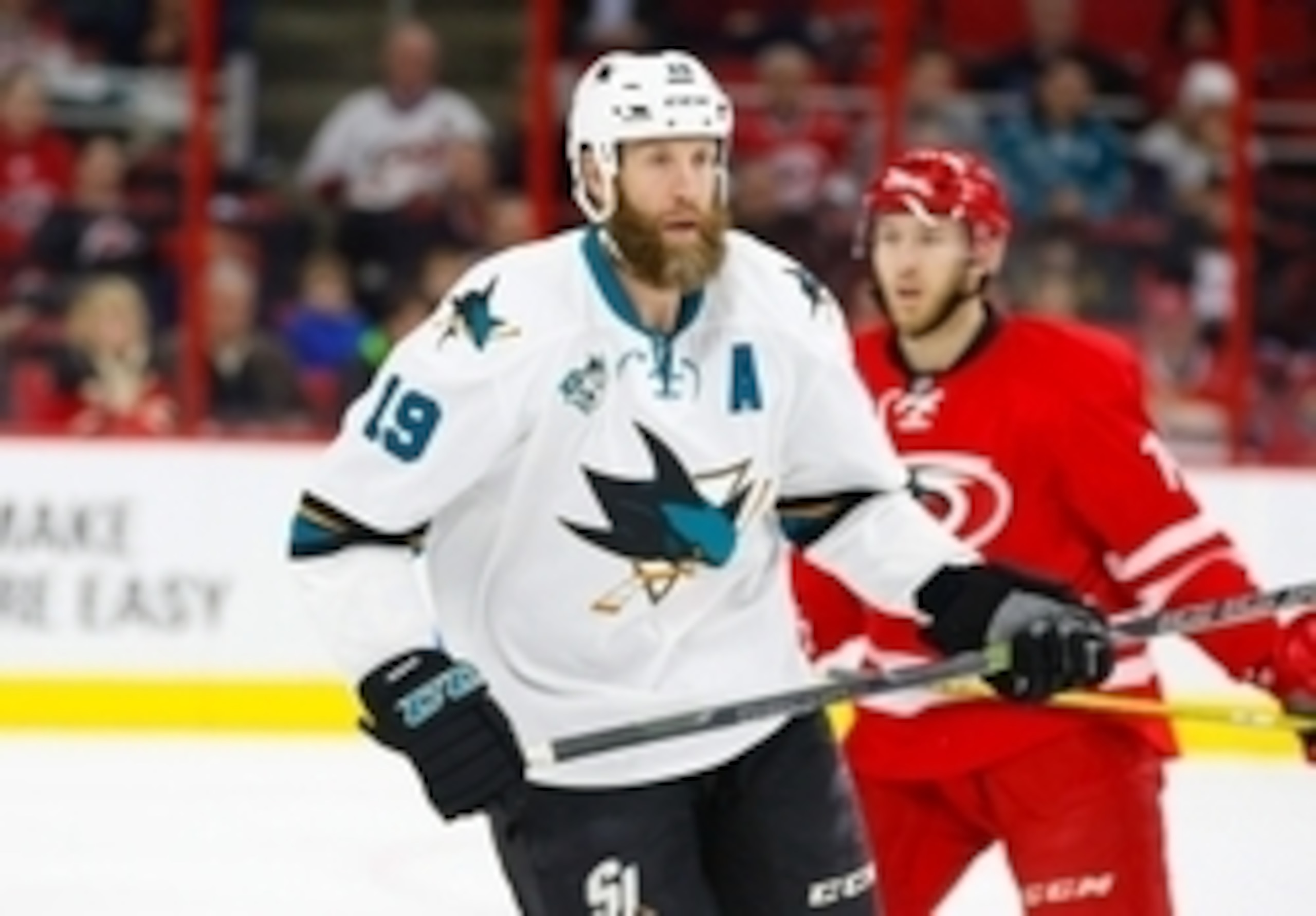
Regular-season finish: Third in Pacific Division, sixth in Western Conference
First-round matchup: vs. Los Angeles Kings
Strengths
Thanks to a return to offensive glory for center Joe Thornton, the San Jose Sharks were the fourth-highest scoring team in the league this year with a 2.89 goals per game average. At 36, Thornton had his best statistical season since 2010 with 19 goals and 82 points in 82 games.
Two other Sharks put up 70-plus-point seasons, as Joe Pavelski scored 38 goals and 78 points, and defenseman Brent Burns shattered his career best with 75 points. The team had five 20-goal scorers and at least 40 points from a half-dozen players
Weaknesses
Defensively, the team has a strong blue line led by Marc-Edouard Vlasic and Burns, but the goaltenders behind them are low on playoff experience. Martin Jones is a first-year starter after the Sharks snagged the former Kings backup through a deal with the Boston Bruins in the offseason. He did well during the regular season, finishing with 37 wins, a .918 save percentage and 2.27 GAA.
In the playoffs, however, Jones has made only two relief appearances in 2014, facing seven shots against. He'll have to prove he is up to the challenge of the playoffs—and he'll have to do it against the team that may know him best in the Kings.
James Reimer is a good backup who has started seven playoff games when the Toronto Maple Leafs took the Boston Bruins to seven in the first round in 2013k. A team doesn't want to wind up running with the backup, but he's a good option if things go that way.
Nashville Predators
15 of 16
Regular-season finish: Fourth in Central Division, seventh in Western Conference
First-round matchup: vs. Anaheim Ducks
Strengths
The Nashville Predators defense may still be the best in the league even without Seth Jones, who they traded away for Ryan Johansen this season. There is no more formidable duo than Roman Josi and Shea Weber, who are backed by Mattias Ekholm, Ryan Ellis, Barret Jackman and Petter Granberg. The Preds also have Corey Potter and Anthony Bitetto as options.
With the addition of Johansen as a top-line center and the emergence of Filip Forsberg, the Predators have a couple of potent scoring lines this season. Forsberg and James Neal both scored 30-plus goals, and Craig Smith—who played with Forsberg and Mike Ribeiro—chipped in 21. They ranked 12th in the league with a 2.73 goals per game average. They won't be mistaken for the Dallas Stars, but the Preds have the ability to produce when needed.
Weaknesses
Pekka Rinne has had one of his worst statistical seasons in goal for the Preds, with a 2.48 GAA and .908 save percentage that is due to some early-season struggles. He's been hot and cold all year, and the team's success mirrors his play. The 33-year-old doesn't have a lot of playoff success either, owning a 15-19 record in the postseason.
If his play dips or the offense dries up from the secondary sources, the Preds won't be around long.
Minnesota Wild
16 of 16
Regular-season finish: Fifth in Central Division, eighth in Western Conference
First-round matchup: vs. Dallas Stars
Strengths
The Minnesota Wild defense remains among the most stingy in the league collectively thanks to the steady play of veteran Ryan Suter, who was second in the league in minutes per game this season. Both Suter and his partner Jared Spurgeon had personal bests offensively this year as well.
With Suter, Spurgeon, Matt Dumba, Marco Scandella, Jonas Brodin and Nate Prosser playing most of the games this year, the Wild limited opponents to a seventh-best 28.6 shots against per game, which, combined with the goaltending of Devan Dubnyk, helped the Wild rank ninth in GAA at 2.49.
Weaknesses
Only two playoff-bound teams scored fewer goals than the Minnesota Wild this year. The Wild didn't get the breakthrough they'd hoped for from center Mikael Granlund. Veteran Thomas Vanek failed to net 20 goals for the first time in his career, and Jason Pominville failed to hit 40 points in a full season for the first time since 2006. Even sniper Zach Parise had his lowest goal total (25) in a non-lockout campaign since his rookie year in 2006.
The Wild's penalty killers were shockingly ineffective with a 77.9 percent kill rate that ranked 27th in the NHL. It's hard to believe considering that the defensive side of the game is where the team thrived this season.
All stats via NHL.com and hockey-reference.com unless, otherwise noted.




.jpg?w=2560 "Latest Peyton-Colts Rumors")