What Russell Wilson's Genealogy Says About America
As old religious-miracle tales go, The Legend of the Beer Mug has to be one of my favorites.
Here are the basics: Some seventh-century peasants in what is now Northern France were moving the coffin of their beloved St. Arnulf of Metz—bishop, governor, reformer and all-around pre-Renaissance man—from his countryside monastery to the town church for reburial. It was thirsty work on a hot day, and the laborers were short on supplies. A parishioner named Duc Notto prayed in the name of Arnulf for something to drink.

.jpg?w=2560 "Seahawks Chiefs Football")
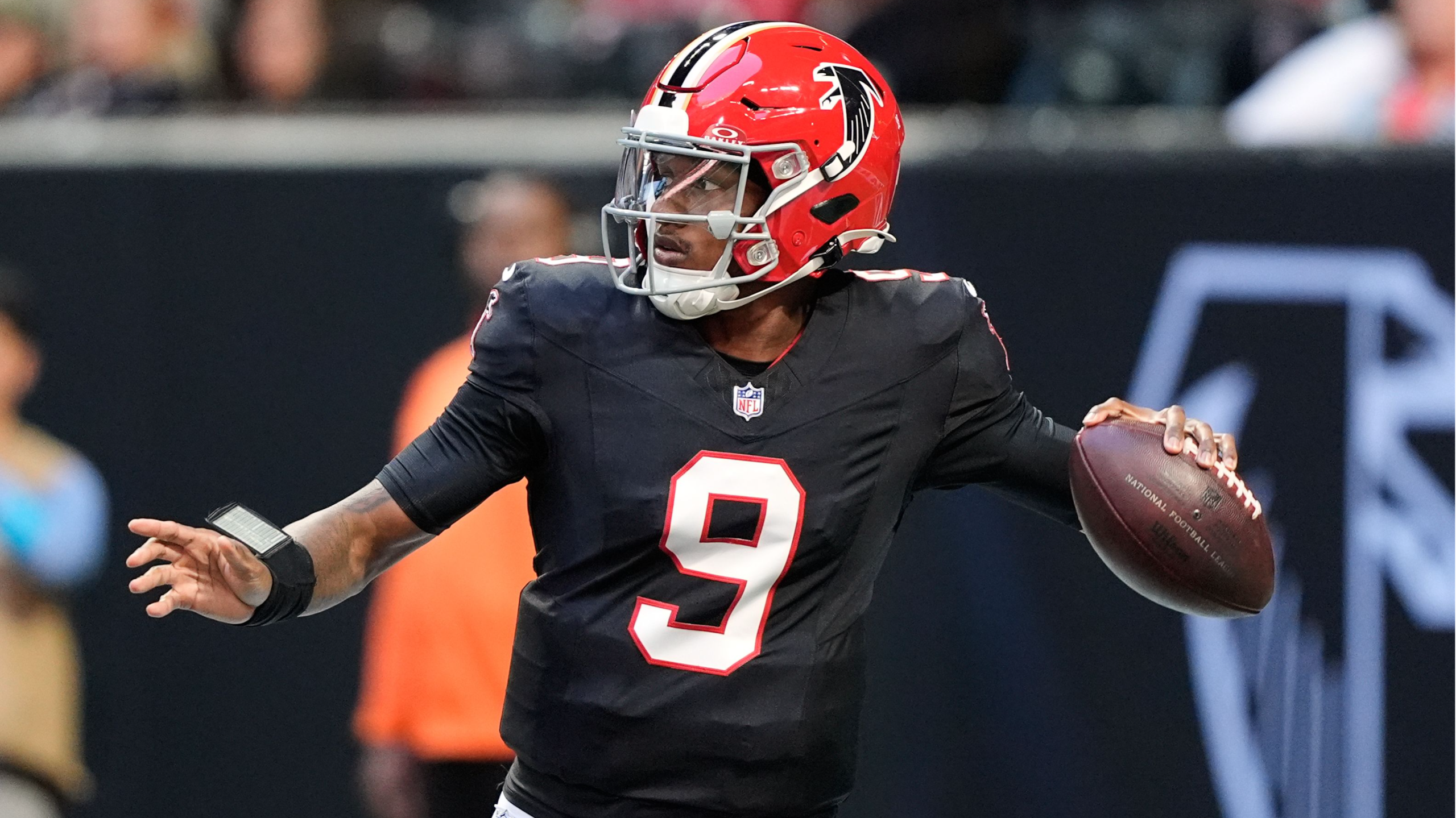

In one version of the legend, a lone mug of beer miraculously kept refilling itself so all of the laborers could quench their thirst. In another, beer actually burst forth from Arnulf's casket, and his faithful parishioners drank it, proof that they really loved him and were really, really thirsty.
St. Arnulf of Metz leads off this football column because: (a) Any saint who provides unlimited beer is the kind of saint NFL fans should know more about; and (b) Arnulf is Russell Wilson's great, great, great (keep going) great grandfather.
Wilson learned of his genealogy last Saturday night, when he appeared with Dr. Henry Louis Gates (historian and host of the PBS series Finding Your Roots) at the Altria Theater in Richmond, Virginia. Wilson's ancestry also includes a woman named Charity Southgate, a slave born to a white mother who spent 23 years suing for her freedom. More on her in a moment.
Wilson's family tree also includes an English king whose name was not revealed. Perhaps it was King Anonymous I, who sired a long line of future NFL inside sources. And it includes Arnulf, Frankish political insider and beer lover whose saintly icon is a rake, even though it should probably be a buffalo wing.
Americans are fascinated by ancestry in ways that are not always 100 percent healthy. Reading about Wilson's illustrious ancestors in today's political climate, I wasn't sure whether to be inspired by the stories of Southgate and Arnulf, to be awed by Dr. Gates' ability to trace families back to the time of Charlemagne or to demand to see some birth certificates.
Americans are also fascinated by quarterbacks in ways that are not always 100 percent healthy. Wilson's fascinating journey over the past month—through life, the tabloid gossipverse, Disneyland, the annals of Western Civilization—can teach us a lot about who we are, the differences that divide us and the deep bonds that bind us together.
Wilson has been a tabloid staple this offseason, though he hasn't done much more than live the normal life of a famous young man. He recently got engaged to R&B diva Ciara. The couple has been public and candid about their plan to abstain from sex until marriage, something Wilson's saintly ancestor would certainly approve of. (For the record, Arnulf's wife Doda never recorded a single titled "Body Party.")
Wilson and Ciara were spotted riding roller coasters at Disneyland with Ciara's son Future. Wilson looked a little paunchy in some of the photographs, prompting reporters to ask Seahawks general manager John Schneider if he was concerned.
"I'm not worried about him at all," Schneider said.
Former Seahawks quarterback Brock Huard was also called upon to address Wilson's conditioning, noting that a little extra weight can help a smaller quarterback.
"Scott Linehan, my old offensive coordinator in college, said, 'Would you please have some beers and eat some pizza?'" Huard told 710 ESPN Seattle.
There's a smartphone app for the pizza now, Brock. And a prayer for the beer.
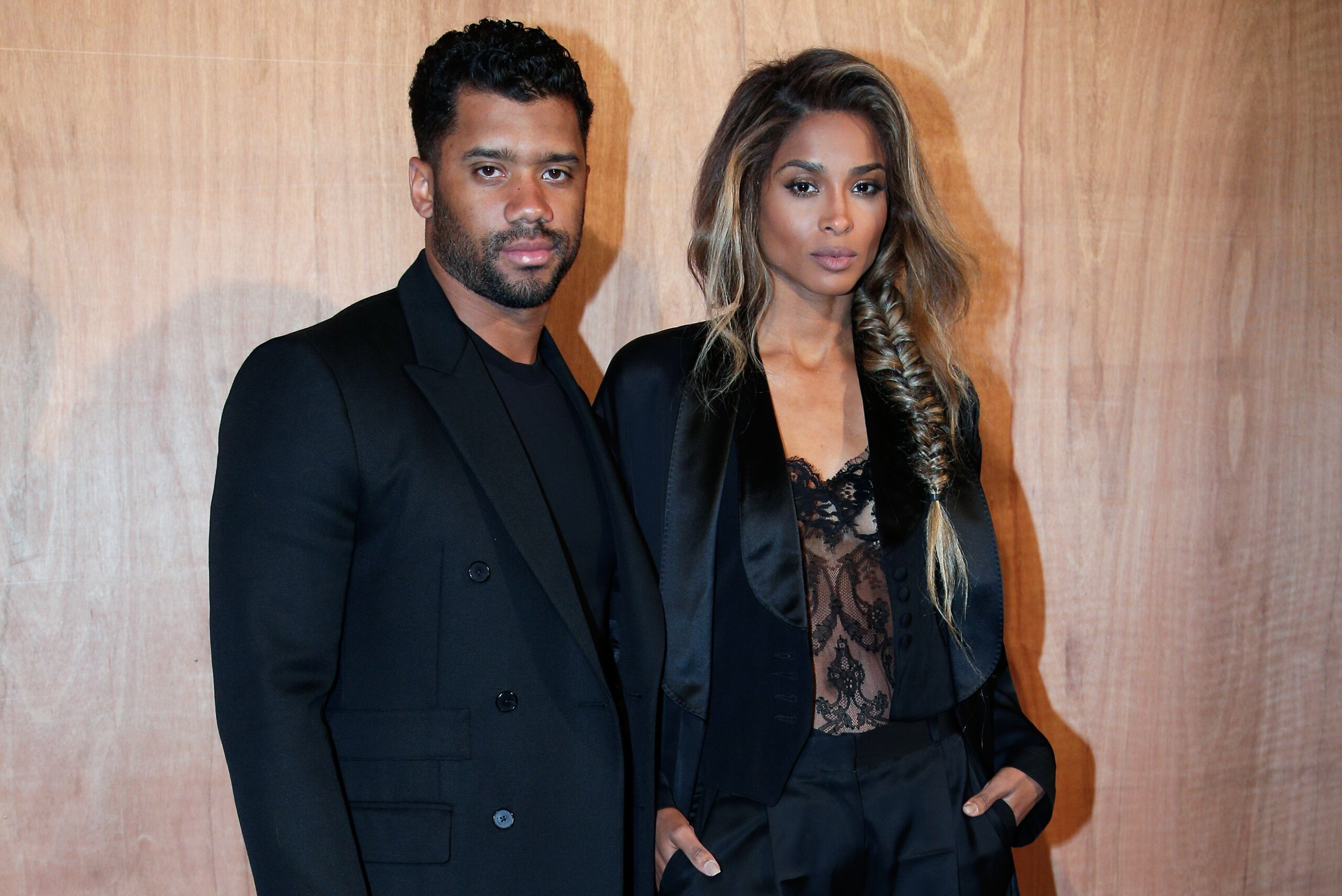
Wilson and Ciara are famous, beautiful people who overshare about their romantic life, so let the cold-shower wisecracks and unfounded skepticism roll. Just try to draw the line before we start blaming bad games on Wilson's love life or lack thereof. (In other words, don't cross the Aaron Rodgers-Olivia Munn taste-and-common-sense barrier).
As for the weight gain, which is a nominal real-football issue, wake me if Wilson looks like Eddie Lacy in October, not like a guy in a loose-fitting shirt in April.
That's the problem with being a quarterback. You get fame, fortune and glamour, but you ride the roller coaster of public opinion all year long. People think it's their business how you spend your free time. Unless you are canonized like Tom Brady, even an amusement park photograph is a potential source of personal criticism. And Brady doesn't always have it so hot, either.
For Wilson, this offseason has actually been quiet on the football front, give or take a few corndogs. Last year, we spent spring and summer writing speculative articles—some of which read like malarial hallucinations—about his contract status. (Just spitballin' here, but what if Wilson plays shortstop for the Rangers, then spends a year in Tibet, then returns to the NFL to take over the Patriots from Brady?)
Wilson gets turned into a figure of controversy for doing things that are barely controversial, such as expecting money for his services, endorsing products (the magical concussion water was stupid, though we now know miraculous beverages are in the bloodlines), letting his conditioning go a smidge during his down time or obeying his (and my, and quite possibly your) religion.
All famous quarterbacks get this business, of course, to some degree or another. But Wilson happens to be a *black* quarterback, which brings us back to his genealogy.
America is an inclusive, tolerant, diverse and post-racial utopia until you scroll about midway down the typical message board. Wilson doesn't get labeled with the thinly veiled semiotics still hung on some of his peers (he doesn't dance, smile too broadly, have obvious tattoos, etc.), but defying a perception only proves that there's a perception to defy.
To be blunt, we're still obsessed about the ancestries of our quarterbacks in ways that are not 100 percent healthy.
So along comes Charity Southgate, Wilson's great-great-great-great-great grandmother, to remind us that racial categories, which once meant the difference between freedom and bondage, have always been completely absurd.
Charity Southgate was the daughter of a white woman named Patsy Palmer (or Parmer or Palmour) and a black servant in her brother-in-law's house in Northern Virginia. Patsy fled in disgrace to another town with little Charity. When Charity was a teenager, a man appeared at her mother's door with power-of-attorney papers, seized Charity and placed her "under the custody" of a man named Robert Wilson. A young girl raised in freedom was suddenly a slave due to a legal technicality. (This webpage sheds additional light on the Southgate story.)
According to the Daily Progress article about the Finding Your Roots presentation, Wilson's hands shook as he read documents from Southgate's life, including an accounting of two of Wilson's ancestors listed as property (along with some livestock) valued at $1,000. Southgate was sold twice during her legal battle to regain her freedom. It took her 23 years to finally win freedom for herself and purchase freedom for her husband.
Southgate's story is powerful in many ways, for Wilson and for all of us. For one thing, it never hurts to get a reminder that we're not that many generations removed from buying and selling our fellow men and women.
It also never hurts to remember that the labels that divide us are ridiculous. Ethnic and religious categories fall apart as soon as genealogists start really digging into just who had children with whom. It turns out that Russell Wilson is black, white, English, Frankish and, depending on which account of the life of Arnulf you read, possibly a direct heir to the Merovingian dynasty. Update your scouting reports accordingly.
We all have genealogies like Wilson's; most of us just don't know the details. Our ancestors had to be prosperous enough to have healthy babies and raise them until they had the prosperity to raise their own healthy babies—quite a feat for most of human history. The mathematics of genetics dictates that all Europeans are related to Charlemagne; Wilson just happened to learn that, through Arnulf, he's a far-removed cousin and that, through Patsy Palmer (at least), he's European.
So while our family trees may be full of slaves, peasants, sinners, serfs and insurance salesmen, they are also scattered with kings, saints and heroes.
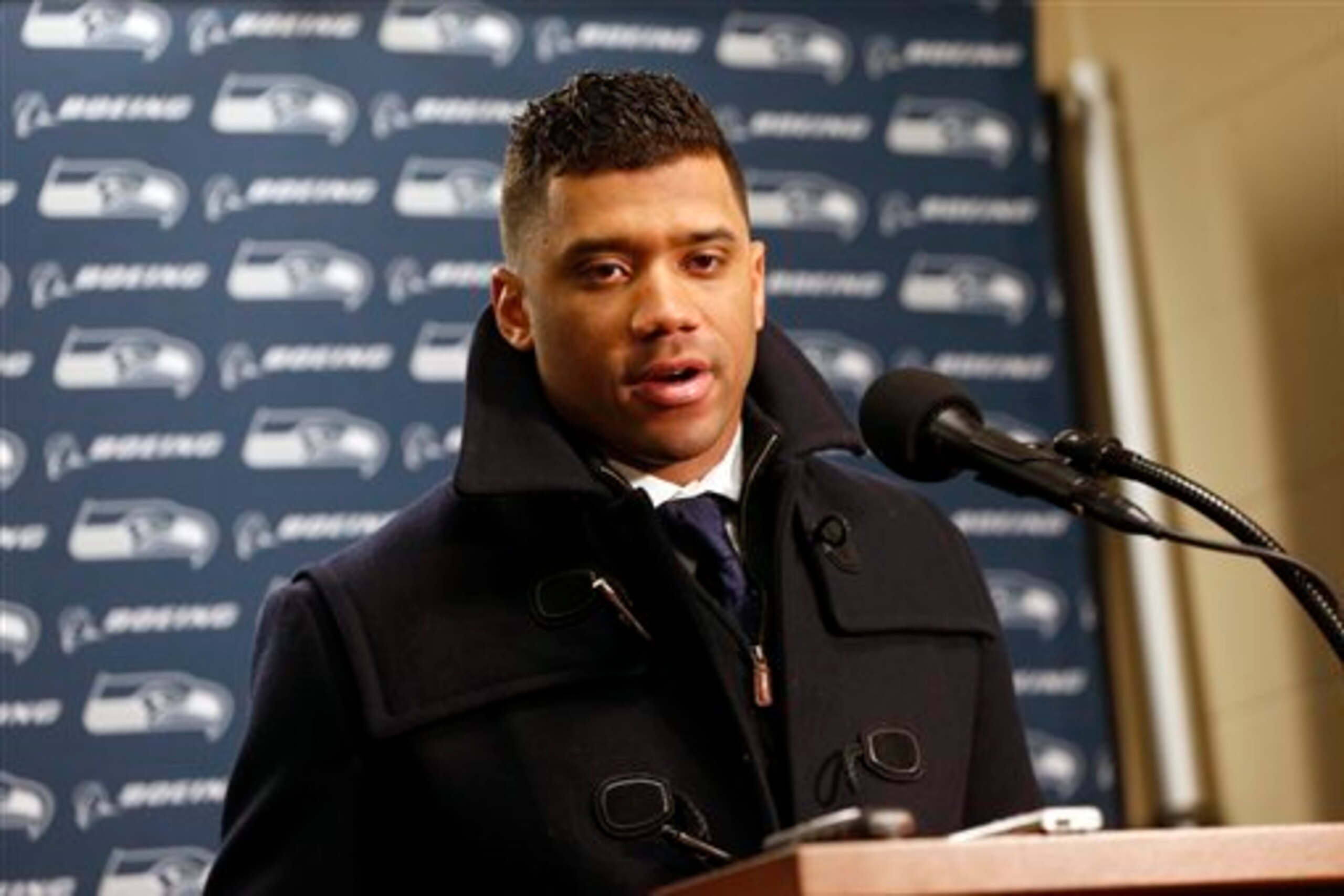
Wilson said it best himself Saturday night, per Randy Hallman of the Daily Progress: "Some of our ancestors may have grown up as slaves. Some may have been slave owners. ... We forget we're all human."
"Sometimes," he said, "you have to forget what a person looks like, forget what a person believes in, forget what a person does have or does not have. ... You have to look deep inside and love. Because you're probably connected."
Indeed, we are all connected. In fact, I have a sneaking suspicion that I'm a direct descendant of Duc Notto, the guy thirsty enough to drink coffin beer.
Wilson's ancestral tale of American and world history may be a little big for us to grasp during coffee breaks, if tabloid articles of the "OMG! Ciara Marrying Into Royal Family" genre are any indication. A quick scan of the legendary Pro Football Talk message board (after two Alka-Seltzers, three Advil and a hug of my kids to remind myself that the human race is still capable of love) following Darin Gantt's brief Wilson posting proved that for some of the NFL's odder, angrier fans, touching stories of freed slaves and forgotten saints are just one more reason to irrationally hate an NFL quarterback as somehow arrogant or phony.
Wilson's ancestor Arnulf retired as a bishop and political adviser in 628 AD. For all the good he did, he was surrounded by palace intrigues and had to choose sides in bloody conflicts. He gave up the cushy, high-profile life of the court and became a hermit in the Frankish countryside. Medieval wealth and power, like its modern equivalents, weren't always healthy for the soul.
Wilson isn't planning to leave the NFL and become a monk. But fame being what it is these days, I wouldn't blame him one bit if he did.
Mike Tanier covers the NFL for Bleacher Report.