

Devonta Pollard Overcoming Rocky Road to Finally Thrive at Houston
HOUSTON — When Devonta Pollard needs a break, he gets in his Dodge Charger and twists the key. The engine answers with its combustive rhythm, burning the fuel that built a city sprawling enough for a country boy to get lost once again. When he pushes the accelerator, he advances forward. When he turns the wheel, he changes direction. When he pushes the button on the stereo, he hears the sounds he wants to hear—he is alone, in control and free.
"I just get on the interstate and just drive, drive, drive," Pollard said. "I go towards Dallas, or I go towards the Galleria. I just get on the interstate, keep straight for 25, 30 minutes, then I turn around and come back. If I get back and I'm not ready, I exit off and keep going."
TOP NEWS
Ole Miss Men's CBB Punished for Violations

Brown with an all-time summary of relationship with Tatum
_0.png?w=2560 "CFB Top 25")
Unranked Teams Cause Chaos in Rankings 📊
For a quiet kid with a lot on his mind, these drives are narcotic.
"Sometimes I just like to be by myself," he said. "Feel the air, feel the breeze and just ride, man."
These days are nice because of all the other days when he's had to see his probation officer and drop a urine test, or check in with a counselor, or field a call from his mother in prison. Most days, he's on the basketball floor for the University of Houston, where after three hard years, he's learned that he does want to be a basketball player after all.
The summer before Pollard's sophomore year of high school in unincorporated, no-stoplight Porterville, Mississippi, his father, Ervin, died of pancreatic cancer. Devonta has his father's shy personality, but he got his basketball aptitude and training from his mother, Jessie, a tough-loving sort of basketball mom. Demanding and encouraging, she had a lot to say about her son's game, but then again, she had played the game professionally in a short-lived U.S. women's league from 1980-81. She knew what she was talking about. So when she famously came out of the stands to yank her son—then the No. 6 player in his class—from an AAU game for a couple of mistakes, she made the correct basketball analysis (and Devonta's play improved after), but she embarrassed her son in expressing it.

"He had made two mistakes," Pollard told a Yahoo Sports correspondent at the game. "It's hard to play a whole ballgame, so I had to take him out to calm him down."
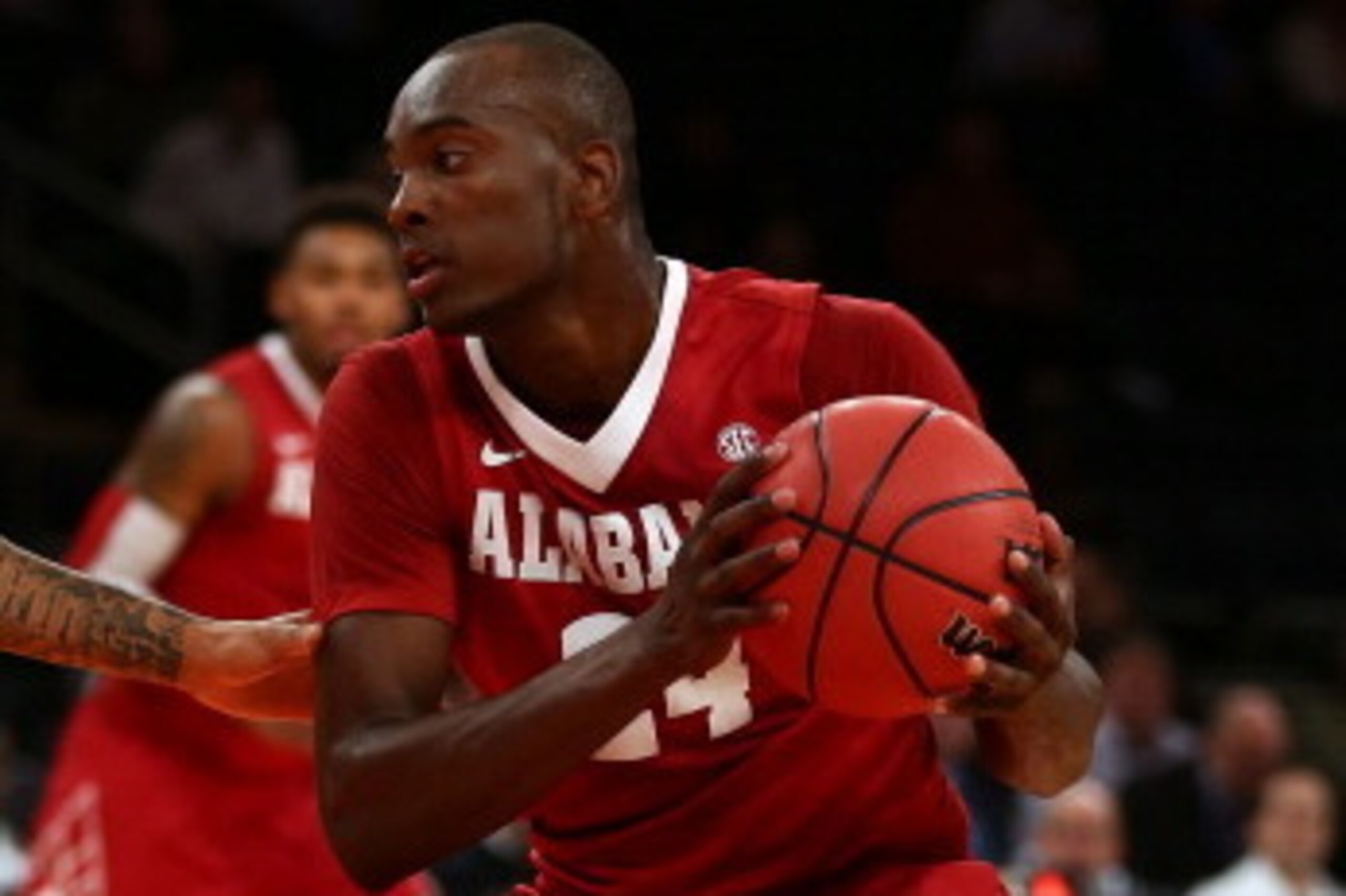
In 2013, when Devonta was a freshman at Alabama, Jessie Pollard's influence over her son's life took a disastrous turn. Angry over a land dispute with her cousin, she kidnapped her cousin's six-year-old daughter. Jessie didn't hurt the girl, and the episode lasted one day, but the girl was missing long enough for an Amber Alert to go out, and by the time it was all over, Jessie was facing a federal kidnapping trial. To make it worse, the FBI found out she had asked Devonta to bring her a couple of tools, and Devonta had done it. It wasn't until later, he said, that he realized what his mother was up to, but the damage was already done—Devonta could now be charged as an accomplice to a federal crime.
For Devonta, it was either testify or go to jail. So on Nov. 21, 2013, he showed up in federal court and testified against his own mother. She got 25 years. He got probation.
"I think he felt some guilt in that," said his high school coach and mentor, Darryl Carter. "But he was trying to do the right thing."
In American amateur basketball, junior college is the last refuge of the still-hopeful. It's one last chance to make the grades, stay out of trouble or get some attention while you still can. There are small pockets of dull glamour in places like Hutchinson, Kansas, and Pasadena, Texas—where JUCO ball matters to the locals a little bit—but it's mostly played in dark gyms between long bus rides by guys with a knock against them.
It's basketball probation, and nobody wants to be there.
Pollard went to East Mississippi Community College, which is one of the better JUCO programs in the country, but he was a part-time starter whose production drifted in and out. He'd score 20 one night, four the next. In the stands one night, some people started the practice of yelling "Jailbird!" That stuck.
"First time I heard him cry," Carter said.
It might have been different if he had played well at Alabama, but he had averaged less than four points per game as a freshman. Still a teenager, his confidence shot, his dad buried, his mom in prison, on probation and getting looked down upon by a bunch of community college students? He didn't know if he still wanted to play ball.
A kid who preferred to keep things inside couldn't hide it anymore.
"It wasn't his game," Carter said. "It was life itself."
But in that isolation, there was relief, too—JUCO basketball games aren't televised.
All that was available to watch was the coach’s videos of the games.
"If I wanted to go back and watch myself and see my mistakes and stuff, I could, and I didn't have to see commentators, and I didn't have to see my reaction when fans said the things they said," Pollard said. "I think that was a positive not to be televised at that moment. I don't think I was ready for it."
When Kelvin Sampson took over as coach at Houston in 2014, the program had six scholarship players, a gym with a distinct Cold War bunker kind of vibe and nothing to brag about since before Hakeem added the H to his name.
Coaches like Sampson aren't usually available to schools like UH, but an NCAA show-cause penalty for recruiting violations at Indiana had driven Sampson to the NBA for a few years. Once the show-cause expired, he was eager to get back into the college game.
Like Pollard, he was looking for a fresh start, and he was starting pretty close to the bottom.
"We weren't trying to recruit," Sampson said. "We were just trying to put a team together. We had a schedule to play, and we had a conference. We needed a team."

Because he had been in the NBA for six years, Sampson didn't know anything about Devonta Pollard. A colleague told him about an interesting unsigned junior-college player, but everyone he asked kept mentioning the kid's "situation."
So, he did the same thing all the taunting fans had done.
"I Googled his name," Sampson said.
Pollard describes himself as "hard to reach" at that time. Sampson tried to get to him through his aunts but found them to be protective of Devonta toward people they didn't already know. Then, Sampson said, "I found out he had a good girlfriend." Through her, he got Pollard on the phone and convinced the two of them to make a nine-hour drive to Houston. They arrived at midnight.
The next morning, Sampson and Pollard had breakfast.
"You could tell, just from looking in his eyes, this kid needed help," Sampson said. "He wanted somebody to help him. He wanted somebody to trust."
At the same time, Pollard was scared. He'd never gone far from home. At Alabama, he'd drive back to Mississippi at every opportunity, sometimes leaving at 2 a.m. to make a 5:30 a.m. practice, driving through the clear Alabama countryside, depriving himself of sleep in the process. But it was home.
Pollard, possessing a soft-speaking voice and the gentle manner of the Southern country boy he is, has spent much of his time worried about being accepted and making mistakes. Outside of ball, all he's ever really wanted was to just slip into the masses. Another driver under the big blue sky.
He had lost so much, been belittled so much, and now here was this big city and these new people.
"The thing I was scared of was that I wasn't going to be able to get along with people," Pollard said. "I didn't think I'd be able to get along with teammates. I didn't think the coaches were going to still see me as a humble young man."
Pollard was not a particularly good teammate at first, Sampson said. Not a trouble-maker, but not engaged, either. He was worse as a player.
"He wasn't even an all-conference high school player when we got him," Sampson said. "He was down to about 180 pounds. Skill level was really poor. Poor ball-handler, poor shooter, terrible dribbler."
Sampson was hard on him, but he entrusted his development to his son, Kellen, an assistant on UH's staff. Pollard, they thought, needed to know they actually cared about him, and that translated to discipline and accountability. It took about six months, but gradually Pollard started hanging out in Kellen's office, then Kelvin's. And back came the will, the bounce, the verve.
"I just thank God for coach Sampson and coach Kellen," he said.
You'd call Pollard a power forward, because he's 6'8", but he is one of those players whose game defies traditional classification. He is lean with a jumper you have to guard and a first step too quick for most power forwards.
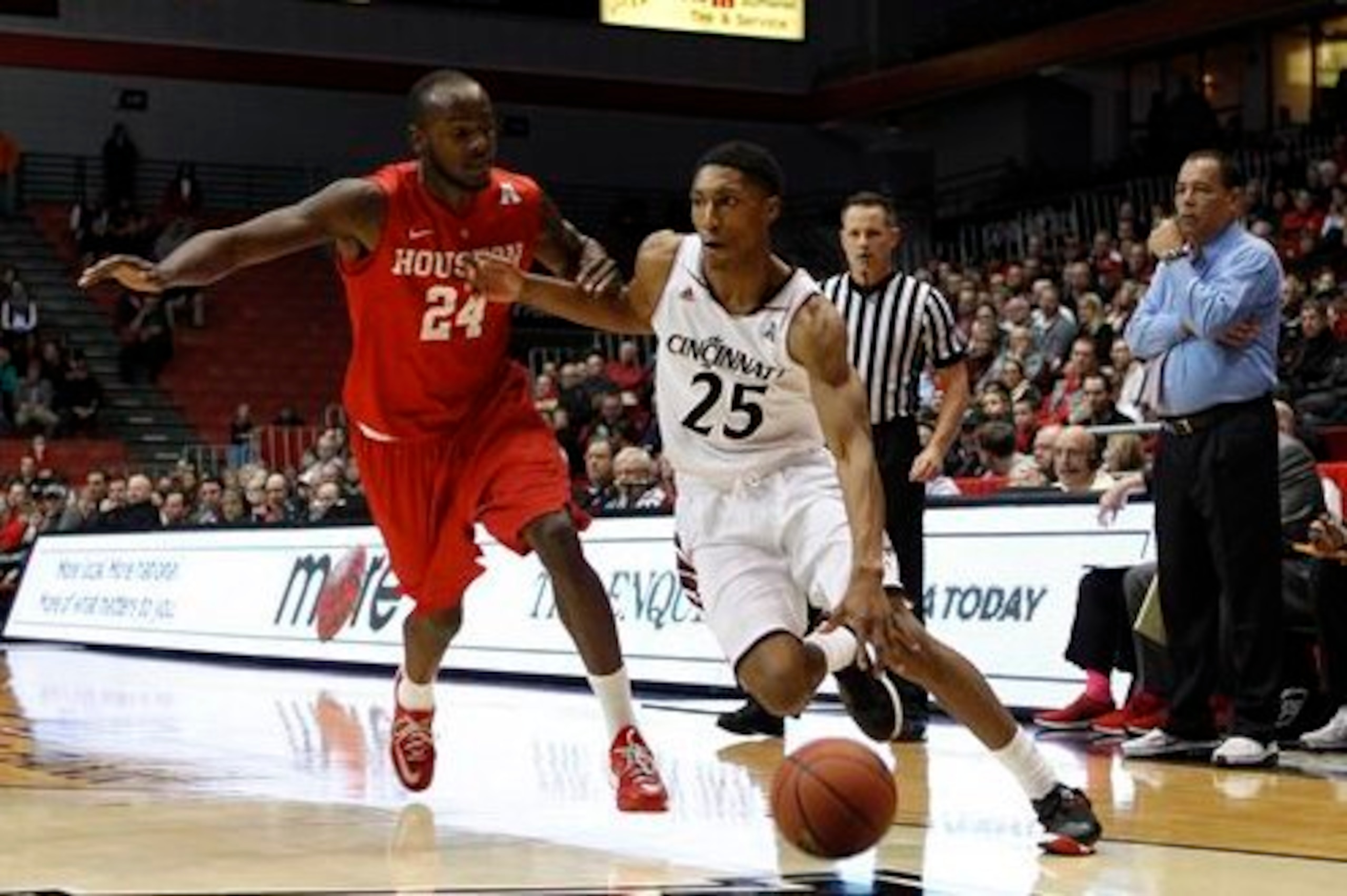
This season, Pollard is the Cougars' second-leading scorer (14.0 points per game), but in the biggest game of the year, against No. 12 SMU, Houston's strategy amounted to getting Pollard the ball at the high post and letting him go. He scored a game-high 23 in a three-point Houston win. Nine days later, he scored 34 in a win over Memphis.
"I look at him now," Sampson said before pausing. "I look at him now, and every time I see him, I want to just go hug his neck and tell him how proud of him I am."
Although Jessie is still in prison, she is allowed to watch his games when they're on TV and talks to her son every week. Their relationship, by all accounts, has not suffered from the events of her trial. Devonta still occasionally looks up into the stands for his mom and dad, still hears their voices in his head.
He's hopeful she won't serve the full length of her sentence so she'll be able to watch him play in person again someday. It helps to imagine what she might say.
"It's comforting for me right now," he said. "Me knowing that she's not going to be there is one thing, but me knowing one day—I don't know when that day might come—there is a possibility I can look up and see her or hear her voice. That possibility keeps me going."
Last fall, Devonta successfully completed his probation, and after this semester ends in May, he'll be 15 credit hours shy of a degree. In December, Sampson received an unexpected email with the subject line: "Devonta Pollard."
"It brought a tear to my eye," Sampson said.
"Once I got that letter," Pollard said, "I felt like a regular human being."
It read:
Coach Sampson,
I am the Federal Judge who has been handling Devonta Pollard's case. This week I signed the order releasing Devonta from further obligation to the Court. I wanted to contact you personally to tell you that you and your staff played a very big part in saving this young man from a very bad situation into which his mother had entwined him. If you had not helped him, I suspect he would have never had a chance to succeed in anything. The probation officer out there in Houston was very complimentary of you and your staff.
I do not see many successful stories in my business, so this one has made me feel. Thank you for your part, and please thank your staff for me. Good luck with your season.
William Barbour
Southern United States District Judge
Southern District of Mississippi
.png?w=2560)


.jpg?w=2560 "Jonathan Taylor Landing Spots 📍")



