
What Each Top Quarterback Needs to Show at the NFL Combine
The NFL Scouting Combine is important for every prospect in attendance. It gives evaluators a chance to medically check each player, test them athletically on the field and begin to determine if their mental makeups and characters fit the cultures of their teams.
But for quarterbacks, it could be the most important offseason moment since they played their final games. Some passers need to show their high-level athleticism as a big part of the developmental nature. Others need to impress in the throwing workouts. And each needs to win teams over in the interview room, whether that be character-wise or at the whiteboard in a football IQ context.
With all that in mind, here’s what the top quarterbacks in the 2016 NFL draft need to show in Indianapolis.
Carson Wentz, North Dakota State
1 of 8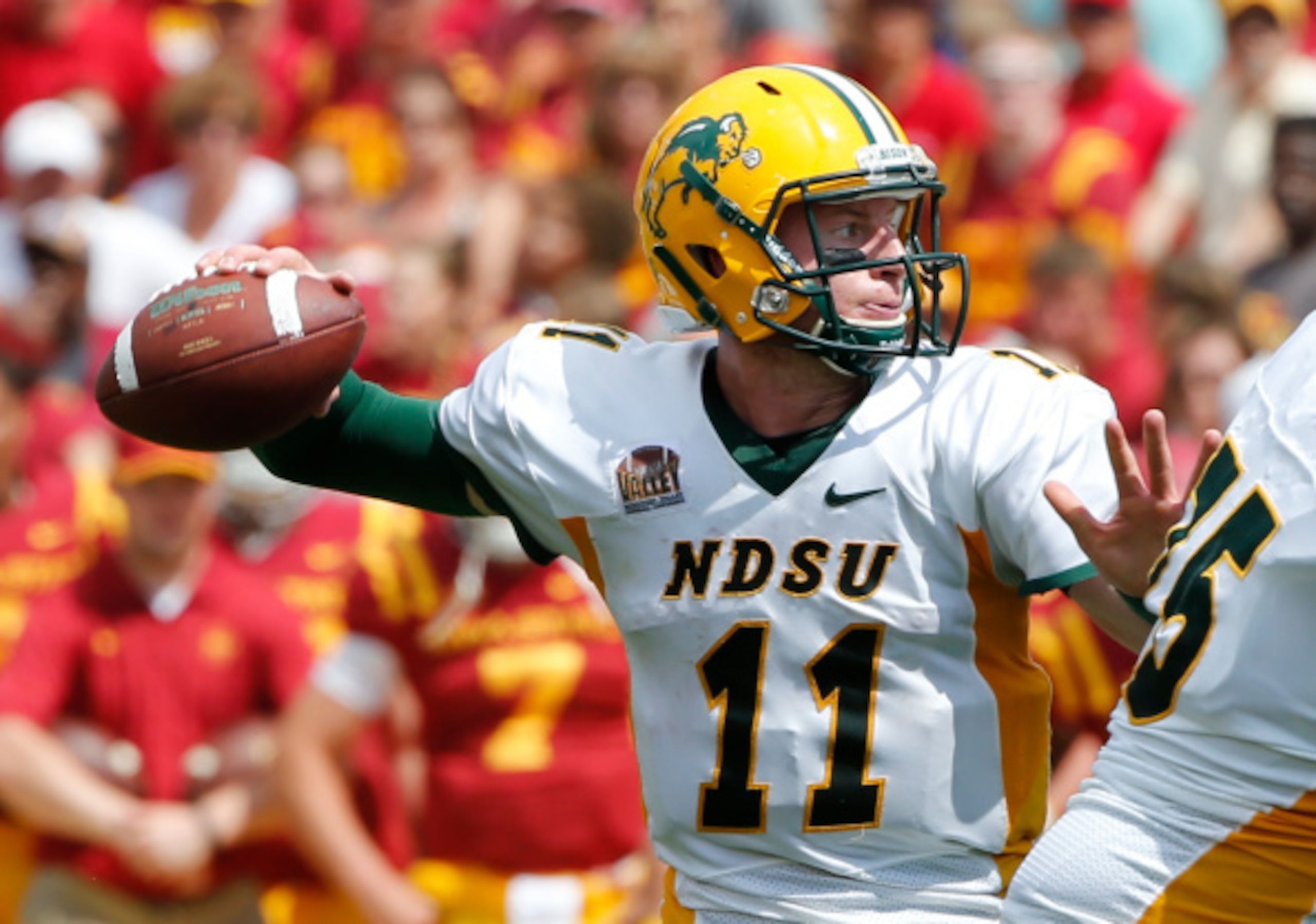
After winning games at the helm of a run-based offense, NFL teams saw plenty of exciting throws from Carson Wentz but not many games when the Bison asked him to truly dominate. His production concerns aren’t minute and short-minded; they show how he wasn’t nearly as relied upon as other passers on this list.
NFL teams may have questions as far as where he’s at mentally on the field. His offense allowed him many one-on-one opportunities to let it rip with his arm talent, but the Senior Bowl practices illustrated that his quick combination read ability is still a work-in-progress.
NFL teams need to have confidence Wentz can progress in reads quickly enough (something that’s difficult to find out at the combine), but they also need to know if he has the requisite play diagramming and pre-snap diagnosis to merit a top-10 pick. How he performs at the whiteboard may solidify or open questions about his top-10 status.
Jared Goff, California
2 of 8
Differing from Wentz, Jared Goff should thoroughly impress at the whiteboard in his individual team meetings. With experience in a multi-read offense over the last two years, Goff should be the most impressive of the top passers when breaking down plays, evaluating concepts and showing a pro-readiness mentally.
But for Goff, the question is far different: Is he built for the NFL well enough? Like Teddy Bridgewater before him, Goff may slip on draft day if teams don’t have the confidence in his body type. Whether it’s hand size, weight, physical build or frame to bulk up, all NFL teams will be poking and prodding Goff in Indianapolis to see if he measures up.
While I have other concerns with Goff that make him a non-first-rounder in my book, I could certainly see why NFL teams may take the risk on him in Round 1. But as we’ve seen in recent draft history, size matters when it comes to quarterbacks, and size is a concern for Goff’s top-10 aspirations.
Paxton Lynch, Memphis
3 of 8
Between Wentz’s national championship win and Senior Bowl performance and Goff’s media coverage throughout his junior season, Paxton Lynch never gained the opportunity to rise in the draft process like his film deserves. While his bowl-game struggles put a cap on how excited evaluators got, Lynch’s junior season indicated he could be the best quarterback in the 2016 class.
Hailing from Justin Fuente’s offense that draws ample similarities to TCU, Lynch’s ability at the whiteboard will be an important aspect of his combine experience. Understanding how to make adjustments post-snap along with comprehending vertical combination routes against different coverages should be the two areas teams quiz him on most.
But along with the whiteboard aspect, NFL teams will likely be curious as to his experience in rebuilding the Memphis football program. It’s a unique case of a quarterback growing with the restart of the Tigers' football program, and NFL teams will find interest in his role, how he handled a rise in fame on campus and his relationship with past and present people in the football organization.

.jpg?w=2560 "Cardinals Giants Football")
.jpg?w=2560 "Hill Injury Update Football")
Connor Cook, Michigan State
4 of 8
It’s been well-reported that NFL scouts aren’t thrilled with Connor Cook off the field during his time at Michigan State. Todd McShay of ESPN alluded to as much, and he’s certainly not alone among those plugged into the NFL draft process.
NFL teams will find their own creative ways to broach the subject, either taking a roundabout approach in evaluating his teammate and coach interactions at Michigan State or simply asking about individual instances NFL teams may be aware of.
On the field, NFL teams have minor concerns about his decision-making and red-zone performances. But what’s keeping them from pushing Cook back into the first-round discussion is whether he can be the face of the franchise that a top-two-round quarterback is expected to become. And unless Cook is honest, genuine and explains his Michigan State background well enough, he may be destined for a fall on draft day.
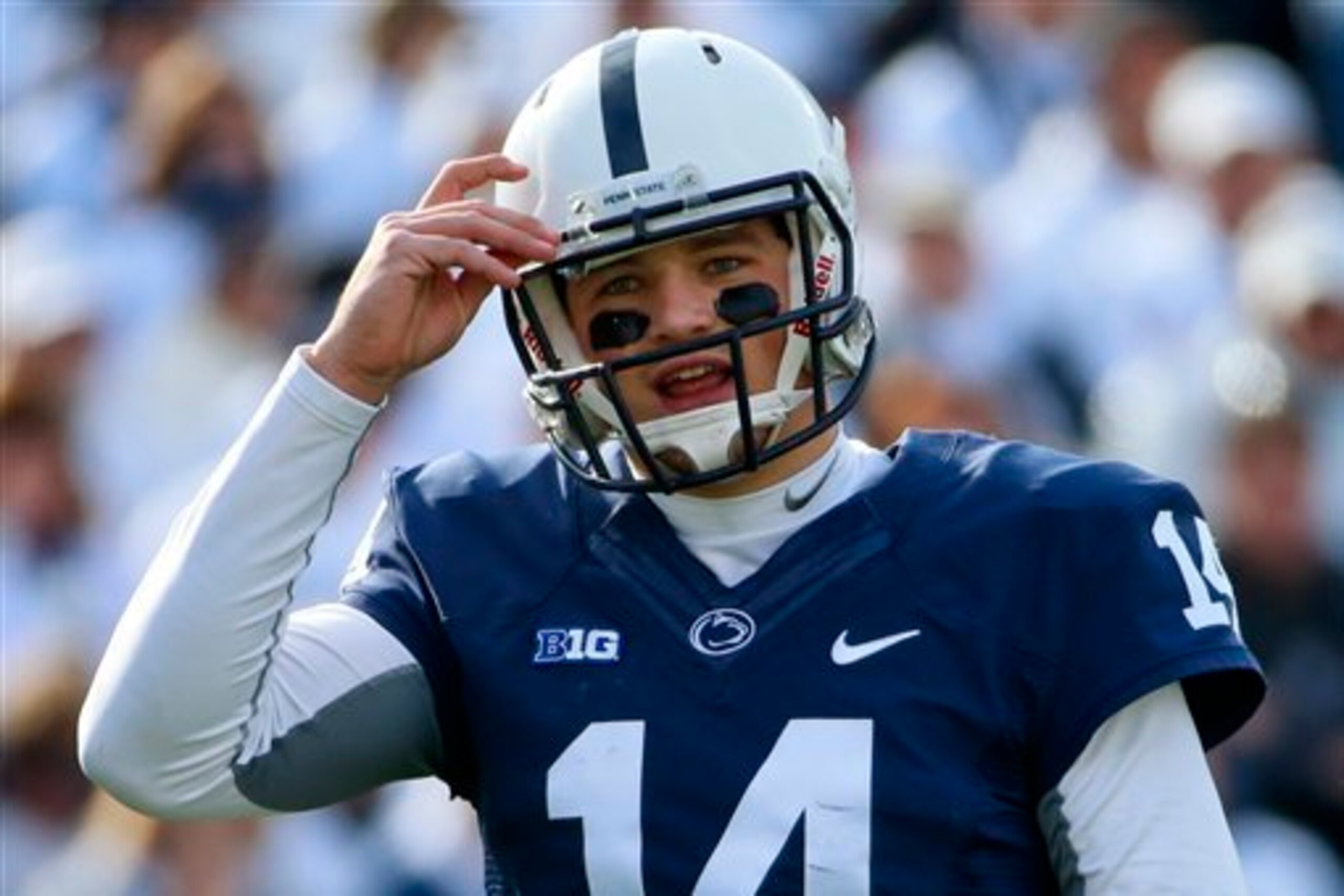
Christian Hackenberg, Penn State
5 of 8
After displaying Andrew Luck-esque upside in his freshman campaign with Bill O’Brien at the helm, no quarterback fell off as much as Christian Hackenberg has the last two seasons. Hackenberg has fallen from No. 1 overall consideration to fighting for a top-three-round grade.
There’s a lot to dissect with Hackenberg’s fall from grace. For one, the coaching change would have had an impact on any quarterback, as comfortability is one of the most important aspects to a developing quarterback. But it was also the switch from the pro-style approach of O’Brien to a James Franklin offense that was less trusting and over-simplistic for the offense.
Hackenberg, for all of his issues, has stayed relatively quiet and positive throughout the process, which speaks well for his character in handling a brutal situation. But along with NFL teams evaluating his character from the whole Penn State situation, they’ll also be curious to see how he performs on the field. His accuracy was atrocious during the 2015 season (53.5 percent), and he’ll need to show some comfort on the field.
Cardale Jones, Ohio State
6 of 8
A historic three-game starting stretch during 2014's postseason nearly allowed Cardale Jones to declare for the 2015 NFL draft after winning the first-ever College Football Playoff National Championship. Jones opted to stay for the 2015 season, but his benching after seven games stifled his development.
With just 10 games on the books, Jones hasn’t gained the opportunity to grow on and off the field as a quarterback. A position that’s dependent on confidence more than any other, NFL teams should attempt to determine Jones' mindset on the whole quarterback dilemma at Ohio State.
More than any other quarterback, teams will heavily question Jones' passion, focus and ability to develop. Despite his struggles in 2015, I’m a firm believer in Jones' Ben Roethlisberger-type upside, and I’d be willing to use no worse than a second-round draft pick on him—but the combine will determine if NFL teams agree.
Dak Prescott, Mississippi State
7 of 8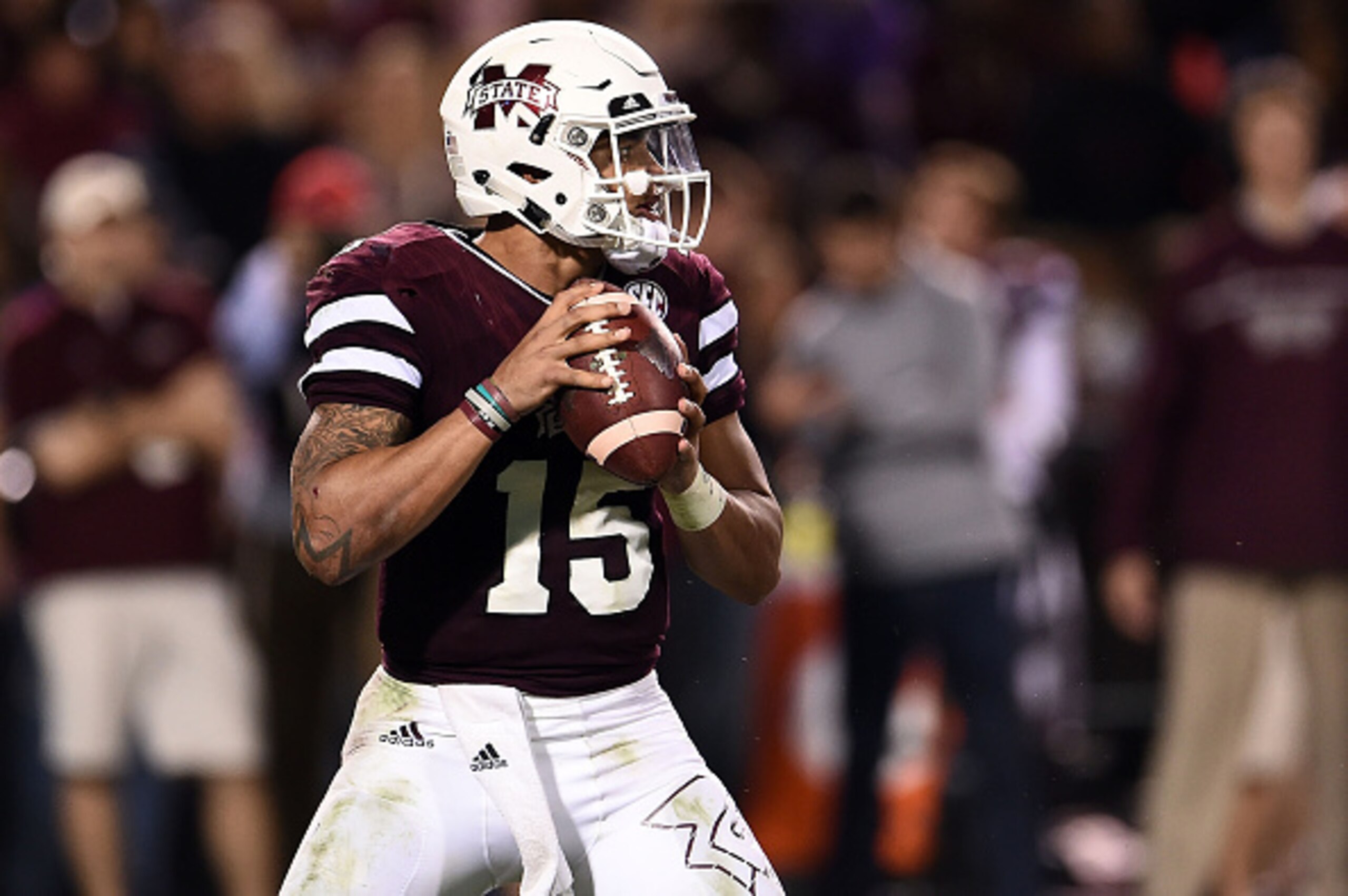
Dak Prescott is destined to be a late-rising quarterback in the draft process. With ideal football and off-field character coupled with steady college development and athletic upside, Prescott is exactly the type of passer quarterback coaches and offensive coordinators advocate for once it’s time for their inputs.
But for teams that have done their in-season homework, Prescott has plenty of long-term question marks that should give teams pause on his NFL growth potential. His college offense, similar to Ohio State’s, isn’t conducive to developing future NFL quarterbacks. The Bulldogs didn't ask him to make consistent NFL-level progressions, especially ones that relied on post-snap defensive adjustments.
While he’s a plus-athlete for the position and offers ample arm talent, his upside may be capped by his four-year college offense inhibiting his mental development at the position. His work at the whiteboard and conceptually explaining to NFL teams different aspects of the game may determine his final draft grade.
Vernon Adams, Oregon
8 of 8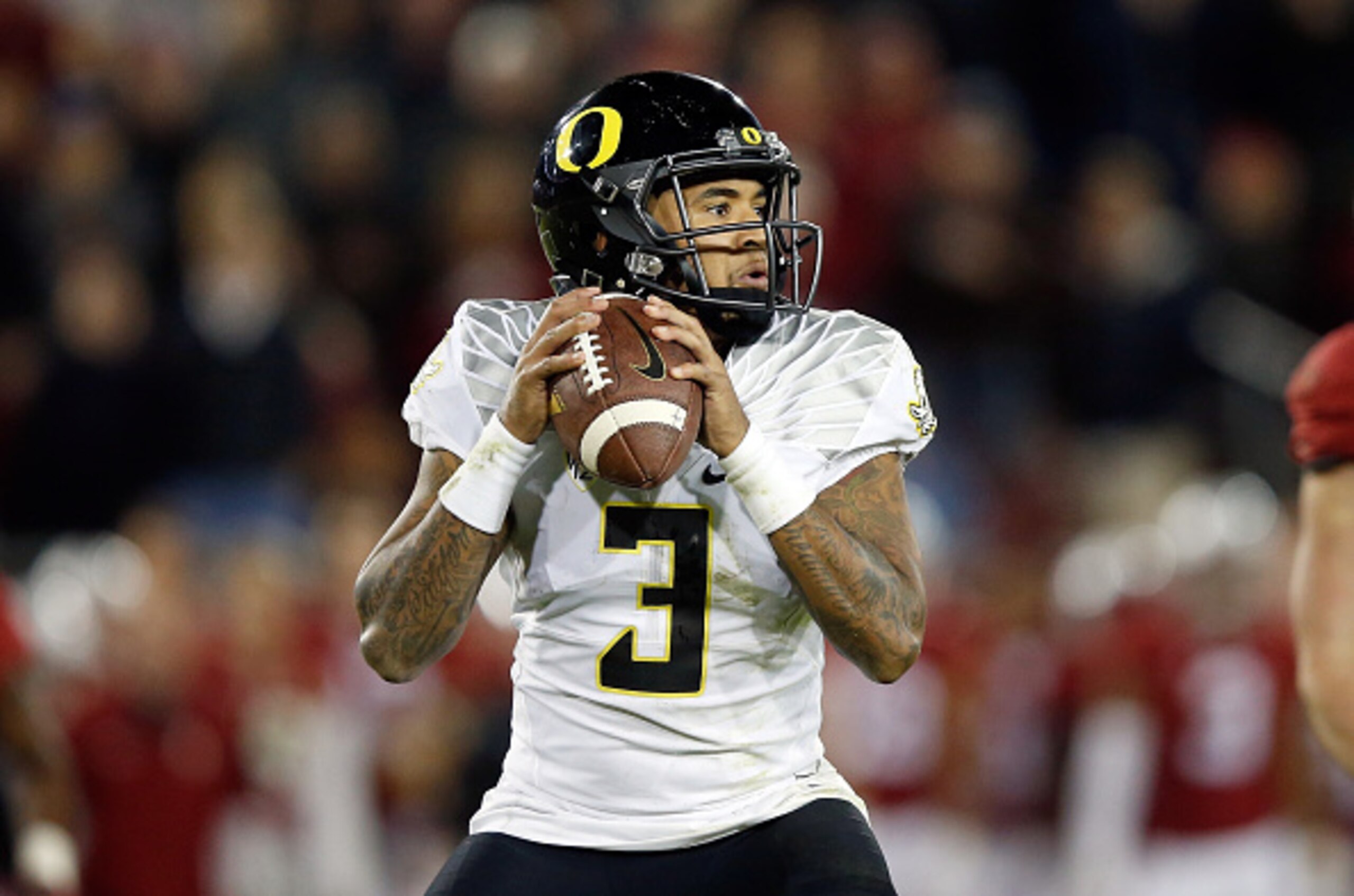
Hoping to draw comparisons to Russell Wilson in the draft process, Vernon Adams still has a long way to go to merit that consideration. On the field, Adams has awesome elusiveness from the pocket to finish as a quarterback similar to the way Wilson excelled at North Carolina State during his junior campaign.
But for Adams, NFL teams know about his playmaking ability as a mobile quarterback. They need to know that, like Wilson, Adams can prove effective from the pocket and meet the measurable thresholds and body-type upside they can really work with in the pro game.
While his measurables (5'11", 201 lbs) are already set from his Shrine Game weigh-in and measurement, NFL teams will want to remeasure (especially his hands), get a better feel for his body type and further determine if his makeup qualifies him as a worthwhile flier. And it sure wouldn’t hurt if Adams could really impress on the field during positional workouts.
.jpg?w=2560 "Titans Giants Football")
.jpg?w=2560 "Dolphins Bills Football")