

Which NBA Teams Are Using the D-League Best?
The NBA Development League has often operated in the shadows of the actual NBA, failing to earn major run on television networks and rarely discussed by the mainstream media. It only finds itself in the news when a player is sent down or called up—the occasional posterizing dunk that makes SportsCenter waves notwithstanding.
Not every franchise even has an affiliate in the D-League. When the Brooklyn Nets, Charlotte Hornets and Chicago Bulls add squads in 2016-17, the total number of organizations will grow to just 22.
But for some teams, it's a rather important entity. Instead of being a place where the fringe players go to continue their hopes of playing professional basketball at the sport's highest level, the league is viewed in a way that justifies its name.
TOP NEWS

LeBron's Special Helicopter Deal

MJ Makes Record-Setting Donation 🙌
Shams: KAT, Hart Could Be Trade Names
It's actually used for development.
Searching for Patterns
During the five seasons prior to 2015-16, the Association as a whole made 668 call-ups from the D-League, impacting the lives of 204 different players.
Grant Jerrett, Sergey Karasev, Jeremy Lamb, Daniel Orton, DeAndre Liggins, James Young, Dwight Powell, Joe Harris and Ricky Ledo were all sent up and down between the two leagues at least 10 times, while Ognjen Kuzmic became the transaction leader. The Warriors shuffled him between the NBA and the D-League on 20 separate occasions—seven more than Ledo and everyone else.
All 30 franchises in the Association have used the D-League at least once, but that doesn't mean the distribution has been remotely even:
On one end of the spectrum, the Oklahoma City Thunder have accounted for 10.8 percent of the total call-ups with their 72 roster moves. The Golden State Warriors, Cleveland Cavaliers and Houston Rockets join them in the over-50 club.
On the other end, the Bulls' D-League impact has been virtually nonexistent, accounting for a meager 0.4 percent with their three call-ups—James Johnson and Marquis Teague (twice). The Milwaukee Bucks, New Orleans Pelicans, Minnesota Timberwolves, Hornets, Orlando Magic and Washington Wizards all have no more than five call-ups to their names. If you're curious, you can find the exact count for each team here.
More significant is the number of unique players each franchise has called to the big league roster, since having one player such as Kuzmic bouncing between the ranks is ultimately insignificant. Forcing a young contributor to embark upon a roller-coaster ride while racking up frequent flyer miles isn't necessarily a sign of good D-League management.
Every single squad has called up at least two different players, but only nine have managed to work their way into double figures. It's those nine, led by the Houston Rockets and their 19 unique call-ups, that we'll continue to focus on. (Again, you can find the exact count for the entire NBA here.)
But not every transaction is made equal.
The Dallas Mavericks, for example, are part of our double-digit group. However, the most significant call-up they made was Jae Crowder, and it was only with the Boston Celtics that he blossomed into a star. Dallas' strategy involves rifling through fringe players and calling upon them when needed; it hasn't resulted in any big league-roster mainstays.
The Best of the Best
San Antonio is quite different.

The Spurs, ever the NBA's model organization, have used the D-League to work on the following players, all of whom have gone on to make a significant impact in the never-ending pursuit of another title: Aron Baynes, Cory Joseph, Danny Green, Gary Neal, Kawhi Leonard and Kyle Anderson.
Austin Daye, James Anderson, Malcolm Thomas, Nando De Colo and T.J. Ford haven't been as impactful, but that's still an impressive usage of the sport's de facto minor league. Of the 11 players who have been on the affiliate's books for any period of time, six have found success in the NBA.
If we look at the total win shares of each team's call-ups, we start to see some separation between the pretenders and the contenders. But keep in mind we're only looking at what was earned for the team in question during and after the season in which each player made his last D-League stint:
A couple housekeeping notes are still necessary.
Should the New York Knicks really get credit for the 8.7 win shares Amar'e Stoudemire produced after he was sent down to the Erie Bayhawks on a rehab assignment? Ditto for Rajon Rondo's brief stint with the Maine Red Claws, as well as Kawhi Leonard's with the Austin Spurs.
That last one is pretty significant, as Leonard accounts for 30.2 of San Antonio's 76.3 total win shares. Take him out of the equation, and the Spurs suddenly stand as the equals of the Houston Rockets.
Still, it's clear those two are the organizations that sit head and shoulders above the rest of the pack. Each has consistently used a D-League affiliate to churn out players who don't just take up roster spots, but actually contribute to the winning efforts.
Even this season, we're seeing another D-League product aid the San Antonio cause, though he technically doesn't count in our analysis. Jonathon Simmons has made the most of his opportunity since receiving the fateful phone call, and it doesn't appear as if he's going anywhere else in the near future.

"Popovich remains convinced Simmons wouldn't be an NBA player without time served in the D-League," Jeff McDonald recently reported for the San Antonio Express-News. "'I think it's been very important in the sense that he was down there for a while and never lost hope,' Popovich said. 'He basically paid his dues.'"
Plenty of others have done the same, even after we brush Leonard aside.
Danny Green, who was a second-round draft pick in 2009 before getting waived multiple times and eventually breaking out in the D-League, serves as the crown jewel. Looking at the nine teams we're concerned with, no single player who spent significant time outside the NBA has done more after receiving a call-up.
But Houston has also experienced plenty of success stories.
Terrence Jones cut his teeth in the D-League, bouncing between the Rio Grande Valley Vipers and the Rockets throughout his rookie season. So too did Patrick Patterson, Patrick Beverley, Clint Capela, Donatas Motiejunas, Greg Smith and others.
In fact, one of the most memorable shots in recent Rockets history was produced by a man who'd only just been called up from the D-League before the start of the postseason:
Troy Daniels has since struggled to make an impact with other organizations, but Houston had confidence in his sharp-shooting abilities because of the work he'd put in with the Vipers. After all, he averaged 21.5 points and drilled five triples per game while shooting 40.1 percent from beyond the arc during his All-Star season in the D-League.
The Rockets have long been ahead of the curve when it comes to using the D-League, as Chris Reichert hinted at for UpsideMotor.com while discussing Capela's growth last May:
"NBA clubs are utilizing the D-League more than ever for development of their young players (record 195 assignments this season) and the Rockets are certainly at the forefront of that movement. While some teams choose to develop certain areas that players need work on, the Rockets let Capela continue to improve upon his strengths that are already in place.
"
"The Vipers have been great for us," former Houston head coach Kevin McHale told Jonathan Feigen of the Houston Chronicle in October 2014. "We sent guys down here. It helped them. D-Mo was down here. Terrence came down for a while. It really helps their game a lot. I like it. Like this year, will be a huge year for Clint Capela down here. That will be fantastic. Nick Johnson will be able to uses this to improve. It’s been fantastic for us."
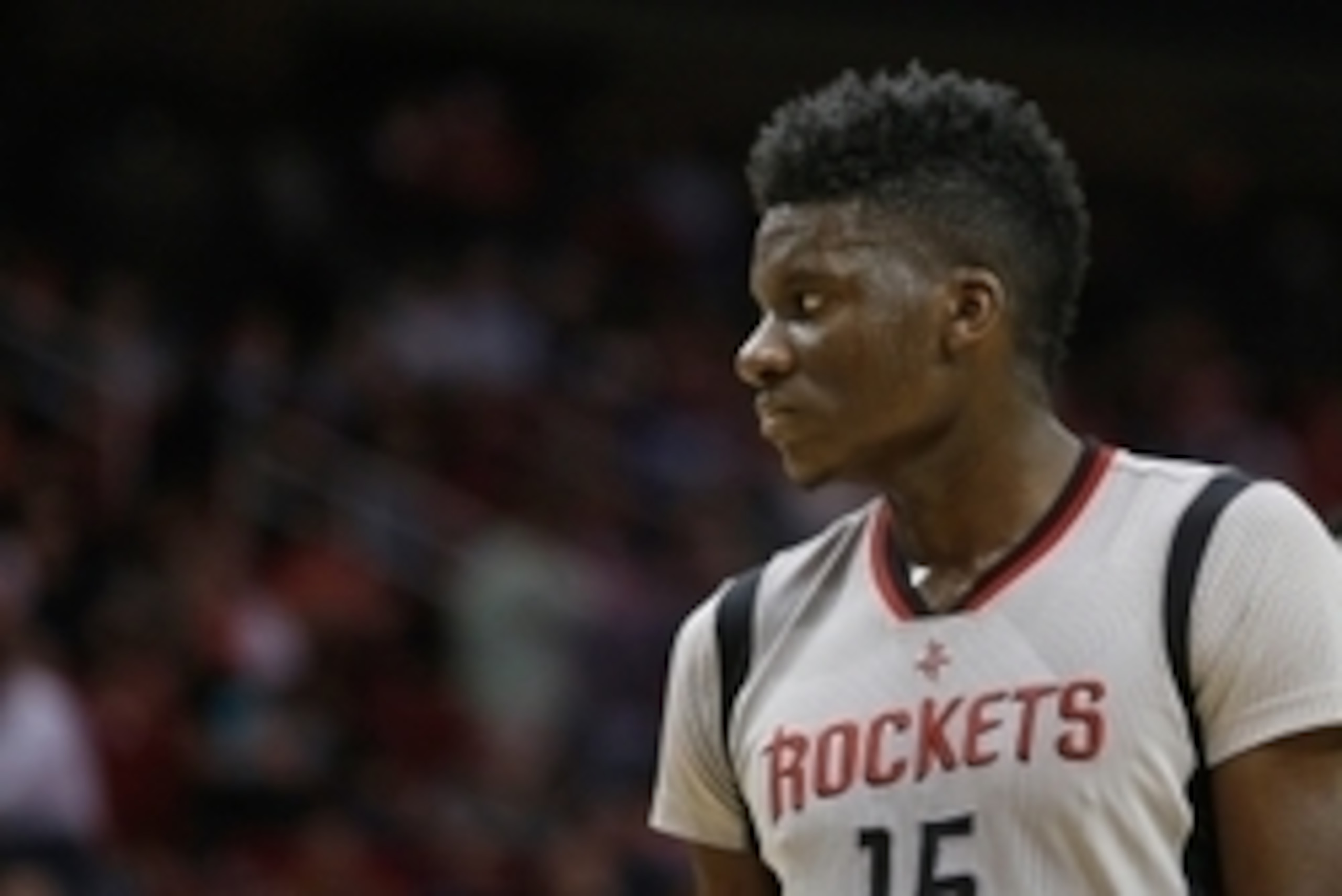
It worked for Capela. It didn't for Johnson, who was traded to the Denver Nuggets and then waived before the start of the current campaign.
But the Rockets will strike gold again. Their history indicates that's more of an inevitability than a possibility, given their philosophy of using the D-League quite often and for targeted improvement in certain areas.
There's no doubt other teams have found or developed gems in the last five years. Avery Bradley, Jordan Clarkson, Jae Crowder, Reggie Jackson and Festus Ezeli are but a few examples from various squads that use the D-League with similar frequency.
But if you're looking for the masters of the minor leagues, two of Texas' three NBA squads stand well above the rest.
Adam Fromal covers the NBA for Bleacher Report. Follow him on Twitter: @fromal09.
All stats, unless otherwise indicated, are from Basketball-Reference.com or Adam's own databases and are current heading into games on Jan. 7.


.jpg?w=2560 "Grading WWE Raw 🔠")
.jpg?w=2560 "Viral Rams Coach Vid 🖕")
.jpg?w=2560 "Injury-stricken Seahawks signing veteran RB")
.jpg?w=2560 "2 NFL Officials Suspended")

.jpg?w=2560 "Mahomes' Wife Trolls Kubiak 💀")