Mike Johnston Fired, but GM Jim Rutherford the Root of the Penguins' Problems
On Saturday, the Pittsburgh Penguins made a move that was increasingly seen as inevitable. The team dismissed head coach Mike Johnston and assistant coach Gary Agnew, as general manager Jim Rutherford tacitly acknowledged he made a mistake behind the bench.
Mike Sullivan will now be given a chance to right the ship.
TOP NEWS
BS Meter on Latest NHL Trade Rumors
Best NHL Heritage Classic Jerseys 📋
Teams That Need Goalie Trade💡
He returned to head coaching this year with Wilkes-Barre/Scranton of the AHL, guiding the baby Penguins to an 18-5-0 run and plus-36 goal differential over just 23 games in the minors. It was Sullivan’s first foray as a head coach since being fired by Boston in 2006; he spent most of the interim as an assistant to John Tortorella in Tampa Bay, New York and Vancouver.
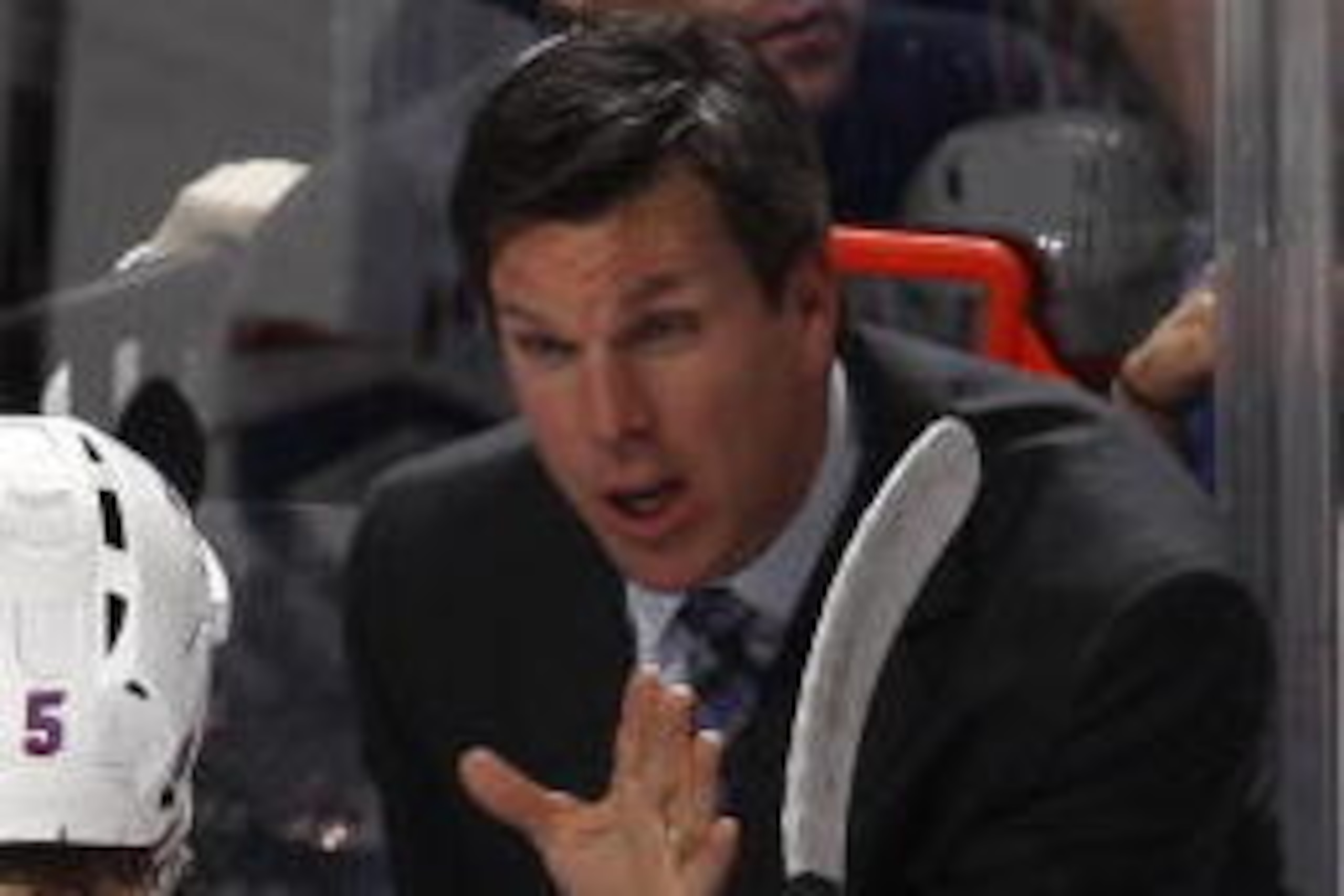
Sullivan established himself as a legitimate candidate with his strong work in the minors this season and deserves a chance to see if he can get more out of Pittsburgh’s top talent than Johnston did. But the Penguins have some real problems—problems that reflect just as badly on Rutherford as they did on Johnston.
Those issues start on defence. Kris Letang is out with an upper-body injury, meaning that in the final game of his Pittsburgh coaching career, Johnston was stuck with David Warsofsky in his top pairing.
That’s an extreme example, but Pittsburgh’s coach has been trying to get by all season with an underwhelming defence.
Johnston’s shutdown pairing—one that performed pretty well under his watch—consisted of Anaheim castoff Ben Lovejoy and rookie Brian Dumoulin. Ian Cole, previously the No. 7 defenceman in St. Louis, was in the top pair with Letang more nights than not; sometimes Rob Scuderi showed up there, too. Olli Maatta continued to battle more injuries and struggled at times when “healthy.”

The composition of that defence corps falls on Rutherford. It was his decision to allow veterans Paul Martin and Christian Ehrhoff to walk. And his inability or unwillingness to replace them left the blue line so weak. He admitted as much in his press conference announcing the coaching move, which was streamed live on the Penguins’ website.
“In fairness to our coach, part of this falls on me because I didn’t get the defenceman that was necessary to have more puck movement from the back end,” Rutherford acknowledged. “More puck movement from the back end generates more scoring opportunities.”
There’s no excuse for Rutherford to have made this mistake, because during the playoffs last year, he saw what a lousy defence did to the team. Against the New York Rangers, Pittsburgh’s blue line was incapable of making a tape-to-tape outlet pass, and the Pens settled into an ultra-conservative, ineffective style of play.
Consider this example from our playoff coverage last spring:
"Pittsburgh’s defence managed just seven tape-to-tape outlet passes in the third period on 19 tries. The other 12 were fumbled, turned into chips or just flat-out turned over to a New York team that settled into a defensive shell in the game’s final frame. Six of the Penguins’ seven successful passes came off the stick of Paul Martin or Taylor Chorney. The team’s other four defenceman were basically incapable of making outlet passes under minimal pressure in the third frame.
"
Cole was Pittsburgh’s No. 1 defenceman in that contest (Game 3 vs. the Rangers).
That’s not to exonerate Johnston. As of this writing, Pittsburgh’s power play is tied for 26th overall in the NHL at 15.6 percent. For a team with Sidney Crosby, Evgeni Malkin, Phil Kessel, Letang and so many other good offensive players, that’s flatly unacceptable. If a coach can’t get that power play to a point where it outperforms the Carolina Hurricanes, there’s not much room to hide.
Again, though, this reflects poorly on Rutherford. Pittsburgh’s power play started last year on fire but cratered down the stretch; he knew it was moving in the wrong direction under Johnston. As with the defence, he had reason to know going into the summer there was a problem.
He didn’t make a change behind the bench then, though.
He didn’t aggressively pursue Mike Babcock or Todd McLellan, using Crosby and Malkin as bait. He didn’t promote five-year Wilkes-Barre/Scranton coach John Hynes to the majors. Instead, he sat idly by as other NHL teams picked up the best free-agent coaches and as New Jersey lured away Hynes.
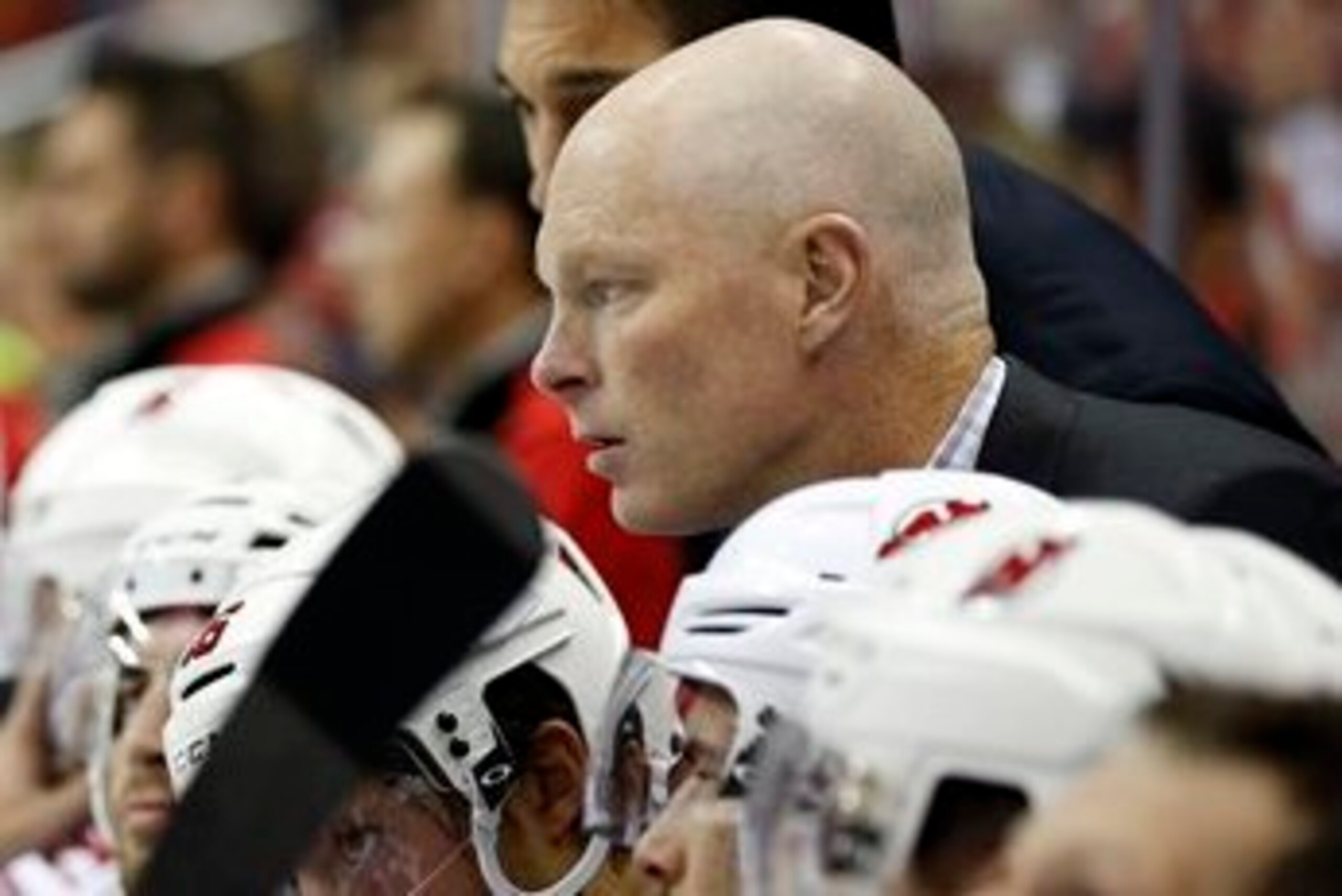
Now it's up to Sullivan to correct the mistakes of his predecessor.
He needs to get more out of people like Crosby. Correcting five-on-five problems may be difficult given the state of the defence, but he certainly should be able to do more on the power play, and a productive man advantage will make a lot of things look better.
If Sullivan can get more puck-moving out of the defence, that will help, too; Warsofsky and perhaps Adam Clendening may be able to do something after being effectively ignored for most of the season.
Ultimately, though, if Pittsburgh is to contend, Sullivan will need to get help from his general manager. Rutherford needs to find a way to upgrade the defence quickly, perhaps even by searching the rental players market. He wasn't able to pull the trigger on a deal before making a coaching change, but at some point he'll need to improve the back end.
When Pittsburgh hired Rutherford in the summer of 2014, it was with an obvious mandate to make whatever changes were necessary to turn the team into a Stanley Cup contender. More than 100 games later, the Penguins seem no closer to that goal. If anything, they’ve moved further away.
Statistics courtesy of NHL.com, Hockey-Reference.com, and war-on-ice.com. Salary information via NHLnumbers.com.
Jonathan Willis covers the NHL for Bleacher Report. Follow him on Twitter for more of his work.