

What Makes the NFC East so Crazy?
The tenants of the NFL's NFC East division are, according to Forbes, among the nine most valuable franchises in American football and the 20 most valuable sports franchises in the world. The Dallas Cowboys, Washington Redskins and New York Giants are three of only four NFL teams worth more than $2.7 billion, and the Philadelphia Eagles aren't far off at $2.4 billion.
The Cowboys have a dedicated, passionate owner in Jerry Jones and play in a state-of-the-art new stadium. The Giants and Eagles also play in top-notch, relatively new venues and are run by well-respected owners and the Redskins continue to be one of the most beloved and lucrative teams in American sports. And Harris polls continually find that Dallas, New York, Philadelphia and Washington all rank among the top 10 in football in terms of popularity.
TOP NEWS

New NFL Power Rankings 📊
The Robinsons POUND the Rock 🪨
Takeaways from Falcons' dominant MNF win
You’d think there’d be more stability within a division that possesses four of the NFL’s best-reputed, most lucrative and most followed franchises.
Yet the NFC East suffers from an utter lack of consistency.
Barring a miraculous turnaround from the 3-8 Cowboys, the division will have a fresh winner for the 11th straight year. Yeah, despite the fact the division contains just four teams, nobody's been able to win back-to-back NFC East crowns since 2004, when the Eagles completed their fourth consecutive first-place season.
In that span, only two other divisions—the AFC North and NFC South—have had under five teams successfully defend their respective crowns.
| AFC East | 8 |
| AFC South | 6 |
| NFC West | 6 |
| AFC West | 6 |
| NFC North | 5 |
| AFC North | 2 |
| NFC South | 1 |
| NFC East | 0 |
That alone doesn't indicate the NFC East is bad. It might just mean there isn't one dominant team. Parity is a good thing, and a division with four high-quality teams is just as likely to have a scarcity of defending champions as one with four low-quality teams.
But consider this: The NFC East hasn't produced a single Wild Card team this decade.
| AFC North | 5 |
| NFC South | 5 |
| NFC North | 4 |
| NFC West | 3 |
| AFC West | 2 |
| AFC East | 1 |
| AFC South | 1 |
| NFC East | 0 |
And although the 2011 Giants went on to win the Super Bowl XLVI, they're the only NFC East team in the last seven years to get through the divisional round of the NFC playoffs.
Further, only the lowly AFC South has a worse divisional winning percentage in the last five years.
| NFC West | .552 |
| AFC North | .535 |
| NFC North | .530 |
| AFC East | .520 |
| AFC West | .500 |
| NFC South | .488 |
| NFC East | .460 |
| AFC South | .413 |
As such, that mocking "NFC Least" moniker isn't unfounded, especially as of late.
The division doesn't lack talent, but it continues to lack wins. Right now, it is the only one in the NFL with no teams at or above .500.
The relatively healthy, talented and well-coached Giants are 5-6 mainly because of the fact they lead the NFL in finding ways to lose. They coughed up fourth-quarter leads in Weeks 1 and 2 against the Cowboys and Falcons respectively and lost despite scoring 49 points in New Orleans in November. And with a chance to take grip of a division in disarray, they laid a complete egg on Sunday in Washington.
The Redskins are actually a pleasant surprise, which considering their 5-6 record goes to show just how bad they've been in recent years. Washington's problem is it can only win at home—the Skins are 0-5 on the road—and three of its last four games come in enemy territory. The inconsistent Redskins have also yet to win back-to-back games, so it's hard to imagine them finishing at or above .500.
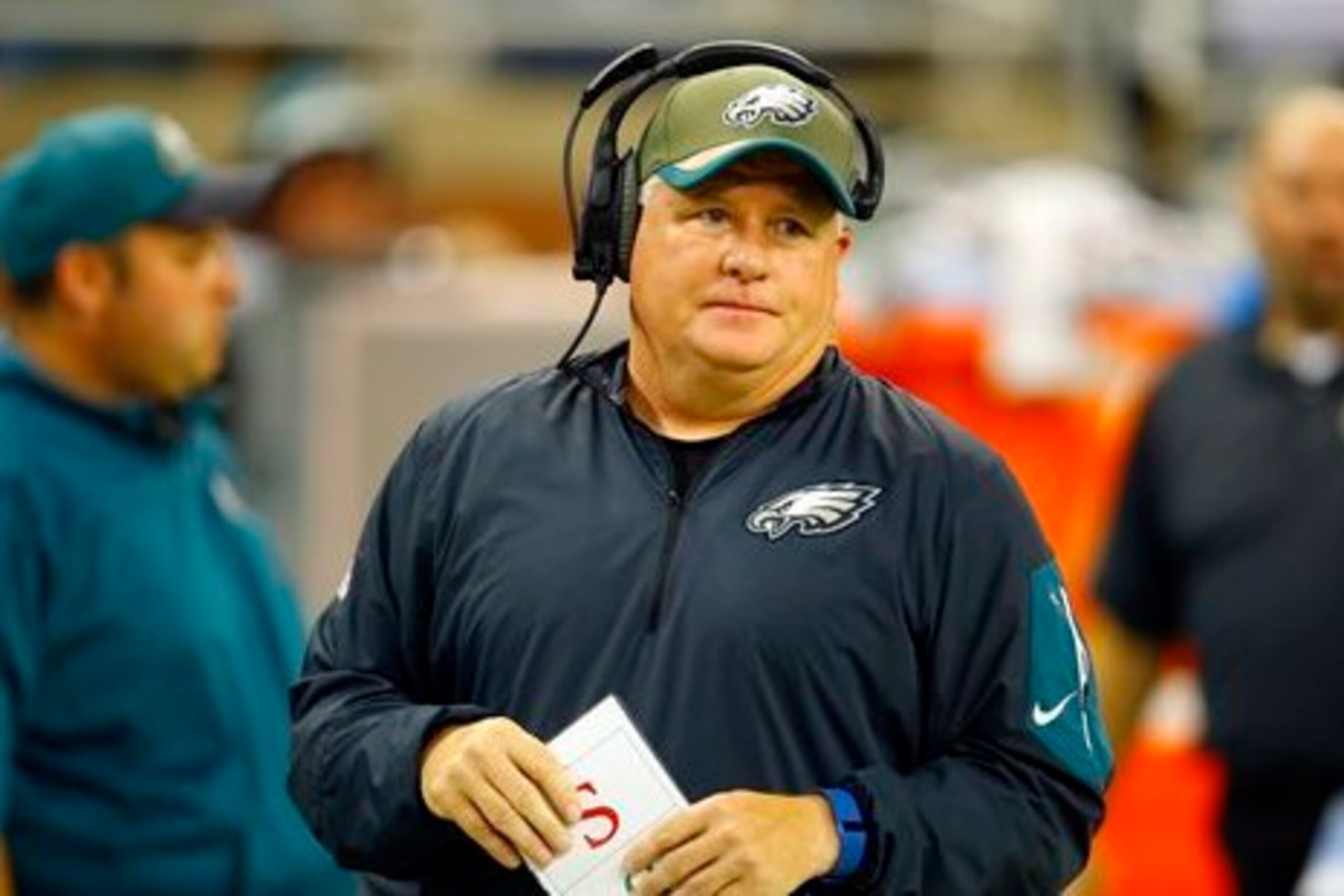
The Eagles are already facing major questions regarding their supposed genius of a head coach after the toiling Chip Kelly tried to fix something that wasn't broken by gutting the offense in the offseason, leading to a 4-7 start. Philly has surrendered 45 points in each of its last two games and has just one win in five weeks, scoring 20 points just once in that span.
That only Philly win—also its only 20-point performance—came against the last-placed Cowboys, who have been ravaged by injuries, especially at the quarterback position. Tony Romo, who was the league's highest-rated passer last season, hasn't played a game from start to finish since the season opener and is likely out for the remainder of the year after breaking his collarbone for the second time in three months.
Throw in that reigning All-Pro receiver Dez Bryant has missed about half the year and that reigning Offensive Player of the Year DeMarco Murray is no longer around to save the day, and it's no surprise 2015 has become a write-off in Dallas.
Why has this division become so consistently inconsistent?
One thing that comes to mind is pressure. You won't find a quartet of teams under more media and fan scrutiny than the Cowboys, Giants, Eagles and Redskins, all of whom routinely hijack episodes of nationally televised talking-head programs such as First Take and Pardon the Interruption.
You'd have to think that with such a strong spotlight shining on these teams, there'd be less margin for error inside and outside of their buzzing markets.
Sir Isaac Newton's laws of motion don't apply to NFL franchises. The bigger you are, the harder—and faster—you fall.
As a result of that increased pressure, have NFC East decision-makers been more erratic and less patient than their non-NFC East counterparts? Or is the division merely mired in a coincidental slump, with an amplified volume of fan chatter and media criticism only making it feel as though the division is a bigger train wreck than it really is?
It may be a bit of both, but I'd lean toward the latter.
It would be hard to argue that any of these teams has routinely caved on grand plans or resorted to knee-jerk tendencies in response to an impatient and frustrated fanbase.
Despite an avalanche of—mostly unjust—public scrutiny, the Cowboys have stuck with Romo at quarterback for 10 years running. And despite the fact Dallas has won just a single playoff game since he took over in 2010, Cowboys head coach Jason Garrett appears to have as much job security as anyone in football.
Speaking of job security, the Giants appear as though they'll let head coach Tom Coughlin and quarterback Eli Manning decide when they're ready to step aside. If they so choose, that duo is almost certain to enter a 12th season together in 2016 regardless of the outcome this fall.
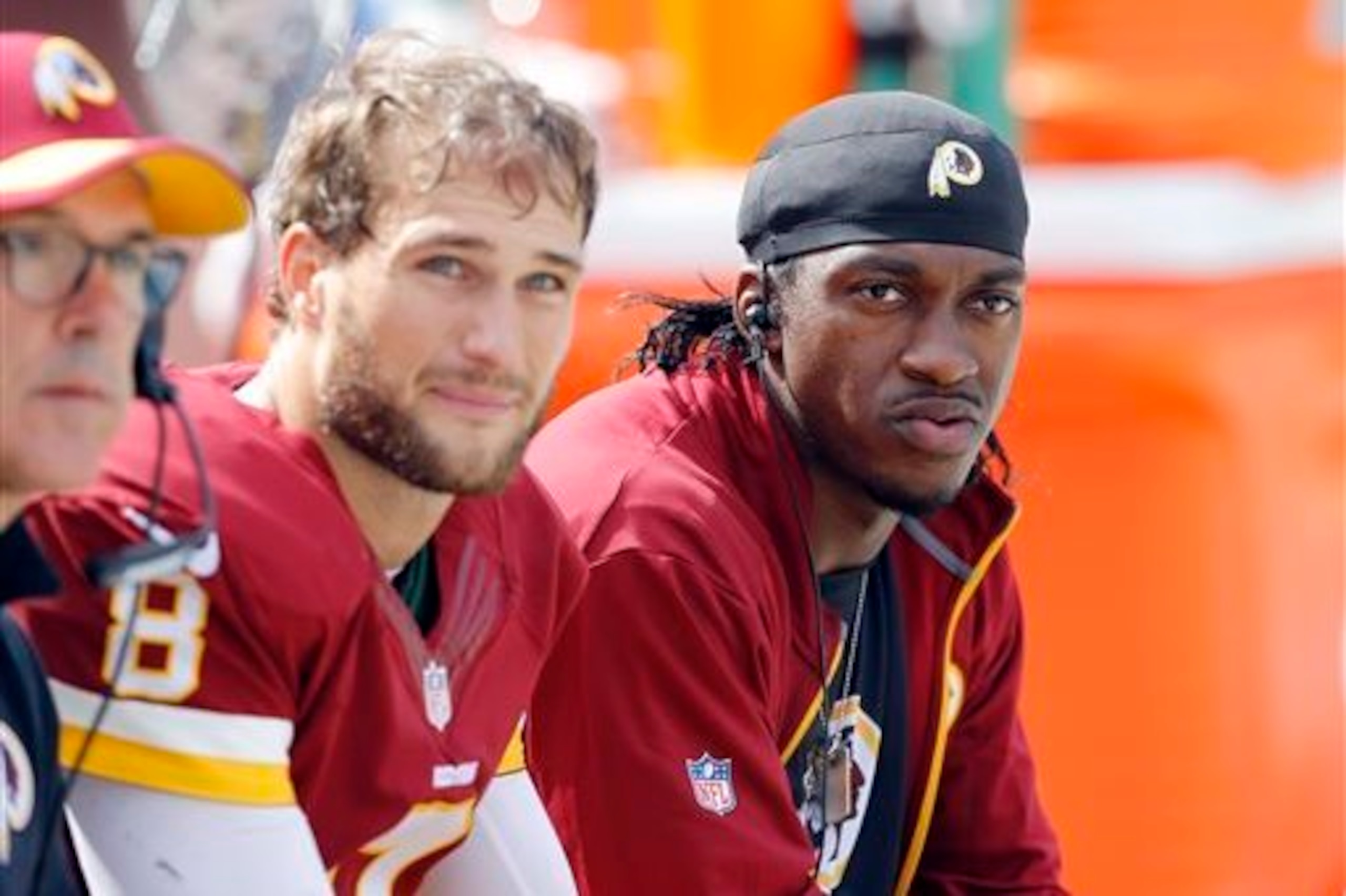
Even notoriously impatient Redskins owner Dan Snyder has checked himself in recent years, employing just two head coaches, Mike Shanahan and Jay Gruden, over a six-year span. Considering the problems that team has endured on the field, that's not bad. And the Skins certainly gave 2012 second overall pick Robert Griffin III plenty of opportunities to establish himself as a franchise quarterback.
The one team in the division that has appeared capricious of late is Philadelphia, but that's on Kelly more so than the rest of the front office. Owner Jeffrey Lurie gave Andy Reid 14 years to try to bring the franchise its first championship in half a century. Former general manager Howie Roseman—who ran personnel during the transition from Reid to Kelly—maintained an even keel with the roster.
Philadelphia didn't blow things up until Kelly gained full autonomy and "revamped" an already highly rated offense by trading, cutting and refusing to try and re-sign a handful of Pro Bowlers.
That, however, wasn't a reaction to pressure. It was Kelly being Kelly.
But if you combine those circumstances—injuries and tough breaks in Dallas, busted quarterbacks in Washington, Kelly's fiddling in Philly and some peeks and valleys (also known as Super Bowl hangovers) for the hard-to-criticize Giants—you begin to realize the NFC East's four teams have mainly been suffering simultaneously from the kind of bad fortune that strikes every NFL franchise at one point or another.
It's just a little worse when it happens in a division as famous as this one.
Brad Gagnon has covered the NFL for Bleacher Report since 2012.

.jpg?w=2560 "Commanders Eagles Football")
.jpg?w=2560 "Grading WWE Raw 🔠")



.jpg?w=2560 "Viral Rams Coach Vid 🖕")