John Tortorella 101: Do's and Don'ts When Working with Blue Jackets' Fiery Coach
Don't back down. That question you think he might sneer at and make a dismissive Torts face at? Ask it anyway with full conviction. Ask a real question, one that, if transcribed, would require a genuine question mark at the end. Don't say, "Talk about....", because all he'll do is say, "Is there a question somewhere in there?" Watch the game closely, do your homework and come prepared with legitimate, game-related questions.
Do all that and maybe, maybe, you won't leave a John Tortorella press conference feeling like the Seinfeld characters trying to order from the Soup Nazi.
Oh, and don't be caught sitting in his team's locker room.


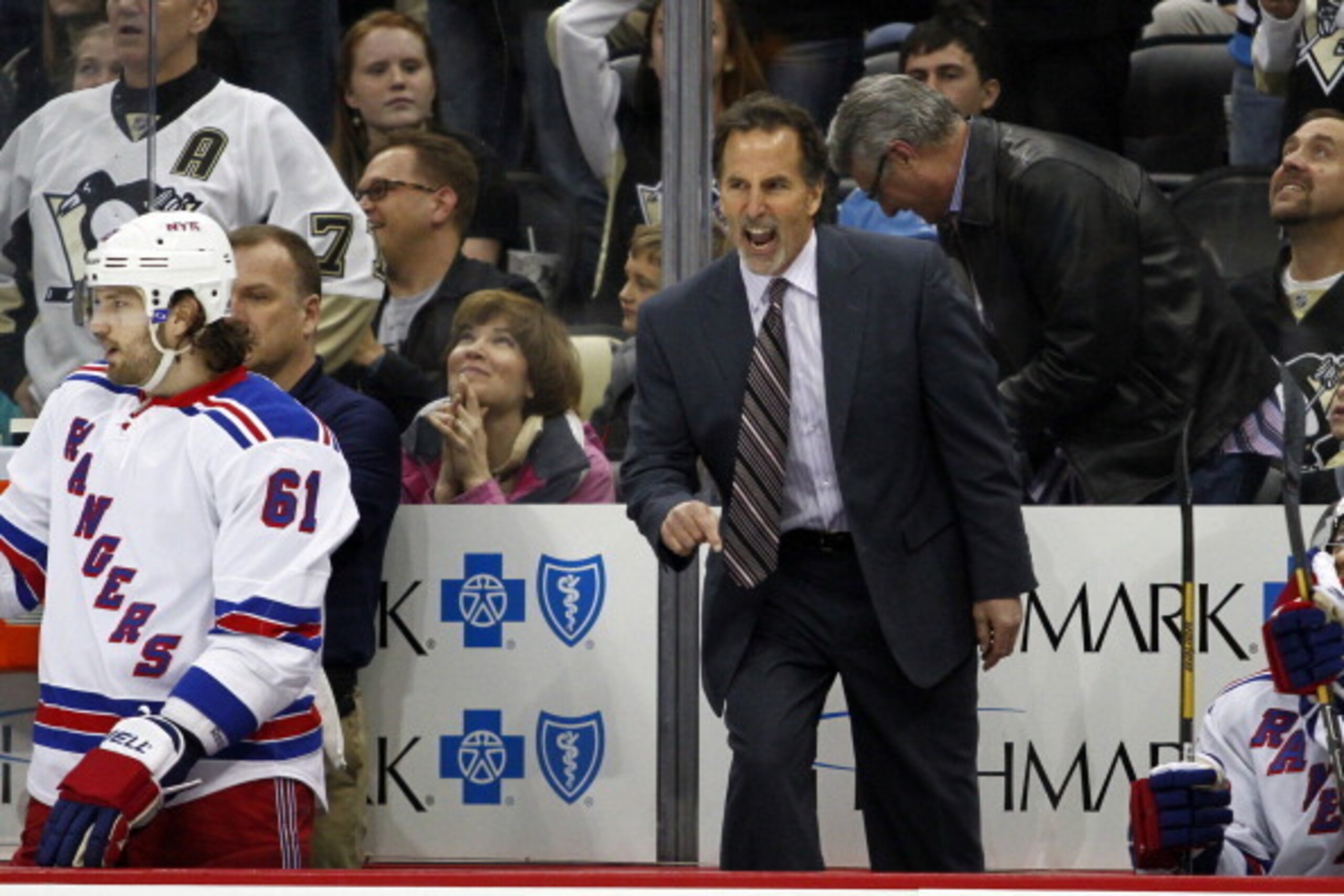
"I did that once in Boston and Torts walks in and says, 'This isn't a (bleeping) lounge,'" said Damian Cristodero, who covered Tortorella's Tampa Bay Lightning teams from 2001-08 for the Tampa Bay (formerly the St. Petersberg) Times.
Cristodero, now a communications officer at George Mason University, was asked along with other beat writers and players who were around Tortorella-coached teams every day what advice and other insights they might pass along to those covering and playing for the Columbus Blue Jackets—who hired Tortorella Wednesday to succeed Todd Richards as head coach.
Tortorella, 57, has long been known as one of the most intense coaches in hockey. He has squirted water at opposing fans from the bench, tried to confront a coach from another team in their locker room, gone nose-to-nose with other coaches on the bench and had confrontations with media members laced with profanity. Many of his press conferences, especially in his days with the New York Rangers, could be quantified using an egg timer.
When Tortorella barks at you—and it will happen in Columbus, too, say all interviewed here—it's critically important not to take it too personally or let him know he can intimidate you. That goes for players, too.
"I learned a lot under him, won a Stanley Cup playing for him," said former Lightning defenseman Cory Sarich. "There's no question he could be very tough on you if he didn't think you were working hard enough. He worked harder than anyone, though, so you knew he wasn't asking do do anything he wasn't already asking of himself. His goal was always to make you better, but some guys deal with his style better than others."
Said Andrew Gross, who has covered the Rangers since 2008 for the Bergen Record: "The best piece of advice I would give to the Columbus media is: Don't let Torts bully you into not asking questions. A lot of times, that's what he's trying to do, and as a journalist, you can't allow that to happen."
Erik Erlendsson has covered the Lightning the last 15 years for the Tampa Tribune, which included seasons the team failed to make the playoffs under Tortorella and one in which it won the Stanley Cup. It was always a little easier to ask Torts questions after a win than a loss, Erlendsson admits.
"He just doesn't have that switch where he can just easily turn it on and turn it off. A 10-minute cooling-off period is just nowhere near enough for him," Erlendsson said.
Those who covered Torts developed their own tricks to sidestep his most abrasive tendencies. Cristodero and Erlendsson used to huddle before every Tortorella postgame press conference and come to an agreement as to who would get the "honor" of asking the first question between them.

"The ironic thing was, the first question always had to be something that he didn't really care about, because he always batted the first question away, no matter what," Erlendsson said. "So, you'd ask him about a line switch in the second period or something, knowing he didn't really care too much what they answer would be. Once you got that first one out of the way, he would often really get going on the things he really wanted to talk about, and once that started, he could go on forever and it would often be great stuff."
Most of the time, those who covered him say, dealing with Tortorella is a drama-free existence. Get him away from the podium, maybe at a hotel lounge or some other quiet setting, and Tortorella can even be (gasp!) very warm and funny.
"There were times when Erik and I would just be alone with him somewhere and we'd end up talking for an hour about all kinds of stuff, and when he wants to be, he is genuinely one of the smartest and most engaging people I've ever met in my life," Cristodero said. "Most people only see the clips of the short press conferences or some kind of confrontation, but away from the job, he can be a very different person."
The angry Torts, the snide and sarcastic Torts, the Torts who can turn on you suddenly—it's the less attractive part of his personality, and not everyone who has covered him can laugh it off now as just "Torts being Torts."
"The stuff that grates on you sometimes is, as media members, you're just trying to do your job, and Torts was always about, you know, respecting what he does and respecting what the players do, but it didn't seem to be a two-way street at times," Gross said. "He wouldn't always give out the respect that he demanded. There were times when he would go out of his way to make things more difficult for you when he didn't need to. If he'd just been a little more cooperative, everyone could have gotten on with their day a lot quicker."
Tortorella has always been loathe to say anything about his personal life or to be asked his thoughts on anything other than his team. Gross remembers some from the Rangers media asking Tortorella for his thoughts on the Boston Marathon bombing the day after it happened, being a guy who grew up in the Boston area and all.
"He shut it down. His quote was 'Don't ask,'" Gross said. "At that moment in time, it didn't reflect very well on him."
The seemingly insensitive vibe Tortorella can give off at times runs counter to numerous examples, Cristodero and Erlendsson said, of charitable work Tortorella did in the Tampa community. Included was a summer from 2010 when, even though he'd been removed from the Lightning by then, Tortorella visited a security guard from the St. Pete Times Forum, Tony Castillo, every day at the hospital following Castillo having a heart attack. Tortorella even pushed back a family vacation, Cristodero wrote for the Times, to spend time with Castillo.
In 2011, HBO cameras captured the heart-rendering relationship Tortorella had with Liam Traynor, a 10-year-old Rangers fan with Cerebral palsy.
The bottom line, Cristodero said some of his players have said, is that being around a Tortorella-coached team made them better at their job.
"It's the everyday thing with Torts—always pushing you, always getting the most out of you. Sometimes you don't really like him, but at the end of the day, he was successful at what he was trying to do," former Lightning and Rangers star Martin St. Louis told Joe Henderson of the Tampa Tribune. "I have a lot of respect for him for what he has done with my career and for my career. He was nothing but good for me, even if some days I didn't like it."
Said Cristodero: "He forced you to really watch the game and to understand what was really going on out there. You couldn't go in there and say, 'So, tough game tonight.' It had to be a specific question, and if you did and it was relevant to the game, he always answered it.
"You had to be on your toes at all times."


.jpg?w=2560 "OBJ Calls Out Giants After Release")



.jpg?w=2560 "Rap: Lions, LaPorta End Contract Talks")