Breaking Down Bayern Munich's Tactical Evolution Under Pep Guardiola
Watching Bayern Munich play in recent weeks, it’s a marvel that this team is coached by the same man who was at the helm two years ago. Through the good times and the bad in 2013-14, Pep Guardiola was engaged in a deep, personal struggle to find the right formula to help the team achieve all it could.
In his first press conference as Bayern coach in 2013, the ex-Barcelona coach admitted, per Goal.com, that he would have to evolve his tactical approach away from that which made him a success at Camp Nou: "Barcelona players have different qualities to those of Bayern. I need to adjust, the system does not."

Yet during that season, it was the Bayern team whose style changed markedly. Jupp Heynckes’ containment and counterattack-based strategy made way for a possession-based game and often the tactic of a false nine.
Individual class alone saw the Bavarians win the Bundesliga handily, but Guardiola himself admitted after a 5-0 aggregate hammering by Real Madrid that his tactics had utterly failed: “There's no valid argument for my system following this result," he said, per the Telegraph. However, he added: "I can't change what I feel, I like to play with the ball."
As events have unfolded, however, he has changed. Perhaps it was winning “only” the Bundesliga last season, but regardless, Guardiola has taken a very different approach to football in 2015-16.
The “tiki-taka” of yesteryear is gone, replaced with a faster, more transition-based game. Per Squawka, Bayern (55 percent) are actually behind Dortmund (57) in terms of possession. Compare that with Bayern’s 59 percent possession last season and 61 percent the previous campaign, and the downward trend is clear.
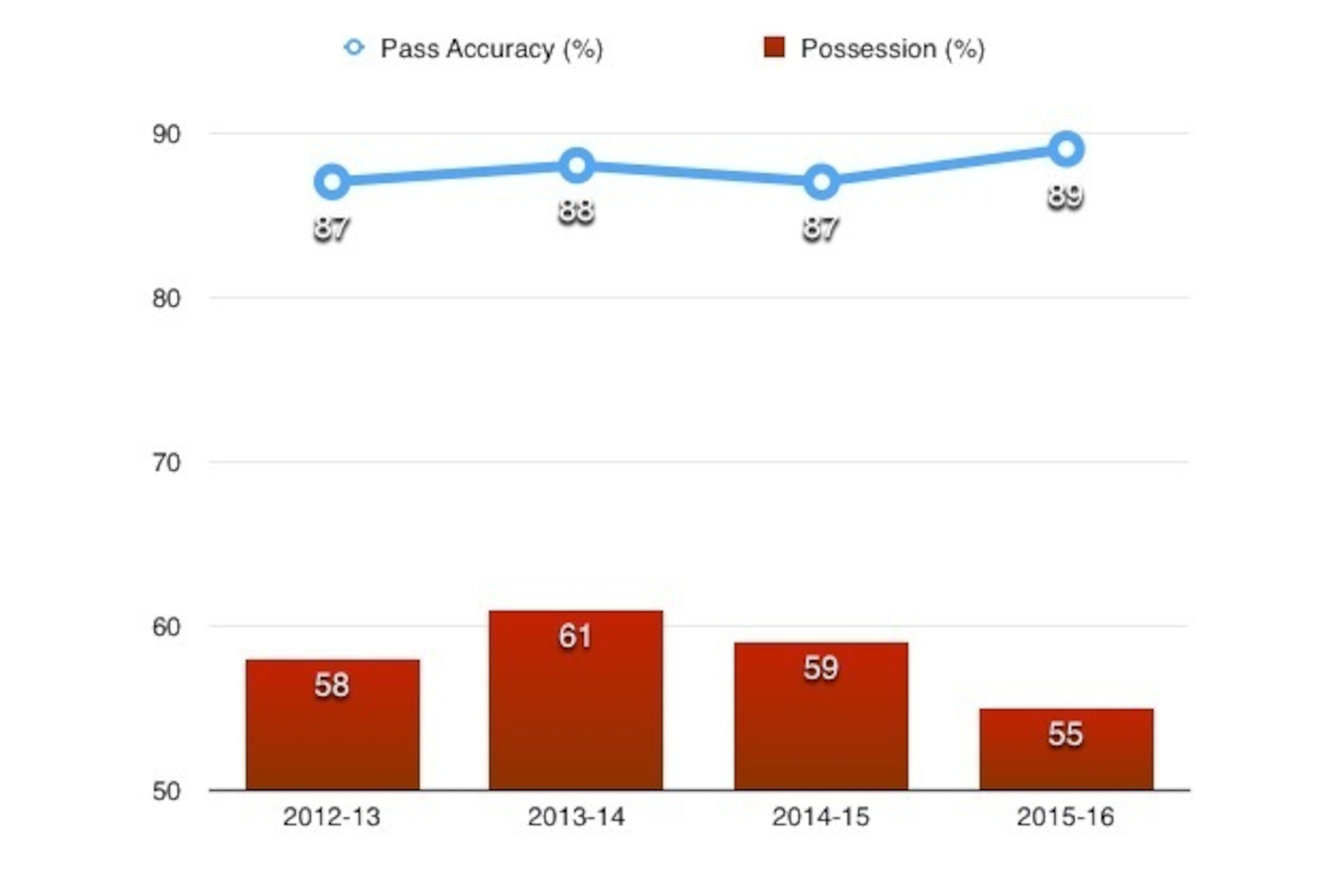
At the same time, Bayern have completed nearly 1,000 more passes than BVB and at a rate (89 percent) that is five percent ahead of the nearest contender.
In 2015-16, the game plan is less about maintaining the ball for a long period of time and more about precisely and deliberately moving it into position to score. Possession with a purpose, as Guardiola was seeking as early as his first season at Bayern (revealed in Marti Perarnau’s book Pep Confidential, h/t the Telegraph), but has only been able to truly deliver in the current campaign.
Perhaps as part of an overall more pragmatic approach to the game, and keeping in line with the theme of passing with intent to score rather than simply maintain possession, Guardiola’s Bayern have taken to playing more long balls.
Xabi Alonso remains a key part of the team, to the point that Bayern sold club hero and local legend Bastian Schweinsteiger and retained the long-range-passing king. And even center back Jerome Boateng has been ambitious in his passing game: He set up two goals against Dortmund with outstanding, long-range deliveries that would never have been seen in a possession-based game.
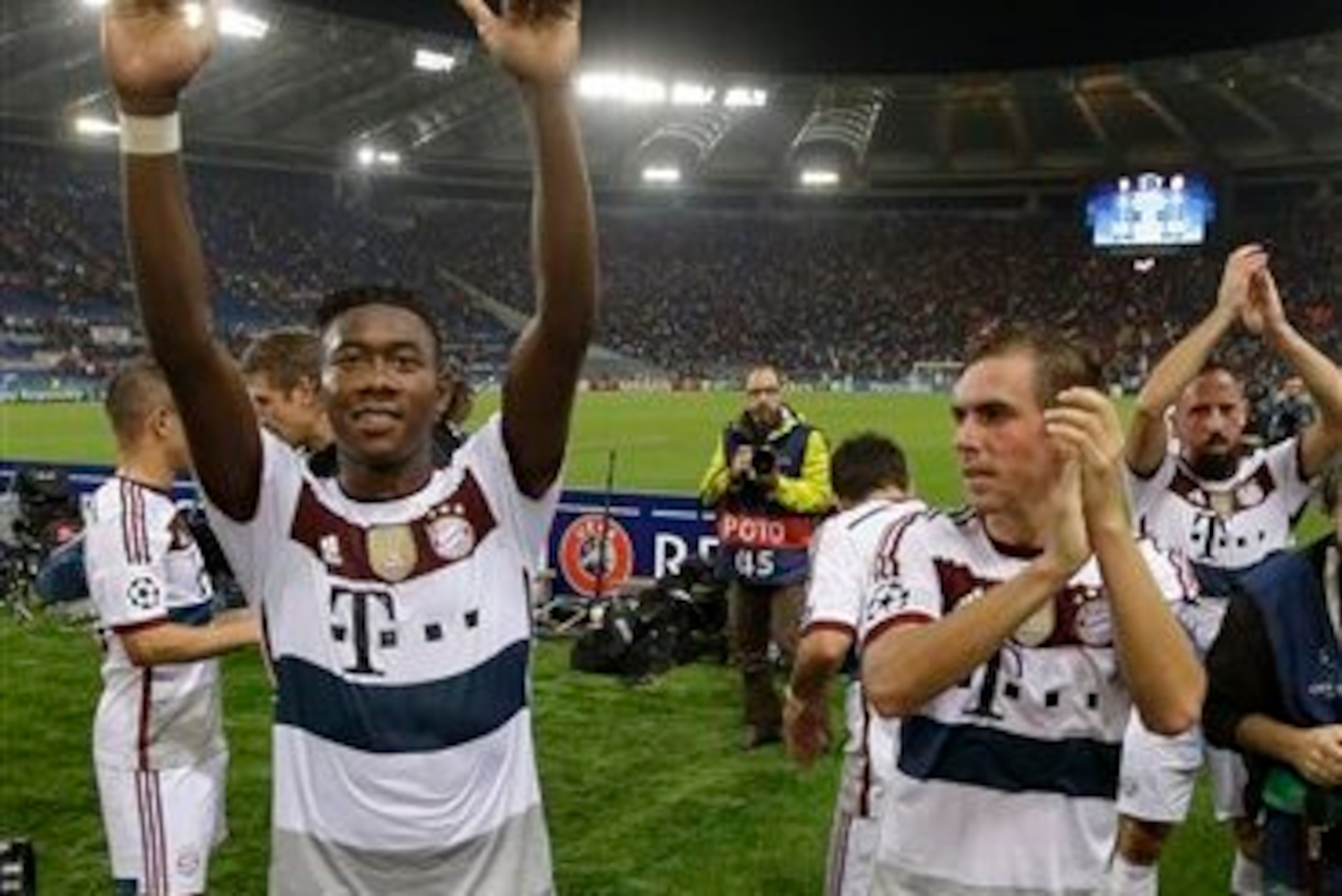
Finally, Guardiola has moved back toward a system emphasizing the use of width, bringing natural full-backs Philipp Lahm and David Alaba—who were often used in central midfield last season—back into wider positions.
In moving away from the 3-5-2 and 3-4-3 formations that placed more emphasis on a narrower game, he’s allowed Bayern to play to their strength, with wingers supported by attacking full-backs.
Although 72 percent (via WhoScored.com) of their shots come from a central location this season, 69 percent of their attacks have come from the wings, indicative of a game plan that focuses on bringing the ball into attack via the wing before crossing. And with Douglas Costa proving to be an assist machine from wide and Robert Lewandowski equally a goal machine in the center, it seems quite clear that this year’s Bayern is much more like that of Jupp Heynckes than that of Guardiola’s first and second years at the helm.
When Guardiola joined Bayern, he inherited a treble-winning side and perhaps felt too much pressure to do something special.
With innovative but sometimes bizarre tactical decisions, he was unable to replicate the success of the 2012-13 team, or even come close. Yet, to his credit, the trainer has learned from his mistakes and pushed his team to evolve. It’s more than can be said of many coaches, and his willingness to see his faults and work to improve on them shows real maturity. It’s the reason why Bayern, at least for now, look to be the best team in Europe.
There’s every reason to believe that, three years after their historic 2012-13 campaign, Bayern will again be treble winners.
.jpg?w=2560 "Colts Football")
.jpg?w=2560 "NFL House in Paris Closes for Protests (AP)")

.jpg?w=2560 "Trevon Diggs Cut by Seahawks")