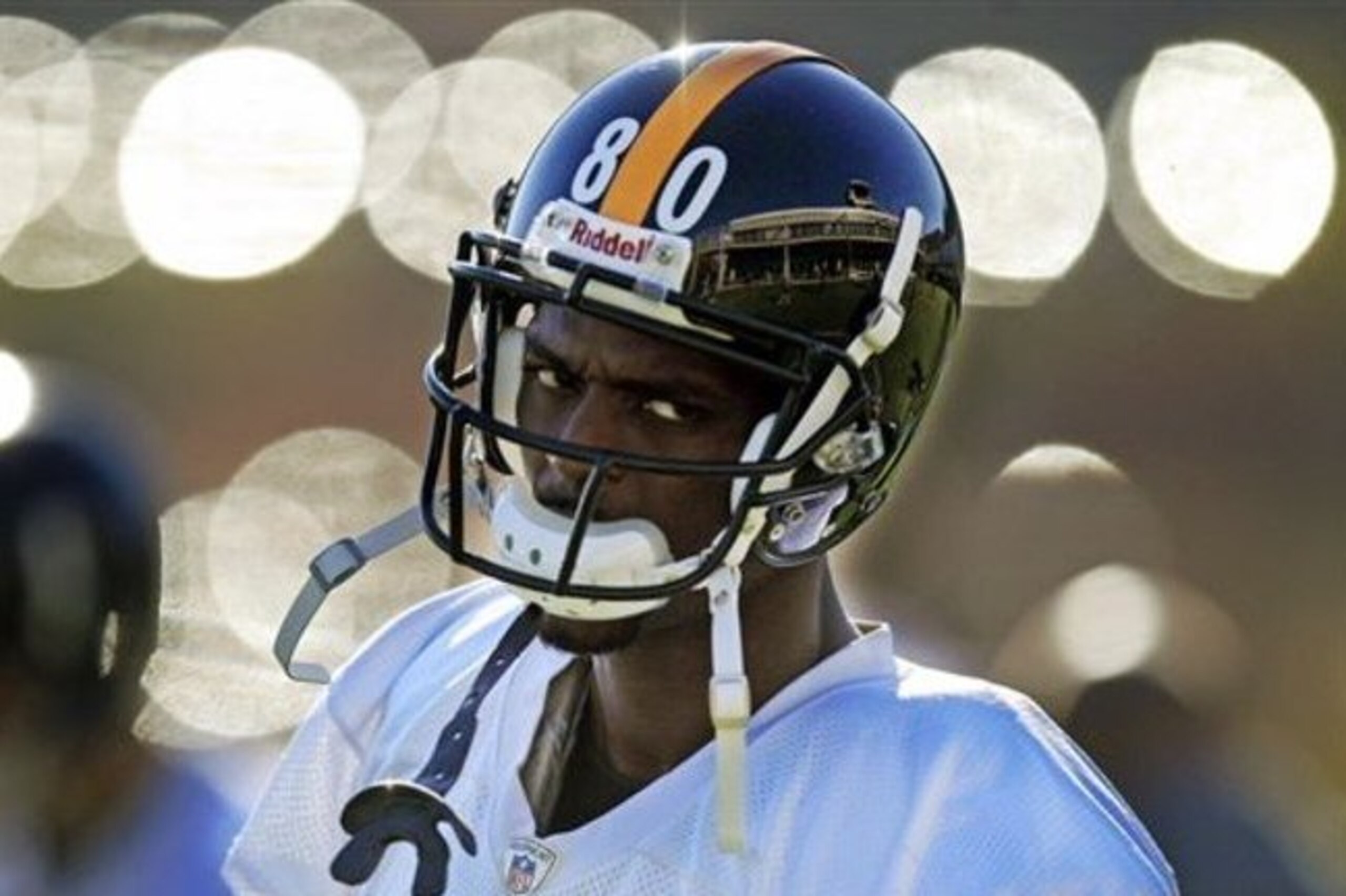

Plaxico Burress Believes Lighter Helmets Are Causing Increase in Concussions
Former NFL wide receiver Plaxico Burress stated Monday that he thinks the league's current helmets are actually having a negative effect in terms of the number of concussions players suffer.
Jay Busbee of Yahoo Sports passed along comments Burress made during an appearance on the Opie with Jim Norton radio show. The 38-year-old wideout, who last played for the Pittsburgh Steelers in 2012, believes things have changed for the worse in recent years.
"These guys [that are making hits] are so big and so fast," Burress said. "It really wasn't happening that much when I was playing. I think it has something to do with these new helmets they're using. You can't convince me that a lighter helmet is better."
TOP NEWS

New NFL Power Rankings 📊
The Robinsons POUND the Rock 🪨
Takeaways from Falcons' dominant MNF win
The violent collisions he references usually generate the most attention. Yet recent research suggests those looking into the concussion problem are more concerned about smaller, repeated hits to the head.
Jason M. Breslow of PBS provided the results of a probe by the Department of Veterans Affairs and Boston University, which showed 87 out of 91 deceased former NFL players (96 percent) had chronic traumatic encephalopathy (CTE), a degenerative brain disease.
Of all the players who tested positive, 40 percent of them played along the offensive or defensive line. Those are the players engaging in battles at the line of scrimmage on every snap, leading to more contact with the head.
Dr. Ann McKee, who runs the lab that did the testing, told PBS' Frontline program that brain disease is a serious concern.
"People think that we're blowing this out of proportion, that this is a very rare disease and that we're sensationalizing it," McKee said. "My response is that where I sit, this is a very real disease. We have had no problem identifying it in hundreds of players."
The 2015 NFL Health and Safety Report noted concussions, contrary to Burress' belief, were down 35 percent over the last two seasons as the league revamped its concussion protocol. Separate research from PBS also showed a decrease, but of only 28 percent.
One key question is how much helmets play a role.
Jim Avila and Serena Marshall of ABC News reported on new Riddell helmets last year, and while the company stated it would increase protection, David A. Hovda, the director of the UCLA Brain Injury Research Center, wasn't sure it would change the concussion numbers.
"Helmets do protect the head. But they do not necessarily protect the brain from concussion, which is caused by acceleration," Hovda said. "Helmets can absorb energy, so it is transmitted around the head differently. But I have not seen any data that would suggest a redesigned helmet would stop/prevent concussion."
All told, while the NFL tries to find ways to reduce concussions in the future, the concrete numbers involving former players and CTE remain troubling. The Department of Veterans Affairs and Boston University research is especially an eye-opener in terms of the game's impact on linemen.
The effort to lessen the problems is ongoing. That said, a definitive solution remains elusive, whether it involves the helmet technology, as Burress suggests, or something else.
.jpg?w=2560 "Rams Eagles Football")

.jpg?w=2560 "Grading WWE Raw 🔠")



