
Steelers vs. Patriots: New England Grades, Notes and Quotes
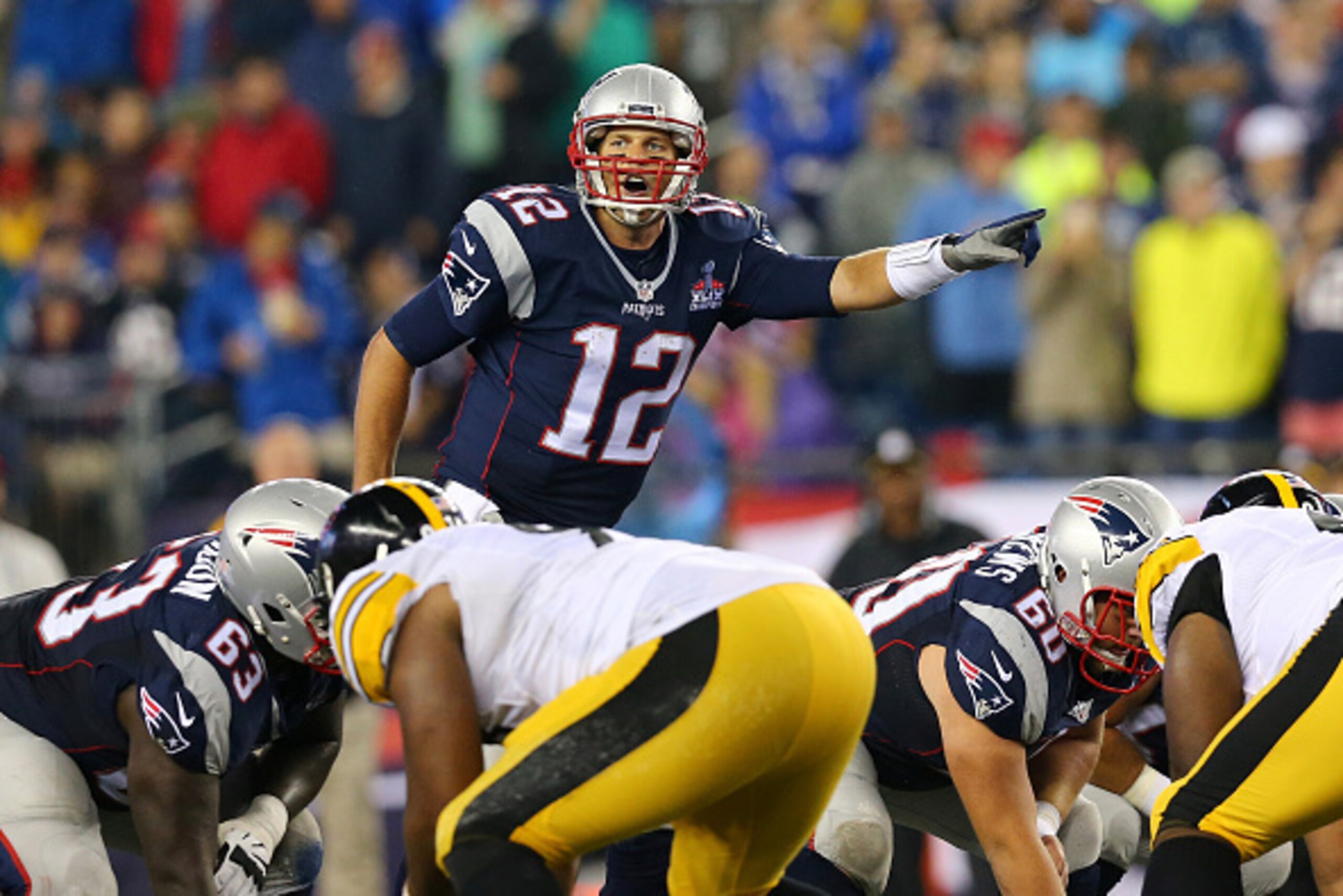
After months of turmoil, the New England Patriots' 28-21 win over the Pittsburgh Steelers on Thursday night had to provide an immense source of relief. Though the Pats were far from perfect, they maintained control for the entire 60 minutes, never trailing and holding at least a seven-point lead throughout the entire second half.
Following a scoreless first quarter, Tom Brady and Co. began to roll in the second quarter, staking the Pats out to a 14-0 lead with a pair of touchdown tosses to Rob Gronkowski. With Gronkowski and Scott Chandler frequently taking the field together, particularly in the red zone, the New England offense bore a striking resemblance to the two-tight end sets that terrorized the league from 2010 to 2012.
New England took a 14-3 lead into halftime, benefiting from two Josh Scobee missed field goals, but saw things get tense in the third quarter. After a Chandler touchdown, Pittsburgh controlled the time of possession with two long drives, rolling off 11 unanswered points to draw within 21-14. However, a false start on 3rd-and-goal from the 1-yard line forced Pittsburgh to settle for a field goal, a misstep that turned out to represent the game's turning point.
In the fourth quarter, Brady put things to rest with a huge 52-yard strike to Gronkowski, eventually setting up a third touchdown pass to the All-Pro tight end. On the night, Brady finished a tidy 25-of-32 for 288 yards and four touchdowns. The defense did concede 464 total yards and a 32:05-27:55 time of possession edge to the Steelers, but the Patriots' ability to tighten up in the red zone made the difference.
Read on for all the top storylines and takeaways from New England's season-opening win.
Position Grades for Patriots
1 of 7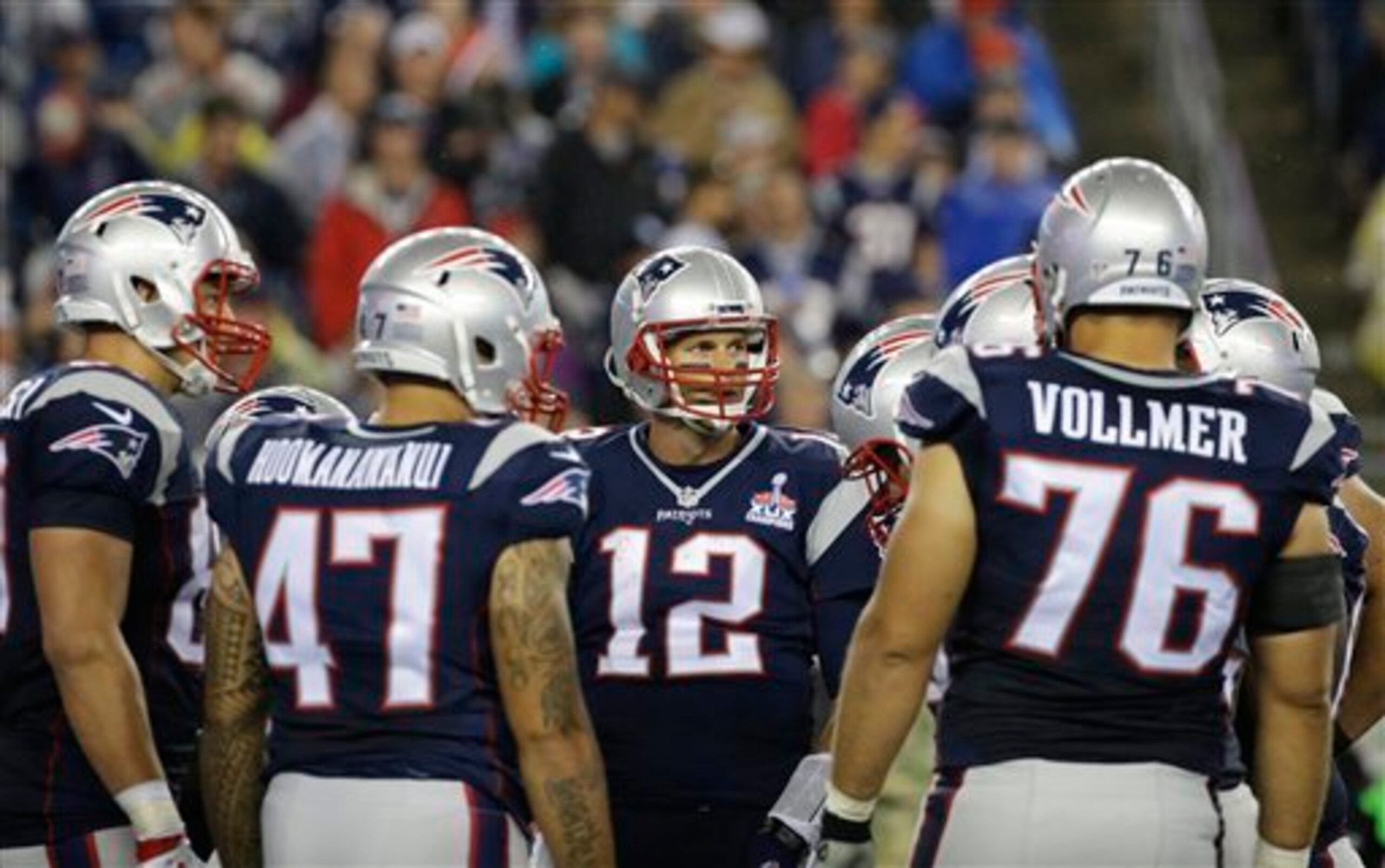
| Position | Grade |
| QB | A |
| RB | B |
| WR | B+ |
| TE | A+ |
| OL | B |
| DL | C+ |
| LB | B- |
| DB | B |
| Special Teams | A- |
| Coaching | A- |
Neither team necessarily lit up the scoreboard, but in truth, this was a game that both offenses controlled. So while the Pats were able to maintain control with superior situational execution, the Steelers were closer to breaking through than the general scoring trend would indicate.
Offensively, it's hard to complain about anything the Pats did. A lackluster preseason quickly faded into the rearview mirror when Gronkowski and Julian Edelman returned to the lineup. The duo combined to receive 20 of Brady's 32 passes, accruing 16 catches for 191 yards and three scores (all from Gronkowski). So long as the two can remain healthy, New England's lack of receiving depth seems unlikely to create significant long-term problems.
Defensively, the Pats were surprisingly slipshod against aging running back DeAngelo Williams and a Steelers line missing All-Pro center Maurkice Pouncey. Williams ripped off 127 yards on six yards per carry, shockingly serving as Pittsburgh's most reliable offensive weapon of the night. In particular, defensive linemen Malcom Brown, Sealver Siliga and Rob Ninkovich appeared to have rough nights in run containment.
On the other hand, the new-look secondary handled Pittsburgh reasonably well. Antonio Brown got behind the secondary for a few big gains but didn't reach the end zone until a junk-time touchdown with two seconds left. Darrius Heyward-Bey should have had a touchdown on a coverage bust (his toes ended up out of bounds), but in general the communication was solid for a secondary that was playing together for the first time.
Brady and Tight Ends Dominate
2 of 7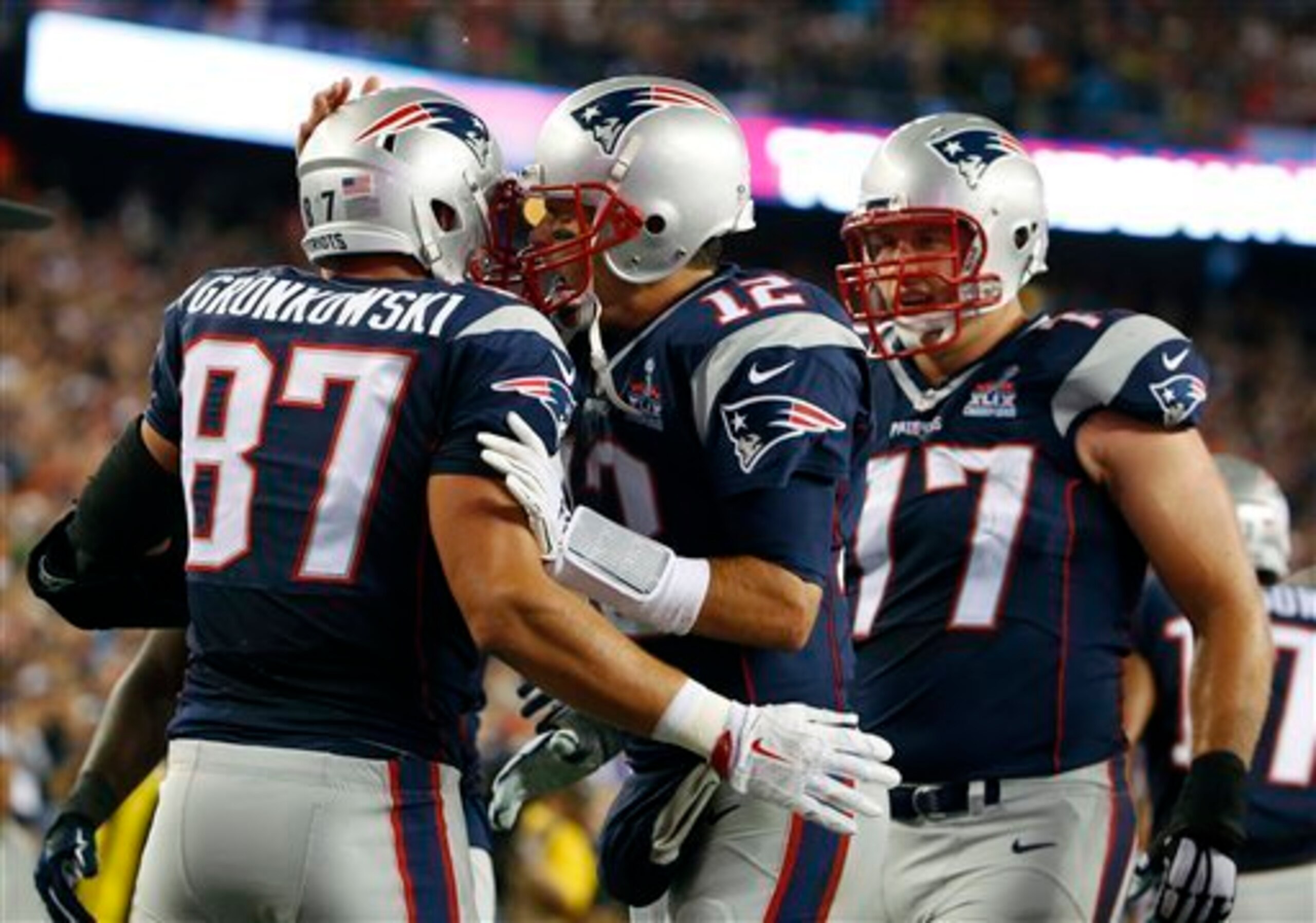
Though he caught just one pass for a single yard, Scott Chandler's presence in the lineup should firmly signal New England's preferred offensive identity this year. Even in a game where the Pats never seemed to establish a consistent rushing attack, they consistently came out in power personnel, creating mismatches across the board for an overmatched Steelers defense.
The Pats' 12 personnel (2 WR, 2 TE, 1 RB) was particularly eye-catching near the goal line, where they would often split Gronkowski and Chandler out wide. The latter's second-quarter touchdown came on a slant-flat combo, creating a massive wall of traffic on the perimeter as two large bodies criss-crossed. Given the diminutive stature of its wide receivers, the size at tight end should serve New England particularly well in the red zone this season.
But make no mistake: Chandler's presence, while helpful, was secondary to Gronkowski's hostile takeover. The night was an example of Gronk at his best, as his ability to line up in a diverse array of formations caused confusion on Pittsburgh's back end multiple times. Everyone knows about his obscene physical tool kit, but his intelligence and versatility help maximize the advantage he holds over defenders.
Brady will always control the middle of the field with Edelman and Danny Amendola, and perhaps a semblance of the perimeter game returns when Brandon LaFell gets healthy. However, if we've learned anything from Week 1, it's that the Patriots will go into every game seeking to control the real estate between the seams.
Butler and Secondary Hold Up Well
3 of 7
A graphic in NBC's broadcast showed that Malcolm Butler gave up nine receptions on 10 targets for over 100 yards. However, those subpar charting stats downplay his efficacy in containing Antonio Brown (nine receptions, 133 yards), who was his typically efficient self but never wreaked havoc on the New England defense.
Butler didn't follow Pittsburgh's All-Pro wide receiver the entire night, but when the Patriots employed man coverages, he typically shadowed Brown. Belichick's willingness to use Butler in this role was a supreme vote of confidence, and in truth, many of Brown's receptions were the result of excellent body control from the receiver or strong throws from Ben Roethlisberger.
Tarell Brown and Bradley Fletcher played the majority of the snaps in the nickel package, with mixed results. New England's best success came when it inserted Duron Harmon into the three-safety "big nickel" package, often used to counter Pittsburgh's power personnel. Harmon came away with a fourth-quarter interception that effectively sealed the game when the Patriots were leading 28-14, demonstrating nice deep-half range to pick off Roethlisberger's pass near the sideline.
A diminished Steelers offense won't represent New England's toughest competition, but with upcoming games against the Buffalo Bills and Jacksonville Jaguars, the Patriots should get some time for their secondary to jell against subpar offenses before a Week 5 date against the Dallas Cowboys. Having settled on an ostensibly workable personnel grouping, the remade secondary is off to an auspicious start.

.jpg?w=2560 "Eagles Titans Football")
Easley Exits with Hip Injury
4 of 7
On a night where the Pats mostly stayed healthy, their lone casualty could wind up being a costly one. Dominique Easley crumpled to the turf on New England's first defensive possession and didn't return with what the team labeled a hip injury. After the game, medical expert David Chao suggested that a joint injury would be more problematic than a simple muscle strain:
"Looked at video of DOMINIQUE EASLEY @Patriots Hoping for oblique/superficial muscle injury rather than true hip joint injury. @BenVolin
— David J. Chao, MD (@ProFootballDoc) September 11, 2015"
At first blush, Pats fans had to fear that Easley had suffered another knee injury. The 2014 first-rounder fell to the team in part because of two torn ACLs suffered in college. Easley's rookie year was essentially a redshirt campaign, as he spent the year dealing with lingering knee soreness that robbed him of his signature quickness off the snap. However, after a strong preseason in which he regained that explosiveness, Easley appeared poised to justify his draft status and evolve into a cornerstone of New England's defense.
That may happen yet, but if this injury keeps Easley out for a prolonged period of time, we could be looking at two straight years of underwhelming returns from the former 29th overall pick. Given that the Patriots have turned into a pressure-reliant pass defense this year, missing their best interior rusher for any time would be a tough blow.
Bill Belichick: Pats Also Had Communication Issues
5 of 7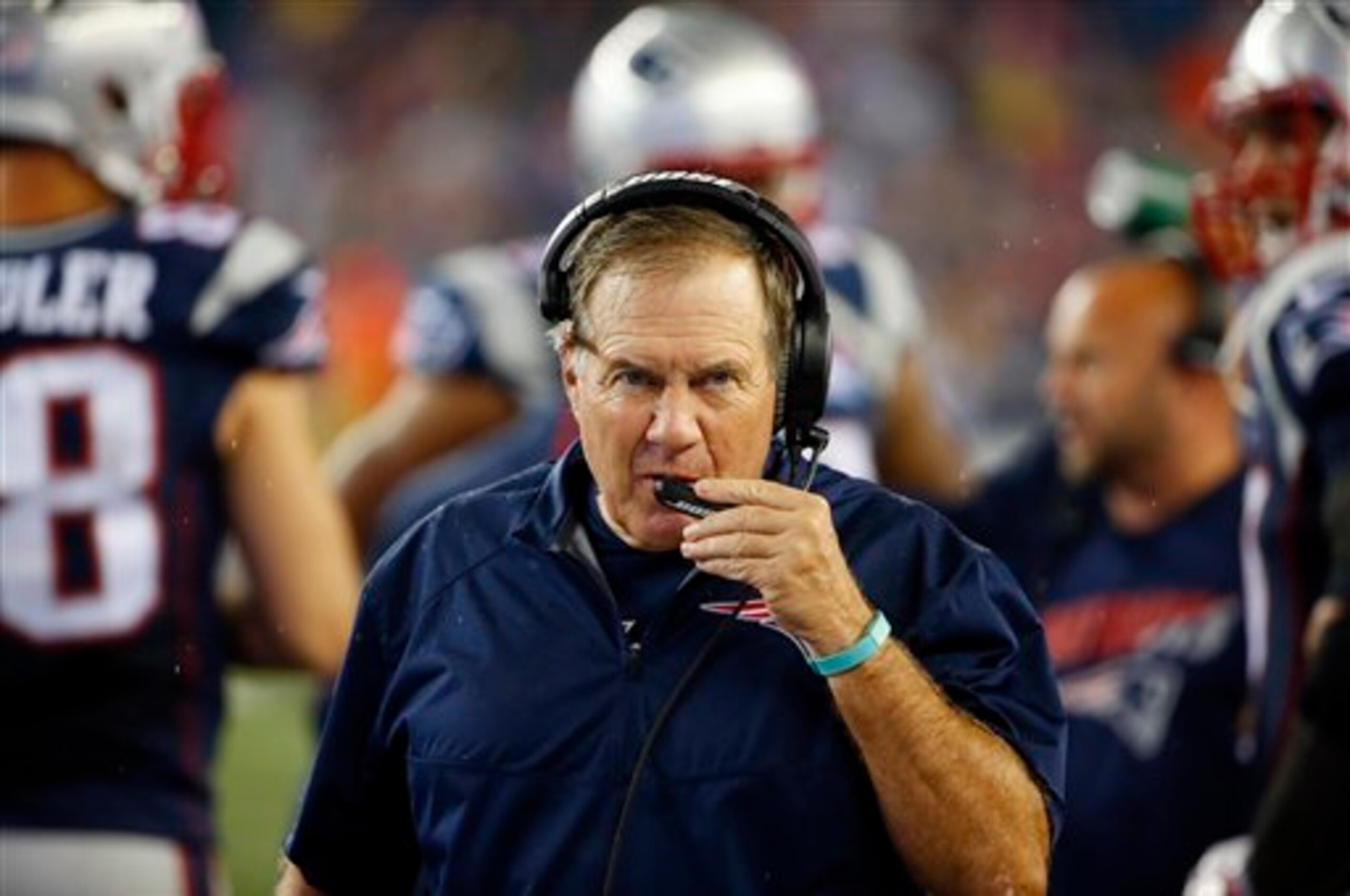
Because this is the Patriots, it seems as though no dose of on-field success can come without some stain of controversy. A report emerged during the first half that Pittsburgh's headsets weren't properly functioning, leading to the natural conclusions that the Pats were again bending the rules through their shenanigans. However, in his postgame presser, Bill Belichick reported having similar issues on New England's sideline, per Mike Loyko of NEPatriotsDraft.com:
"Bill Belichick said their sideline had issues with their communications too. Switched out headphones mulitple times. Issue all game.
— Mike Loyko (@NEPD_Loyko) September 11, 2015"
Indeed, later in the night, the MMQB's Greg Bedard passed along a statement from NFL spokesman Michael Signora. Essentially, Signora pinned the blame on the league for the faulty headsets, absolving the Patriots in the process:
"Statement from NFL spokesman Michael Signora on the headset communication during the game: pic.twitter.com/5cr1ZixLph
— Greg A. Bedard (@GregABedard) September 11, 2015"
This is a minor storyline that shouldn't warrant much discussion in the days after the game. Still, after the offseason the Pats just endured, it's understandable if the most minor provocation feels like an impending disaster. For now, though, it appears New England will actually get to enjoy its win without answering to more off-field inquiries.
Dion Lewis: Fumble Marred Strong Night
6 of 7
The identity of the Pats' lead back is usually an inscrutable picture that changes week to week. As the likes of Jonas Gray and Stevan Ridley can attest, things tend to change quickly in Foxborough. At least for one night, though, there was absolutely no question about the alpha dog among Patriots running backs.
Dion Lewis, a veteran afterthought who worked his way onto the roster following a strong preseason, received 15 of New England's 24 carries on the night, tallying 69 yards. He also caught four of his five targets for 51 yards, splitting out wide multiple times and out-leveraging linebackers on angle routes. For someone who was pigeonholed as strictly a passing back, Lewis' usage suggests that the Pats see more in the fourth-year vet.
It wasn't all rosy for Lewis, as he coughed up the ball while trying to fight his way into the end zone on his final reception of the night. Gronkowski did recover the ball on the 1-yard line to avert the potential disaster, but considering that the contest was still within seven points at the time, a turnover could have been a devastating change of events. After the game, Lewis dwelled more on that mistake than his generally strong performance, per CSNNE's Michael Giardi:
"Dion Lewis really bummed out about the fumble. Says that can't happen there and he needs to make sure it doesnt happen again
— Michael Giardi (@MikeGiardi) September 11, 2015"
Belichick did insert Lewis back into the game afterward, so it didn't appear as though the fumble sent him to the doghouse right away. Hopefully, ball security doesn't become an issue, as Lewis appears to possess the juice this backfield could use. Even with LeGarrette Blount returning from suspension next week, it'd be surprising to see Lewis fade away from the offense.
David Andrews: Not Nervous in First Start
7 of 7
Much like it did in 2014, the Patriots offensive line quickly entered a state of flux to start the 2015 campaign. With Bryan Stork on short-term injured reserve and Ryan Wendell unexpectedly scratched, the Pats started an anonymous interior line trio of Josh Kline (left guard), Tre' Jackson (right guard) and David Andrews (center).
Kline has previous starting experience, and Jackson was widely seen as a potential rookie-year starter, but the undrafted rookie Andrews was the night's big surprise. The offensive line wasn't perfect, as it did concede two sacks, but Brady was generally afforded strong pass protection, while running back Dion Lewis found his fair share of open running lanes.
According to Giardi, Andrews denied having any nerves in his first career pro start:
"At first blush, David Andrews did a very nice job in tough conditions. Said he wasn't nervous.
— Michael Giardi (@MikeGiardi) September 11, 2015"
The undrafted Georgia center was a strong bet to make the final roster, especially given the Patriots' lack of interior offensive line depth. The undersized Andrews (6'3", 294 lbs) may yet run into more problems if he starts against Buffalo and its mammoth defensive tackle tandem of Marcell Dareus and Kyle Williams. For one night, though, Andrews and the interior line helped dissuade concerns that the offensive line might experience similarly hellacious struggles that the unit went through last September.