
On Thursday, the Golden State Warriors (and really, anyone who enjoys watching good basketball) got some tough news.
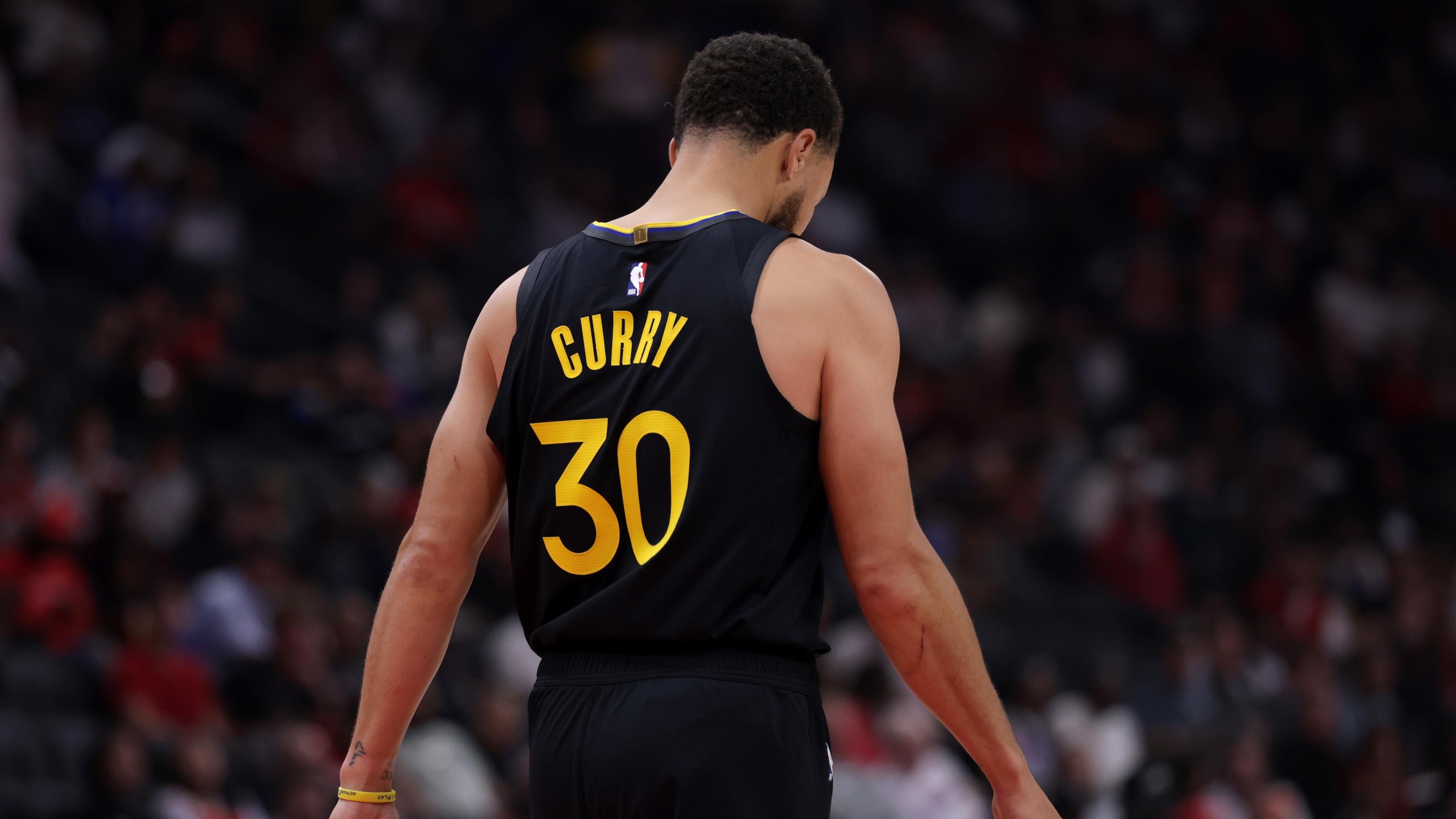
ESPN's Shams Charania reported that Stephen Curry will miss at least the next two weeks with "an oblique abdominal tear."
With yet another high-profile star going down, it's time to ask whether this injury problem is a growing trend or just a well-reported one, and whether the NBA, its teams, or its stars can do anything about it.
The Growing Injury Report
For those who haven't been keeping track at home, since the regular season tipped off on October 20, we've now lost the following (with their original injury timelines):
- Paolo Banchero (4-to-6 weeks with a high ankle sprain)
- Jalen Suggs (at least two weeks with a bone bruise on his knee)
- Jalen Williams (potentially the entire season with a dislocated left ankle and fractured fibula)
- Cason Wallace (potentially the entire season with a torn labrum)
- Kawhi Leonard (multiple weeks with swelling in his knee)
- Jaren Jackson Jr. (6-to-8 weeks with a torn MCL)
- Anthony Edwards (up to two months following an arthroscopic procedure on his knee)
- Tyrese Haliburton (at least two weeks with a hamstring strain)
- Ja Morant (at least four weeks with a hamstring strain)
- Chet Holmgren (8-to-10 weeks with a small patellar tendon tear)
- Lauri Markkanen (at least one month with a non-displaced fracture in his hand)
- Caleb Wilson (4-to-6 weeks with a fractured hand)
- Stephen Curry (with the aforementioned oblique injury)
Beyond that, Shaedon Sharpe, Kon Knueppel, AJ Dybantsa, Jimmy Butler, Bradley Beal, Grant Williams and Nic Claxton all carried injuries into this season.
And we've also seen an alarming increase in Achilles tears in recent years. In just the last three seasons (including 2026-27), that injury has claimed DaRon Holmes, James Wiseman, Isaiah Jackson, Dru Smith, Dejounte Murray, Damian Lillard, Jayson Tatum, Haliburton, Donte DiVincenzo, Ariel Hukporti and Ben Simmons.
And to get one of the questions asked earlier out of the way right now, it doesn't look like this is something that just feels like a problem because of the way the NBA is currently covered.
Dr. Brian Sutterer, a sports medicine doctor with a large social media following, posted recent findings showing that injury absences per rotation player are much higher than they were 20 years ago. Serious injuries (like an Achilles tear) are also more common.
Should There Be Fewer Games?
The general refrain, at least among many sports media personalities, is that the season is too long.
The take goes something like this:
At the pace the game is played now, players' bodies simply can't take the rigors of an 82-game campaign. Everyone is too explosive now. They have to cover much more ground on defense because offenses are so spaced out. In a word, the game is just more demanding than it was in previous eras, to the point that it's time to reduce the schedule.
The catch is that the logic and potential outcomes have real problems.
For one thing, the injuries piling up now are happening in October and November. The season is less than a month old. Even with a hypothetical 65-game schedule (or whatever other number might be popular), these injuries would still be happening.
The retort may be that the current avalanche is a byproduct of wear and tear from previous years, but Banchero, Suggs and Morant, just to name a few, aren't coming off deep playoff runs.
What's more, team training and medical staff have effectively already shortened individual players' seasons. "Load management" is a concept that has been popularized during the 20-year sample Sutterer examined.
Players get more off-nights from games and practices than in earlier eras, but the frequency of injuries hasn't gone down.
Should Games Be Shorter?
Beyond shortening the season, some want to shorten games from 48 to 40 minutes.
The problems here are even easier to spot.
For one, it could all but eliminate role players. Some teams would still play their starters 30-35 minutes, leaving little time for reserves and the strategies involved in using them.
That said, if shortening games did cause stars to drop below 30 minutes per game, it would also mess with individual players' legacies.
In baseball and football, totals for home runs, touchdowns or other numbers are tracked almost religiously. In basketball, for about as long as it's been an organized sport, the measuring stick of choice is most commonly "per game" averages.
MVP numbers from a winner playing 28 minutes per game, rather than 36, would look odd compared to historical peers. Because while we have easier access to "per-minute" or (preferably) "per-possession" numbers today, viewers are raised and trained on points, rebounds and assists per game.
On top of all of the above, money could stand in the way. For the league, any reduction in inventory (whether through fewer games or fewer minutes) likely means lower revenue, at least in the short term.
Some could argue that scarcity would eventually make the remaining games more valuable.
But if there's one overarching theme of Adam Silver's tenure, it may be that revenue is a tough concern to top.
So, What's The Solution?
Ultimately, the best way forward may run counter to popular arguments.
In a recent appearance on Bill Simmons' podcast, longtime coach Doc Rivers suggested that practicing more could actually help. Sutterer shared a similar sentiment on X.
Preparing the body for a more rigorous version of basketball may simply require more rigorous preparation and training. Some (though certainly not all) of the rest may need to be replaced with some form of conditioning, plyometrics or other mobility training.
Surviving an 82-game gauntlet, plus multiple rounds in the playoffs, has always been part of the bargain for winning a championship. No one wants an uptick in injuries. Freak accidents, such as the one that sent Jalen Williams to the injury report, are particularly tough to see.
But the most common response over the years—load management—hasn't worked. It just hasn't.
Maybe it's time to focus less on rest and more on better preparing players' bodies for the demands of today's NBA. More conditioning, more purposeful training and perhaps even more practice.
It's an approach worth exploring before shortening the season, rewriting the record books or fundamentally changing the sport.
It's an option that won't affect the decades-long legacy of the NBA, and it's time to try it.