
Does Jarret Stoll Signing Bring New York Rangers Any Closer to Stanley Cup?
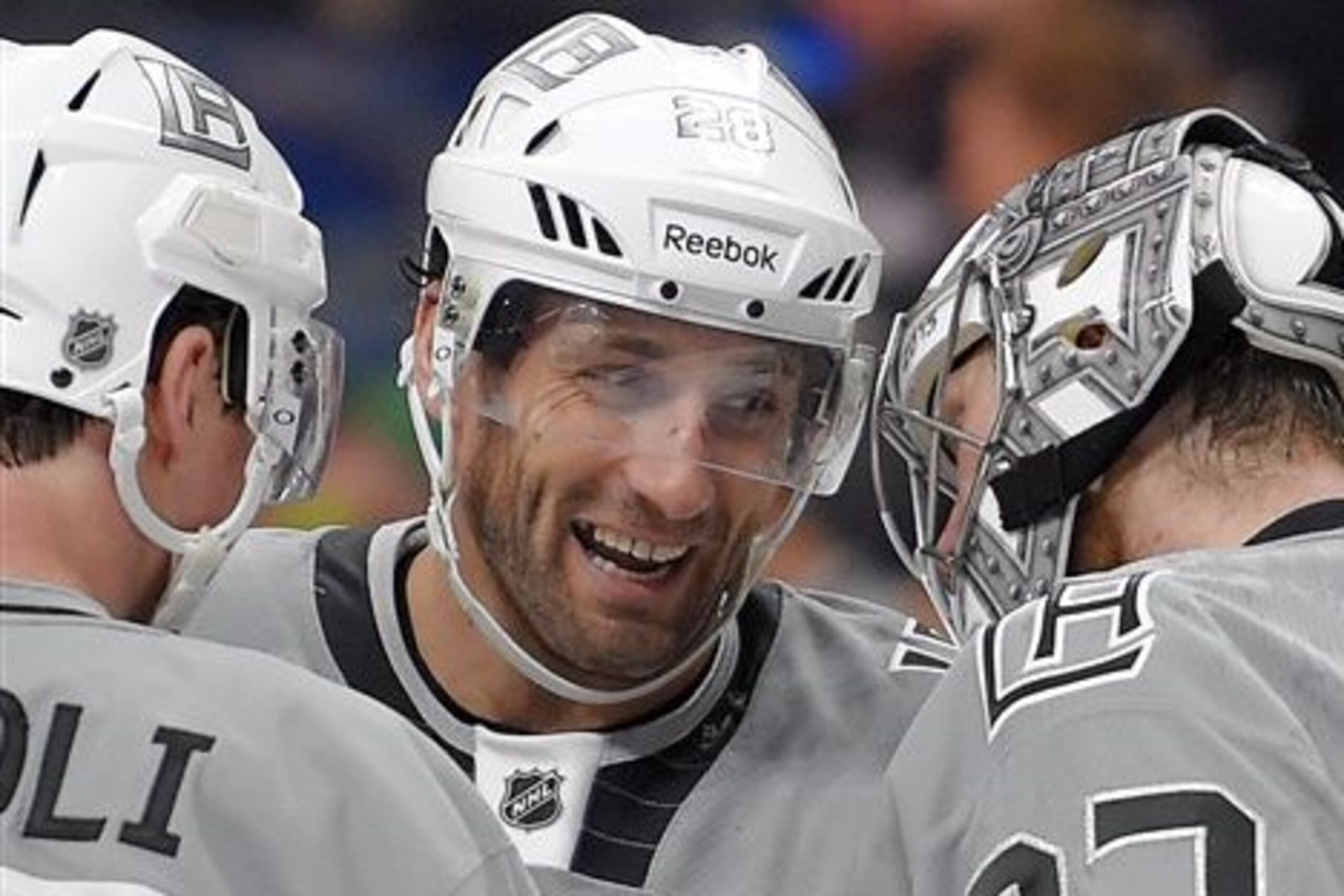
Normally, when a team signs a player like Jarret Stoll, the emphasis is placed on intangibles. He’s basically a perfect fit for the part; he plays a physical style of hockey, he’s primarily a defensive specialist at even strength and he has multiple Stanley Cup rings. He’s the kind of guy who just naturally brings the cliche “he knows how to win” to mind.
The trouble with praising Stoll’s intangibles is that this summer he was arrested and charged with felony cocaine possession in Las Vegas. According to the Associated Press, those charges were dismissed, while Stoll pleaded guilty to two reduced charges and was ultimately sentenced to community service.

That makes it a little bit easier to focus on what he does as a hockey player to help his team win, and to ignore the all-too-automatic “it’s what he brings to the room” dismissal of any qualms regarding the things that actually happen on the ice.
So what kind of player is Stoll?
Stoll has, over the years, evolved into a specialist. He contributes to both the power play and the penalty kill and at even strength has become a shutdown specialist; the last time he hit double-digit goal totals in a single season was 2010-11, and even in his heyday didn’t score a lot five-on-five.
Stoll will almost certainly see penalty-killing minutes with New York, but he’s somewhat superfluous there.

The Rangers have had a consistently excellent penalty kill under Alain Vigneault, ranking third and sixth overall in the NHL during his years at the helm. Dominic Moore and Derek Stepan have had exceptional underlying numbers at centre, though Stoll brings more faceoff wins to the table than Stepan does.
One positive is that this might allow Vigneault to reduce Stepan’s load and replace those minutes with offensive ones, which could have a ripple effect elsewhere.
| Slava Voynov | 3.87 |
| Drew Doughty | 3.73 |
| Alec Martinez | 3.59 |
| Jake Muzzin | 3.32 |
| Jarret Stoll | 2.80 |
Nor is Stoll likely to be a great help on the power play, where New York could use some assistance. He is a right-shooting forward with a powerful slap shot who has often been employed as a point man over his NHL career, but his scoring numbers over the last three years are bad even by defencemen standards.
He’s probably a little better than Dan Girardi, but Girardi is a serious contender for “worst regularly used power-play point man in the NHL,” so that isn’t really saying much. Vigneault may or may not use him on the man advantage, and if he does it may not make any noticeable difference.
What about at even strength?
As mentioned previously, Stoll isn’t a scorer. He’s averaged 1.0 points per hour at even strength over the last three seasons, which would be good if he was a defenceman but ranks him 338th of 375 forwards to play at least 1,000 minutes over that span. He’s just behind Ryan Reaves and Max Lapierre.
He’s also getting worse. Last season saw Stoll fall to 0.66 points per hour at five-on-five, roughly half of what the somewhat comparable Moore managed for the Rangers.
If Stoll has value, in other words, it must be almost entirely defensive, and there are some problems there. Most notably, Stoll doesn’t really seem to be playing high-value defensive minutes these days.
Stoll ranked 10th on the Kings last year in quality of competition, and most of his draws were taken in the offensive zone.
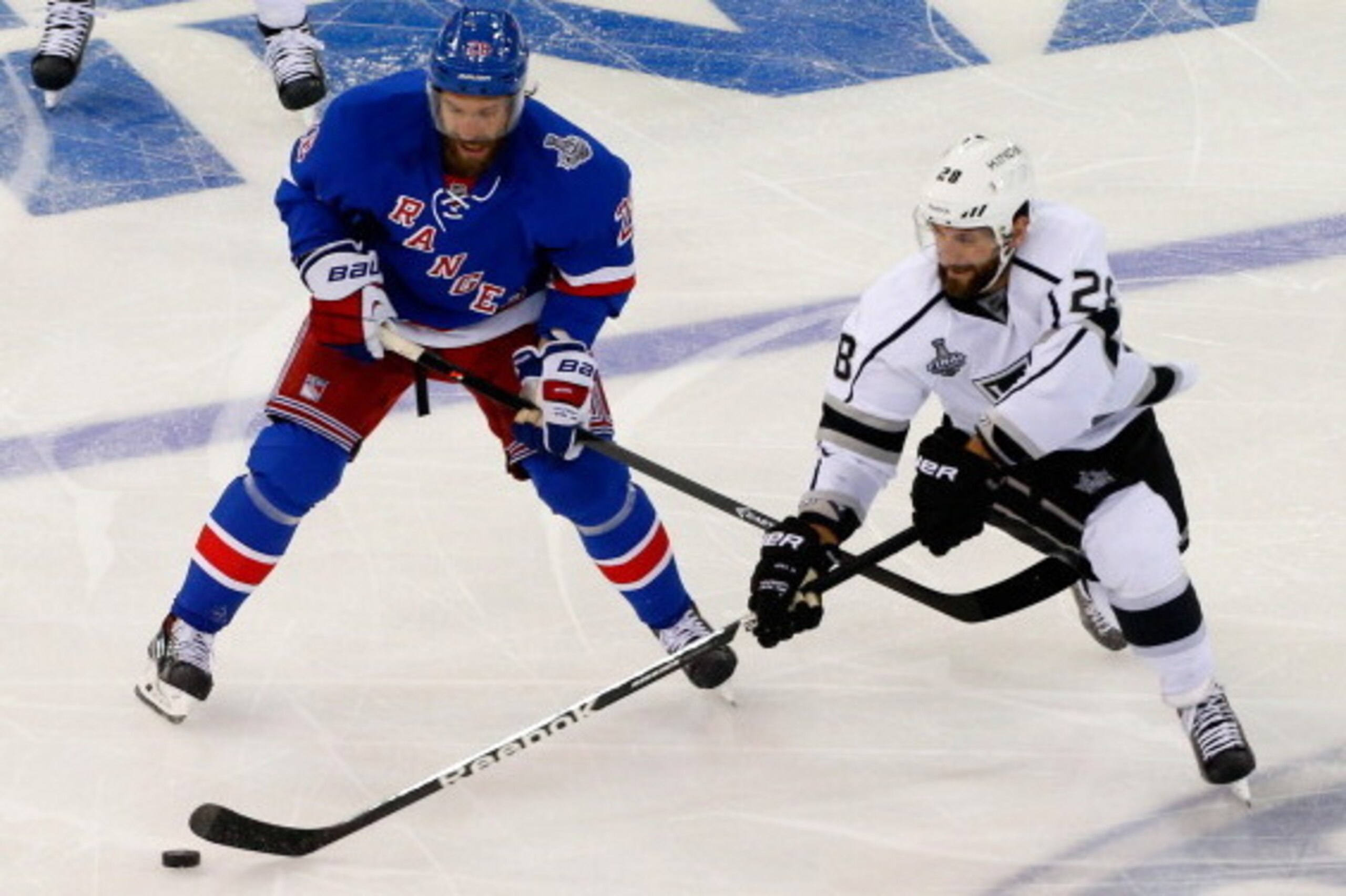
For the sake of context, Moore was on the ice for 401 defensive and 153 offensive-zone faceoffs last year, while Stoll was on for 279 and 328, respectively. Moore ranked 12th among New York forwards in quality of competition; Stoll’s totals by that metric are nearly identical.
Increasingly, bad things have happened with Stoll on the ice.
He’s lagged the Kings’ team average in on-ice scoring chances in each of the last four years, but for the first time in that span the Kings were actually out-chanced when Stoll was on the ice, which is hard to do because Los Angeles is typically so dominant by scoring-chance numbers. With Stoll off the ice, the Kings out-chanced their opponents 55-44 at even strength; with Stoll on the ice, they were out-chanced, 49-51.
Partially, that’s because Stoll’s line is chronically incapable of generating scoring chances. But it’s also in part because Stoll’s on-ice chances against numbers are far and away the worst they’ve been during the Kings’ championship era.
We can talk about Stoll’s faceoff-winning ability, his physical style of play and his formidable defensive reputation formed over years on one of the league’s best teams, but the reality is that he’s not needed on the penalty kill, not good on the power play and is a pretty run-of-the-mill fourth-liner in terms of on-ice numbers at evens.
Is he worth the $800,000 New York invested in him? Probably. That’s very little money, and Stoll’s versatility makes him a nice fit as a depth piece. Is he going to substantially change their odds of winning the Stanley Cup? Absolutely not; to borrow a line, he’s not the Jarret Stoll of old, he’s just an old Jarret Stoll.
All statistics and salary information courtesy of War-on-Ice.com.
Jonathan Willis covers the NHL for Bleacher Report. Follow him on Twitter for more of his work.

.jpg?w=2560 "Rodgers Iced Out on Plane 💎")
.jpg?w=2560 "Mahomes Told Teammate to Leave Meeting")
.jpg?w=2560 "🚨 Week 8 AP Top 25 Poll")


.jpg?w=2560 "Raiders Could Start Mendoza")
.jpg?w=2560 "Lamar Being Out Shocked Ravens")