
B/R's Best Players Available on Day 2 of the 2026 NHL Draft
There are always players ranked in the first round who aren't selected in the first round.
So much the better for the teams that can take advantage on Day 2.
Here are our best available for the second round of the 2026 NHL Draft, ranked as originally, and what your team might get if they snag them.
Xavier Villeneuve — Blainville-Boisbriand Armada (QMJHL)
1 of 6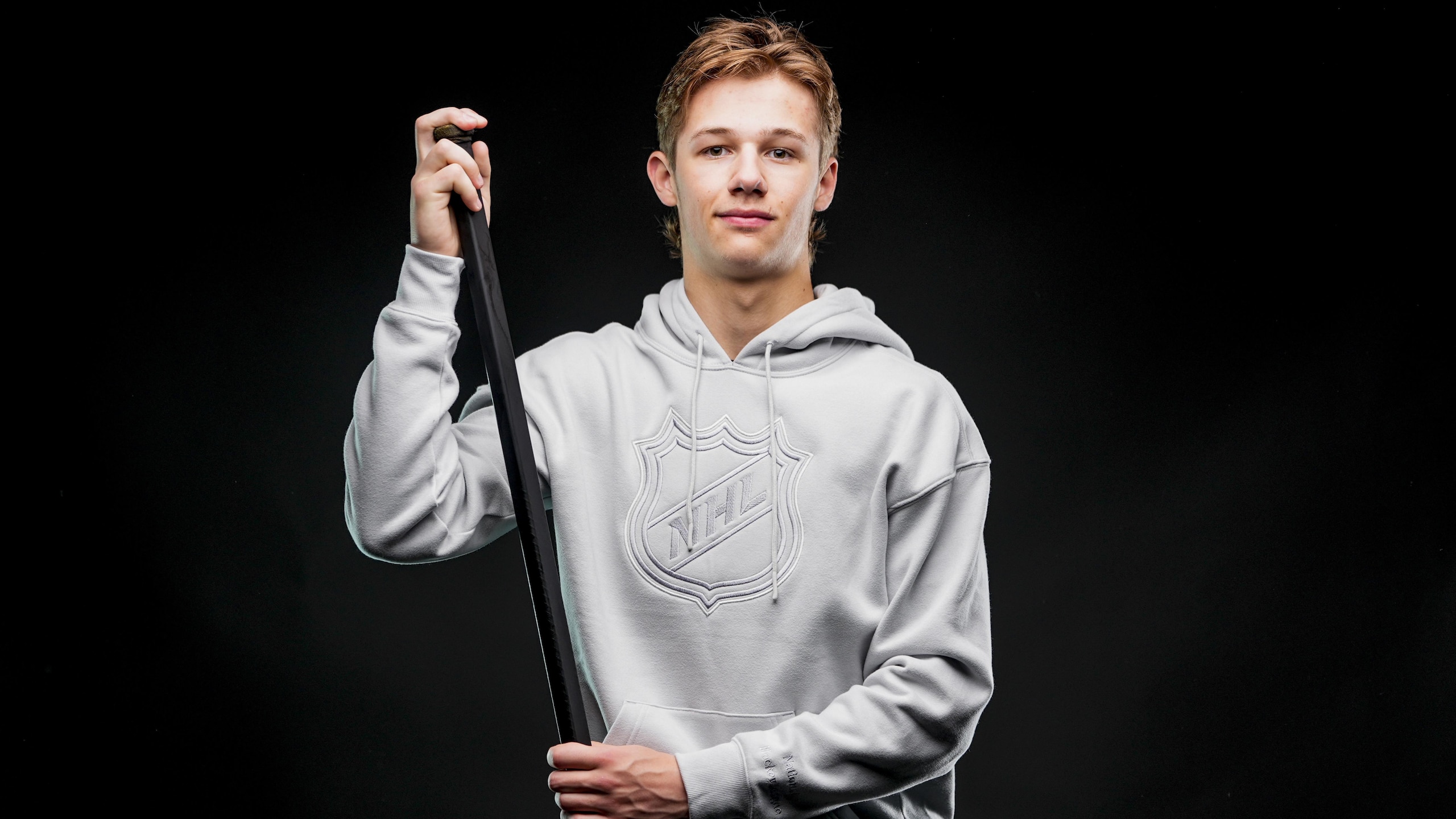
B/R Big Board Rank: 13
Strengths: Agility, puck skills
Weaknesses: Size
Don't take Villeneuve falling back out of our top ten as commentary on anything other than the likelihood of teams passing him up due to his size; his upside is immense, and if we didn't have to consider all the relevant context and could rank him on upside alone, he'd still be in those top spots. Because we have to operate from a holistic view, we're hedging our bets a little here.
With that in mind, if Chase Reid is the best defenseman in this draft class, Xavier Villeneuve is the most exciting.
If you want to be a good defenseman in the NHL and you're small, you have to be off-the-rails good at everything else. Villeneuve is the whole package: extremely intelligent, dynamic on offense, effective defensively, and wildly creative when it comes to playmaking. He's the type we've discussed in the past who defends by just always keeping possession of the puck.
He doesn't need to take the puck away from an opponent if he already has it.
In the 2025 first round, no defensemen under six feet tall were selected. Villeneuve is genuinely worth not repeating that. While his skill set is raw, his inherent potential is such that we would pit it against even the top players in this draft. He's agile, dynamic, and extremely intelligent, with quick hands and feet that let him put that intelligence into action in every game. His timing, in particular, when trying to outwit and outmatch opponents, is especially impressive.
The main concern here is his size: whether he will fill out effectively, not just add muscle but also round out the physical size of his game. He also needs to refine his playmaking ability to avoid situations where that size will be a detriment. College hockey awaits him in the fall at Boston University, and it should serve him well in that respect.
Egor Shilov, C, Victoriaville Tigres (QMJHL)
2 of 6B/R Big Board Rank: 24
Strengths: Hockey IQ, stickwork
Weaknesses: Can lack engagement and pace
Victoriaville Tigres center Egor Shilov is taking one of the more intriguing paths to the NHL — the NCAA via a stop in the QMJHL (he's headed to Boston University in the fall). It's a concept that we're fans of in theory, but especially love in practice for Shilov. It feels tailor-made to develop him effectively.
Watching Shilov, it's evident that his hockey sense and ability to read and select plays are excellent. It is equally as evident that his pace and urgency are lacking. It isn't enough to have fantastic stickwork (Shilov does) or high-end puck carrying abilities if you lack the engagement levels to truly make those skills a threat night in and night out. It certainly won't fly at the NHL level. It's frustrating to watch someone with so much potential glide along in moments where more than just gliding is necessary.
Fortunately, the tough competition and high pace of NCAA hockey will force Shilov to smooth out those divots in his game and stay engaged if he wants to continue progressing. Teams well-positioned to develop those aspects of his play stand to reap significant benefits. In addition to his creation game and other aspects of his upside, Shilov is an effective shutdown player, so he has a solid floor
Nikita Shcherbakov, D, Tolpar Ufa (MHL)
3 of 6B/R Big Board Rank:
Strengths: Agility and edgework
Weaknesses: Decision-making
It can be challenging to get a good sense of players when they're in multiple leagues over the course of a season, so the best thing to do is focus on the tools themselves and how consistently they're used. This is what we had to do for Tolpar Ufa defenseman Nikita Shcherbakov to project where he belongs in this draft and how he could project to the NHL.
Spoiler alert: We think Shcherbakov could project quite nicely to the NHL.
He split time between the KHL, the VHL, and the MHL this season, with the majority of his games (35) coming with the VHL's Toros Neftekamsk. While he isn't a flashy high-scoring dynamo of a defender, he could be just as valuable to the right team (one that could prioritize
development over rushing him to the pros). His talent is still raw, but as noted, we're betting on upside. We really like Shcherbakov's.
That raw talent is displayed in his skating, through tools such as edgework and agility; he's efficiently mobile in all directions, particularly for someone who is 6'3". This is especially evident in transition. Shcherbakov appears fearless on the breakout at times, and though he prefers not to be the puck carrier, he's capable. His defensive awareness and the resulting decision-making need sharpening; there are moments when he's looked questionable, which isn't something you want from his player type. But betting on the potential could bring great benefits here.
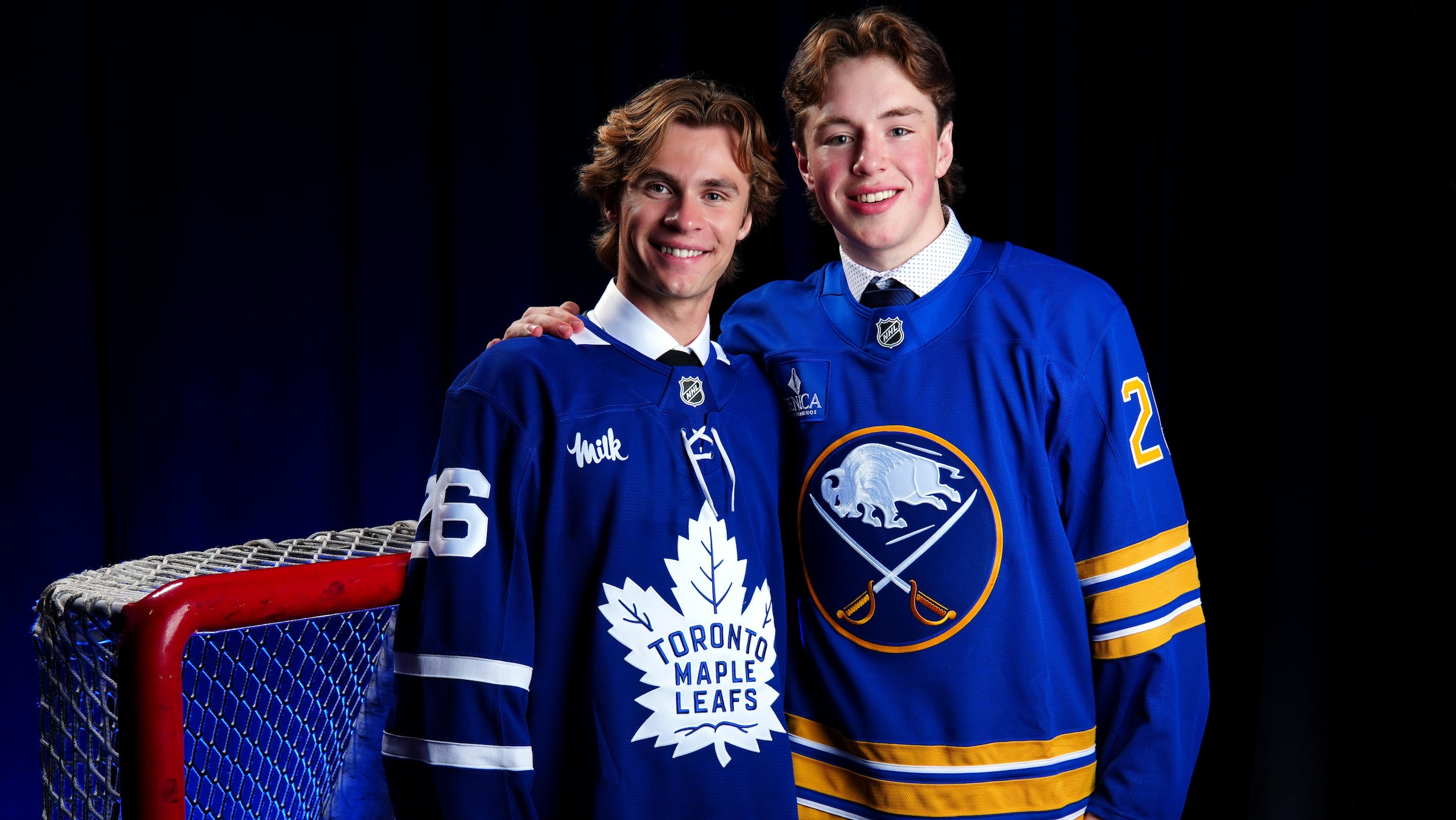
Brooks Rogowski, C, Oshawa Generals (OHL)
4 of 6B/R Big Board Rank: 29
Strengths: Vision and intelligence, great shot
Weaknesses: Could stand to add an extra gear to really utilize his skillset
Oshawa Generals center Brooks Rogowski is one of those players you watch and can almost immediately envision how he projects to the NHL. Some might call him boring, since he isn't the flashiest player on the block, but we just call him "effective". He's 6'7" (please no 6-7 jokes, the NHL draft is serious business) with good skating posture for his size and a nice top speed. While there were aspects of his game that we liked even as the season started out, he truly broke out in the second half of the season.
The primary attraction to Rogowski's game is his attention to detail; he's a huge guy, but he isn't over-reliant on his size to be effective, instead choosing to lean on his intelligence. His vision is high-end, enabling him to make good decisions in the moment and to support more creative linemates efficiently. He hasn't quite put it all together yet; ideally, he will be allowed to develop with patience in a way that draws that intelligence to the forefront. He'll be an NHL player regardless, but we'll see him higher in the lineup if that playmaking ability.
Casey Mutryn, RW, US National U18 Team (USNTDP)
5 of 6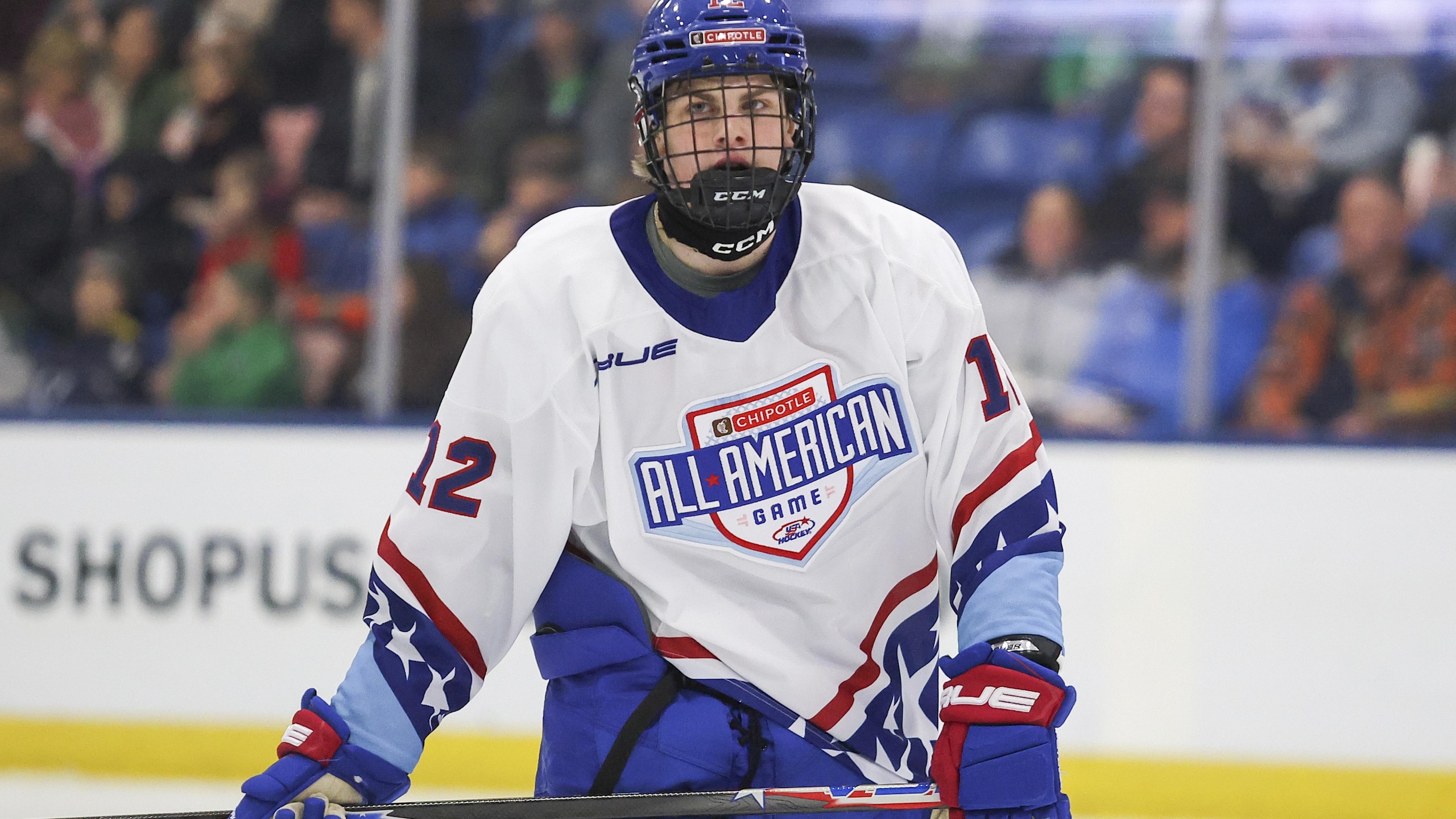
B/R Big Board Rank: 30
Strengths: Winning battles, passing
Weaknesses: Skating
USNTDP right winger Casey Mutryn is a powerful presence each time he steps on the ice. He clearly enjoys throwing his weight around and battling to get the puck back from opponents—his physical game is one of his standout traits, and he's 6'3" and 203 pounds—but he has a nice offensive element to his game as well. Mutryn brings effective vision and creativity, always looking for a smart approach to find his teammates, and at times, he is truly dangerous.
Mutryn, a Boston College commit, finished this NTDP season with 46 points in 62 games, including 18 goals. While it feels unlikely that he will become a prolific scorer at the NHL level, he'll certainly make his impact known. He's tenacious as they come. He doesn't give up on chasing down opponents to retrieve pucks, and he doesn't settle for the simplest play; instead, he looks to the middle for opportunities that may work out better. He's got a really solid floor.
Skating, being a weakness, is something that comes up again and again in this class. Mutryn's is a limiting factor to an extent; he needs better depth and more extension in his stride. He does bring a lot of power, and his straight-line speed is good; this should mitigate the extent to which his skating limits his game at the NHL level.
Mathis Preston, RW, Vancouver Giants (WHL)
6 of 6
B/R Big Board Rank: 32
Strengths: Stick work, skating
Weaknesses: Offensive consistency
Vancouver Giants forward Mathis Preston snuck back into the end of our first round at the last minute, but he's in that tier of players who could go anywhere between about pick 24 to about pick 40. It's a strange liminal space where just about anything goes.
After being limited to just 10 games with his new team after the WHL trade deadline due to injury, Preston came out swinging at this year's U18 World Championships. He was a bright light on a less-than-impressive Canadian team, netting six points in 5 games, and his presence was also felt in ways that didn't show up on the scoresheet. It was nice to see the player we'd been missing for a good chunk of the season. For this reason, "offensive consistency" being listed as one of his weaknesses comes with the asterisk that across a full season next year, it may not be as much of a problem.
Preston is a smart player—not elite intelligence but good—and has excellent stick work, dangling opponents in a way that is quick and creative. He's an effective problem-solver who doesn't cave under pressure, with lightning-hot speed and quick crossovers. He's got a killer shot, too, able to use those quick hands to camouflage his release. The main issue with his offensive play is that he can try to do it all himself and doesn't necessarily engage in creative playmaking. There are nights when his motor is off as well.
.jpg?w=2560 "🚨 Texans Trade for MHJ")
.jpg?w=2560 "Grading Marvin Harrison Jr. Trade 📝")


.jpg?w=2560 "Mendoza Makes NFL Debut 🤩")
.png?w=2560 "Money In The Bank Ends In Shocker 💼")