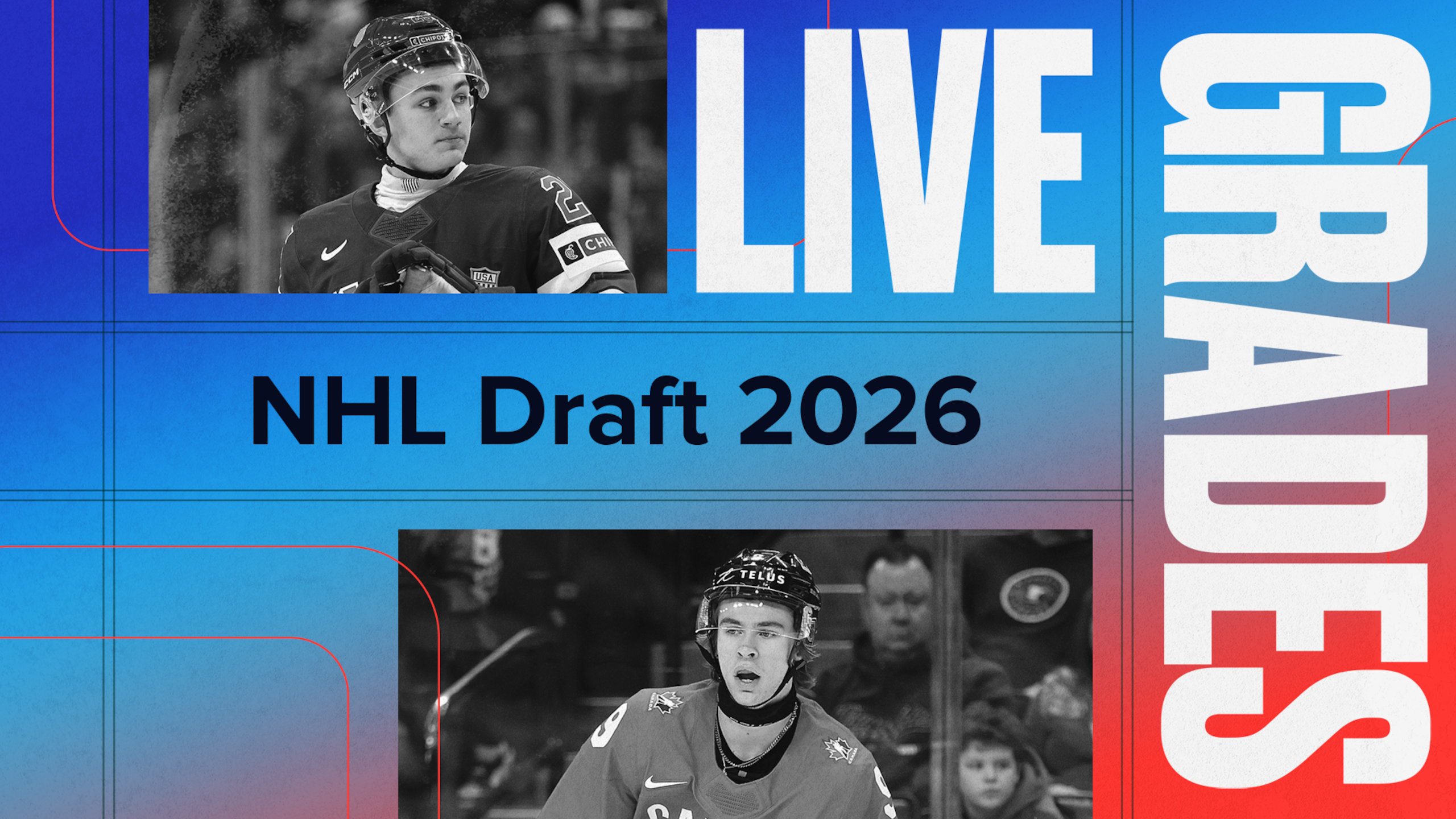

2026 NHL Draft Grades and Analysis for Every 1st-Round Pick
After a week that looked like another NHL Trade Deadline, the 2026 NHL Entry Draft begins Friday night in Buffalo, New York.
The very start of the night probably won't hold any surprises. It's been reported that the Toronto Maple Leafs have informed Gavin McKenna they will be selecting him first overall. Multiple insiders, including Elliotte Friedman, have also noted that the San Jose Sharks seem to be planning to select Ivar Stenberg.
But the picks from there? We honestly have no idea. We're along for the ride with you.
Will we see Dylan Larkin, Vincent Trocheck, and others move to new teams? Will we be shocked by trades we haven't heard tossed around?
Follow along as we grade all 32 picks from the first round!
Note: Full scouting reports were taken from our final 2026 NHL Draft Big Board.
1. Toronto Maple Leafs: Gavin McKenna, Left Wing, Penn State Nittany Lions (NCAA)
1 of 32
Strengths: Intelligence and puckhandling
Weaknesses: Engagement off puck
Pick Grade: A+
B/R Rank: 1
We've known this pick was coming, but we didn't expect Justin Bieber to be the one making it. Never say never, right?
This fall, Gavin McKenna will take the ice as the newest star on the Toronto Maple Leafs. Obviously, this is an excellent pick; McKenna has the power to change the flow of the game every time he steps onto the ice. But this pick is also a great fit for the team in Toronto. They lost an elite, intelligent winger in Mitch Marner; that lack was glaring over the last season. McKenna will fill in that gap nicely.
He also has the confidence necessary to handle the Toronto spotlight.
Gavin McKenna spent two full seasons in the WHL, as well as 16 games the season before he was eligible to join the WHL full-time (in which he had 18 points), before crossing the border and the continent to join Penn State University's Nittany Lions men's hockey team. The move saw him play against older, more experienced players in a brand new environment with a completely new style of play.
At the end of the regular season, McKenna finished with 51 points in 35 games, including 15 goals and 36 assists. That was good for 2nd in the NCAA, up from 14th place at the time of our original scouting report in November. He played big minutes, averaging 22:32 per game at the end of the season; again, this was the highest on Penn State's team. McKenna also registered 14 points in 7 games for Canada at this year's World Junior Championships.
His biggest strength is, without question, his passing ability. He is uniquely dangerous with the puck amongst his draft peers, particularly along the wall, and the way that he can control the flow of the game from the moment that he steps onto the ice is pure magic. He's precise and deceptive, constantly keeping opponents guessing with his stick positioning and puck-handling, already connecting on NHL-level passes. His ability to practically freeze time and project his opponents' next moves keeps him poised under pressure.
His elite skating comes in a close second to his passing; elite explosiveness and fluidity along with terrific edgework just underpins his offensive skill. He's always two steps ahead, getting his passes off before opponents realize he's not skating in the direction they think.
McKenna spent the season throwing everything he could on net, ending the year with 152 shots—the highest on Penn State's team—and an innumerable amount of chances outside of that. Adding muscle and taking the time to both improve and put more power into his shot will make him a true dual-threat scorer down the line.
In our initial scouting report, valid critiques were leveled against McKenna's level of engagement and his play without the puck. His first several weeks of college hockey were not what viewers expected based on his play in the WHL. The NCAA exposed issues inherent in McKenna's game that were masked by his gaudy offensive totals, and that was a good thing — it effectively required him to address them.
Time and space were much harder for McKenna to find on NCAA ice than they were in the WHL, so he had the puck less than he was used to. And instead of going after it to get it back, he was often caught coasting around, waiting for an opportunity to receive a pass and start back into the offensive zone rather than actively participating in the forecheck. For a player who was already at a disadvantage in board battles, for example, due to his lighter frame, McKenna showcasing little to no pace when playing defense turned some scouts off—and understandably. When a player has the vision and hockey sense that McKenna does, he should be constantly using that vision to find opportunities to outwork opponents.
Fortunately, the second half of the season saw McKenna change course on that issue—not entirely, but in promising enough stretches to show that the ability and willingness to address that weakness at least existed. There were moments when we saw elite hockey sense used to steal pucks back or intercept opponents' opportunities, and moments like that can turn into habits over time.
2. San Jose Sharks: Ivar Stenberg, Left Wing/Right Wing, Frolunda HC (SHL)
2 of 32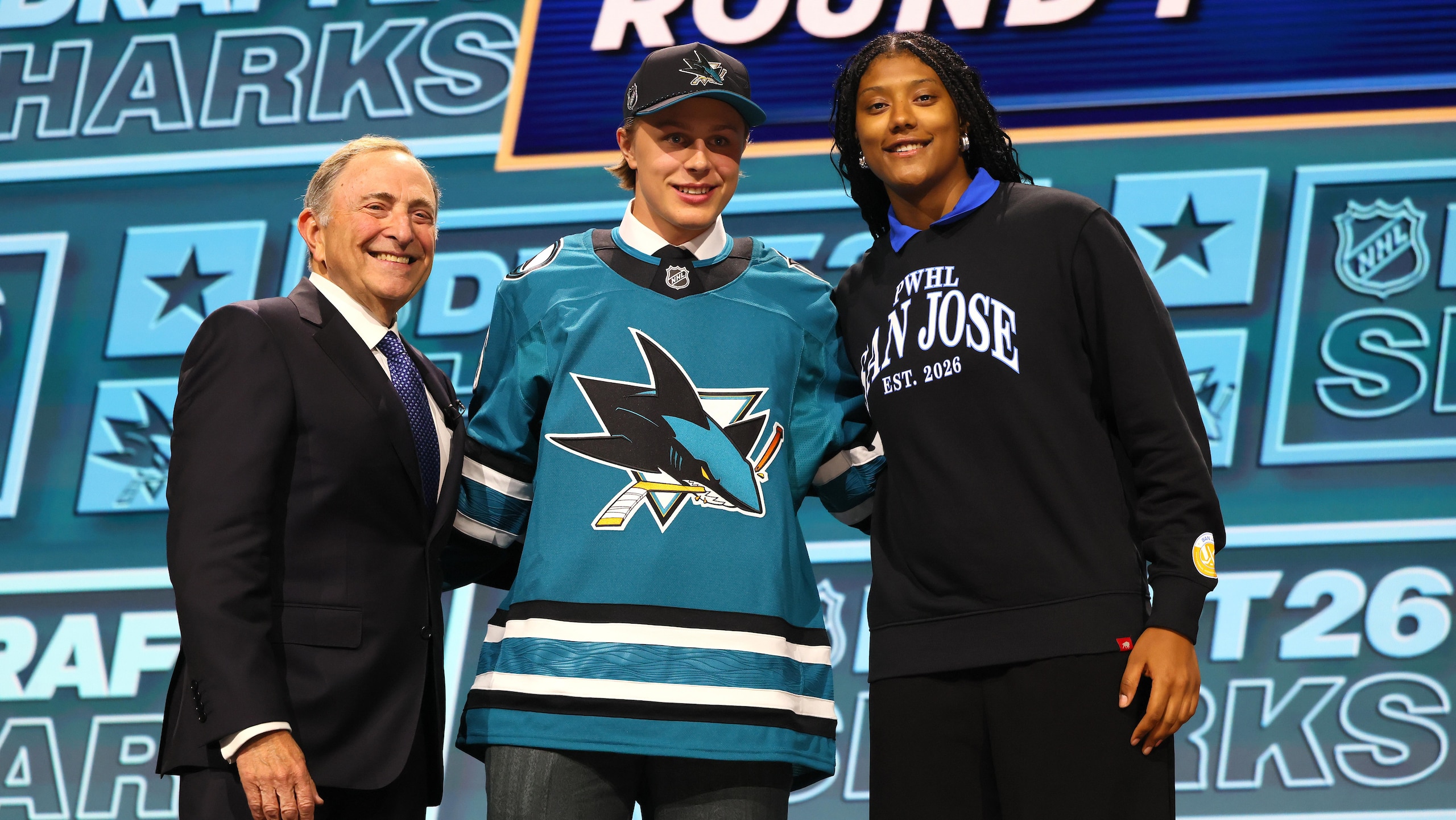
Strengths: Intelligence, motor
Weaknesses: Sometimes forces plays
Pick Grade: A+
B/R Rank: 2
Analysis:
All season long Ivar Stenberg was considered the most likely candidate to oust Gavin McKenna from that coveted first overall slot. That didn't happen, but going second overall means he's landed in a great spot—with the San Jose Sharks. The Sharks are quickly amassing a future full of high-end young talent, and Stenberg will be a key part of that future. (Sidebar: extremely cool to see fellow San Jose athlete and new PWHL draft pick Laila Edwards make the pick!)
Watching Stenberg in the SHL, it's clear that he is a player who, even at 18, can already hold his own against older men with years of professional hockey experience. He's someone to keep an eye on regarding the possibility that he joins his NHL team next season and becomes a difference-maker.
Stenberg finished the SHL regular season with 33 points (11 goals, 22 assists) in 43 games, and added a further 4 assists in 6 playoff games. He also recorded 10 points in 7 games during Sweden's gold medal run at this year's World Junior Championships, where he was named one of the top three players on his team.
For a large chunk of the regular season, Stenberg was producing at a 0.93 points-per-game rate, which simply does not happen for draft-eligible players in the SHL. Though he finished the year with a 0.77 points-per-game pace, it's important to note that this is still above the level where most elite SHL draft-eligibles finish. Stenberg saw the elite benchmark of 0.70-0.75 points per game and laughed.
It is Stenberg's hockey IQ and intelligence that allowed him to narrow the gap with McKenna in terms of playmaking ability so significantly. His vision is elite, as is the rate at which he's able to process his options on the ice. His quick hands pair with his quick mind, and he's an excellent skater with a motor that simply does not quit. He also uses that intelligence to win plays in his own end and retrieve pucks, though he sometimes waits for those moments rather than making them happen. At the end of the day, Stenberg is a player you can count on anywhere on the ice, in any situation, and many teams likely view him as more development-proof than other options.
Every player has things to work on; you basically never see a guy come into the NHL Draft with scouts saying, "he's perfect, actually, no notes." For Stenberg this season, the notes were about consistency. His offensive output remaining so high across the season has done a lot to assuage any concerns in that area; he doesn't often have nights when he disappears.
His decision-making is, most of the time, a plus. But when he gets tired, or when he's under a lot of pressure, he can revert to old, bad habits—hanging on to the puck for too long, making lazy passes, missing opportunities. Trying to force plays when frustrated or under pressure will always be a problem for high-end players like this; Stenberg's moments lessened across the season.
3. Vancouver Canucks: Caleb Malhotra, C, Brantford Bulldogs (OHL)
3 of 32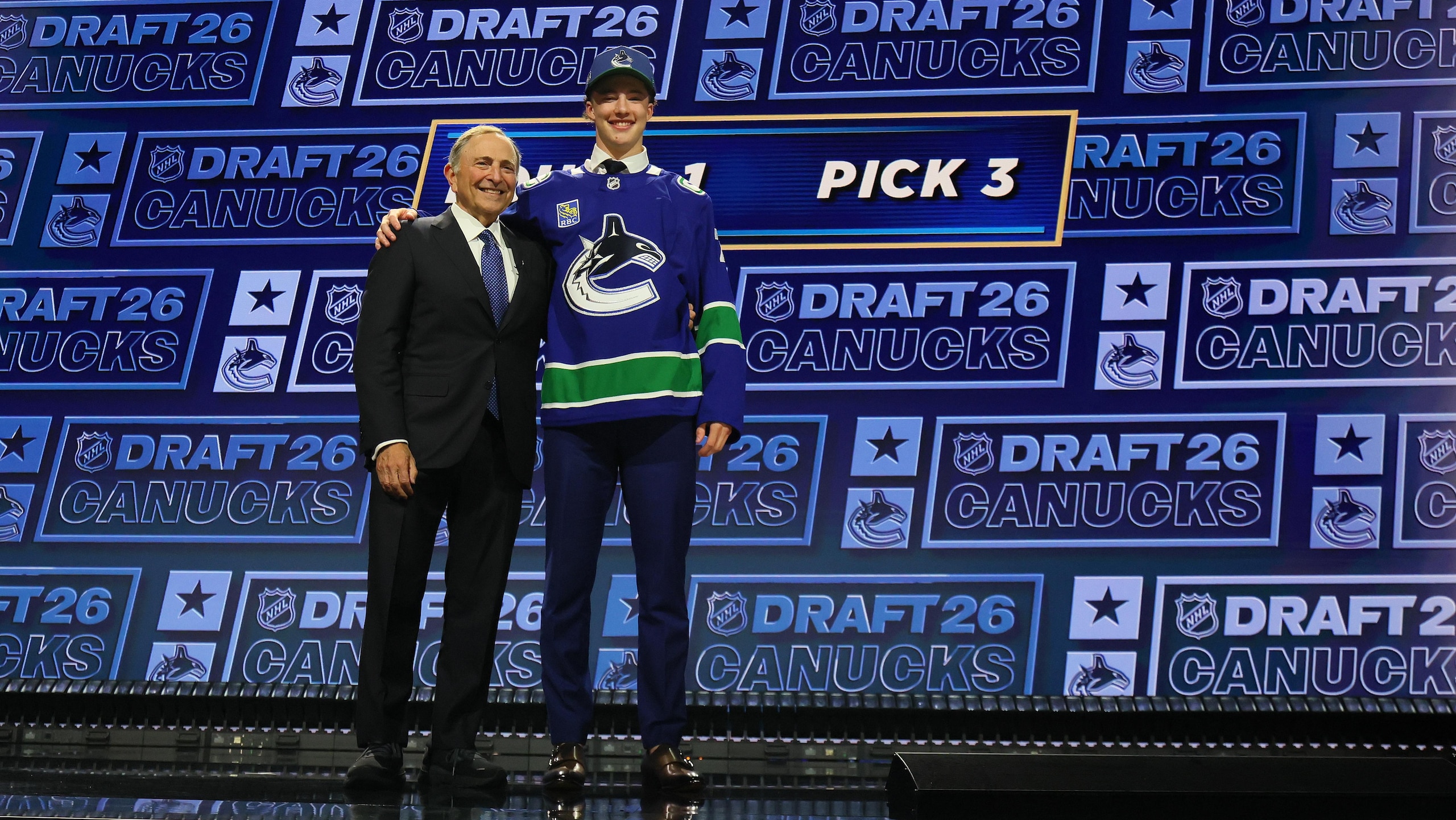
Strengths: Hockey sense, details
Weaknesses: Could refine aspects of his skating (particularly agility against more dynamic opponents)
Pick Grade: A
B/R Rank: 4
Analysis:
It happened!
While there was speculation that the Vancouver Canucks would target a defenseman at third overall, the draw of Caleb Malhotra—not just an extremely talented center, but also the son of head coach Manny Malhotra—was too strong to resist. It's not nepotism, either. It's a strong choice for a team that needs a boost to just about every position in their prospect pool.
Caleb Malhotra did not start the season near the top of anyone's draft board. He made the jump to the OHL from the BCHL's Chilliwack Chiefs thanks to a rule change that allowed him to play major-junior and still move to college hockey (he's a Boston University commit), and was trusted to eat huge minutes for the Bulldogs. Those minutes allowed him to prove everyone's initial assumptions incorrect.
Malhotra ended the regular season with 84 pts in 67 games (29 goals, 55 assists). He also added 26 points in 15 playoff games (13 goals, 13 assists) before Brantford was eliminated by the Barrie Colts in the OHL's Eastern Conference Final. He will head to Boston University in the fall, unless he makes the NHL out of camp.
Malhotra brings a combination of maturity and intelligence to the ice that makes him the best center prospect available this year. Too often calling a player a "two-way center" just means he's used at both ends of the ice and nothing else. For Malhotra, it means he's effective no matter the zone you put him in; it means you can trust him on the ice in any situation and he will not only hold his own, he'll thrive and drive positive results.
In a nutshell, he pairs high-end hockey sense that feeds a superb attention to detail with a work ethic that would measure up for even the strictest of coaches. That pairing of elite intelligence with a motor that doesn't quit is like catnip for NHL teams; too often players are smart but slack off when they don't have the puck, or work hard but don't have an elite toolkit.
No one can accuse Malhotra of either of those. His instincts and vision drive an incredible understanding of positioning on the ice; his own and his opponents. The defensive zone is where this really shines, allowing him to pinpoint precisely how to neutralize a threat from an opponent or how to retrieve loose pucks, but he's no slouch on offense either.
Malhotra effectively pressures opponents off the puck, winning battles along the wall and moving the puck inside (refreshing to switch to his game tape after watching players who prefer to stick to the perimeter) and he's constantly aware of where his teammates are. He's a possession-creator and a play-driver, though his offensive creation tends to be in cycle situations more than anywhere else.
His B-game/his floor are also high-end. If something goes dramatically wrong and he doesn't reach that high ceiling potential the team that selects him will still have a strong NHLer on their hands.
Refining his skating is now something that's classified as a want, rather than a need—he's clearly put in the work. At this point what he needs to focus on are the specific areas that could potentially hold him back at the professional level: agility, particularly against more dynamic opponents, and explosiveness on that first step.

4. Buffalo Sabres: Daxon Rudolph, D, Prince Albert Raiders (WHL)
4 of 32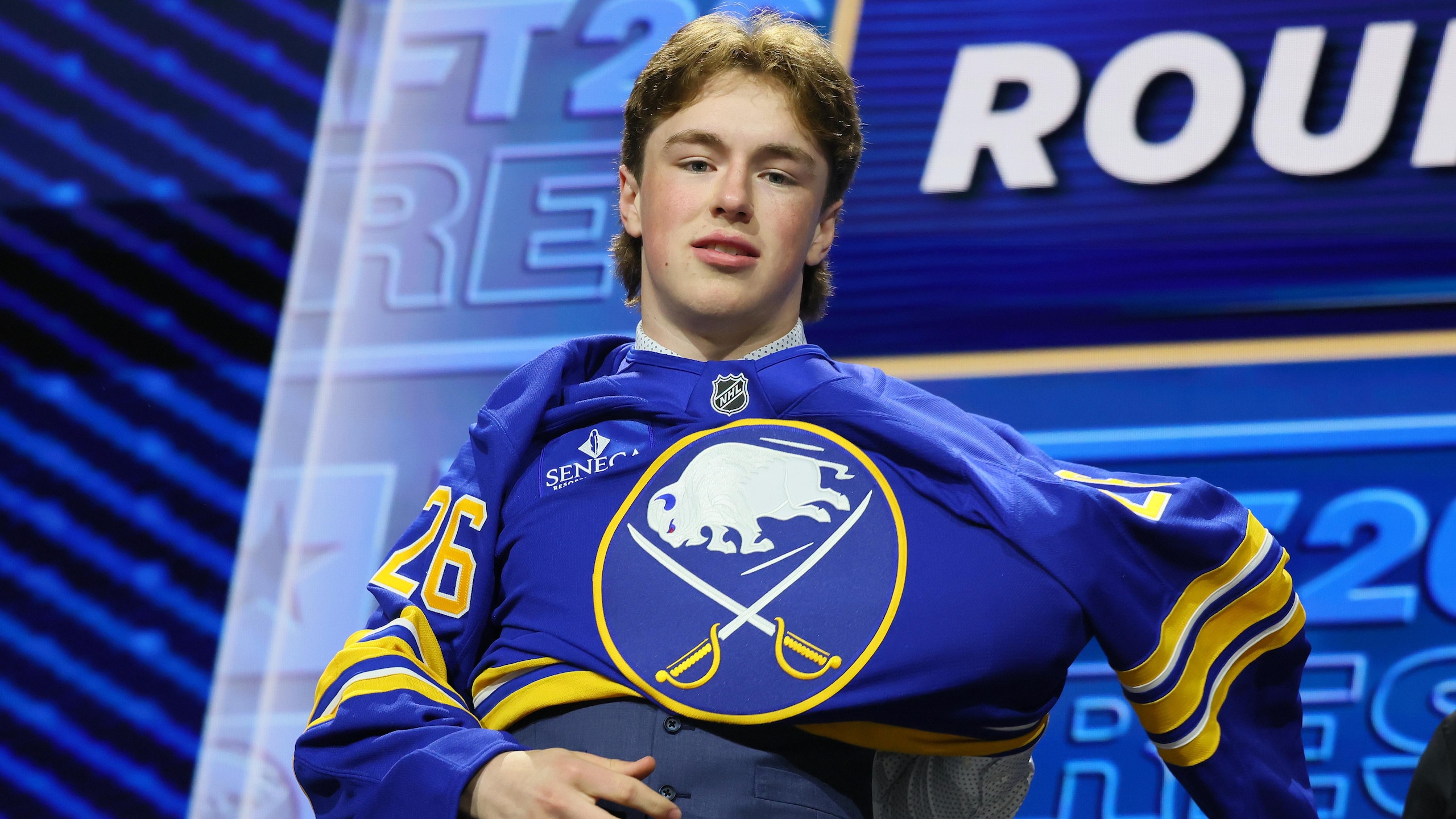
Strengths: Intelligence, stick work
Weaknesses: Would love to see his physical game be more strategic/deliberate
Pick Grade: B+
B/R Rank: 9
Analysis:
Daxon Rudolph of the Prince Albert Raiders is a Buffalo Sabre.
While we had him at 9th overall, we did mention that he could rise sharply if a team fell in love with him. It makes sense that the Sabres would; he gives them some variety in style when it comes to defensemen. Combining size with intelligence, Rudolph is also one of those coveted right-shot defensemen every team is searching for.
Rudolph may play a quieter style of hockey than many of the flashier, more dynamic defenders in this draft class, but don't mistake quiet for lack of skill on his part. He just makes what he does look easy. The majority of his tools grade toward the elite end of the scale, from skating and handling to his hockey sense. We saw those in action this season as he continued to develop his playmaking abilities. He pairs size (he's 6'2.5" and 206 pounds) and deliberate physicality with a highly active stick, using that long frame to achieve quite a serious reach.
The opposite side of that ability to make things look easier is that it can come across as the bad kind of poise—unbothered, maybe even a little disengaged. Adding intensity is something that he definitely needs to work on before jumping into the pace of a professional game. Even with that in mind, though, he's an attractive prospect, with great skating and mobility driving the rest of his game.
5. New York Rangers: Alberts Šmits, D, Jukurit (Liiga)
5 of 32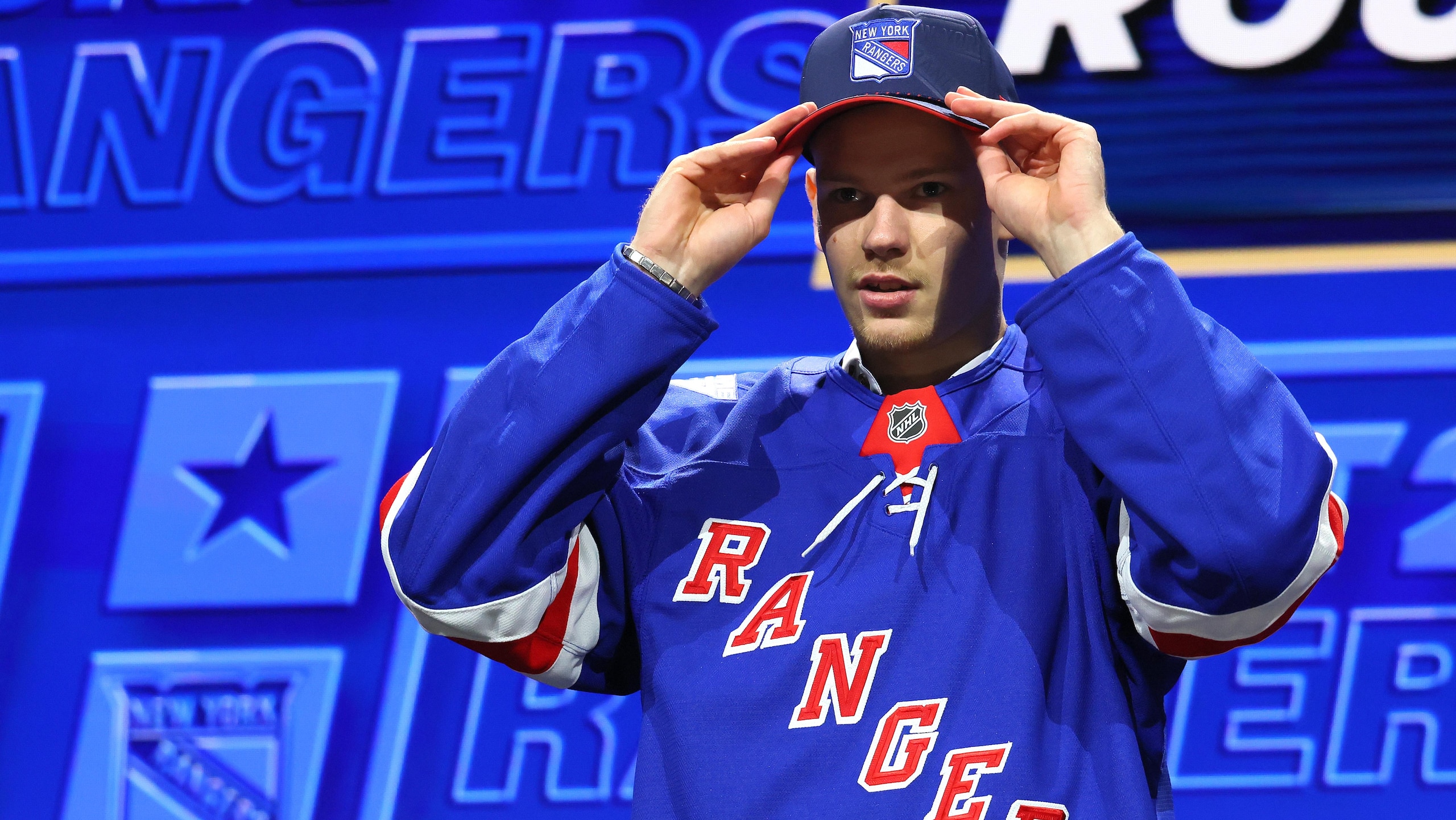
Strengths: Processing, skating
Weaknesses: Decision-making can be chaotic
Pick Grade: B+
B/R Rank: 9
Analysis: Alberts Smits, Latvian Olympian and now New York Ranger.
We mentioned on our final board that Smits could easily jump with the right general manager picking—the Rangers are pretty much the perfect landing spot for him. He suits their current ethos perfectly, with his mean streak and defense-first mindset.
So many of his qualities combine to make him easily projectable to the NHL—perhaps even as soon as next season. Smits pairs size—he's 6'3" and 205 pounds—with genuinely excellent skating, particularly for his size. Mobility, quickness, a steady foundation, he's got them all; this isn't one of those "good skater for his size" things.
Smits is constantly looking to get involved when he's on the ice; engagement is not an issue here. While he operates on that defense-first mindset, he can bring offensive contributions in certain situations (think in transition, namely, or using his heavy shot from range). Imposing his will on the play is the name of his game. Sometimes, the way he disrupts opponents looks as easy as brushing off a fly.
With all that in mind, we have lowered his hockey sense in certain areas, which is reflected in the ranking. He's not incompetent by any means, but there is a desire for more intelligent reads and better decision-making, especially at those high speeds his skating can reach. It's something that we have highlighted as an issue in his game in the past, and that concern has grown as we've gotten down to crunch time. Even with that in mind, however, given his mobility and his motor, it's difficult to envision him not getting consistent NHL time. There's just more opportunity to mine.
6. Calgary Flames: Carson Carels, D, Prince George Cougars (WHL)
6 of 32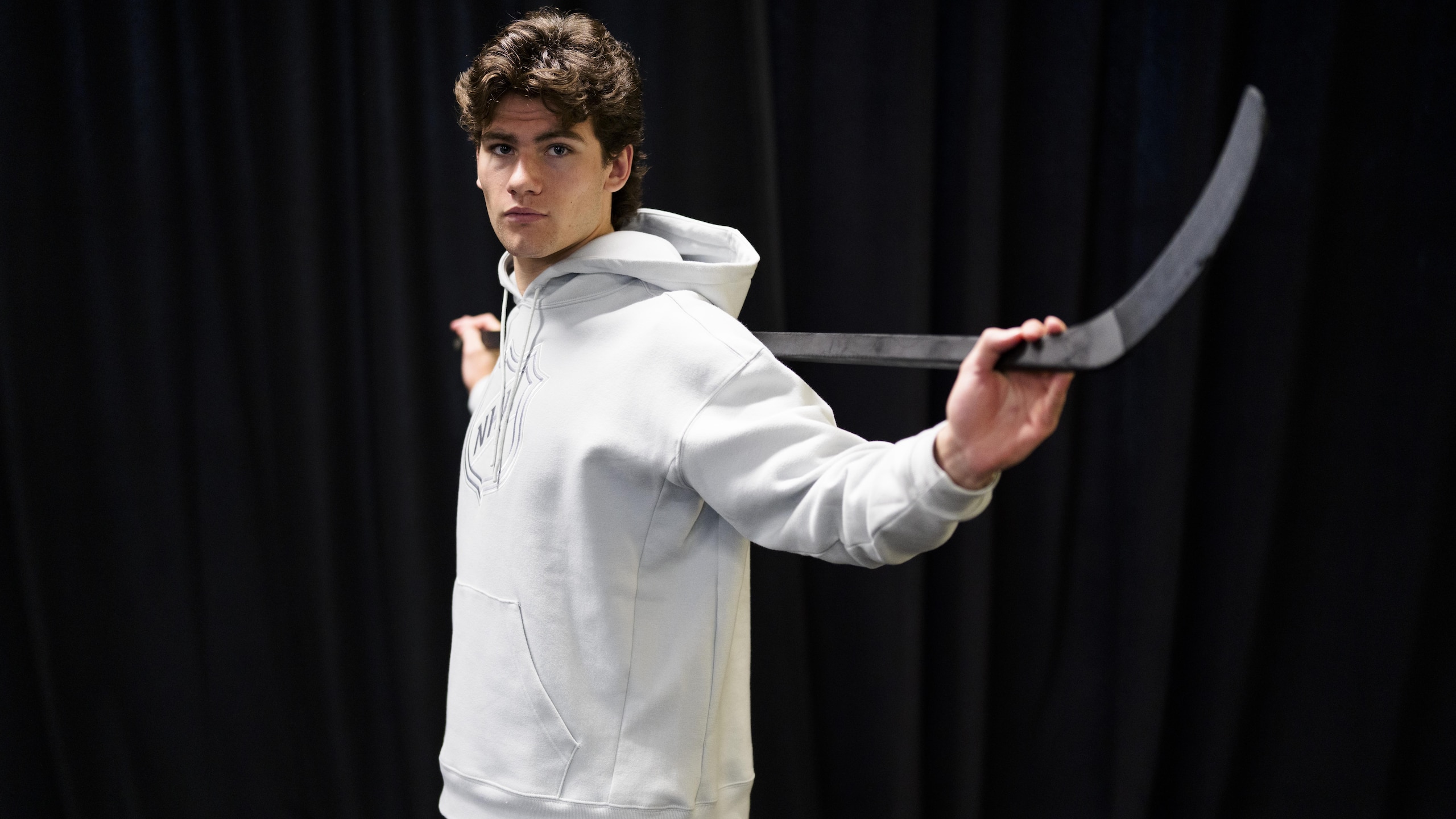
Strengths: Skating, tenacity
Weaknesses: Consistency
Pick Grade: A
B/R Rank: 5
Analysis: While defender Carson Carels grew on us across the season, we have a feeling the Calgary Flames didn't need that convincing. Not only does he have a shorter runway to the NHL than others available in this draft—his game projects so easily to an NHL style—he's got the tenacity of a locked-in German Shepard and pairs it with fantastic skating. When a player combines mobility and a never-quit motor, it's difficult to pass up. The Flames bolstering their already loaded future blue line is just a bonus.
Carels averaged almost 28 minutes per game for the Prince George Cougars of the WHL across the season and joined Hockey Canada at this year's World Junior Championships as an underager (not common, which makes it even more remarkable that both he and Verhoeff were there this year).
Carels' skating is a standout aspect of his game, with agility and edgework as well as nice explosiveness. We described him once as "pairing meanness with efficiency", and that's a strong compliment. His physicality and menacing qualities are used effectively to turn defense into offense, rather than hitting someone just to hit, and his own offensive instincts make him an effective attacker and distributor. His controlled entry outcomes, in particular, were impressive, and we saw his puck retrievals improve across the season.
He's also relentless each shift; we saw too many skilled players who lack pace this season, but Carels has tenacity in spades. Consistency is another matter; there were nights when game-management needs took over, and he sacrificed some of the top elements of his play rather than putting all the pieces together. That's really his biggest weakness, and something that can improve with time, particularly when a player has the kind of awareness that Carels does. When he does put it all together, the impact he has on the game is tremendous.
7. Seattle Kraken: Chase Reid, D, Sault Ste. Marie Greyhounds (OHL)
7 of 32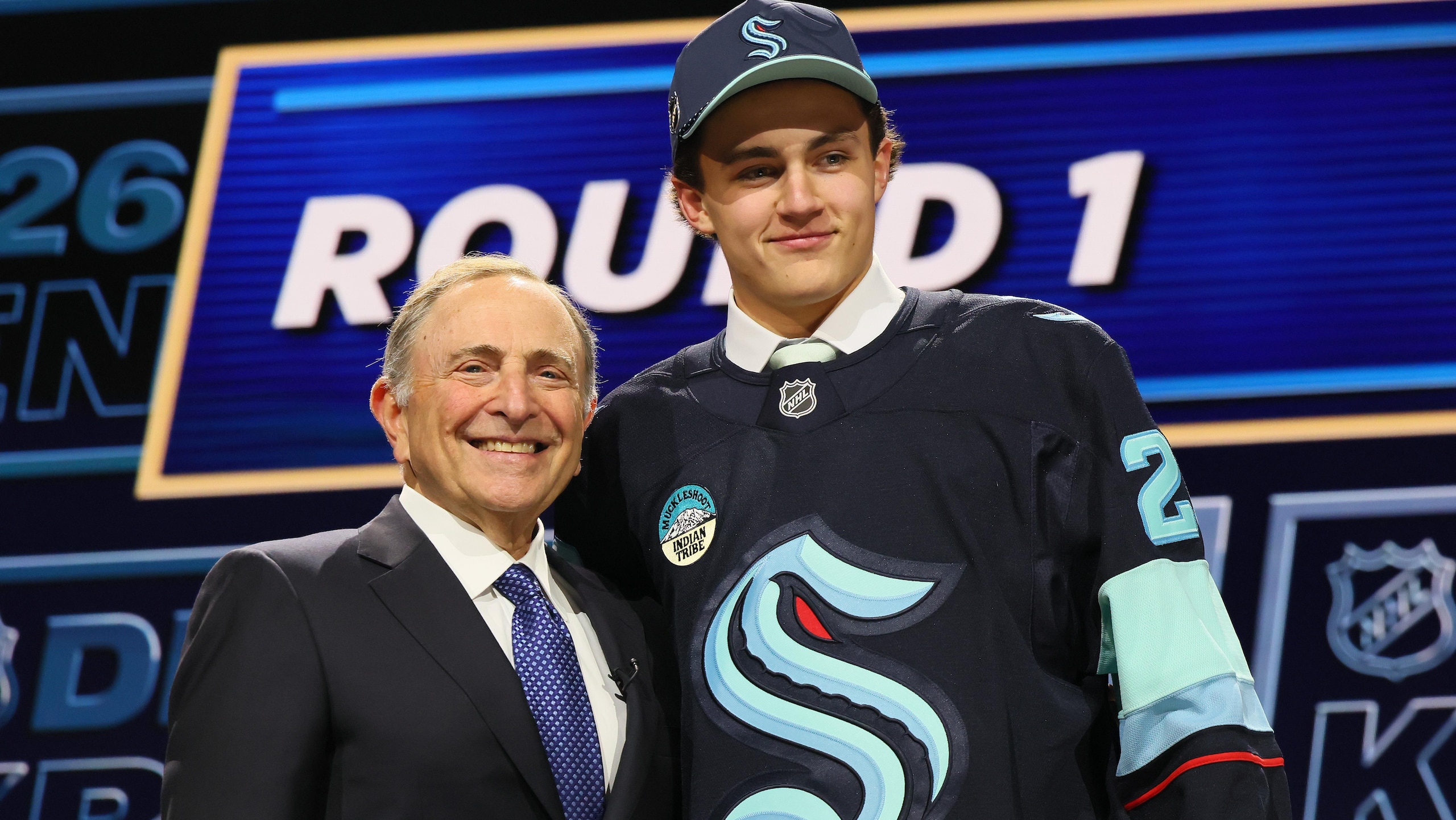
Strengths: Intelligence, vision
Weaknesses: Risk mitigation is sometimes an issue, but that's part and parcel for his player type
Pick Grade: A+
B/R Rank: 3
Analysis: For maybe the first time (?) ever, the Seattle Kraken didn't select a center with their first round pick. Giving their blue line a boost with an absolute steal, they've selected defenseman Chase Reid. Value for value, this is probably the best pick so far, aside from McKenna and Stenberg.
Reid falling to 7th overall will make some teams look negligent very quickly.
He's easily this year's top play-driving defenseman. He's the kind of player who is able to control the flow of the game from the moment he steps onto the ice. Despite missing 17 games with injury during a key stretch of the season, prospect pundits and team scouts alike got a good glimpse at exactly what he brings to the table, and there's very little about him that isn't appealing. He's an incredible skater with elite hockey sense and the hands to back it up.
Reid being limited to only 45 regular-season games this year due to injury was disappointing only in the sense that he left us wanting to see more in a good way. He came back in mid-March to help the Greyhounds for the end of the regular season and into the postseason, and finished the regular season with 48 points (18 goals, 30 assists) and added 6 points (3 goals, 3 assists) in 10 further playoff games.
When discussing his strengths, Reid's skating is the place to begin. Not only because it's one of his brightest assets—it is—but also because it is the clearest separating factor when deciding on this year's top defenseman. Saying he's mobile feels like a drastic understatement. His skating is fluid and dynamic, with quickness that allows him to utilize his elite processing in a scarily effective manner. Reid will be smothering opponents' chances in his own end one moment, and before the other team can blink, he's passed the puck to an open teammate or carried it out—and then in—himself.
That processing is just one aspect of his elite hockey sense and vision. Reid brings intelligence and creativity, and even flashes of deception, to his playmaking. His ability to think multiple steps ahead of opponents underpins his entire game, allowing him to anticipate what everyone else on the ice will do and make his own decisions accordingly. He's a high-volume shooter, but he's just as likely to find an open teammate with a pass before opponents have a clue what's happening.
One key thing to point out about Reid's reliability: when Cole Hutson went down at this year's World Junior Championships, and it wasn't known whether he'd be available again in the tournament, the USA staff turned to Reid, a draft-eligible player, over any of their other defensemen. Was this likely because he and Hutson play a very similar style of game? Absolutely. But it speaks volumes that, in a U20 tournament, their go-to guy to step up and fill the top defenseman role was one of their underage players.
The easiest way to break down Reid's weaknesses is simply to say: if you had the puck as often as he does, you'd probably make some goofy mistakes sometimes, too. It is what it is; that's a facet of the game that matures with time and experience, and the fact that having the puck for longer periods of time gives you more opportunities to make mistakes is basic math.
8. Winnipeg Jets: Viggo Bjorck, C/RW, Djurgardens IF
8 of 32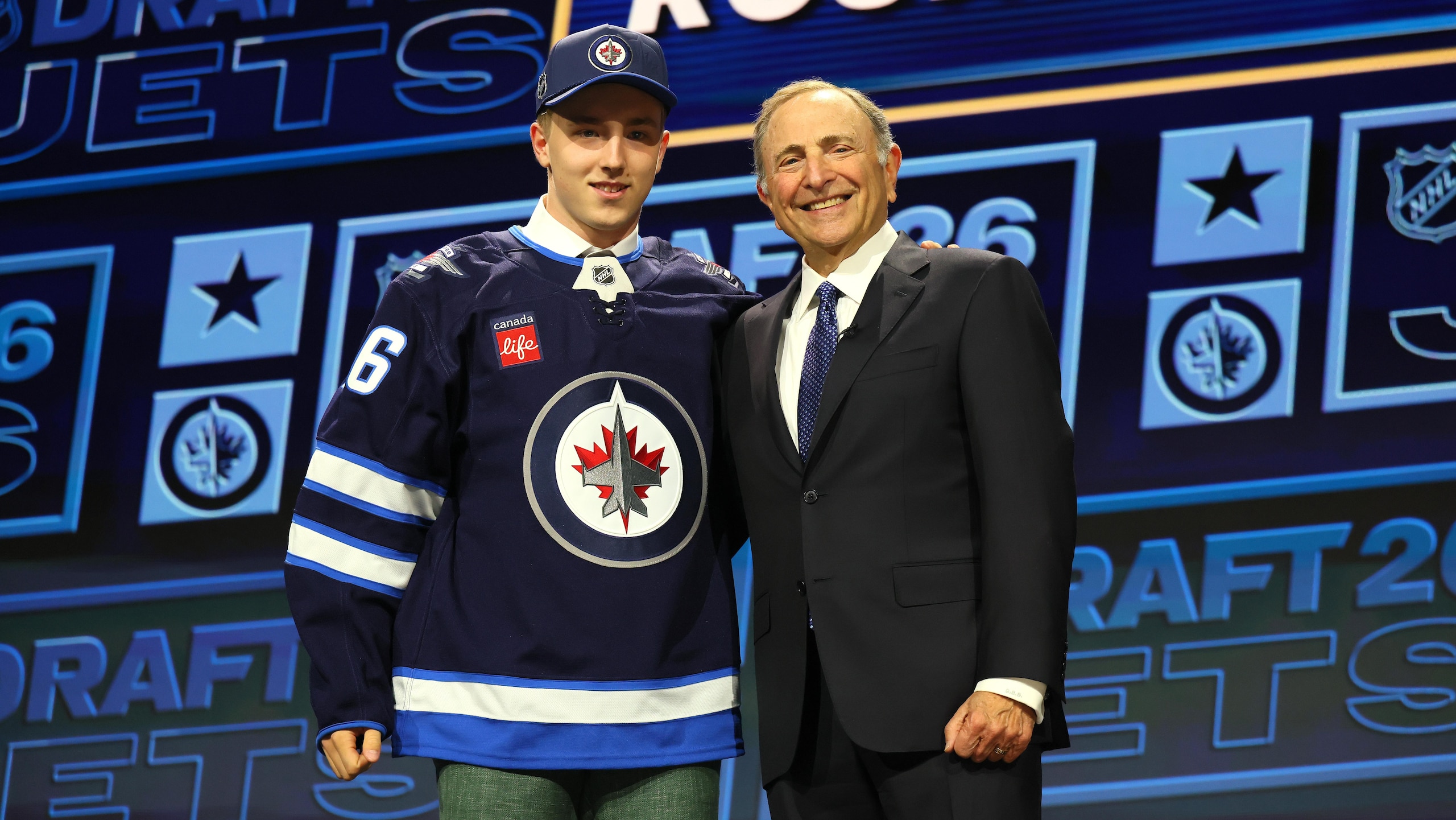
Strengths: Motor, puck skills
Weaknesses: Top end speeds, can defer to the safe choice too often
Pick Grade: A
B/R Rank: 7
Analysis:
Swedish forward Viggo Bjorck is an extremely smart pick for the Winnipeg Jets at 8th overall. We had him ranked at 7th, but there's every chance his value as his career goes on is that of a top-three pick—if he's developed correctly. While he's played both wing and center this season, center is where he shines, and that versatility itself is a nice bonus.
The first thing you'll notice about Viggo Bjorck is that he just doesn't stop. He drives his line, he drives the game—he's absolutely fearless, always engaged and extremely competitive. When you look closer, however, you'll see the extreme intelligence that underpins everything else he does. He's 5'9", so we'll definitely see some teams underrate his ability to transfer that intelligence to the NHL level, but those concerns are overblown.
NHL Central Scouting initially gave him a B rating, but any questions were answered quickly—especially in the second half of the season. His puck skills are as good as they come, and while we spent the season interrogating exactly where we wanted to rank his hockey sense, we've settled on it being elite as well. And it's all driven by an intensely competitive nature. He just makes the players around him better by being smart and working hard. There are still some concerns, namely about his top-end speeds and whether he can bolster his strength enough to win battles. But we believe in the potential here.
9. San Jose Sharks: Keaton Verhoeff, D, University of North Dakota (NCAA)
9 of 32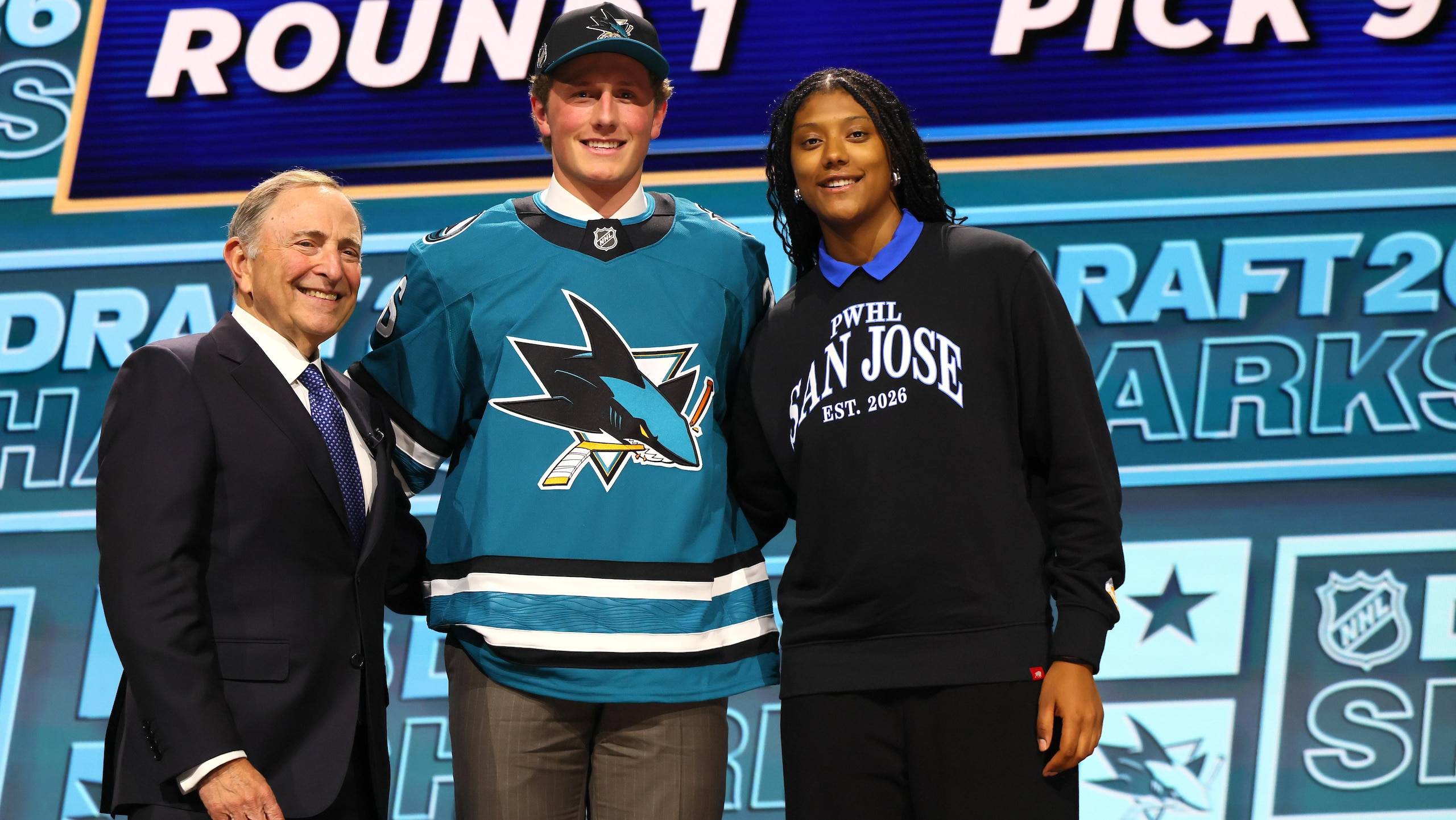
Weaknesses: Decision-making, engagement
Pick Grade: B+
B/R Rank: 12
Analysis:
While we have concerns about certain aspects of his game (we get into those below), if defenseman Keaton Verhoeff lives up to his ceiling, this pick will look phenomenal for the Sharks. When he's at the top of his game, Verhoeff is a brilliant, mobile, offensive, and physical force on the blue line. It's going to require a little patience from the Sharks, but they are decently positioned to give him that.
After scoring 21 goals in his 16-year-old season with the Victoria Royals of the WHL, Keaton Verhoeff chose to make the same leap as several other draft-eligible prospects and head for the NCAA. He chose the University of North Dakota alongside former Royals teammate (and Calgary Flames 2025 pick) Cole Reschny and did what not many draft-eligible defensemen choose to do: play college hockey in his draft year as an underage freshman. He only turned 18 just before the draft in mid-June.
Verhoeff started out high on boards, with many scouts and public pundits alike noting that he could challenge Gavin McKenna for first overall. He quickly fell down many of those same boards—including ours—as the season progressed and the distinct challenges of NCAA hockey (as opposed to the WHL) exposed legitimate concerns in his game.
Verhoeff holds the distinction of being the youngest player to ever suit up for a varsity game at the University of North Dakota, and finished the regular season with 20 points (6 goals, 14 assists) in 36 games. He also joined Canada at this year's World Junior Championships, suiting up for five games as a 17-year-old and recording four assists.
At his best, Verhoeff combines size and offensive skill, using his size to his advantage, driving play without the puck, and looking for opportunities to create with it. He's got a rocket of a shot with a lot of force behind it, and the intentional physicality of his game is easy to project to the NHL level.
That being said, as the season wore on and the warts became more apparent, our conviction that we would see that best-case version of Verhoeff at the NHL level decreased. Issues with his skating that once seemed like minor concerns that would correct themselves in time began to look like real inhibitors; lacking any real agility, he has difficulty pivoting, which is crucial in today's game. Skating concerns only compounded our other chief concern: his decision-making, particularly when in the moment. He struggles to read the play before him and puts his choices into action in a way that makes it easy for opponents to read him.
The silver lining of Verhoeff falling down draft boards is that the further he falls, the lower the chances he'll be rushed into the NHL and take the almost-certain bust path. As things stand, he still has a very real NHL future ahead of him; given time to improve his decision-making and work with a skating coach, we could see that high-end upside flourish once more and see him take on a top-four role.
10. Nashville Predators: Wyatt Cullen, LW, USNTDP
10 of 32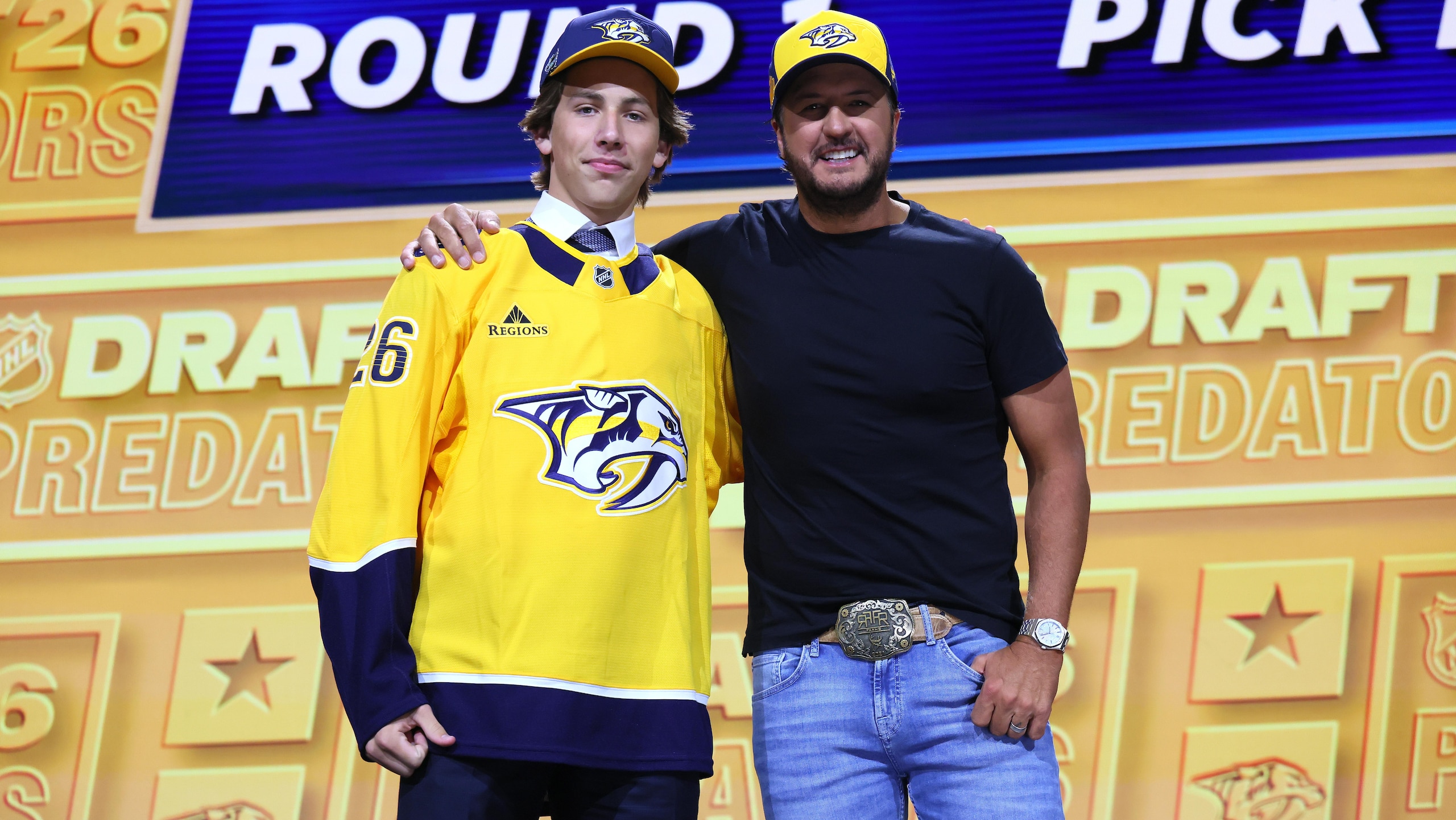
Strengths: Skating, hockey sense
Weaknesses: Can shy away from contact
Pick Grade: A+
B/R Rank: 6
Analysis: Wyatt Cullen is an incredibly smart, high-value pick for the Nashville Predators. The first pick of brand new general manager Chris MacFarland, does Cullen signal a new approach to drafting? If so, keep an eye out for dynamic, intelligent forces. Outside of the top couple of guys, you don't get much more purely skilled in this draft than Cullen.
Cullen finished much higher on this draft board than he started, as we'd suspected he would. A slow start due to injury—he tore his hip flexor off the bone and didn't see game action until the end of October—led many people to underestimate his talent. He quickly proved them wrong, showcasing talent in every area; he may shine as a playmaker, but he's just as capable of taking the shot himself.
On pure skill alone, he's one of the best available this season. Cullen's vision and hockey sense are high-end, and he's got a motor to match; he's basically never not involved in play. He's just as likely to showcase creative playmaking as he is to get involved in a puck battle. He brings a high-end layer of deception, he has the patience to elude opponents—it's just been so exciting to watch him develop across the season.
More explosiveness in his skating will be key moving forward, as it can help ensure success at the pro level, and he needs to add muscle after he went through a significant growth spurt over the last year and a change. He will sometimes shy away from contact—though we did see a decrease in that tendency as the season wore on—and time in college hockey will give him plenty of opportunities to work on that.
11. Tynan Lawrence, C, Boston University (NCAA)
11 of 32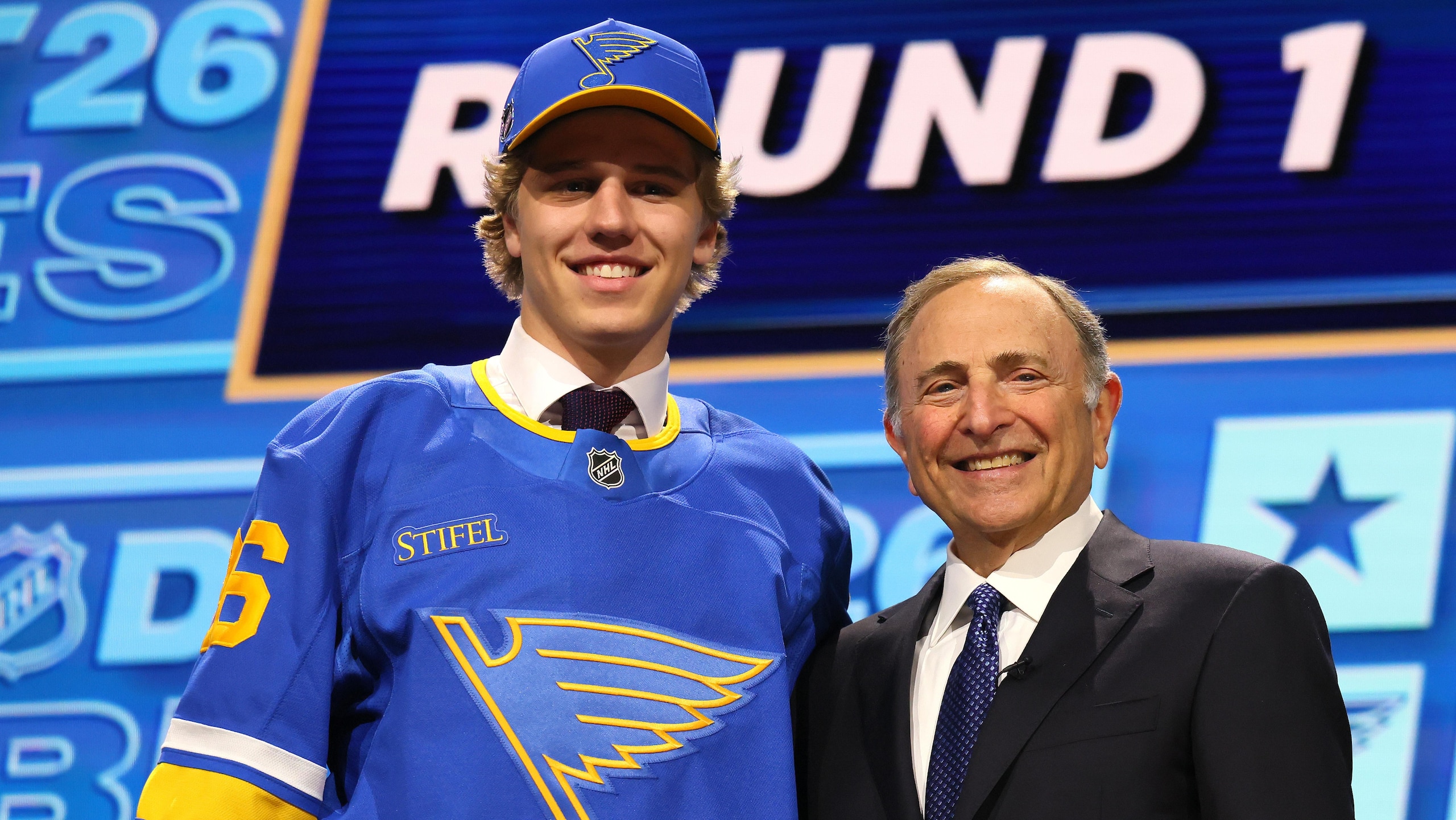
Strengths: Intelligence
Weaknesses: Consistency
Pick Grade: A-
B/R Rank: 14
Analysis: There may not be a better landing spot for Boston University center Tynan Lawrence than the St. Louis Blues, a team that can more than afford to give him the development time he needs to reach his full potential. Lawrence is an incredibly intelligent player, able to process the game at high speeds; we're just waiting to see him utilize that intelligence to truly take over games. More time in college hockey will definitely help with that.
He's an excellent skater, with strong explosiveness and speed. This ability benefits him greatly when he doesn't have the puck, as he menacingly pressures opponents to get it back, closing distances with ease. While we saw him struggle to put up numbers offensively after his midseason jump to Boston University, he didn't falter on the defensive side of the game. Projecting him as an NHLer isn't difficult; knowing what kind of NHLer he will be is.
In order to truly become the top-six center that many project him as, he'll need to add another gear when it comes to playmaking. Ideally, the team that drafts him will be able to give him the time in college that he needs to truly maximize his abilities. The defensive play is clearly there, and no one could accuse him of lacking tenacity; now he just needs to figure out how to add creativity and play-driving qualities consistently.
12. New Jersey Devils: Alexander Command, C, Orebro HK (SHL)
12 of 32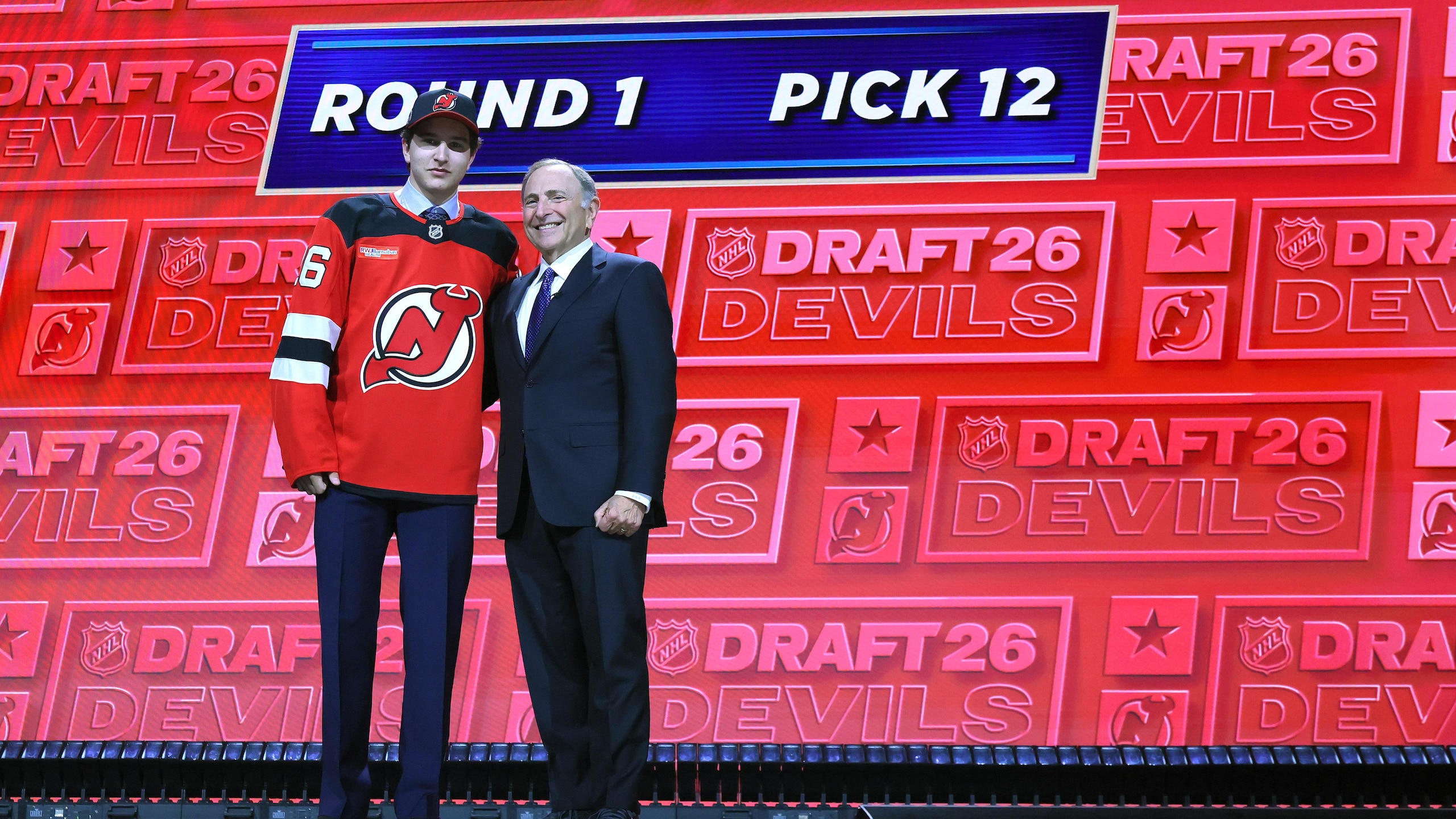
Strengths: Vision, maturity
Weaknesses: Skating speed, production consistency
Pick Grade: B-
B/R Rank: 20
Analysis: At 12th overall, Alexander Command is a little high for us. That being said, it's incredibly understandable to see the draw—especially for the New Jersey Devils.
When in doubt, build at center.
Command is a center with an extremely high floor and plays with great poise.
He's a highly physical player in a productive way, and he pairs that with an above-average hockey sense that drives some very nice playmaking. He's safe in a way that isn't detrimental as a pick (something that happens far too often), and though he isn't development-proof, he may give teams a feeling of safety in that area. His maturity of play as a draft-eligible at the SHL level is so enjoyable, and you can consistently see that maturity and command (if you'll forgive the wordplay) in one-on-one moments.
Command's floor is that of a solid middle-six center who is strong and effective defensively, who can chip in offensively, and who has a motor that doesn't quit above all else. And that's his floor—there's more to be mined there! He may lack truly elite tools, but he has the potential to add another layer of playmaking to his game if he improves his skating. He needs a stronger separating factor in terms of speed; the NHL is rapidly becoming more unforgiving in that space.
Still, he's strong at both ends of the ice, and his intelligence really shines through. On top of that, the security of his floor makes him NHL-projectable even if he doesn't reach his ceiling.
13. New York Islanders: Malte Gustafsson, D, HV71 (SHL)
13 of 32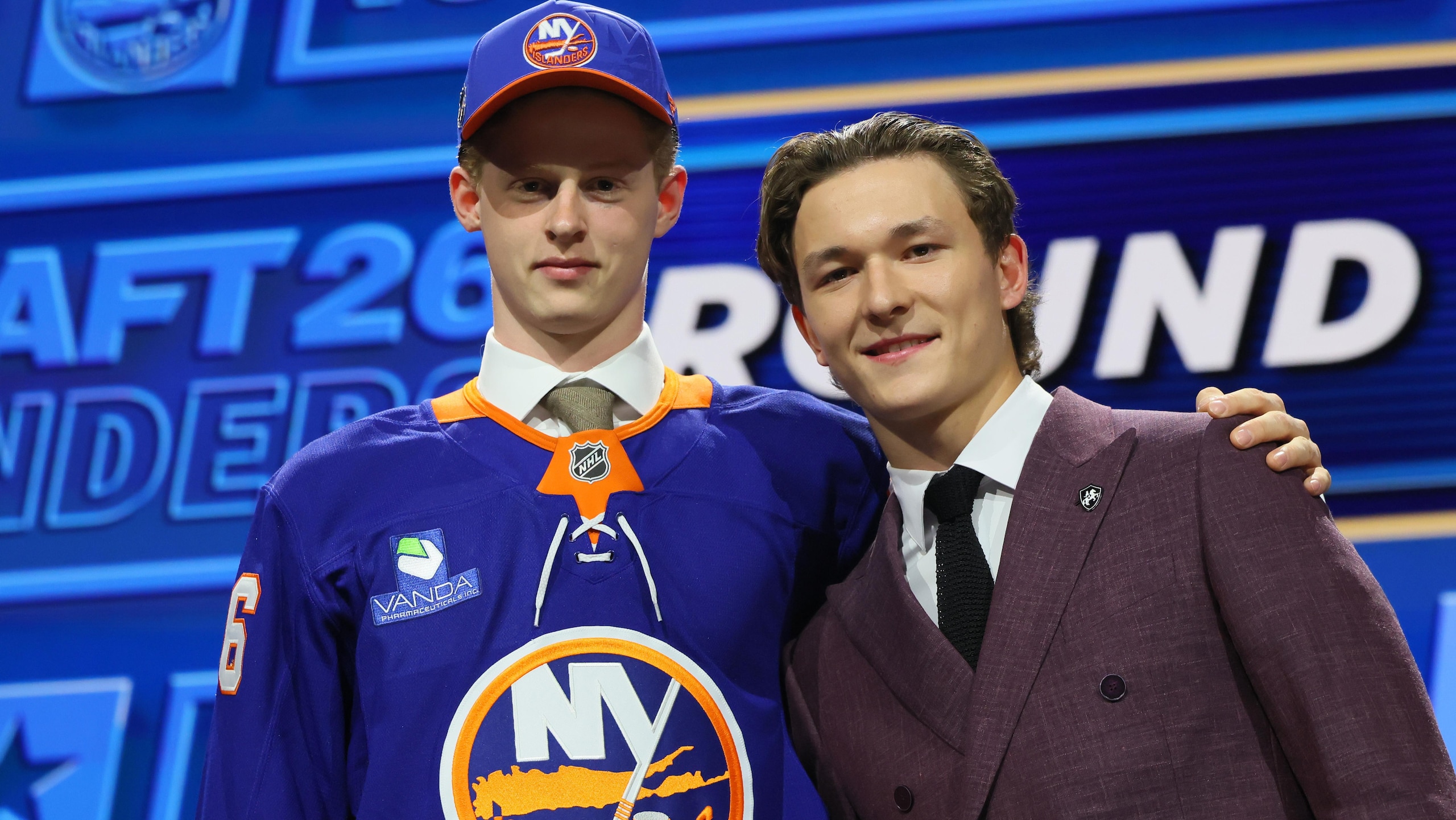
Strengths: Awareness, puck handling
Weaknesses: Offensive consistency
Pick Grade: A
B/R Rank: 11
Analysis: Malte Gustafsson makes almost too much sense for the New York Islanders. He's the perfect partner for a defenseman who is more offense-minded, one who likes to range all over the ice in a more rover-style. Someone like, oh, perhaps the future teammate who made his pick, Calder-winning Matthew Schaefer? With a little time, those two are going to be mainstays on the Islanders' blue line.
Gustafsson splitting his time between HV71's SHL team and the U20 team (with a few U18 games at key moments, for good measure) means we've gotten to see him against a variety of opponents and experience levels, which wreaks havoc on consistency but is good exposure for the player nonetheless. While he is one of the more high-risk, high-reward defenders available in this first round, the reward is worth the risk.
Typically, when intelligence is mentioned for defensemen, it's referring to those flashy, dynamic point machines. Gustafsson is absolutely brilliant, but his intelligence shines on the other side of the game. His awareness is magnificent, allowing him to pinch aggressively and accurately, and he has the necessary high-end mobility in his skating to support the way he likes to remove space and opportunities from opponents. Saying that he plays significant minutes is an understatement.
While his primary skill set is on the defensive side of things, aggressive on the rush and always tracking threats anywhere on the ice (not just the person with the puck), Gustafsson has solid offensive abilities. Any flashes of interesting offensive creation tend to be seen at the lower levels he's played, while his offensive game has been simpler against SHL opponents, which goes back to that awareness and processing of the game. It shows he's able to think through and select what he feels is most likely to succeed against his opponents and adapt. That said, he needs to keep an eye on that tendency and make sure it doesn't lead him to defer too much at higher levels as his game develops.
He's also enormous, coming in at 6'4" and 201 pounds, and he knows how to use that size to take away space from and crush opponents. All of this adds up to an incredibly impressive floor; think excellent shutdown defense and smothering opponents in the neutral zone. And he's still raw, with plenty of opportunity to add to his profile by improving his skating even further and refining his handling abilities. He's a dark horse for a player to make an unexpected jump into the top five.
14. Columbus Blue Jackets: Oscar Hemming, F, Boston College (NCAA)
14 of 32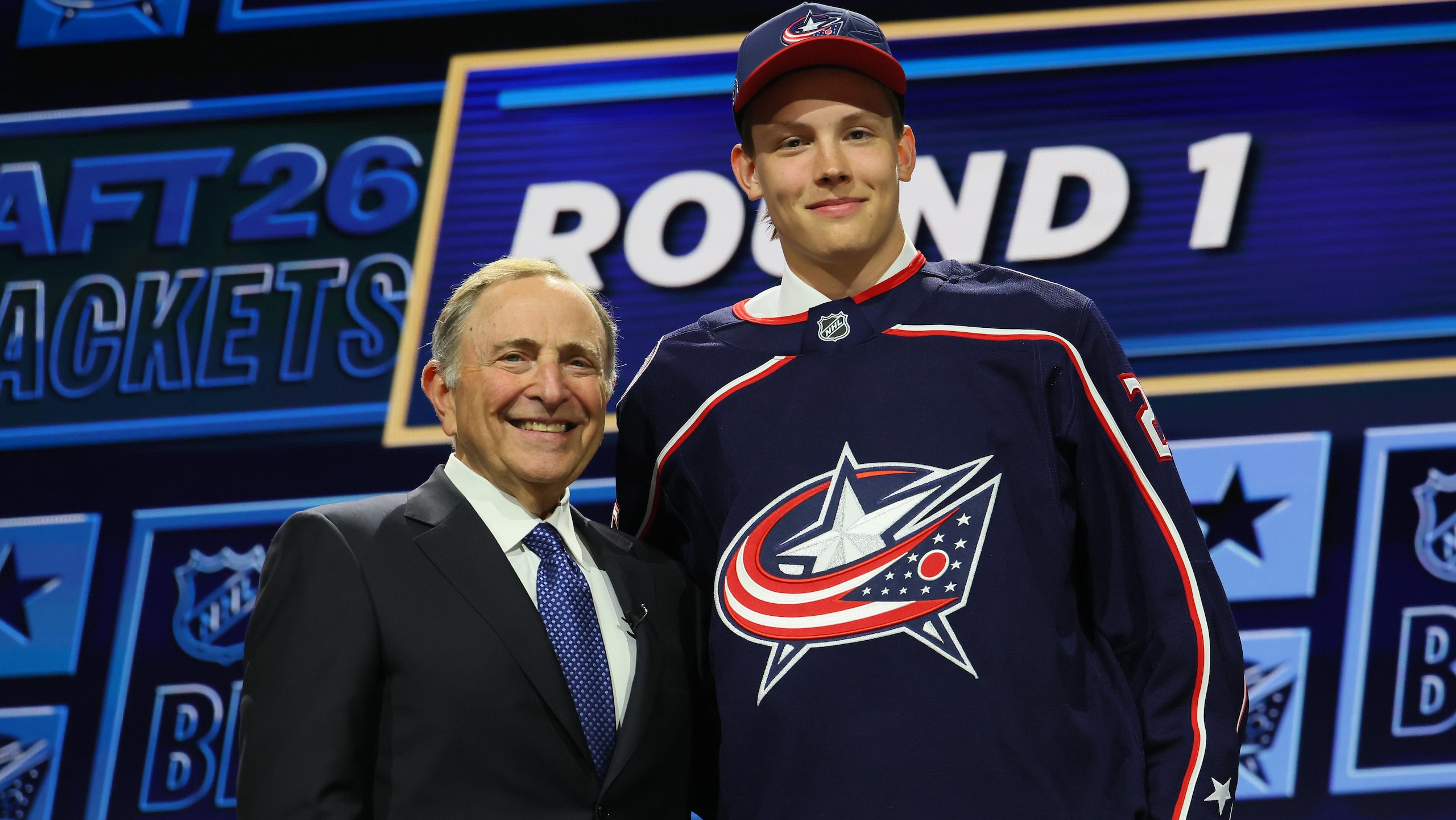
Strengths: Awareness, physicality
Weaknesses: Consistency in creation
Pick Grade: B
B/R Rank: 18
Analysis: Finnish forward Oscar Hemming is a boring pick for the Columbus Blue Jackets in the best way—a pick that makes a lot of sense for both team and player in terms of fit. A pick that isn't thrilling or surprising, but also doesn't come with a lot of risk. It's hard to dislike anything about Hemming's game that isn't consistency, and that will come with time.
The younger brother of Dallas Stars prospect Emil Hemming, Oscar took the leap to NCAA hockey, joining Boston College midseason. It was a move borne of a rather frustrating start to the year: when he initially tried to join the Kitchener Rangers of the OHL, his Liiga team, where he was already under contract, blocked the transfer. The NCAA is not bound by IIHF rules, so off to college hockey he went.
Hemming, who was the youngest player in college hockey, immediately showcased standout qualities, including excellent awareness and doggedness on the forecheck, that he pairs with wonderfully intentional physicality. His floor seems to be "a useful and efficient third liner who is strong defensively". His ceiling is higher. There are concerns about his overall pace, and that's something to keep an eye on this year — can he sustain that level of play that we initially saw across a full season? College hockey is, at least, a good place to build the kind of stamina that is required.
He's a mobile skater, but needs to add a separating factor in terms of edge acceleration. He already has an NHL frame. He makes opponents' lives tougher on every shift when he's at his best, and he's very good at finding teammates; he would be a solid choice for any team selecting in the middle or early second half of this first round.
15. Anaheim Ducks: Nikita Klepov, LW, Saginaw Spirit
15 of 32
Strengths: High-end processing, motor
Weaknesses: Skating mechanics make separation difficult
Pick Grade: A-
B/R Rank: 19
Analysis: The Anaheim Ducks traded back into the first round, moving forward Mason McTavish to the St. Louis Blues, explicitly to select Nikita Klepov. That's gotta feel good.
From a drafting standpoint, this pick makes an absurd amount of sense. Pat Verbeek selecting a player with a motor that never quits? Deeply unsurprising. Add to that the fact that he's a phenomenal processor who is extremely effective in all areas of the ice, and it's so easy to see the draw here. The Ducks are going to be terrifying very soon.
Klepov didn't win the OHL scoring title by chance; his 97 points didn't come from feasting on his teammates' creations by any means.
He brings to mind the role Andrew Shaw filled in the Blackhawks' 2013 and 2015 Cup runs, and later in his time with the Montreal Canadiens. While the perception of Shaw was initially someone who could play but was more of a brawler, an enforcer type, he proved that he was, in fact, a useful and effective winger who could play with more elite linemates. Klepov boosts that and brings far more skill than Shaw had at this point in his career, but his strong work ethic and endless energy for battling echo Shaw's. Again—unsurprising for a Verbeek pick.
He processes the game at such high levels and he is absolutely relentless each time he steps onto the ice. His playmaking still comes more in flashes than consistently, but it happens in a way that suggests he will become consistent there with time. He's also constantly engaged off the puck. Get this kid a skating coach to fix those wonky mechanics stat, so that he can get a separating factor in his speed. We're betting on upside this year, remember?
16. St. Louis Blues: Maddox Dagenais, C, Quebec Remparts (QMJHL)
16 of 32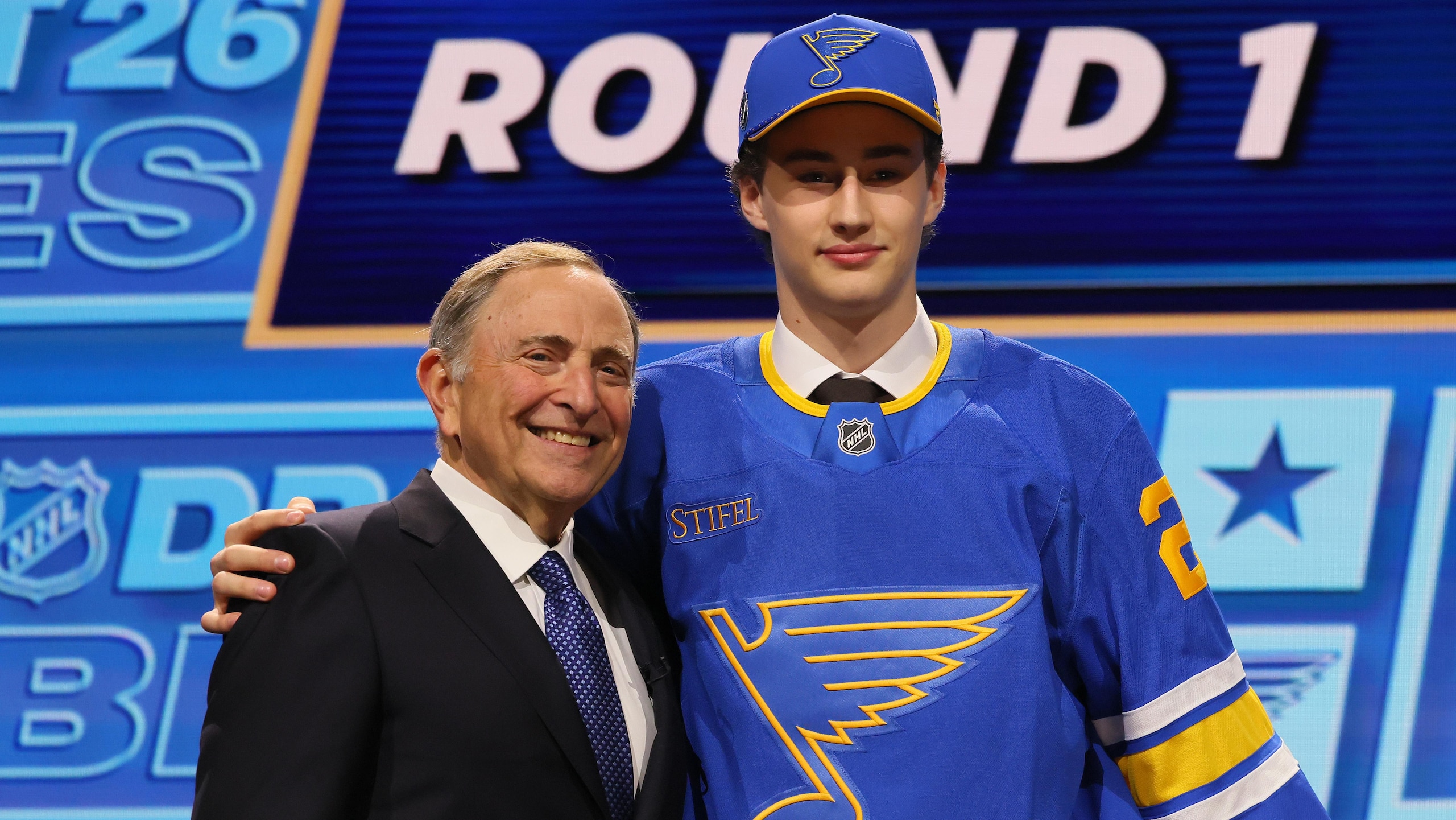
Strengths: Shooting, physicality
Weaknesses: Consistency
Pick Grade: A
B/R Rank: 17
Analysis: Center Maddox Dagenais has the honor of being the first player selected out of the QMJHL in this Draft, and he's landed in a great spot — the Blues won't rush his development, unlike a lot of teams may have. He also landed almost precisely where we had him ranked (selected 16th versus ranked 17th), which doesn't happen often outside the first couple of picks. Adding another center is smart for any team, and this one will be worth the investment for the Blues.
Dagenais took a giant leap this season—especially in the second half. After a lackluster draft-minus-one season, he came out swinging. There were questions about his hockey sense at the beginning of the year, but he proved to be the real deal as the season wore on. Switching into high-intensity mode, he showed a power-forward nature with flashes of truly high-end processing ability.
Dagenais is a project pick for sure, but most in this draft are in one way or another, and many teams have the time and desire to invest in making these kinds of picks pay off. As things currently stand, Dagenais brings reliable, effective playmaking to the ice, with flashes of dynamic ability and passing and handling that live up to his intelligence. He's tenacious as they come, throwing effective and heavy reverse hits and plowing through opponents with a nice speed and intensity.
The main questions for Dagenais are whether he can bring the player we now know he's capable of being to the ice every night, and whether he can access that higher level of playmaking dynamism on a regular basis. The upside here is massive if he puts it all together.
17. Utah Mammoth: Ethan Belchetz, LW, Windsor Spitfires (OHL)
17 of 32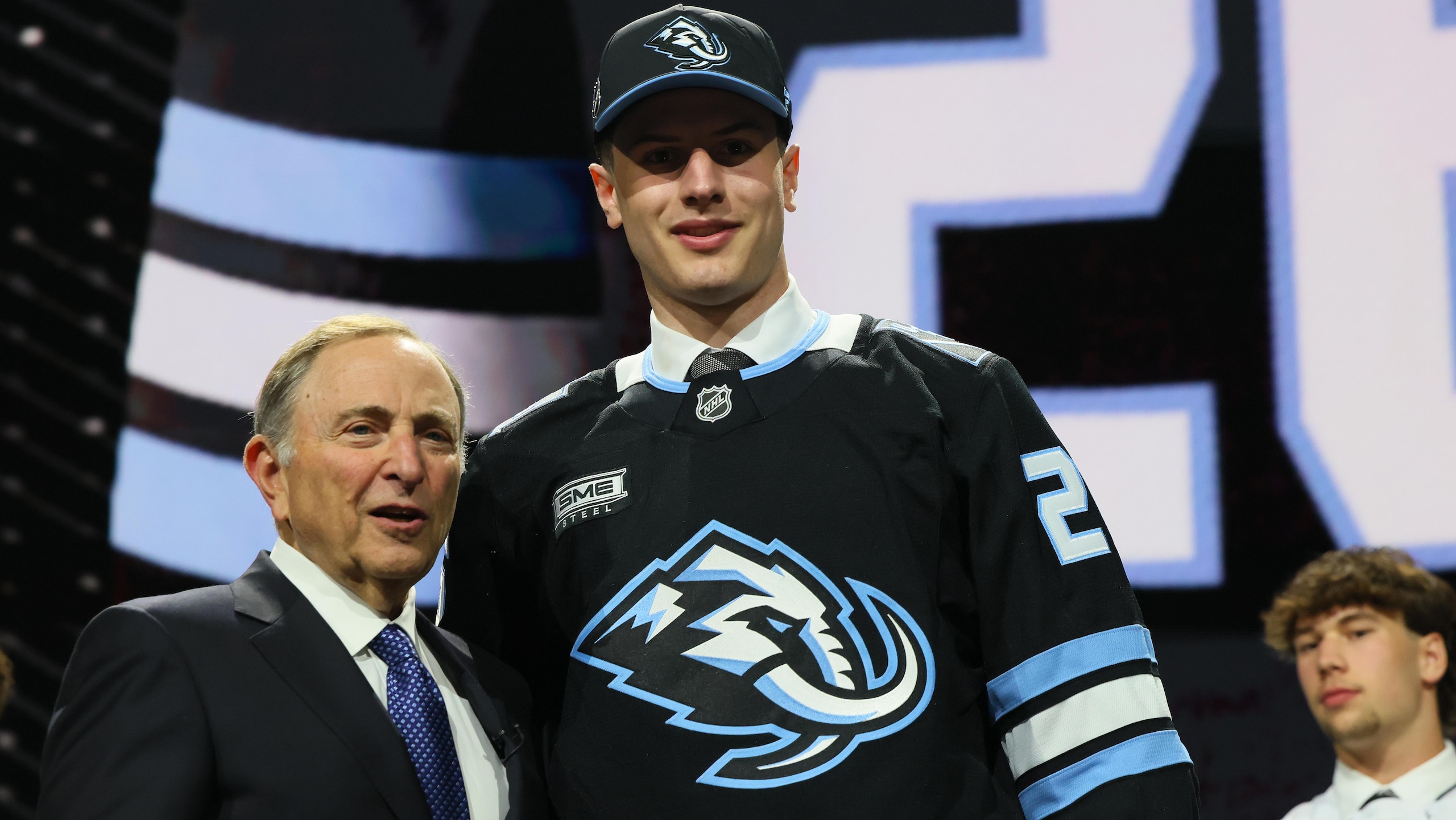
Strengths: Puckhandling, vision
Weaknesses: Consistency
Pick Grade: A+
B/R Rank: 8
Analysis: The Utah Mammoth trading up to pick Ethan Belchetz will look extremely good in hindsight; this pick is a true steal. We had Belchetz ranked in our top five at more than one point in this season, and in terms of pure skill, that's the tier he's hanging out in. He's like if Tom Wilson had elite tools. It's no secret that Belchetz was one of our favorite players of the season; Mammoth fans will soon understand why.
While it can be difficult to project where players are selected after missing significant time with injury, some players shine enough in your limited viewings that you feel comfortable ranking them highly. Belchetz is one of those players. His combination of size (he's 6'5") and top-notch skill is incredibly appealing, and his overall approach to the game feels easily translatable to the NHL. This is a ranking where we're definitely betting on his potential; the player that he could become if he goes down the right development path is an electric one.
Belchetz projects as a power forward, but also brings strong vision, offensive instincts, and playmaking ability. He's skilled at creating in transition, and his ability to create net front is even better; his vision really shines on crafty passes to teammates or identifying gaps. His physicality is phenomenal; he's deliberate with it, not just seeking out contact but the right kind of contact, dominating battles and winning intelligent positioning battles. And when you have all of those in the recipe, it's difficult not to want the finished product on your roster.
Consistency is his biggest battle moving forward; we've seen deception, we've seen good awareness, we've seen him use that size to win puck battles, and now it's time for him to put all of that together night in and night out in a way that he hasn't before. Because when he's on, he's on — he's capable of taking over the flow of a game when he's at his best, and whoever oversees his development needs to prioritize that aspect of his game.
18. Washington Capitals: Oliver Suvanto, C, Tappara (Liiga)
18 of 32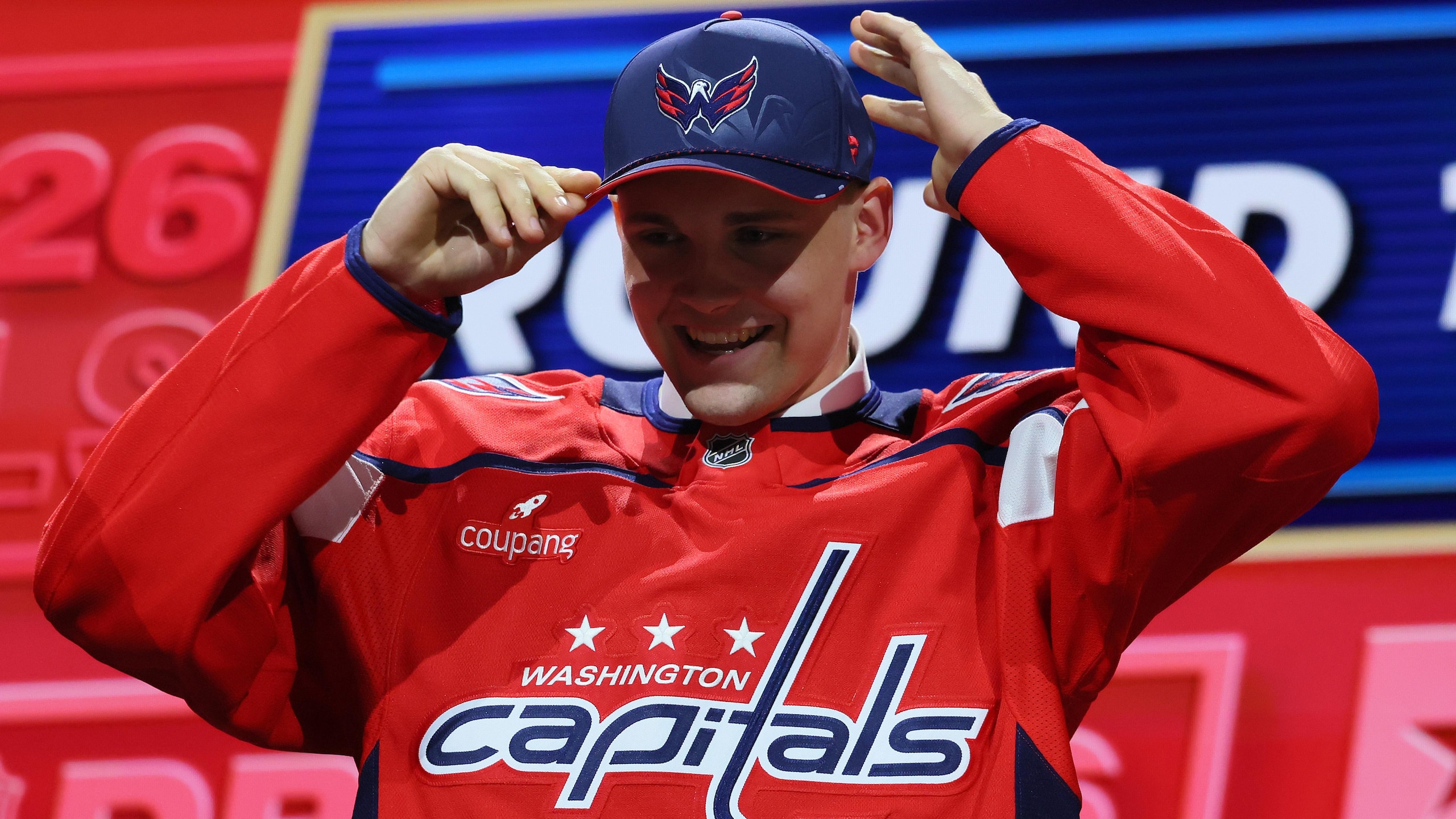
Strengths: High-end hockey sense
Weaknesses: Not a huge amount of offensive output, which can camouflage his value
Pick Grade: C+
B/R Rank: 27
Analysis: While this is our lowest-graded pick yet, don't let that sour you on Oliver Suvanto, Caps fans. The pick grade is based on a) the talent left on the board and b) the fact that Suvanto was a late first-rounder for us. In a vacuum, he's going to be a boon to the Washington Capitals' prospect pool, due both to his intelligence and his poise. It will be interesting to see whether the Capitals, who are very careful and deliberate with their prospects' development, leave him in Finland next season or bring him over to North America.
Oliver Suvanto's NHL future is, at its bright and shining best, as a true two-way center—a stabilizing force for linemates who take a more dynamic approach to offense. He's the archetype of a player that most teams hope for when they draft a "200-foot player". So often that label can be used to camouflage a lack of true offensive ability, not with Suvanto.
He's not consistently that guy right now, but the signs are very positive, and there are moments when you can see it so clearly. Did we mention that he doesn't turn 18 until September?
So Suvanto isn't a huge numbers guy when it comes to offensive output. Don't let that trick you into thinking that he doesn't have a big impact on the game and the way that play unfolds. He's incredibly intelligent—a high-end hockey mind—and plays a mature game despite being one of the younger players in this draft class. It will not surprise you to learn that he spent the vast majority of his draft season playing full-time minutes in Finland's top professional hockey league.
With that in mind, Suvanto, like other players, has aspects of his game that need improvement. We would like to see him create more. He has the intelligence, and there are moments where it's clear he is capable of more playmaking than he does, and perhaps even adding some manipulation down the line. He has a very high floor and should transition effectively to the NHL, but he has the potential to kick it into another gear and rise up the lineup. We'd like to see it.
19. Los Angeles Kings: Elton Hermansson, RW/LW, MoDo Hockey (Hockey Allsvenskan)
19 of 32
Strengths: Stick work, edgework
Weaknesses: Skating posture, decision-making
Pick Grade: B-
B/R Rank: 25
Analysis: The Los Angeles Kings typically trade back in the first round for more assets, and this year was no different. Fortunately, they only traded back two picks, and with their newly acquired 19th overall pick, they selected Elton Hermansson from MoDo Hockey in the Swedish Allsvenskan. It's a bit of a reach pick, but not much—and at this point in this year's first round in particular, going a little off board makes a lot of sense if you've got your eye on a player specifically. And watching Hermansson play, it's easy to understand why the Kings pinpointed him.
Much like almost every player in this draft, Hermansson is a guy where scouts are betting on upside; trying to hedge whether he'll live up to his potential. His top speeds and edgework are high-end; he's got a nice elusive quality to him. Paired with his stick work, he has the potential to be a crafty playmaker. His overall skill level is incredibly appealing, and even if he doesn't entirely live up to his ceiling, his floor is high enough that he'll be effective in the NHL anyway.
That being said, there are moments when his decision-making can be questionable; he'll make errors that aren't the result of crafty play by an opponent. And there are nights when we don't see that crafty creation at all. That lack of consistency raises questions of whether he can wholly translate that skill to the North American professional ranks. His odds of being an offensive winger in the NHL are better than they aren't, though; if the Kings develop him effectively, it'll pay off in spades.
20. Buffalo Sabres: Ilia Morozov, F, Miami University (NCAA)
20 of 32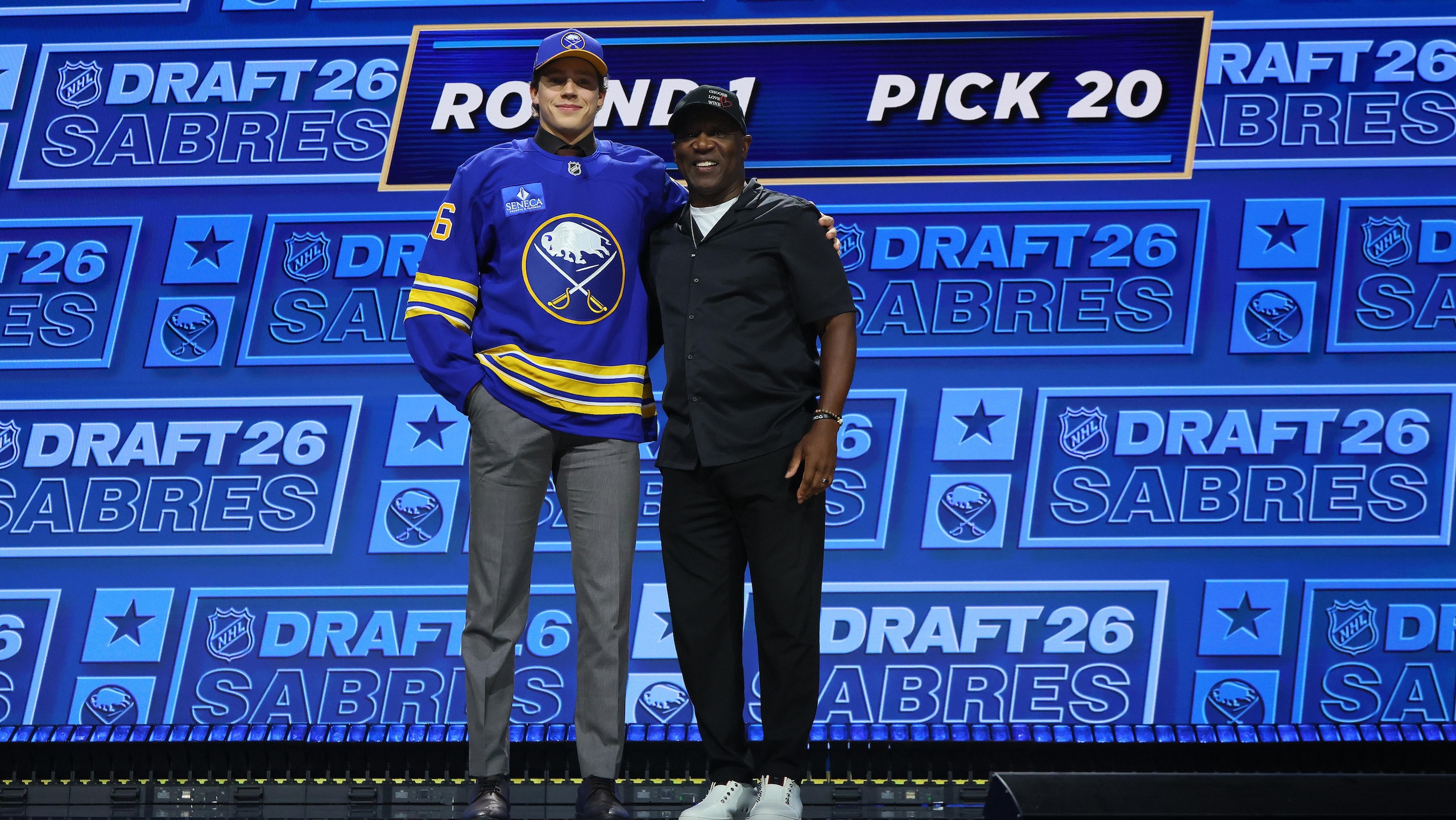
Strengths: Problem-solving, vision
Weaknesses: Overconfidence, overcomplicating plays
Pick Grade: A-
B/R Rank: 21
Analysis:
With two players left from our list left on the board ahead of Ilia Morozov, it's difficult to argue with this pick at all—especially for a Buffalo Sabres team building toward a future where they want to contend sooner than later. It's hard to go wrong with a younger, intelligent, highly engaged center. Much like his peers in this draft, he needs a little time to cook, but when he's already making opponents miserable every night, it's easy to envision a fruitful future.
Miami University forward Ilia Morozov's game is easy to project to the professional level, and he was a significant part of Miami's team, helping the team go from a 3-win record the previous season to 18 wins. He finished the regular season with 20 points in 36 games, including 8 goals. If Miami's power play improves next season, expect to see that total jump even more than it might otherwise.
Morozov spent the season as the youngest player in college hockey (he doesn't turn 18 until Aug. 3 of this year), and yet we still tuned in to see him frustrate older, more experienced opponents and make an impact game after game. His defensive anticipation is already high-end — high praise for any draft-eligible player, much less the youngest in his league — and his engagement levels are high.
Quick reaction times, intelligent problem-solving under pressure, and disrupting opponents' passing lanes are all standout elements of his game. His top-end speed isn't the highest, so it would be good to see him work on that next season; adding a separating factor is never a bad idea. Moving forward, it would also be good to see him lean more into using his hockey sense to add a layer of creativity and selection to his playmaking.
21. San Jose Sharks: Ryan Lin, D, Vancouver Giants (WHL)
21 of 32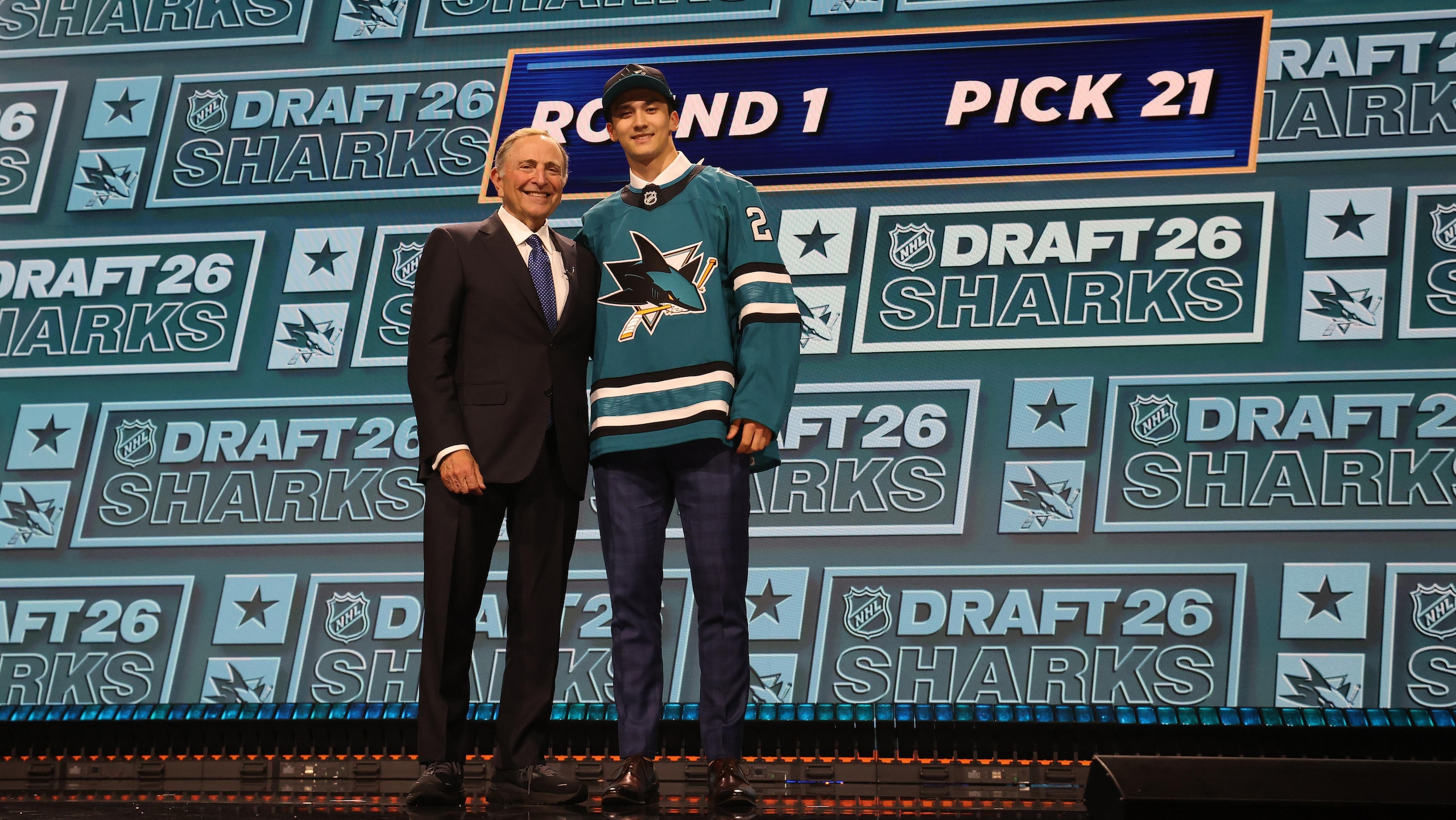
Strengths: Intelligence, edgework
Weaknesses: Can defer to teammates too often
Pick Grade: A
B/R Rank: 16
Analysis: Incredible value here for the San Jose Sharks, who traded with the Philadelphia Flyers to move up to this spot. They probably thought that defenseman Ryan Lin wouldn't be available this late; we didn't either. Lin is brilliantly intelligent and has incredible skating skills, and adding both him and Keaton Verhoeff rounds out their blue-line depth so beautifully. Also, an interesting note: both of their defense choices so far have been WHL-to-NCAA guys.
He was one of the best defensemen at the recent U18 World Championships, bringing high-end intelligence and a mature, detail-oriented game. Though he missed time during the season due to injury, he returned for the end of the regular season, finishing with 53 games total. Lin is such a cutting player, consistently engaged and able to suffocate his opponents defensively.
His skating is terrific—especially his edges and his agility, hello evasiveness—and though he's got wrinkles in his game that need ironing out, there's serious potential for him to turn into a top four defender. He brings offensive skill to the table as well, and high-end details, particularly in his stick work. He's a little on the smaller side comparatively (he's 5'11"), but that's not a limiting factor in his play.
Missed opportunities or bad habits creeping into later shifts are an issue at times, but engagement and intelligence are never in question. Whether he can add necessary muscle and refine that decision-making is a question he'll need to answer down the road. If he can add another layer of creating himself offensively, rather than deferring and feeding to teammates, he'll be even more unstoppable—and even easier to project at the NHL level. Another member of the CHL-to-NCAA pipeline, which appears to be the new development path for top players, Lin is headed to the University of Denver to play for David Carle in the fall.
22. Pittsburgh Penguins: Liam Ruck, RW, Medicine Hat Tigers (WHL)
22 of 32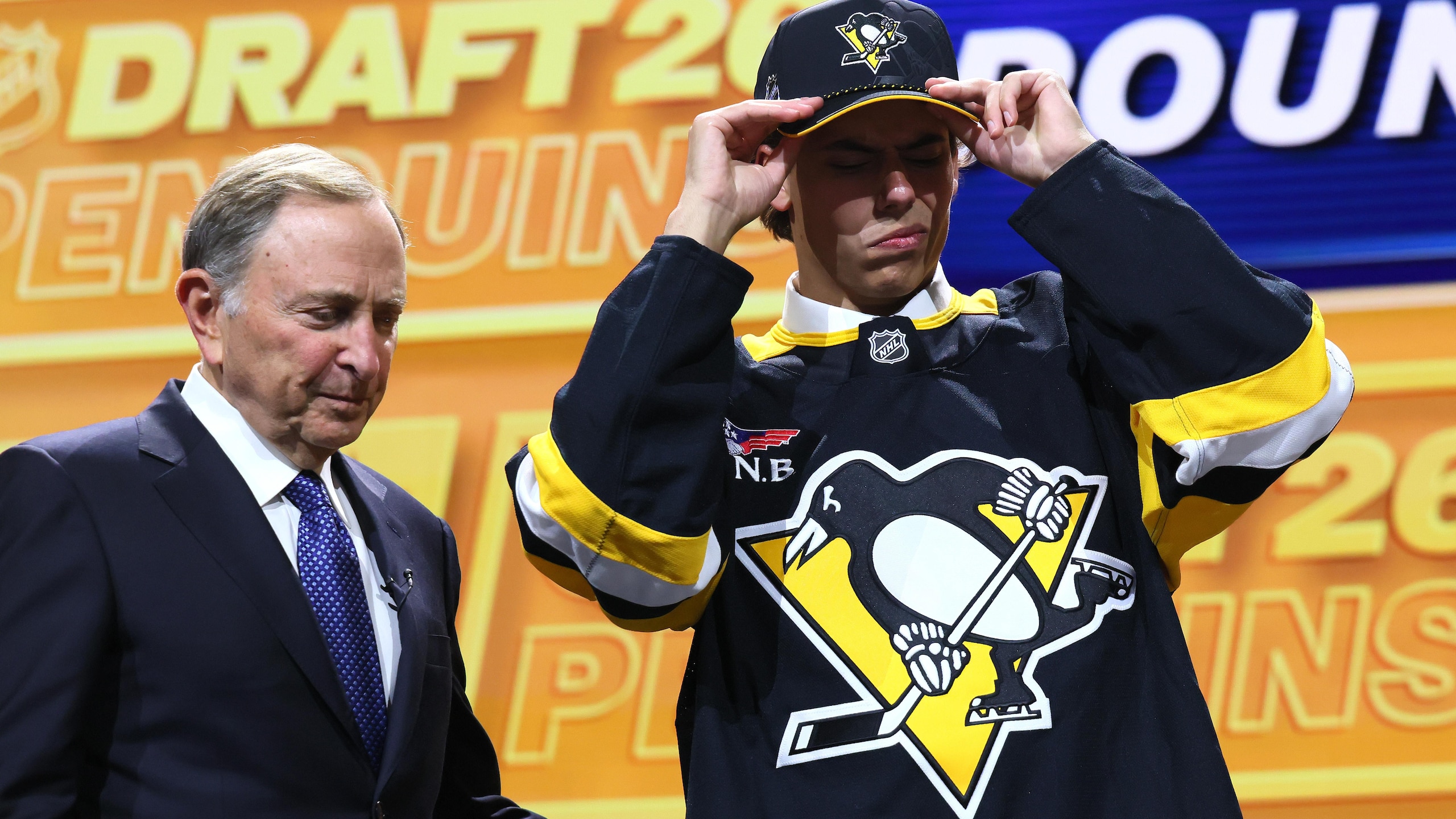
Strengths: Intelligence, anticipation
Weaknesses: Physicality could use work
Pick Grade: A
B/R Rank: 22
Analysis: Getting selected precisely where we had him ranked, Liam Ruck goes to the Pittsburgh Penguins. Gut feeling pegs this pick as deeply on-brand for Kyle Dubas; Liam is incredibly intelligent, with a really beautiful sense of anticipation. If he's working with another forward who is more of a true play-driver (think: getting zone entries in), he's going to bring real magic. Zero arguments with this selection. Now we wait and see if the Penguins draft his twin brother.
Liam Ruck finished the WHL regular season with 104 points, including 45 goals, trailing only his twin brother Markus, who finished with 108. While the twins play well together, only Liam's projectable skill level rises into first-round conversation for us. (Markus is more of a second-rounder guy.)
His hockey sense and vision are high-end enough that it may leave you questioning whether he's mildly clairvoyant sometimes. He spots seams for sly, high-end passes quickly and easily, and identifies opportunities to jump on defensive miscues in a way that many of his peers would kill to be able to do. He's a bit of a sniper, landing his shot effectively in a variety of ways.
Our main concern for Ruck is that his skating currently lacks a true separating factor. Adding another layer of explosiveness and agility will be the deciding factor between whether he's a top-line winger or more of a middle-six type in the NHL. We've seen that he can dominate the WHL; what's left to prove is that he can translate that to a higher level of play. We expect to see him at the NHL level regardless. Both Ruck twins are headed to the University of North Dakota after one more season with the Medicine Hat Tigers, which should help smooth out their rough edges.
23. Detroit Red Wings: JP Hurlbert, RW, Kamloops Blazers (WHL)
23 of 32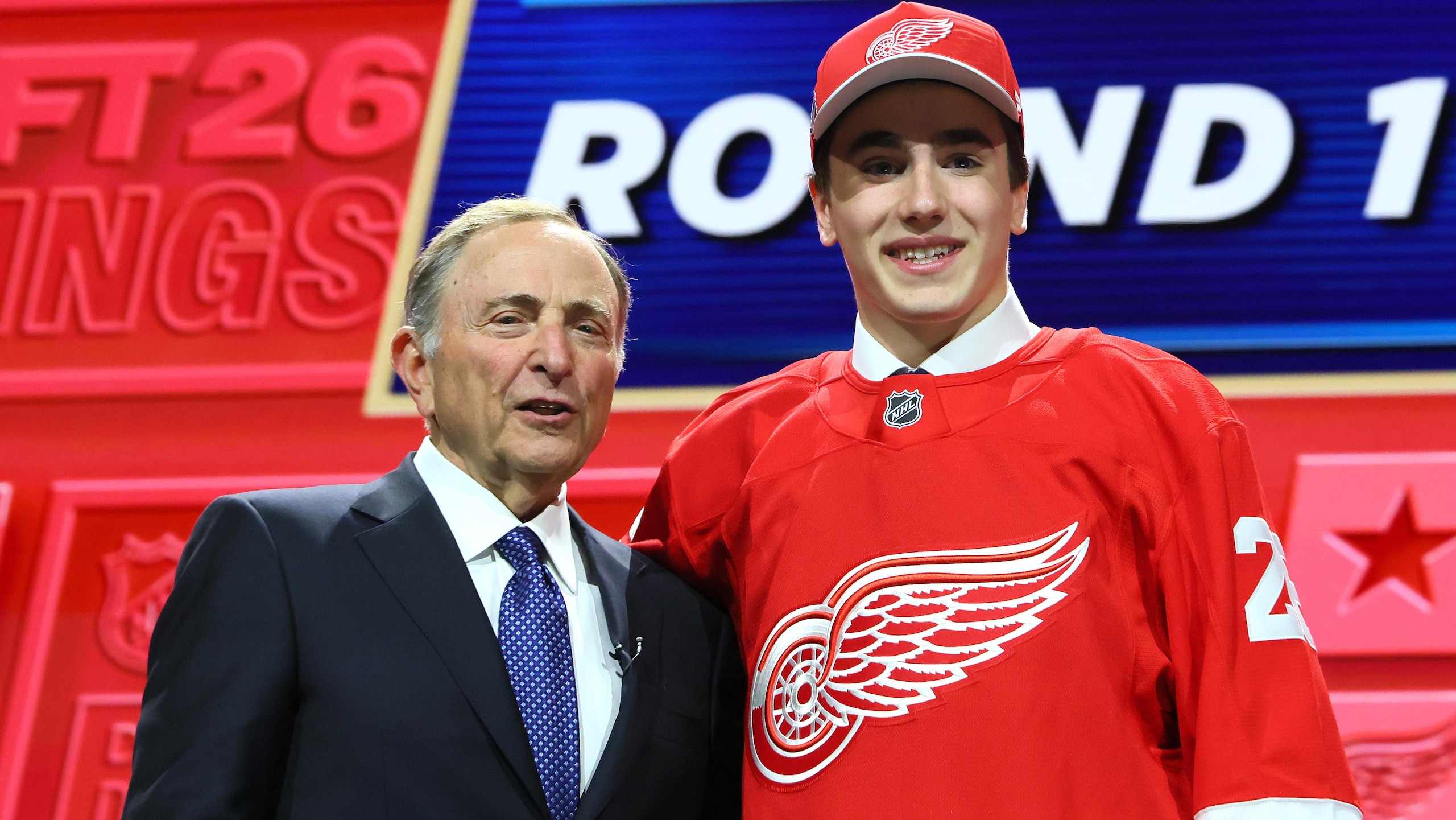
Strengths: Hockey sense, vision
Weaknesses: Details need improvement, and can lack quickness sometimes
Pick Grade: B+
B/R Rank: 28
Analysis: The Detroit Red Wings traded up specifically to get Kamloops Blazers winger JP Hurlbert, and while there's a decent chunk of talent still on the board, it's really difficult to argue with this pick. He's going to bring a beautiful offensive skill set to the Red Wings' prospect pool and, eventually, their lineup. He may have a few wrinkles to iron out first, but he is exactly the kind of player they need. If this pick belonged to a different team, there may be an argument to be made, but for the Red Wings, Hurlbert makes perfect sense.
Hurlbert is an intelligent, intuitive creator who started with the USNTDP, moved to the Kamloops Blazers of the WHL for his draft season, and will head to the University of Michigan to play college hockey in the fall. It's a good development path for his player archetype, specifically: someone who has significant skill but one or two rough edges that need rounding out, who could benefit from a change in environment and new challenges.
Hurlbert ended the WHL regular season with 97 points in 68 games, including 42 goals. His offensive instincts are terrific, always projecting the flow of the game a few steps ahead, but he sometimes relies on teammates rather than creating for himself. We've seen glimpses of his creation and good puck-handling, and he has a killer arsenal of shots. He just needs to improve his skating—strength and quickness immediately come to mind—and add another layer of physicality to his game. We definitely saw his detail game improve across the season; now we'll find out if he can utilize the college hockey environment to make the necessary changes to translate his offense to the NHL.
24. Vancouver Canucks: Adam Novotny, LW/RW, Peterborough Petes (OHL)
24 of 32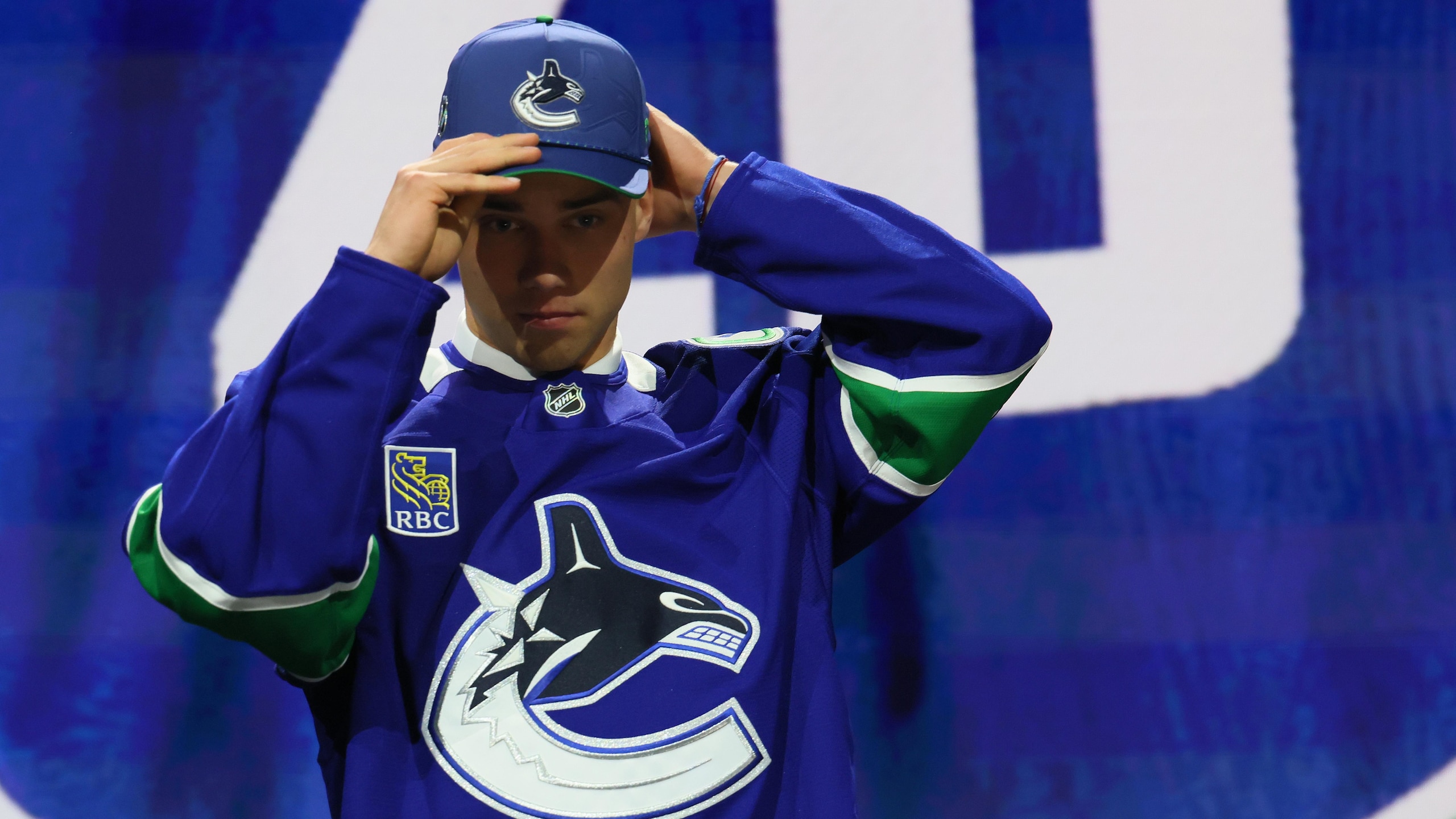
Strengths: Skating
Weaknesses: Would love to see him create more offensively
Pick Grade: A+
B/R Rank: 15
Analysis: We had Adam Novotny ranked at 15th overall; the Vancouver Canucks getting him at 24th overall feels like a steal. He has, without question, been the best player left on our board for a minute. The only analysis you need about this pick is that he is precisely the kind of player that the Canucks need; he's got an Energizer Bunny-level motor and efficiency, skates incredibly well, and is developing his creation ability.
If you are a defender who has to go up against Adam Novotny one-on-one, make peace with your god now. You aren't the one who is coming out of that scenario with the puck.
Novotny is engaged in every aspect of the game; he can create in multiple situations, and he's an absolute beast on the forecheck. If you were to ask which prospect was most likely to make opponents cry out of sheer frustration, Novotny would be the answer. There isn't a single shift where he doesn't make his presence known and make an impact on the game.
He's incredibly efficient, impacting all areas of the game and menacing opponents both when he has the puck and when he doesn't. He can create on the cycle and off the rush, and it has felt like his offensive game has been developing further even over the latter half of this season. He's intense on the forecheck, and he's got speed that will burn most opponents.
Combining all of that with his offensive skill and the fact that we see his strengths consistently, he really projects as a power-forward type. Before his game rounded out, it was thought perhaps he'd end up more of a sniper; it was nice to see that develop further this season. Novotny will not need as much of a runway as many of his peers.
25. Ottawa Senators: Jonas Lagerberg Hoen, RW, Leksands IF U20
25 of 32
Strengths: Strong shot, speed
Weaknesses: Playmaking needs work, lots of uncertainty
Pick Grade: C-
B/R Rank: Unranked
Analysis: Jonas Lagerberg Hoen missed nearly the entire season due to injury, only getting in two SHL games and nine games with Leksands IF U20. With that in mind, there's so much uncertainty about how this player will pan out. We did not have Lagerberg Hoen ranked and considered him more of a mid-round player—perhaps late second or third round—but the Ottawa Senators selecting him at pick 25 suggests they clearly saw something they liked.
So what do you need to know about Lagerberg Hoen, Sens fans? First and foremost: he's a phenomenal shooter. In the nine games that he did play, he scored nine goals, and while that probably would not have been a sustainable pace across an entire season, it points to a scoring ability that cannot be ignored. His creation ability is not as high-end; while we've seen him make plays effectively at the junior level, almost at will at times, it's not in a way that is immediately projectable to a higher professional level.
Lagerberg Hoen's season ended in late October, and there's so much that we don't know about how things could've panned out. This is a wait-and-see for sure.
26. Montreal Canadiens: Gleb Pugachyov, RW, Torpedo Nizhny Novgorod (KHL)
26 of 32Strengths: Physicality, skating
Weaknesses: Finishing, passing
Pick Grade: B-
B/R Rank: Unranked
Analysis: Right winger Gleb Pugachyov was a player who landed just barely outside of our first round—we were thinking early-to-mid second. For that reason, it's a higher grade than it might be otherwise, especially this late in the round.
As a gut reaction, being drafted by the Montreal Canadiens feels like a good fit for him. He's the kind of player they can use to balance their many smaller, more dynamic forwards, taking the brunt of the opposing force and frustrating the stew out of those opponents by being extremely difficult to move.
Pugachyov's physical tools immediately jump out when you watch him; he's an incredibly heavy hitter, despite being one of the younger players in the class. He's 6'3"and continues the trend of taller skaters learning to move incredibly well. He's not only frustrating to opponents; he also frustrates those of us who watch him play, because there are these tantalizing flashes of playmaking ability that he just hasn't put into action yet. He's going to be an effective player even if he doesn't fully develop that side of his game; he can drive pucks to the net quite efficiently as things currently stand. But it's up in the air whether he can create offense for himself at the NHL level.
27. Philadelphia Flyers: Maksim Sokolovskii, D, London Knights (OHL)
27 of 32
Strengths: Physicality, meanness, skating
Weaknesses: Hockey sense
Pick Grade: B+
B/R Rank: Unranked
Analysis: We didn't have defenseman Maksim Sokolovskii ranked in our first round, but we considered it more than once, and he didn't land too far outside of it. There's a lot to like about this pick, and it's one that we're not going to argue with much; it's based on raw potential, but there's a good bit of it. And frankly, Sokolovskii feels tailor-made to be a Philadelphia Flyer.
And also he's extremely tall, landing at 6'7".
Sokolovskii shines on the physical side of the game, crushing opponents and retrieving pucks impressively. He's also a fantastic skater, with excellent four-way mobility and really nice speed. For his size, the way that he moves and his skating posture is quite impressive, and that alone is going to help him transition to the NHL level.
If we're being entirely honest, the main reason that we didn't slide him into our first round was his hockey sense. He's going to be an NHL regular, with a solid chance of playing higher up the line-up, regardless of whether he further develops his intelligence and ability to create offense. He might be a little too patient. For that reason, the Flyers may need to be patient with him.
28. Anaheim Ducks: Marcus Nordmark, RW, Djurgardens IF U20 (U20 Nationell)
28 of 32
Strengths: Vision, intelligence
Weaknesses: Physical game
Pick Grade: B-
B/R Rank: Unranked
Analysis: For the second time tonight, we have seen the Anaheim Ducks trade up to get a player. This time it's yet another Swede (quite a few of them in this year's class!), Marcus Nordmark out of Djurgardens IF. While we had him earmarked as an early second-rounder, he appeared in multiple of our mock drafts, and we specifically noted that he was one we could easily see jumping into the first round.
Nordmark's maturity and composure, along with his level of production (he finished at a 1.52 points per game pace in his U20 games) were no doubt attractive to many teams. The Ducks very likely saw that and jumped to make sure they were the team that grabbed him.
Nordmark's vision and intelligence are the key attributes that drive the rest of his game. He utilizes it, along with a high-end set of tools, for both goal-scoring and playmaking. His creation tends to happen more to the outside, which isn't the best-case scenario, but he's a skilled finisher and has a high level of precision on his shot.
If those skills coalesce into a well-rounded player, there's value. The concern is that they may not coalesce at all. His physical game is on the weaker side, and his pace is low. These are both things that he's capable of addressing, and he's operating from a place of skill—we just need to see more urgency and an improvement in utility away from the puck.
29. Vegas Golden Knights: Juho Piiparinen, D, Tappara (Liiga)
29 of 32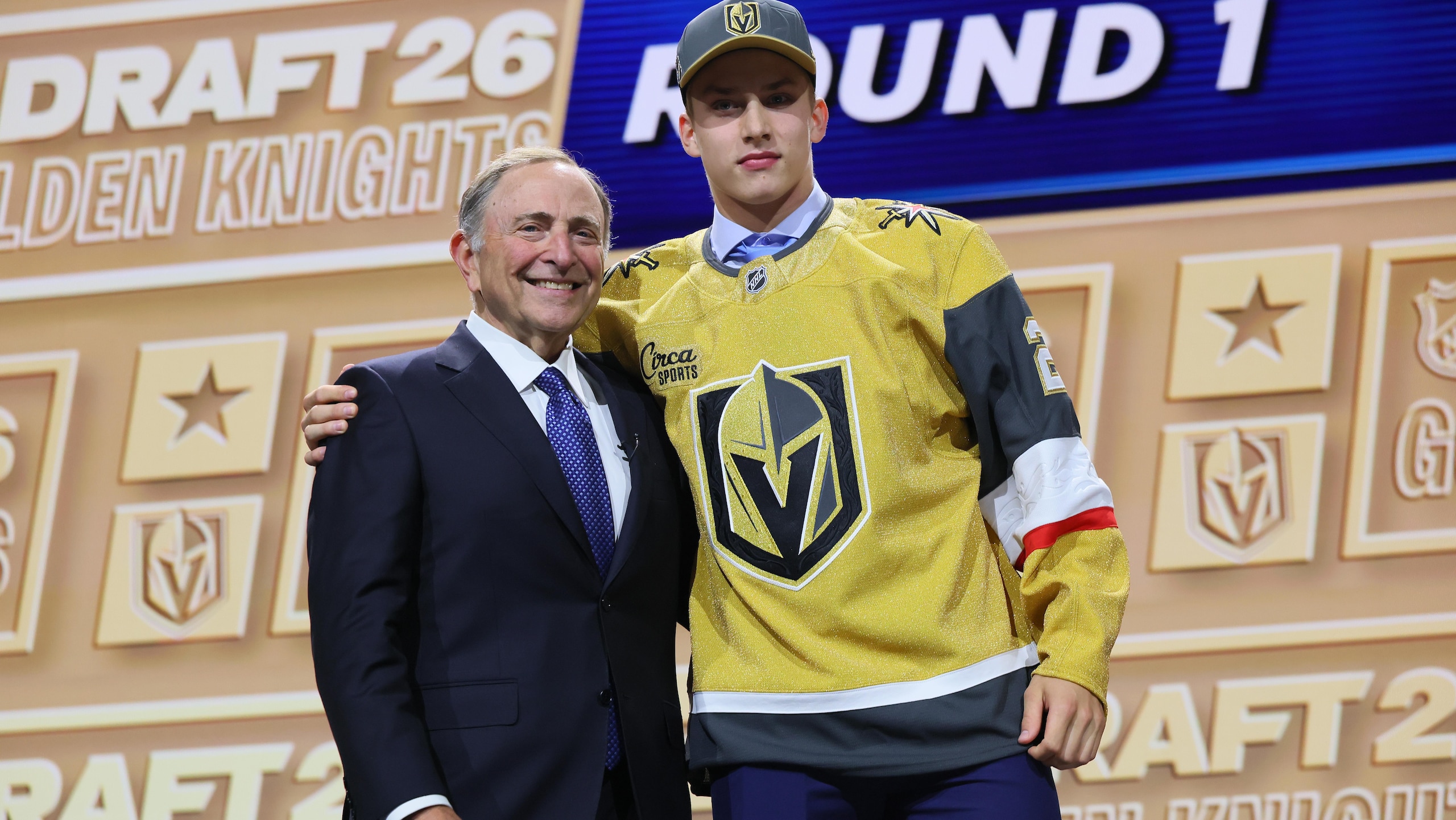
Strengths: Puck-moving, intelligence
Weaknesses: Decision-making can be a problem at times
Pick Grade: B-
B/R Rank: Unranked
Analysis: It was honestly surprising that the Vegas Golden Knights made this pick rather than trading it for something else. That said, Finnish defenseman Juho Piiparinen makes a lot of sense for this team. He was ranked in the second round for us, though he made a few appearances in our mock drafts as he was also a player we could envision moving into the first round. (There were quite a few of those.)
While many of us tend to gravitate toward the more agile, offensively-minded defensemen these days, thanks to the way the game is evolving, there are still defensemen who play a defense-first game and bring significant value. Talking about this player archetype can too often make people think of the big lumbering "stay-at-home" types who can't move. That's not what Juho Piiparinen is. He does bring size, but he uses it to suffocate opponents, removing the time and space they have to get up to any shenanigans, and then once he has the puck back, he'll slip a teammate the perfect pass.
He's one of the youngest players available this year, which to me makes the composure he displayed that much more impressive. He's intelligent and reliable — the number of times you're going to hear his name spoken on a game broadcast is very few, and that's because he's not out here making glaring mistakes. It would be beneficial for him to add an extra gear to his playmaking ability and refine his decision-making, but he brings very real value.
30. Calgary Flames: Jack Hextall, C, Youngstown Phantoms (USHL)
30 of 32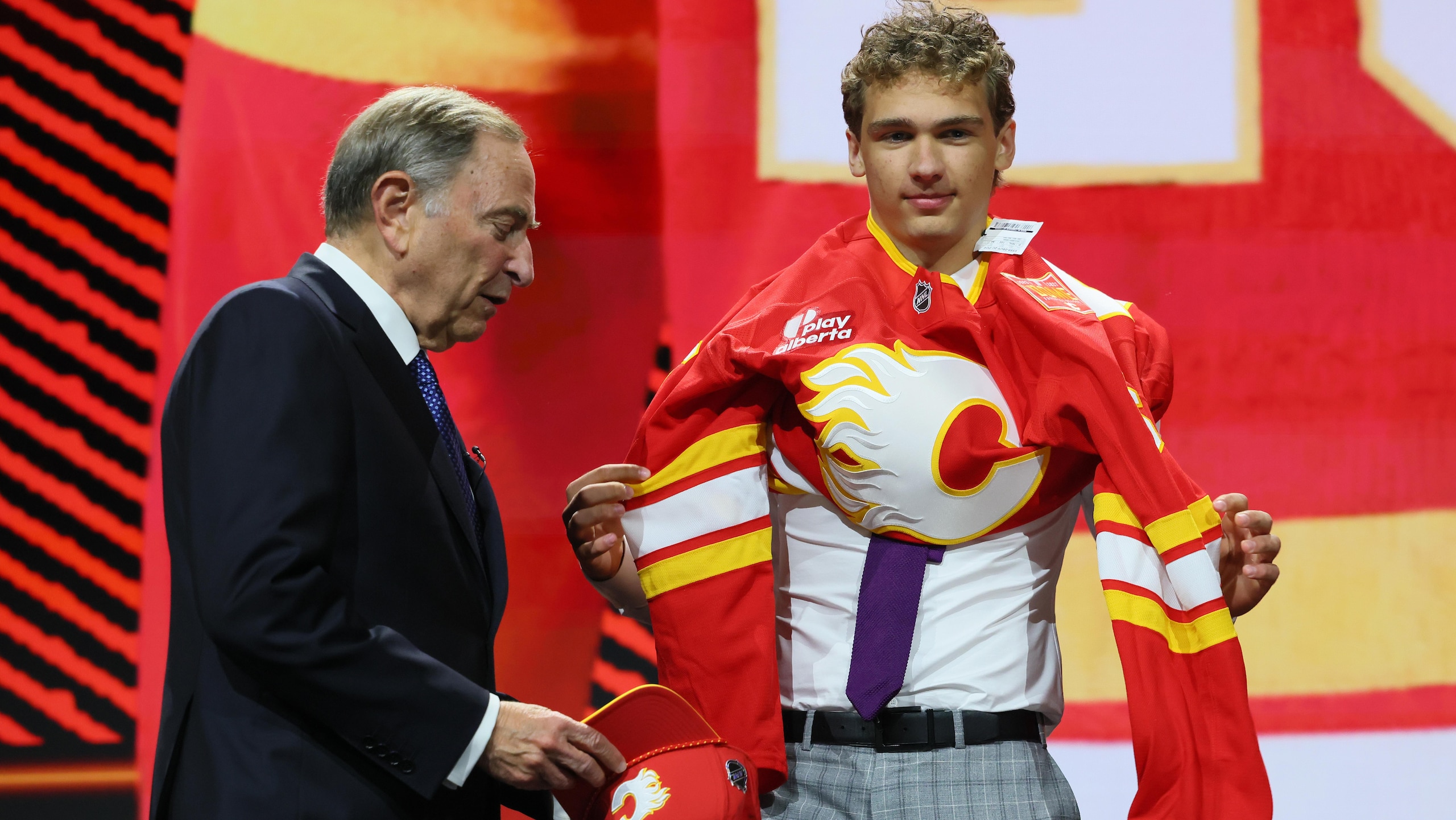
Strengths: Versatility, vision
Weaknesses: Skating
Pick Grade: B+
B/R Rank: Unranked
Analysis: Calgary Flames pick Jack Hextall is a player that we toyed with ranking as a first-rounder multiple times during the season. Though he did not ultimately make it onto our list, he's another who came with that asterisk of "easy to see moving into the first".
Hextall is versatile, useful at center and also on the wing. He's easy to trust with and without the puck, bringing some really nice vision and hockey sense. His exact projection in terms of where he'll land in a lineup is murky, but his passing skills will be a boon to whichever line he ends up on.
Hextall spent this season with the Youngstown Phantoms of the USHL, finishing the regular season at nearly a point-per-game (58 in 59). He's another player headed to Michigan State in the fall. The Flames can give him the time he needs to bake; the end result will be well worth it.
We've seen some tantalizing moments where he's shown deception and creativity in his already good playmaking; moving forward, it would be good to see him make that a regular part of his game. It would also be good to see him unlock another level with his skating, particularly his speed.
31. Nashville Predators: Tommy Bleyl, D, Moncton Wildcats (QMJHL)
31 of 32
Strengths: Skating, intelligence
Weaknesses: Physicality
Pick Grade: A
B/R Rank: 31
Analysis: Tommy Bleyl has had a lot of people talking this season. Tommy Bleyl also had the Nashville Predators trade up to pick him (and precisely at the pick where we ranked him!). He's honestly exactly the kind of player that the Predators need in their prospect pool; he's so smart, so evasive, and while he's just a hair behind Xavier Villeneuve for us, he makes a lot of sense for this pick.
Bleyl finished the QMJHL regular season with 81 points in 63 games, including 13 goals, did so after making the leap from prep school (he previously attended Cushing Academy) to major-junior hockey for his draft year. Looking at his various rankings, it seems like that gamble is going to pay off. At his best, he's a thrilling game changer on the rush; on the other side of the coin, the question remains whether he can do that at higher levels.
The key thing to know about Bleyl is that he is a phenomenal skater, explosive, slippery, and extremely difficult for opponents to catch. He manages the flow of play well and sometimes even seems to be controlling it, using his handling and skating to manipulate opponents. Right now, he leans on the skating a little too much, and his physical game is below-average. If he can improve that physical game as well as utilize his intelligence—not just depending on his skating, but improving his reads as well—he'll turn out to be an excellent pick.
32. Ottawa Senators: Jaxon Cover
32 of 32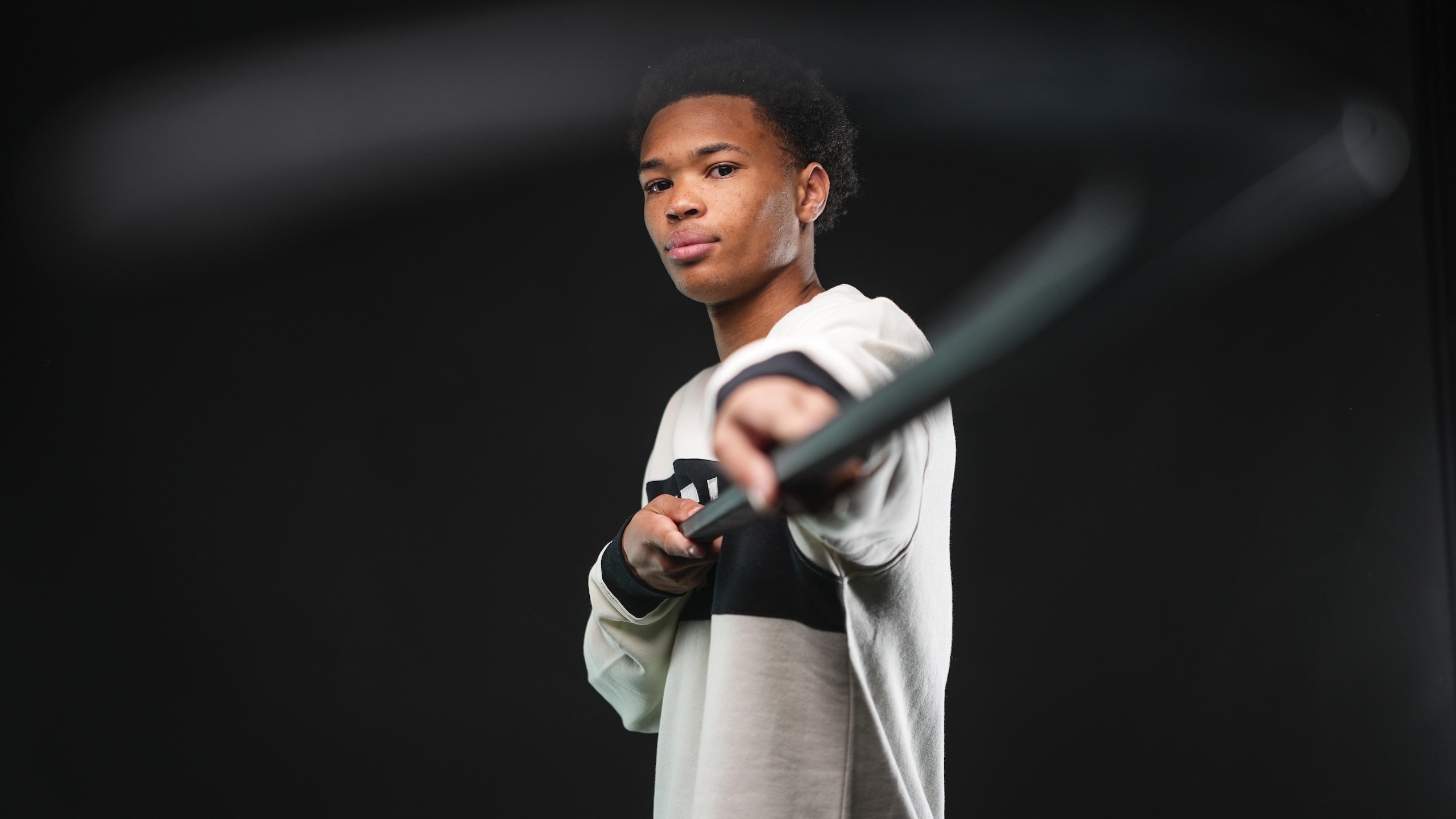
Strengths: Puck handling
Weaknesses: Refinement, off-puck awareness
Pick Grade: A
B/R Rank: 23
Analysis:
Not much to say here except: wow, what a get for the Ottawa Senators here at the end of the round. Jaxon Cover is a raw pick, but if the Senators work carefully with the London Knights to ensure his development plays out well, it is going to end up looking like an absurd steal down the road. Cannot compliment this pick enough.
Cover is a player who exemplifies a trend we've seen this season—someone who has tons of raw, high-end skill, and just needs a little more time to smooth out the rough edges before he's ready for professional hockey. Unsurprising when you consider that he only switched to ice hockey five years ago; before that, he was playing roller hockey in the Cayman Islands. It's a cool story, but he's so much more than just a story. A little patience and a longer runway to regular NHL ice time will pay off in spades.
Cover's puck handling is sublime, as is the vision that allows him to utilize it so effectively. The way he feasts on opponents' mistakes, using precision and deception to stymie opposing defenders, is one thing. The fact that he doesn't rely too heavily on that impressive stickhandling to succeed is another. He's also got an excellent work ethic, constantly engaged in going after the puck and utilizing that same vision that drives his offensive game to select good defensive positioning. He's got work to do on consistency and on refining his already excellent skill set, but he has a bright future ahead of him.
Cover is committed to Penn State, another player taking advantage of the CHL-to-NCAA pipeline, and it's a path that will be great for his personal development needs.
.jpg?w=2560 "🚨 Texans Trade for MHJ")
.jpg?w=2560 "Grading Marvin Harrison Jr. Trade 📝")



.jpg?w=2560 "Mendoza Makes NFL Debut 🤩")
.png?w=2560 "Money In The Bank Ends In Shocker 💼")