.jpg?w=2560)


The 2026 MLB draft kicks off on Saturday afternoon, which means it's time for Bleacher Report's final official mock draft.
This year's Day 1 will feature the first four rounds and 135 picks, with the first 10 selections televised on NBC and Peacock, starting at 1 p.m. ET from Citizens Bank Park in Philadelphia.
UCLA shortstop Roch Cholowsky, Georgia Tech catcher Vahn Lackey and Texas high school shortstop Grady Emerson are viewed as the consensus top three in the draft class and expected to go off the board first in some combination to the Chicago White Sox, Tampa Bay Rays and Minnesota Twins.
Ahead is a full mock of the first 40 picks. That allows at least one pick for all 30 teams, as the Mets, Yankees, Phillies, Blue Jays and Dodgers all had their first selection moved back 10 spots as a penalty for exceeding the highest level of the luxury-tax threshold.
Nos. 1-3
1 of 10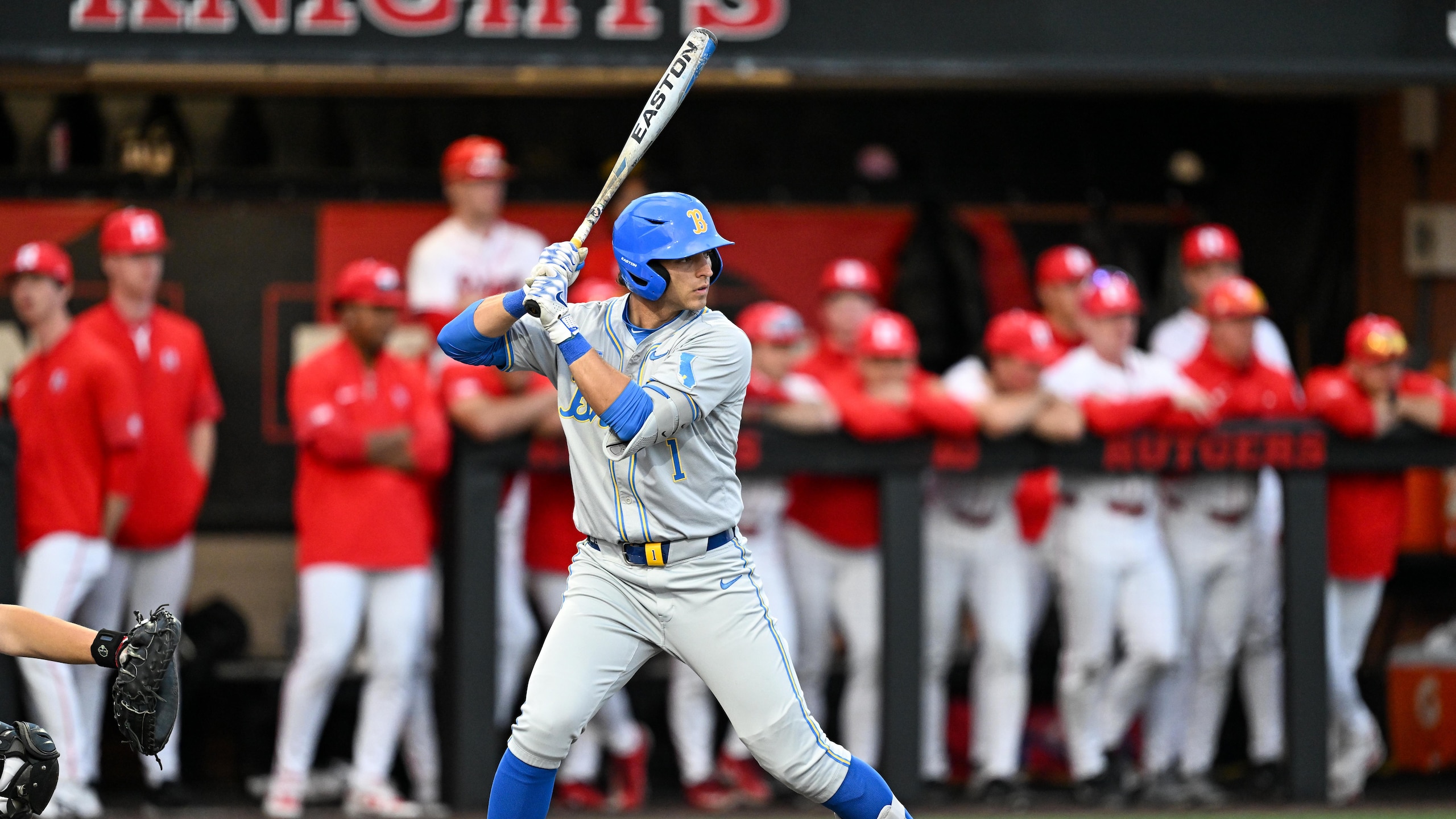
1. Chicago White Sox: SS Grady Emerson, Fort Worth Christian School (TX)
The White Sox have given no indication which direction they are leaning at No. 1 overall, but the general consensus seems to be that it's a coin flip between Roch Cholowsky and Emerson at this point, with Vahn Lackey unlikely.
If they want certainty and proximity to the majors, Cholowsky is the guy. If they want to bet on potential and try to find the Bobby Witt Jr.-caliber talent in this draft class, Emerson has that type of upside.
2. Tampa Bay Rays: SS Roch Cholowsky, UCLA
Given their long-standing need for a franchise catcher, Vahn Lackey has gotten plenty of buzz here, and there would likely be more consideration for that move if the No. 1 overall pick is Cholowsky.
In this case, the UCLA star is still on the board and an easy choice for an organization that will value his defensive polish and sure-fire shortstop profile as much as they value his 60-power and advanced approach at the plate.
3. Minnesota Twins: C Vahn Lackey, Georgia Tech
With a consensus top-three in this draft class and a clear top two in that group, the Twins might have the easiest decision of any team in the draft on Day 1 as long as the two teams ahead of them don't do something unexpected.
The Twins have not taken a catcher in the first round since Joe Mauer went No. 1 overall back in 2001, and that worked out pretty well.
Nos. 4-6
2 of 10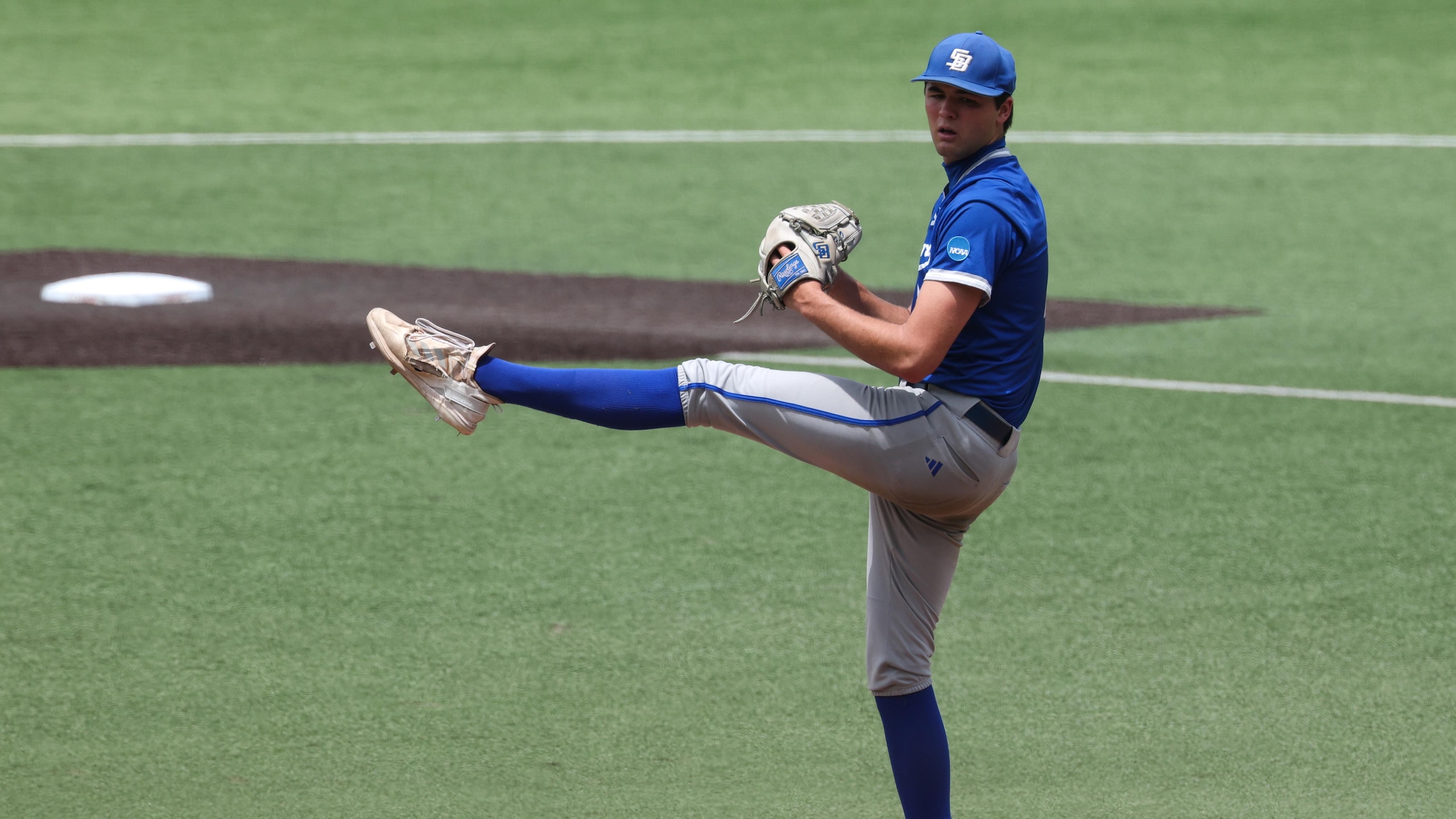
4. San Francisco Giants: RHP Jackson Flora, UC Santa Barbara
The Giants have been tied to prep bats Jacob Lombard and Eric Booth Jr. throughout the predraft cycle. However, they selected just three high school players among an 18-player class last year in the first draft orchestrated by the Buster Posey-led front office, including college guys with their first six selections.
That would seem to point things in the direction of Flora, who is the unquestioned top arm in this class with the upside to make an impact at the top of a big league rotation and the polish to be one of the first 2026 picks to reach the majors.
5. Pittsburgh Pirates: SS Jacob Lombard, Gulliver Prep (FL)
The presence of Konnor Griffin is not going to steer the Pirates away from taking a high school shortstop, as teams simply don't avoid taking shortstops when that athletic profile generally means they can play a handful of other positions on the diamond.
Despite some swing-and-miss on the showcase circuit last summer, Lombard still offers one of the highest offensive ceilings in the draft. He has room to grow into his 6'3", 195-pound frame and the power to potentially be a clean fit at the hot corner.
6. Kansas City Royals: OF Eric Booth Jr., Oak Grove HS (MS)
If the Royals prefer a more polished college player with a closer proximity to the majors, Georgia Tech outfielder Drew Burress is the name to watch here, but there might be too much upside in Eric Booth Jr.'s outlook to pass up.
His top-of-the-scale speed is his calling card, but he also has an above-average hit tool and budding power that give him legitimate 30/30 upside in a center field profile. Remember how important Lorenzo Cain was to their success a decade ago? Think him but with more pop.
Nos. 7-9
3 of 10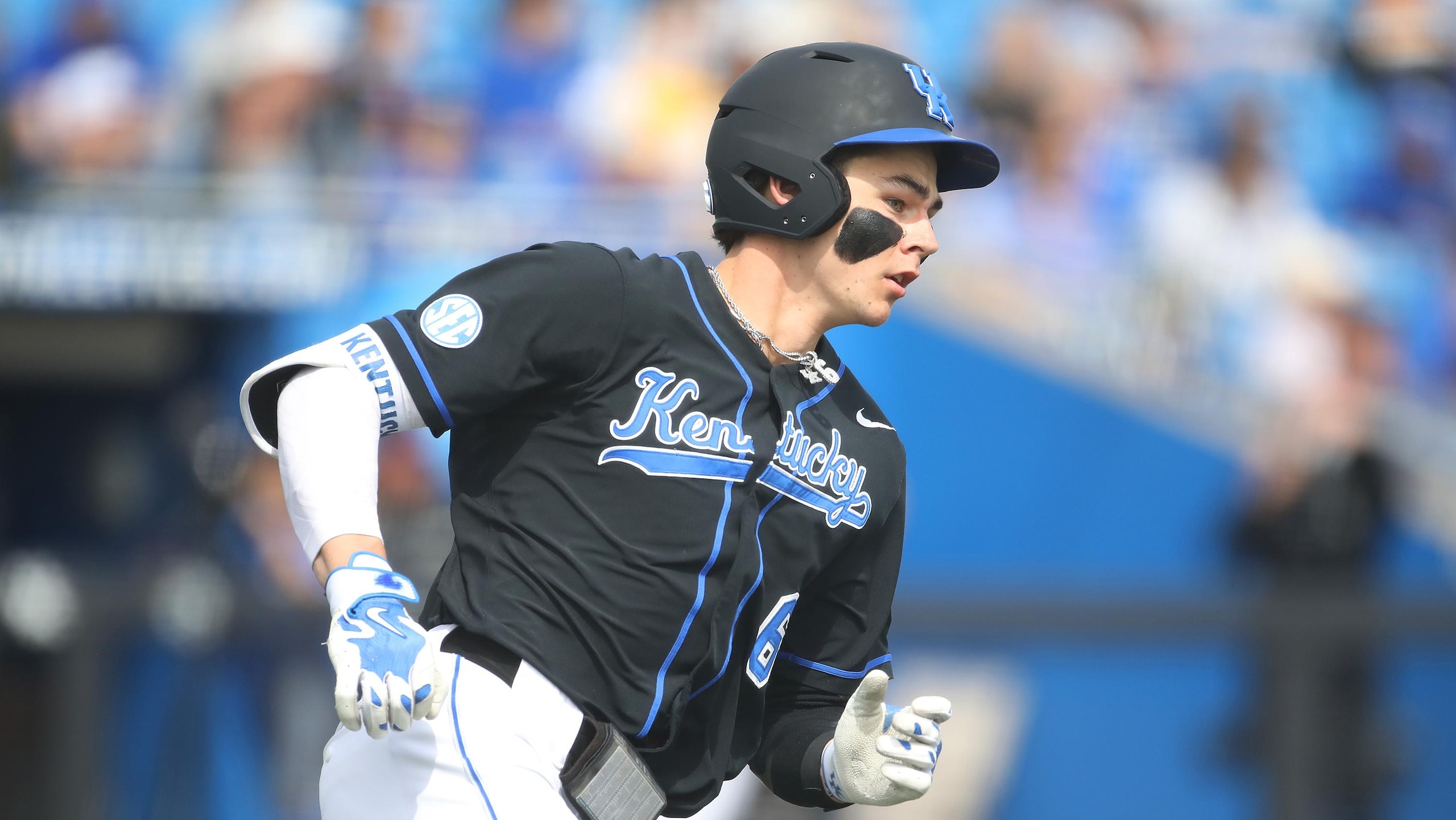
7. Baltimore Orioles: OF Drew Burress, Georgia Tech
The Orioles love a college outfielder, and Burress has a more well-rounded profile than other recent selections from that demographic like Ike Irish (limited athleticism), Vance Honeycutt (questionable hit tool) and Enrique Bradfield Jr. (speed over impact).
Not only does he have 60-grade pop and a strong track record of production, but he also possesses an advanced hit tool, good wheels, the arm to fit in right field and the athleticism to stick in center field.
8. Athletics: SS Tyler Bell, Kentucky
This will be the floor for Jackson Flora, and the Athletics might also be the first team to seriously consider Coastal Carolina right-hander Cameron Flukey or one of the other top college arms.
That said, they have been consistently linked to Bell, and he firmly established himself as the No. 2 college infielder in this class with a strong finish to the season, putting concern about an early shoulder injury in the rearview.
9. Atlanta Braves: OF Derek Curiel, LSU
The Braves are a true wild card inside the top 10. They could be a potential landing spot for the first high school arm taken, likely Gio Rojas, or the team that rolls the dice on Justin Lebron given their need for impact bats.
Curiel represents a high-floor option with an up-the-middle defensive profile, polished hit tool and good speed. There is some belief he has untapped power in his 6'2", 192-pound frame, and if the Braves buy that narrative, he's not a reach at No. 9 overall.


Nos. 10-12
4 of 10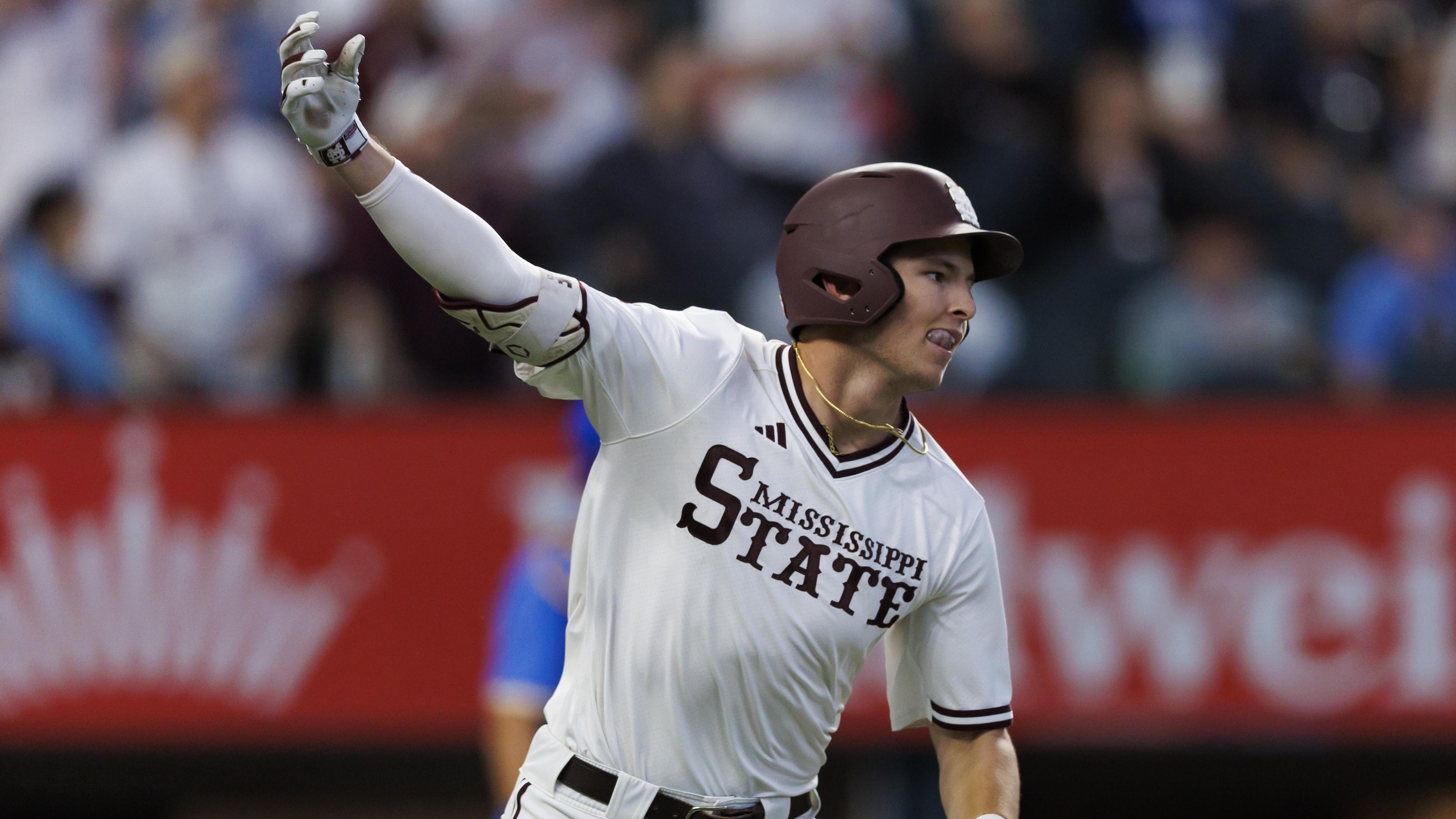
10. Colorado Rockies: C Ryder Helfrick, Arkansas
The Rockies have been tied almost exclusively to college players, and if they're high on Cameron Flukey or Liam Peterson, their perennial need for quality pitching could drive the decision.
Helfrick is as close to an MLB-ready catcher as you'll find coming out of the draft thanks to his polished defensive game and experience calling pitches. A standout defensive backstop could have a far-reaching impact on the pitching staff as a whole.
11. Washington Nationals: 3B Ace Reese, Mississippi State
Reese has some serious late helium as teams seem less and less concerned with his hit tool, and more focused on his huge raw power, track record and batted-ball metrics.
With a 6'4" frame and 30-homer upside, the best-case scenario here is what the Nationals hoped Brady House would one day become. His .993 OPS and 12 home runs in 30 games during SEC play helped solidify Reese's status as a top-tier college bat.
12. Los Angeles Angels: RHP Cameron Flukey, Coastal Carolina
High-floor college bats such as Chris Hacopian and AJ Gracia are worth mentioning here given the Angels' recent history of prioritizing MLB readiness, but interim general manager John Mozeliak might not be as tethered to that philosophy.
Flukey has all the traits to be a frontline starter and the best pitcher in this draft class, with four quality pitches, premium velocity, good command and projection remaining in his 6'6", 210-pound frame. A stress fracture in his rib cost him significant time this spring, but the arm talent is still elite.
Nos. 13-15
5 of 10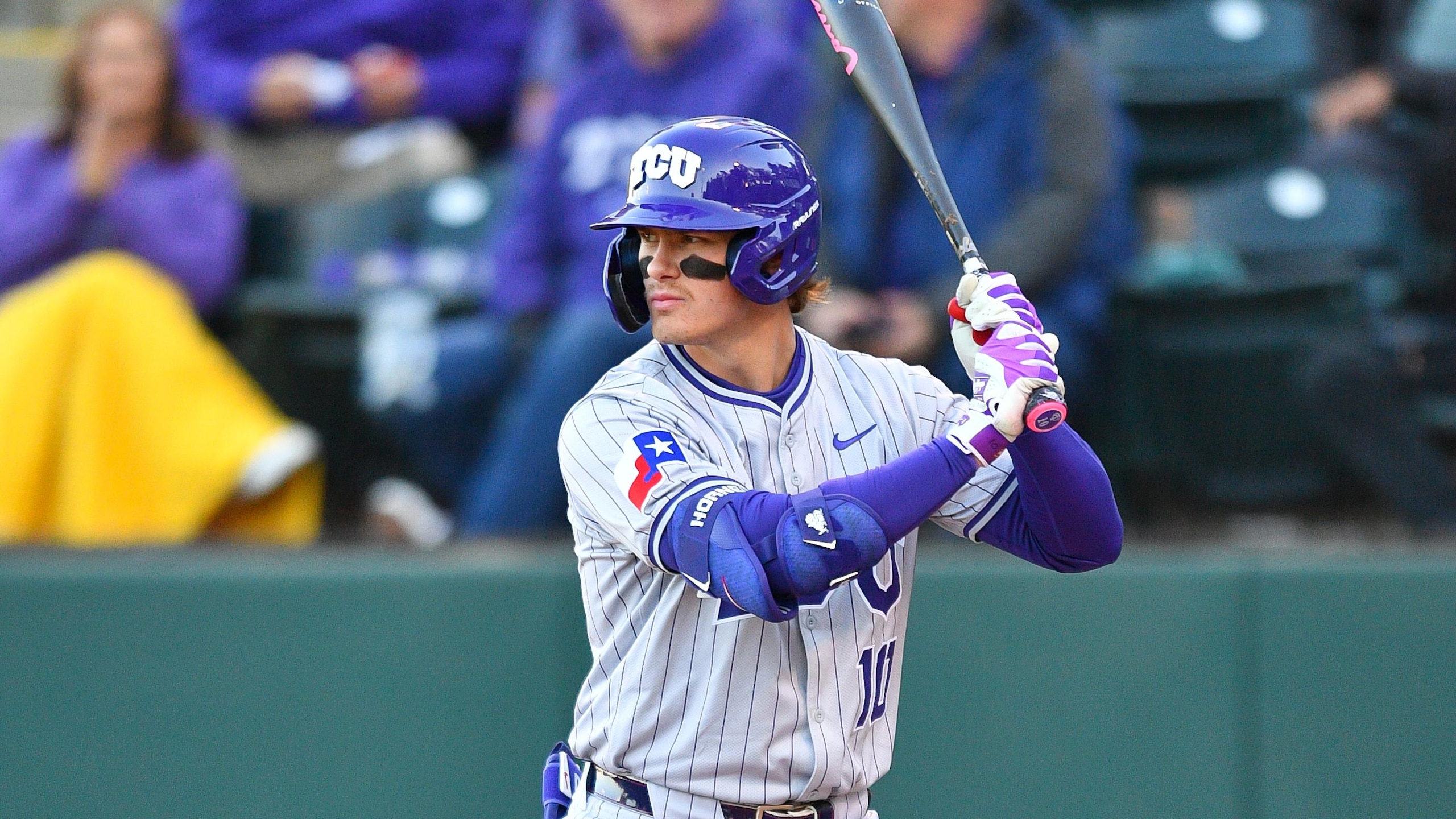
13. St. Louis Cardinals: OF Sawyer Strosnider, TCU
The Cardinals are a prime candidate to pounce on Ryder Helfrick or Derek Curiel if they fall this far given the value they place on defensive tools and up-the-middle talent, and that makes Strosnider an obvious target if those guys are gone.
The TCU star has a 60-power, 60-speed profile and the twitchy athleticism to stick in center field, despite playing mostly right field in deference to Chase Brunson this spring. His hit tool concerns stem more from swing decisions than bat-to-ball ability, which is generally an easier fix.
14. Miami Marlins: 2B Chris Hacopian, Texas A&M
Hacopian has one of the best hit tools in the 2026 class, and he handled the uptick in competition transferring from Maryland to Texas A&M with aplomb. There could also be more power to come simply due to his ability to consistently barrel the ball.
The question here is whether the Marlins place more value on a safe profile like his, or a higher ceiling profile like Justin Lebron. Given the production they have seen from Xavier Edwards and Otto Lopez this year, they might be more willing to bet on the elite hit tool.
15. Arizona Diamondbacks: OF Trevor Condon, Etowah HS (GA)
The D-backs have a type. They target undersized prep players with standout hit tools and plus athleticism. Corbin Carroll is the home run example, but Slade Caldwell (No. 29 overall in 2024) and Kayson Cunningham (No. 18 overall in 2025) also fit the mold.
Condon is this year's model, and with a 60-hit, 70-speed toolbox and a clear center field profile defensively, he has been steadily climbing draft boards this spring to the point that this does not feel like a reach at all.
Nos. 16-18
6 of 10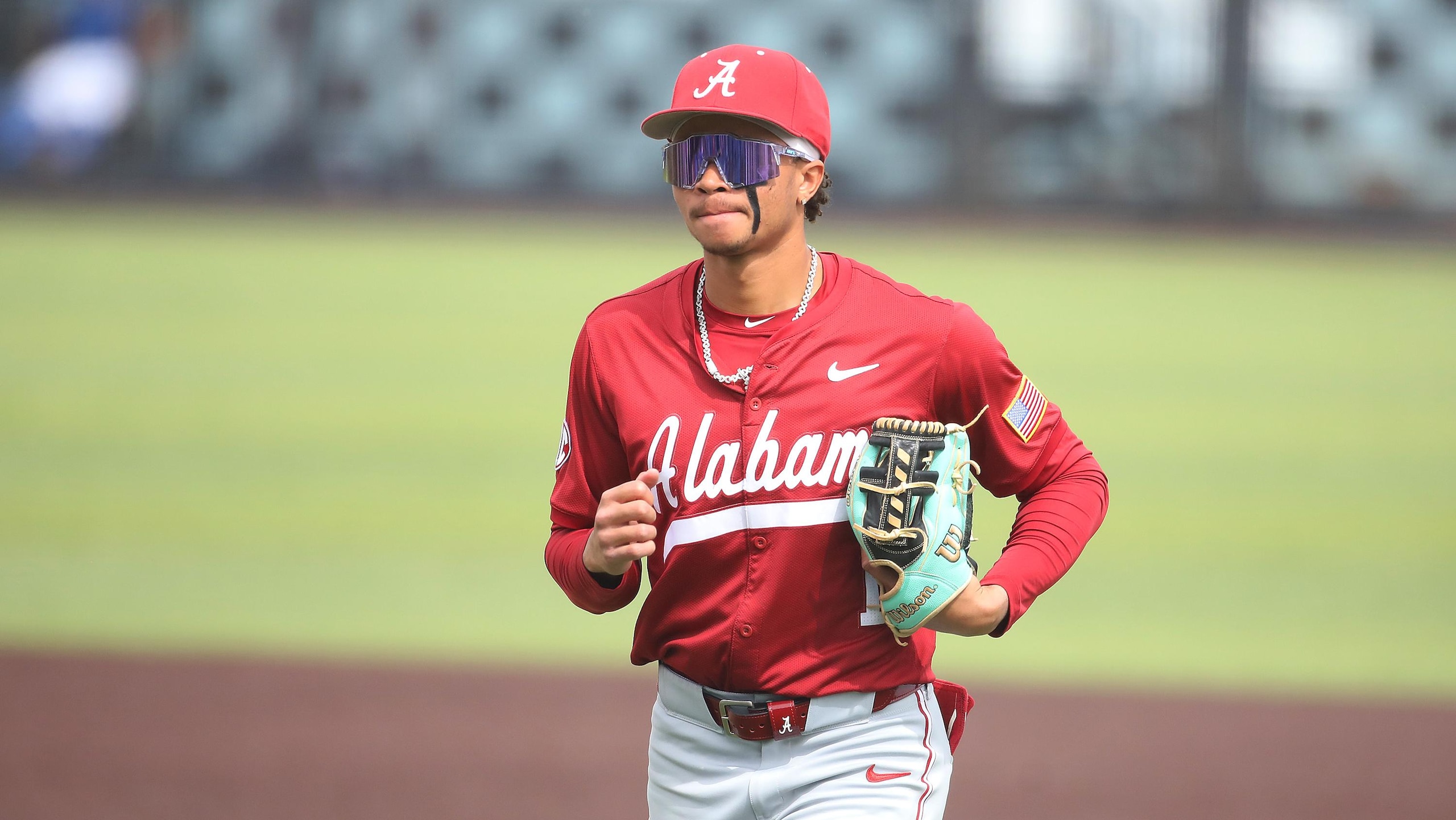
16. Texas Rangers: SS Justin Lebron, Alabama
Even with a .229/.328/.413 line during SEC play to cap off a disappointing junior season, Lebron is only going to fall so far down the board. Shortstops with 60-power, 60-speed offensive profiles and standout defensive traits simply don't come around often.
The Rangers rarely stick to one consistent demographic and often value loud tools over polish, so this looks like a logical landing spot for the Alabama shortstop. This could also be a fit for Florida right-hander Liam Peterson.
17. Houston Astros: OF AJ Gracia, Virginia
The Astros have been regularly tied to college bats, and they are picking in a prime spot to see who falls from a group that includes Gracia, Sawyer Strosnider, Ace Reese and Justin Lebron.
If the board is clear of those names, this could also be the first spot where 2026 Golden Spikes winner Daniel Jackson and Louisville outfielder Zion Rose are mentioned, but the consensus seems to be a college hitter.
18. Cincinnati Reds: OF Aiden Robbins, Texas
This appears to be the floor for Trevor Condon, with the Reds frequently mentioned as a logical fit for the prep outfielder. An outfielder in general makes sense for an organization where that is an obvious need and with a long list of viable options that fit into this portion of the board.
Robbins has a unique profile in that he was a hit-over-power guy at Seton Hall who completely transformed his game this spring, raising his home run total from six to 24 at the cost of his strikeout rate climbing roughly 10 percent. The team that drafts him has some options on how they want to mold his future game.
Nos. 19-21
7 of 10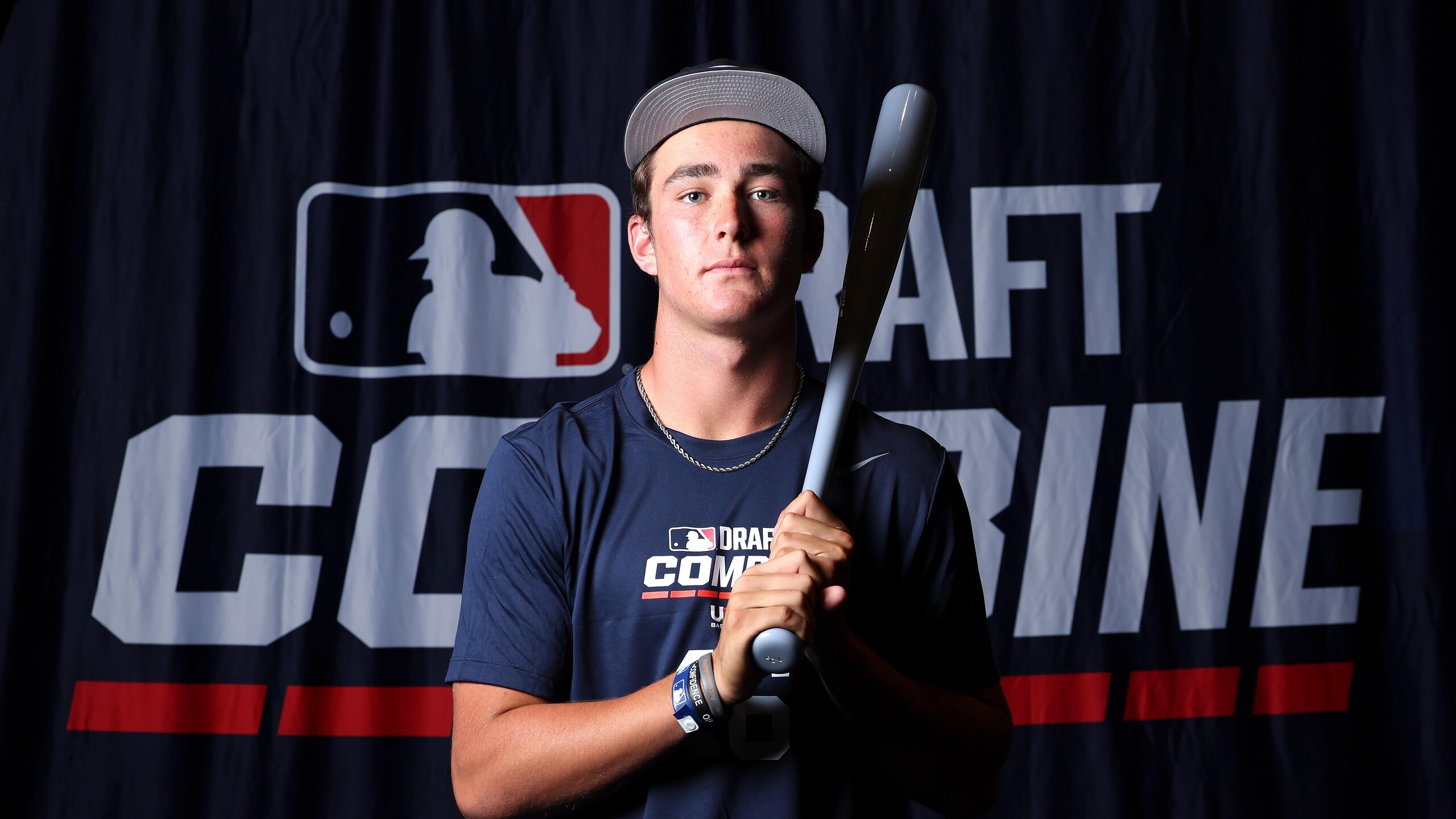
19. Cleveland Guardians: OF/LHP Jared Grindlinger, Huntington Beach HS (CA)
There is still no consensus on whether Grindlinger profiles better on the mound or as an outfielder, and he might not be forced to choose right away, especially since he does not turn 18 years old until April and is one of the youngest players in the class.
His contact-oriented approach fits the type of prep players the Guardians have often targeted, and it's easy to dream on him growing into impact power as his 6'3", 190-pound frame fills out. That profile, coupled with Cleveland's ability to develop pitching, makes this an intriguing fit for both player and team.
20. Boston Red Sox: RHP Taylor Rabe, Ole Miss
College pitchers and prep slugger Bo Lowrance are the names generally linked to the Red Sox, and Rabe had some serious helium down the stretch with a 1.46 ERA and 37 strikeouts in 24.2 innings over his final four starts while allowing just 13 hits.
His fastball-heavy approach could be a red flag for some teams, but Payton Tolle had a similar reliance on his heater coming out of college and he quickly developed into one of the best pitching prospects in baseball.
21. San Diego Padres: LHP Gio Rojas, Stoneman Douglas HS (FL)
There has been frequent speculation that Rojas is a prime candidate to go to the Royals at No. 6 or the Braves at No. 9 if they want to cut a deal, since both of those teams pick again inside the first 30 selections.
Otherwise, the Padres are always a logical fit for prep pitching, and the 6'4" left-hander has the best combination of present polish and future upside of any arm from the 2026 high school class.
Nos. 22-25
8 of 10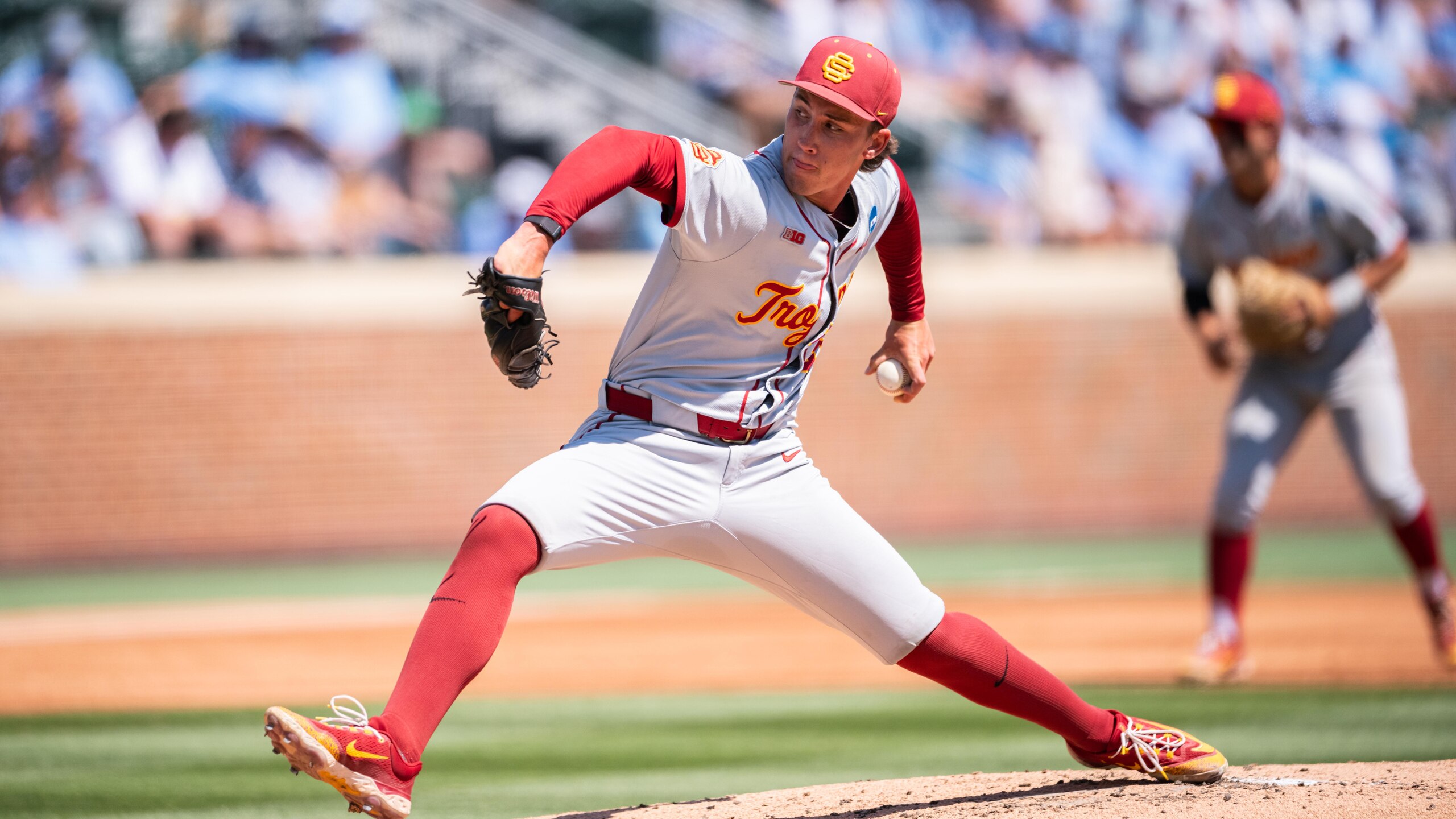
22. Detroit Tigers: 3B Bo Lowrance, Christ Church Episcopal School (SC)
The Tigers have had five first-round picks over the last three years, and they used all of them on high school hitters, starting with Max Clark and Kevin McGonigle in 2023.
Standout defensive shortstop Aiden Ruiz has been a popular name in recent weeks, but they might have a tough time passing on Lowrance if he winds up slipping this far. The 6'5", 200-pound slugger might have the best raw power in this year's prep class, and a good enough feel for hitting to fully realize it.
23. Chicago Cubs: LHP Hunter Dietz, Arkansas
The board has generally pointed the Cubs toward college pitching, and given the overall lack of impact arms in the system right now, it's a logical approach to help restock the pipeline.
Every pitcher on the board here has some sort of blemish in his profile, and for Dietz it's the fact that injuries limited him to just 1.2 innings of work his first two seasons at Arkansas. He was electric this spring, and his 6'6", 235-pound frame looks the part. The question is simply his lack of track record.
24. Seattle Mariners: RHP Liam Peterson, Florida
College pitching is generally the demographic tied to the Mariners, but their recent success developing prep bats could steer them toward Bo Lowrance if he's available or one of the shortstops still on the board if they are not enamored with any of the arms in this range.
With a 6'5", 225-pound frame, four quality pitches and plenty of bat-missing ability, Peterson looks like a potential value here even coming off a less-than-dominant spring at Florida.
25. Milwaukee Brewers: LHP Mason Edwards, USC
The Brewers have not led off their draft class with a pitcher since Ethan Small in 2019, but they are slotted in the middle of what could be a run on college arms if the board plays out as expected here.
Edwards led the nation with 169 strikeouts in 95.2 innings in his first year as a full-time starter. The Brewers have often gravitated toward pitchers who can spin a good curveball, and his might be the best in the class.
Nos. 26-28
9 of 10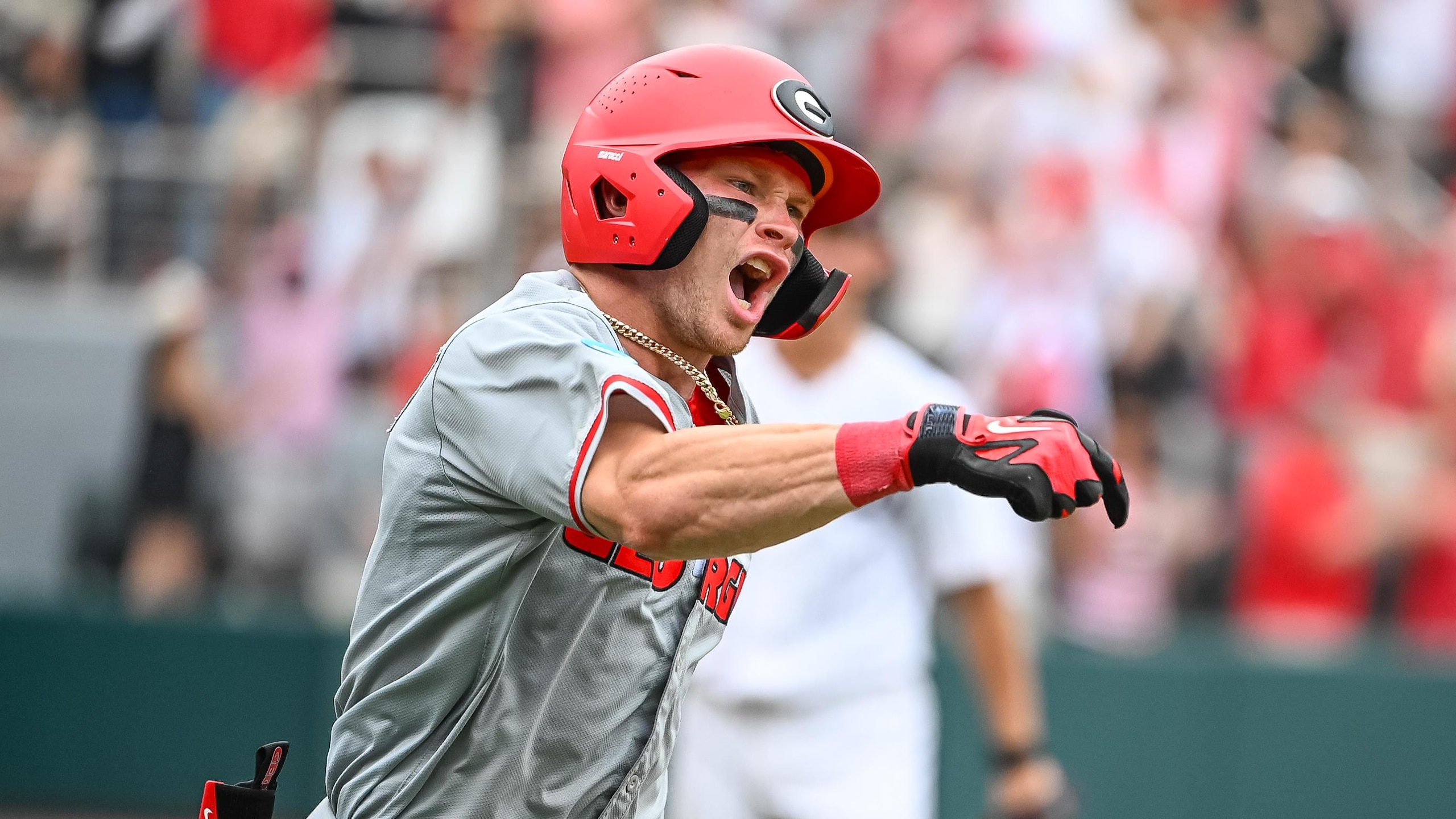
26. Atlanta Braves: LHP Cole Carlon, Arizona State
PPI pick for Drake Baldwin winning NL Rookie of the Year
If the Braves go with a bat at No. 9 overall, which they have done in this mock with LSU outfielder Derek Curiel, expect this pick to be a pitcher.
Carlon has the size and stuff with a 6'5" frame and arguably the best breaking ball in the draft in his tight, upper-80s slider. His command is the biggest question mark, but his fastball-slider combo and experience pitching in relief as a freshman and sophomore give him an extremely high floor as a bullpen piece if starting doesn't work out.
27. New York Mets: C Daniel Jackson, Georgia
First pick moved back 10 spots for exceeding top of luxury-tax threshold
There are holes to be poked in Jackson's game, most notably his swing-and-miss on pitches in the zone and his still-developing defensive game, but at a certain point it is impossible to ignore the numbers.
He hit .379/.473/.803 with 100 hits, 32 home runs and 87 RBI in 67 games this spring to win the Golden Spikes Award, and with experience playing first base and the corner outfield spots, he is athletic enough to lean on his bat if catching doesn't work out.
28. Houston Astros: OF Zion Rose, Louisville
PPI pick for Hunter Brown finishing top-three in AL Cy Young
College hitters are the consensus for the Astros at No. 17 overall, and if the right bat is still on the board when they pick again, don't be surprised if they double dip on that demographic.
Rose has above-average tools across the board and could find more in-game power if he drives the ball in the air with more consistency. Other names to monitor here include Caden Sorrell and Logan Hughes.
Competitive Balance A Picks
10 of 10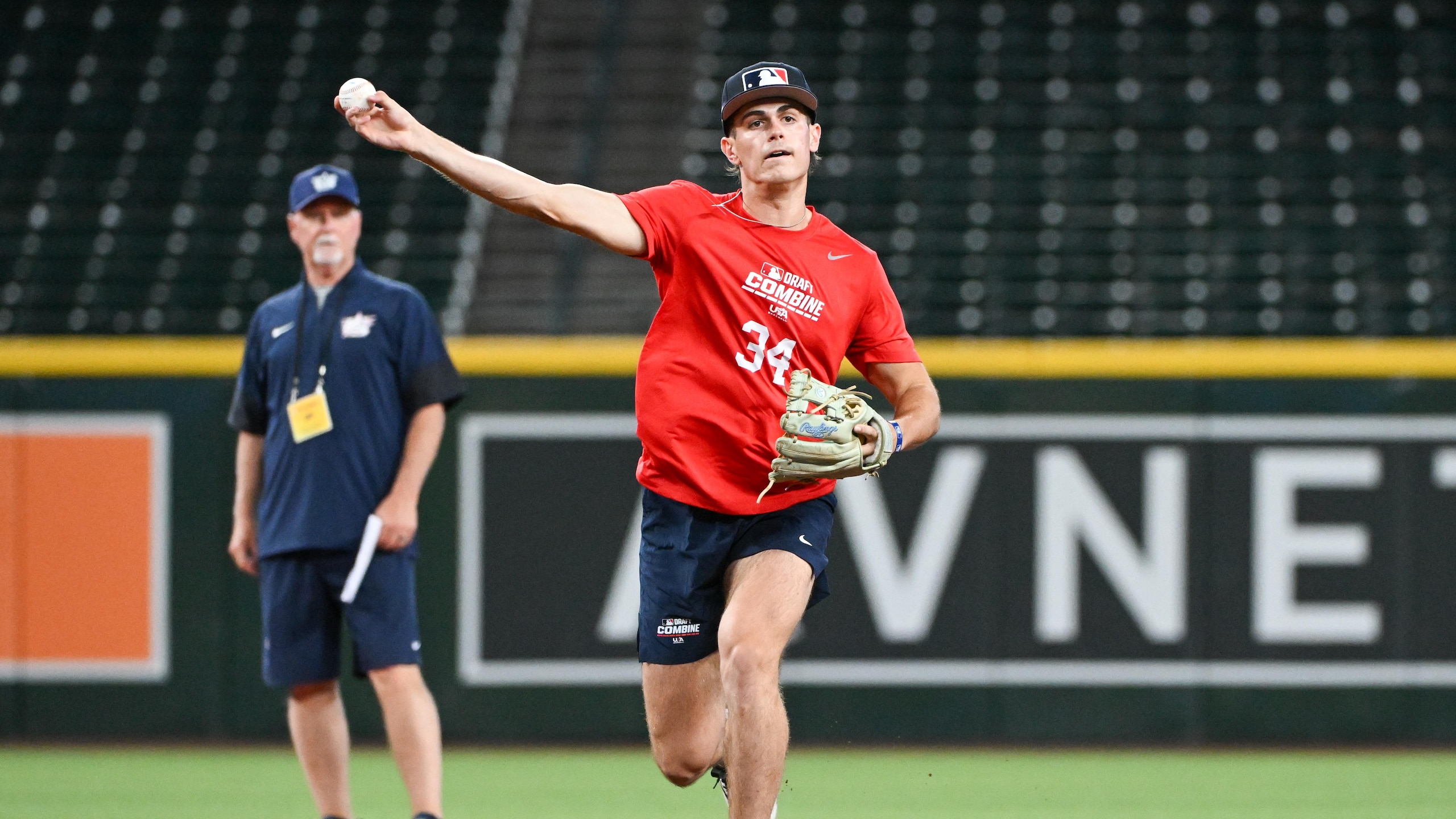
Competitive Balance Round A Picks
All teams that have either one of the 10 smallest markets or 10 smallest revenue pools receive an additional pick at the end of the first or second round. The groups of teams alternate between the two rounds each year. These are the only picks that are eligible to be traded.
The Yankees, Phillies, Blue Jays and Dodgers also each received a 10-pick penalty on their first selection for exceeding the second luxury-tax threshold, leaving their first picks as part of the Competitive Balance Round A.
29. San Francisco Giants: SS Tyler Spangler, De La Salle HS (CA)
Pick acquired from Guardians in Patrick Bailey trade
30. Kansas City Royals: RHP Logan Reddemann, UCLA
31. Arizona Diamondbacks: LHP Carson Bolemon, Southside Christian School (SC)
32. St. Louis Cardinals: SS Aiden Ruiz, The Stony Brook School (NY)
33. Tampa Bay Rays: 3B/C Cole Prosek, Magnolia Heights HS (MS)
Pick acquired from Orioles in Shane Baz trade
34. Chicago White Sox: RHP Blake Bryant, Citizens Christian Academy (GA)
Pick acquired from Pirates in Jacob Gonzalez trade
35. New York Yankees: SS Landon Thome, Nazareth Academy (IL)
First pick moved back 10 spots for exceeding top of luxury-tax threshold
36. Philadelphia Phillies: OF Logan Hughes, Texas Tech
First pick moved back 10 spots for exceeding top of luxury-tax threshold
37. Colorado Rockies: RHP Tegan Kuhns, Tennessee
Second Round
38. Colorado Rockies: OF Caden Sorrell, Texas A&M
39. Toronto Blue Jays: SS Eric Becker, Virginia
First pick moved back 10 spots for exceeding top of luxury-tax threshold
40. Los Angeles Dodgers: 2B Jarren Advincula, Georgia Tech
First pick moved back 10 spots for exceeding top of luxury-tax threshold

.jpg?w=2560 "Rams to Sign New Kicker")
.jpg?w=2560 "NFLPA Makes Hurts Statement")