Mike Freeman's 10-Point Stance: Goodell Shouldn't Be Judge, Jury and Executioner
1. Why does Goodell want all this power, anyway?
I found myself somewhat staggered, like when I get kicked in the head in muay thai, after reading something from Richie Incognito and, gulp, agreeing with him.
It was when Incognito said this, about NFL Commissioner Roger Goodell, to Newsday's Bob Glauber:
TOP NEWS

New NFL Power Rankings 📊
.jpg?w=2560 "Commanders Eagles Football")
2 NFL Officials Suspended
.jpg?w=2560 "Texans-Mixon Released Football")
Injury-stricken Seahawks signing veteran RB
"I just think it's bogus, the whole system in how it's set up with Roger and the complete, absolute power he has.
He has so much power and he hires independent investigators who come in and are obviously not independent. They come in with an agenda and they come in looking to find facts to back up their argument. All the facts are slanted in their favor.
"
And then this:
"I think with Roger, with so much power, just keeps fumbling over independent investigations and making everything public.
I think it just needs to be a more concise system. Roger can't be the judge, jury and executioner on this thing. I understand league discipline.
"
Incognito may be a bully and a bigot (warning: link contains NSFW language), but on this he is probably right.
A few things:
I am not one of these people who believes Goodell is evil or incompetent or a Sith Lord. I think he's a good man who is missing the optics of what's happening in his sport now.
I don't believe Ted Wells goes into an investigation trying to rig the game and dictate the outcome, but it's easy to understand why some would think that.
I don't believe that when Goodell serves as arbitrator he purposely rigs the system and automatically backs his rulings, but it's easy to understand why some would think that.
Most of all, I wonder why Goodell wants this type of power, because it sets him up to be the bad guy. Constantly.
Goodell thinks the power is required because the NFL needs someone who looks out for the league first, above all else. I think Goodell sincerely believes he does that.
The problem, again, is the optics. It just looks, well, weird when the punisher is also the appeals dude.
In fairness to Goodell, in the history of major sports, commissioners have almost always been the final arbiters. That's the traditional power structure. The difference now is that—partly due to the media attention, partly due to the arrogance of some players and partly, I believe, due to chronic traumatic encephalopathy (CTE)—there are more crises in the NFL.
This requires a more delicate handling of these issues than Goodell can provide.
Goodell was asked by reporters at the owners' meetings if it was still important to him to have the final say on discipline issues.
"I think first off, it's important to the ownership," he said. "The ownership instills in the commissioner, and we negotiated that with the union...the authority of the commissioner to protect the integrity of the game...that's my job. That's my responsibility. I take it seriously. The ownership knows that. We have rules in place to protect the integrity of the game and all 32 teams. And we enforce those."
What's needed is a group of people who, mandated by the CBA, have the power to punish (or not to punish).
Hand the power over to a judge agreed upon by the union and Goodell. Or a council composed of ex-players and ex-team officials. Give them a budget and investigative team, and they get final say on appeals. It's pretty simple, actually.
Then the process would have the appearance of total fairness.
Again, I don't think Goodell is unfair, but the process does make it look that way.
And it all goes back to a central question:
Why would he want that power?
2. Foster out three months?
ESPN's excellent medical reporter, Stephania Bell, seems to think it's possible Texans running back Arian Foster will be back from a groin injury sooner rather than later.
I've been told by a person close to Foster that a three-month absence is possible, "though Arian has great healing powers."
The tough part for the Texans and Foster is finding the best time to bring him back. It's not as easy as it sounds. They will want him back as soon as possible, because he's so talented. And because Foster is a competitor, he'll want to come back as soon as possible, too.
But both sides have to resist that urge. Rush Foster back, and you risk re-injuring the groin. It's a delicate balance.
3. On Charles Haley
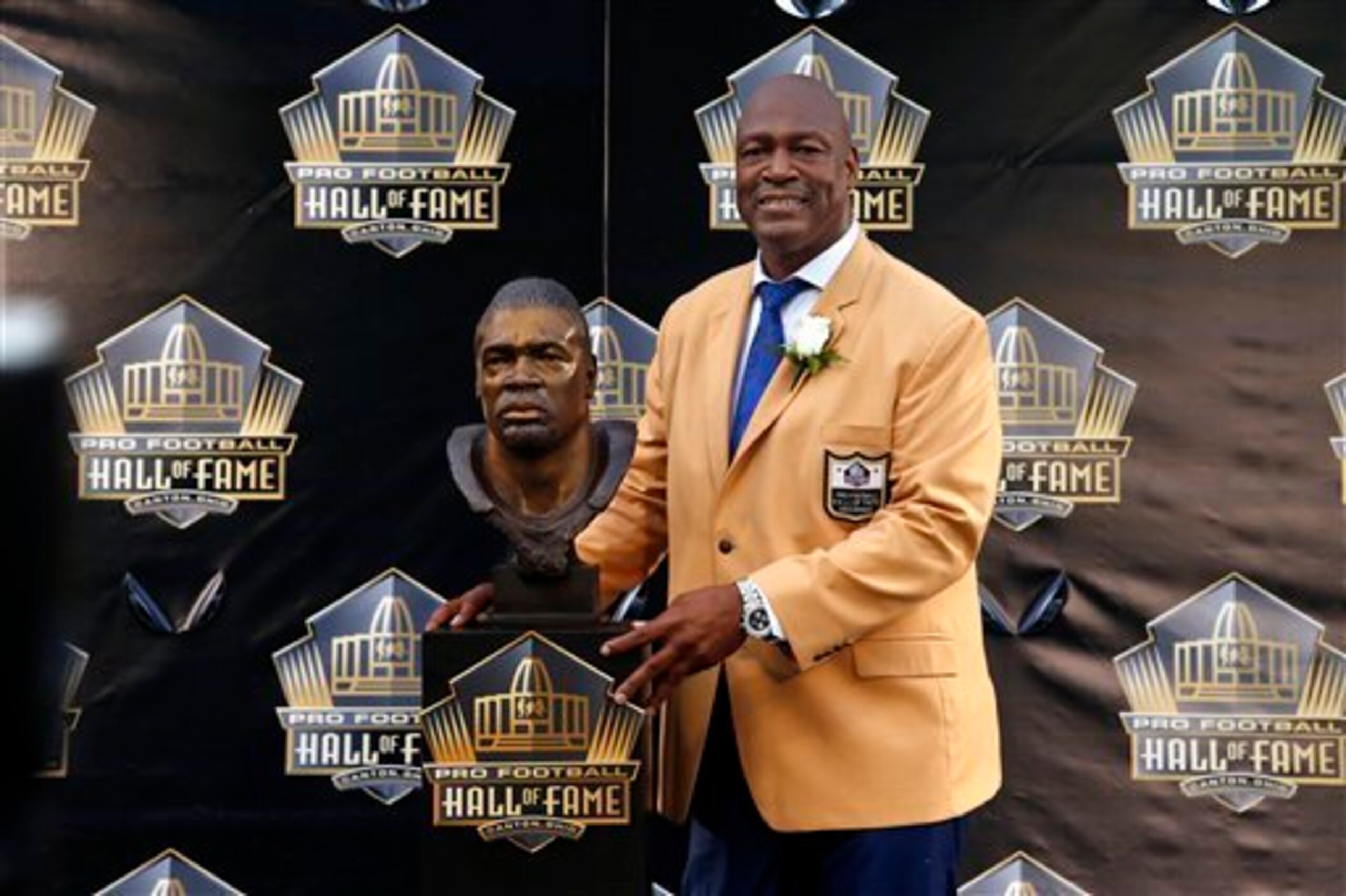
My first memory of Charles Haley is how incredible he was on the field. He destroyed offensive lines. At times, it was like watching Reggie White. In some ways, he was the first J.J. Watt. He was a big guy, sure, but more of an athlete than a brute.
Haley routinely required two and three guys to block him. Like all Hall of Famers, as Haley said in his induction speech, he wanted to be great every play. Not some. Not most. Every one. I saw in Haley's effort what I saw in covering Michael Strahan—a desire to be the best ever.
My other memory of Haley is that he was easily the most intimidating guy I ever covered. Once, standing at his locker after a game and asking him about a play, he turned to me out of nowhere and said, "Suck my ----."
There were many writers, locally and nationally, who gave Haley a wide berth. We knew he was mentally ill. Most of us had sympathy for Haley and just let him be.
Watching his speech, which was genuine and heartfelt and funny, showed how far he's come.
4. On Sydney Seau
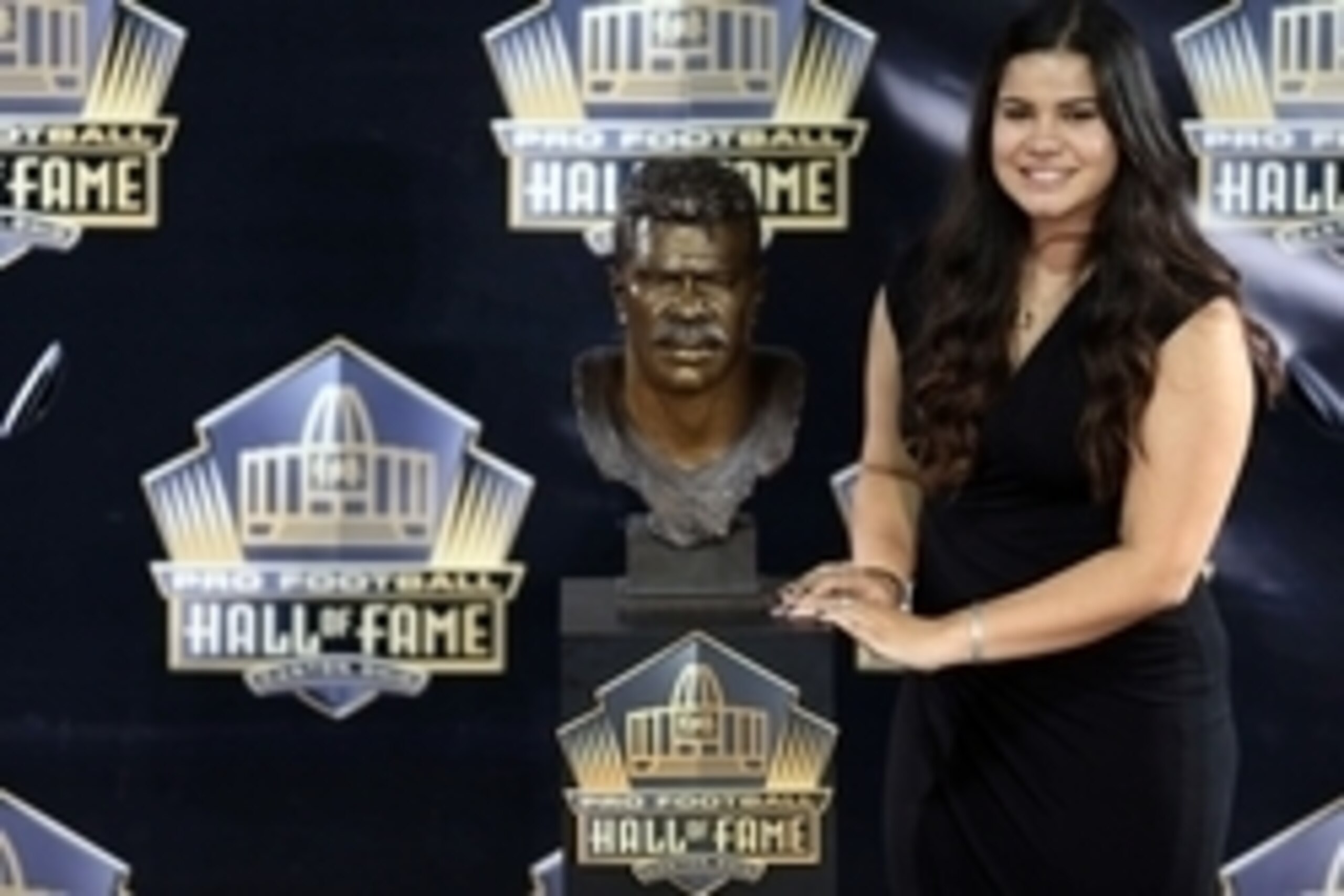
The best Hall of Fame speech was one not given at the actual induction. It was made in a hotel room.
Having met Sydney once, when she was much younger, and seeing how incredible she's become as she's gotten older, her speech brings a tear to the eye.
Then there was the emotional interview she did at the ceremony in Canton. It was equally brilliant.
One of the most poignant parts of the night was how after Sydney's interview, every Hall of Famer on stage waited to give her a hug.
5. On Junior Seau
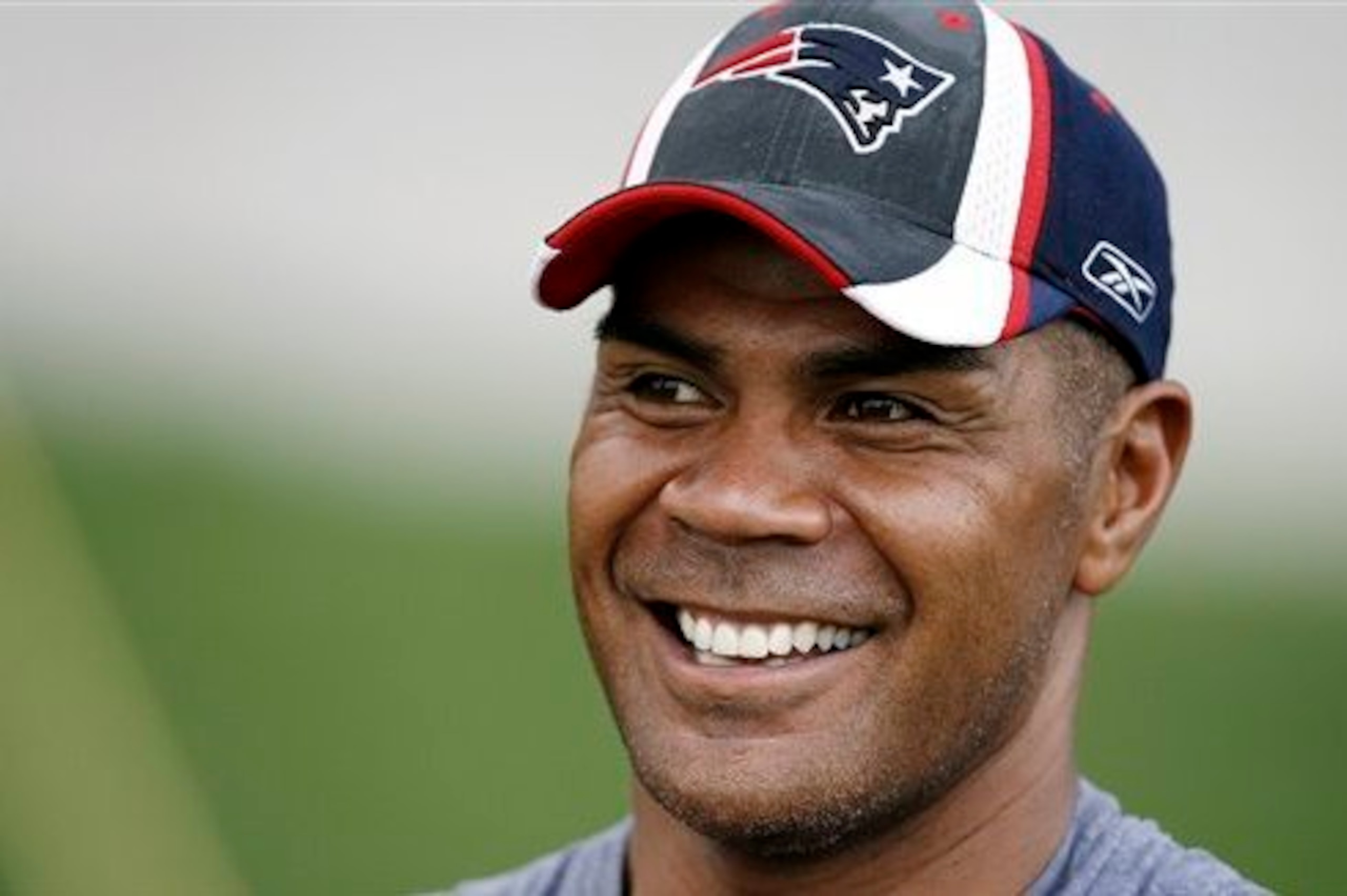
The Hall of Fame—and the NFL—dramatically underestimated one thing when they initially denied Sydney the right to speak, based on a five-year-old rule that really means nothing. They underestimated just how popular Junior Seau was.
Seau was one of the friendliest superstars I ever covered. In the 25-plus years that I've covered the NFL, I can only think of a handful of players who were so universally cherished.
The fact he was such a great player, in addition to a highly popular one, is what caused the backlash. It wasn't just the optics of a daughter not being allowed to honor her father; it was also that players and others felt Seau literally gave his life to the sport. And if he did that, then the least the sport could do was allow his daughter to honor her father.
6. 1970s All-Decade team would win all-time tournament
One last thing on Hall of Fame ceremonies. Watching the Hall of Fame gave me an insane idea. (Yes, you're shocked I have an insane idea.) If I could create a holodeck—right after making a phaser and the perfect chocolate chip cookie—I would recreate every player from every All-Decade team, starting in the 1950s.
Then, I'd have an NCAA-type tournament—decade vs. decade. Each decade would be seeded, from 1950 to the 2000s.
The decade that I think would beat them all: the 1970s.
I know what you're going to say. The safeties in the 2000s were bigger than the offensive linemen in the 1970s. I get that. (I also know it would be important to determine what rules these games would be played under. I haven't figured that out yet.)
They would be at a size disadvantage, sure, but the talent in that era, I mean, wow. The great Raiders players like Gene Upshaw, Art Shell and Ken Stabler. The undefeated Dolphins. Those incredible Steelers teams. I'd make Don Shula coach of my 1970s team, and I'd like my chance against any other decade.
One day, soon, after holodecks are invented, we'll make it so.
7. One last Hall of Fame note
First, you need to know that I'm biased with the three names I'm about to give, but I also believe I'm right.
The Hall of Fame is missing, sorely missing, three personnel people who should be inducted:
George Young: Won two Super Bowls, hired Bill Parcells and worked in the league office.
Ernie Accorsi: Won a Super Bowl and made the trade for Eli Manning, who would go on to win two championships.
Amy Trask: Worked for three decades for the Raiders, transforming the business side of one of the most famous organizations in all of sports—from one that was clunky and wasteful into one that was a model for the rest of the league.
8. No, AP, you're not a Hall of Famer…yet
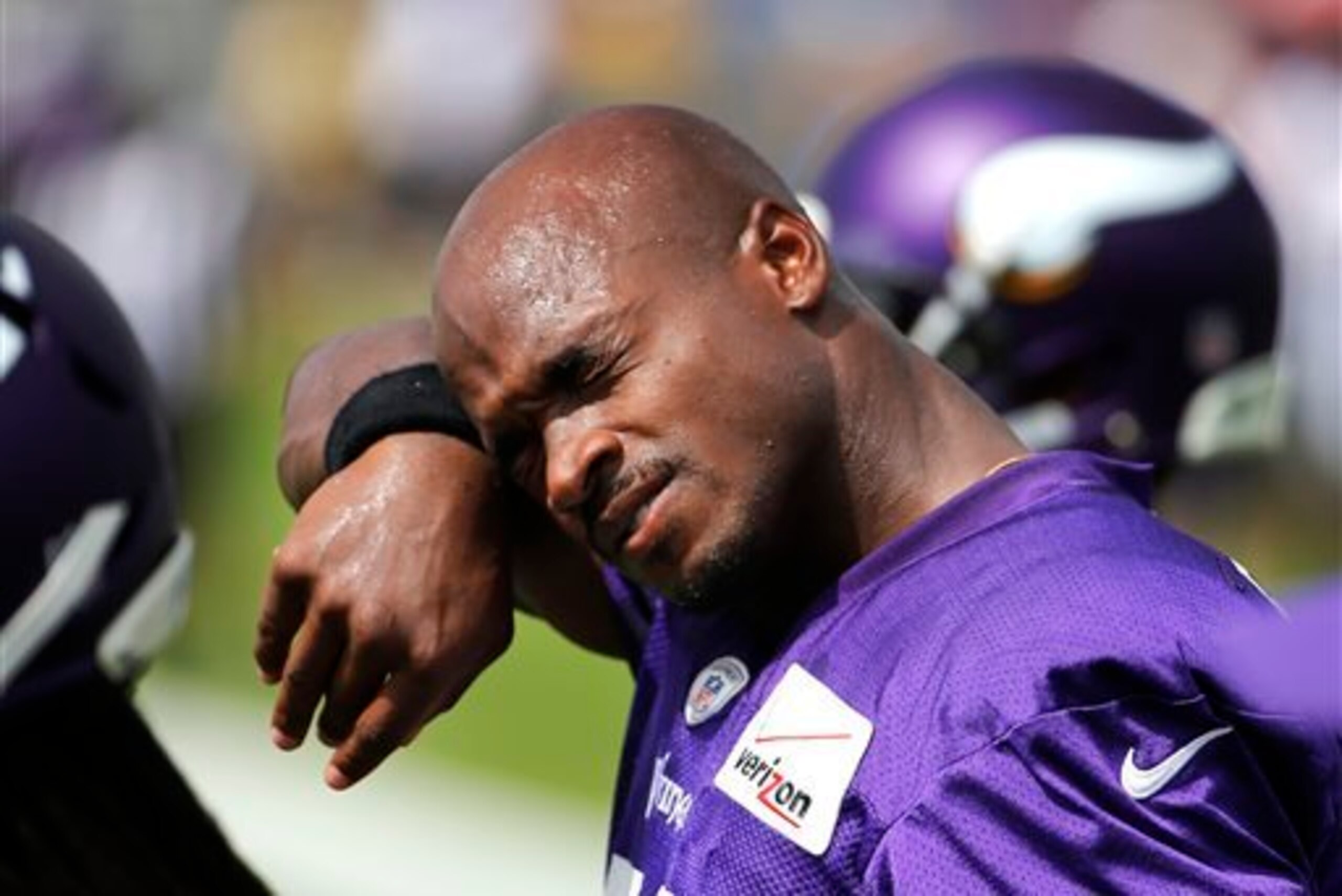
Adrian Peterson saying he's already a Hall of Famer shows that Peterson doesn't understand how the Hall of Fame works.
You're not in—until you're in. It's pretty much that simple.
Terrell Davis, at one point in his career, looked like a certain Hall of Famer. Then he got hurt. Now he's not in. He'll likely never get in, despite what were highly impressive numbers for a short burst of his career.
Peterson's already missed one season. What if this year he blows out a knee? Is Peterson a Hall of Famer then? He certainly would have an argument, but he would be no lock.
9. The Love for Winston
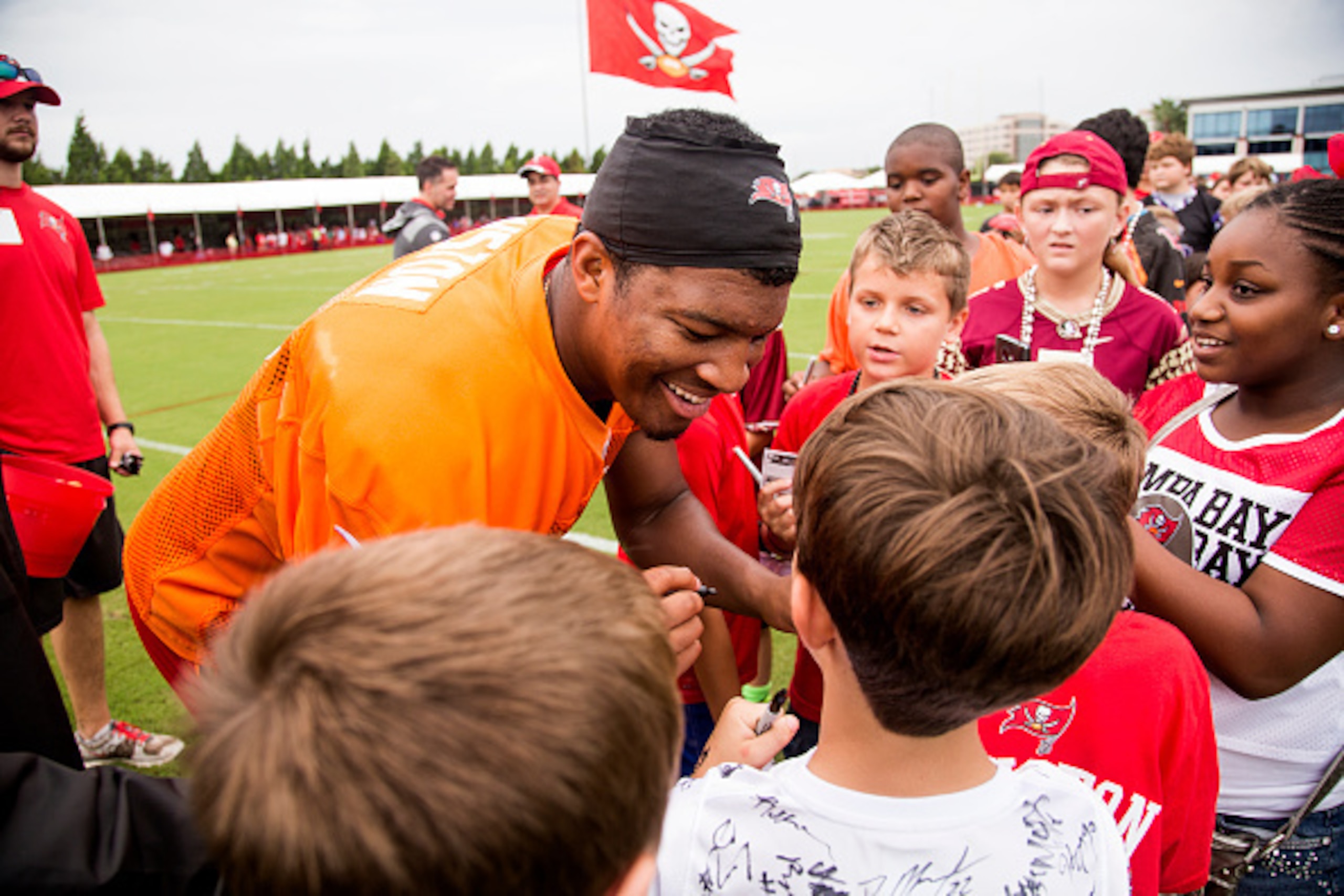
It continues.
The coaches I've spoken to on the Bucs staff say they have rarely seen as impressive a young player as Jameis Winston. "First at the complex, last to leave," one said.
Sure, of course they have a reason to say things like this—because they drafted him—but I trust what they're saying.
Head coach Lovie Smith was relaying the same message to reporters Sunday. Referring to how adept Winston has been at spreading the football around, he said (via a transcript provided by the team):
"That's what we brought him in here to do. We talk about improvement from a lot of guys and we've seen that from Jameis.
[He's getting] more and more comfortable. As we talk about a linebacker, as a rookie in general it's about being out there getting as many reps as you possibly can right now. That's what he is doing—working with different people. Working with the guys also that he'll be throwing to this year. There is an awful lot that goes into what we are asking him to do and he is picking it up. [Quarterbacks coach] Mike Bajakian is doing a super job with him. Of course [Offensive coordinator] Dirk [Koetter]. We want to have flexibility with our offense and be balanced. Part of that balancing in the passing game is spreading it around.
"
I'm hearing some of the same from Titans coaches about Marcus Mariota, but they are slightly more tempered. Winston has the Bucs coaches going gaga. Some of the players Winston clashed with upon first arriving also are now on board.
Part of it might be that for the first time in a long time, the Bucs feel they have a real quarterback.
10. Locker rooms are insane places
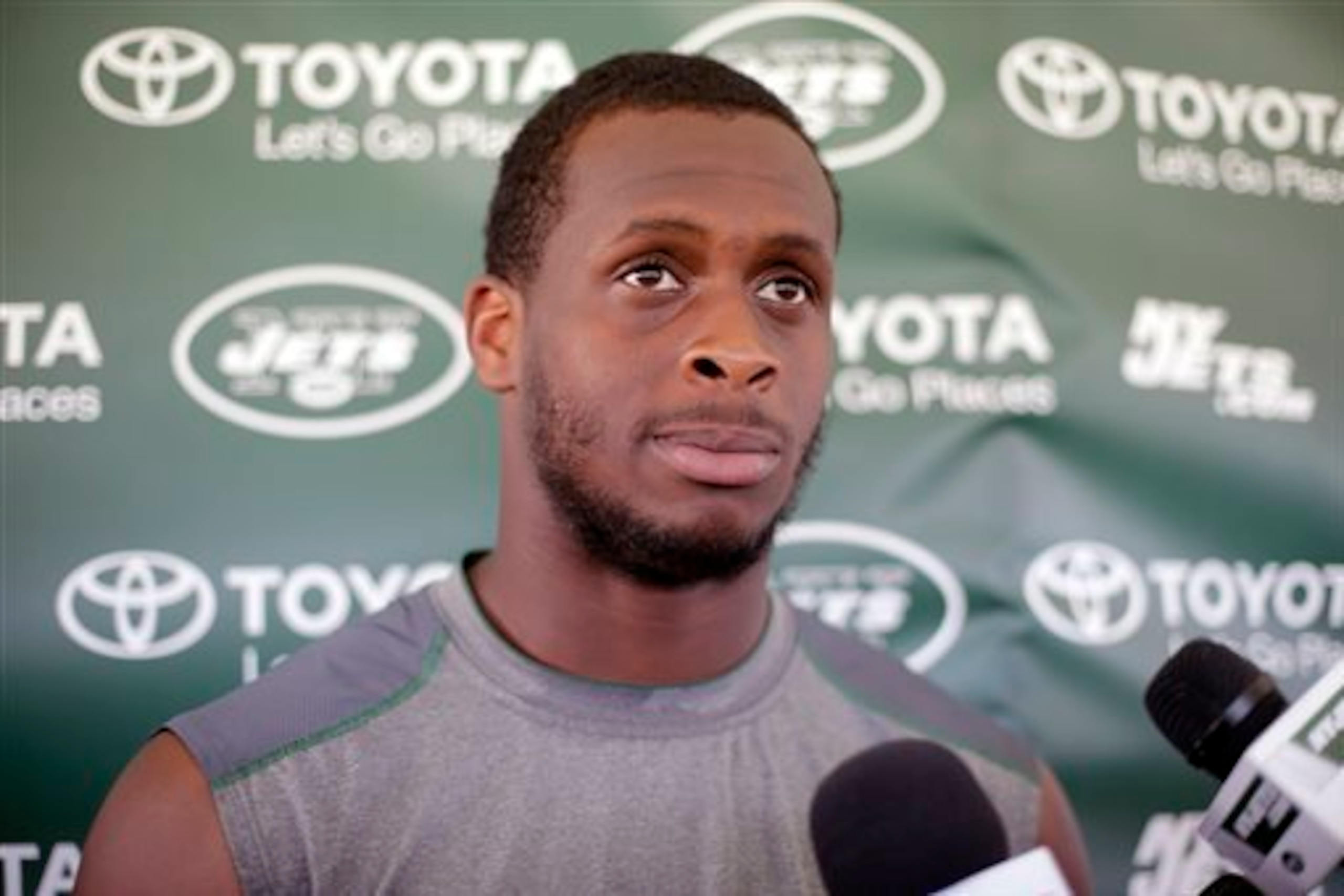
Now that Punchgazi is almost over and Geno Smith is headed to jaw surgery and the Jets are again headed to 4-12, a word about locker rooms.
It's true that what happened with the Jets is just about unprecedented. I've never heard of a quarterback getting sucker-punched in the locker room and his jaw busted. Then, missing at least six weeks.
It's also true that locker rooms are alien worlds. One of my favorite stories came when I did a story on players and guns. There was a Giants player, who played in the 1990s, who came to the Giants from another team. He was concerned Giants players wouldn't accept him—or worse would physically harm him.
So he used to bring a small handgun in a bag and store the gun in his locker. Just in case, you know, he had to defend himself. The player never intended to shoot anyone; just wave it around and scare dudes if anyone jumped ugly with him.
So, yes, locker rooms are crazy places.
Mike Freeman covers the NFL for Bleacher Report.

.jpg?w=2560 "Chiefs Dolphins Football")