
How the Edmonton Oilers' Dysfunction Could Drive Connor McDavid Away
Call it an Oil spill because this is a mess.
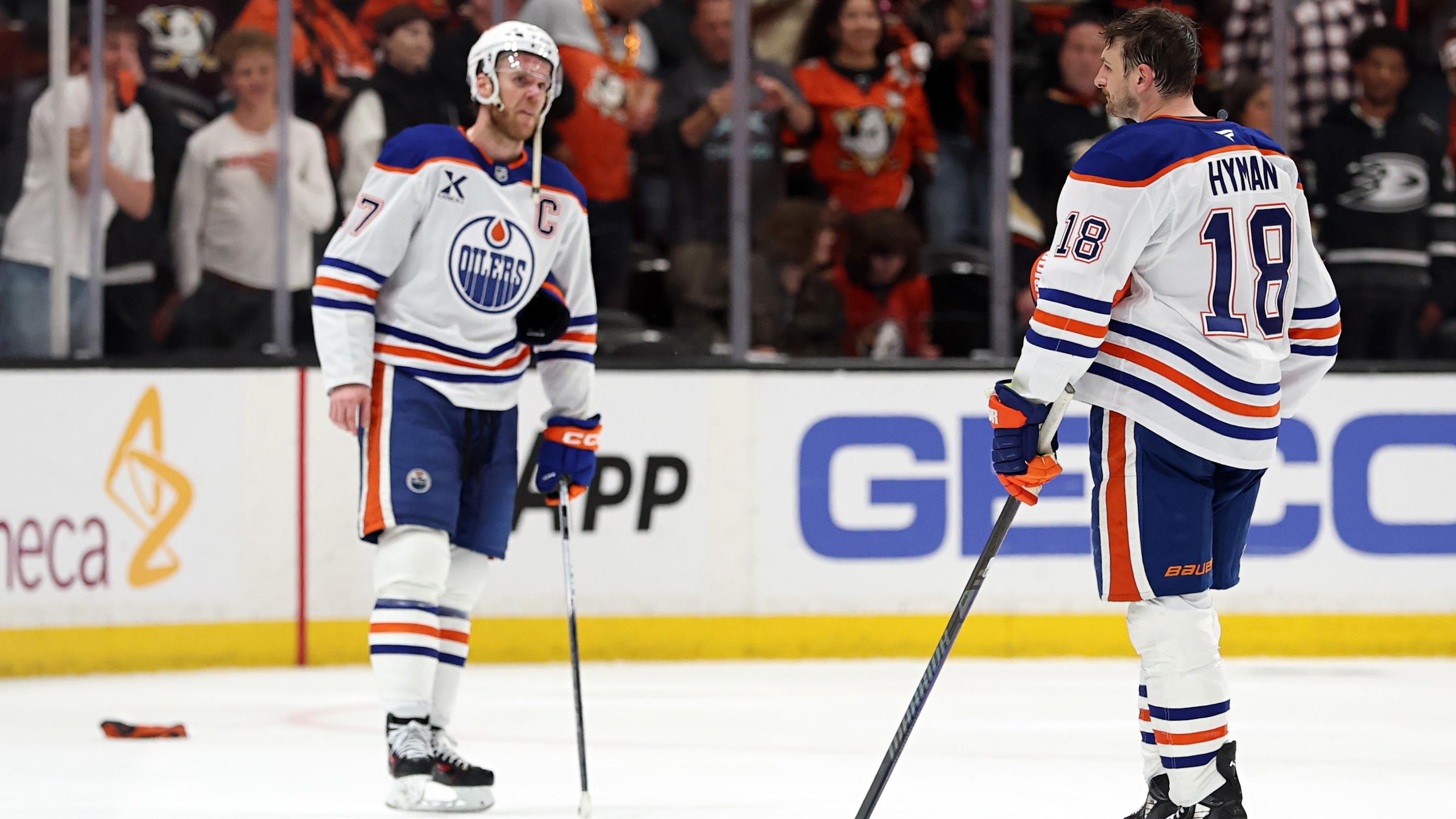
The basic tension in Edmonton is well understood. Connor McDavid made a tepid commitment to the Edmonton Oilers on Oct. 6 of last year, signing a two-year extension. The Oilers were, by McDavid's own words, "average" this season and then sputtered out in the first round against an underripe Anaheim Ducks team. Now the Oilers seemingly have one season to show 30-year-old Connor McDavid that he won't be wasting the back half of his career by sticking around.
TOP NEWS
Re-Ranking Top Free Agents 🛒

Grades For Every Team's Prospect Pool 🔠
Canes Troll 3 Philly Teams 😅
Yet a full audit of the organization is necessary to properly understand how unprepared the Oilers are to meet that challenge.
The Oilers have fired head coach Kris Knoblauch after making that situation untenable through their own sloppiness. Reports surfaced this week that the Oilers had contacted former Vegas Golden Knights head coach Bruce Cassidy. They were hoping to keep it quiet, thereby leaving the possibility for Knoblauch to remain on the job. It would have been impossible to go into the season with a head coach the entire world knew the organization didn't totally believe in.
Now the Oilers are forced to part with one of the brightest young coaches in hockey, one who previously brought the team to back-to-back Stanley Cup Finals. One who has a three-year contract extension with the team that hasn't even officially kicked in yet.
It's a microcosm of how general manager Stan Bowman has run the organization. A total lack of object permanence or understanding of the secondary or tertiary consequences of every given decision. Impulsive decision-making, followed by desperate attempts to chase those losses, thereby stacking problems on top of problems.
Stuart Skinner was a bad goaltender in Edmonton. What if he, Brent Kulak, and a second-round pick were parlayed into Tristan Jarry, an equally inconsistent goaltender but one who is more injury-prone and term-committed?
The Oilers had to package a first-round pick with Andrew Mangiapane, who had just been signed, to get out of his contract and acquire a depth rental in Jason Dickinson. And that contract was a minor annoyance compared to the absurd long-term deal handed to Trent Frederic. His remaining five contracts would pass through waivers if Bowman placed Frederic on waivers, which he can't, because he also inexplicably handed over a full no-move clause to a bottom-six forward.
Injuries to McDavid and others, of course, contributed to the Oilers' early playoff exit, but good teams can absorb injuries. Dallas did not look completely pathetic despite not having a healthy Mikko Rantanen or Miro Heiskanen for long stretches. Ditto for Tampa Bay with Victor Hedman, Brayden Point, and Anthony Cirelli. There's no Plan B besides "McDavid and Leon Draisaitl make legendary plays."
Obviously, that's what McDavid will need to see change. The Oilers apparently have roughly 12 months to change the narrative. That alone should be enough to jolt the organization awake. The bigger dilemma is that it's difficult to see the way forward.
The Oilers will have some cap space to work with, thanks to a few bottom-six forwards hitting free agency and the rise to a $104-million ceiling. Even so, they'll be competing with many other teams that have even greater financial flexibility. Apart from Jarry and Frederic, Darnell Nurse is paid like an All-Star ($9.25 million for four more seasons) despite barely registering as a top-four defenseman. If they can even find a suitor for that albatross, they'll have to convince him to waive his no-move clause.
Jake Walman, coming off a poor season, doubles his cap hit to $7 million starting next season. Did I mention that Bowman handed him a no-move clause as well?
Bowman also doesn't exactly have a wide pool of assets to maneuver with in trade. The Oilers currently have no first-round picks in 2026 or 2027 and just three total picks in the first four rounds over the next two seasons. There isn't much young talent on the NHL roster, and their prospect pool is among the worst in the NHL; only Isaac Howard is a legitimate trade piece or a contender for meaningful NHL responsibilities next season.
That won't provide much bait to bring in the variety of players needed to fix the roster's weak spots: a true starting goaltender, at least one second-pairing defenseman, a top-six winger, and a robust third-line center, among them.
Is that possible to overcome? Sure. Creativity, data insights, and modern coaching can uncover hidden gems and maximize value. Does anyone believe the Oilers are capable of that type of radical organizational philosophy overnight, let alone successfully acting on it? This is a team that has historically leaned into nostalgia and appeals to authority.
The past three GMs were hired for name recognition and what they had done in the past rather than for what they could provide going forward. They add goaltenders based on recency bias. Their depth additions are meant to fit an aesthetic of how a team might have been built in 1985.
All of this culminates in a new type of meta-problem. The Oilers are transparently desperate. They have a must-win mandate to a degree unseen. It's not only about a contention window or even saving everyone's jobs. A McDavid decision to abandon the organization would be a total humiliation, public relations catastrophe, and financial destruction.
The entire world knows what's at stake. What will that do for the Oilers' leverage? If one of the few impact-free agents asks for every perk possible, can the Oilers afford to say no? Other GMs can demand sizable returns in trade negotiations because there's little question as to which side will be backed into blinking first. Most other teams will be able to claim that they don't need to make a move.
They can hold on to their pieces, let things play out, and try another day again if necessary. The Oilers are in no position to bluff. They will fail brutally if they even pretend they are willing to hold their position, seek out lesser options, or wait until next year.
Better yet, what type of players and coaches will willingly sign up for this situation? If you're Alex Tuch, or are you willing to sign for seven years in Edmonton knowing that one mediocre season means McDavid leaves, the entire appeal of playing in Edmonton has evaporated, and now you're stuck in a full-blown Alberta rebuild? If you're Cassidy, Peter Laviolette, or any other veteran head coach, are you okay with potentially signing on to a position that could effectively render you a lame duck just months later?
That the Oilers are being met with a virtual ultimatum from Connor McDavid is an indictment of the years of awful decision-making that have inexplicably made success untenable for the best player in the NHL. Even worse, it's the cascading effect of those decisions, and the lack of internal self-awareness about them, that makes it difficult to see how they'll be able to rescue themselves from this impending crisis.
.jpg?w=2560 "Viral Dan Campbell Presser 💙")
.jpg?w=2560 "Cam Ward Says He's Not A Loser")
.jpg?w=2560 "AD Trolls Bears WR on IG 😂")
.jpg?w=2560 "Chargers Fall to 0-5 🤢")

.jpg?w=2560 "Report: Steelers WR to Miss 'Weeks'")