.png?w=2560 "NHL Grade the Trades")

NHL Trade Grades for Quinn Hughes to the Wild, Marco Rossi, Zeev Buium to the Canucks
The result was expected, the destination less so.
A Friday night bombshell landed in the NHL as Quinn Hughes will be headed to the Minnesota Wild in exchange for forwards Marco Rossi and Liam Ohgren, defenseman Zeev Buium, and a 2026 first-round pick.
It's surprising enough that the Vancouver Canucks are moving on from Hughes. Even more stunning is the landing spot; The Minnesota Wild come from absolutely nowhere to land a top-three NHL defenseman. Plenty of time was spent in the lab contemplating hypotheticals involving other teams. Most prominently, the New Jersey Devils.
Everyone is going to be scrambling to make sense of this trade. You and I included. So let's take a look at what Minnesota looks like with a franchise-altering defenseman, and let's also break down the players going back to Vancouver and help them come to terms with new organizational expectations.
Minnesota Wild
1 of 2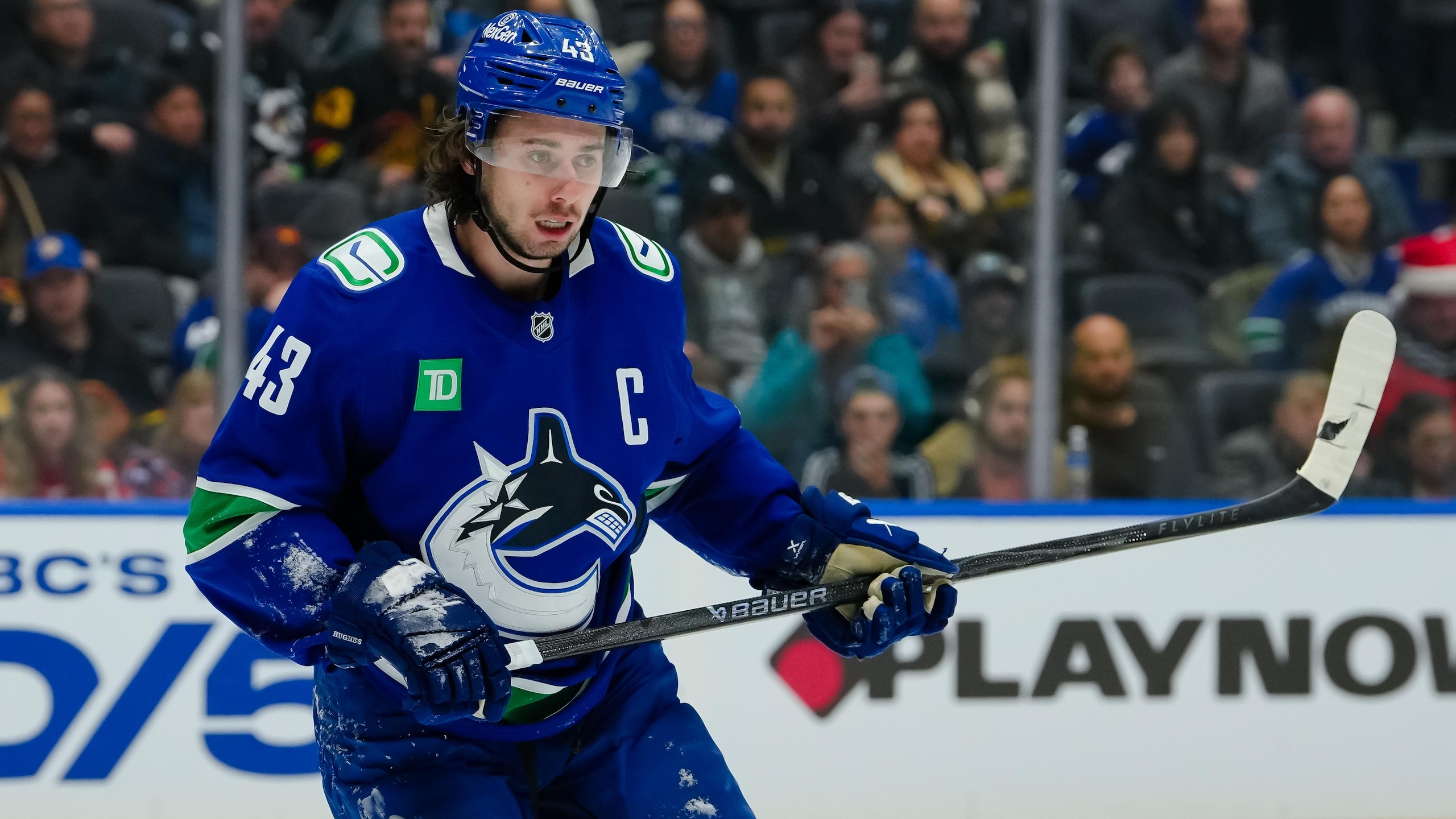
Good luck finding an NHL team that couldn't use a player like Quinn Hughes. He quenches a particular thirst for the Minnesota Wild. Organizational depth on defense behind Jonas Brodin and Brock Faber was lacking, particularly in puck possession.
The team put its hopes and dreams into Zeev Buium this year. The 19-year-old is going to be a heck of a hockey player, but top-four minutes for a hopeful contender have proven too much to ask of him in this stage of his career.
Prior to this trade, the Wild sat in a very familiar spot. The Wild are fifth in the Western Conference by points percentage and are a safe projection for the playoffs and a competitive first-round matchup, but not talented enough to be a serious contender for the Stanley Cup. Kirill Kaprizov is not enough. Good-but-not-great defines the last decade of Wild hockey.
In Quinn Hughes, the Wild gets a serious injection of talent. The 26-year-old is comfortably a top-three NHL defenseman. His puck transporting skills and offensive-zone playmaking are superlative. His defensive play is also underrated because of stigmas against size. He defends well with his stick, his speed and footwork make closing gaps a breeze, and his keep-away proficiency means the other team doesn't spend much time with the puck in the offensive zone.
Minnesota's power play is now downright scary. Hughes, ranked 3rd by PP assists over the previous three seasons, will join Kaprizov, Mats Zuccarello, and Matt Boldy to create a dynamic group that will move and shoot pucks faster than brains can process.
Despite their success this season (39 points in 31 games), Minnesota's offense has been lackluster and heavily reliant on the power play, and even then they rank 23rd of 32 NHL teams in goals-per-60. Hughes will add both possession-driving and offensive-zone production to the equation.
The trickle-down effect could be significant as well. Faber may be a perfect partner for Hughes on the right side. He has the stamina to play the heavy minutes Hughes' sidekick will need, and Faber is an instinctual two-way defender who may not be a great offensive producer, but will help Hughes drive play and tilt the ice towards more opportunities for him to create offense.
This would free Jonas Brodin on the left side to move down a pairing with Jared Spurgeon, who struggled this season trying to carry Buium. Brodin is a true shutdown defenseman who will free the 5'9" to focus on his offensive strengths.
Does Hughes alone make the Wild a true contender? They might still be a piece or two short. The Wild loses some forward depth from this move and, in particular, now needs a credible top-nine center.
There are also many questions about Hughes' long-term future. Minnesota was able to acquire him because Hughes had no trade protection, and Hughes' camp reportedly has given the Wild "no assurances" that Hughes will re-sign before becoming an unrestricted free agent in July 2027. His preference to move East was an open secret. Does Minnesota satisfy that bullet point? Is his connection to GM Bill Guerin and a pretty good Wild roster enough to keep him from chasing something better or more familiar in New Jersey or elsewhere?
If this ends up being only a two-year rental, then Minnesota gave up a whole lot for that privilege. Especially while not being a true contender. Rossi had 60 points last season at the age of 23 and was playing well this year. Buium is a borderline blue-chip prospect who has the tools to become a No. 1 defenseman. Liam Ohgren is a former first-round pick with a high likelihood of making the NHL and decent odds of turning into a top-six forward. Plus, a first-round pick.
This is boom-or-bust for Minnesota. If it doesn't work, there's no shaking it off. The Wild just gutted most of their top youth to make this happen. But you know what? Why not go for broke? The Wild have been far too careful in recent seasons, trying to trade second- and third-round picks for upgrades between the margins.
Any chance of moving into a new tier required the addition of a bona fide impact player, and Hughes is as good as it gets. If Guerin can convince Hughes to commit beyond 2027, then the Wild just pulled the rug out from a number of other teams in incredible fashion.
Grade: A-
Vancouver Canucks
2 of 2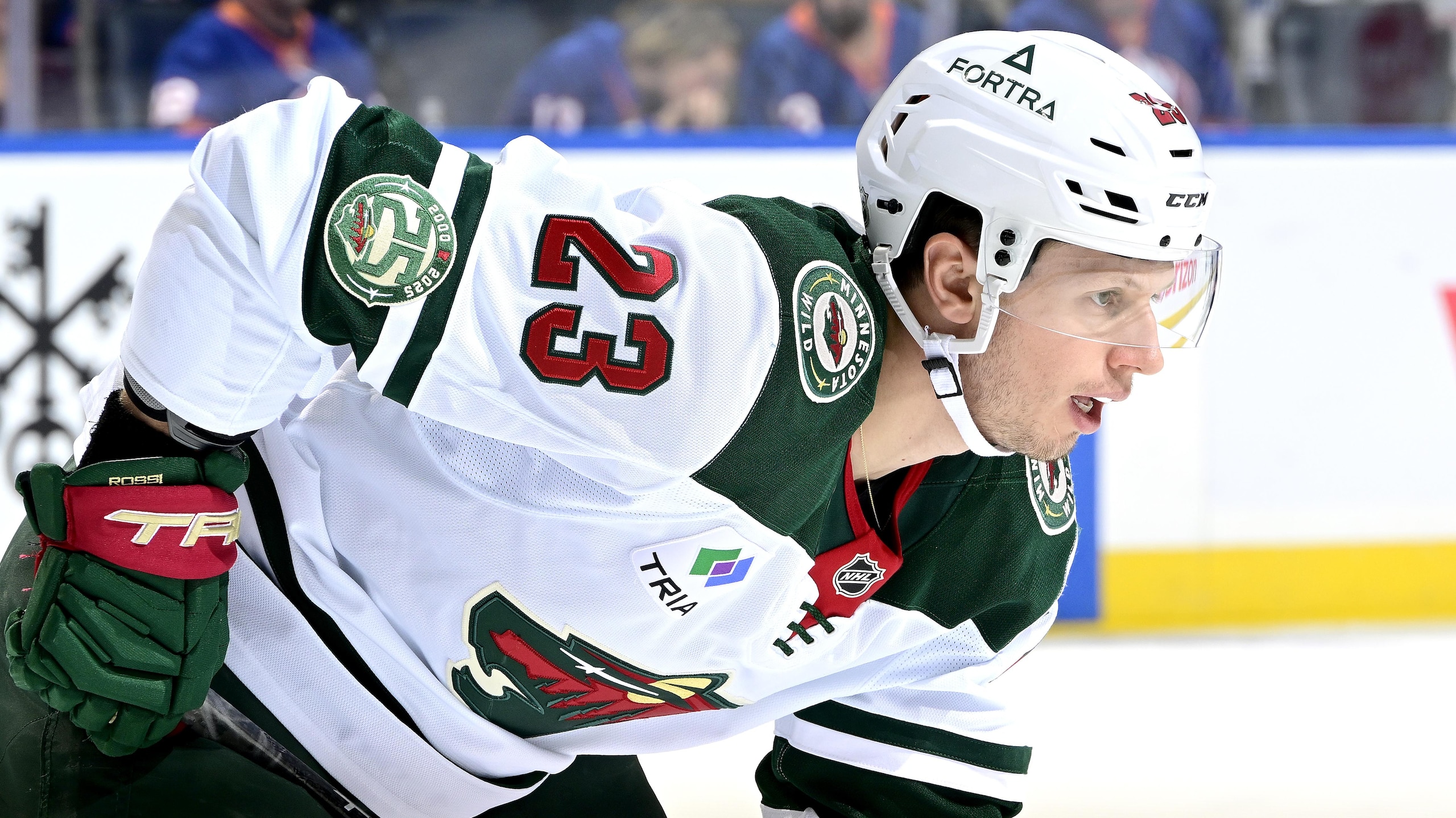
Let's qualify the coming analysis. You do not win the Quinn Hughes trade in which you're the team trading Hughes. The fact that it has come to this at all is incriminating of a management group that has utterly failed. The Canucks have major existential problems to figure out, and it should be a new management group tasked with clearing the rubble.
I am viewing this trade for Vancouver without prejudice. Assigning the givens that Hughes seemed likely to leave in 2027, and the Canucks are looking at a rebuild, how good is the return relative to what one could expect?
Marco Rossi is a 5'9" center, and that means he's been penalized by the pundits time and time again. Despite producing one of the greatest draft seasons in OHL history in 2020, the team still dropped to 9th overall. He thrived in the AHL as a teenager and quickly made his way to the NHL. He's a two-way play driver despite his size and, funny enough, has a knack for finding goals around the netfront.
Rossi produced 60 points last season and has four goals and nine assists through 17 games this season. Once you get over his unconventional attributes, he's a really exciting player. His $5 million cap hit through 2028 is a bargain, and he remains under team control through 2029. Vancouver needed a second-line center, and they got one for the long haul.
There is no replacing Quinn Hughes. If one had to try, Zeev Buium is about as good an attempt as is possible. The 19-year-old was drafted 12th overall in 2024, and that was far too low. He then dominated the NCAA at the University of Denver, scoring well above a point-per-game pace and winning a national championship. His edgework is a separating skill. He escapes pressure like it's nothing and creates separation in the offensive zone to make space for playmaking and shooting opportunities. He has the mass, speed, and instincts to develop into a good defender against the rush.
Buium has 14 points in 31 games despite generally struggling with the pace of play. He is a virtual lock to turn into a top-four offensive defenseman in Vancouver and has the upside to become a top-pairing offensive contributor and PP QB.
Liam Ohgren, drafted 19th overall in 2022, produced both in the Swedish Hockey League and the American Hockey League. Last season, the Swedish winger tallied 37 points in 41 AHL games. He finds space in the offensive zone to get open, and his shot release is swift. His instincts and habits are good, but skating holds him back. Ohgren is going to have an NHL career, and he could turn into a middle-six scoring winger.
The Canucks also receive the Wild's 2026 first-round pick. With some luck, that could end up in the late teens or early 20s.
Removing all other context, the Canucks made the first smart organizational decision in a long time by trading Hughes now to maximize value. Unlike the Matthew Tkachuk or Jack Eichel trades, the Canucks don't get back a top player like Mackenzie Weegar or Alex Tuch.
Instead, they radically transform their youth pool without leaning into lottery scratch-offs. Rossi is already a second-line NHL center. Buium and Ohgren are both ready for NHL action and should be meaningful contributors quite soon. The deal isn't contingent on first-round pick success, and they won't have to wait years to bear fruit.
It won't make up for Quinn Hughes and a wasted era of Canucks hockey, but the Canucks made the Wild pay a heavy price for the privilege of jumping the line and cutting a deal this soon. The Canucks have some real building blocks to embark on a rebuild that the team should have started years ago.
Grade: B+
.jpg?w=2560 "NHL Trade Grades Connor Hellebuyck")


.jpg?w=2560 "Raiders Could Start Mendoza")
.jpg?w=2560 "Rodgers Iced Out on Plane 💎")

.jpg?w=2560 "🚨 Week 8 AP Top 25 Poll")

