
Whether you realize it or not, we just witnessed the greatest single-season team in the Oklahoma City Thunder's (and Seattle SuperSonics') franchise history, which got us thinking: Which team claims that honor for each of the other 29 organizations?
Answering that question is tougher for some teams than it is for others, but we have plenty of evidence to guide us. Team record, SRS (which combines point differential with strength of schedule), star power and playoff success were all analyzed. There was certainly some subjectivity, too. Oh, and just one more note, we're only looking at NBA history. ABA seasons were ruled out.
And ultimately, with all that in mind, we zeroed in on the best choice for all 30 teams.
1986-87 Atlanta Hawks (57-25)
1 of 30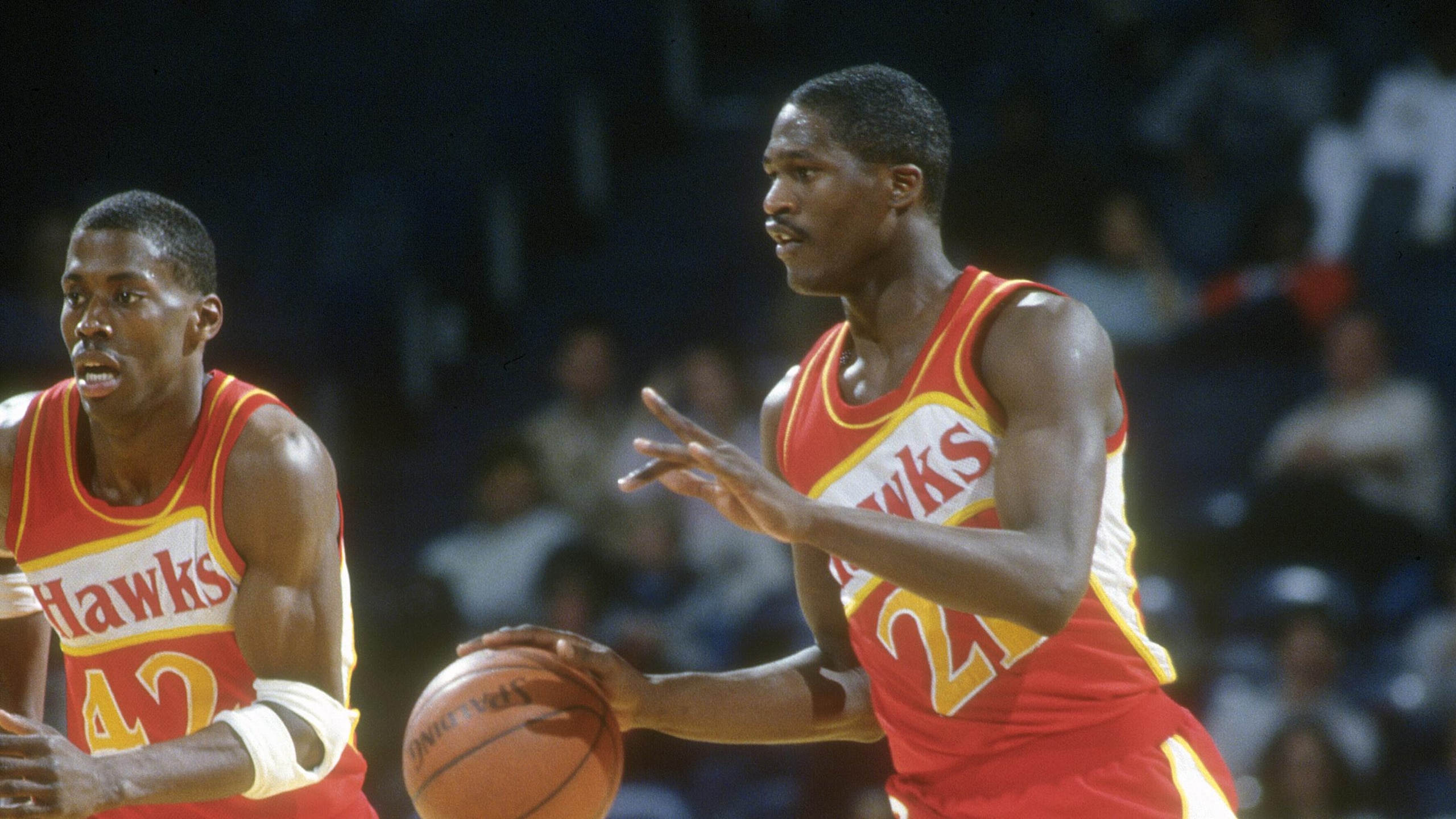
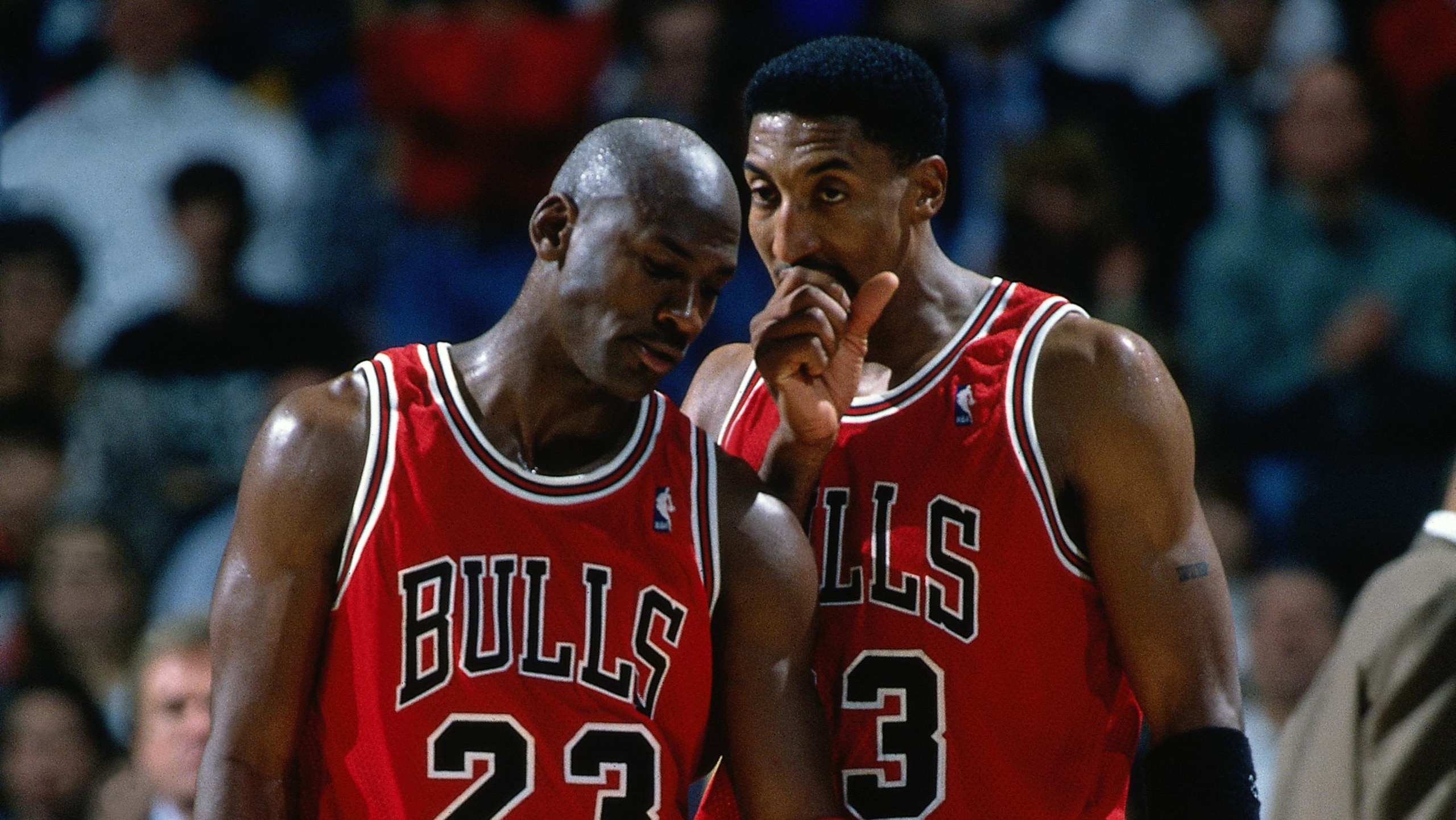
Winning Percentage: 69.5 (2nd in franchise history)
SRS: 7.18 (1st)
Playoffs: Lost conference semifinals
We're going to jump right in with a hint of controversy. The Atlanta Hawks do have a championship in their franchise history. It came in 1958, when Bob Pettit's St. Louis Hawks beat Bill Russell's Boston Celtics in the Finals.
But that team went 41-31 in the regular season, in a league that only had eight teams. It only had to win two playoff series to secure the title.
The NBA was a whole different game back then, and the 1986-87 team featured here had a more impressive regular season in a deeper league. Its own playoff run was stopped short, but it was stopped by an Isiah Thomas-led Detroit Pistons team that would eventually win two championships.
There was some consideration for the 2014-15 team that finished the regular season with 60 wins. But ultimately, the star power from Dominique Wilkins (29.0 points per game that season) and steady contributions from Kevin Willis (16.1 points and 10.5 rebounds) and Doc Rivers (12.8 points, 10.0 assists and 2.1 steals) put the 1986-87 squad over the top.
1985-86 Boston Celtics (67-15)
2 of 30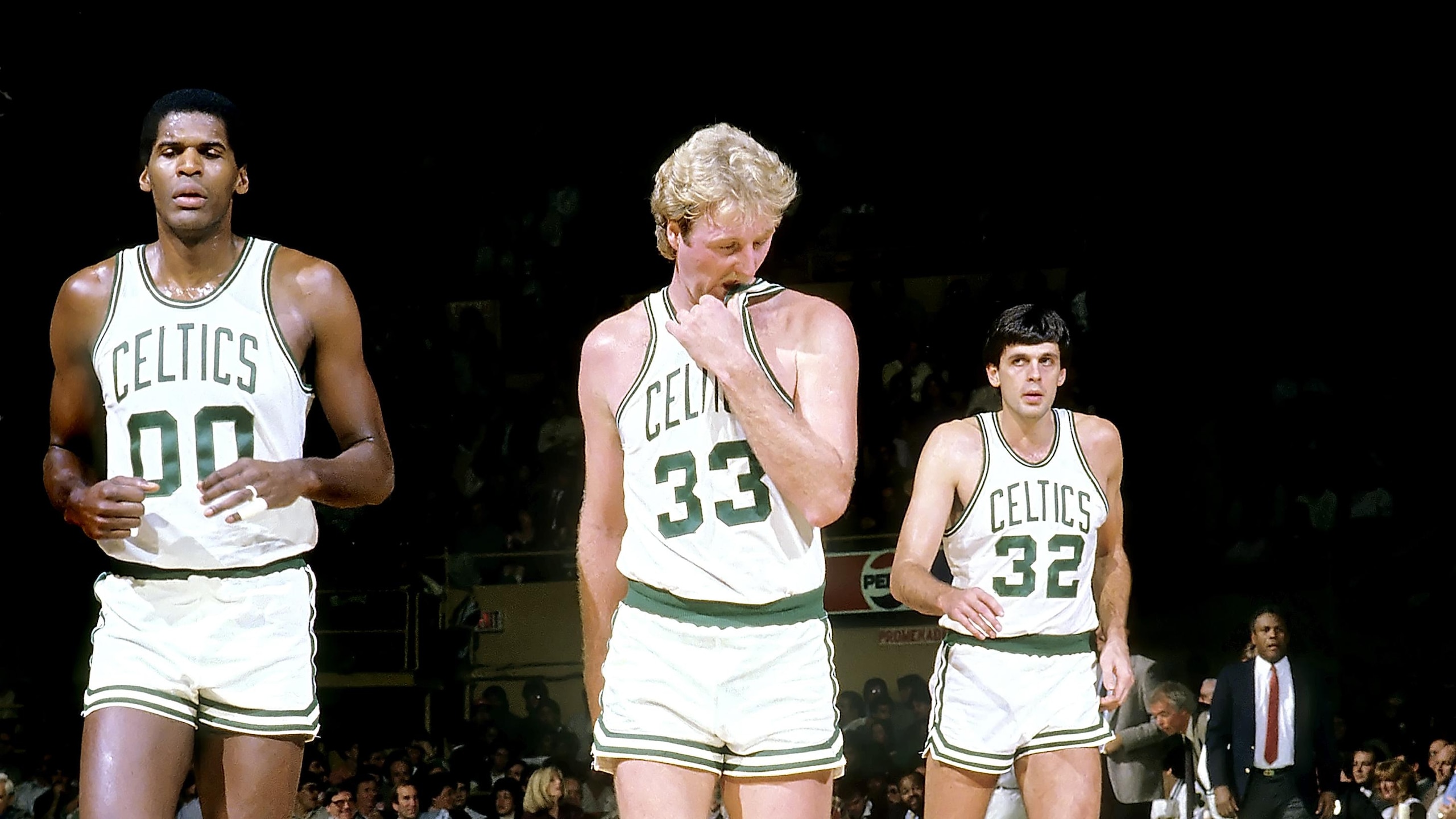
Winning Percentage: 81.7 (2nd in franchise history)
SRS: 9.06 (3rd)
Playoffs: Won Finals
The Celtics, as you probably imagined, presented one of the biggest challenges of the exercise.
You have Russell's entire 1960s era to sift through. The 1980s teams with Larry Bird have to be considered, too. Kevin Garnett's 2007-08 squad is one of the biggest superteam success stories in NBA history. And believe it or not, the 2023-24 team that won the Finals just over a year ago has the highest SRS in Boston history.
That last number, though, has to be taken with a little grain of salt. It's been inflated leaguewide in recent years by an upswing in pace and an explosion in three-point attempt rate. The 1960s teams are worthy, but they come with the same caveat as those 1957-58 Hawks. And though Boston's mid-2000s Big Three of KG, Paul Pierce and Ray Allen boasts plenty of star power, it doesn't quite measure up to Bird, Kevin McHale and Robert Parish.
That trio led an utterly dominant Celtics squad to the best record in the league (and five more wins than the next-best team). They, along with a supporting cast that included Bill Walton (who won Sixth Man of the Year that season), Dennis Johnson and Danny Ainge, cruised to a 15-3 playoff record and the third (and final) championship of Bird's career.
2001-02 Brooklyn Nets (52-30)
3 of 30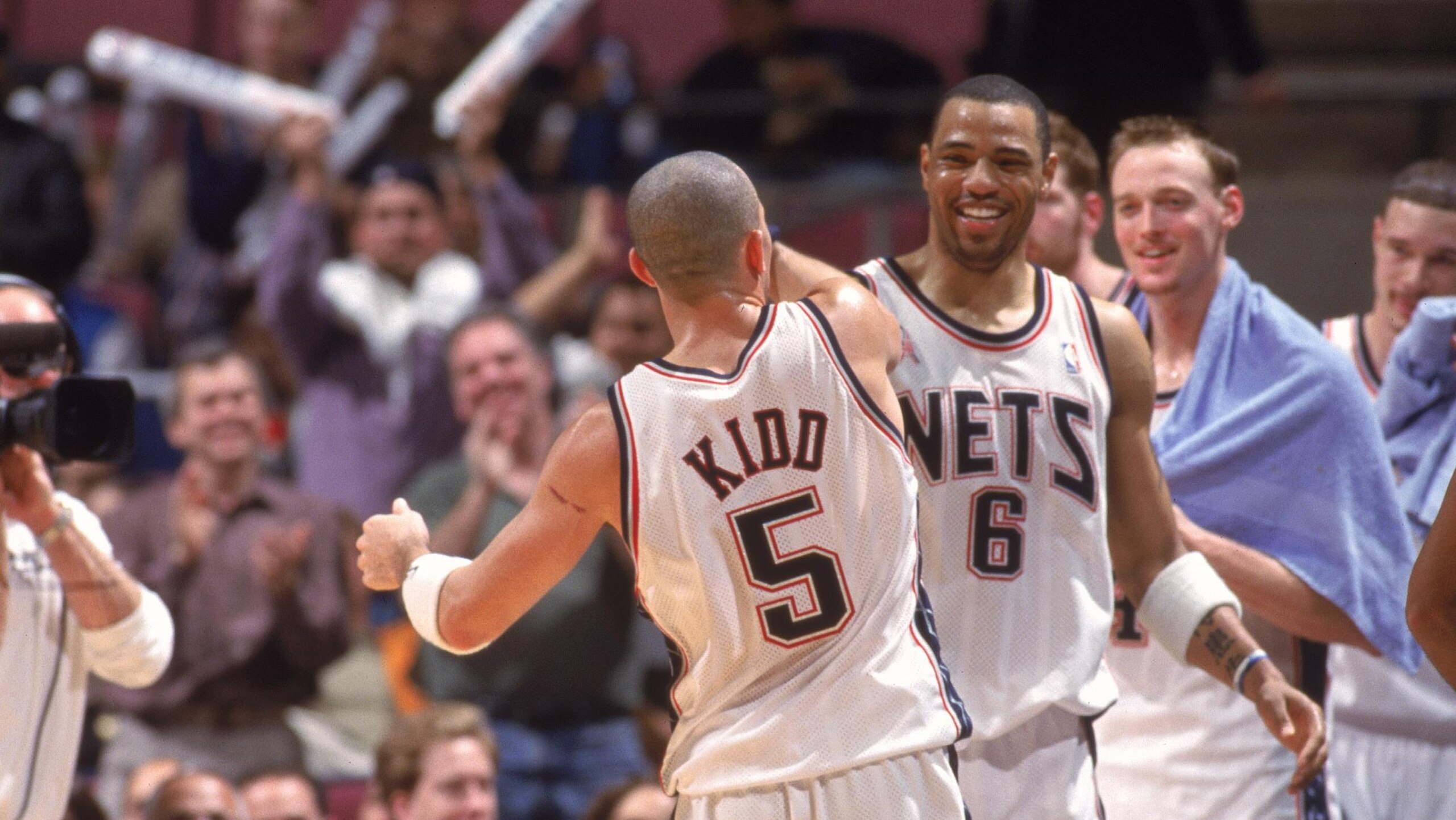
Winning Percentage: 63.4 (2nd in franchise history)
SRS: 3.67 (3rd)
Playoffs: Lost Finals
Once you rule out the Brooklyn Nets' ABA history, the choice is relatively simple.
This squad had four players (Kenyon Martin, Keith Van Horn, Jason Kidd and Kerry Kittles) averaging between 13 and 15 points per game. It had three others, including a rookie Richard Jefferson, averaging more than nine.
Kidd finished second in MVP voting, averaged 9.9 assists and had a league-high eight triple-doubles.
And of course, all of the above worked together to make the first of two back-to-back Finals appearances.
They ran into a buzz-saw Los Angeles Lakers squad on its way to a third straight title, but these Nets were one of the East's best teams of the early 2000s.
1994-95 Charlotte Hornets (50-32)
4 of 30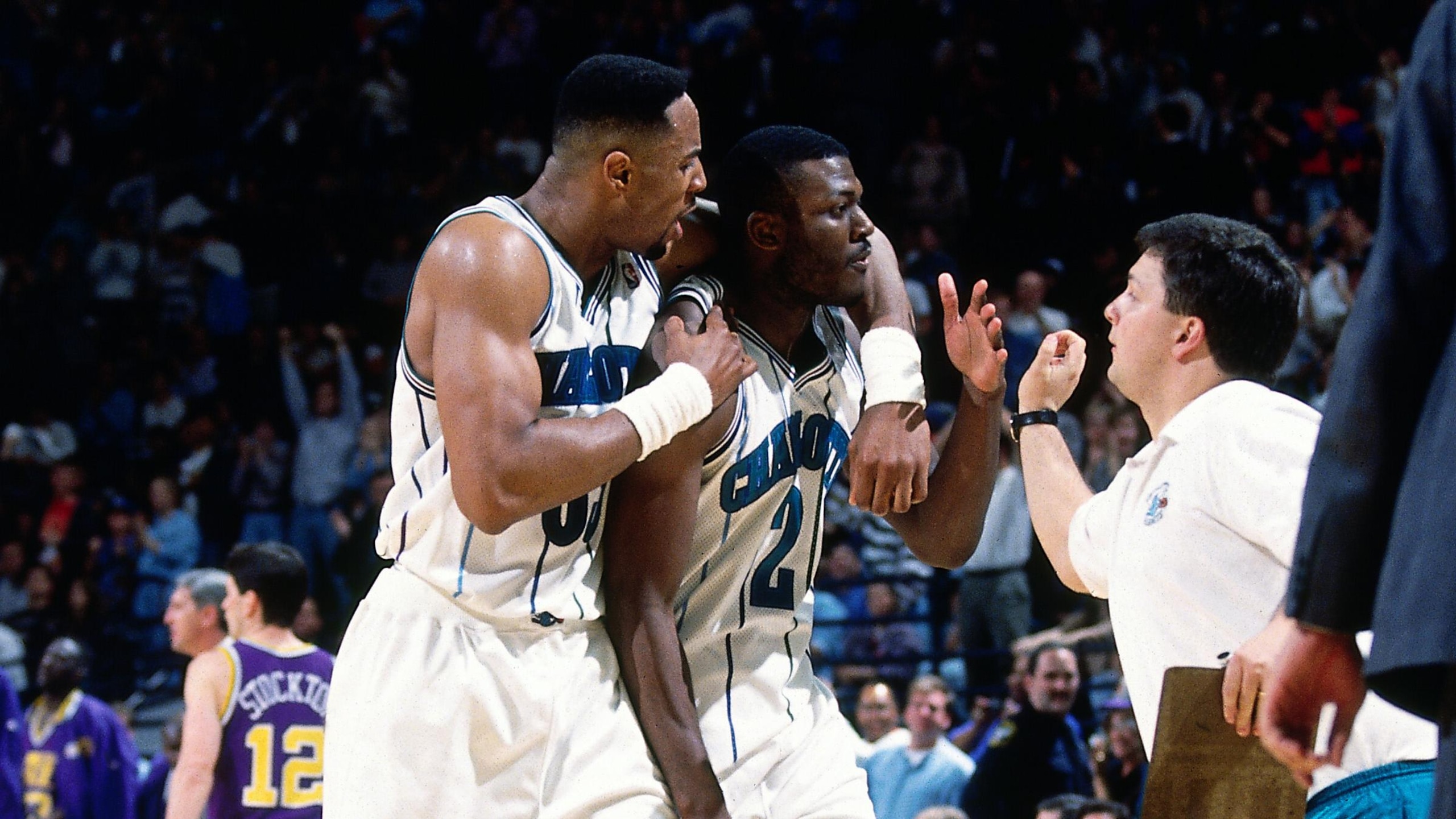
Winning Percentage: 61.0 (3rd in franchise history)
SRS: 2.87 (1st)
Playoffs: Lost first round
The most iconic thing about the 1990s Charlotte Hornets may well be their white, teal and purple uniforms. As you can see, it wasn't likely to be team success (that SRS ranks 439th in league history).
Even without high win totals or point differentials, though, the Hornets of this era were, at the very least fun.
Alonzo Mourning averaged 21.3 points, 9.9 rebounds and 2.9 blocks. Larry Johnson added 18.8 points, 7.2 rebounds and 4.6 assists. Dell Curry, who finished second in Sixth Man of the Year voting, averaged 13.6 points and 2.2 threes while shooting 42.7 percent from deep. And legendarily diminutive point guard Muggsy Bogues put up 11.1 points and 8.7 assists.
1995-96 Chicago Bulls (72-10)
5 of 30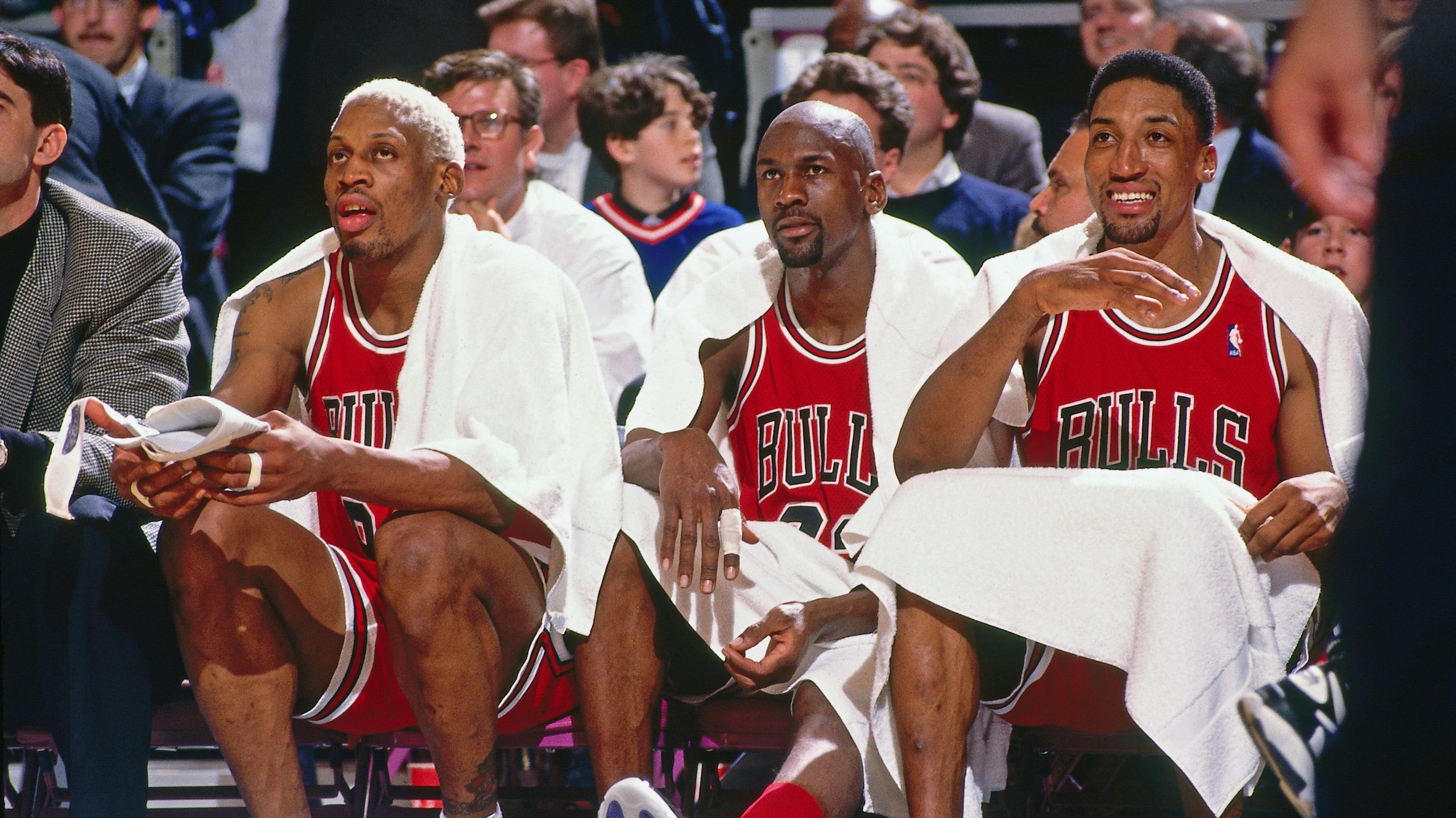
Winning Percentage: 87.8 (1st in franchise history)
SRS: 11.80 (1st)
Playoffs: Won Finals
Even for an organization that boasts the bulk of Michael Jordan's career and has six championships, this call was pretty easy.
The 1995-96 Bulls, led of course by Michael Jordan and Scottie Pippen, set a single-season record for wins that lasted until 2015-16 (when the Golden State Warriors went 73-9). They had a suffocating defense, a high-octane offense, the MVP (Jordan) and the Sixth Man of the Year (Toni Kukoč). Pippen finished that year fifth in MVP voting and second in Defensive Player of the Year voting. Dennis Rodman averaged a league-best 14.9 rebounds. Steve Kerr shot 51.5 percent from deep.
And of course, all of the above preceded a 15-3 run through the postseason that resulted in Jordan's fourth title.
This isn't just the best team in Bulls history. It has a real argument to be considered the best individual team of all time.
2015-16 Cleveland Cavaliers (57-25)
6 of 30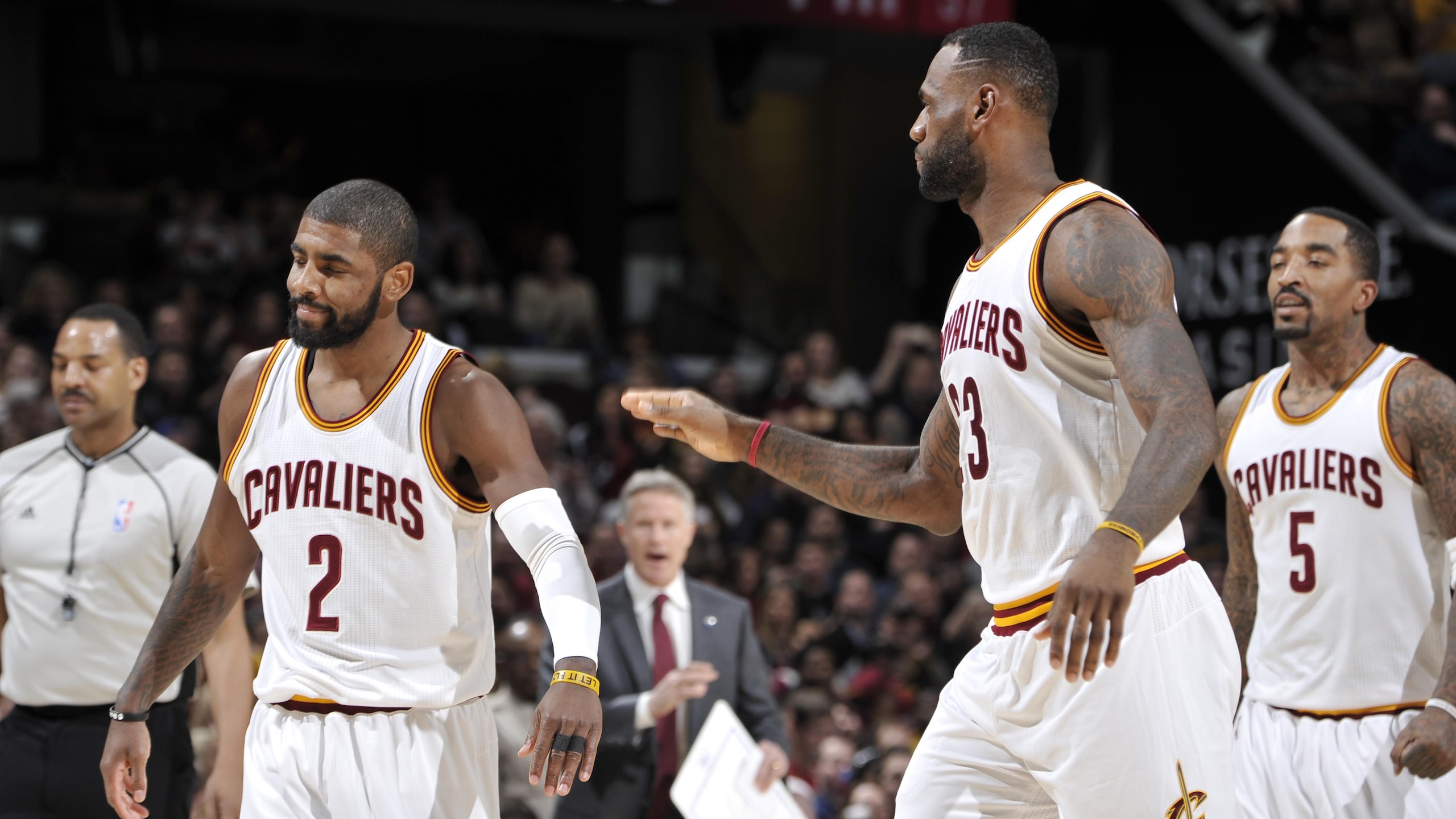
Winning Percentage: 69.5 (5th in franchise history)
SRS: 5.45 (6th)
Playoffs: Won Finals
In 2016, the aforementioned 73-9 Warriors looked destined to become perhaps the greatest team in NBA history. They even went up 3-1 in the 2016 Finals against LeBron James' Cleveland Cavaliers.
But Draymond Green's now infamous swipe at LeBron got him suspended for Game 5 of that series. Cleveland seized momentum, won three straight and secured the first and only championship in franchise history.
That postseason, James secured his third Finals MVP, after averaging 26.3 points, 9.5 rebounds and 7.6 assists. Kyrie Irving just about went shot for shot with Stephen Curry in the Finals, where the Cavs point guard put up 27.1 points and 3.9 assists. Kevin Love contributed as a floor spacer and playmaker throughout the regular season and playoffs. And a gritty supporting cast around that trio helped Cleveland make history.
2010-11 Dallas Mavericks (57-25)
7 of 30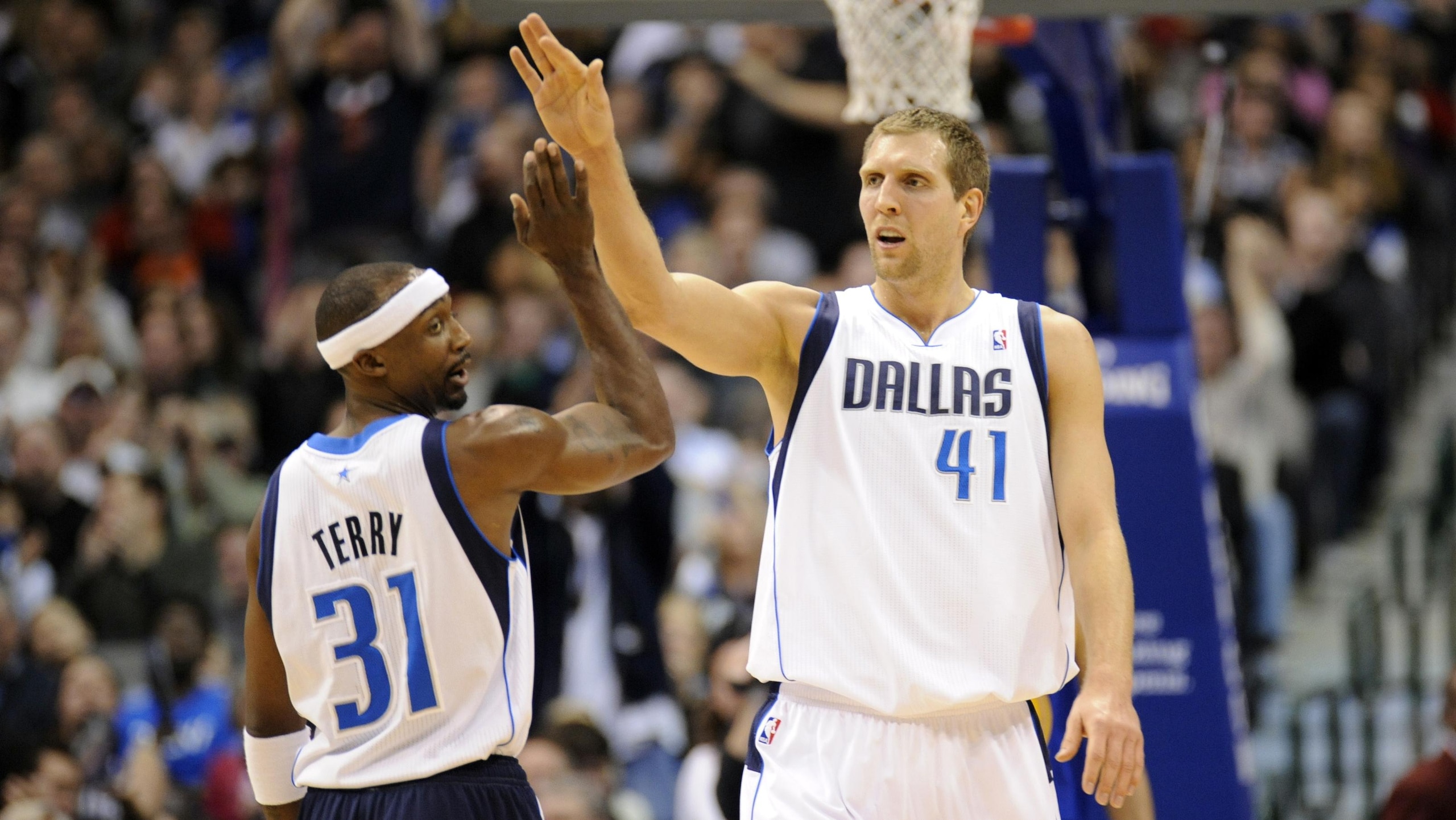
Winning Percentage: 69.5 (5th in franchise history)
SRS: 4.41 (10th)
Playoffs: Won Finals
After a relatively quiet regular season that was overshadowed by the Miami Heat's first campaign with LeBron, six out of ESPN's 12 experts picked the Dallas Mavericks to lose in the first round in 2011. The next round, all 14 picked the Los Angeles Lakers, who were then swept by Dallas. And of course, after dispensing of the up-and-coming Oklahoma City Thunder in the conference finals, most experts picked Miami in the Finals.
All along the way, Dirk Nowitzki and the Mavericks kept beating the odds. They authored one of the best underdog stories in NBA history. And they helped pushed Dirk into consideration for "top 20 all time" status.
He, specifically, was unreal that postseason. He averaged 27.7 points, 8.1 rebounds and 2.5 assists. But he didn't secure the title alone. Jason Terry added 17.5 points off the bench that postseason. And Shawn Marion, Jason Kidd, J.J. Barea, Tyson Chandler and even Peja Stojaković all made timely contributions on the way to Dallas' lone title.
2022-23 Denver Nuggets (53-29)
8 of 30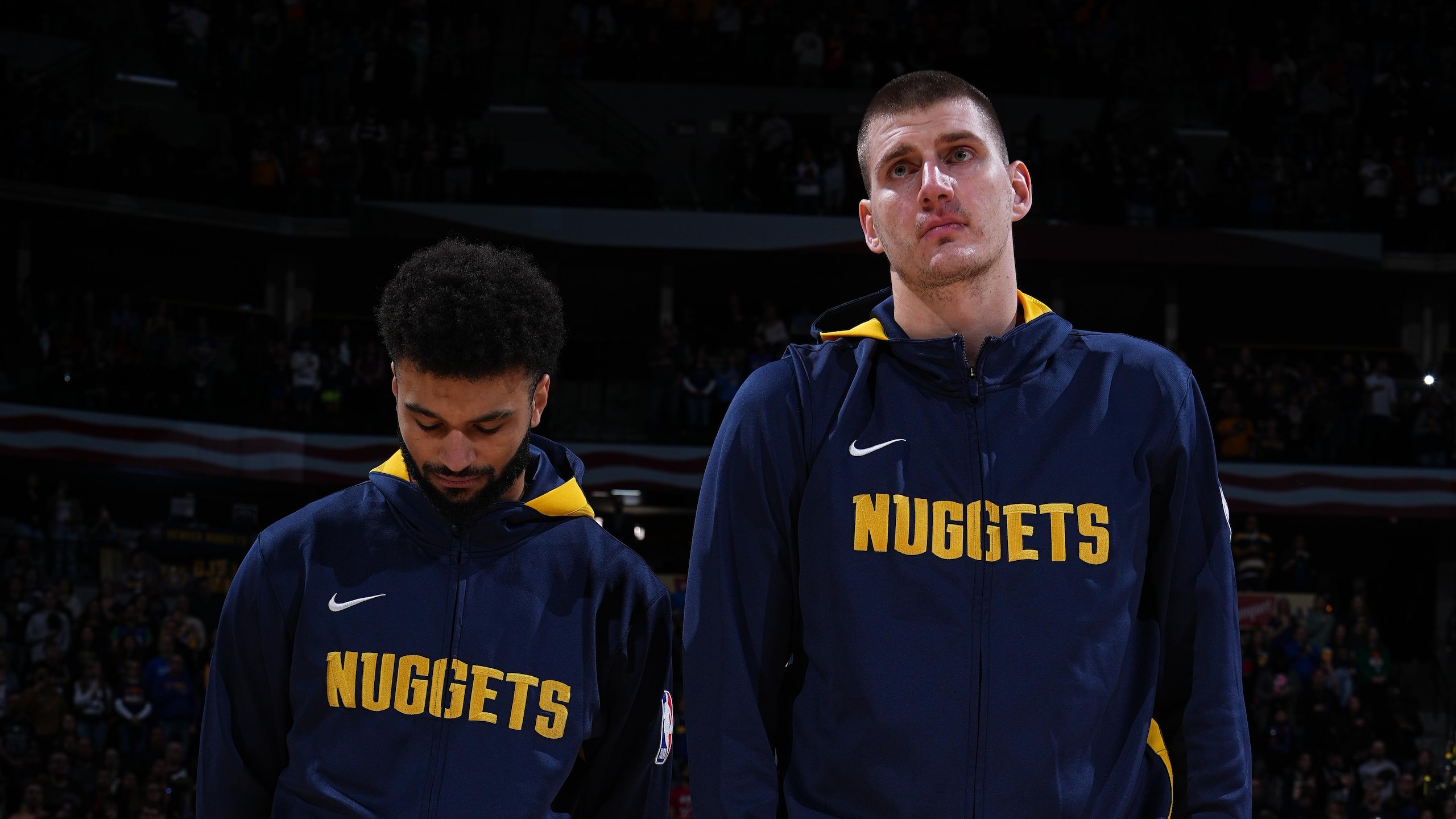
Winning Percentage: 64.6 (7th in franchise history)
SRS: 3.04 (13th)
Playoffs: Won Finals
The 2022-23 Denver Nuggets were the first seed in the West, but three teams in the other conference had a better record. Nikola Jokić lost his bid for a third straight MVP to Joel Embiid. Prior to their second-round matchup against Kevin Durant and Devin Booker, the Phoenix Suns were overwhelmingly favored by the experts.
For much of the season, and all the way through that series, these Nuggets weren't seen as a bona fide title contender (despite that first-place finish). But Jokić and Jamal Murray were determined to outperform that profile. And both had all-time great playoff runs on the way to the franchise's only championship.
That postseason, Jokić averaged 30.0 points, 13.5 rebounds and 9.5 assists. Murray added 26.1 points, 7.1 assists and 5.7 rebounds. And they got plenty of help from their supporting cast. Four others (Michael Porter Jr., Aaron Gordon, Bruce Brown and Kentavious Caldwell-Pope) averaged double-figures.
Surrounding that top two with defense and shooting was a formula that overcame expectations, led to a 16-4 playoff record and sent the Nuggets into the history books.
1988-89 Detroit Pistons (63-19)
9 of 30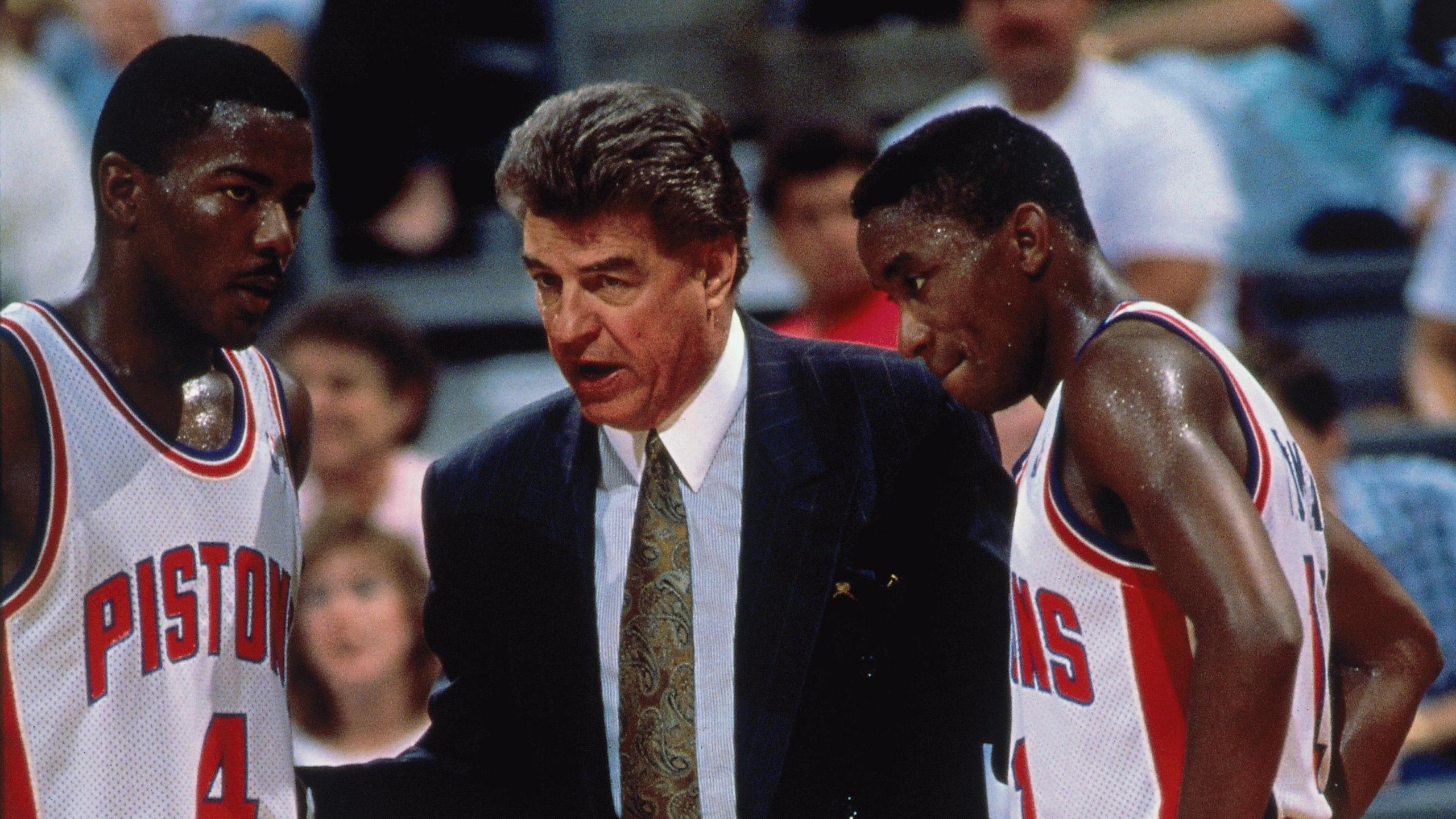
Winning Percentage: 76.8 (2nd in franchise history)
SRS: 6.24 (2nd)
Playoffs: Won Finals
The "Bad Boys" era Detroit Pistons secured the first of their back-to-back titles after winning a league-best 63 games and flying through the playoffs with just two total losses (both to the Bulls in the conference finals).
Offensively, the team was led by two dynamic guards in Isiah Thomas (who averaged 18.2 points and 8.3 assists that postseason) and Joe Dumars (who won Finals MVP), but they got plenty of help from a big, imposing and physical supporting cast.
John Salley, Rick Mahorn and Bill Laimbeer were all willing to dish out a little punishment while chasing rebounds and clogging the paint. And Dennis Rodman was establishing his reputation as one of the best defenders and rebounders of all time.
To this day, surrounding a star offensive talent with grit is a viable team-building strategy. And these Pistons remain one of the best examples of it.
2016-17 Golden State Warriors (67-15)
10 of 30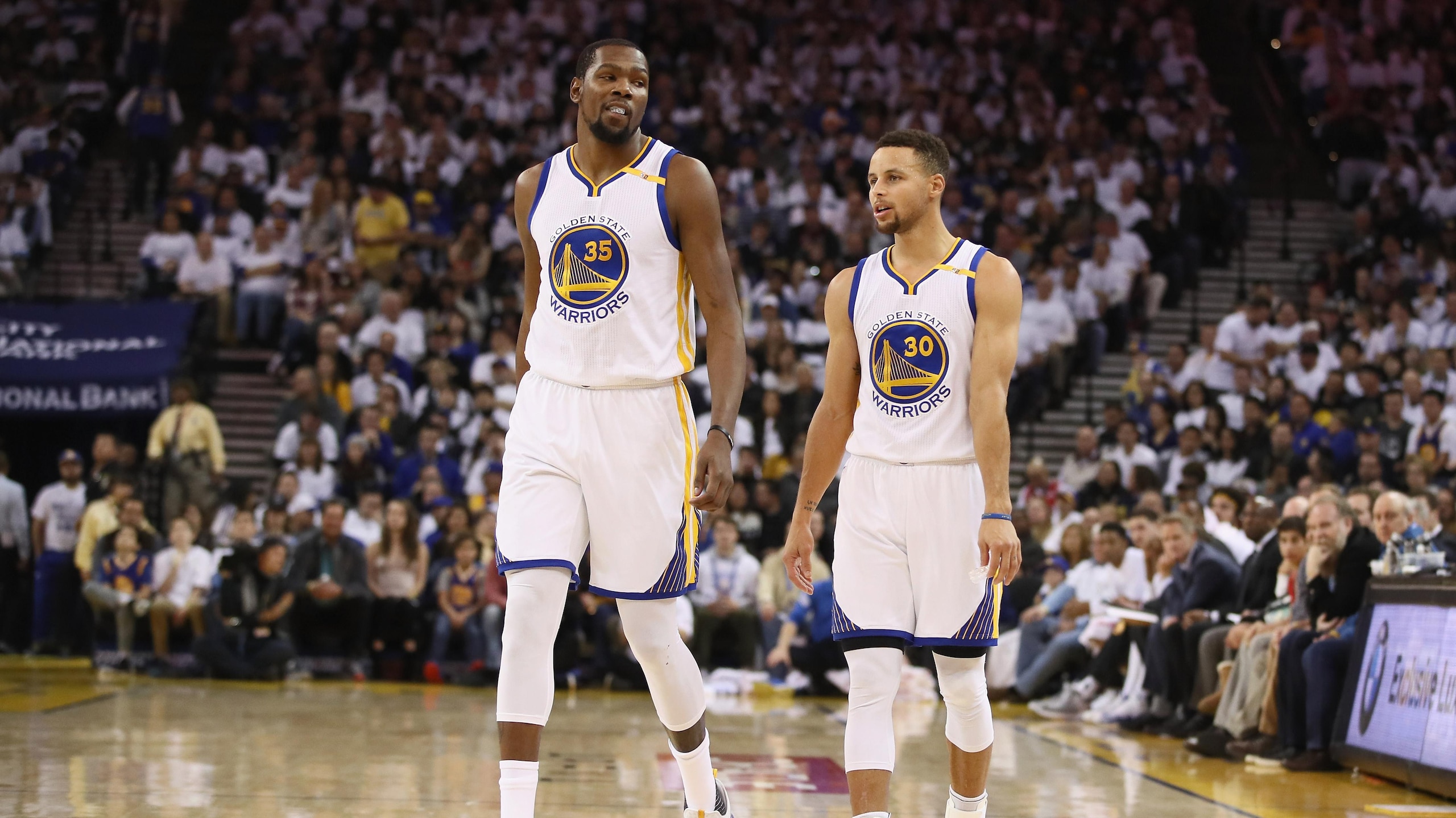
Winning Percentage: 81.7 (2nd in franchise history)
SRS: 11.35 (2nd)
Playoffs: Won Finals
Golden State Warriors history didn't begin with the "Light Years" era teams that today's NBA fan is most familiar with.
The organization, then in Philadelphia, won the first championship in league history back in 1947 (when it was known as the BAA). In 1956, led by Paul Arizin, it won another. Rick Barry brought the Warriors their first title in the Bay Area in 1975.
But the nearly four decades between that championship and Stephen Curry's arrival were pretty bleak. And that's part of what makes Curry's invigoration of the franchise so striking. He completely changed the NBA, made Golden State one of the most famous and successful franchises in the league and led a team that broke the Bulls' single-season record for wins. And then, Kevin Durant joined Curry's revolution.
And those two, along with Draymond Green, Klay Thompson and a deep and versatile supporting cast, made the 2016-17 Warriors one of the absolute best teams in NBA history.
They couldn't match the 2015-16 team's 73 wins, but these Warriors had the best SRS of any Golden State team. And most importantly, they nearly swept their way through the entire postseason.
The Warriors won their first 15 playoff games before the Cavs delayed the inevitable in Game 4 of the Finals. By the time they were done, the Warriors were plus-230 across 17 postseason games. And that's still the record for a single-playoff plus-minus.
1993-94 Houston Rockets (58-24)
11 of 30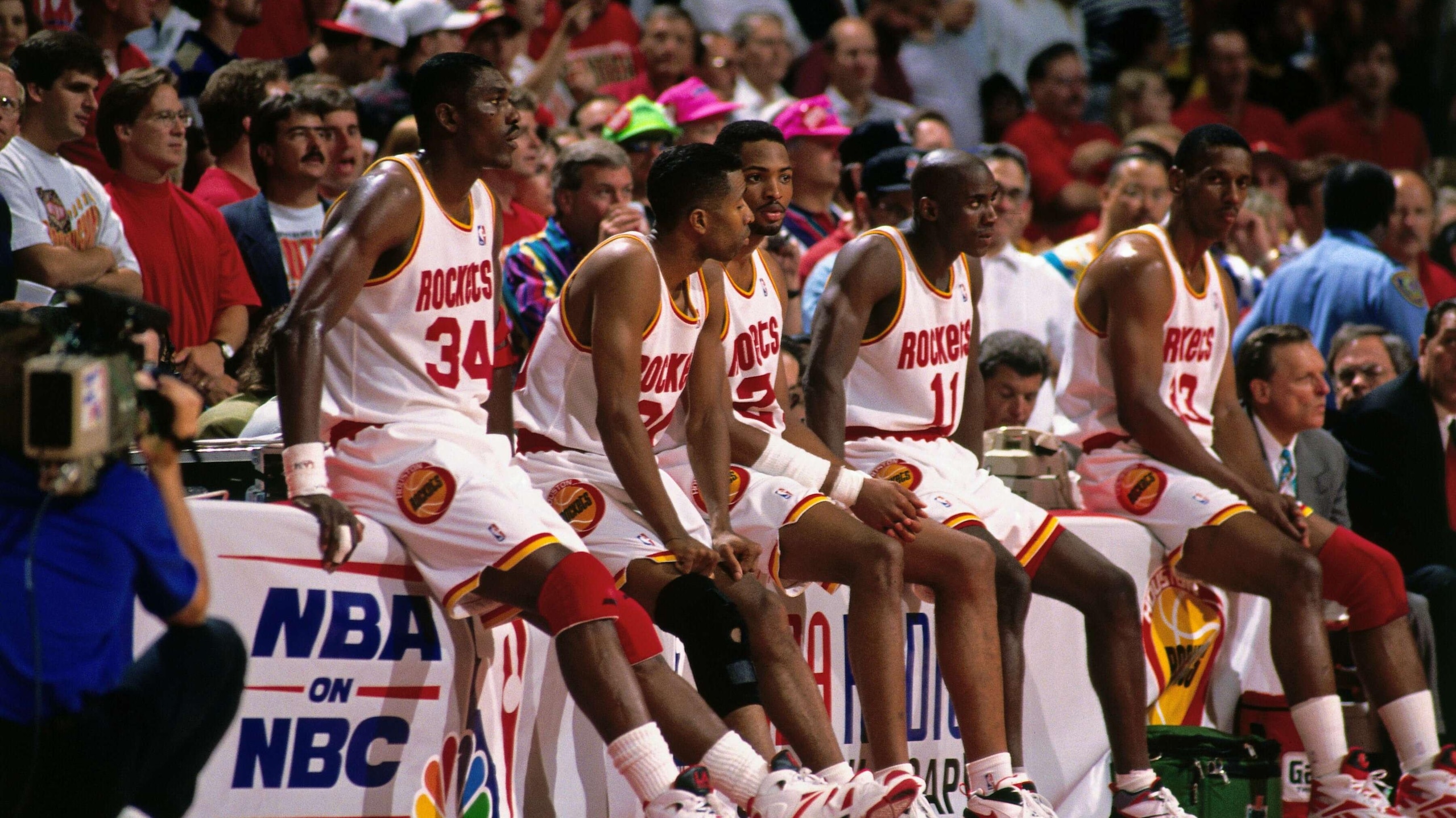
Winning Percentage: 70.7 (2nd in franchise history)
SRS: 4.19 (9th)
Playoffs: Won Finals
In a bit of a departure from most of league history, the Houston Rockets won the first of their back-to-back championships with one superstar on the roster.
But that superstar was one of the top 15 players in NBA history, and he was surrounded by a gritty, unselfish and versatile supporting cast.
In 1993-94, Hakeem Olajuwon averaged 27.3 points, 11.9 rebounds, 3.7 blocks, 3.6 assists and 1.6 steals. He won both MVP and Defensive Player of the Year.
And somehow, he got even better in the playoffs, where he averaged 28.9 points, 11.0 rebounds, 4.3 assists, 4.0 blocks and 1.7 steals.
After him, five others averaged between nine and 14 points in the postseason. Vernon Maxwell, Sam Cassell and Kenny Smith were all over 4.0 assists. Robert Horry added another 3.6 and shot 38.2 percent from deep. Smith shot 44.7 percent from three.
Everyone seemed tailor-made to play alongside Olajuwon. And everyone magnified their roles all the way through a playoffs that included two seven-game series.
1997-98 Indiana Pacers (58-24)
12 of 30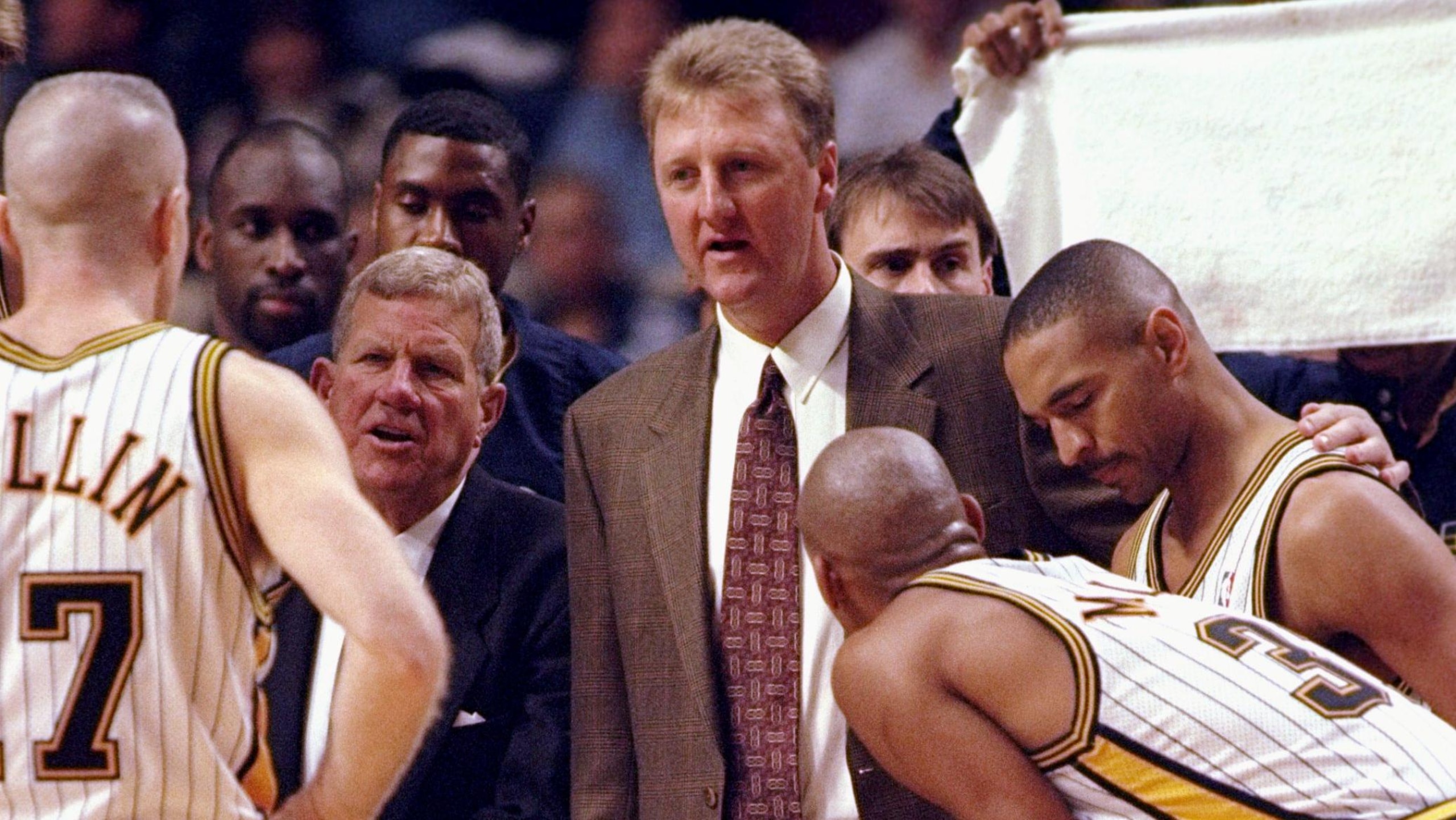
Winning Percentage: 70.7 (2nd in franchise history)
SRS: 6.25 (1st)
Playoffs: Lost conference finals
The Indiana Pacers have made two trips to the NBA Finals (including one just a few months ago), but this team tops those two in both winning percentage and SRS. And these Pacers had their postseason ended by the greatest player of all time, but not before they pushed Jordan and the Bulls to the brink.
Indiana won three games in that conference finals, behind balanced scoring and sharp shooting from Reggie Miller, Mark Jackson and Jalen Rose.
The Pacers followed a similar formula to 58 wins in the regular season.
Miller averaged 19.5 points on just 13.3 field-goal attempts per game. Rik Smits added another 16.7 points and 6.9 rebounds. And after that, five more players—a veteran Chris Mullin, Antonio and Dale Davis, Jackson and Rose—averaged between eight and 12 points.
With Bird pulling the strings as head coach, Indiana's deep and balanced roster nearly upset one of the greatest players and teams we've ever seen.
2013-14 Los Angeles Clippers (57-25)
13 of 30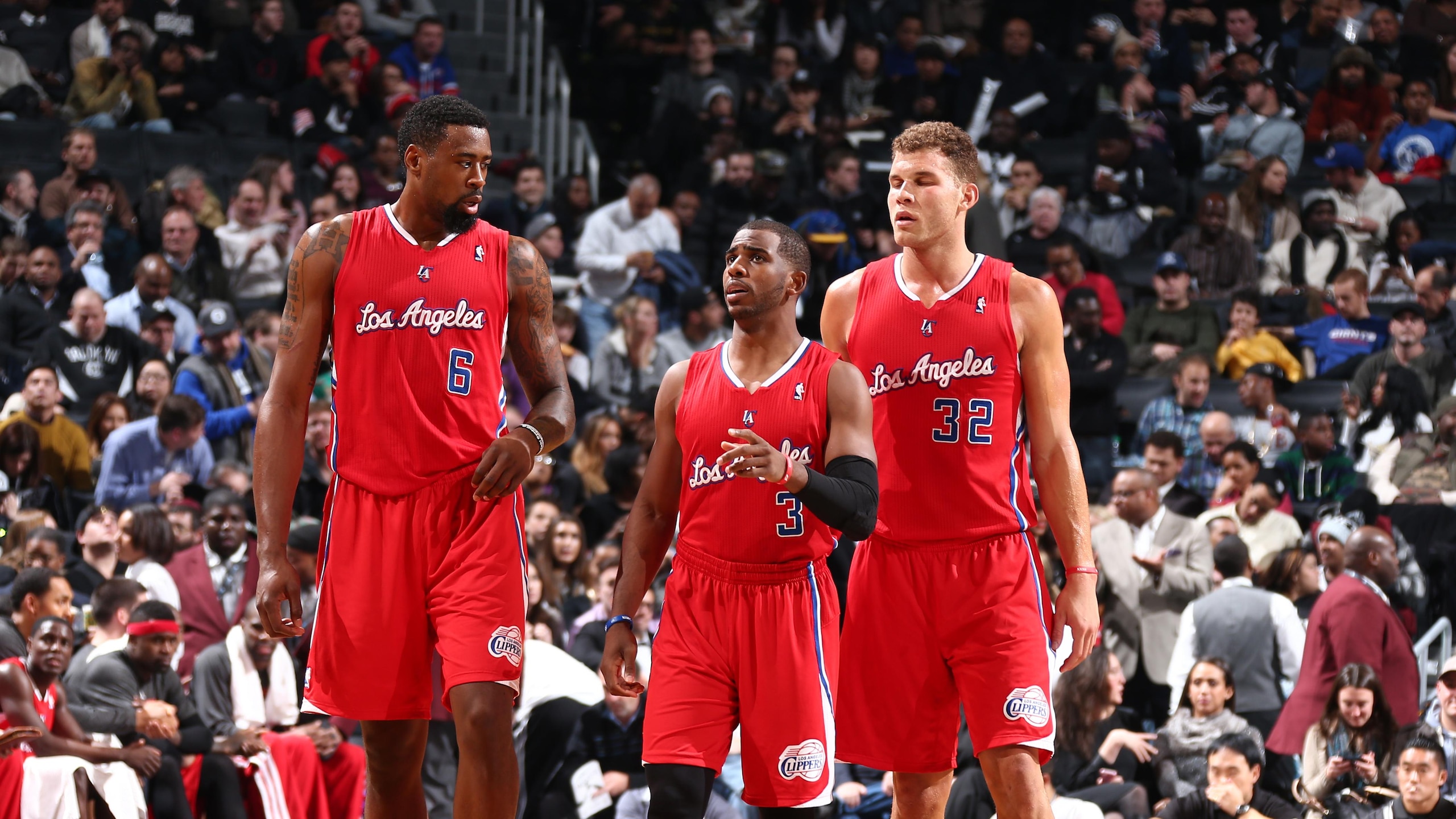
Winning Percentage: 69.5 (1st in franchise history)
SRS: 7.27 (1st)
Playoffs: Lost conference semifinals
The Los Angeles Clippers have just one conference finals appearance in their history, but that came in a shortened season, and that 2020-21 team lags well behind this one in both winning percentage and SRS.
Playoff disappointments aside, the 2013-14 Clippers were loaded. They were the epitome of the "Lob City" era, thanks to Chris Paul's elite playmaking and Blake Griffin and DeAndre Jordan's high-flying.
The point guard averaged 19.1 points, led the league in both assists (10.7) and steals (2.5) and finished seventh in MVP voting. Griffin led the team in scoring at 24.1 points, while also averaging 9.5 rebounds and 3.9 assists. He finished third in MVP voting. Jordan led the league in rebounding at 13.6 per game and averaged 10.4 points to go along with it.
But this team was about a lot more than those stars at the top of the roster. Jamal Crawford averaged 18.6 points and won Sixth Man of the Year. JJ Redick averaged 15.2 points and shot 39.5 percent from deep. And Darren Collison and Matt Barnes provided plenty of veteran know-how as both starters and reserves.
1999-00 Los Angeles Lakers (67-15)
14 of 30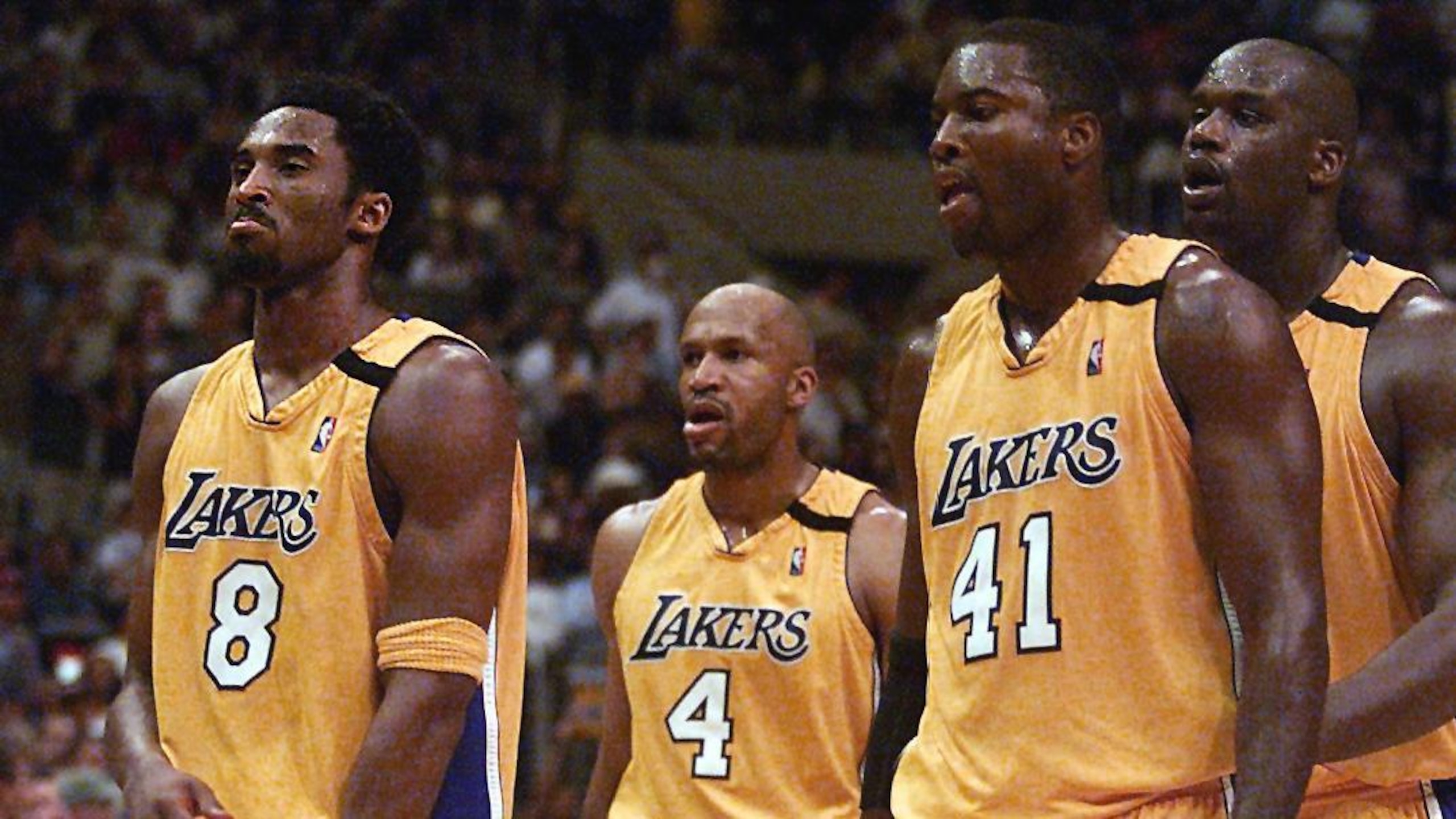
Winning Percentage: 81.7 (2nd in franchise history)
SRS: 8.41 (2nd)
Playoffs: Won Finals
The old heads may not be thrilled with this pick. The Los Angeles Lakers have a rich history to sift through and multiple eras with multiple championships. There are the George Mikan-led teams of the 1940s and 50s. There are the Showtime Lakers with Magic Johnson and Kareem Abdul-Jabbar. Kobe Bryant won two titles with Pau Gasol and Lamar Odom.
Plus, there's the 1971-72 team that boasted Gail Goodrich, Jerry West and Wilt Chamberlain, holds the franchise records for winning percentage and SRS and won the championship.
But in the end, depth, winning a more modern title (when the worldwide talent pool the league pulled from was deeper) and spectacular star performances from Shaquille O'Neal and Kobe Bryant compelled us to take the first of three straight title teams from that era.
During the 2000 playoffs, fresh off winning the MVP, Shaq put up 30.7 points, 15.4 rebounds, 3.1 assists and 2.4 blocks. In the Finals alone, he went for 38.0 points and 16.7 rebounds. His No. 2, a 21-year-old Kobe Bryant, pitched in with 21.1 points, 4.4 assists, 1.5 steals and 1.5 blocks.
And the star duo's supporting cast did its part, too. Ron Harper (8.6 points and 3.2 assists that postseason), Robert Horry (7.6 points, 2.5 assists, 0.9 steals and 0.8 blocks in 26.9 minutes) and Derek Fisher (who shot 41.4 percent from deep) all made meaningful contributions to one of the greatest teams of all time.
2012-13 Memphis Grizzlies (56-26)
15 of 30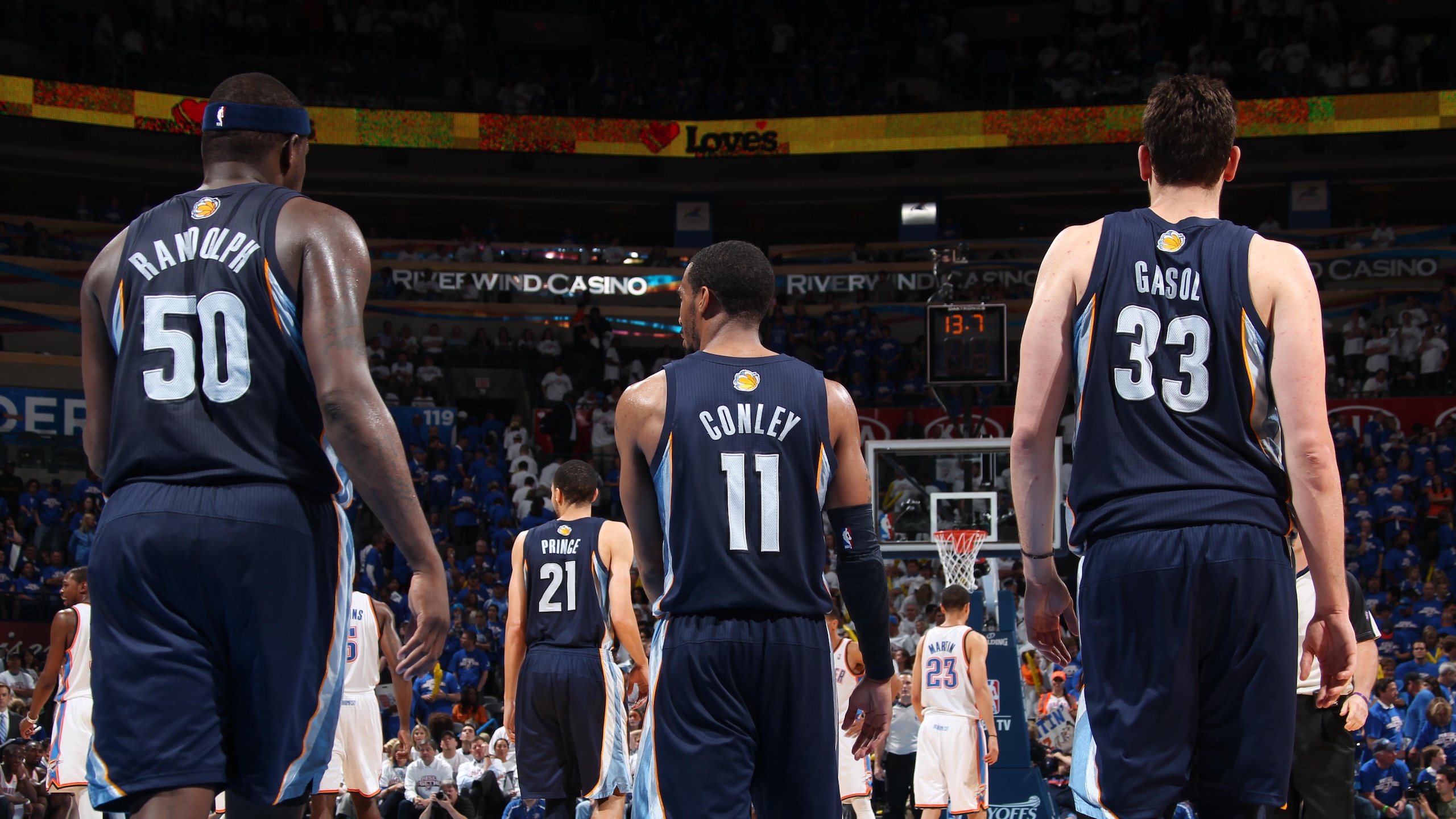
Winning Percentage: 68.3 (1st in franchise history)
SRS: 4.32 (3rd)
Playoffs: Lost conference finals
The 2012-13 Memphis Grizzlies represent the peak of the "Grit and Grind" era.
Behind a stellar defense led by Defensive Player of the Year winner Marc Gasol, the Grizzlies allowed just 99.7 points per 100 possessions. And they bet big on that identity when they traded their leading scorer, Rudy Gay.
The wheels didn't come off without him. In fact, leaning into the balanced scoring and defensive intensity that survived Gay's departure made Memphis even more dangerous.
They cruised past CP3's Clippers in the first round of the playoffs and beat the Oklahoma City Thunder with Kevin Durant (but without Russell Westbrook). And though they got swept by the San Antonio Spurs in the conference finals, they made their mark in that run.
That postseason, Zach Randolph, Gasol and Mike Conley all averaged 17-plus points. Tony Allen and Tayshaun Prince combined for another 17.3 (plus 2.0 steals from Allen). And together, they established an identity that fans will remember for years to come.
2012-13 Miami Heat (66-16)
16 of 30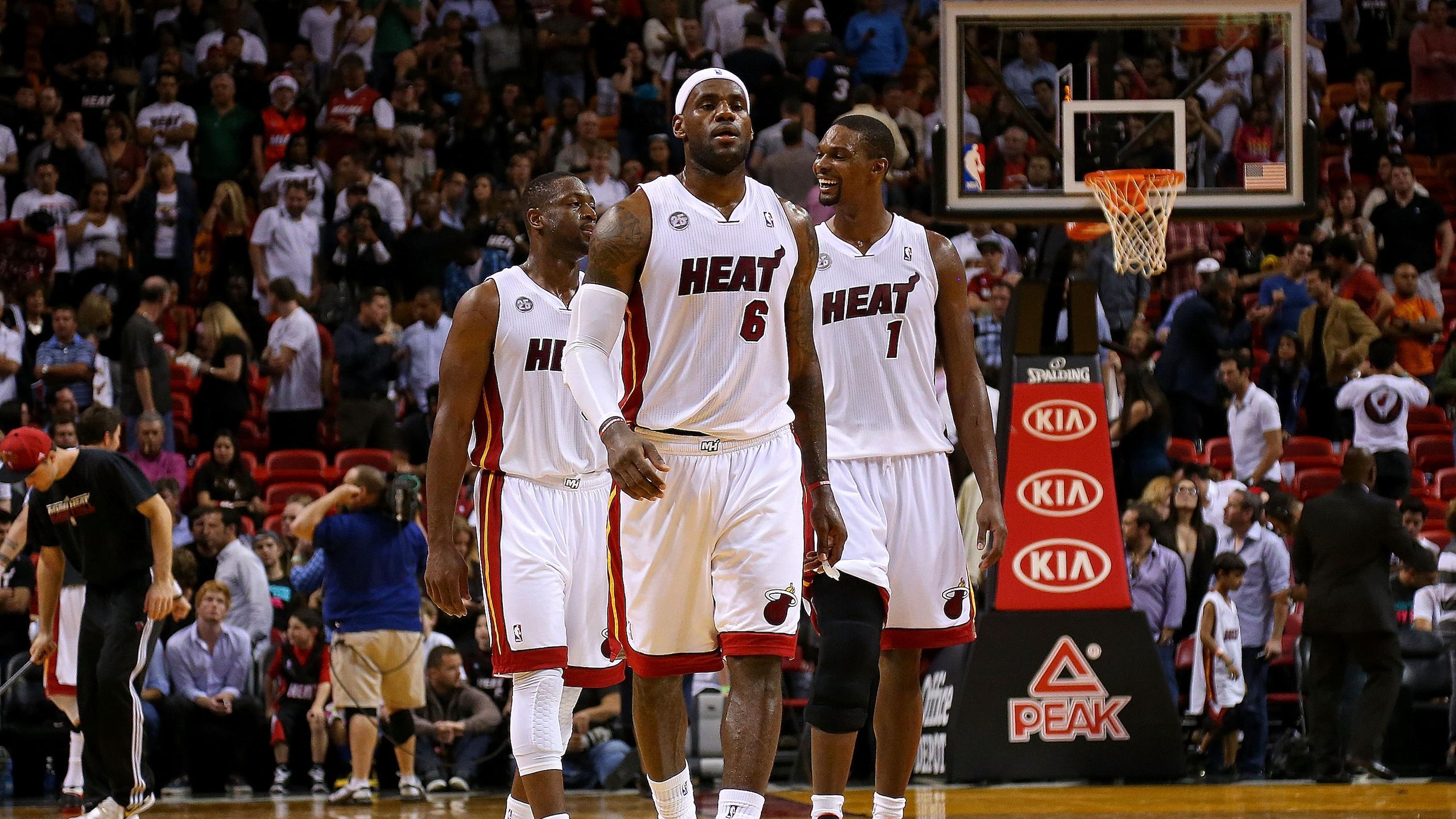
Winning Percentage: 80.5 (1st in franchise history)
SRS: 7.03 (1st)
Playoffs: Won Finals
After prophesying multiple titles at their introductory press conference, the "Big Three" era Heat famously lost to Dallas in their first Finals. They then had plenty of detractors pointing out that their first title in 2012 came in a lockout-shortened season and ended with a win over the inexperienced Oklahoma City Thunder.
But in 2012-13, LeBron, Dwyane Wade, Chris Bosh and a rock-solid supporting cast left little doubt and gave haters little to nitpick.
Miami led the league in wins and had 12 more than the second-place team in the East. They had a 27-game winning streak that lasted most of February and March.
LeBron won MVP with 26.8 points, 8.0 rebounds and 7.3 assists. D-Wade settled into his No. 2 role with 21.2 points, 5.1 assists and 1.9 steals. And Bosh put up 16.6 points and 6.8 rebounds.
And though they were pushed to Game 7s against both the Indiana Pacers and San Antonio Spurs in the playoffs, the adversity led to one of the most famous moments in Finals history.
1970-71 Milwaukee Bucks (66-16)
17 of 30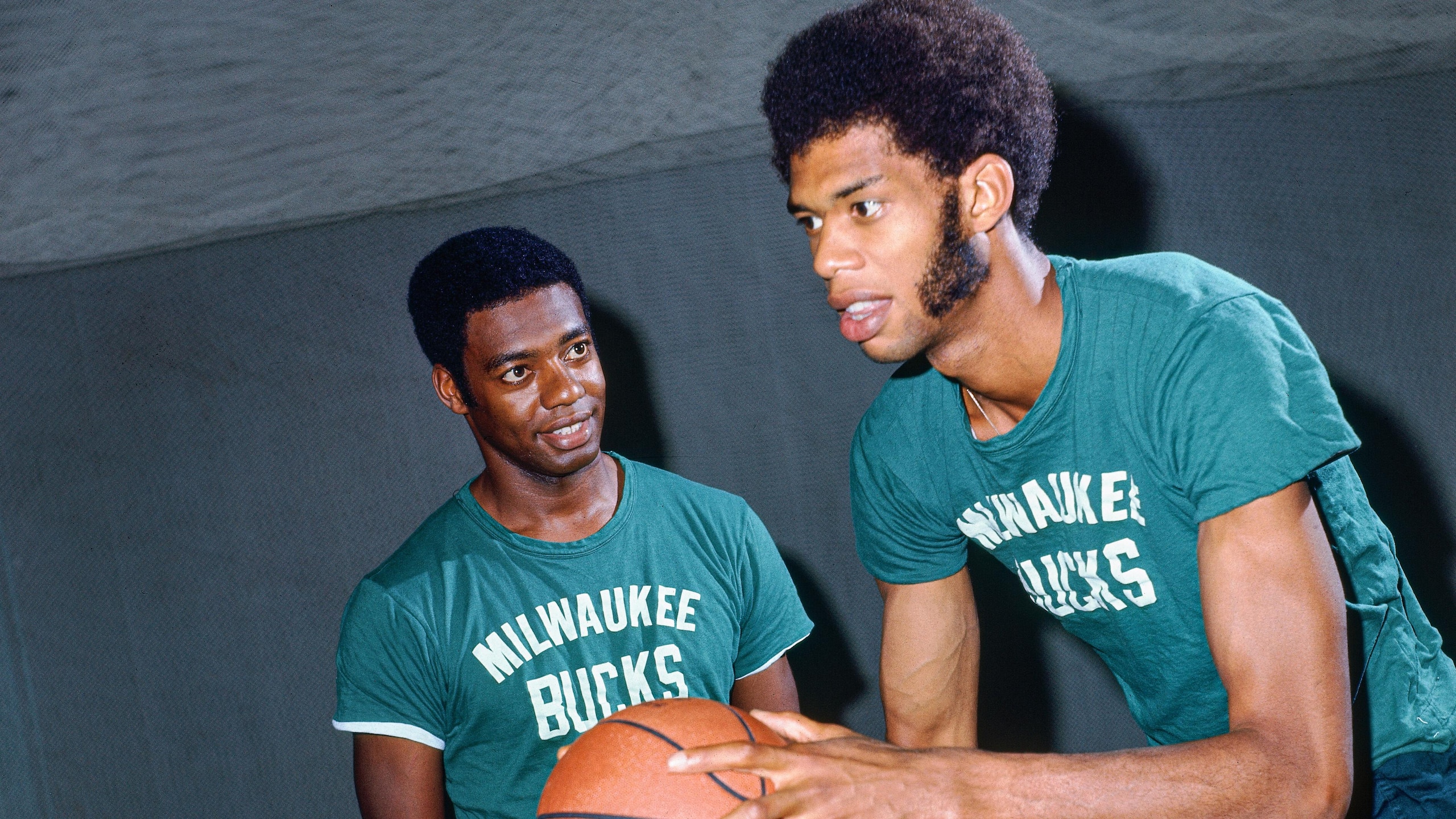
Winning Percentage: 80.5 (1st in franchise history)
SRS: 11.92 (1st)
Playoffs: Won Finals
Giannis Antetokounmpo has overtaken Kareem as the greatest player in Milwaukee Bucks history, but his 2020-21 campaign doesn't quite measure up to what Kareem's Bucks did in 1971.
They smashed the SRS record at the time. And theirs stood for over 50 years. To this day, it's second all time. But that's just the beginning of why this team is here.
Kareem averaged 31.7 points, 16.0 rebounds and 3.3 assists. Oscar Robertson put up 19.4 points and 8.2 assists. And both finished top five in MVP voting that season.
In the playoffs, they cruised past the San Francisco Warriors, Lakers and Baltimore Bullets, went 12-2 and secured the first championship in franchise history.
2003-04 Minnesota Timberwolves (58-24)
18 of 30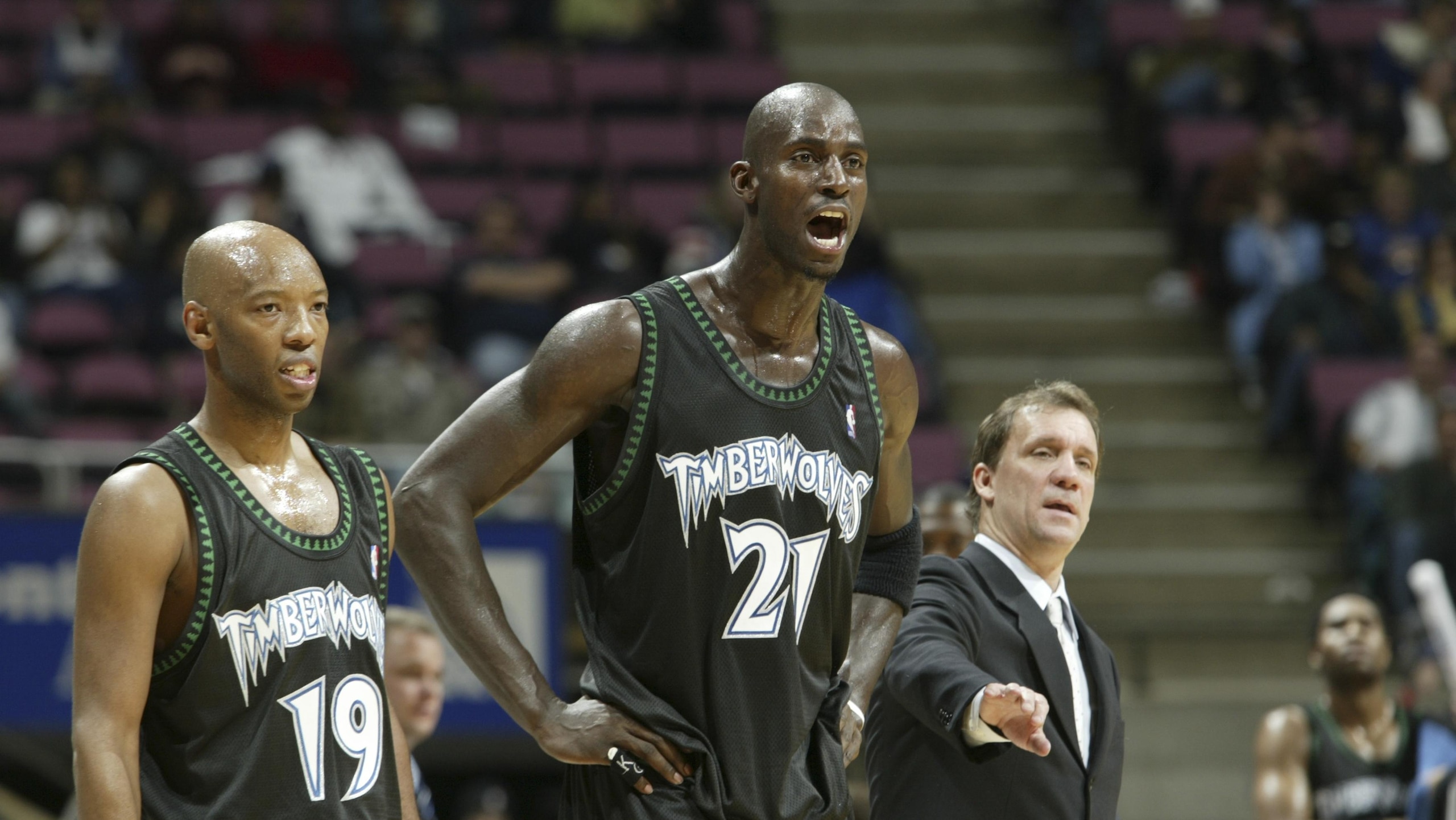
Winning Percentage: 70.7 (1st in franchise history)
SRS: 5.86 (2nd)
Playoffs: Lost conference finals
Kevin Garnett didn't achieve his ultimate goal of winning a championship until he joined the Boston Celtics, but he was never better individually than he was during 2003-04.
That season, KG set a career high in box plus/minus and led the NBA in that category. He averaged 24.2 points, a league-leading 13.9 rebounds, 5.0 assists, 2.2 blocks and 1.5 steals.
And though he didn't quite upend a Lakers team with Shaq, Kobe, Karl Malone and Gary Payton, he did lead the Minnesota Timberwolves to the best record in the West. And he got a lot of help along the way.
Sam Cassell had one of the best seasons of his career, with averages of 19.8 points and 7.3 assists. Latrell Sprewell pitched in with 16.8 points and 3.5 assists. And though injuries limited him to 28 appearances in this campaign, Wally Szczerbiak shot 43.5 percent from deep.
2007-08 New Orleans Pelicans (56-26)
19 of 30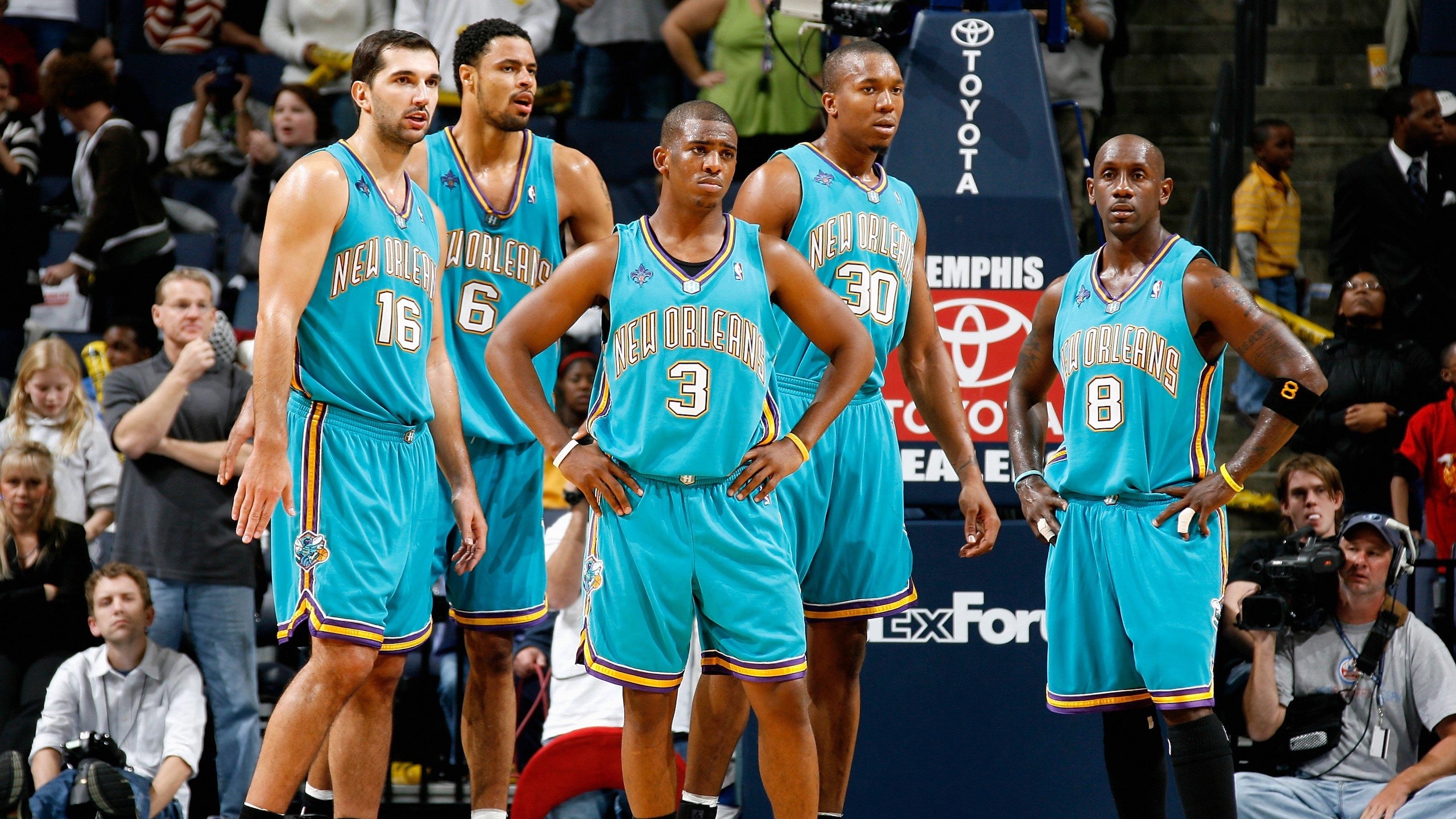
Winning Percentage: 68.3 (1st in franchise history)
SRS: 5.46 (1st)
Playoffs: Lost conference semifinals
Much has been made of what the lack of a championship means for CP3's legacy, but this is the second team on the list for which he was the offensive engine. And in this particular season, he put up some of the most absurd point guard numbers you'll ever see.
Paul averaged 21.1 points and posted league highs in both assists (11.6) and steals (2.7). He also led the league in estimated plus-minus (yes, ahead of LeBron). And when he was on the floor, the New Orleans Hornets had a point differential around that of a 60-win team.
It was a masterpiece campaign from the man who would become known as the "Point God," but he didn't reach those heights alone.
David West had a breakout campaign with 20.6 points, 8.9 rebounds and 2.3 assists. Peja Stojaković added 16.4 points and a league-leading 3.0 threes, while shooting 44.1 percent from three. And Tyson Chandler put up 11.8 points, 11.7 rebounds (including a league-best 4.1 offensive rebounds) and 1.1 blocks.
1969-70 New York Knicks (60-22)
20 of 30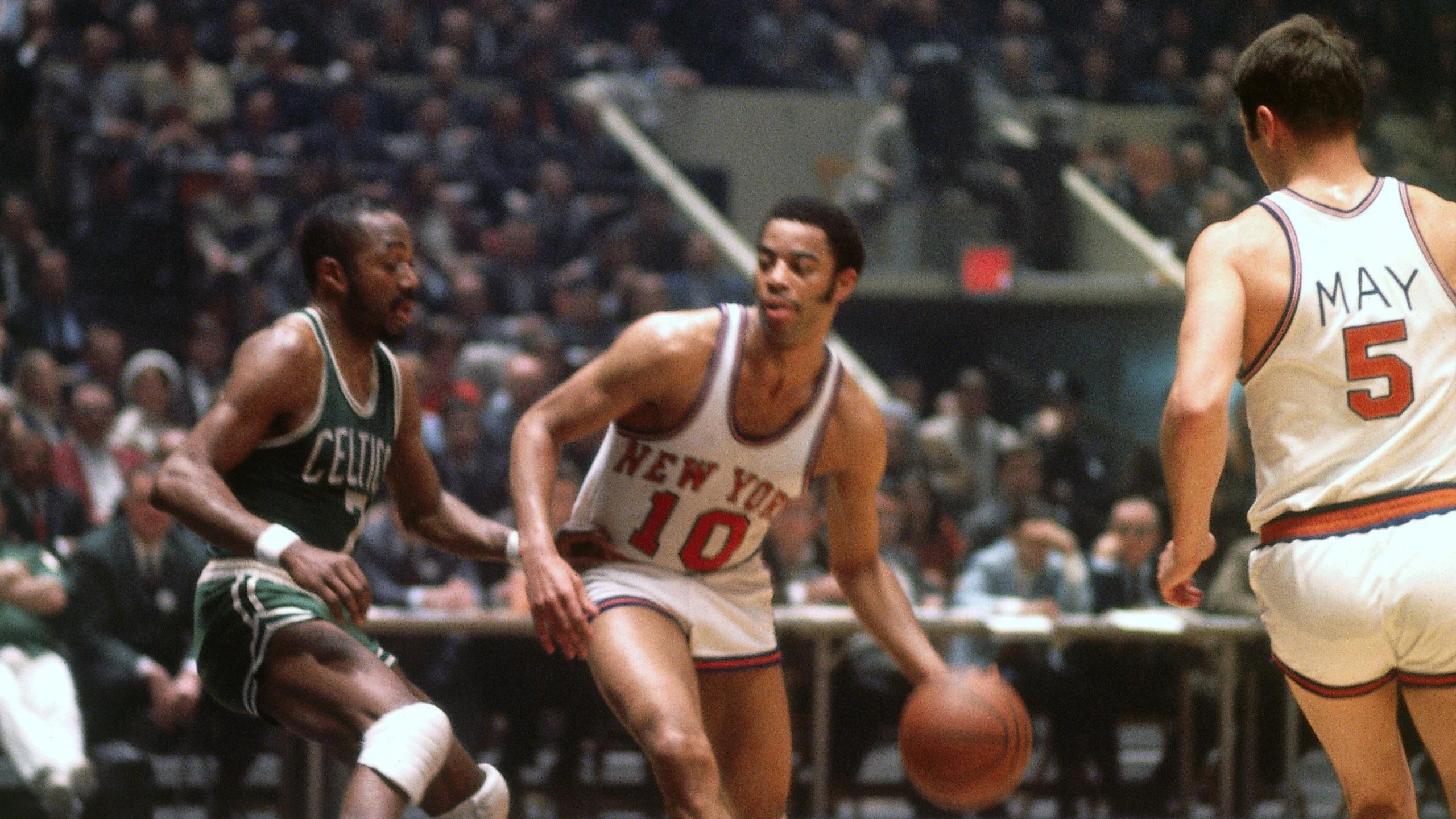
Winning Percentage: 73.2 (1st in franchise history)
SRS: 8.42 (1st)
Playoffs: Won Finals
Thanks in large part to an absolutely dominant defense that led the league in points allowed per 100 possessions, the 1969-70 New York Knicks had the best record in the NBA.
They also boasted three First Team All-Defense selections (Willis Reed, Walt Frazier and Dave DeBusschere). And behind 21.7 points, 13.9 rebounds and 2.0 assists, Reed won MVP over a field that included Jerry West, Kareem Abdul-Jabbar and his own teammate (Frazier finished fourth in voting).
In the playoffs, Reed upped his averages to 23.7 points and 13.8 rebounds. Dick Barnett, DeBusschere and Frazier were all between 16 and 17 points per game. Bill Bradley added another 12.4. And Frazier orchestrated everything with 8.2 assists.
Fresh off a decade dominated by the Celtics, the Knicks put together one of the league's deepest teams and turned the page to a new era.
2024-25 Oklahoma City Thunder (68-14)
21 of 30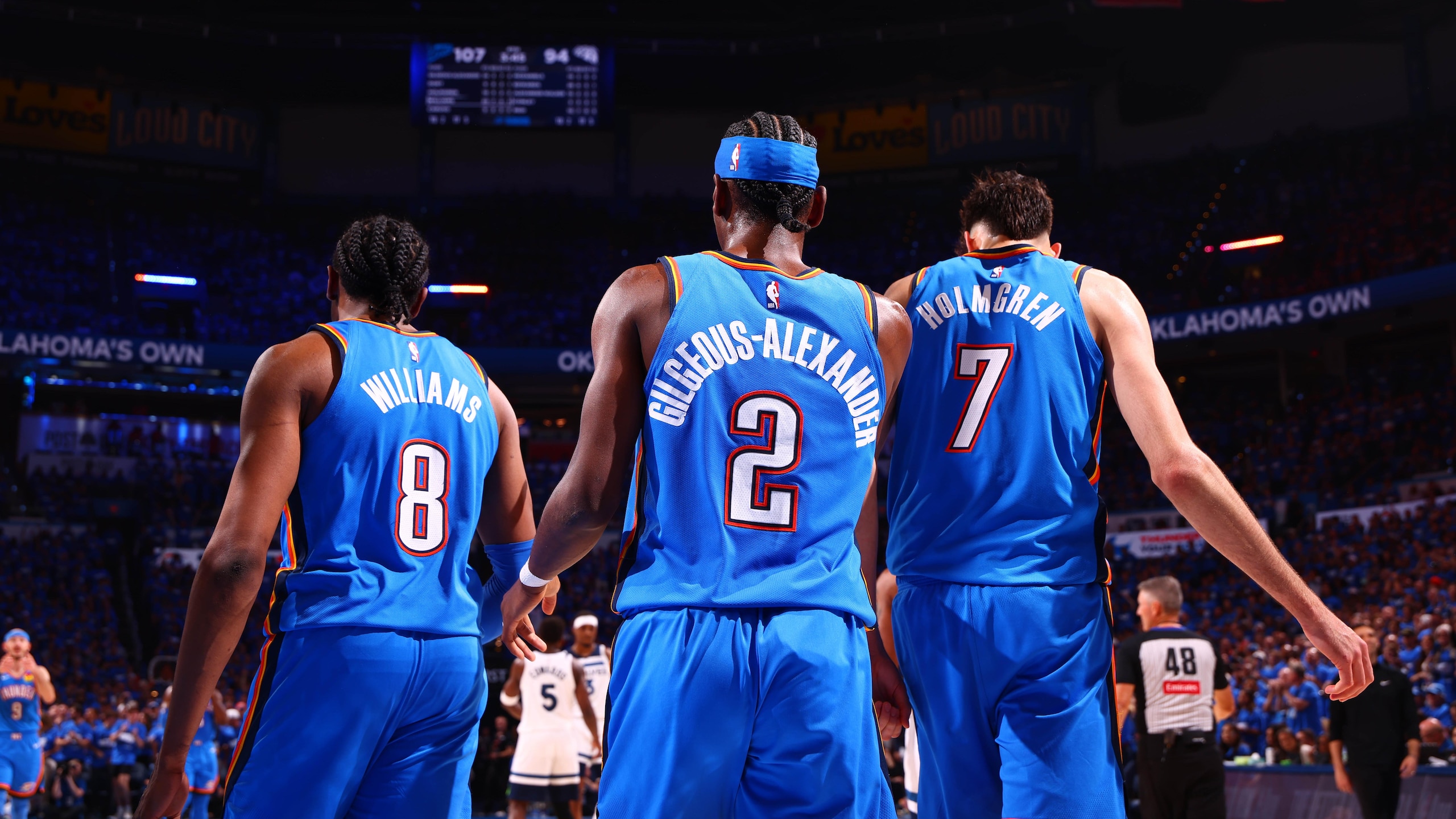
Winning Percentage: 82.9 (1st in franchise history)
SRS: 12.70 (1st)
Playoffs: Won Finals
In the deepest and most talent-rich era in NBA history, the Oklahoma City Thunder just set the single-season record for SRS and point differential. They won an NBA championship, despite entering the season as the league's youngest team.
Shai Gilgeous-Alexander won MVP. Jalen Williams and Luguentz Dort both made All-Defense teams. And Alex Caruso, Chet Holmgren, Williams, Isaiah Hartenstein, SGA, Cason Wallace and Dort all ranked in the 89th percentile or higher in defensive estimated plus-minus.
This isn't just the best team in Thunder (and Seattle SuperSonics) history. It has a legitimate claim to the best single season in all of NBA history.
1994-95 Orlando Magic (57-25)
22 of 30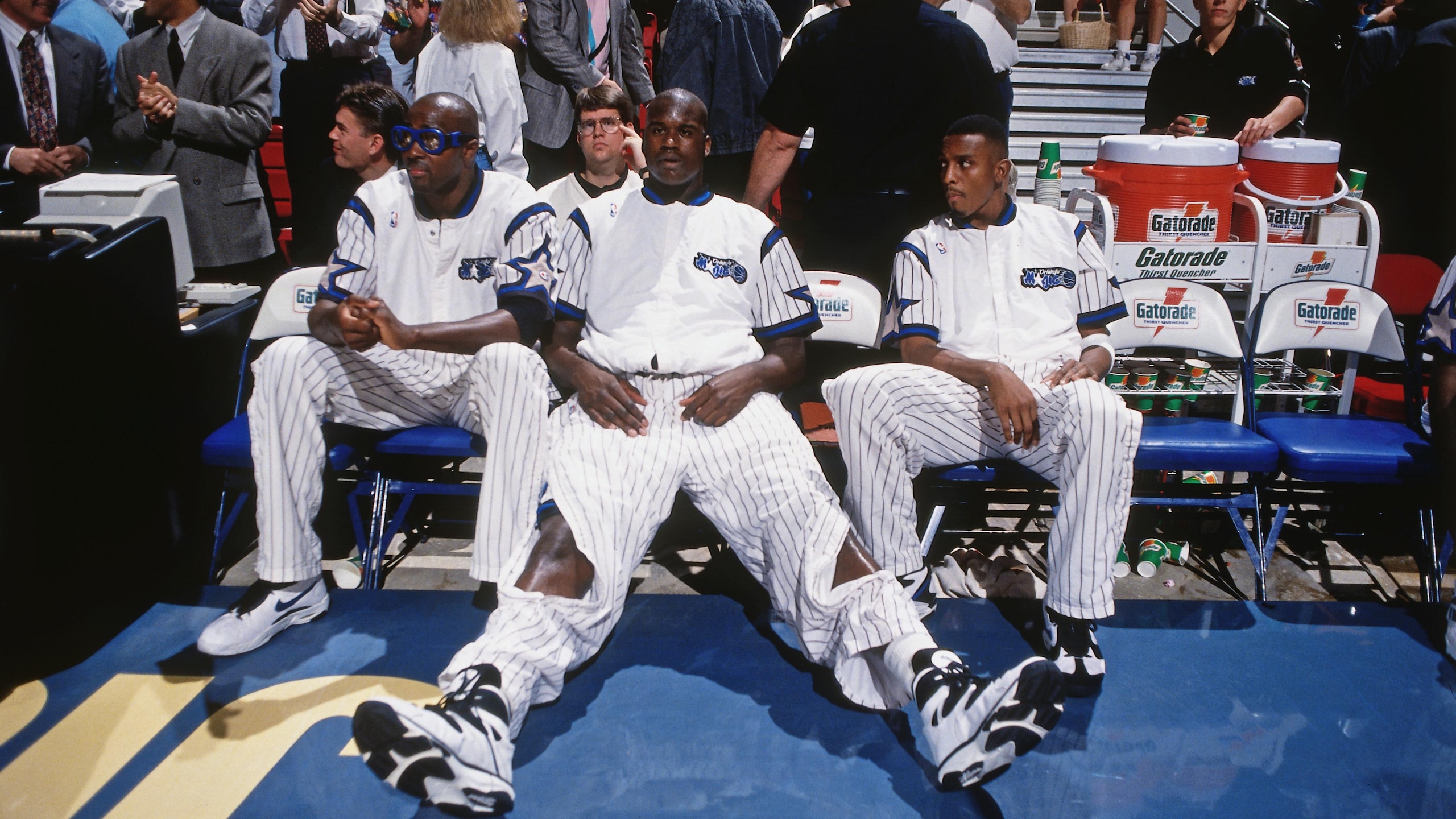
Winning Percentage: 69.5 (4th in franchise history)
SRS: 6.44 (3rd)
Playoffs: Lost Finals
The Orlando Magic have made it all the way to the NBA Finals twice, and there's a solid argument to have the 2008-09 team here. That squad finished slightly higher in both winning percentage and SRS.
But the 1994-95 team did its damage in a tougher Eastern Conference, had two of the absolute biggest stars of the decade in Shaquille O'Neal and Anfernee Hardaway and is one of the only groups that can say it beat Jordan at the peak of his powers in a playoff series.
Yes, the GOAT missed part of the 1994-95 campaign for his baseball hiatus, but he'd been back for two months by the time he faced Orlando in the postseason.
His Bulls just couldn't stop the attack led by Shaq (24.3 points and 13.2 rebounds in the series), Penny (18.5 points and 7.5 assists) and former Jordan teammate Horace Grant (18.0 points and 11.0 rebounds).
In the regular season, O'Neal and Hardaway were second and 10th, respectively, in MVP voting. Nick Anderson and Dennis Scott were dynamic floor spacers around that two-man game. And the Magic, despite falling short against the Rockets in the Finals, were one of the best teams of the decade.
1982-83 Philadelphia 76ers (65-17)
23 of 30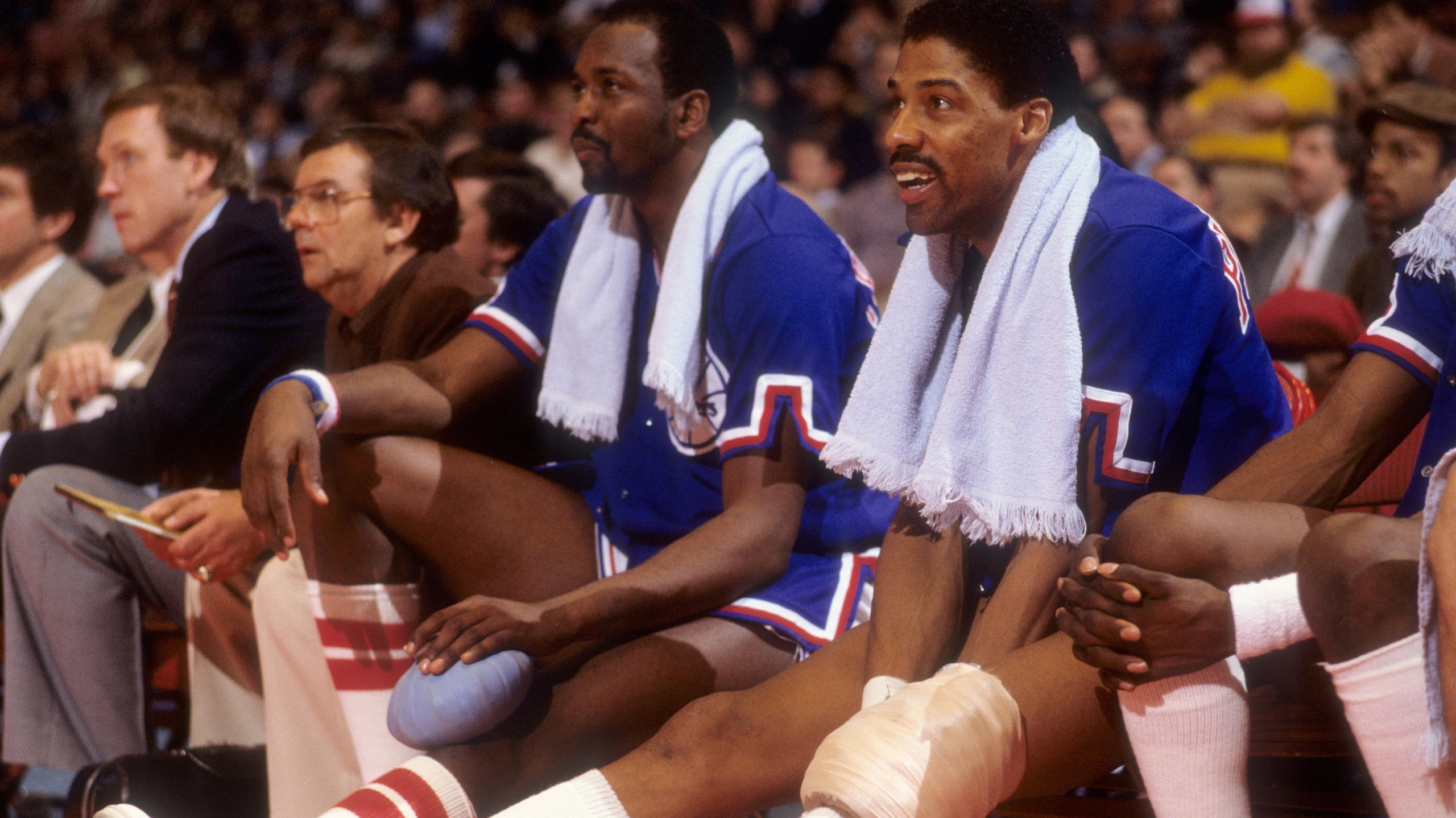
Winning Percentage: 79.3 (3rd in franchise history)
SRS: 7.53 (4th)
Playoffs: Won Finals
This is one of the harder calls of the entire exercise. The 1966-67 Philadelphia 76ers have the best marks in franchise history for both winning percentage and SRS. They snuck a title in during the decade almost completely dominated by Russell's Celtics. And Wilt Chamberlain won the MVP.
But that championship also came in a 10-team league, and the 1982-83 team broke through in a more packed era, with comparable numbers and their own MVP in Moses Malone.
The big man put up 24.5 points, a league-best 15.3 rebounds (including 5.7 offensive boards) and 2.0 blocks. Julius Erving finished fifth in MVP voting and added 21.4 points, 3.7 assists, 1.8 blocks and 1.6 steals. Andrew Toney put up 19.7 points and 4.5 assists. And Bobby Jones won Sixth Man of the Year while finishing third in Defensive Player of the Year voting.
And that all came together, in a decade owned by Bird's Celtics and Magic's Lakers, for a 12-1 playoff record. They finished off the campaign by sweeping Magic, Kareem and L.A.
1992-93 Phoenix Suns (62-20)
24 of 30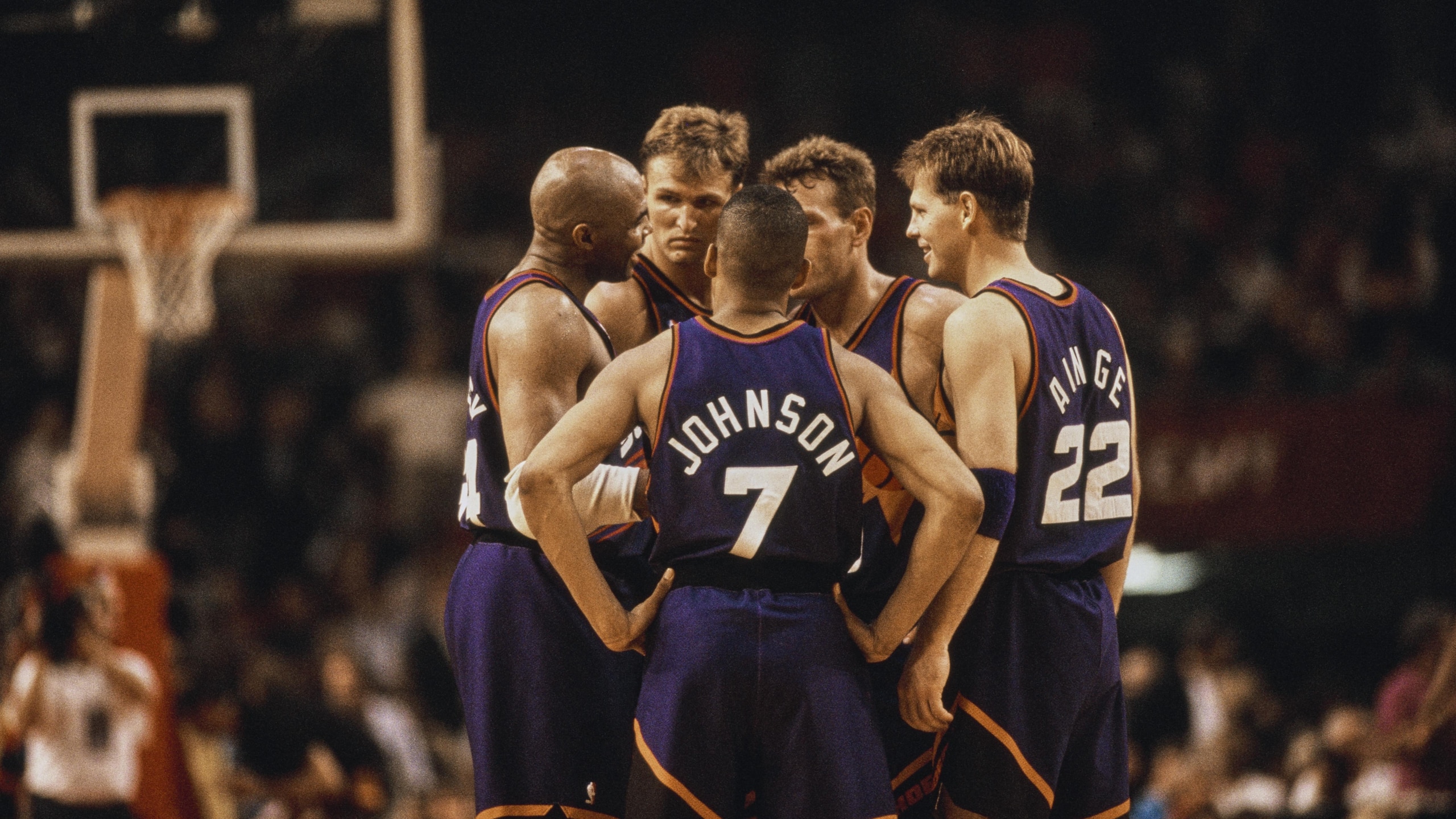
Winning Percentage: 75.6 (2nd in franchise history)
SRS: 6.27 (7th)
Playoffs: Lost Finals
Charles Barkley was an absolute force during his first season with the Phoenix Suns.
He averaged 25.6 points, 12.2 rebounds, 5.1 assists, 1.6 steals and 1.0 blocks. He led his team to the best record in the league and won MVP over Olajuwon and Jordan. And he maintained similar production through a playoff run that led all the way to the Finals.
Unfortunately, as was the case for so many big names in the 90s, he couldn't quite vanquish Jordan and the Bulls. But in just about any other era, this team could well have won it all.
Barkley, Kevin Johnson (who averaged 16.1 points and 7.8 assists that season) and Dan Majerle (16.9 points, 3.8 assists, a league-leading 2.0 threes and a 38.1 three-point percentage) gave the Suns one of the league's best offensive trios. And they were lifted up by a loaded supporting cast that included Richard Dumas (15.8 points), Cedric Ceballos (12.8), Tom Chambers (12.2) and Danny Ainge (11.8).
1976-77 Portland Trail Blazers (49-33)
25 of 30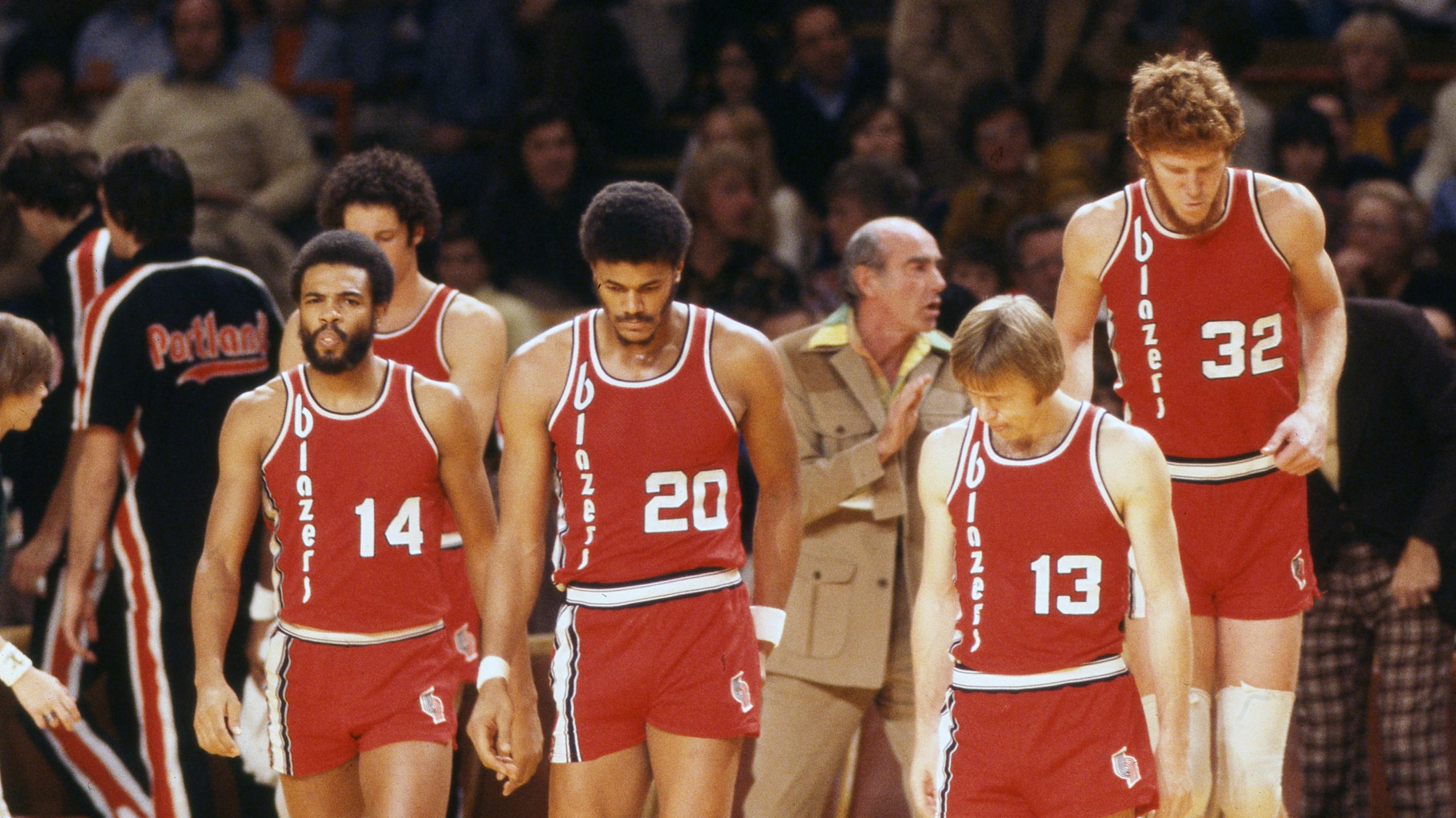
Winning Percentage: 59.8 (16th in franchise history)
SRS: 5.39 (7th)
Playoffs: Won Finals
The modern era wasn't the first stretch of NBA history that was packed with parity. There wasn't a single repeat champion in the 1970s. And toward the end of that decade, one of the funkiest and most entertaining teams in league history broke through.
Led by Bill Walton, before injuries completely altered his career, the Blazers went 14-5 in the postseason. They beat a 76ers team with Dr. J at the peak of his powers in the Finals. And they got a legendary performance from their center in those six games.
On his way to a Finals MVP, Walton averaged 19.0 rebounds, 18.5 points, 5.2 assists, 3.7 blocks and 1.0 steals. And he had three teammates (Maurice Lucas, Bob Gross and Lionel Hollins) average at least 16 points in the series.
Thanks to a superstar turn from Walton and a team-first approach from him and the rest of the roster, Portland made its way to the very top of the basketball world.
2001-02 Sacramento Kings (61-21)
26 of 30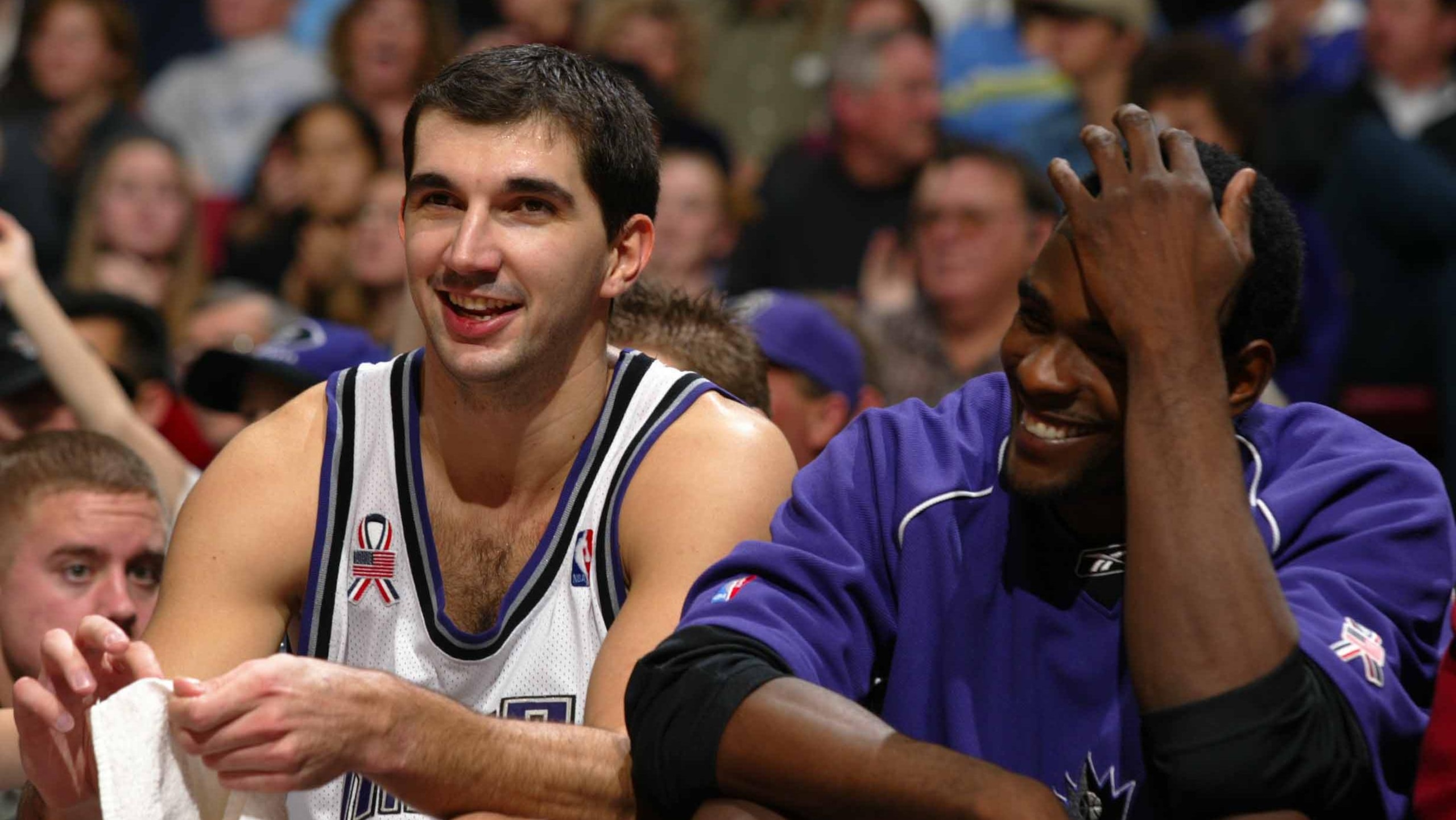
Winning Percentage: 74.4 (3rd in franchise history)
SRS: 7.61 (2nd)
Playoffs: Lost Western Conf. Finals
The Sacramento Kings actually have a title in their franchise history, but it came from a 1950-51 Rochester Royals team that went 41-27 and won the championship in an 11-team league.
With all due respect to that era and Arnie Risen (who led the team in scoring at 16.3 points per game), the early 2000s Kings have the greater legacy. And the 2001-02 team, specifically, took the eventual champion Shaq-and-Kobe Lakers to the brink in a seven-game series later steeped in controversy.
That season, Chris Webber averaged 24.5 points, 10.1 rebounds, 4.8 assists, 1.7 steals and 1.4 blocks. Peja Stojaković went for 21.2 points and 1.8 threes, while shooting 41.6 percent from deep. Mike Bibby added 13.7 points and 5.0 assists. And Vlade Divac, who averaged 11.1 points, 8.4 rebounds, 3.7 assists, 1.2 blocks and 1.0 steals, was one of the league's ultimate glue guys (and something of a trailblazer for modern bigs like Jokić).
The Kings played a fun, uptempo and team-first style that helped the league shake out of its post-Jordan malaise. They led the league in regular season wins, were top six in both offense and defense and had separate 2-1 and 3-2 leads over the Lakers in the conference finals.
Had they escaped that now infamous series, there's a good chance Sacramento would've won it all.
2013-14 San Antonio Spurs (62-20)
27 of 30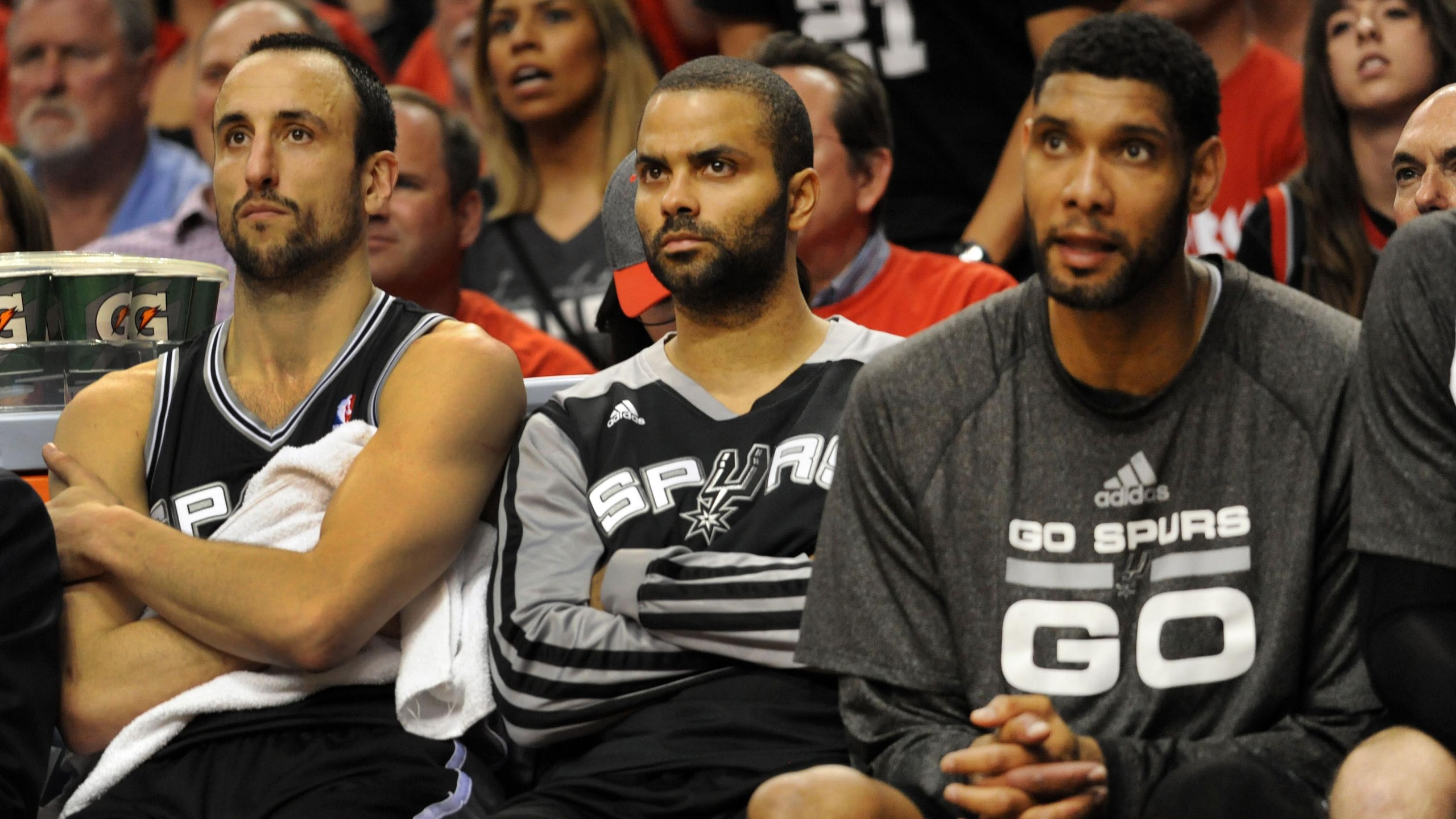
Winning Percentage: 75.6 (4th in franchise history)
SRS: 8.00 (3rd)
Playoffs: Won Finals
The San Antonio Spurs are another organization that gives us plenty of legitimate options for this exercise.
They have five championships. The "Twin Towers" teams with David Robinson and Tim Duncan dominated the interior. Following the arrival of Tony Parker and Manu Ginóbili, they had a dynamic new perimeter threats who made Duncan's life easier. Throughout their nearly two decades of dominance, they always had deep and well coached supporting casts.
But there was something special about the 2013-14 team, despite the fact that Duncan and Ginóbili were nearing the end of their careers. Or maybe that's part of what made it special. Those two stars, then in their late 30s, seemed to have a preternatural understanding of the game. And their leadership was crucial in San Antonio playing some of the most beautiful basketball we've ever seen that season.
Fresh off a stinging Finals loss in 2013 to LeBron's Heat, the Spurs looked finely tuned for revenge throughout the regular season and playoffs. Everyone was on the same page. Seemingly every possession was packed with ball and player movement. Nine players averaged at least eight points. Six were between 10 and 17 points per game.
And when San Antonio got its rematch against Miami in the 2014 Finals, their team-first approach shredded the "big three" model. The Spurs' plus-70 point differential for the series is the biggest in NBA Finals history.
2018-19 Toronto Raptors (58-24)
28 of 30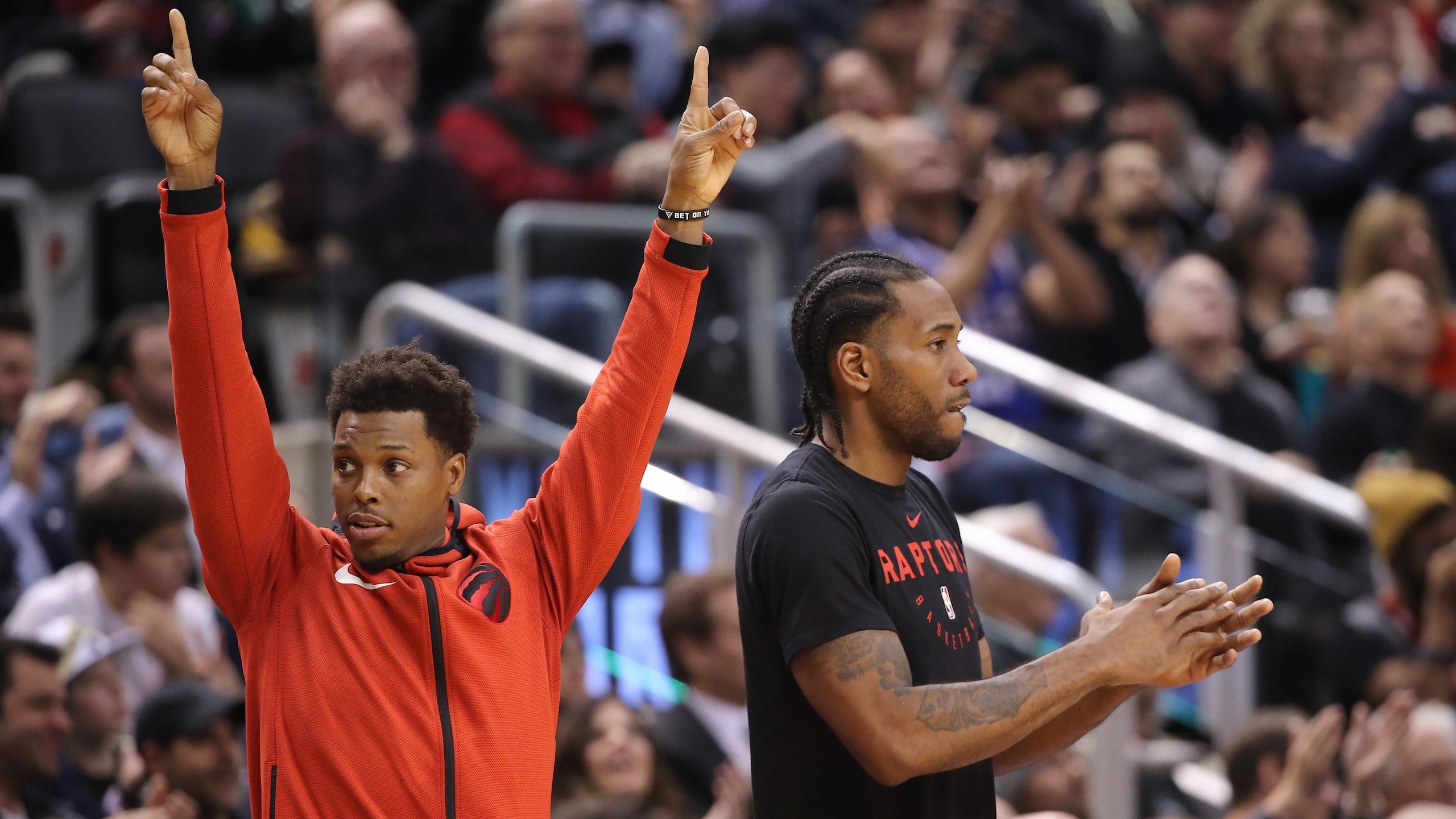
Winning Percentage: 70.7 (3rd in franchise history)
SRS: 5.49 (3rd)
Playoffs: Won Finals
Those numbers above are heavily influenced by the Toronto Raptors' load management of Kawhi Leonard during the regular season.
He only played 60 games, and the Raptors were plus-8.0 points per 100 possessions when he was on the floor (compared to plus-3.3 when he was off).
Still, a stout supporting cast that included Kyle Lowry, Serge Ibaka and a young Pascal Siakam, helped Toronto finish with the second best record in the league (behind the Milwaukee Bucks).
And in the playoffs, when Leonard played full-time alongside those three, Marc Gasol, Danny Green and Fred VanVleet, the Raptors looked like a juggernaut.
In 24 postseason games, Leonard averaged 30.5 points, 9.1 rebounds, 3.9 assists, 2.3 threes and 1.7 steals. He was Jordan-esque. And the rest of his team was willing and able to fill any gaps he couldn't on the way to the franchise's lone championship.
1996-97 Utah Jazz (64-18)
29 of 30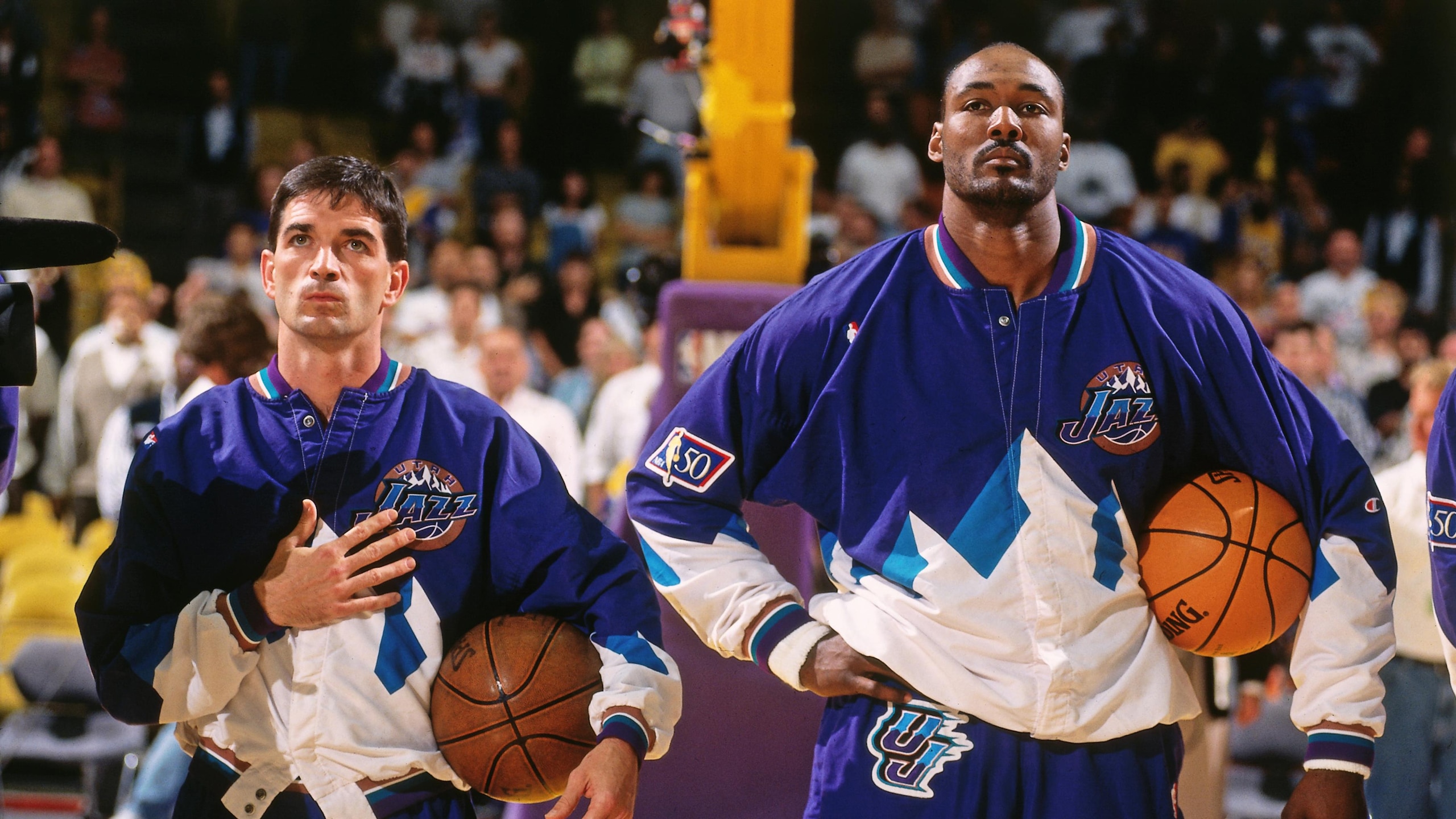
Winning Percentage: 78.0 (1st in franchise history)
SRS: 7.97 (2nd)
Playoffs: Lost Finals
The "Stockton to Malone" era Utah Jazz were one of the NBA's best and steadiest teams of the 1990s. Unfortunately, for their players and fans, they just happened to peak a little before Jordan let go of his iron grip on the league.
The Jazz had two Finals clashes with Jordan in 1997 and 1998. And both of those teams would've been fine selections for this spot. But we're going with the 1996-97 team because of the numbers above and the fact that John Stockton and Karl Malone were both a little closer to their primes.
That season, Malone won MVP behind 27.4 points, 9.9 rebounds and 4.5 assists per game. Stockton averaged 14.4 points, 10.5 assists and 2.0 steals. And Jeff Hornacek added 14.5 points, 4.4 assists and 1.5 steals.
With the legendary two-man game of Stockton and Malone, flanked by Hornacek, Bryon Russell and the rest of a solid supporting cast, this team was a dominant offensive force.
1977-78 Washington Wizards (44-38)
30 of 30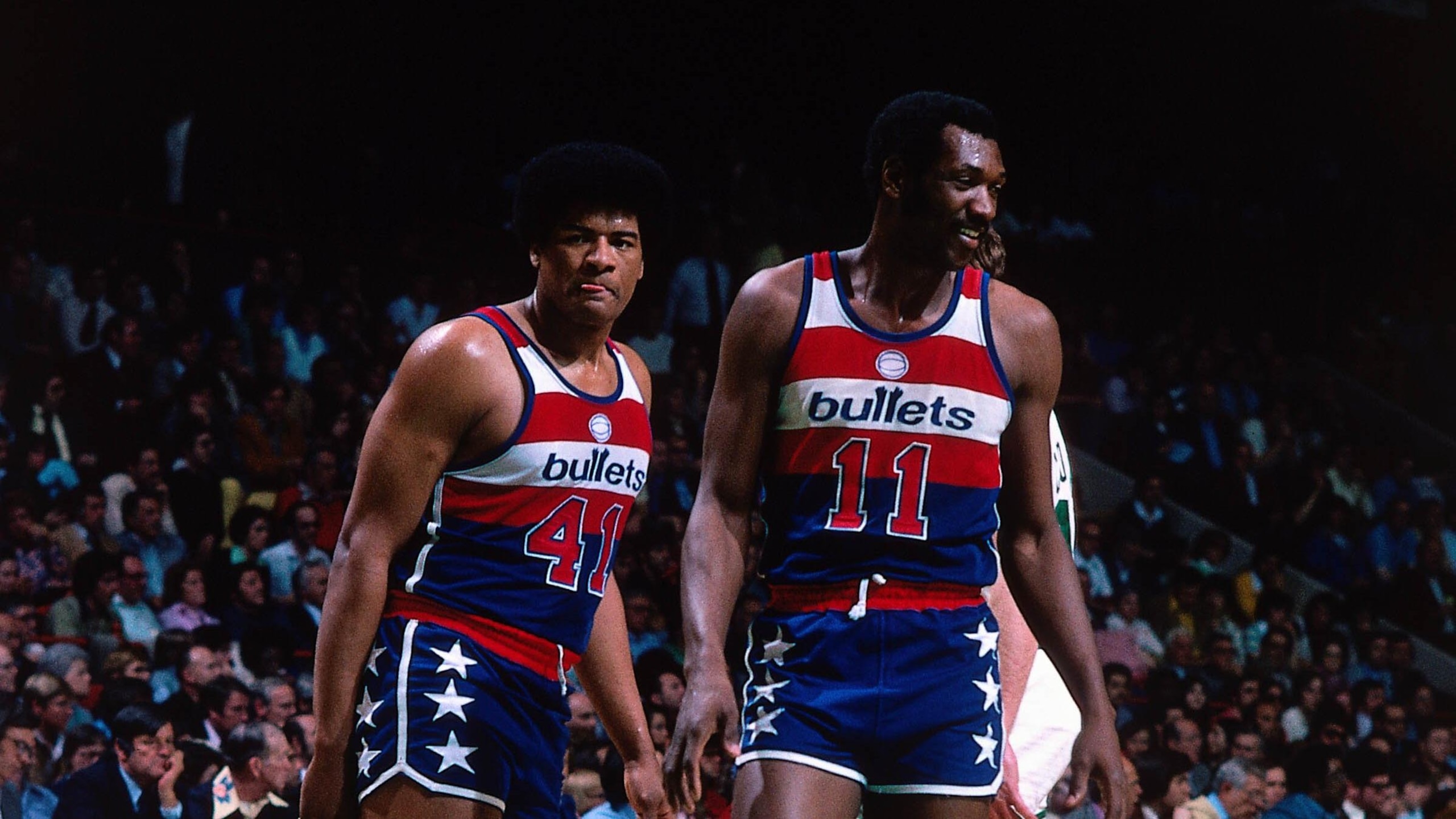
Winning Percentage: 53.7 (12th in franchise history)
SRS: 0.82 (16th)
Playoffs: Won Finals
The 1977-78 Washington Wizards (then the Washington Bullets) don't have the most impressive regular-season marks. Even relative to the rest of a pretty weak organizational history, the winning percentage and SRS look pedestrian.
But winning the title is the ultimate trump card. Some other Wizards squad would have had to be spectacular in the regular season to top that. And though the 1974-75 and 1978-79 teams were close (both lost in the Finals), there was something magical about this particular version.
Those Bullets, led by Elvin Hayes and Wes Unseld, beat John Drew, George Gervin and Julius Erving on their side of the bracket. Then, in the Finals, they beat a Seattle SuperSonics team that would go on to win the championship a year later.
That postseason, Hayes averaged 21.8 points, 13.3 rebounds and 2.5 blocks. Bob Dandridge averaged 21.2 points. And Unseld added 12.0 rebounds, 9.4 points and 4.4 assists on the way to his Finals MVP.
.jpg?w=2560 "A.J.'s Message to Hurts 🙏")
.jpg?w=2560 "NFLPA Makes Hurts Statement")
.jpg?w=2560 "Rams to Sign New Kicker")