.jpg?w=2560 "Cowboys Camp Football")

NFL Backfields Shaping Up to Be 2025 Fantasy Football Nightmares
Shared backfields sends shivers down the spines of long-time fantasy football enthusiasts.
What happened to the days of LaDainian Tomlinson and Shaun Alexander? But that's 20 years ago now. Interestingly the NFL featured more running backs, who managed over 300 carries during the 2024 season (six), than 10 years prior (two).
For those fantasy football owners who don't land one of the few modern-day workhorses, they must deftly navigate the running back position and the handcuffs to their respective standouts.
However, a handful of situations should be outright avoided based on the uncertainty found in those backfields. A stable of running backs is nice to have on a roster, but it can be murder when trying to determine which option will maximize points each and every weekend.
Cleveland Browns
1 of 6.jpg?w=2560 "Browns Football")
The entire Cleveland Browns offense has the ingredients for a potential disaster.
Beyond the reliable veteran offensive linemen found of up front (Joel Bitonio, Wyatt Teller and Jack Conklin), the unit has no legitimate solution at quarterback. Dawand Jones must prove he can handle left tackle. A second wide receiver must show he can be a threat to help Jerry Jeudy. Meanwhile, the running back rotation is in flux.
Currently, Quinshon Judkins, whom the organization drafted in this year's second round, remains unsigned after being arrested on a charge of battery and domestic violence. The Browns remain "cautiously optimistic" that the running back will sign and play for the team this season.
At this point, any contributions from Judkins can't be relied upon, nor should they.
From there, Jerome Ford is once again thrust into the lead role. Technically, Ford led the Browns in rushing yardage during each of the last two seasons. But it's clear that Cleveland wanted an upgrade at the position, not only with Judkins' selection but by doubling-down with Dylan Sampson's addition in this year's fourth round.
Sampson led the SEC in rushing last season. He's a potential home-run threat out of the backfield any time he touches the ball. But he's also 20 years old, with only one year of top-end production.
Pierre Strong Jr. is a solid third-down option as the final piece.
A lot has yet to play out in regards to the Browns' backfield. How it'll stack and be deployed once the regular season begins is too much of a mystery to sink a significant fantasy investment into any of these names.
Dallas Cowboys
2 of 6.jpg?w=2560 "Cowboys Rookie Camp Football")
The Dallas Cowboys went from the NFL equivalent of having nothing at running back to too many options. Though no one knows whether those options are going to be quality contributors or not.
Last season, Rico Dowdle experienced a breakout season and eclipsed 1,000 rushing yards. Honestly, Dallas really didn't have any better options. To that point, the team brought back an aging Ezekiel Elliott, who finished second on the team in the same category despite not making it through the entire campaign.
As a unit, the Cowboys finished bottom six in rushing yardage last season. To make matters worse, Dowdle left in free agency to join the Carolina Panthers.
Dallas responded by signing Javonte Williams and Miles Sanders in free agency, then drafted Jaydon Blue and Phil Mafah in this year's fifth and seventh rounds, respectively.
Williams once looked a future star before a significant knee injury ended his sophomore campaign. He hasn't quite looked like the same explosive ball-carrier ever since. Sanders is now 28 and more of a change-of-pace option at this stage of his career. He can be effective as an outlet target.
Blue is the one option among this group with the upside to warrant a later flier. The rookie has impressive throughout training camp. He's undersized but explosive. Although, he's currently injured and dealing with a bone bruise in his heel, according to the Fort Worth Star-Telegram's Nick Harris.
Fellow first-year ball-carrier Phil Mafah shouldn't be overlooked, either, because he provides a completely different skill set as a powerful, downhill runner.
The issues here is too many cooks in the kitchen with the potential to cancel out one another from a fantasy football perspective. The Cowboys should ride the hot hand each week, while will create far too much much uncertainty when considering lineup projections.
Denver Broncos
3 of 6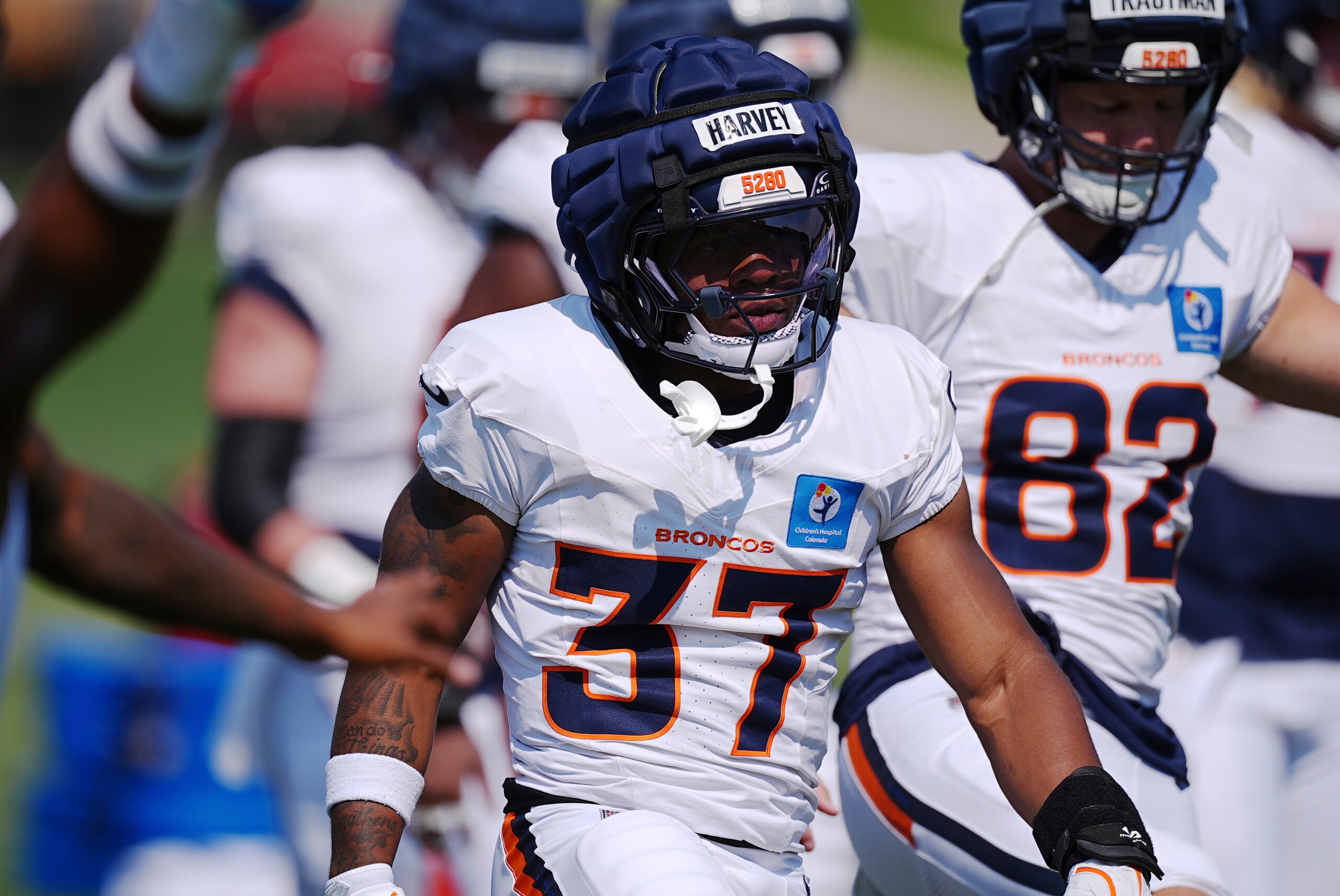
Despite not having any individual rush for more than 513 yards last season, the Denver Broncos weren't an awful running team. They finished in the middle of the pack for rushing offense. Still, the organization understood it had to get better in this particular area.
"We've got to be more explosive in that area, and so we first look at ourselves, the scheme, and are we doing it the way we want to, and then we're looking at who we're asking to do it with," head coach Sean Payton told reporters last week. "Obviously, we've added some players in the running back room, and we're going to be much improved in that area."
To the coach's point, the team signed JK Dobbins as a free agent and drafted R.J. Harvey in this year's second round, to go along with Jaleel McLaughlin and Audric Estime, who remained on the roster.
Dobbins looked great as part of the Los Angeles Chargers offense to start the 2024 campaign. Unfortunately, he can't seem to overcome the injury bug. Harvey was ultra-productive during his final two collegiate seasons, but he's undersized (5'8", 205 lbs) and already turned 24. Even so, he's going to get plenty of looks this fall. McLaughlin can continue to be the jitterbug out of the backfield. Finally, Estime provides power elements.
The Broncos situation is very similar to the previously discussed Cowboys setup. Both groups are more talented today than they were a year ago. But those additions create a logjam when dispensing carries. Furthermore, Payton's offense isn't built on a traditional run game, as is the case with other situations. Those running backs on Denver's roster will likely be used in a variety of manners, except in a truly featured role.

.jpg?w=2560 "Cardinals Giants Football")
.jpg?w=2560 "Hill Injury Update Football")
Houston Texans
4 of 6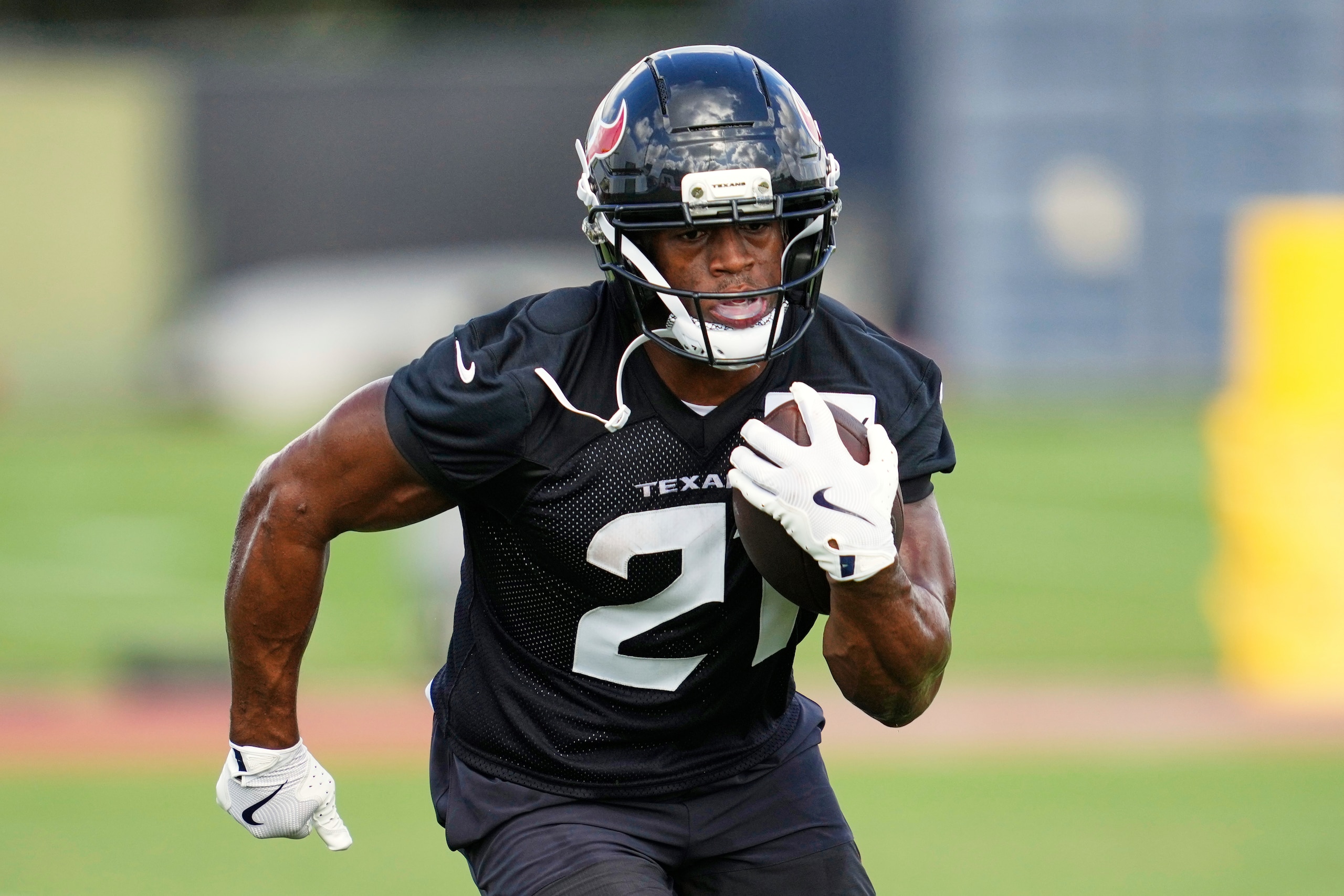
The Houston Texans already have a bell cow in the backfield. Though an injury provides a roadblock for this particular setup and muddies the clarity of how the Texans will proceed during the regular season.
Currently, Joe Mixon is dealing with a foot/ankle injury that's expected to keep him off the field until at least the start of the regular season. Even if he's ready for Week 1, he'll need to get his feet under him—no pun intended—before returning to form as the back who ran for 1,000 yards for the fifth time in his career and first with the Texans during the 2024 campaign.
Keep in mind that Mixon is now 29 years and teetering close to that age when running backs start to significantly decline. So, it should come as no surprise that the organization brought in Nick Chubb to help in the backfield, even before Mixon's injury.
Chubb is no longer peak Chubb after suffering a devastating knee injury during the 2023 campaign and a broken foot last season. But he's a competent veteran who can eat his fair share of carries and give Mixon a rest when necessary.
"To see the resilience, to see him battle back, work in the right way to put himself in position to have another opportunity here in Houston, I couldn't be more excited to add him to our team and see what value he can provide to us," head coach Demeco Ryans told reporters two months ago.
Dameon Pierce should experience somewhat of a bounce-back in Year 3 as well, now that the Texans are expecting a heavier dose of gap-blocking principles instead of a zone-predominant approach.
Furthermore, the offensive line will look drastically different this fall, as compared to last season, and will need time to gel.
Considering the circumstances, the Texans may need some time before their run game gets rolling, which shouldn't excite fantasy football owners.
Miami Dolphins
5 of 6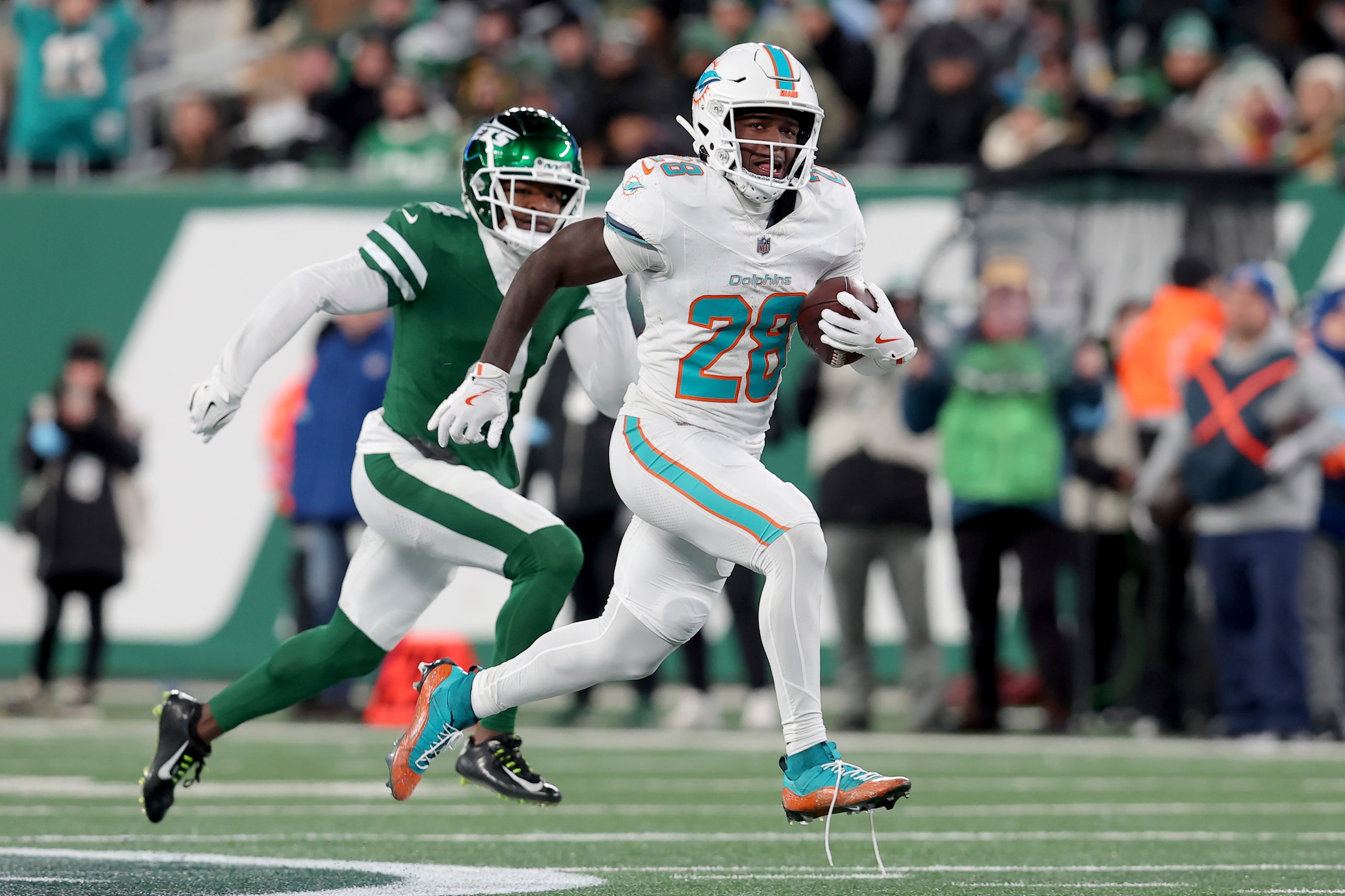
Despite being a Kyle Shanahan protege and employing a similar system that seemingly spits out productive running backs on the regular, the Miami Dolphins' Mike McDaniel hasn't been as committed to his run game since becoming a head coach.
Part of the problem lies in the Dolphins' roster construction. They've never had a true lead back. Instead, their options tend to be smaller, lighter and faster as complementary pieces to the squad's high-flying passing offense.
De'Von Achane did manage 907 rushing yards last season. He's instant offense, with the ability to create chunk plays at a moment's notice.
At the same time, the 5'8", 188-pound runner is never going to be a viewed as a true featured back because of his size, injury history and usage. As an example, Achane carried the ball 14 or more times in only four of 17 appearances last season. He provided fewer than 45 rushing yards in 10 different instances.
McDaniel is going to lean on his rotation. Jaylen Wright is now in Year 2, and he's expected to steal some carries. Alexander Mattison signed as a free agent this offseason, after rushing for 1,120 combined yards during the previous two campaigns. He's a more traditional option.
Finally, Miami drafted Ollie Gordon II in this year's sixth round. He can serve as a banger between the tackles to provide the Fins with more of a physical presence.
From a blocking perspective, Miami's offense is also rebuilding its left side, with Patrick Paul and Jonah Savaiinaea expected to be full-time starters in the second and first seasons, respectively.
All four running backs will be in the mix, thus negating the overall effectiveness of a singular option. Besides, this scheme is built around quarterback Tua Tagovailoa getting the ball to Tyreek Hill and Jaylen Waddle.
New Orleans Saints
6 of 6.jpg?w=2560 "Saints Football")
Avoiding anyone from the New Orleans Saints this season may be a good rule of thumb in general.
The Saints are preseason favorites to be the league's worst team in 2025. Early projections have them as the franchise ready to capture the No. 1 overall pick in next April's draft, where the front office can adequately address the quarterback position for the first time since Drew Brees retired.
Right now, Spencer Rattler and second-round rookie Tyler Shough are competing to start behind center. Neither should be viewed a legitimate long-term option until they prove otherwise, which means the Saints will need to generate offense elsewhere.
Alvin Kamara is a natural pivot point considering the five-time Pro Bowler's previous level of play. However, Kamara turned 30 earlier this summer. He's never had more than 240 carries in a season or surpassed 1,000 rushing yards. His value always derived from his versatility as a stellar weapon out of the backfield. Without consistent quarterback play, the veteran's effectiveness will be limited.
Besides, the Saints have made investments in other ball-carriers over the last few years. Kendre Miller and Devin Neal are recent third- and sixth-round draft selections, respectively. Granted, Neal is currently dealing with a hamstring issue. Even so, both should be expected to contribute in the run game and possibly get larger roles as the season progresses, in order to keep an aging Kamara fresh and effective throughout the campaign.
The Saints can do everything right with their running back rotation this fall and they're still a team that's going to struggle, particularly on offense. Without any of these options being a true workhorse in a featured role, the Saints running back room should be a hard pass.
.jpg?w=2560 "Titans Giants Football")
.jpg?w=2560 "Dolphins Bills Football")