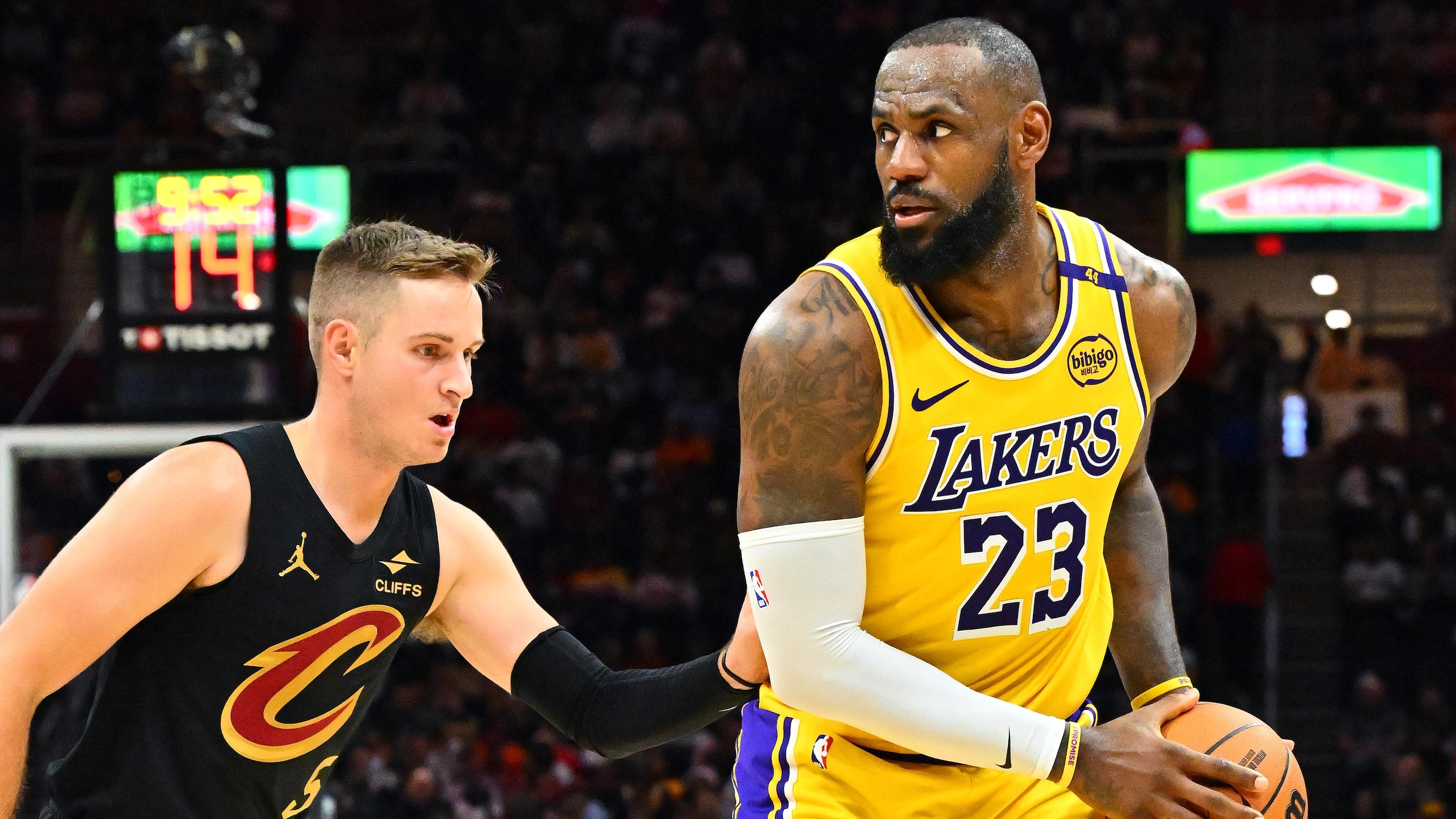


The LeBron James watch continues across the NBA, as a trade from the Los Angeles Lakers seems entirely possible.
According to James' agent, Rich Paul, four teams have reached out to discuss a trade for the 40-year-old, with the Cleveland Cavaliers reportedly one of those franchises.
Unfortunately, no team faces a tougher challenge when trying to acquire James, who chose to pick up a $52.6 million player option for the 2025-26 season. The Cavaliers are the only NBA team above the second apron luxury-tax line, meaning they cannot combine multiple player salaries to trade for one player, in this case, James.
The same reason the Cavs face this restriction is precisely why they should pursue a trade for the greatest player in franchise history for yet another reunion.
They should trade for James, although the rationale has as much (or more) to do with off the court as it does on.
Cavs' Crushing Cap Situation
1 of 5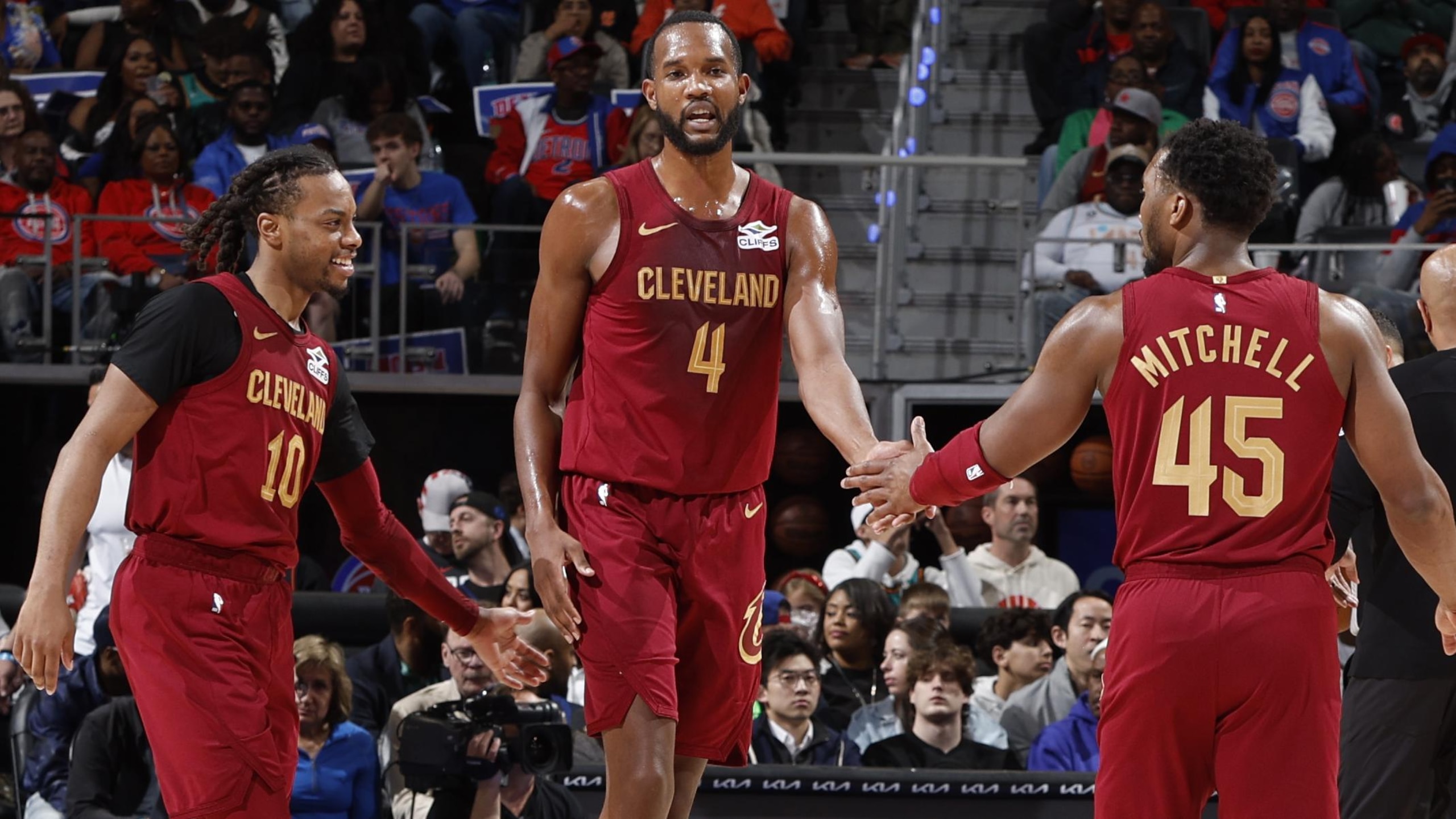
Following Bradley Beal's buyout with the Phoenix Suns, the Cleveland Cavaliers have become the most expensive team in the NBA with a projected roster cost of $226.3 million.
They are also the only franchise above the second apron luxury-tax line and face a tax bill of $149 million, bringing the total cost of the 2025-26 team to $375.3 million before filling out the final two roster spots. For comparison, this figure is nearly $200 million more than the NBA champion Oklahoma City Thunder will cost next season.
Opening up the wallet is nothing new to owner Dan Gilbert, who previously paid well over $100 million in luxury-tax penalties during the Cavs' NBA Finals runs from 2014-2018 with LeBron James on the roster. Still, $149 million for a single season is eye-popping, and this is before factoring in the second apron restrictions.
Evan Mobley made $11.2 million last season in the final year of his rookie deal, yet a new max contract that escalated to 30 percent of the salary cap after he won Defensive Player of the Year will see him earn $46.4 million in 2025-26.
Donovan Mitchell's new max extension means a raise from $35.4 million to $46.4 million and Darius Garland still has three years left on his own max deal, paying him $39.4 million this season. Four other Cavaliers (De'Andre Hunter, Jarrett Allen, Max Strus and Lonzo Ball) are due eight figures as well.
There's no financial relief coming in sight, either.
The Cavs hold a $10 million team option for Ball next year, yet they are still projected to be well above the second apron line after factoring in raises for so many other players.
Mitchell can choose to become an unrestricted free agent in 2027. At this time, he'll have accumulated 10 years of service, making him eligible to sign a contract for the maximum 35 percent of the salary cap. This could be as much as $380 million over five years.
As good as the Cavaliers are, this kind of spending just isn't sustainable.
Trading for James is a chance to get out of this financial prison while actually improving the team in the short term.
LeBron's Contract Is Key
2 of 5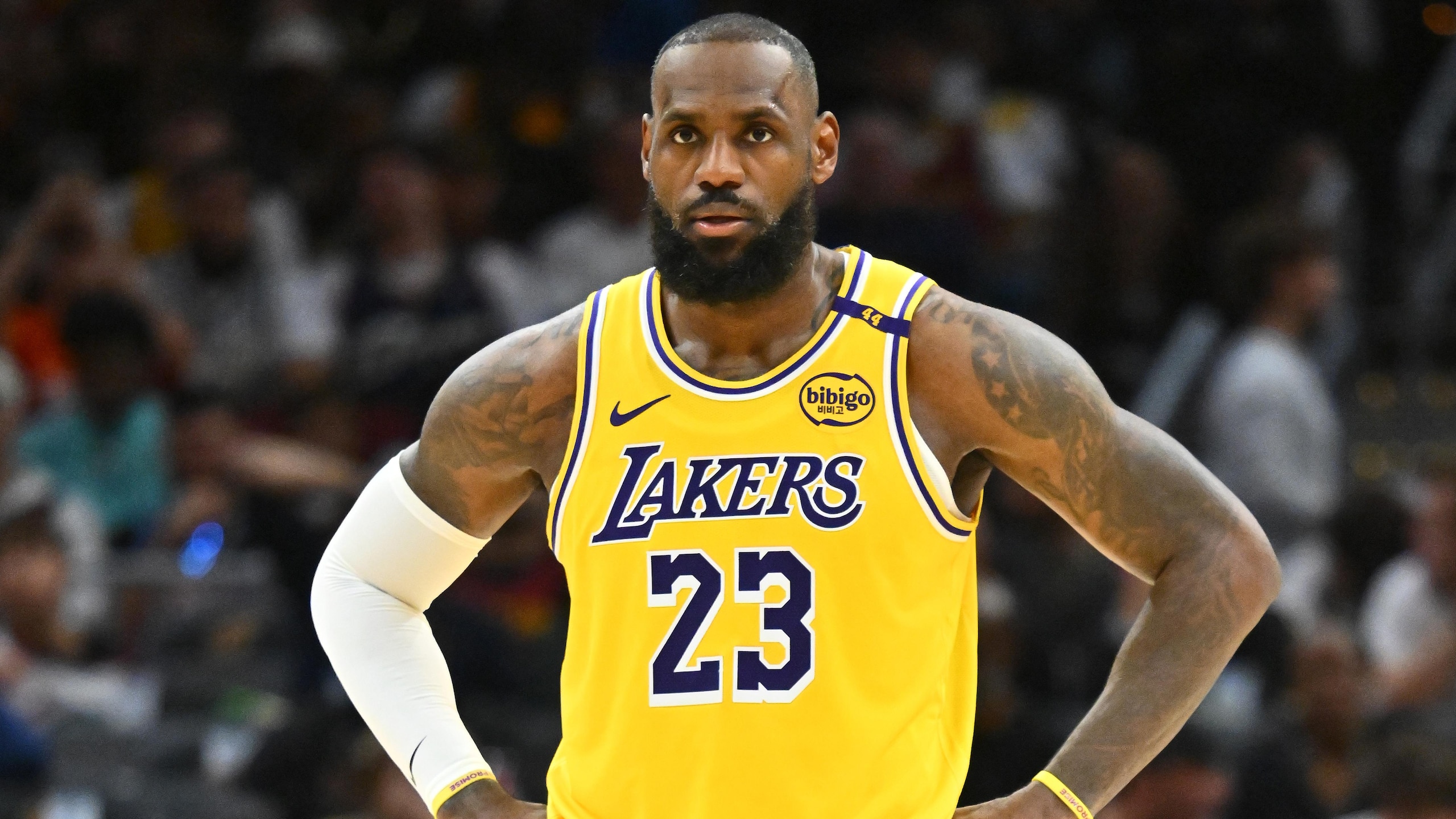
Expiring contracts used to hold a lot of value for NBA teams, as franchises would use them to clear cap space for star free agents in the upcoming summer.
With more and more players signing extensions and few stars actually hitting the market, teams will start to use big expiring deals to plan ahead and avoid second apron restrictions in the future instead.
This is where LeBron James and his $52.6 million salary come in.
As currently constructed, the largest expiring contract on the Cleveland Cavaliers belongs to Dean Wade at just $6.6 million. This is going to do next to nothing for financial relief, especially since a new three-year, $90 million extension for Jarrett Allen will kick in next summer.
The Cavs could use James the player, but they need his expiring money.
Donovan Mitchell and Evan Mobley have established themselves as the two most important pieces on the team, earning first and second All-NBA teams last season, respectively. Both would be off the table in any potential James trade.
Instead, Cleveland would need to include enough salary to not only match James' $52.6 million contract but also shed $19.7 million in salary off the 2025-26 roster to get them under the second apron. Only then could they aggregate salaries to trade for James.
This would have to include Darius Garland ($39.4 million) and some combination of De'Andre Hunter ($23.3 million), Jarrett Allen ($20 million), Max Strus ($15.9 million) and Wade.
Cleveland could make the math work by sending out Garland, Hunter and Strus ($78.6 million in salaries), in a deal for LeBron and Bronny James, putting the Cavs $4.4 million under the second apron with two roster spots left to fill.
Such a trade would clear a whopping $81.8 million of salary off the books for the Cavaliers in 2026-27. This is before factoring in a new contract for James, who may retire or agree to return on a team-friendly deal.
Cleveland would still have a core of Mitchell, Mobley and Allen and have nearly $20 million in projected salary-cap space.
The Importance of Getting Out of the Second Apron
3 of 5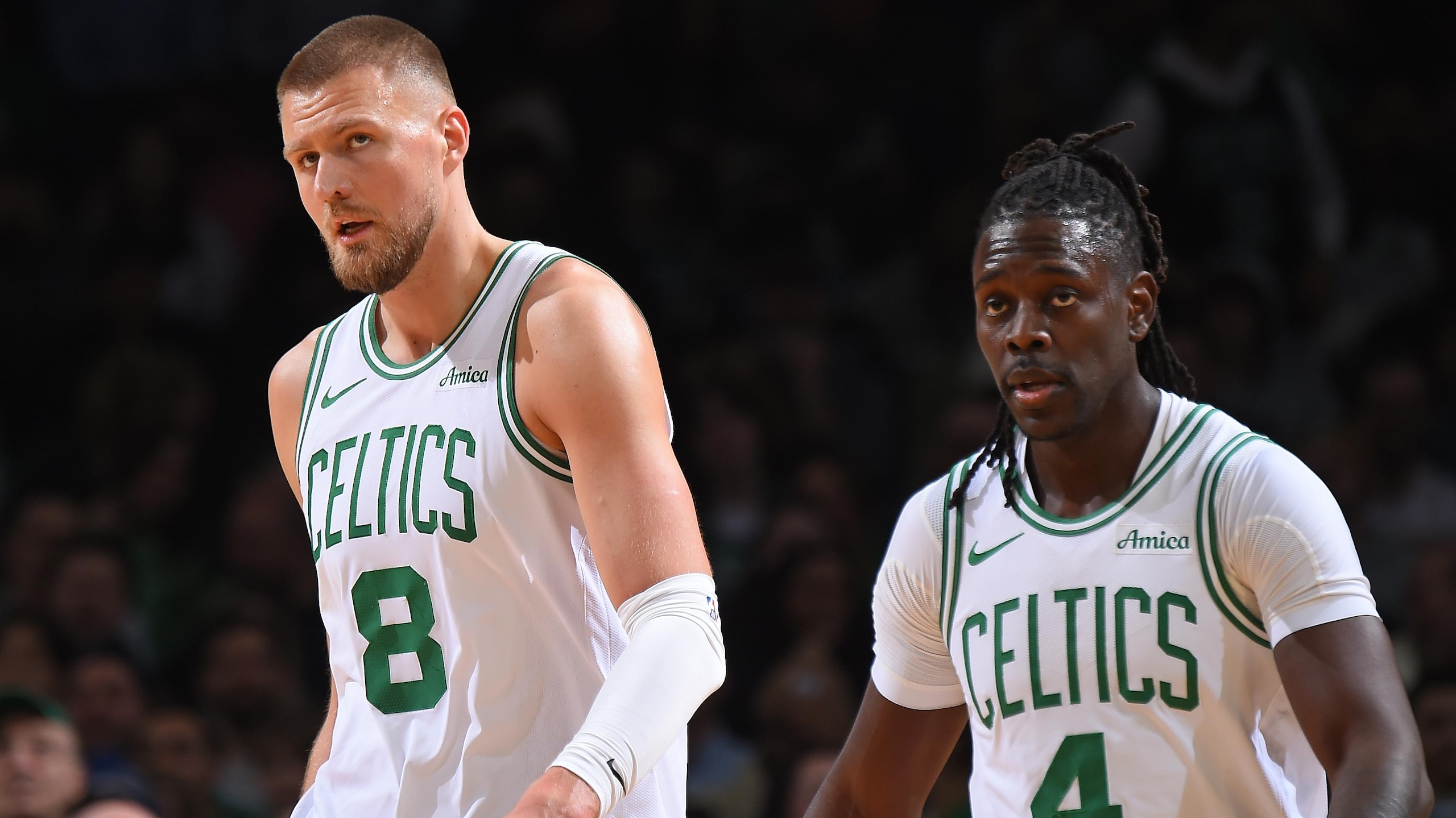
The incorporation of the first and second apron levels in the new CBA has fundamentally shaken how NBA teams go about building rosters.
Here's how the second apron has already impacted teams:
- The Minnesota Timberwolves traded Karl-Anthony Towns after reaching the Western Conference Finals.
- The Milwaukee Bucks traded franchise icon Khris Middleton for Kyle Kuzma.
- The Boston Celtics traded Jrue Holiday and Kristaps Porziņģis for Anfernee Simons and Georges Niang a year after winning a championship.
- The Phoenix Suns traded Kevin Durant for a discounted rate and are now paying Bradley Beal nearly $100 million over the next five years to not play for them.
Teams have now begun making desperation moves to get under the second apron and avoid all of the restrictions that come with it. A LeBron James trade for Cleveland helps get them an All-Star and All-NBA talent now while opening up other roster improvement opportunities.
If the Cavaliers stay above the second apron, they won't be able to:
- Sign outside free agents to more than veteran minimum contracts.
- Aggregate players in future trades.
- Trade a first-round pick seven years into the future (2032).
- Sign any player who gets bought out during the 2025-26 season who was making more than the mid-level exception (CJ McCollum, Middleton, etc).
- Send out any cash in trades.
If the Cavs finish as a second-apron team in three out of four seasons, their frozen future first-round pick automatically drops to the end of the first round as well. Obviously, all of this severely handicaps how much a team can improve.
On the flip side, we've seen what having versatility can do.
By letting Paul George walk last summer and avoid the second apron, the Los Angeles Clippers used their full $14.7 million mid-level exception to sign Bradley Beal and Brook Lopez. The Denver Nuggets did the same with Kentavious Caldwell-Pope, using his loss in free agency and a trade of Michael Porter Jr. to bring in Cam Johnson, Jonas Valančiūnas, Bruce Brown and Tim Hardaway Jr.
The Cavs need to get out ahead of their future financial troubles now and avoid falling into a Celtics situation where they perform strict salary dumps.

LeBron Improves Cavs' Title Chances
4 of 5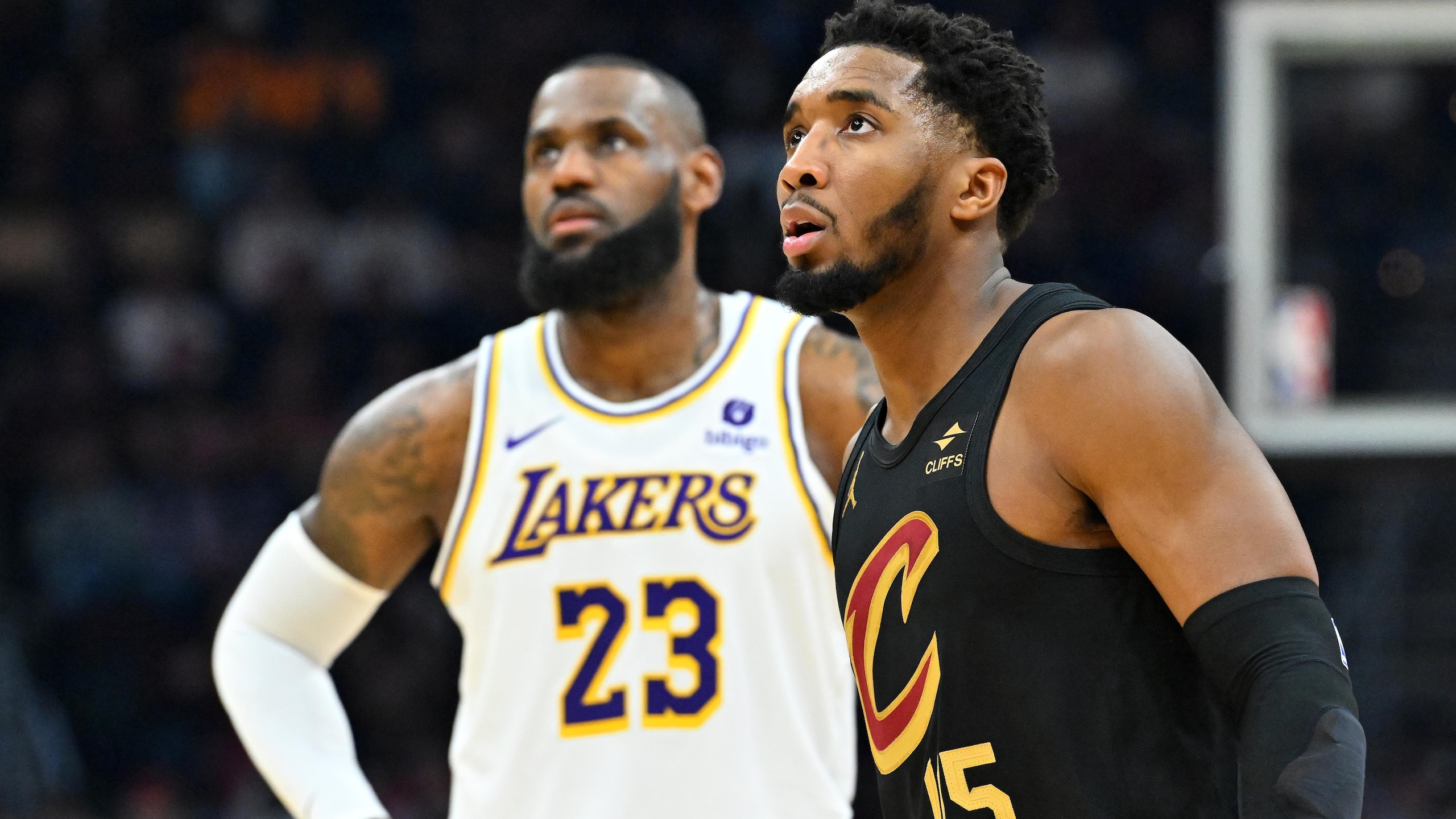
A LeBron James trade may be financially driven, but there's obviously a basketball element involved here as well.
Adding 24.4 points, 7.8 rebounds, 8.2 assists, 1.0 steals and a 37.6 percent mark from three alongside Donovan Mitchell, Evan Mobley and Jarrett Allen seems good. James was an All-Star for a record 21st-straight season and made the All-NBA second team next to Mobley and hasn't slowed down all that much despite turning 40 last December.
The Cavs' depth helped them win 64 games, finish with the best offense in the NBA and earn the No. 1 seed in the East. What it didn't help with, though, was making it out of the second round of the playoffs for the third consecutive season.
Injuries severely limited Darius Garland and De'Andre Hunter. Mobley and Mitchell either missed time or were hobbled as well.
Somehow, James has never missed any of his team's 292 playoff games, an NBA record for any player.
If the Cavaliers traded a trio like Garland, Hunter and Strus for James, they almost certainly wouldn't win 64 games again. The New York Knicks may pass them for the No. 1 seed in the East.
The only thing that should matter for the Cavs at this point, however, is winning a ring.
They've already had the regular-season success and all of the accolades that come with it. In the end, yet another early-round exit means the campaign was ultimately a failure, despite how well most of the year had gone.
Garland, Hunter and Strus make this a better 82-game team. James makes it a superior 16-game one.
A Fairytale Ending Exists (For LeBron and Cleveland)
5 of 5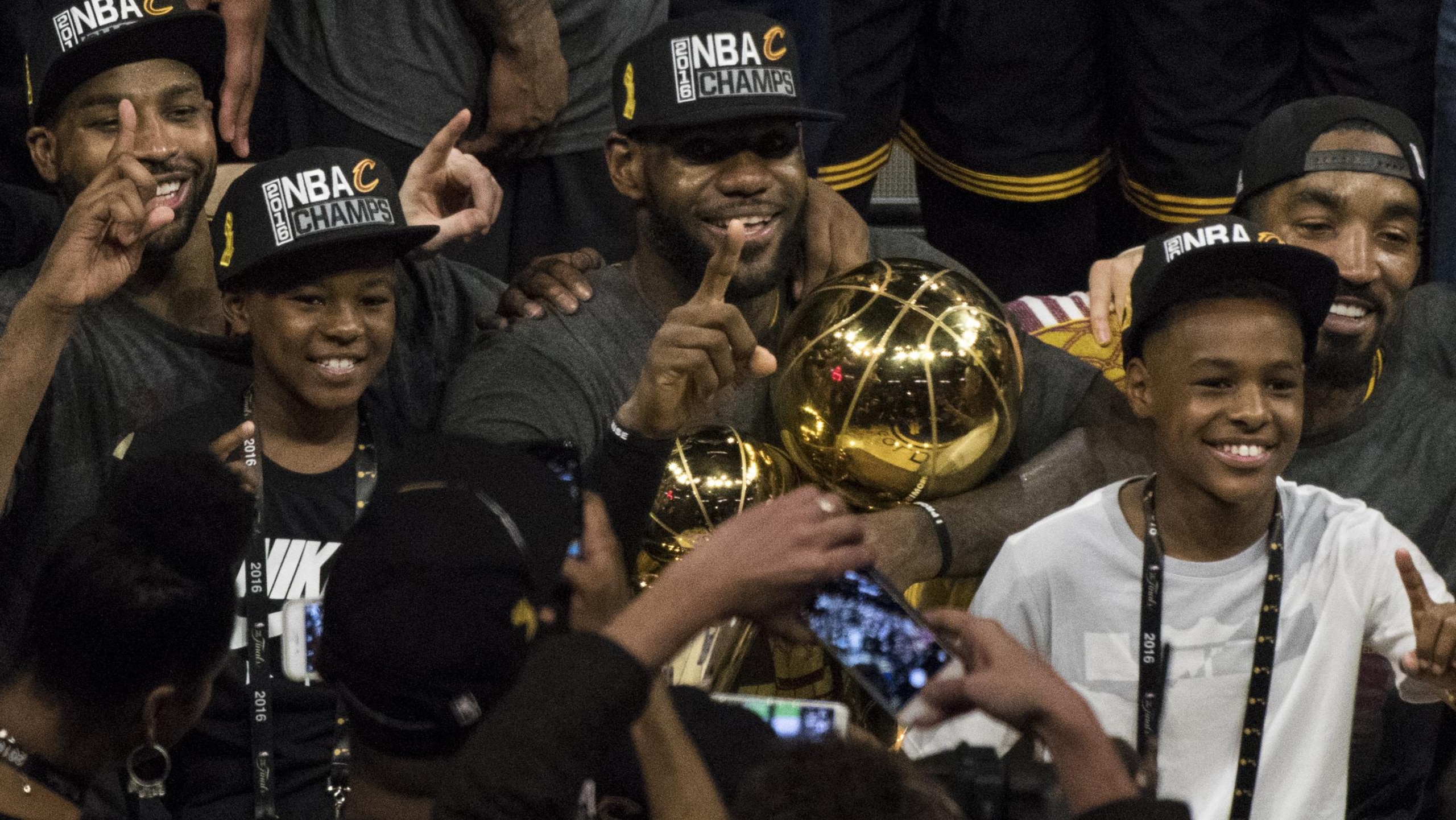
Trading for a 40-year-old LeBron James with no clear idea of when he'll retire (One year? Two? Five??) certainly carries some risk. So does messing with a roster that was so successful last year when depth and chemistry seem to matter more than ever.
Given the second apron penalties, though, the Cavs may not have a choice.
The worst-case scenario is that Cleveland trades a 25-year-old All-Star point guard in Darius Garland as well as some key rotation players for James, who finally begins to show his age. The Cavs' depth and chemistry take a hit and Koby Altman is dragged over the coals online for messing up what he worked so hard to build.
It would also leave the Cavs with two potential top-10 NBA players in Donovan Mitchell and Evan Mobley, potential cap space and tons of flexibility by getting under the second apron. It would also mean over $100 million in luxury-tax savings for the Cavs this season alone, something ownership would certainly get behind.
The best-case scenario would be one of the coolest endings the NBA has ever seen.
LeBron James returning to the Cavaliers in 2014 and winning a title two years later did wonders for his legacy and gave us arguably the greatest NBA Finals of all time. This season will mark the 10-year anniversary of that team, with James now set to help lead players like Mitchell and Mobley to a championship.
If Bronny James is included in the trade, the Cavs have a chance to make this a complete Northeast Ohio family affair. Cleveland also has possession of its own second-round pick in 2026 when Bryce James will be draft-eligible following his freshman season at Arizona.
The feel-good stories that could sprout here are endless. Three James family members on the same NBA team? Kevin Love getting a buyout from the Utah Jazz and coming back to Cleveland? Tristan Thompson re-signing for a third consecutive year with the Cavs?
We've seen legends of the game go out in less-than-glamorous ways, whether it be Shaquille O'Neal with the Boston Celtics, Dirk Nowitzki hanging on too long with the Dallas Mavericks or Michael Jordan's stint with the Washington Wizards.
James returning to Cleveland and winning a title with his hometown team again would be perhaps the greatest ending to any career we've seen in history.
Given the financial ramifications of a deal, the weakened state of the Eastern Conference and how well he could fit between Mitchell and Mobley, the Cavs should explore a trade for James.
.jpg?w=2560 "Purdy Becomes Highest-Rated QB EVER 🤩")
.jpg?w=2560 "Grading WWE Raw 🔠")

.jpg?w=2560 "🚨 Davante Out 6-10 Weeks")