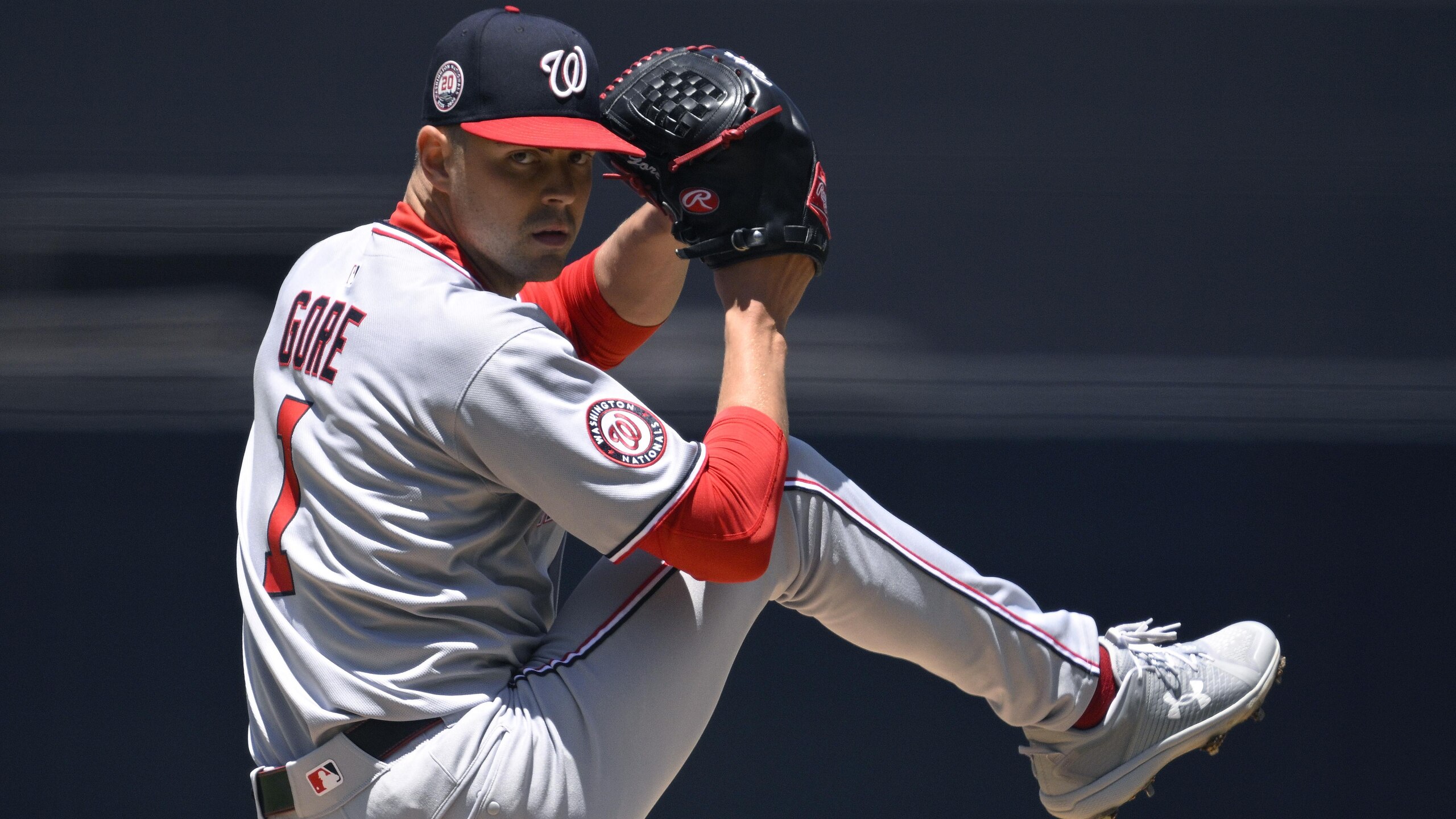

Ranking All-Star MacKenzie Gore's Potential Landing Spots, Trade Packages amid Rumors

Out of the 81 players who were named as All-Stars for this year's Midsummer Classic, the vast majority figure to stay put at the July 31 trade deadline.
There are exceptions, though, and even we didn't think to include Washington Nationals ace left-hander MacKenzie Gore among them earlier this week.
His name is suddenly on the rumor mill courtesy of Mark Feinsand of MLB.com, who wrote on Wednesday that the southpaw is one of six All-Stars who have "been mentioned as potential trade candidates."
It's pretty vague, and Gore doesn't sound like he expects to be traded any second.
"Having been traded before, it's just one of those things you don't even think about,” the 26-year-old said. “You love the guys you're around and you grow as a group with these guys, but I'm just trying to stack good starts and whatever happens, happens."
This said, these is some sense in the Nationals moving Gore this summer. Let's get deeper into that and then dive right into assessing potential landing spots and trade packages.
What Is MacKenzie Gore's Trade Value?
1 of 7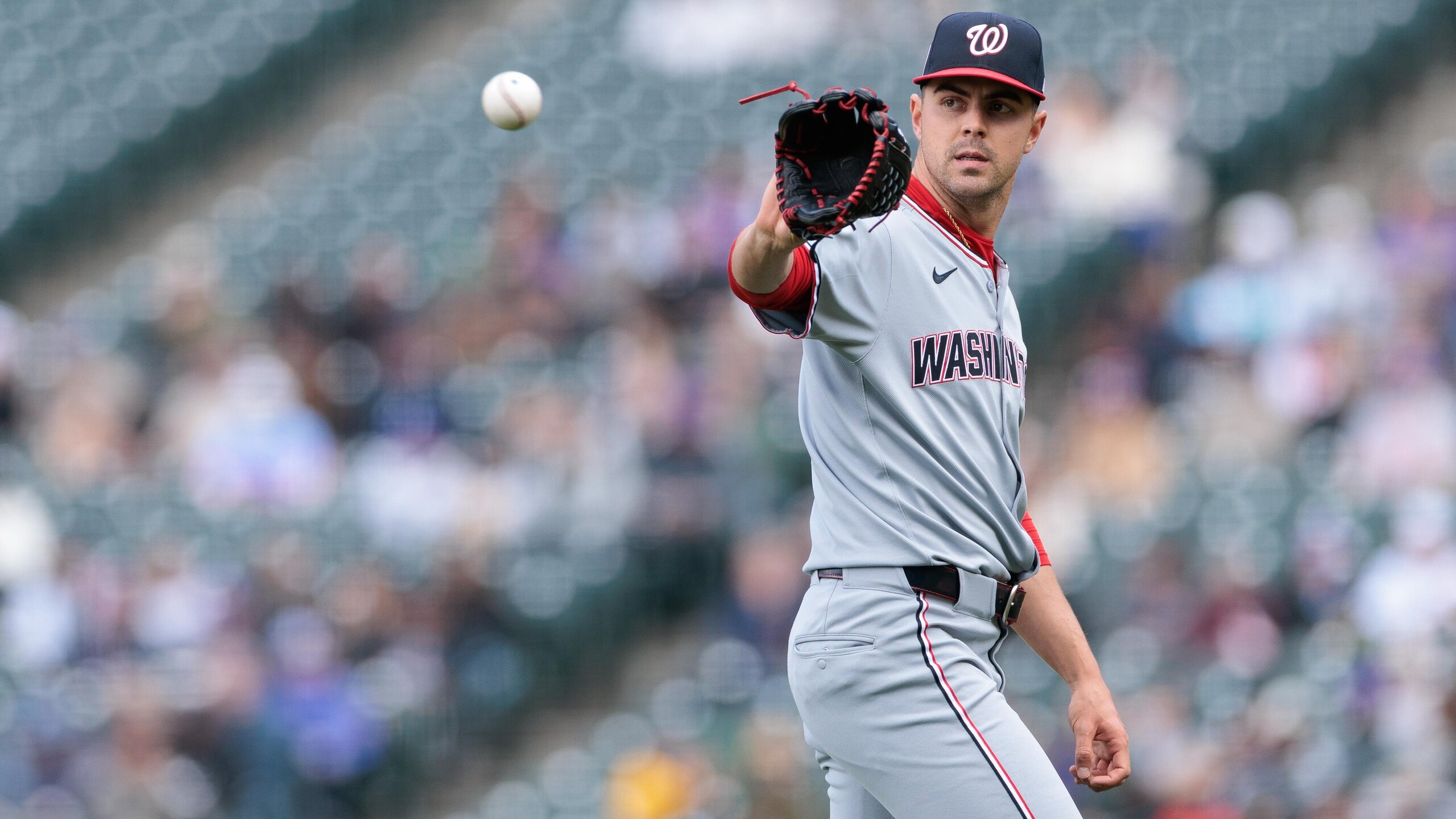
This isn't the first time the spotlight has been on Gore. In fact, he's spent almost the entirety of his career with attention on him.
He was the No. 3 pick in the 2017 draft by the San Diego Padres, for whom he was a regular top-100 prospect in the years to come. He was eventually a key piece of the Juan Soto trade in 2022, and he's finally broken out over the last two years.
After posting a 3.92 ERA in 32 starts in 2024, Gore boasts a 3.02 ERA over his first 19 outings of this year. He's been a strikeout machine with 138 total for the year, and that is against only 35 walks.
This is clearly a rising ace, and he's under the Nationals' control for two more years after 2025. Why, then, would they trade him now?
It all comes down to how the club's years-long rebuild has stalled. Only the Colorado Rockies have lost more games than Washington since 2020, and B/R's Joel Reuter has the club's farm system ranked among the bottom 10 in MLB.
Hence why Mike Rizzo and Dave Martinez had to go, and it could take a while to clean up their mess. To this end, the Nats would be justified in not taking it for granted that they'll contend again before Gore's arbitration clock runs out in 2027.
As for his trade value, well, it's huge. Baseball Trade Values estimates his surplus value at $77.9 million, which makes him worth multiple talented young players.
As not every team is created equal when it comes to tradeable assets, this naturally limits Gore's list of potential suitors. But after first touching on some honorable mentions, we'll pitch deals for five teams that should be in on him.
Honorable Mentions
2 of 7
Houston Astros
Hunter Brown and Framber Valdez are excellent, but there isn't much underneath them in the Astros' rotation. If they'd rather not wait for reinforcements off the injured list, a trade for Gore would be huge.
It's therefore too bad the Astros don't have much to trade. Their farm system ranks at No. 24 in MLB, and it doesn't have much in the way of blue chips that would get Washington to listen.
New York Yankees
Between Max Fried and Carlos Rodón, the Yankees likewise have a strong front two in their rotation. But it was otherwise on the weak side even with Clarke Schmidt, and he's done for the year after having Tommy John surgery.
Like the Astros, though, the Yankees are short on tradeable talent. They'd probably have to offer George Lombard Jr. and Spencer Jones just to get the Nationals to listen, and Washington would then be within reason to demand even more.
San Diego Padres
Gore going back to the Padres three years after he hitched a trade ride out of town? It would be a fun story, and the rotation does need to be on A.J. Preller's mind for upgrades.
And yet, San Diego needs bats a lot more than it needs arms. The Friars also don't have a ton of prospect depth after Leo De Vries and Ethan Salas, who have previously been off-limits.
Toronto Blue Jays
The Blue Jays are a good team with a bad rotation, as theirs ranks 25th in MLB with a 4.60 ERA. Some kind of upgrade must be in store, and Gore is as good as they're going to get.
Once again, though, the prospect depth just isn't there. This is the No. 25 farm system in MLB, and its best prospect (JoJo Parker) can't be traded until after the World Series.
5. New York Mets
3 of 7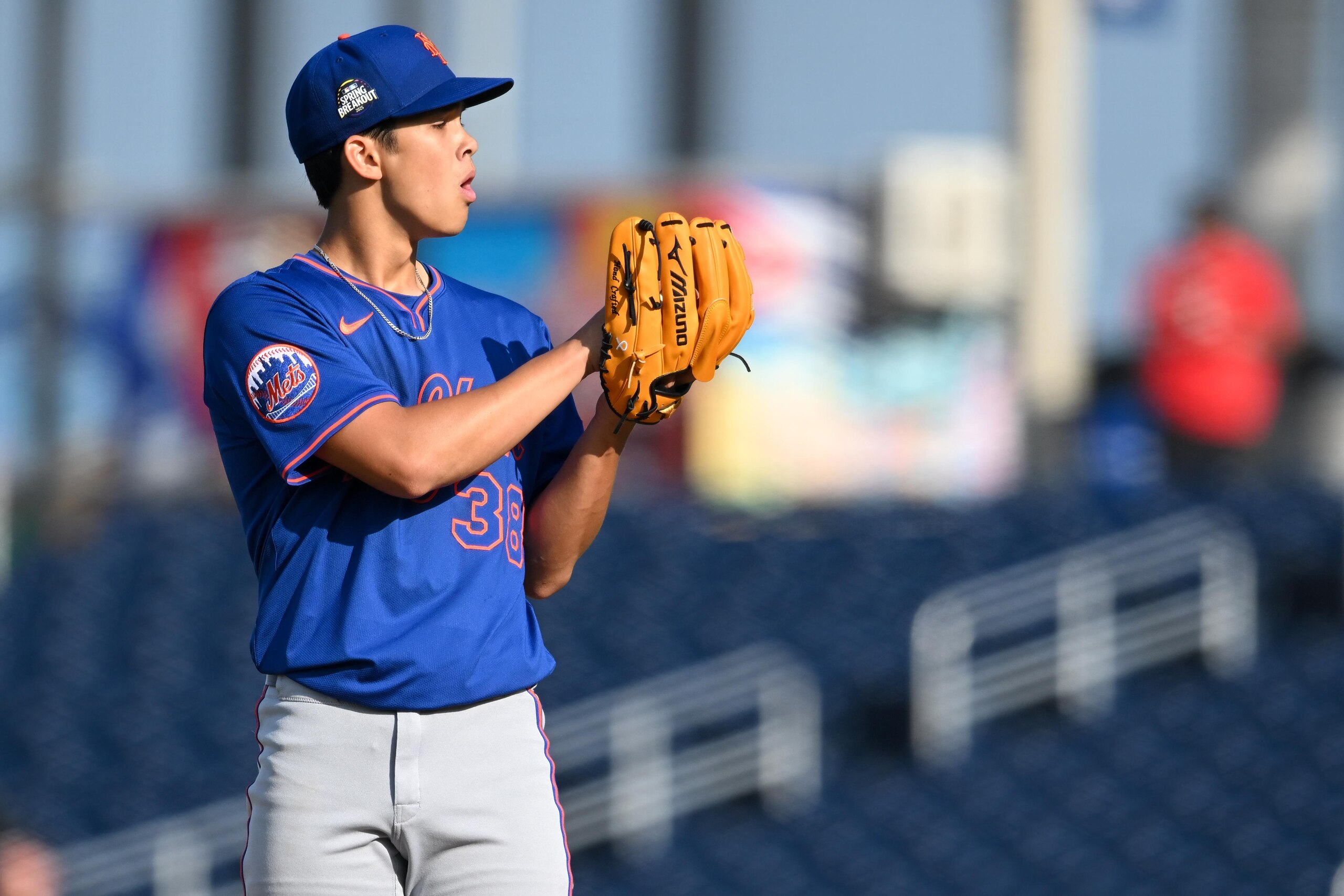
Trade Proposal: New York Mets get LHP MacKenzie Gore, RHP Kyle Finnegan; Washington Nationals get RHP Jonah Tong (Mets No. 1), RHP Nolan McLean (Mets No. 2), SS Jett Williams (Mets No. 3), OF Carson Benge (Mets No. 4)
Why It Works
Mets starters rank fourth in MLB with a 3.38 ERA, so another starter wouldn't seem to be a priority at the trade deadline.
You can never have too much of a good thing, however, and this just feels like a rotation that needs an insurance policy. Sean Manaea and Frankie Montas only recently came off the IL, while Clay Holmes (already past) and David Peterson (nearing) are testing their limits as far as innings pitched.
A trade for Gore would not only provide insurance, but also give the Mets a Game 2 starter to go after Kodai Senga. For his part, getting Finnegan as a throw-in would outfit the Mets' bullpen with the kind of high-leverage arm that is sorely needed.
As for the Nats, the appeal of this trade is simple: They would get to fleece a division rival of all four of its best prospects.
Why It Doesn't Work
Of course, that last point doesn't make this an ideal trade from the Mets' perspective. Even if it meant a chance to win the World Series, they'd surely rather not risk getting burned by so many quality prospects becoming an intra-division headache.
Besides, they need to address their lineup before they go get more pitching. It's a little thin outside the foursome of Juan Soto, Francisco Lindor, Pete Alonso and Brandon Nimmo.


4. Seattle Mariners
4 of 7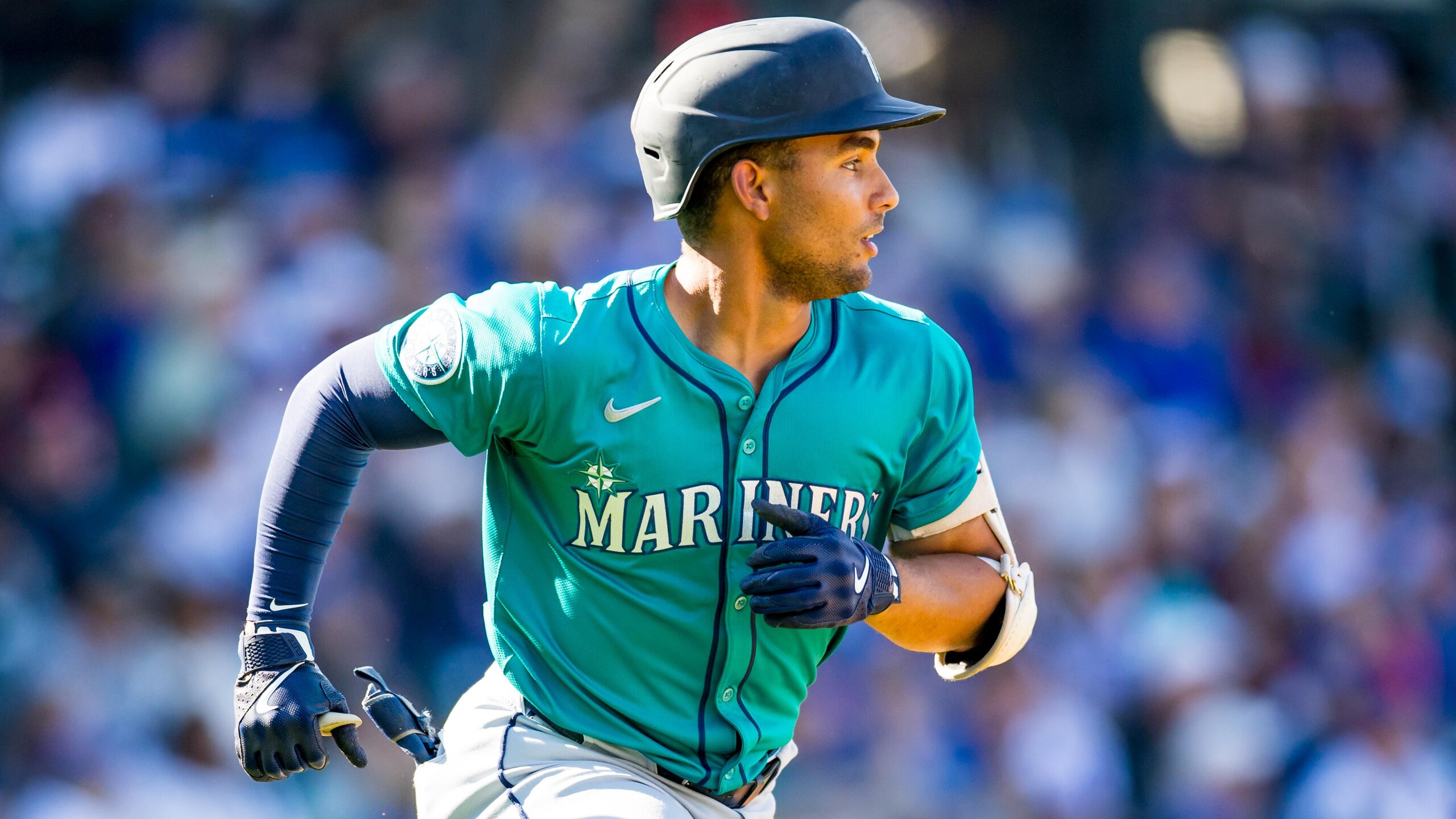
Trade Proposal: Seattle Mariners get LHP MacKenzie Gore, 1B Nathaniel Lowe; Washington Nationals get SS Colt Emerson (Mariners No. 1), C Harry Ford (Mariners No. 7), RHP Ryan Sloan (Mariners No. 8)
Why It Works
Yes, the Mariners are known for having an endless supply of quality starters. But especially compared to 2024, that hasn't quite been the reality in 2025.
Bryan Woo has been excellent and Luis Castillo has been steady, but Bryce Miller is hurt and Logan Gilbert and George Kirby have been shaky since returning from their own injuries. Further, Woo is less than seven innings from setting a new career high.
If this is one rationale for the Mariners to pursue Gore—plus Lowe as a throw-in who could start at first base—the other is because they can. They had the deepest farm system in MLB even before they scored a major steal with Kade Anderson at No. 3 in the draft.
The Nats would bite off a big chunk of that system in this deal, and it would serve them both sooner and later. Ford is MLB-ready now, while Emerson and Sloan have star-caliber upside a few years down the line.
Why It Doesn't Work
As nice as another starter would be, it's more of a nice-to-have than a must-have for the Mariners. What they really need is offense, with third base, first base and right field particularly in need of upgrades.
To this end, Gore isn't the big fish they should be going after. If anyone is going to trade for Ronald Acuña Jr., it's the Mariners.
3. Chicago Cubs
5 of 7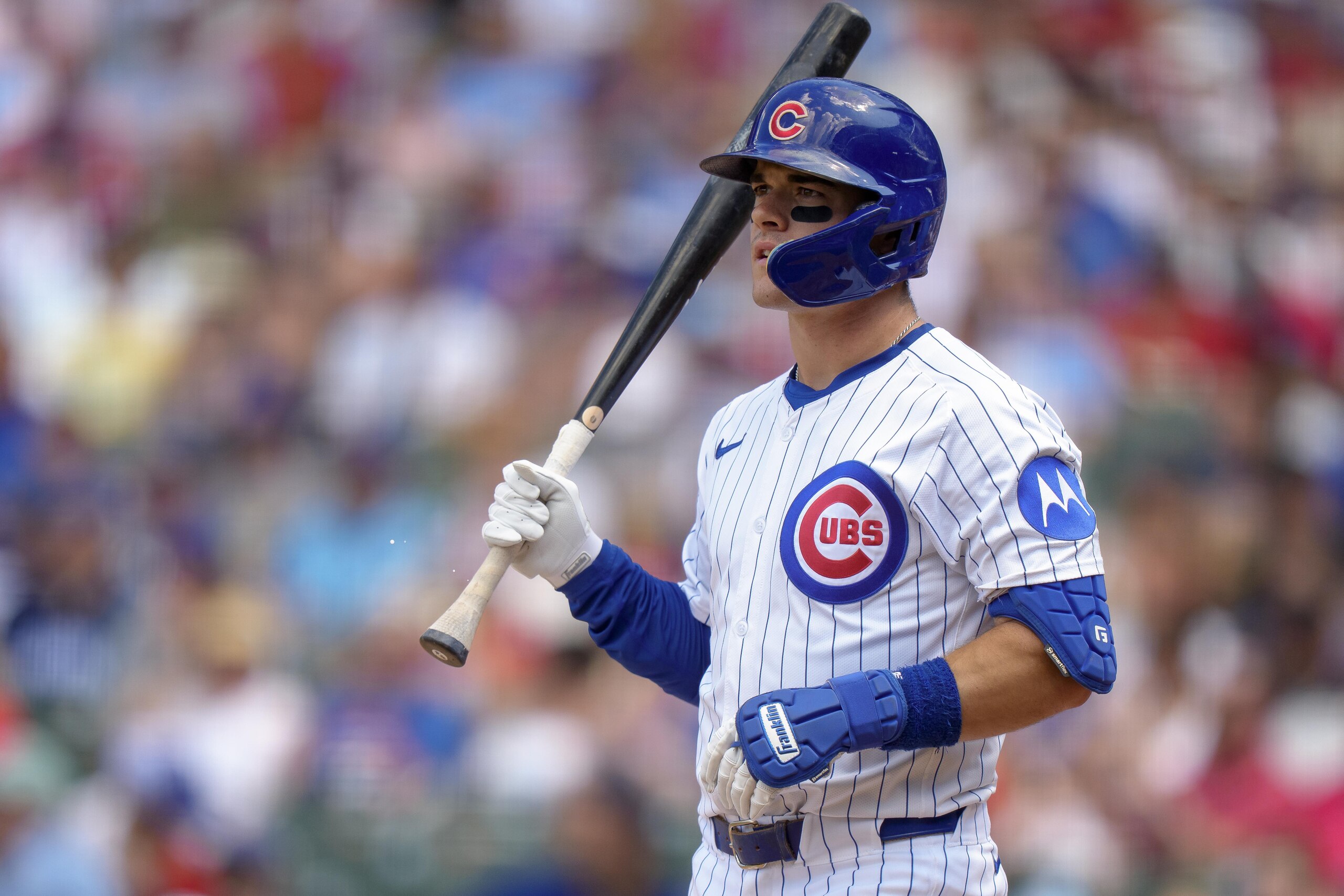
Trade Proposal: Chicago Cubs get LHP MacKenzie Gore; Washington Nationals get 3B Matt Shaw, RHP Cade Horton, C Moisés Ballesteros (Cubs No. 1)
Why It Works
Assuming they can hold onto the NL Central lead, the Cubs stand to be a formidable opponent in October just based on their offense.
They have only gotten 3.2 rWAR from their rotation, though, which is less than Gore (3.6) has all on his own. And as great a story as Matthew Boyd has been, he has already pitched more innings this year than he did in 2023 and 2024 combined.
Per their reported interest in Mitch Keller, the Cubs are clearly aware they need to get a top-flight starter. Gore obviously fits the bill, and Chicago especially needs his propensity for getting swings and misses.
For their parts, Shaw and Horton began this year as top 100 prospects. Ballesteros is still in that conversation, and he's already gotten his first taste of the majors.
Why It Doesn't Work
Though there is plenty of room to dream with Ballesteros, the Nationals would be buying low if they took on Shaw and Horton. Neither has impressed in the majors, with the former posting a .556 OPS and the latter a 4.48 ERA without much swing-and-miss.
Then again, this isn't necessarily a deal-breaker. Gore and CJ Abrams also had low stock when the Nationals got them in the Soto deal, and both became All-Stars.
2. Los Angeles Dodgers
6 of 7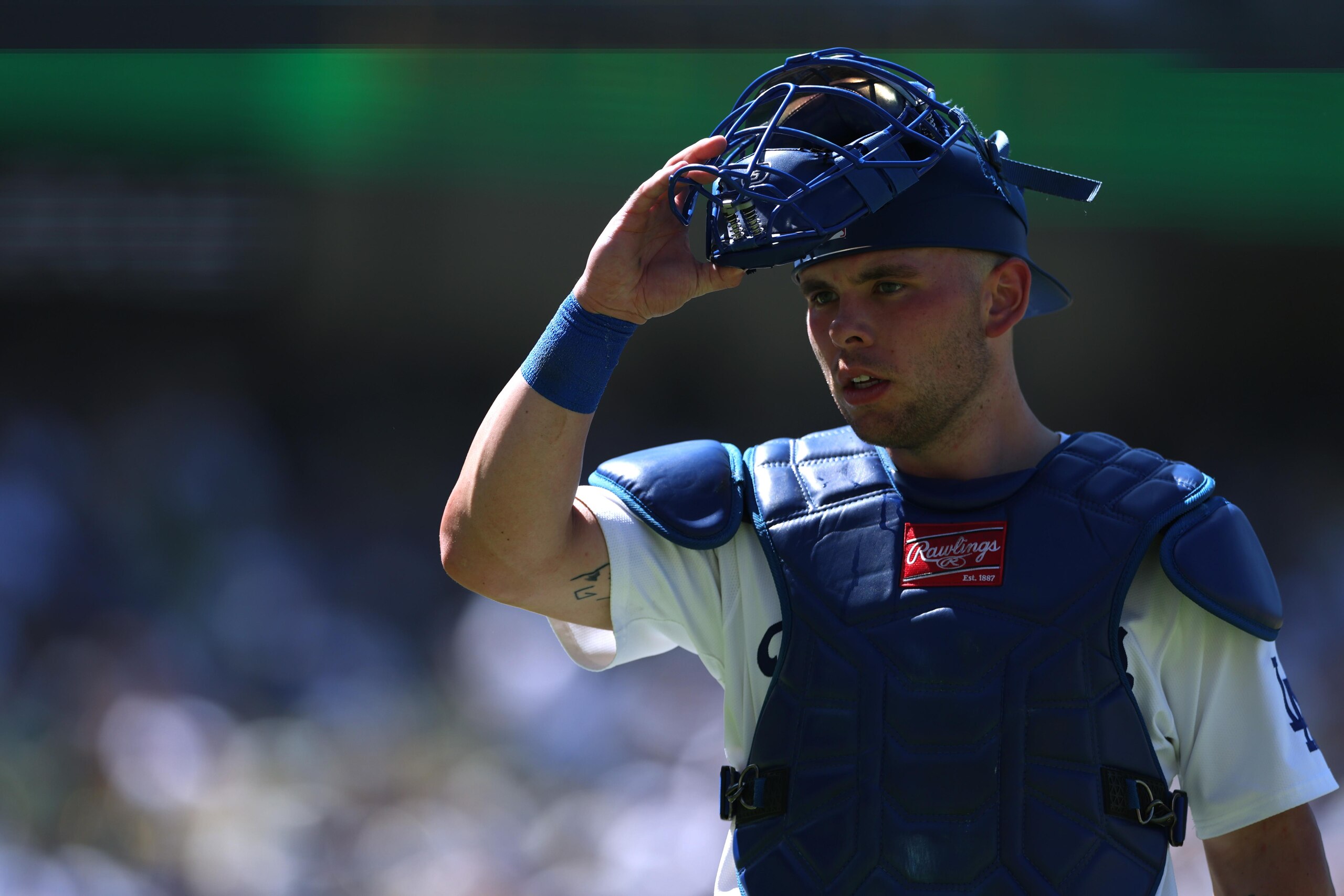
Trade Proposal: Los Angeles Dodgers get LHP MacKenzie Gore, RHP Kyle Finnegan; Washington Nationals get C/1B/OF Dalton Rushing, OF Zyhir Hope (Dodgers No. 2), LHP Jackson Ferris (Dodgers No. 6)
Why It Works
Only four teams have gotten less rWAR from their starting pitchers than the Dodgers, though the good news should be that help is on the way.
Shohei Ohtani and Tyler Glasnow are already back, and L.A. will hypothetically get Blake Snell and Roki Sasaki back at some point as well. Yet for everything this organization does well, it should be wary that keeping pitchers healthy isn't one of them.
A trade for Gore—plus Finnegan to add depth to a bullpen that has likewise been decimated by injuries—would be equal parts insurance policy and all-in maneuver. It is frankly what the Dodgers need amid all the obstacles the Baseball Gods are throwing at them in their quest to repeat as champions.
The Nationals could take Rushing on as a project and hope he lives up to his erstwhile top-100 billing. Hope and Ferris, meanwhile, are two of the best prospects in an elite system.
Why It Doesn't Work
Since there are reinforcements standing by on the injured list, the most pressing question is if the Dodgers will choose patience with their rotation and focus on other upgrades, such as to their bullpen.
Apart from that, this is a solid deal for both sides. Rushing is notably expendable for L.A., as he's blocked by Will Smith and Freddie Freeman and doesn't really have a window in the outfield, either.
1. Boston Red Sox
7 of 7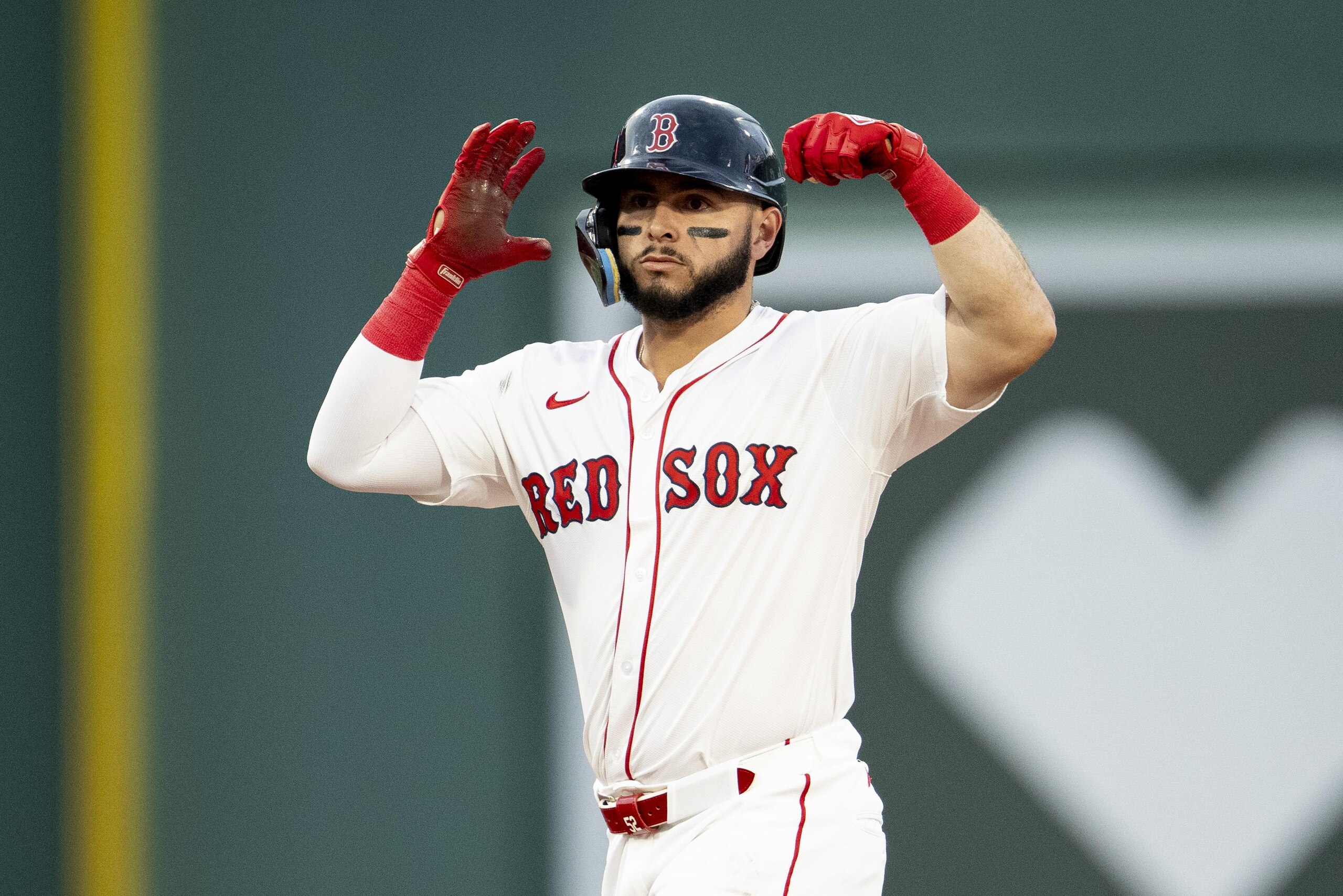
Trade Proposal: Boston Red Sox get LHP MacKenzie Gore, 1B Nathaniel Lowe; Washington Nationals get RF Wilyer Abreu, SS Franklin Arias (Red Sox No. 2), LHP Payton Tolle (Red Sox No. 4)
Why It Works
After riding a 10-game winning streak into the break, the Red Sox sure seem headed firmly toward buying mere weeks after offloading Rafael Devers.
Starting pitching is atop the list of items they need to address, and they're reportedly aiming as high as Minnesota Twins All-Star Joe Ryan. According to FanSided's Robert Murray, however, the Twins have had neither conversations about him nor about selling in general.
Should Boston pivot to Gore, it would be to a younger and arguably better pitcher. He's what they need in a rotation that is a little too unstable behind Garrett Crochet, while Lowe would likewise stabilize a first base spot that remains unsettled months after Triston Casas' season-ending injury.
Though it's more so been Jarren Duran at the center of rumors, Abreu is the expendable Red Sox outfielder who makes more sense for Washington because of his youth (26) and club control through 2029. Also getting Arias and Tolle, who's one of the league's hottest pitching prospects, would make this a coup.
Why It Doesn't Work
Losing Abreu would hurt, but there just isn't enough room for him Duran, Roman Anthony and the suddenly electric Ceddanne Rafaela in the Boston outfield. One of them has to go.
Which pretty much means this is a "Who says no?" type of trade, and it's hard to rationalize why the Red Sox or Washington would do so if the latter is willing to move Gore in the first place.
Stats courtesy of Baseball Reference, FanGraphs and Baseball Savant.




.jpg?w=2560 "Jonathan Taylor Landing Spots 📍")




