

The first major business of the 2025 NHL offseason takes place Friday night as the 2025 NHL draft commences in Los Angeles.
Despite long odds, the New York Islanders won the draft lottery and will be picking first. Will they select defenseman Matthew Schaefer or opt for the upside in Michael Misa?
And will we see blockbuster trades throughout the night?
Follow along as we grade all 32 picks from the first round!
Note: Full scouting reports were taken from our final 2025 NHL Draft Big Board.
1. New York Islanders: Matthew Schaefer, D, Erie Otters (OHL)
1 of 32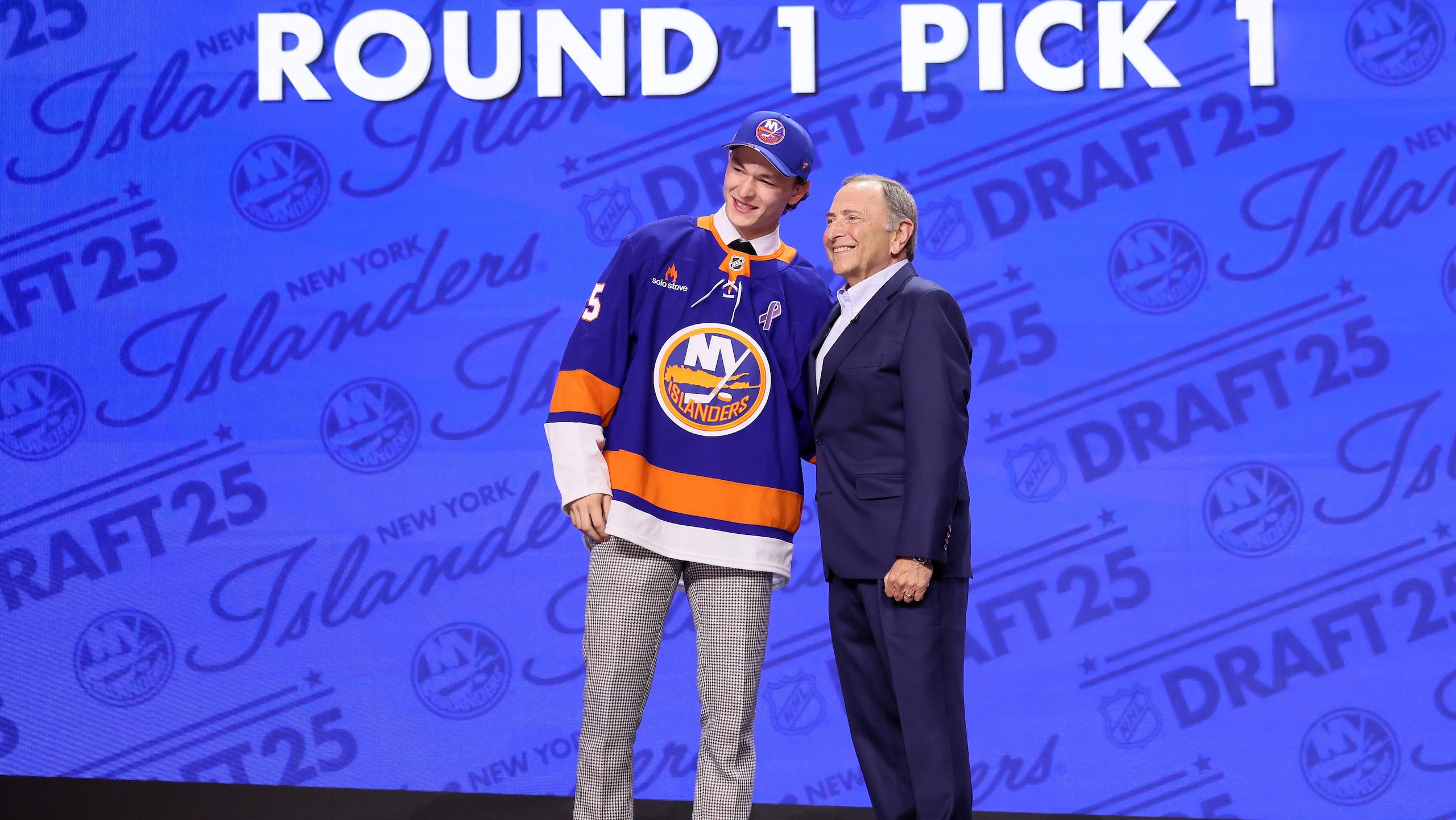
Strengths: Game-breaking skill, decision-making, skating
Weaknesses: I want to see him in a consistent stretch at the pro level, but that's hardly a weakness.
Pick Grade: A+
B/R Rank: 2
Analysis: Matthew Schaefer is an incredible defenseman who could take control of an NHL game the way he does in the OHL sooner rather than later. The Islanders didn't galaxy-brain it and thank God. They need a prospect—and especially a defenseman—who can absolutely take over a game and impose his will on the flow of play the way that Schaefer can. If they handle this right, he's going to be a cornerstone of the Islanders franchise for a long time.
He only played 17 OHL games this season, thanks to the broken collarbone he suffered at World Juniors. And those 17 games were enough to prove he is a special player, the kind of defenseman you don't see often. It speaks very highly of him that the injury has not scared anyone off from ranking him and picking him first overall.
He makes clear the kind of player he is every time he steps onto the ice. His tools are visible. Phenomenal skating, with excellent straight-line speeds and a quick first step. Puck possession from end to end without losing a step. Agility to support his quick decision-making.
What truly separates him is his ability to take over the game without sacrificing any one aspect of his play. His elite hockey IQ probably has something to do with that. It's a necessary factor when you play the kind of game he does. It allows him to read and process his options at top speed, something that is invaluable.
If you've seen Schaefer play, you understand why he went first overall, even if you can't explain it. If you haven't seen Schaefer play, it's time to change that.
2. San Jose Sharks: Michael Misa, LW, Saginaw Spirit (OHL)
2 of 32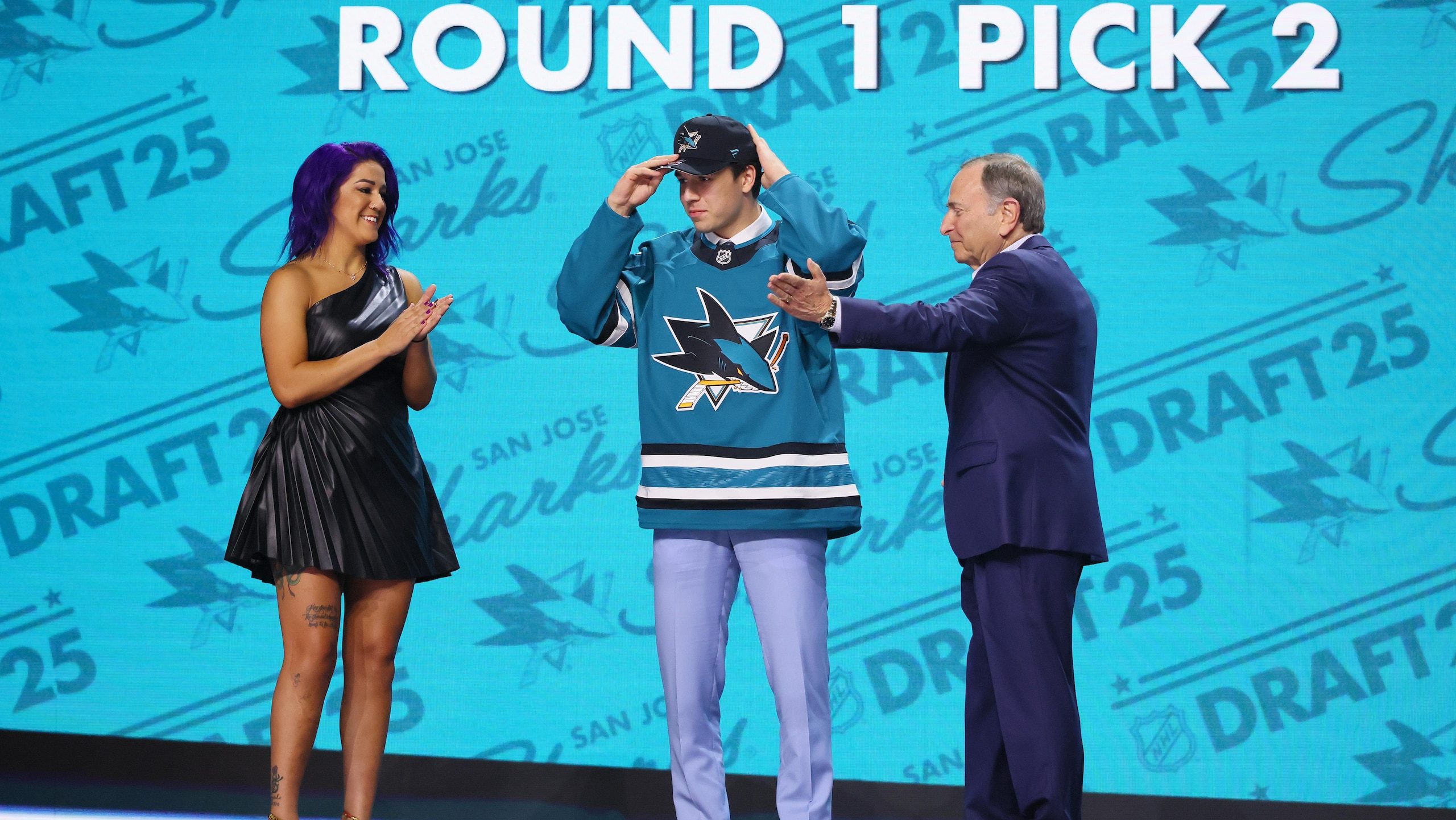
Strengths: Everything. But in all seriousness: vision, playmaking, skating
Weaknesses: Nothing glaring. Will need time and experience to move to the pros, but that's hardly a weakness, just a given at this age.
B/R Rank: 1
Pick Grade: A+, cannot speak highly enough of this pick
Analysis: The San Jose Sharks just got the smartest player available this year. I've said so much about Michael Misa already, but you all are in luck because I could talk about him endlessly. We ranked him first because he is a phenomenal talent—in terms of pure skill, he's the best forward available this year. He's going to fit right in with the likes of Macklin Celebrini—who I've compared him to in the past in terms of how complete his game is—and Will Smith. The Sharks are truly building an impressive young core and I cannot wait to see how else they fill it out.
Translating his game to the NHL level, particularly his playmaking and scoring, isn't going to be an issue. He could step into a pro game right now and more than hold his own. This all starts with his elite skating and hockey sense.
That hockey sense supports his incredible attention to detail, the keystone of his game and what underpins the rest of what he brings to the ice each night.
Even when he isn't at his best, Misa is an absolute force. Processing the game at top speeds, his opponents often can't match with their feet, let alone their minds, giving him a significant advantage. Creating opportunities, dodging defenders, protecting the puck; you name it and his skating allows him to do it at a high pace of play.
3. Chicago Blackhawks: Anton Frondell, C, Djurgardens IF (Allsvenskan)
3 of 32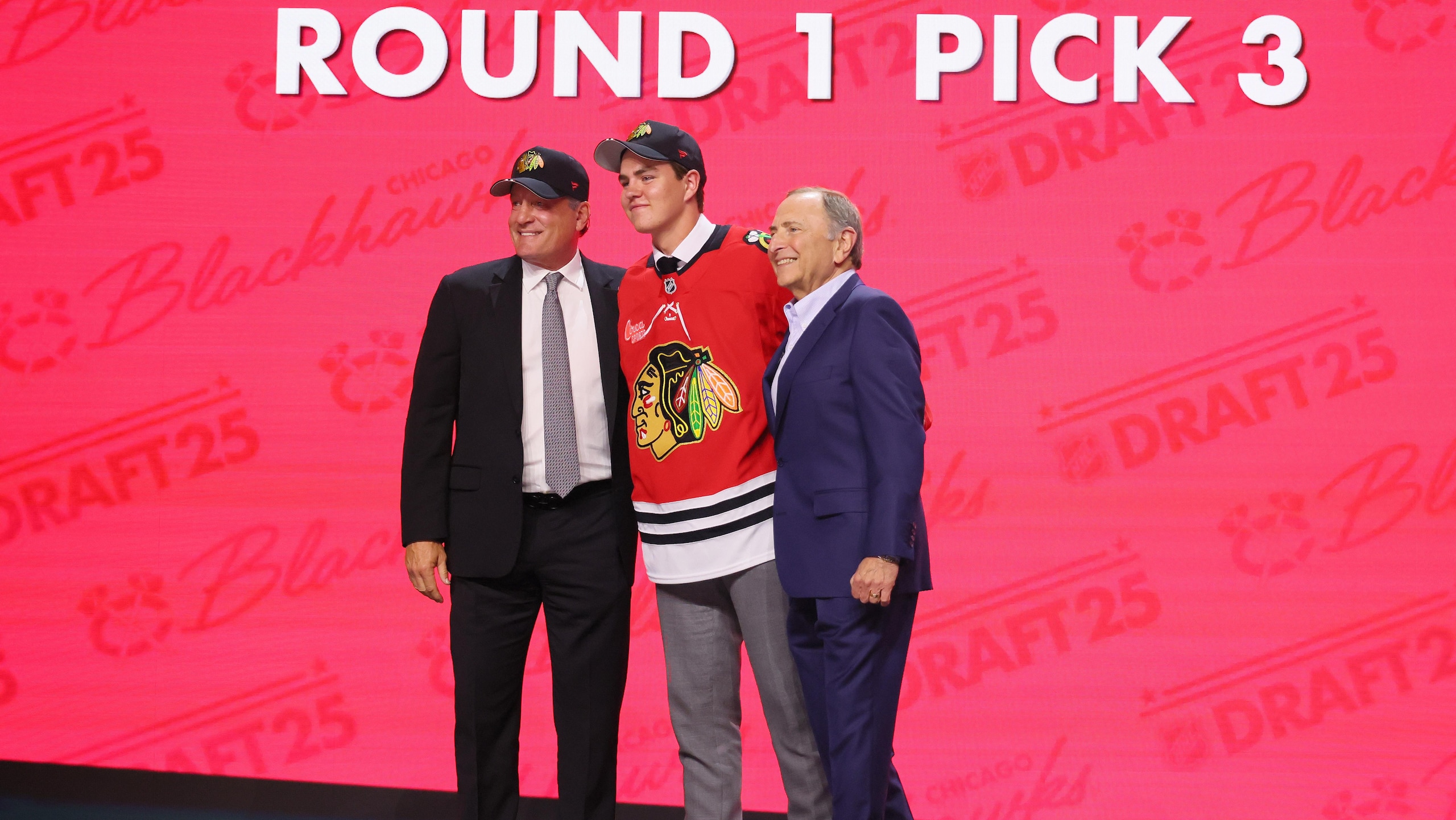
Strengths: Puck skills, physicality
Weaknesses: Consistency, deceptive abilities
B/R Rank: 13
Grade: B-, too much talent left on the board.
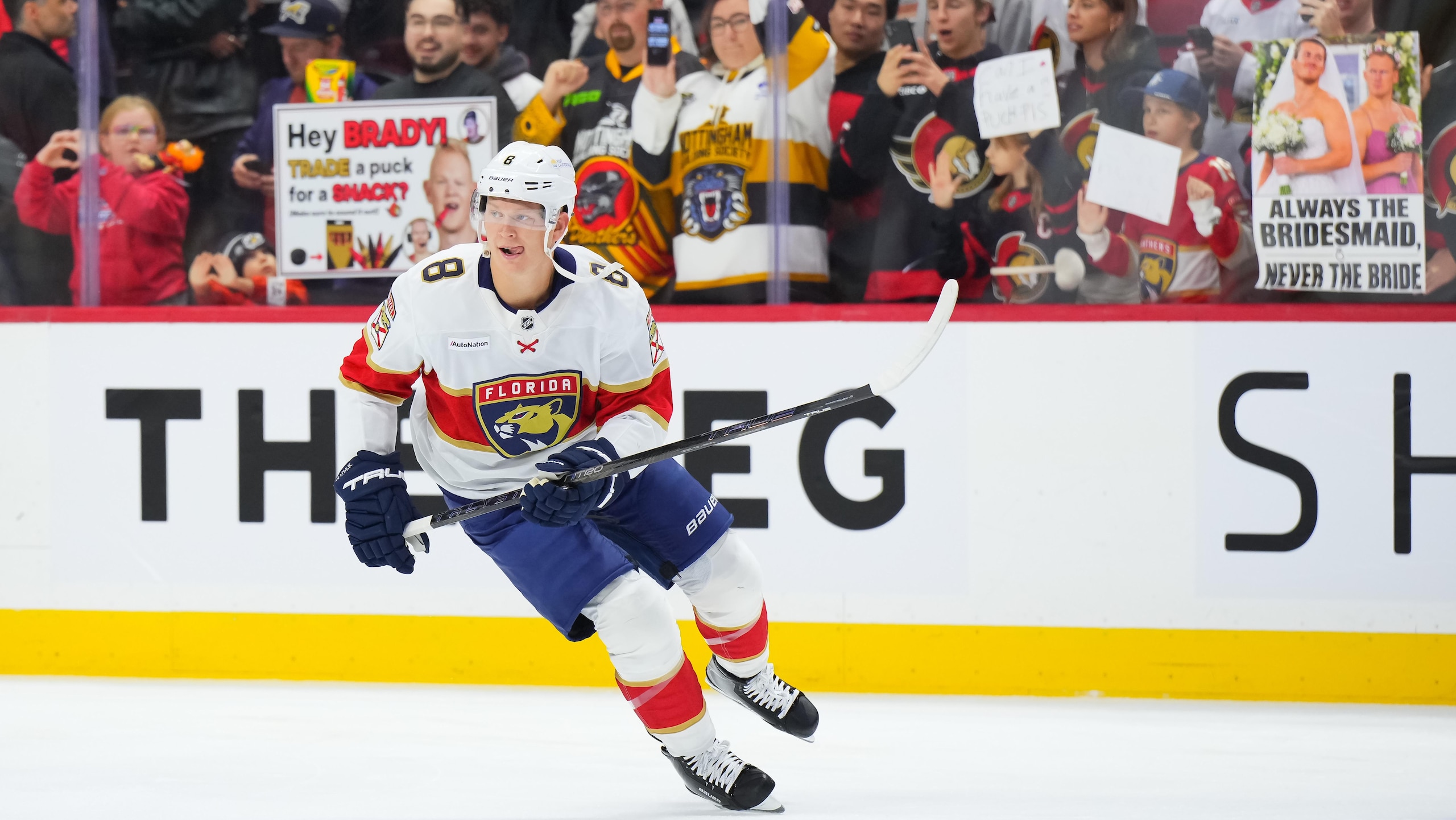
Analysis: Anton Frondell is not a bad pick, but he's not the first Swede we would've had off the board (that would've been Victor Eklund). The Chicago Blackhawks are leaving a lot of talent on the board by selecting him here. That being said, his approach to the game will fit quite nicely with the team that the Blackhawks are trying to build—he's got the hands to play with those high-skill forwards.
Frondell has excellent puck skills, especially in the small-area game—this is something that I love seeing in a junior-age player. What I don't love is that while we've seen his playmaking at lower levels this year, we didn't see it when he played up.
It's possible this was because of a coaching decision; it's possible he felt the pace of play at the higher level required him to focus on other areas of his game. We've seen strength and intelligence from him, regardless, and improvement in his physicality, including his ability to retrieve pucks. We've even seen flashes of puck-protection skills. I just want more consistency.
At times, he chooses to dump the puck in transition instead of making a play, and that's not what NHL teams are looking for from players of his caliber.
Frondell is so smart. That means we need more playmaking from him, especially as he is playing center. We know he can do it; he just needs to put it into action more.
-(1).jpg?w=2560 "Bleacher Report")
4. Utah Mammoth: Caleb Desnoyers, C, Moncton Wildcats (QMJHL)
4 of 32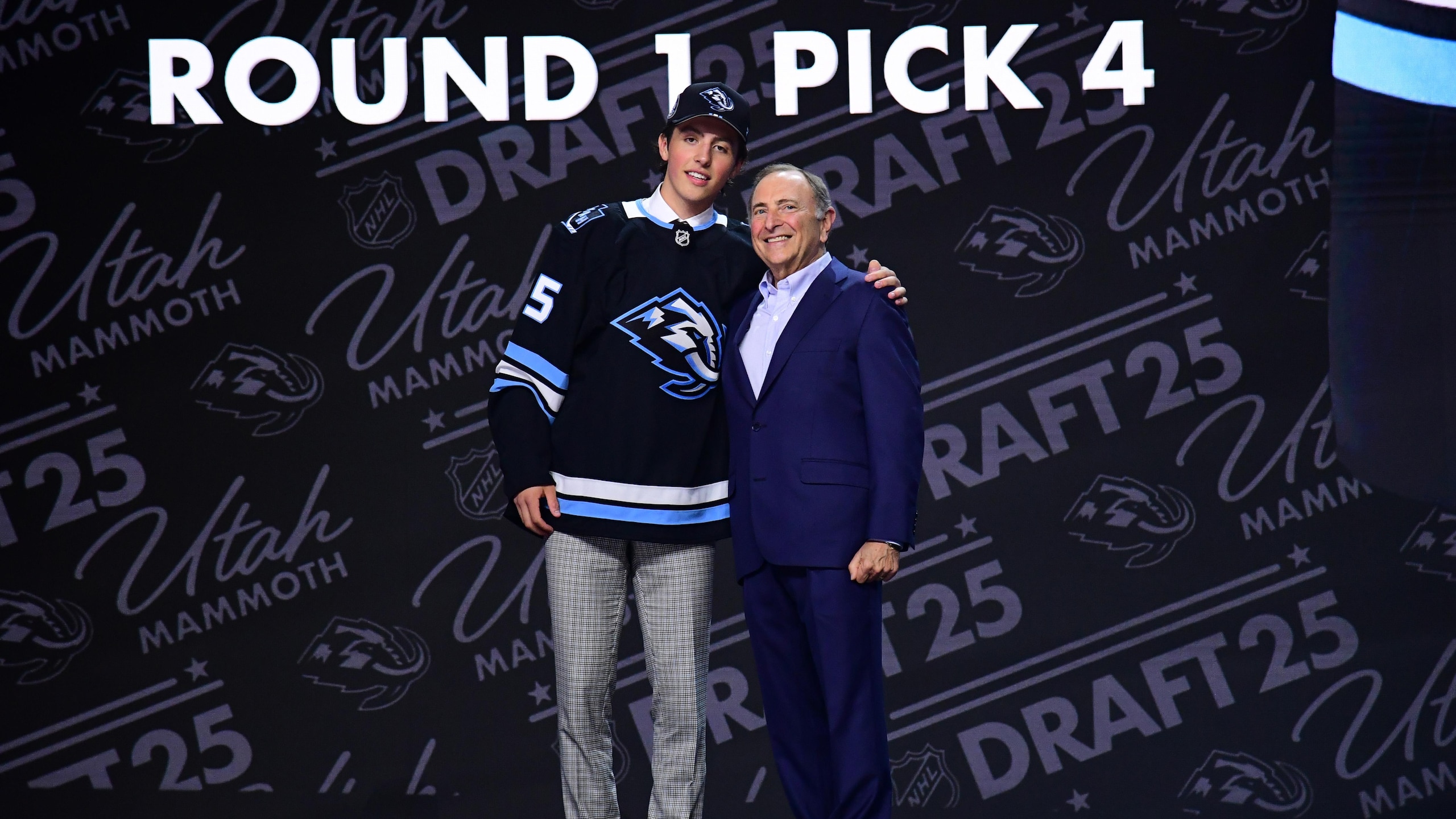
Strengths: Hockey IQ, skating skills (specifically his edgework/agility)
Weaknesses: Could afford to boost his motor/pace of play
B/R Rank: 9
Pick Grade: A-
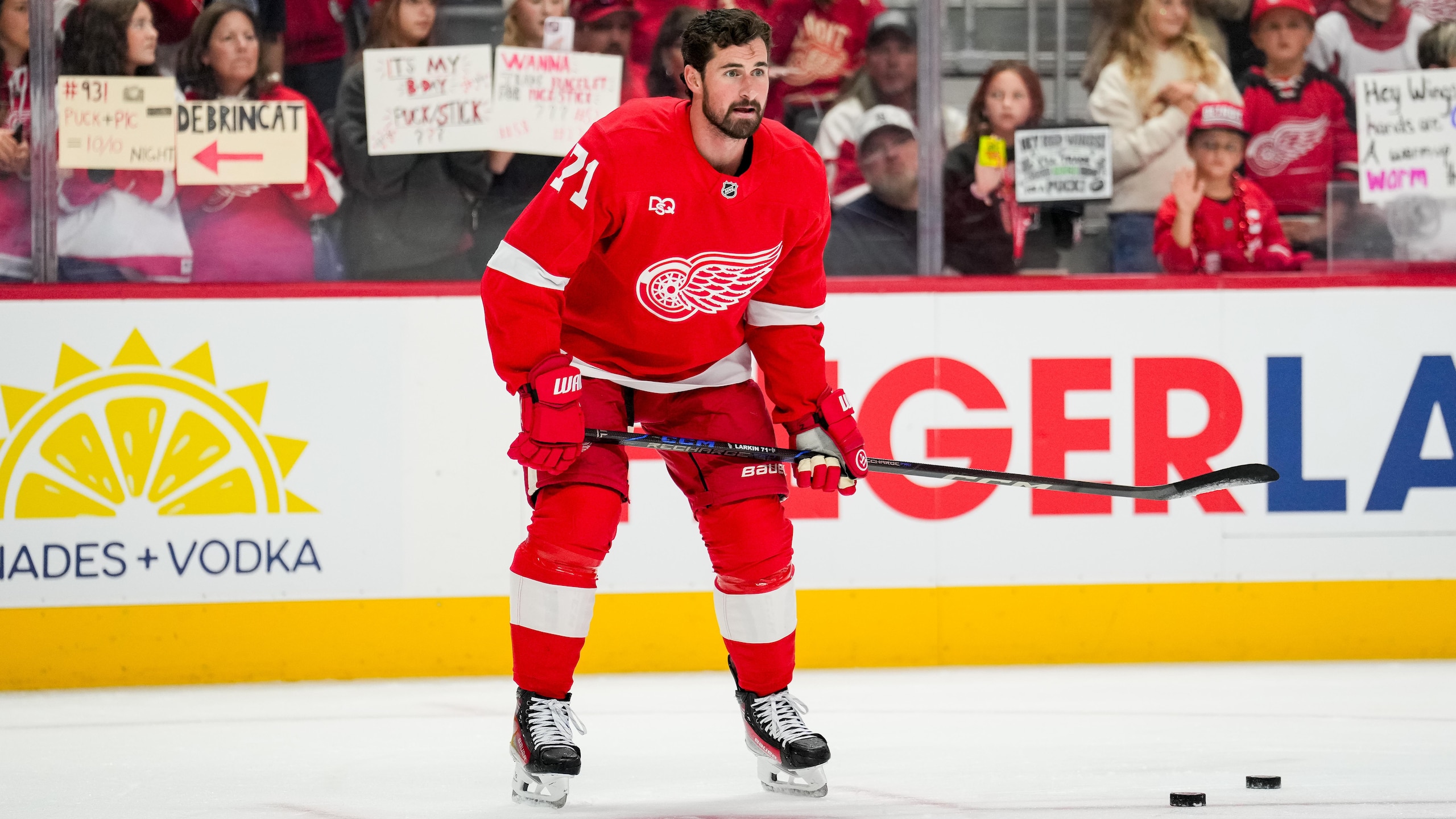
Analysis: Caleb Desnoyers is an absurdly smart player, and I cannot fault the Utah Mammoth for grabbing him at fourth, even with the rest of the talent left on the board. When you're building a new franchise, you want players you can count on, and Desnoyers has the vision and hockey IQ to stymie opponents on a nightly basis.
Finishing the QMJHL regular season with 84 points in 56 games is nothing to sneeze at, but to do so without pouncing on opponents' blatant mistakes and instead relying largely on your ability to create is a good sign for a player's ability to jump from the junior level to the pros.
Desnoyers' hockey IQ and vision drive that offensive ability, alongside his puck skills. He reads passing options and selects the most effective one, making it happen before opponents realize what's going on.
His edgework and agility allow him to move effectively in close, protecting the puck and creating opportunities for his teammates. He's also got a nice element of physicality that he uses when called for. He's constantly engaged—physically and mentally—regardless of whether he's creating offensive opportunities, forechecking or what have you.
He needs to up the pace next season because he has a lot more in him than just 84 points.
5. Nashville Predators: Brady Martin, C, Soo Greyhounds (OHL)
5 of 32
Strengths: Intelligence, tenacity
Weaknesses: Skating (especially posture)
B/R Rank: 11
Pick Grade: A-
Analysis: I said before that Brady Martin "is going to both bless and stress whatever NHL team drafts him," and I stand by that. That being said, Nashville Predators fans: you are going to absolutely love Martin. He never quits, as is evidenced by the fact that he isn't even at the draft—he's at home on the farm doing his farm chores. All work ethic all day long, and a ton of smarts to go with it.
I've been so impressed with him across the course of the season—his work ethic, his hockey sense, the relentless drive he brings to each shift.
He pairs high-end intelligence with an engagement level not many players in this year's draft can match. He's constantly involved, no matter what area of the ice he's in, and he uses his physicality to dominate opponents. There's no such thing as the word "quit" in his vocabulary.
Sometimes this is a negative; he can occasionally end up trying to do too much. But as mentioned, I would much rather have to scale a player back than try to motivate a player whose engagement level is low or who prefers to float around the edges waiting to pick his moment.
"Cleverness paired with chaos" is the best way to describe Martin. Thanks to his offensive instincts and intelligence, he tries things with the puck that his opponents won't even consider—and that sometimes maybe he shouldn't.
6. Philadelphia Flyers: Porter Martone, RW, Brampton Steelheads
6 of 32
Strengths: Offensive instincts, stick-handling, reading the play
Weaknesses: Stays to the perimeter. Doesn't throw productive hits, but rather throws hits to start something. Needs to sharpen his focus on using his skill set consistently because it is extensive.
B/R Rank: 3
Pick Grade: A+
Analysis: No player has driven me bananas more this season than Porter Martone, because I have not seen such a wide gap between who a player has the potential to be and who he chooses to be when he steps onto the ice each night. But if he can live up to his potential, he'll be a Flyers fan favorite. Martone's ceiling is absurdly high, and the Flyers getting him at sixth may end up looking like a steal, as silly as that sounds. I could not like this pick more—but he's going to need to put in the work.
He has an incredible offensive skill set. Even without remotely maxing out his abilities, he's still one of the best players in this draft class.
It's endlessly frustrating. But if he puts it together, oh boy, look out. The frustration will be more than worth it.
As we said in our scouting report, Martone "may have the best pure hockey sense in this year's draft class. Unfortunately, he's not always inclined to use it."
It's like he takes one look at the ice and projects how a play is going to end before it's even really begun, which allows him to best position his teammates for success. Unfortunately, this is also the skill that allows him to hang back around the edges until he swoops in to either receive or make the perfect pass. He also uses it to deceive opponents or find gaps in their coverage.
I need him to stop floating around the perimeter and cherry-picking. But if he can give that up and throw himself into the meat of play, well, that's another matter entirely.
I'll need to see some real movement next season to be convinced Martone will hit his ceiling. But take the swing anyway. He's got the potential to be special.
7. Boston Bruins: James Hagens, C, Boston College (NCAA)
7 of 32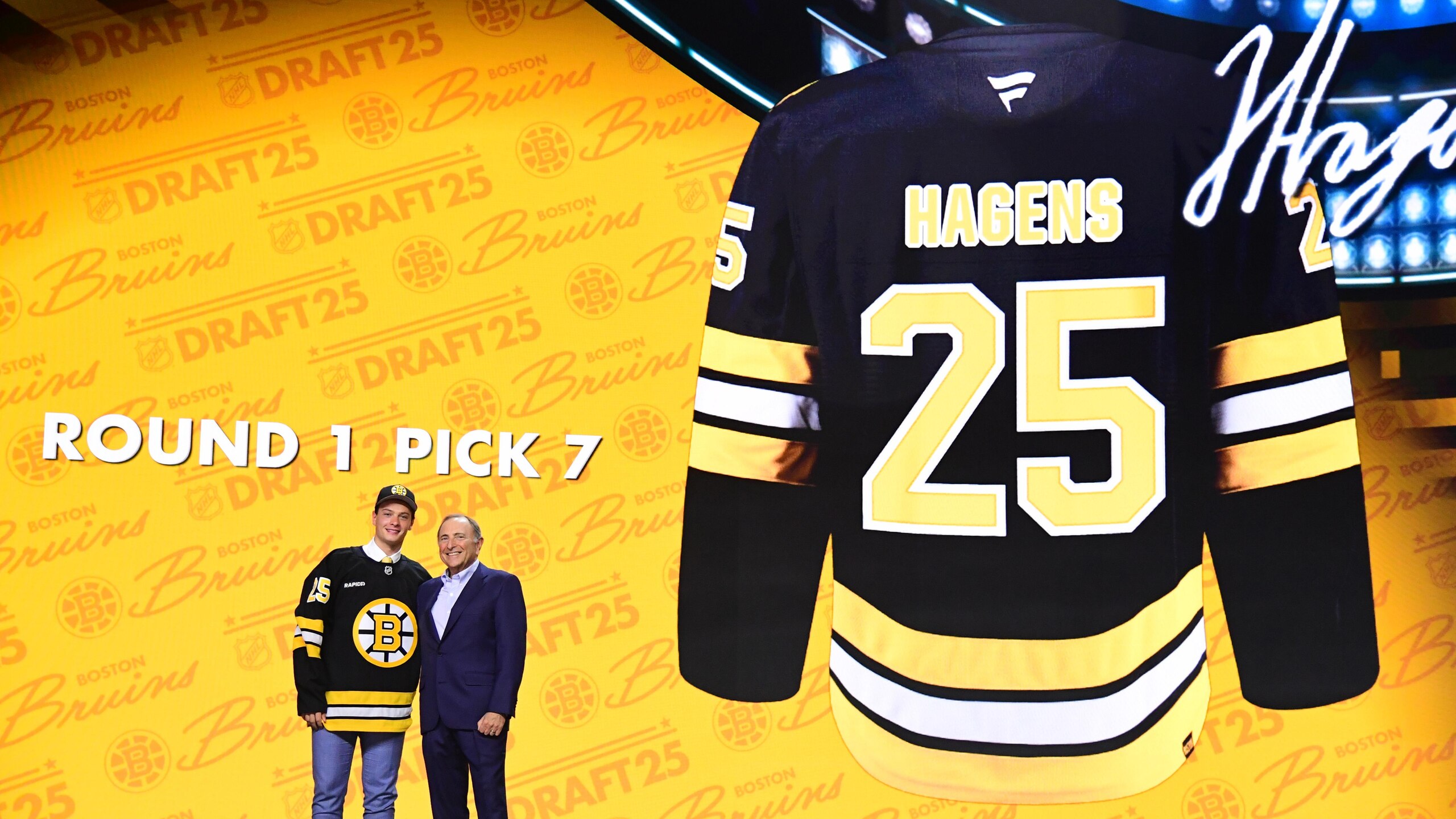
Strengths: Skating, hockey IQ, vision both on and off of the puck
Weaknesses: Decision-making can be questionable at times—he defers too often—and he has a higher gear than he showed this season
B/R Rank: 4
Pick Grade: A+
Analysis: James Hagens, congratulations. You get to stay in Boston.
This is a huge win for the Boston Bruins who, let's face it, have not done a great job drafting in recent years. The Bruins are also in the middle of a rebuild (retool, whatever you want to call it), and having a brilliant facilitator like Hagens as a piece of that is a big step forward. You can trust him anywhere on the ice. Boston needs that.
Although Porter Martone's potential and high ceiling got him our third spot over Hagens, I feel more confident that Hagens will reach his ceiling. He was the consensus No. 1 last summer, but being No. 4 on our board is not a slight on him, just commentary on how much impressive work we've seen from the three players ahead of him this season. He's going to be an excellent player with development and time.
He just isn't that player yet. The guys ahead of him have shown they can put the pieces together. Hagens hasn't, at least so far. I expected more from him in this NCAA season than we got. With that in mind, though, it isn't a reason to pass him up as he still brings a lot to the table.
Hagens was, after all, a point-per-game player in his first NCAA season as a true freshman. That in itself is an accomplishment, and he made it happen with his fantastic skill set: incredible skating, high-octane motor and phenomenal playmaking skills.
He makes setting up his teammates look like a breeze. I wanted to see him shoot more, but he spent most of the season playing with shoot-first-and-shoot-often Ryan Leonard. Between the two, Hagens is going to be the one facilitating rather than taking the shot.
His passing skills were, as such, on full display. I have no qualms about saying that this aspect of his game will translate well to the pro level. He knows how to set up a play so that it finds his teammates where they need to be rather than where they are, thanks to his terrific hockey sense. He also utilizes that hockey sense off the puck to get himself in the right position.
Hagens has the potential to control the play himself, and he has the potential to become a more deceptive player. His vision drives both of those things, and it is more than high-end enough for him to further explore adding these layers to his game. I would even argue that adding those layers is necessary to thrive at the NHL level.
8. Seattle Kraken: Jake O'Brien, C, Brantford Bulldogs (OHL)
8 of 32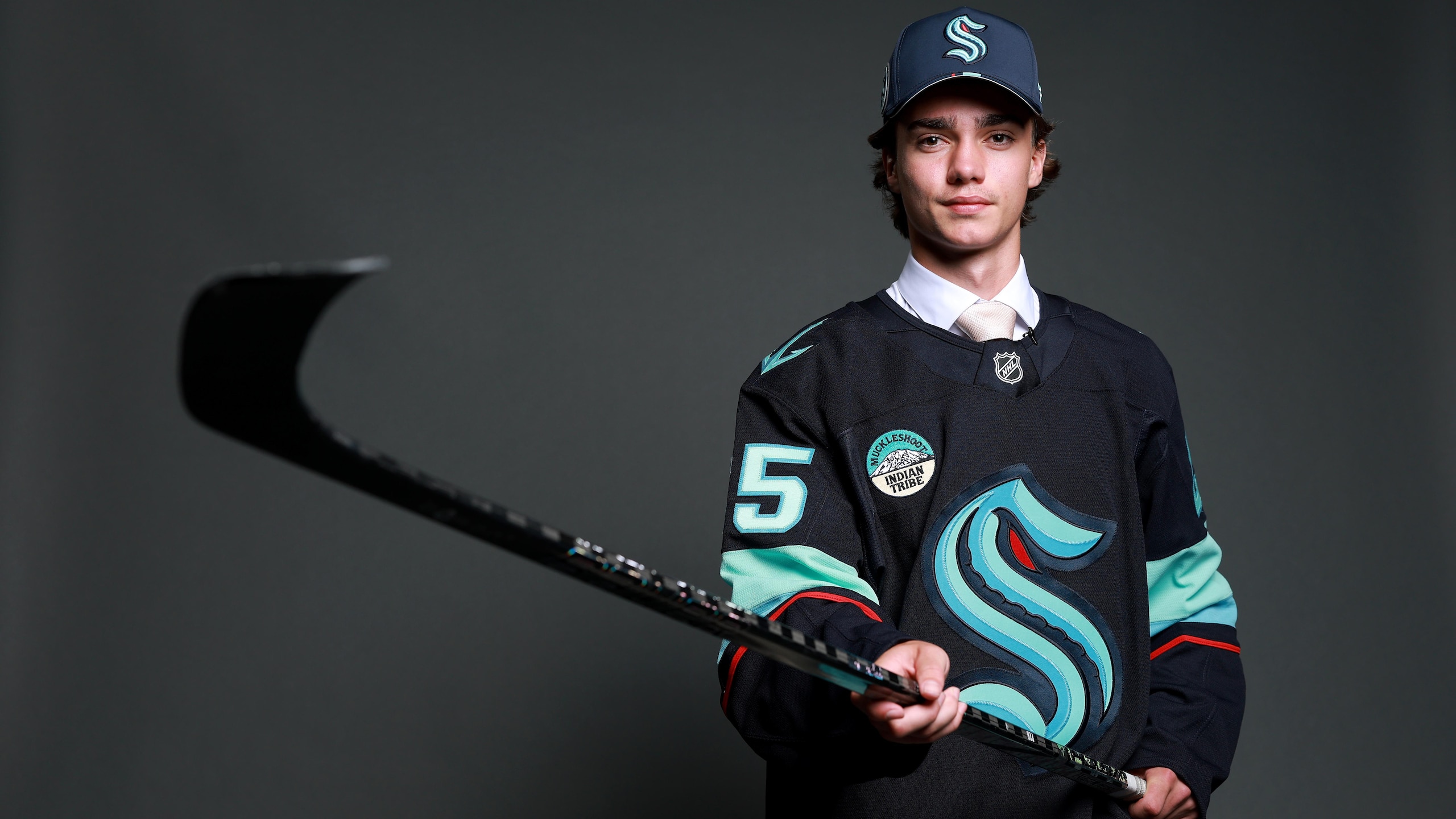
Strengths: Playmaking, passing
Weaknesses: Skating mechanics
B/R Rank: 10
Pick Grade: A
Analysis: Watch one game with Jake O'Brien in it and you'll be hooked. The Seattle Kraken clearly were. He's another center to add to the fantastic prospect pool they're building, and while they need defensemen more, I deeply respect going best player available instead. O'Brien's passing is phenomenal, and a player who can set up his teammates without having to think about it for more than a split second is always the right addition to your organization.
His approach is underpinned by creativity and generosity; he knows how to create a good passing opportunity and loves setting up his teammates. His playmaking abilities are so special.
His vision and hockey sense often have him freezing up opponents with the passes he selects. He's always scanning the ice for the right opportunity, identifying the tiniest gaps in his opponent's defense to pass through and find teammates. And he's not solely focused on offense.
His defensive responsibility is top-notch. It's another place that vision comes into play; it allows him to ensure he's always in the right spot in his end of the ice, and he's got a never-ending work ethic that has him hounding opponents when his team doesn't have the puck.
In terms of any weaknesses, his hands are more agile than his feet. I would like to see him work on his skating mechanics to the point where his feet can match and add some strength (there are a lot of guys in this class with similar issues).
9. Buffalo Sabres: Radim Mrtka, D, Seattle Thunderbirds
9 of 32
Strengths: Awareness, stick skills
Weaknesses: Mobility could improve
B/R Rank: 15
Pick Grade: C+
Analysis: Radim Mrtka was a mid-first-round pick for us, rather than inside the top 10, and also, I don't think that the Buffalo Sabres need more defensemen and definitely not of this type. This pick is a reach for me. With a longer development runway, though, he could be a valuable piece for them. There's a lot to like if that raw potential pans out.
On our last full board, I said that Mrtka was "someone we're going to be watching closely the rest of the way." I'm so glad that we did. Watching his growth across the season was a particularly enjoyable part of this draft journey, and I think I'm even more intrigued to see what he does next season.
Mrtka projects as a shutdown-type defenseman, trusted in big minutes for his team and smothering opportunities for his opponents—this is where he truly shines. His awareness of where everyone is on the ice and how a play is going to unfold is a highlight of his game, whether he has the puck or not.
He does have flashes of offensive ability, using that same awareness to create opportunities for his teammates. The ability to do so is an added benefit on top of the rest of his game, and one that I would love to see unfold further next season, though not to the detriment of his other strengths.
10. Anaheim Ducks: Roger McQueen, C, Brandon Wheat Kings (WHL)
10 of 32
Strengths: Hockey IQ, puck-handling
Weaknesses: Skating mechanics
B/R Rank: 5
Pick Grade: A
Analysis: Sure, it's a risk taking a player this high who played so little. But he has such special potential that the gamble is worth it and is why we ranked him fifth. Roger McQueen has such a high hockey IQ and he pairs it with excellent puck skills. With the Ducks having just shipped out Trevor Zegras, adding another forward with legitimate scoring potential to their pool is the smart move. I could not like this pick more; mark my words, this is going to look like a genius move a few years down the road.
While McQueen only played 17 total WHL games this season, with 20 points in those appearances, he was a point-per-game player after his return from injury.
I'm not worried about what he brings to the table offensively. Frankly, I'm not worried about what he brings to the table at all. His hockey IQ and puck skills are through the roof, for one thing. His skill set is broad, with a range of shots, high-end passing abilities and the ability to beat defenders in myriad ways. He's never just relying on one move to score.
Grade: A
The only real knock on his game at present is his skating mechanics. He looks a little clunky out there sometimes. But there are a lot of players that is true of in this draft, and skating is something that can be worked on. His engagement level is high at both ends of the ice, including physically, though there could be improvement in his details in his own end. That's the kind of thing that comes with maturity.
McQueen's hockey sense allows him to understand and read the play at such a high level, and this shows up in his playmaking. He's able to identify the right opportunity, creating advantages for himself and teammates. I'm reserving judgment on this aspect of his game until I see him in longer stretches next season, but some moments make me wonder if he could add a deceptive layer to that playmaking as well.
11. Pittsburgh Penguins: Benjamin Kindel, RW, Calgary Hitmen (WHL)
11 of 32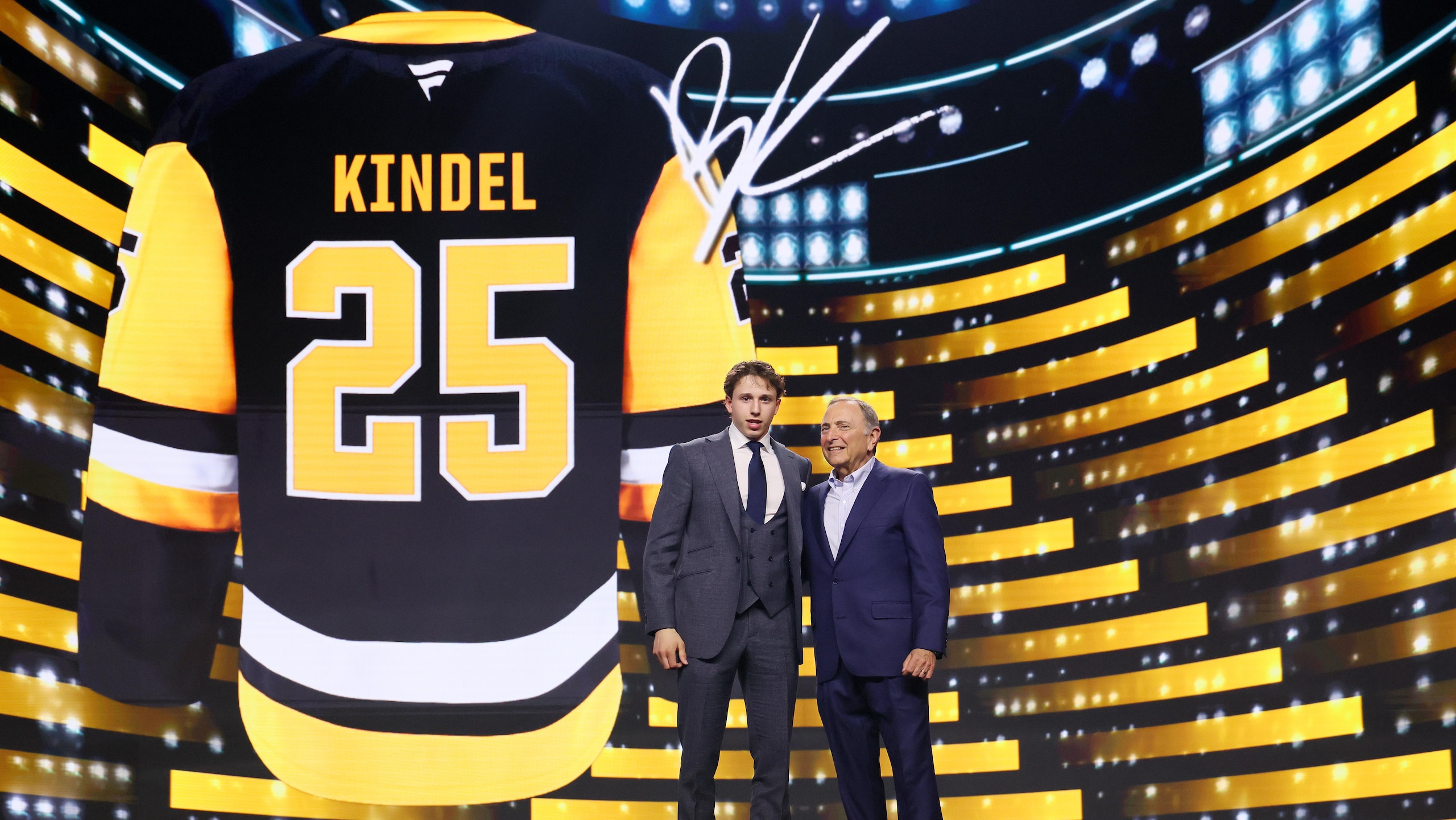
Strengths: Hockey sense, creativity
Weaknesses: Consistency, decision-making on occasion
B/R Rank: 20
Pick Grade: B-
Analysis: Calgary Hitmen forward Benjamin Kindel nearly broke the 100-point mark (only one shy) in 65 games this season, and when you take a closer look at his skill set, that's not a surprise. The Penguins went off the board with selecting Kindel here, but without the pick location in the equation, I cannot fault them for taking him. Kindel has raw skill and creativity coming out his ears, and if there's any team that can help that talent develop, it's the Penguins. Still, there's a lot of talent left on the board here.
As far as pure raw skill and potential go, Kindel has it in spades. Can he put those tools together on a nightly basis at the professional level? That remains to be seen.
His high-end hockey sense is a highlight for me. Kindel can create for himself and teammates, but he's also engaged physically, battling for the puck and backchecking. Strength is not a strong suit currently, and I would like to see him improve his shot. I also think there's a layer of deception he could add to his game; he has the creativity and hockey sense required if he can use them efficiently at the game's top speeds. Decision-making will hopefully mature with time, but right now, there are occasions where it feels lacking.
12. Philadelphia Flyers: Jack Nesbitt, C, Windsor Spitfires (OHL)
12 of 32
Strengths: Physicality, hockey sense
Weaknesses: Pace, skating, handling
B/R Rank: N/A (Outside top 32)
Pick Grade: D+
Analysis: Windsor Spitfires center Jack Nesbitt was so off the board at 12th overall that we didn't even have him on our list of first-round potentials. The Philadelphia Flyers clearly were afraid someone else was going to snag him, trading the 22nd and 31st picks for this selection. For me, this is a miss—too much raw potential and not enough certainty about his floor. But I'm willing to be proven wrong, and the Flyers clearly believe in his ability to grow as a player.
Nesbitt is a smart left-shot center who brings a physicality that allows him to use his size to forge his way through opponents—he's 6'5"—and he's got solid hockey sense. His positioning is sound in all three zones, he's strong on the forecheck, and his passing shows real promise. But his skating mechanics are stiff, and I don't love his stride. His handling doesn't always keep up with his brain. These things will need to improve for this pick to pan out. His current projection is more of a bottom-six player, though, and that's not a guy you necessarily want to use a top-15 pick on.
13. Detroit Red Wings: Carter Bear, LW, Everett Silvertips (WHL)
13 of 32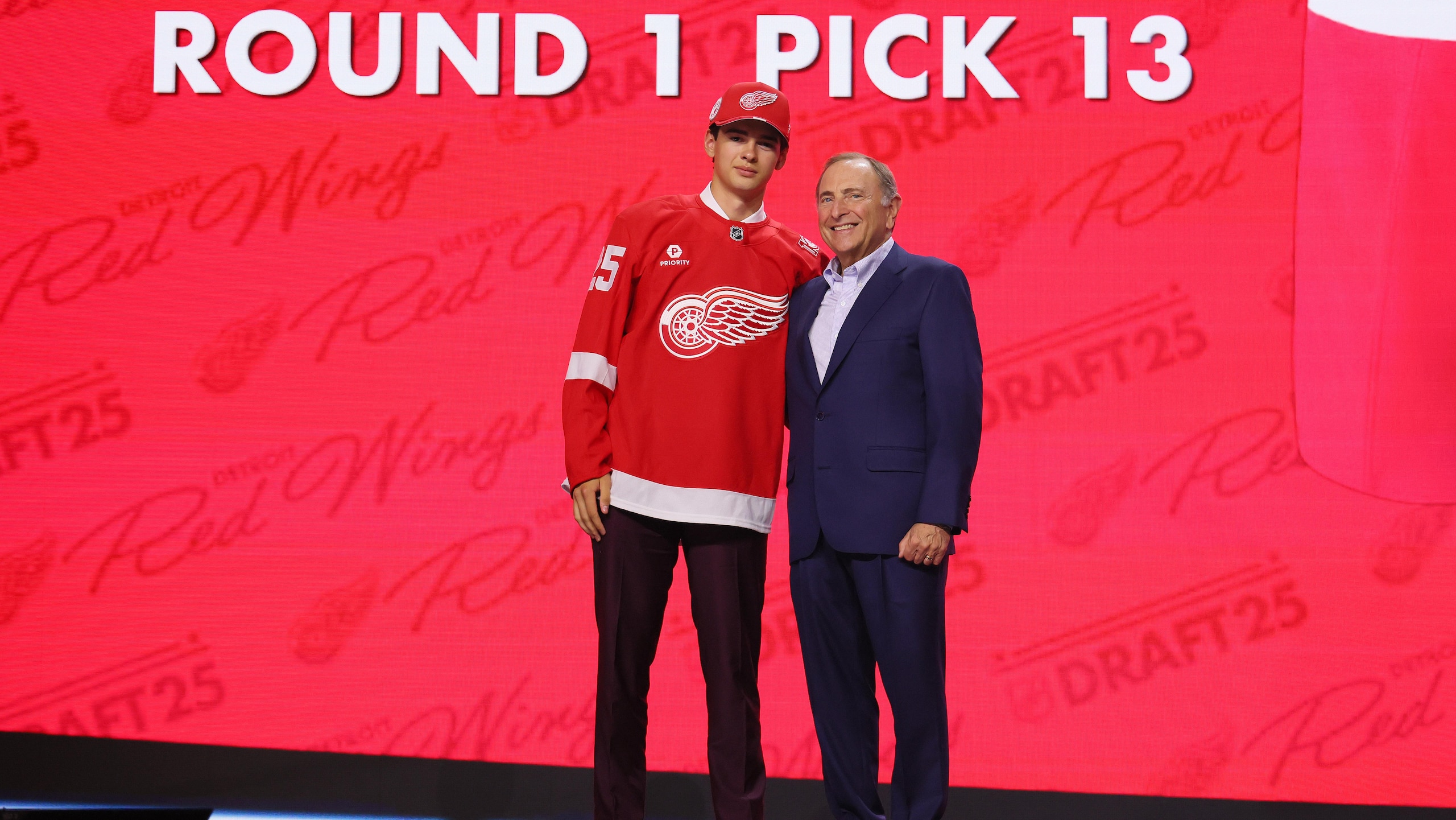
Strengths: Never-quit motor, awareness, playmaking
Weaknesses: His mechanics are average, but he's doing OK despite that
B/R Rank: 7
Pick Grade: A
Analysis: Carter Bear simply doesn't stop. Pair that with terrific offensive instincts and playmaking abilities and you have the potential for a dangerous player. It's not at all surprising that the Detroit Red Wings saw their opportunity to snag him at 13th and ran for the podium (metaphorically). They're getting a phenomenal competitor with a huge amount of skill, and after so many years out of the playoffs, the excitement Bear brings when he steps on the ice is much-needed.
I could watch Bear play for hours on end. His motor doesn't have an off switch; he's relentless. He has tenacity in spades. He's involved every time he steps on the ice; that level of engagement can be refined and encouraged, but there's something about seeing it be such an integral part of a player's game at such a young age that I find very promising.
His playmaking abilities still have room to grow; the fact that he was on such an offensive tear before his Achilles laceration, even before that growth occurs, bodes well for his NHL future. He's not some one-trick pony; he uses his awareness and hockey sense to identify and select the precise play that is right for the moment, and he doesn't slow down while doing it.
We'll see his scoring take another step next season, especially if he continues to refine and utilize those playmaking skills.
14. Columbus Blue Jackets: Jackson Smith, D, Tri-City Americans (WHL)
14 of 32
Strengths: Skating, puck-moving skills
Weaknesses: Needs to improve his decision-making
B/R Rank: 6
Pick Grade: A
Analysis: Jackson Smith is a special player. Between his smooth skating, puck-moving skills, offensive abilities and pest-like qualities, there's not an aspect of his game not to like. He's exactly the kind of player that the Columbus Blue Jackets need, and once he makes the NHL, he is going to be a cornerstone of his organization. Especially if he manages to round out the creative side of his game.
Smith's skating supports excellent puck skills and mobility that are necessary for an offensive defenseman in today's game. On the other side of that, he's an incredible pain in his end, limiting any chances that opponents might try to create and re-establish puck possession.
Facing him one-on-one feels like a nightmare. His specific combination of pure skill and the ability to be a pest without sacrificing it is such a useful one.
He's had flashes of creativity that I would like to see him develop further next season, as it would only add another layer to an already excellent skill set. I would also like to see him further refine his decision-making in tight moments.
15. Vancouver Canucks: Braeden Cootes, C, Seattle Thunderbirds (WHL)
15 of 32
Strengths: Constantly engaged, excellent off-puck, speed
Weaknesses: Size is a concern, as well as the question of whether his skill is enough for the next level
B/R Rank: 16
Pick Grade: A
Analysis: Another riser thanks to his performance at the U18 World Championships? Seattle Thunderbirds forward Braeden Cootes. Finishing the WHL regular season at a better than point-per-game pace wasn't enough; he needed to go out and show off the parts of his skill set that we're most fond of.
This might be the first smart move the Vancouver Canucks have made this week. Cootes is a smaller player, but he's so engaged every time he steps on the ice, and he's got skill at both ends of the ice—you can rely on him in any situation. When you can get a high-character guy alongside some very real skill, it's always a good decision.
He's such a fearless player, with a motor that doesn't quit and speed and agility to match. Channel that correctly and that makes you a dangerous player indeed. He has the potential to add even more to the playmaking side of his game than we saw this year, and I hope he does. We know he's excellent off the puck, applying pressure on the forecheck and utilizing that agility to evade defenders once he gets the puck back. I question whether his size will affect his ability to translate his skill set to the next level (and it's not something I question often), but if we see more of that playmaking game next season, I won't be nearly as concerned. Cootes grew quite a lot across this year, and I fully anticipate that continuing.
16. New York Islanders: Victor Eklund, LW, Djurgårdens IF (HockeyAllsvenskan)
16 of 32
Strengths: Attention to detail, work ethic, playmaking
Weaknesses: A lot is happening in his head, which can occasionally affect his execution
B/R Rank: 8
Pick Grade: A+
Analysis: Victor Eklund wasn’t the first Swede chosen; that was Anton Frondell. But I believe Eklund is the better player. The New York Islanders got an absolute steal selecting Eklund at 16th (we won't even get into getting both Schaefer and Eklund in one draft—embarrassment of riches). He's the type who could have easily gone inside the top five, and his attention to detail and intelligence are only two of the reasons why. I love this pick for the Isles.
That intelligence is both a blessing and a curse at times. It allows him to process and execute the game quickly and effectively, but sometimes he's just got a little too much going on up there and his execution suffers. It's not as frequent as you might expect that problem to be from a player at this level, though.
Saying he plays with intention is one of the biggest compliments you can give a draft-eligible player. His attention to detail is excellent, and his playmaking abilities have unfolded wonderfully across this season—we're going to see that progress even more in the coming year.
Eklund has a never-quit motor to add to it, and his reliability and willingness to go to the dirty areas of the ice round out what is a solid skill set.
17. New York Islanders: Kashawn Aitcheson, D, Barrie Colts (OHL)
17 of 32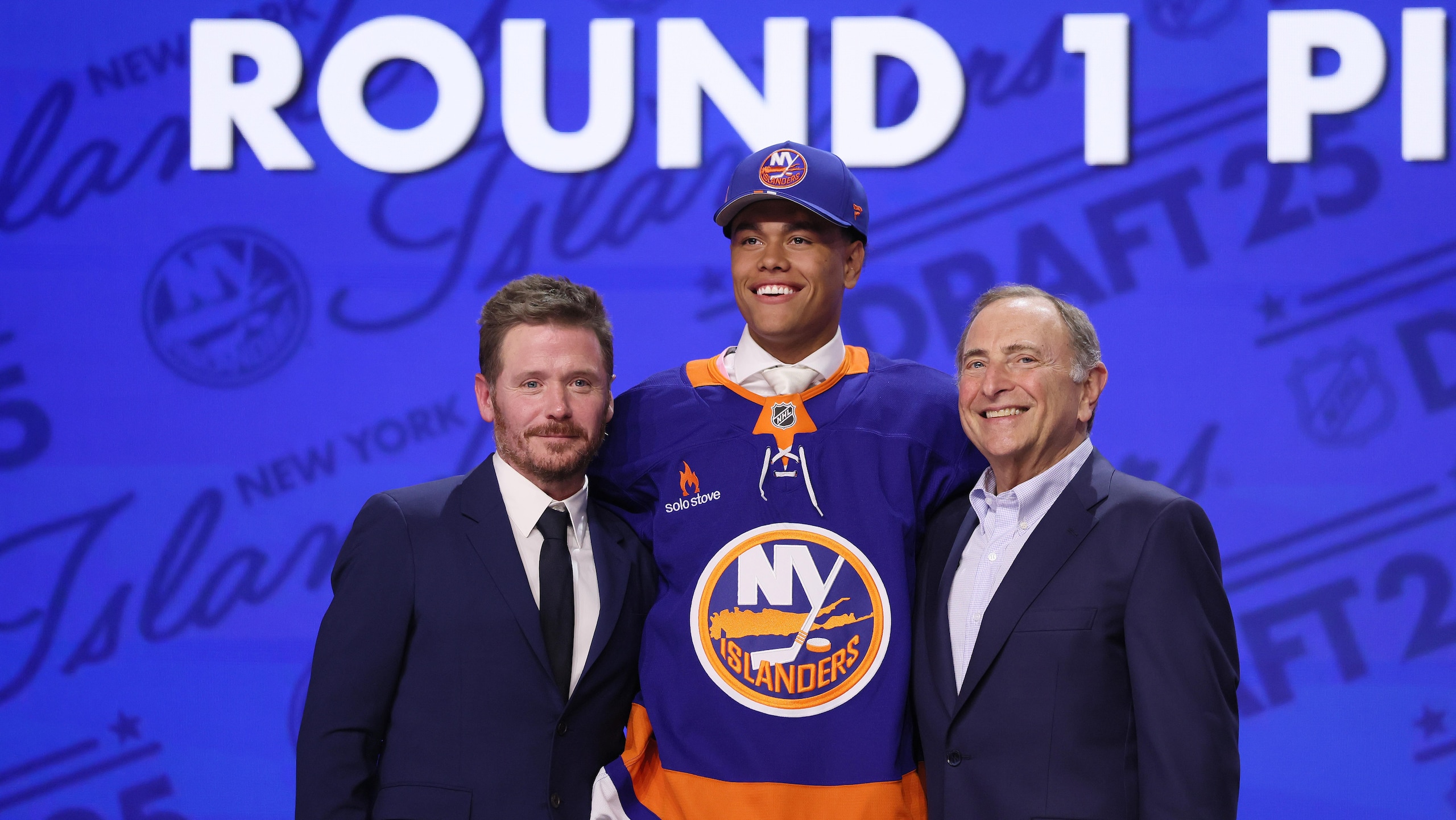
Strengths: Physicality, puck-moving skills
Weaknesses: Isn't the most creative or dynamic
B/R Rank: 18
Pick Grade: A
Analysis: I said Kashawn Aitcheson wouldn't be around at 18, and I was right—the Islanders snagged him at 17 and I cannot fault them in the slightest. What a guy. He's not the kind of player they have in their arsenal, either, so I love this for them—adding him and Matthew Schaefer instantly elevates their defensive prospect pool.
He's extremely projectable. Sit down and watch one Barrie Colts game and you find yourself picturing precisely the kind of NHL defenseman he's going to be. He isn't the most creative, dynamic defenseman on the ice and never will be, but frankly, that doesn't matter—he doesn't need to be to do what he does best.
With Aitcheson, what you see is what you get, and this is one of those occasions where that is a very good thing. He's a physical force each time he steps onto the ice, and he has excellent puck-moving abilities. His engagement level is high; he's constantly scanning the ice for opportunities or obstacles. He's so effective, reading lanes and suffocating opponents' chances, fully in their space. He's extremely fun and would be an excellent balance on a pair with a more freewheeling rover-type defenseman. This tracks, as we project him as someone who will be counted on to eat those big minutes at the professional level.
18. Calgary Flames: Cole Reschny, C, Victoria Royals
18 of 32
Strengths: Reading the play and exploiting opponents' mistakes
Weaknesses: Offensive play isn't as dynamic or high-end as others (but is effective)
B/R Rank: 25
Pick Grade: A-
Analysis: One of my favorite parts of Cole Reschny's game is his ability to feast on his opponents' mistakes at a moment's notice. He's a puck hound, and quick with it, and he's got the potential to grow into a player who can control the game. While it's a tiny bit of a reach for me, I absolutely understand the Calgary Flames snagging him here—especially if they heard someone else wanted him. I think they're going to be very happy with this pick.
Reschny moved up on our board after extensive reviewing of video across the season, because frankly, I enjoy his offensive skill set. He isn't a dynamic, shifty guy who will go out and manipulate opponents or create high-skill plays that blindside opponents, but he doesn't need to. He's quick with his feet, hands and brain, creating plays on a dime that exploit the mistakes of his opponents. If he can continue that kind of reading the play and creation at a higher level, he's going to thrive.
Those opportunistic moments aren't his only contribution, though. He's got a high-end motor and is constantly engaged in the game in all areas of the ice. He might be smaller, but he's not afraid to take hits or get involved physically for the sake of a play. He projects as more middle-six than top-six for me, but you need those guys too, and the way that Reschny can lay in wait to strike while remaining involved in the game (rather than floating around the edges) is valuable.
19. St. Louis Blues: Justin Carbonneau, RW, Blainville-Boisbriand Armada (QMJHL)
19 of 32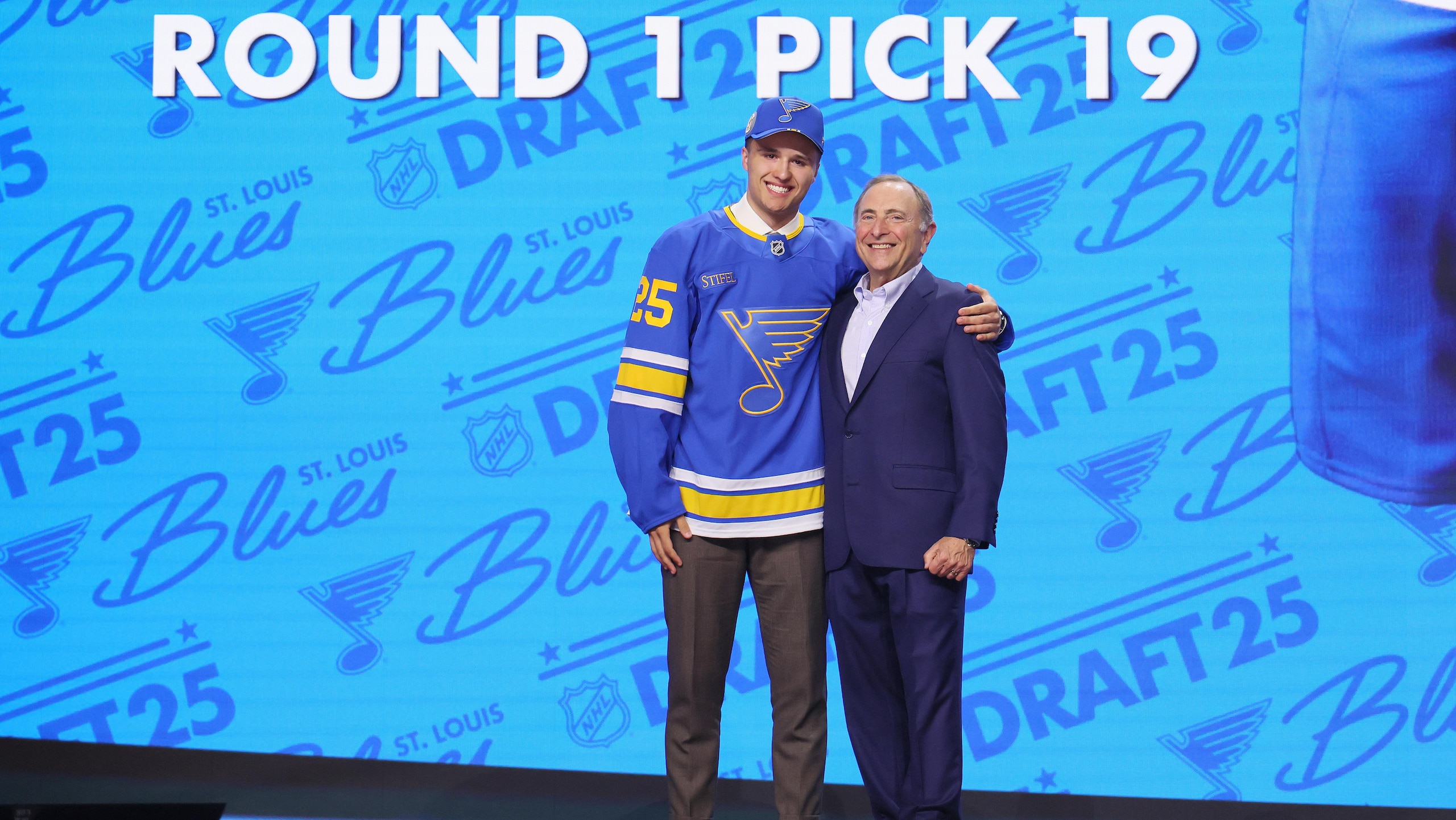
Strengths: Playmaking, vision, precise shot
Weaknesses: Does too much sometimes
B/R Rank: 12
Pick Grade: A
Analysis: The St. Louis Blues snagging Justin Carbonneau at 19th is a solid get. All aspects of his offense are valuable—his shot is great, his instincts and vision are high-end, and he can use that vision to set up teammates. The way he approaches the game will make him a great addition to the Blues' prospect pool.
There are a lot of players in this year's first round who have high potential when it comes to creative playmaking and dynamic offense, and the No. 1 thing we want to see from them moving forward is maturity concerning decision-making.
Carbonneau is one of those players. He's a threat in every area of the ice, with the puck and without it. His combination of vision and playmaking abilities, alongside his quick release, makes him dangerous offensively. His skating speed and the way he uses it to chase loose pucks or burn opponents make him dangerous defensively.
The problem—again, a common one—is that he can try to do it all himself. And this is so often where mistakes happen. When you're only relying on yourself, you miss opportunities. You turn the puck over. You get intercepted by an opponent who may not have been an issue if you'd made a pass moments before.
If Carbonneau can rein in his desire to do it by himself and utilize his playmaking abilities and vision more to find teammates and set them up, he'll have no trouble in the NHL.
20. Columbus Blue Jackets: Pyotr Andreyanov, G, Krasnaya Armiya Moskva (MHL)
20 of 32
Strengths: Footwork, explosiveness
Weaknesses: Rebound control, catching
B/R Rank: N/A (Outside top 32)
Pick Grade: D
Analysis: I was wrong when I said Joshua Ravensbergen would be the first goaltender off the board. Clearly the Blue Jackets’ goaltending scouts feel strongly that Pyotr Andreyanov is their guy, and you have to respect that sort of certainty in a position where nothing ever feels certain.
Andreyanov's athleticism and explosiveness are two of his strongest elements, and his play tracking is strong. He's good at taking away space from opponents, using that explosiveness to get to the top of the crease and beat those opposing shooters. His projection, though, is more of a tandem or backup goalie type right now. That could change down the line, but it makes this pick a reach for me.
21. Nashville Predators: Cameron Reid, D, Kitchener Rangers (OHL)
21 of 32
Strengths: Skating, stick work
Weaknesses: Size, inconsistency in several areas
B/R Rank: 19
Pick Grade: B+
Analysis: On our last board, I said the way I would sum up Cameron Reid as a prospect is "the potential is high but the runway is long," and I stand by that. The Nashville Predators clearly don't mind that he'll need that runway, and as they're in the midst of trying to get back to truly competing, they can afford to give it to him. Martin and Reid are a solid first-round haul for this team.
I like so much about Reid's game; he's constantly activating, his rush defense is great, and his skating and stick work are huge pluses. All good things to see from a draft-eligible defender for sure.
Here's the thing: His size has the potential to limit him (and it isn't often that I worry about a player's size). His lack of consistency in key areas worries me more, particularly because it happens in areas where he should be showing strong throughlines. It's not just his physicality without the puck that can take a night off; his playmaking and offensive reads also struggle sometimes. If he can improve that, he'll have a nice long NHL career. Right now, however, I'm still emphasizing the "if."
22. Pittsburgh Penguins: Bill Zonnon, LW, Rouyn-Noranda Huskies (QMJHL)
22 of 32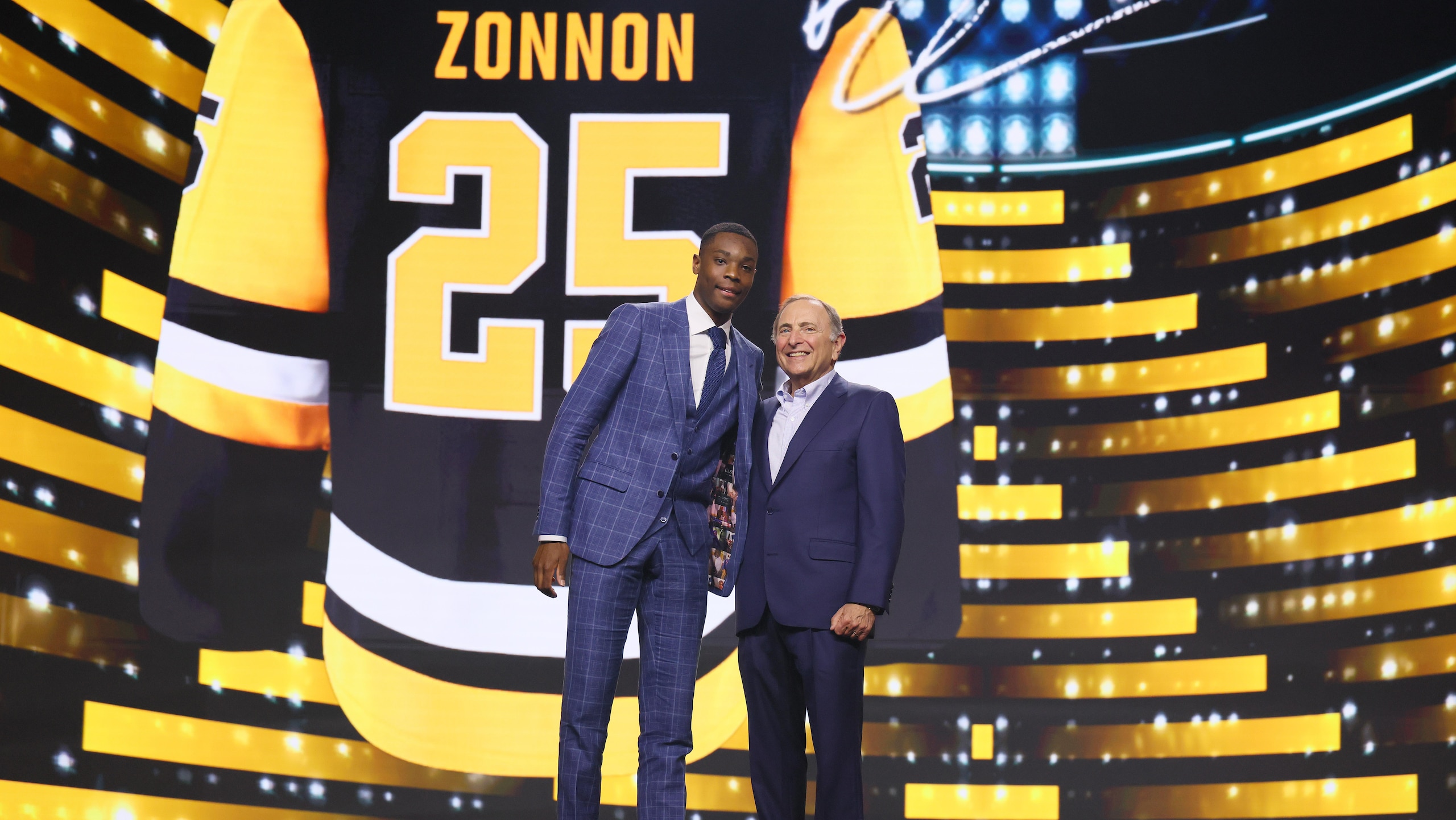
Strengths: Work ethic, motor, playmaking
Weaknesses: Skating, though it is improving
B/R Rank: 29
Pick Grade: B+
Analysis: Bill Zonnon is the kind of player with raw potential that, if refined through a good development environment, could end up outplaying his draft position. That's what Kyle Dubas and the Pittsburgh Penguins are undoubtedly betting on; I wouldn't be surprised if it pans out. The Zonnon pick fits what Dubas' draft style seems to be right now: high raw potential with some risk and a longer runway. It fits a rebuilding team.
His high floor paired with a fantastic work ethic alone are great selling points. Add to that his engagement level and awareness and you've got a promising prospect indeed.
It's that awareness, and the way he snags primary points, that tells me there is so much more to unfold in terms of Zonnon's offensive abilities. His playmaking and hockey sense are two aspects of that skill set that come to mind. Get him in the right environment and we may see an offensive explosion moving forward.
The beautiful thing is: Even if he doesn't explode offensively from here, he's still an excellent player. His defensive game has grown quite a bit over the season, and he clearly heard criticism of his skating and began working to improve it.
23. Ottawa Senators: Logan Hensler, D, University of Wisconsin (NCAA)
23 of 32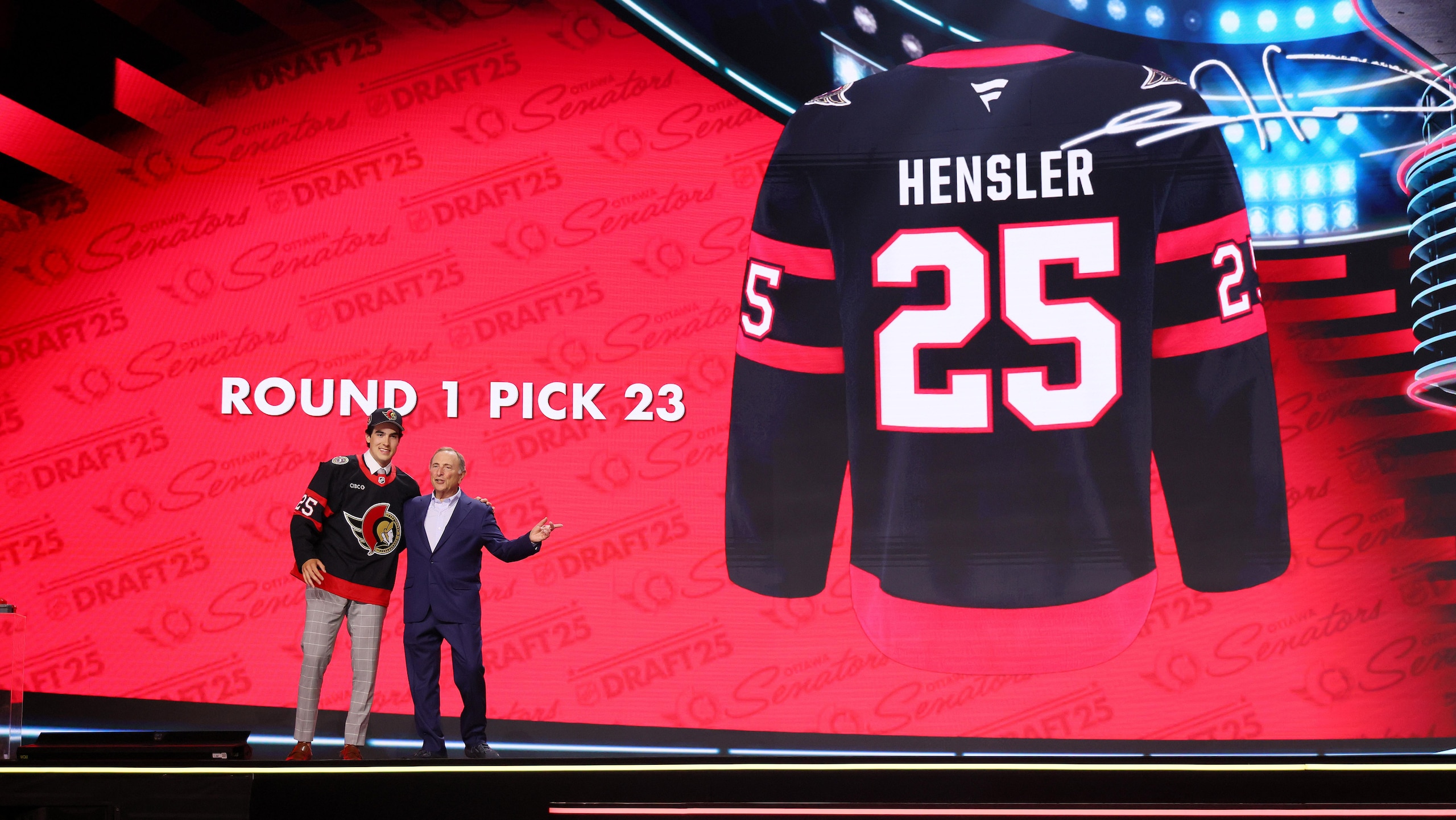
Strengths: Mobility, stick work
Weaknesses: Decision-making under pressure
B/R Rank: 17
Pick Grade: A-
Analysis: With a few years of development, Logan Hensler will be a solid addition to the Ottawa Senators' blue line. I had plenty of critiques for him this season, but he's still one of the best defensemen in this draft. He's got the mobility necessary to play today's game and to use his awareness at game speeds. Ottawa should be very happy with this pick.
I do not love what we saw from Hensler this season; I am also inclined to give him grace because playing as a true freshman in NCAA hockey is difficult on its own, but particularly as a defenseman. Much like James Hagens, this is a case of "I still believe in his skill set; he just isn't where I wanted him to be at this point."
There's a lot to like about Hensler; his awareness and decision-making suffered this season, but were highlights of his game before this year, and I cannot imagine instincts like that disappearing entirely. I wouldn't be surprised if we see that part of his game surge again next season as he comes into the season more used to the environment and his opponents. He activates well, and he shows signs of being able to incorporate offense into his game. With awareness being a past strength, offensive opportunities are another area he could channel that into, and adding that to his skill set could elevate him further.
I still believe that Hensler projects as a top-four NHL defenseman. I just think it's going to take slightly longer to get there than we thought.
24. Pittsburgh Penguins: William Horcoff, LW/C, University of Michigan (NCAA)
24 of 32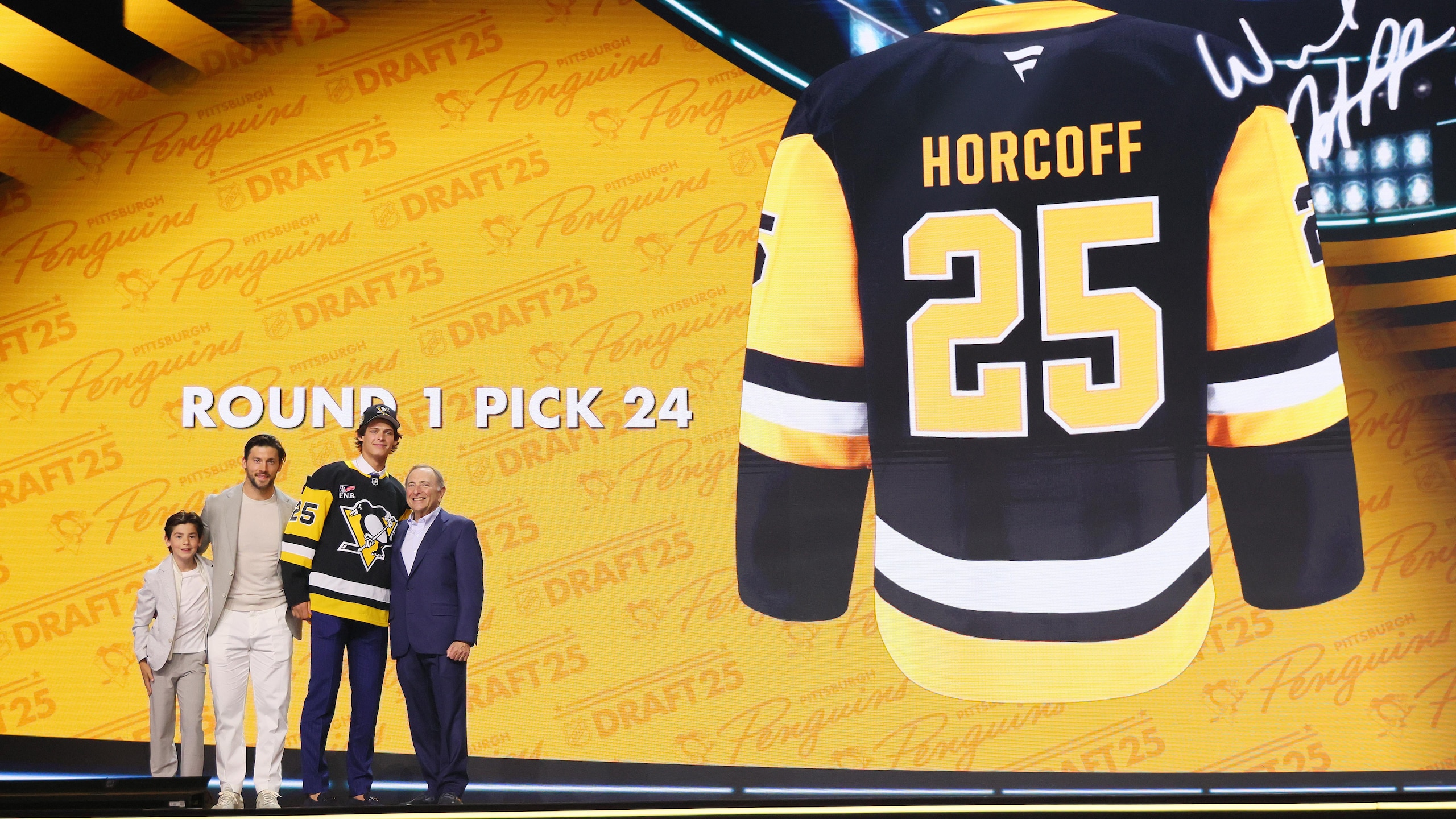
Strengths: Defensive details, playmaking/passing
Weaknesses: Skating, pace
B/R Rank: N/A (Outside top 32)
Pick Grade: C+ — Horcoff has the potential to be a good prospect but there's too much skill left on the board.
Analysis: William Horcoff (yes, Shawn's son) was the youngest player in NCAA hockey this season, having made the jump from the NTDP midseason. We had him projected as more of a second-rounder, but with the Pittsburgh Penguins trading up to get him, there must've been talk of another team wanting to snag him as well.
Horcoff has size for sure—he's 6'5"—and he's a great passer, preferring to distribute for teammates rather than shoot himself. He has real playmaking potential, able to fool opponents. His real separator, though, is his defensive ability. His reads are proactive rather than reactive, and he's great at smothering opponents' lanes. His limitations are his skating and his pace; college hockey is a great place for him to improve both of those, and he'll likely spend a few more years with Michigan.
25. Chicago Blackhawks: Vaclav Nestrasil RW, Muskegon Lumberjacks (USHL)
25 of 32
Strengths: Physicality, offensive impact
Weaknesses: Consistency, certain aspects of his skating (i.e., quickness and agility)
B/R Rank: 27
Pick Grade: B+
Analysis: Every year, there's a guy who has high raw potential but high risk. This year, we have more than just a couple of those guys, but one I cautioned people not to ignore is Vaclav Nestrasil. The Chicago Blackhawks clearly agreed, and their prospect pool is at a point where this is a risk that they can afford to take. I think this is a smart pick at 25.
He's got very real potential to become a valuable power forward; we're not sure if he'll put it all together yet, but there are too many facets that shine not to take a chance on him.
Defensive awareness and offensive impact are both areas of strength for Nestrasil, and he can put together creative plays quickly. Physicality is a strong suit—some have used the word "violence," but positively and productively.
I just really want to see more consistency from Nestrasil. If he can apply these facets of his game night in and night out, he's going to be a dangerous player, and Chicago will look like a genius. He needs to improve his quickness and agility, but I see no issue with the rest of his skating.
26. Nashville Predators: Ryker Lee, RW, Madison Capitols (USHL)
26 of 32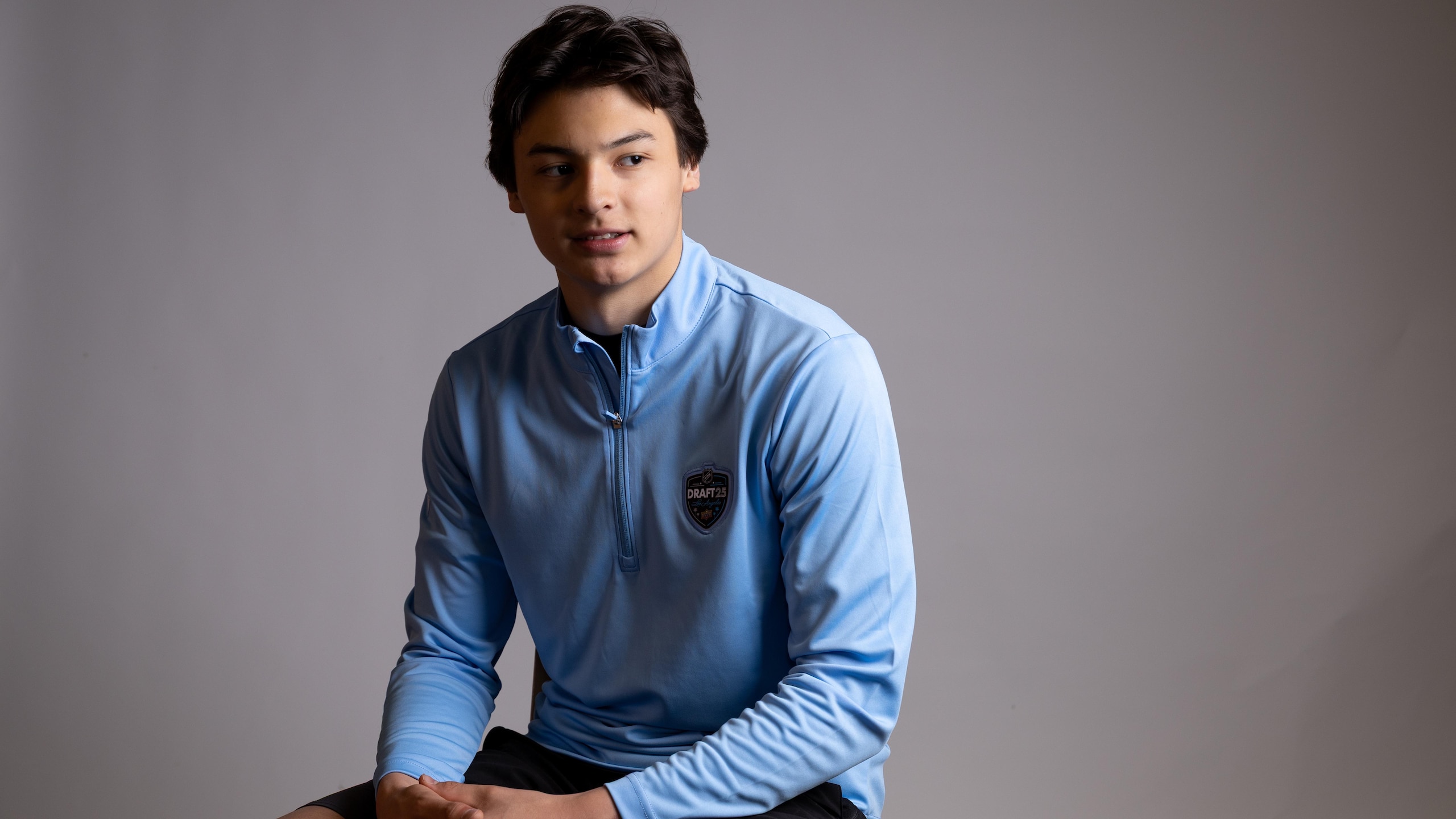
Strengths: Anything you can name to do with handling and passing
Weaknesses: Skating
B/R Rank: N/A (Outside top 32)
Pick Grade: B-
Analysis: While we didn't have Ryker Lee inside our first round, with what we know about him we completely understand why the Nashville Predators made the jump and took him at 26th. Lee's raw skill is high-end, enabling him to create in ways that stymie opposing defenders on a nightly basis. On skill alone, he's an excellent addition to their prospect pool.
He ended the USHL season with 68 points in 58 games, an impressive scoring rate in the USHL. He's a product of the NHL factory Shattuck-St. Mary's and is committed to play for Michigan State of the NCAA. In terms of passing, handling and hockey sense, he's up there with the best of them. The issue is his skating. He's stiff, and there's no real explosiveness to allow him to create separation to utilize that skill. As I like to say, skating can be fixed. We'll have to wait and see whether it will.
27. Washington Capitals: Lynden Lakovic, LW, Moose Jaw Warriors (WHL)
27 of 32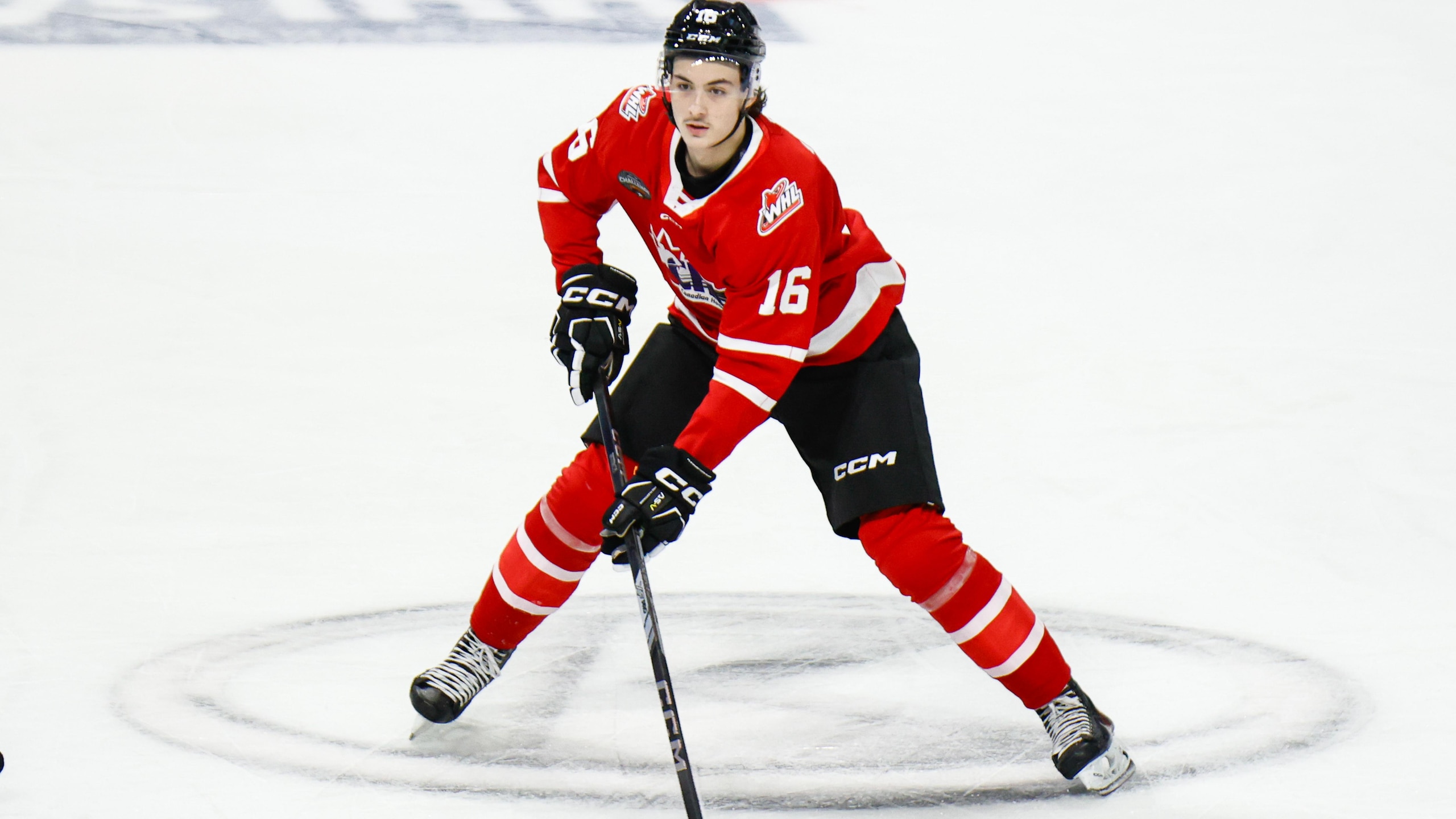
Strengths: Excellent shot, speed
Weaknesses: Could engage more physically
B/R Rank: 14
Pick Grade: A
Analysis: Washington Capitals fans are going to love Lynden Lakovic. This year is a case of "player X has a ton of potential, but he's still raw," and Lakovic is no exception. I believe in his potential, and I think with time he's going to turn into a dangerous player at the NHL level. With one era of Capitals hockey ending and another beginning, Lakovic is a good player to move forward with.
One reason to believe in his potential is that his floor is so high. His skill set is terrific—high-end shot, excellent use of his stick to disrupt opponents' plays and protect the puck, above-average skating—and he can further add to that skill set moving forward. One way I'd love to see him do that is by adding a bit more pace and, of course, consistency.
He's got another gear we haven't seen yet (recall that he missed part of this season with injury). If he can utilize that gear next season and work on adding a layer of physicality to his game, we'll see that consistency come naturally. Netting 58 points in only 47 games in your draft year is pretty good; expect to see that rise next season.
28. Winnipeg Jets: Sascha Boumedienne, D, Boston University (NCAA)
28 of 32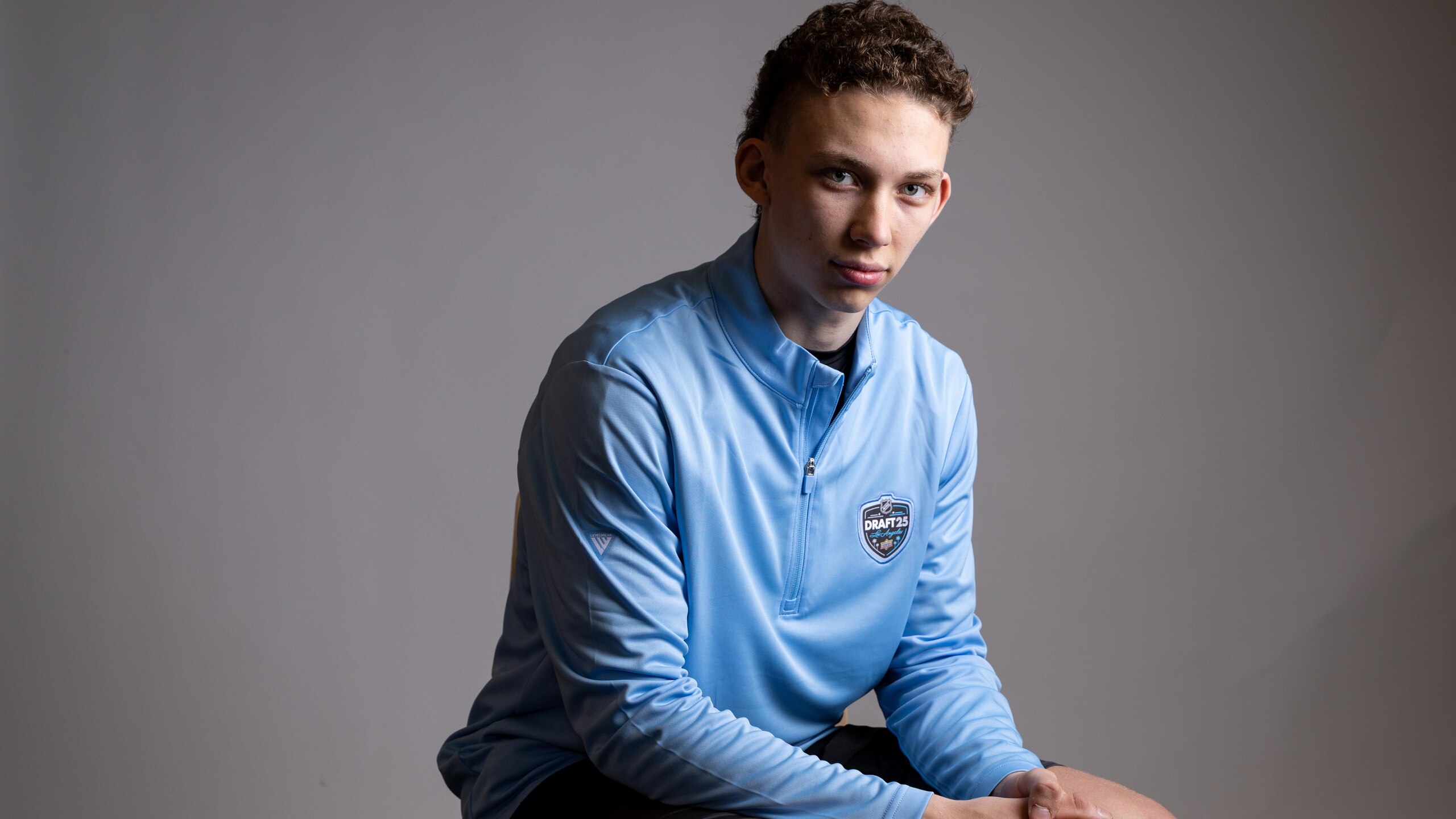
Strengths: Passing, defensive awareness
Weaknesses: Edgework and other mobility aspects of his skating
B/R Rank: 30
Pick Grade: A-
Analysis: I fought with myself about whether to bring Sascha Boumedienne back into the first-round rankings and Boumedienne won. With the Winnipeg Jets selecting him at 28th, I'm glad that he did. He's got a bit of a runway ahead of him before he's ready for the NHL, but the Jets don't need him yet, so that works out nicely.
He was the youngest defenseman in college hockey this season, and that's tough all on its own. Growing pains aside, though, I think making the move to NCAA rather than major-junior was the right decision for him and will pay off in the long run. He has so much potential to mine, and I think we may see a very different player in his sophomore season.
His confidence and approach to the more detailed parts of the game were two aspects we saw improve across the season, something that I find promising for his play moving forward. Boumedienne's motor is relentless, and he's one of the better distributors in this year's draft—his passing on the breakout is especially nice, but it's not limited to that.
Earlier in the year, I said I wasn't sure who he was going to be in the NHL. I'm becoming more confident that he can be an effective and skilled two-way defenseman at the pro level after watching him across a full season. I do want to see him improve his edgework and mobility when it comes to his skating; I like the rest of his skating and don't want to see that part hold him back.
29. Chicago Blackhawks: Mason West, C/RW, Edina High School/Fargo Force (USHL)
29 of 32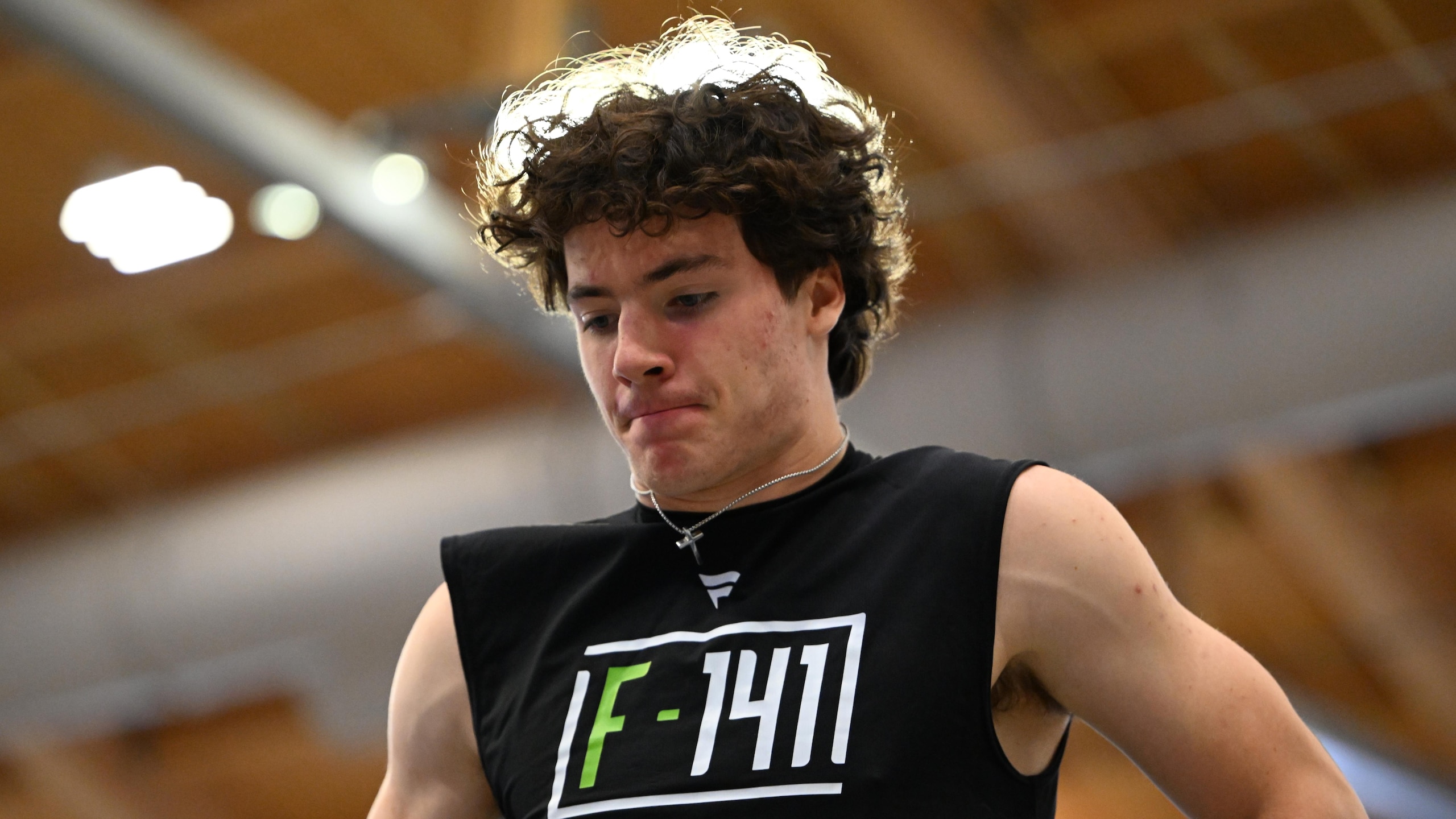
Strengths: Size, skating
Weaknesses: Handling can be awkward and ineffective at times
B/R Rank: N/A (Outside top 32)
Pick Grade: B
Analysis: Mason West is one of the most fascinating players in this year's draft, and one of the youngest. Both a very skilled hockey player and a high school football quarterback, West played for Edina High School before joining the Fargo Force of the USHL for the end of their season. While we didn't have him ranked inside our first round, he was someone we considered a likely second-rounder. Seeing him go at the end of the first round, especially to the Chicago Blackhawks who have picks to play with, makes complete sense.
West's size and reach, along with his fluid skating, are some of his greatest strengths. He's shown flashes of offensive creativity that look quite promising, and he's able to use his reach to create offense, but at times his hands can fail to keep up with the rest of him. He can also lose battles at times, despite his size. He's one of those players with a long runway who is worth taking the risk for.
30. San Jose Sharks: Joshua Ravensbergen, G, Prince George Cougars
30 of 32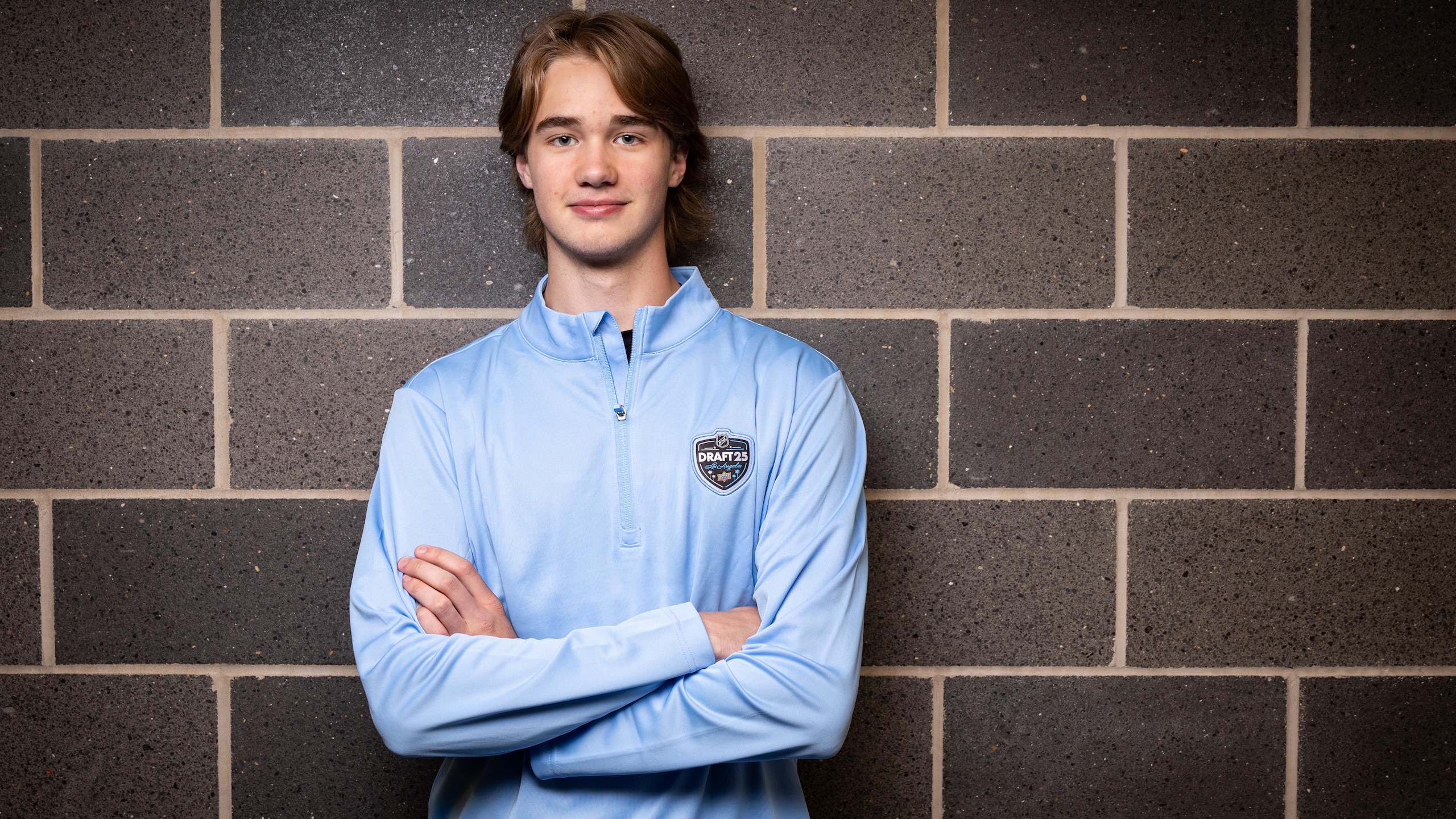
Strengths: Size, puck-tracking
Weaknesses: Struggles with layered screens (who doesn't?)
B/R Rank: 24
Pick Grade: A-
Analysis: Joshua Ravensbergen was our highest-ranked (and only first-round-ranked) goaltender this year. The San Jose Sharks are building a solid prospect pool, and Ravensbergen is a nice addition to it. Goaltenders often take longer to develop than other players, and that's a plus for a rebuilding team like San Jose—by the time the rest of the Sharks' organization is ready to compete, Ravensbergen will probably be ready to step into that net.
One of the reasons Ravensbergen will be selected high is, of course, his size—he's 6'5" and NHL teams love themselves a big goalie. But his key valuable traits include his composure and sense of calm in the net and, perhaps the most important, his puck-tracking ability. He's always one step ahead of his opponents, able to see the play unfold before it happens and utilize his athleticism to get to the right place to stop it. He gives up too many rebounds, but it's not a major weakness either, and that's something that can improve with time and experience.
31. Los Angeles Kings: Henry Brzustewicz, D, London Knights (OHL)
31 of 32
Strengths: Skating, good off the rush
Weaknesses: Plays a quieter game
B/R Rank: N/A (Outside top 32)
Pick Grade: B-
Analysis: Henry Brzustewicz is a London Knight, and if you know junior hockey, you know what that means. He's got an organization known for great player development behind him. This bodes well for his path to the NHL, especially given that we should see him take on a larger role over the next season or two. We had him as more of a second-rounder, but we're at the point in the first round where it's close enough that it isn't a reach.
He's a quieter type of defenseman, but there were flashes of creativity in his game this season, especially as he took on more minutes. His skill set is all above-average, though nothing elite, and while I currently project him as a middle-pairing type, there is a good chance he’ll improve even further over time.
32. Calgary Flames: Cullen Potter, LW, Arizona State (NCAA)
32 of 32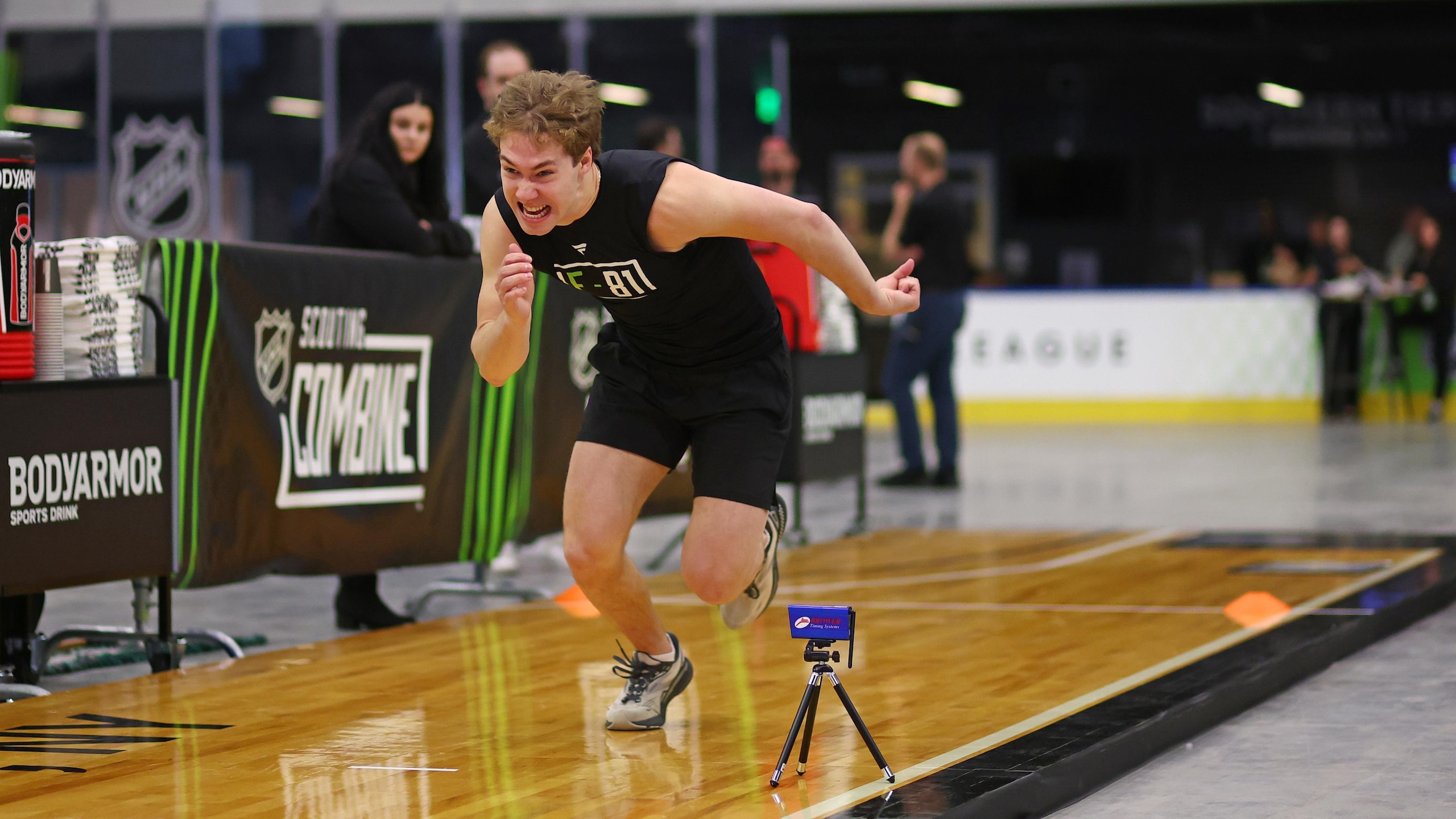
Strengths: Speed, mobility, tenacity
Weaknesses: Play under pressure, especially reading the ice
B/R Rank: 31
Pick Grade: B+
Analysis: Any time a player comes into the NCAA as a true freshman—especially when they're still 17 at the start of it—the adjustment can be difficult. Cullen Potter has done an excellent job making that move and growing as a player across the season. I love this pick for the Calgary Flames—this is right around where we had him ranked, and they're getting very real value here. I think we'll see a significant leap from Potter next season.
He brings electric speed and mobility in transition to the table, and pairs it with a never-quit sense of tenacity that will serve him well moving forward both in the NCAA and at the pro level. It's easy to look at his 22 points in 35 games and find that underwhelming, but you would be wrong to do so. Compare that to his eight points in seven games at the U18 World Championships and you can infer that his offensive abilities are still there—he just needs to adjust further to the NCAA.
This year was a season of growth and transition for Potter, and he will only continue to grow further. We've seen his playmaking abilities develop across the year and, importantly, his defensive play. I'd love to see him continue to improve his decision-making under pressure, as that can be an area of weakness. The NCAA environment is an excellent place for him to do that.


.jpg?w=2560 "Report reveals list of next NFL international locations")