

The rest of the NHL let the Panthers have their day in the (scorching) sun for Sunday's Stanley Cup parade, but we got our first big move of draft week on Monday.
Folks, the Trevor Zegras saga in Anaheim has finally come to a close. After years of speculation, the Ducks traded Zegras to the Flyers for Ryan Poehling, the 2025 45th overall pick and a 2026 fourth-round pick.
The Ducks drafted Zegras ninth overall in 2019, hoping the skilled and media-savvy center would be the cornerstone to their rebuild, but his tenure in Anaheim was underwhelming. He showed flashes of the player he could still become, but as the years went on and the mutual dissatisfaction appeared to grow, you got the sense he wasn't going to become an X-factor for the Ducks franchise.
It was the latest of several bold moves as the Ducks try to accelerate their rebuild, but are they headed in the right direction? Should a once highly touted and still young player like the 24-year-old Zegras have yielded a higher return, or did the Ducks get fair value considering his recent setbacks?
Here are the winners and losers of the long-awaited Zegras trade.
Winner: Danny Briere
1 of 5
The Flyers were able to capitalize off the Ducks' dwindling leverage.
While Zegras' NHL career has been plagued by injury and inconsistency, he scored 23 goals in each of his first two seasons and put up 60-plus points in the process before things went downhill.
Plus, he is a high-skill player who has been more or less forced to play within strict and defense-first systems run by Dallas Eakins and Greg Cronin. Neither philosophy is wrong, but you can understand why a player like Zegras wasn't the correct X-factor in systems that didn't emphasize his strengths.
You can also understand why the Ducks felt it was time to move on, as the piece just wasn't fitting, but even if Zegras never becomes a true No. 1 center, Flyers GM Danny Briere made out clean here. The Flyers are pretty much set in the defense-first forwards department led by Sean Couturier. Making a move for Zegras indicates to budding star Matvei Michkov that they want to let him rip, and that message works both ways when it comes to potentially unleashing Zegras' potential.
Plus, he's in the final season of his contract with a $5.75 million cap hit before he becomes an RFA: If Zegras stays healthy and ends up thriving with a phenom like Michkov, that could end up a steal.
At the very least, the Flyers didn't surrender a top player or a top draft pick, and they didn't create any new holes in their lineup with the deal. This is the type of low-risk move a GM should make to signal to a rising star that they're investing in him and want to try as much as possible to build around him.
Loser: Pat Verbeek
2 of 5
Verbeek has been taking the Ducks' rebuild in an interesting direction as of late.
He's made several deals with the tumultuous Rangers recently, acquiring Jacob Trouba and his $8 million AAV for the year and Chris Kreider and his $6.5 million AAV for the next two years. He also fired head coach Greg Cronin and hired Joel Quenneville at the start of this offseason. Now, with Zegras gone, it's even clearer Verbeek wants a significantly different team as the Ducks attempt to make the playoffs next season.
Perhaps the push for more experience pans out, and perhaps the Ducks aren't done yet—they've reportedly been interested in the Mitch Marner sweepstakes. But after several opportunities to sell Zegras, not even squeezing a first-round pick or a young asset out of the ordeal is a disappointment.
Selling this low on Zegras smells a bit like impatience: What if the Ducks could've put Kreider on his wing and shored up his value for a deadline move, given his reasonable contract?
Maybe it's more important to let the rest of the young stars get more reps in, but I'm not convinced the Ducks squeezed enough return out of such an anticipated move.
Winner: Trevor Zegras
3 of 5
As Zegras' minutes and role on the Ducks continued to dwindle, you saw a once bright-eyed and bushy-tailed top-10 pick devolve into a shell of himself. Part of it was bad injury luck, part of it was his own mistakes on defense, but at least some of it was a team that gave up on him as a franchise cornerstone.
He's just 24 years old and has been hungry for an opportunity to prove himself in a different environment. He's been gifted a prime situation to do so with one year left on his contract. He'll surely get the opportunity to play alongside fellow skill guy Michkov in an environment that encourages them to play to their strengths. They'll have Jack Adams-winning head coach Rick Tocchet to guide them along the way.
Oh, and Zegras is officially re-united with his best friend Jamie Drysdale.
It's on him to turn his career around and grow into a bigger role, but he's now in a great position to go for it.

Winners: Pending Free Agents
4 of 5
The first big domino moment of a free agency period generally sets the tone, and the tone here screams: "Players are getting paid."
The most logical reason the Ducks were willing to unload Zegras at a low cost? They're reportedly in on the Mitch Marner sweepstakes, and they wanted to prove quickly that they have enough cap space to give him or perhaps another coveted pending free agent as much money as possible.
That's just one theory, but there's no doubt other teams in the mix for Marner are looking at the Zegras trade and wondering if it's time to start unloading and making bids.
Plus, Zegras is coming off two down years and ended up in a better position for his career; meanwhile, the Ducks ended up with less than they probably hoped. Players are gaining more agency right now.
Losers: Teams That Could Have Traded For Zegras
5 of 5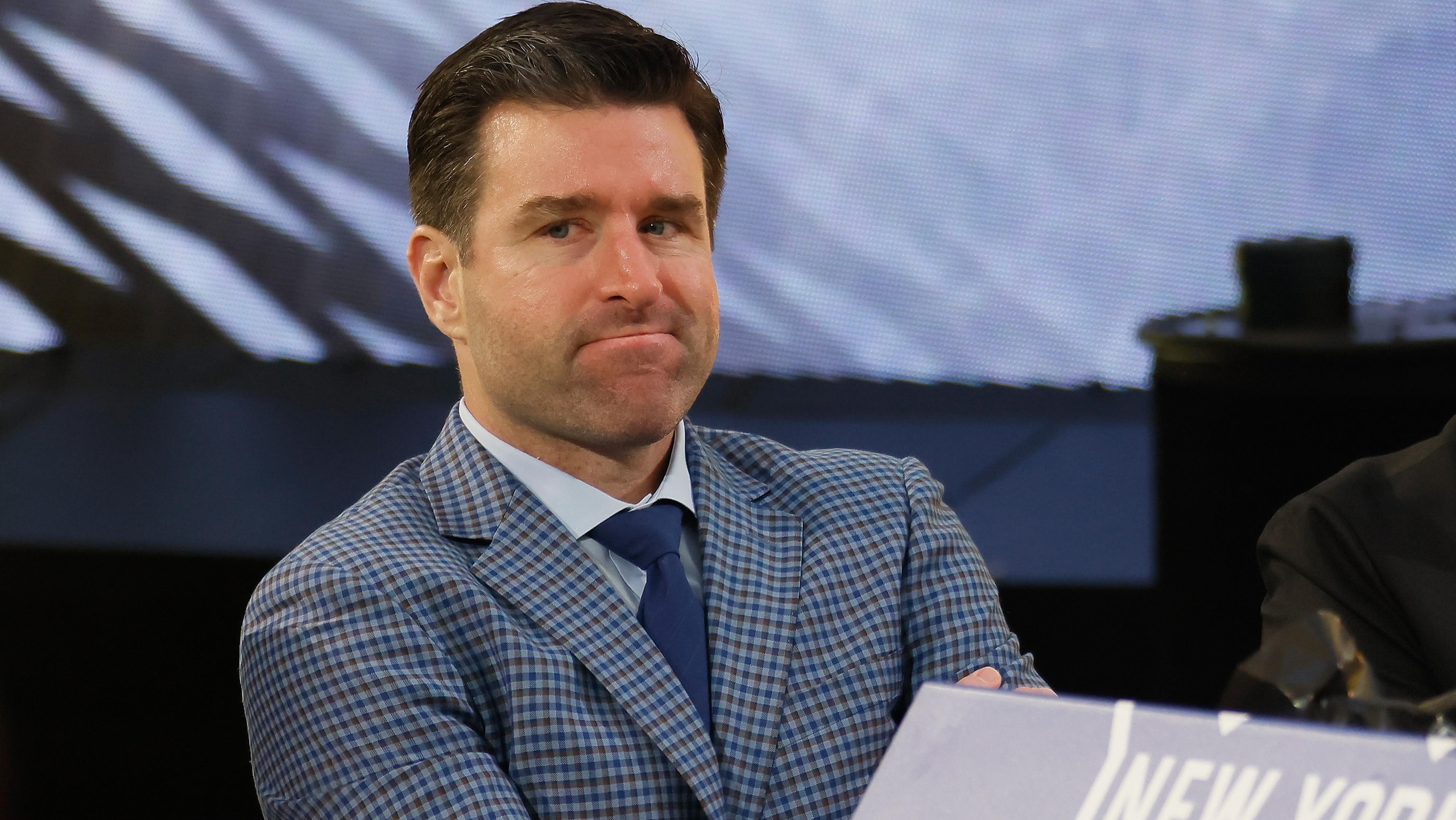
No one on Earth can claim to know what's up Rangers GM Chris Drury's sleeve, so who knows if he even wanted Zegras in any of his negotiations. The Trouba and Kreider trades were largely salary and vibe dumps, anyway. But if the Ducks were willing to trade Zegras for Poehling and a few non-first-round picks, surely Kreider or Trouba could've yielded that return.
With the cost so low, you have to think several mid-to-competitive NHL teams with some cap space looking to make the playoffs or score a few more playoff goals are kicking themselves for not making this happen. You could've seen a decent fit on the Devils to re-stock after trading Erik Haula, or the Canadiens, who are looking for more scoring depth to assist their top-heavy squad.
One thing's for sure after this Zegras trade: It bodes well for teams to be as proactive as possible on the free-agency and trade markets if this is all it took to get Zegras.

.jpg?w=2560 "B/R's Expert Week 7 NFL Picks 🔮")
.jpg?w=2560 "Puka Dealing with Calf Injury")