
Good fight movies take many different forms and teach many different lessons, but they all have one thing in common: At some point, the main character will have to square off against a bigger, scarier, seemingly indomitable foe.
Odds are, said foe is getting knocked out.
Leading up to that conclusion, though, the best combat movies include high stakes, personal redemption, cool montages and, very often, unintentional silliness. The more testosterone you pump into one of these things, the more likely they are to devolve into absurdity. That's a feature, not a bug, by the way.
These movies have rules, often so the antagonist can break them, and we've got a couple of our own. First and most importantly: Regular humans only. No superheroes shooting hand-lasers at each other because they have to seal off a portal or converge timelines.
The fighting also has to be organized somehow, usually in the form of a tournament or sanctioned bout. No standard action movies allowed. This eliminates pretty much everything from the Arnold Schwarzenegger catalog, as well as stuff that would otherwise qualify like John Wick, Ong Bak, The Raid and Ip Man.
These are the 10 greatest combat sports movies of all time.
10. Best of the Best
1 of 10This won’t be the last entry on the list that uses a debilitating shoulder injury as a pivotal plot point, but it’s the one most strongly burned into my brain. Part of a team representing the United States in an international martial arts tournament against Korea, Eric Roberts plays Alex Grady, and his shoulder is always getting dislocated in fights.
That’s set up early in the movie, and it happens in a critical match near the end. He has it excruciatingly popped back into socket during a two-minute injury timeout and manages to avoid getting knocked out while fighting the last 30 seconds of his match with one arm. It was a heroic performance, and it wasn’t even the high point of the third act.
That nod goes to Tommy, who defeats but chooses not to kill his opponent, Dae Han, in the final match. This is a sanctioned tournament in which killing is definitely illegal, but that option is on the table for Tommy because Han killed his brother in a previous fight. Han has an eyepatch, so you know he's bad news.
We learned earlier in the movie that when Tommy shifts his back foot a certain way before kicking someone, it’s basically a guaranteed kill shot.
James Earl Jones is Team USA's coach, and the "No!" he shouts when he sees Tommy shift that back foot was at a register so deep and authoritative that you could have heard it at the bottom of the ocean. Tommy listens, doesn't kill Han and loses the match. Han, who is not dead because of Tommy, gives Tommy his gold medal and apologizes in the movie's final scene*. Everybody cries.
The lessons, in order: First, do not become a professional fighter if you have shoulder issues. Second, avoid being brothers with an accomplished martial artist because there’s a good chance you’ll be killed early on and used as a plot device. And third, always listen to James Earl Jones.
*The actor who played Dae Han is Simon Rhee, the actual brother of Phillip Rhee, who played Tommy. This movie has layers.
9. The Wrestler
2 of 10The fight genre doesn’t tend to attract auteur-level directors, but Darren Aronofsky’s The Wrestler is an exception to the rule. Perhaps unsurprisingly, this is one of the few entries on the list you could credibly call a “film” without drawing any excess eye-rolling. You’ll still get the normal amount of eye-rolling because you used the pretentious term “film” to reference a movie, but there’s no avoiding that.
Short summary: Randy "The Ram" Robinson is living a mostly ruined life after his professional wrestling career petered out. He’s a mess, physically and emotionally, but he’s still a sympathetic character amid all the self-sabotage. He finds love and loses it. He reconciles with his daughter but messes that up, too.
Ultimately, he concludes he has to accept a wrestling match that, after having undergone heart surgery, will almost definitely kill him. In a deeply sad ending, Randy performs his finishing move while suffering from some kind of episode that the audience is made to understand could be fatal.
And while he (presumably) dies alone and unloved, he goes out doing the only thing that ever made him feel alive. Who would have thought an alarmingly tan Mickey Rourke, clad in neon green tights, could capture the bittersweet truth of human existence in a wrestling movie?
8. Raging Bull
3 of 10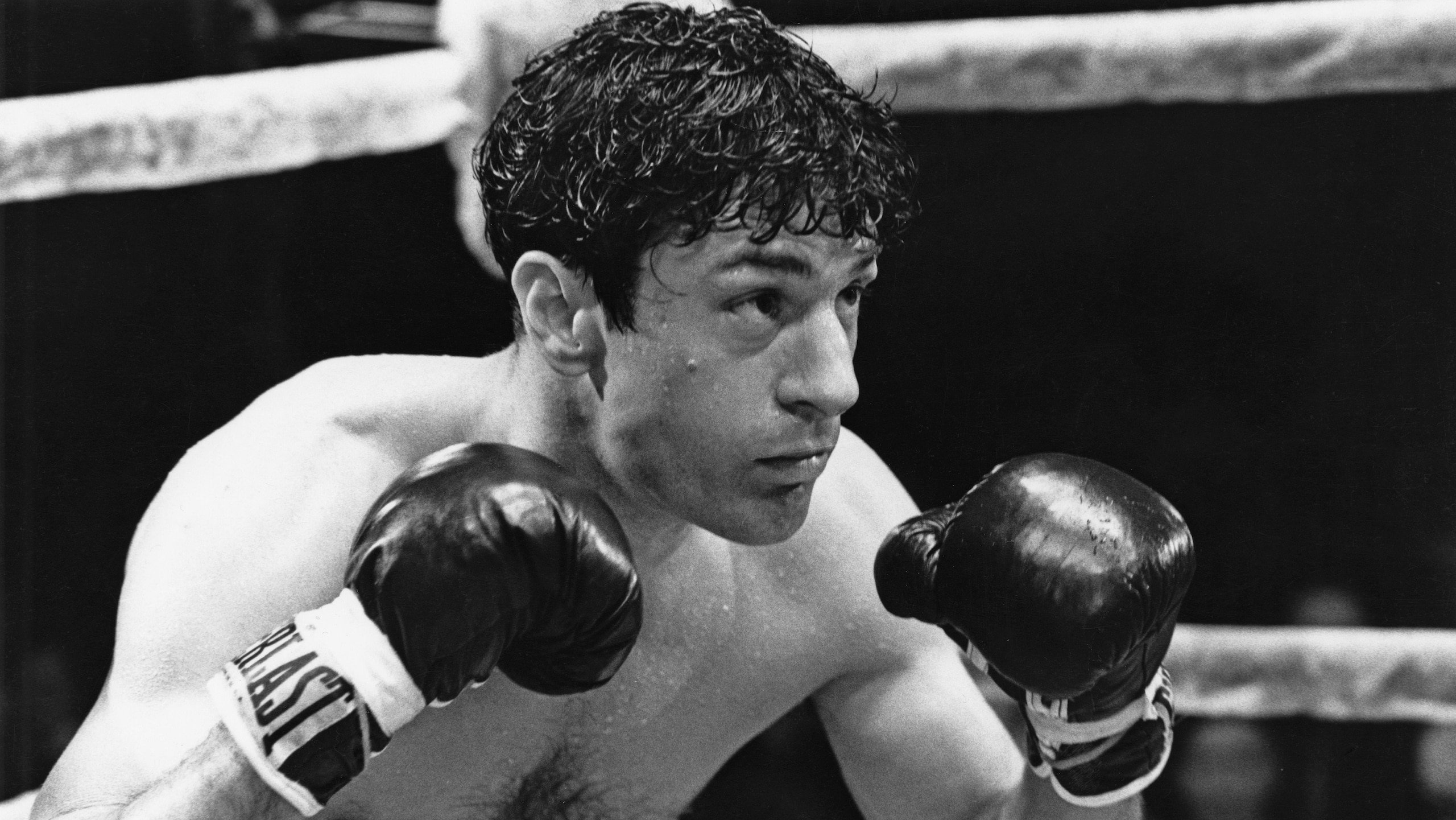
De Niro. Scorcese. Massive weight gain for a role before every A-list actor started doing it—Raging Bull is a no-questions-asked all-timer. It’s the kind of movie you might actually have to call a film, much more so than The Wrestler.
The story follows boxer Jake LaMotta, a violent guy even for someone whose job is punching people. LaMotta is good enough to win and later defend the middleweight title, but he loses a fight on purpose at one point and is generally awful to everyone in his orbit. He winds up alone in the end, and his fate feels earned.
Scorcese basically invented the modern approach to filming combat sports in this movie, and De Niro deservedly won his second Best Actor Oscar. His transformation from a young, svelte LaMotta in the 1940s to the washed-up, 60-pounds-heavier version toward the end of the story showed a level of commitment most 1980s audiences weren’t accustomed to.
Fifty years later, the cinematography doesn’t knock your socks off. But that’s only because the last half-century of movies borrowed from Scorcese’s style. Even modern anti-hero characterization draws from what De Niro did with his portrayal of LaMotta. This is an art form-altering masterwork, and you can’t really have a discussion about fight-based movies without it—even if it's unavoidably dated.


.jpg?w=2560 "NFL Paris Football")
7. Bloodsport
4 of 10Let's start with the fact that Frank Dux, played by Jean-Claude Van Damme, earns acceptance into the shadowy, definitely illegal Kumite tournament by proving to the organizers that he’s exceptionally well trained. He does this by performing the “Dim Mak” death touch, which involves basically vaporizing a brick at the bottom of a stack by hitting the one on top. Van Damme pulls this off while wearing khakis hitched six inches above his navel and a barely-there tank top.
The year was 1988, and the fashion choices were suspect.
Chong Li, the arch villain of the film, who easily has the most pumped pecs of any combat movie antagonist, begins his intimidation campaign by stone-facedly telling JCVD: “Very good. But brick not hit back.”
Chong Li will later go on to do a whole bunch of hitting back, nearly killing Dux’s buddy, Jackson.
With Jackson hospitalized, Van Damme watches Li actually kill his next opponent, adding real stakes to the inevitable clash between Dux and Li in the Final.
Li, apparently not convinced his penchant for murder and huge pecs are enough to assure victory, throws salt in Dux’s eyes during the fight. A blinded Dux is now in his element, as he was trained by his master while wearing a blindfold. Li walked right into this one, but you can forgive him for not assuming his opponent would be better at fighting without the ability to see.
The synth-heavy score picks up, Van Damme makes a series of absurd faces, grunts in slow motion, and kicks Li into oblivion. Best of all, Van Damme forces an incapacitated Li to submit, rather than killing him as payback.
Combat movies love a merciful winner.
6. Rocky
5 of 10The actual combat in the original Rocky doesn’t measure up to some of the sequels, but this is a situation where you’ve got to acknowledge the originator of the form. Rocky walked so Rocky IV could run (up a mountain in the snow).
It’s tough to overstate the cultural clout here. If someone were to run up a flight of stairs, turn around and raise their arms in celebration, you’d know exactly what they were referencing: Rocky’s iconic training montage from this movie, which concludes with him sprinting up the steps of the Philadelphia Museum of Art.
There’s now a real-life statue commemorating the fictitious run from the film in that exact spot, and the image is basically a shorthand for Philadelphia’s general toughness and grit.
This one has it all—Rocky chasing chickens to work on his agility, Stallone’s arrival on the scene as a star (who also wrote the film), 10 Oscar nominations and a Best Picture win.
Also, the decision to have Rocky lose the final fight paved the way for that trope to show up in tons of other derivative movies.
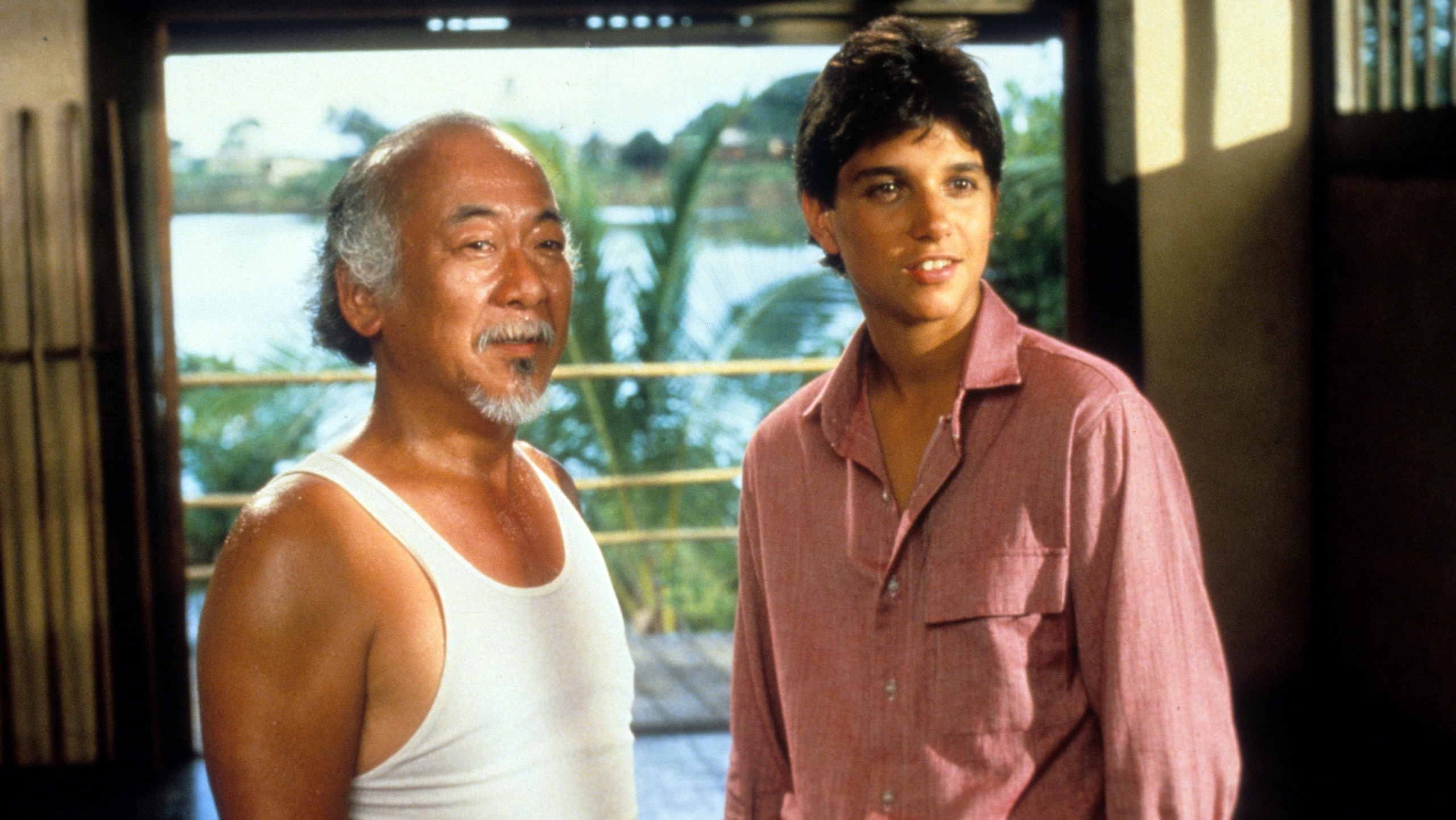
5. The Karate Kid
6 of 10Reasonable minds could disagree about the quality of combat in the original Karate Kid, but this entry’s status as a cultural icon is beyond dispute.
In addition to teaching us that rough kids from the valley are not to be trusted, this 1984 release imparted vital messages and forged a generation of aspiring martial artists.
Everyone now knows a well-placed crane kick works 100 percent of the time, even when the deliverer of the kick is badly injured—as long as the opponent kind of just stands there and waits to get kicked in the face.
Everyone also knows about Mr. Miyagi’s “wax on, wax off” line, and that the ethos of the Cobra Kai dojo still stands as an example of how not to coach youth sports.
All that stuff just adds extra layers of meaning to a classic struggle between Daniel LaRusso—old school, underdog, defined by discipline—and Johnny Lawrence, whose coaches encourage him to do things like “sweep the leg” and whose teammates bloodthirstily yell about body bags during fights.
4. Rocky IV
7 of 10Did the training montage begin in Rocky IV? Hardly, but it feels fair to say this movie perfected the form.
The discrepancy in training methods is a key element of the Rocky vs. Drago fight, as the former’s preferred methodology—lifting ox carts, chopping down trees—seems like a recipe for disaster. Especially when pitted against the cutting edge of Russian sports science which, according to this movie, involves steroids and futuristic machines that train Drago to deliver enough punching power to put a hole in an aircraft carrier.
Plus, we already know how dangerous Drago is. This dude killed Apolo Creed in an exhibition match. He does not mess around, a fact he makes clear when commenting, “If he dies, he dies.”
Any argument that this ranking is too high falls flat because for a large swath of people watching this movie after the fact, it pretty much seems like Rocky Balboa ended the Cold War. In beating Drago, he wins over a Russian crowd and explains to them (while definitely concussed), “If I can change, and you can change, everybody can change.”
No, I did not have to look that up to get it verbatim because it accounts for roughly 40 percent of my understanding of American history.
3. Kickboxer
8 of 10Ever wonder what Bloodsport would have been like if it had better training montages, an even more evil villain, a similarly implausible story and a significant increase in the number of scenes that involve Van Damme dancing with unnerving sexual energy?
Great news! That movie exists, and it’s called Kickboxer.
This time, Van Damme plays Kurt Sloan, a man motivated to learn Muay Thai after Tong Po, the pony-tailed arch villain of the movie, paralyzes his brother in a fight. Van Damme kicks a bunch of trees to toughen his shins, does the splits like 50 times and perfects his skills before fighting Po in the “ancient way.” That means they have to wrap their hands in glue-covered rope, which they then dip into shards of broken glass. The ancient way is super hardcore.
As you might expect, Van Damme takes a real beating before going into his standard Bloodsport routine, which is to say he comes back and wins while doing a lot of slow-motion posing, middle-distance staring and drawn-out grunting as he kicks his way to victory. Van Damme could see in this one, so Tong Po never had a chance.
2. Warrior
9 of 10Tom Hardy isn't the main character in Warrior, but he absolutely cooks as Tommy, a mumbling, damaged, painkiller-addicted anti-hero. The other important thing to know about Tommy is that he’s a war veteran who ripped the door off a tank to save the people inside but did not accept a medal of valor for his efforts.
In a weird nod to Bloodsport, a commentator covering one of Tommy's fights notes that “the tank don’t hit back." Minimizing someone's heroic, life-saving exploits is a real choice.
Tommy has done nothing but quickly destroy opponents throughout the movie, and it turns out they also don't get a chance to hit back because they're unconscious almost immediately.
Brother angle alert: Tommy eventually squares off against his brother, the protagonist, Brendan. Based on Tommy's path to the final of this MMA tournament, and all the savagery he's displayed throughout the movie, it seems literally impossible for Brendan to beat him.
Brendan dislocates Tommy’s shoulder* (his special attack, basically), but Tommy fights two more rounds with one arm before Brendan gets him in a rear-naked choke. Tommy taps out only after Brendan tells him he loves him, which closes this combat movie out with real heart.
Hardy is set up as an indomitable, animalistic force. But he’s really just a combination of a broken man and a caged animal. He’s kind of a perfect character, and his traps are huge, and you completely believe it when he’s wrecking everyone he fights. But really, he just wanted someone to care about him.
*Shout out to Best of the Best!
1. Creed
10 of 10Originality matters, but Creed soars because it does a better job of repurposing old ideas and themes than any modern fight flick. Pulling plot elements from several Rocky movies, Ryan Coogler’s first big-budget effort established him as a first-tier director and made Michael B. Jordan a superstar.
Jordan plays Adonis Creed, son of Apollo, who seeks out an aging Rocky to train him after determining Tijuana bar fights are a few notches below his level. We get all the standard montages, and “how will he ever be ready for the final fight?” anxiety, but everything is more polished and less goofy than the Rocky predecessors.
A major highlight: Early in Adonis’ rise up the ranks, Coogler treats us to an uncut four-minute fight scene marked by incredible choreography and several blows that actually land. Most boxing movies are cut within an inch of their lives so the fighting looks as good as possible. This one pulled off an incredible high-wire act that makes you forget you’re watching fiction.
Lastly, Adonis, like Rocky in the original, doesn’t win the climactic fight. That formula begat one of the biggest franchises in movie history when applied to Rocky, and it’s not a coincidence that Creed got two more sequels.
.jpg?w=2560 "Seahawks Chiefs Football")

.jpg?w=2560 "Jonathan Taylor Landing Spots")
