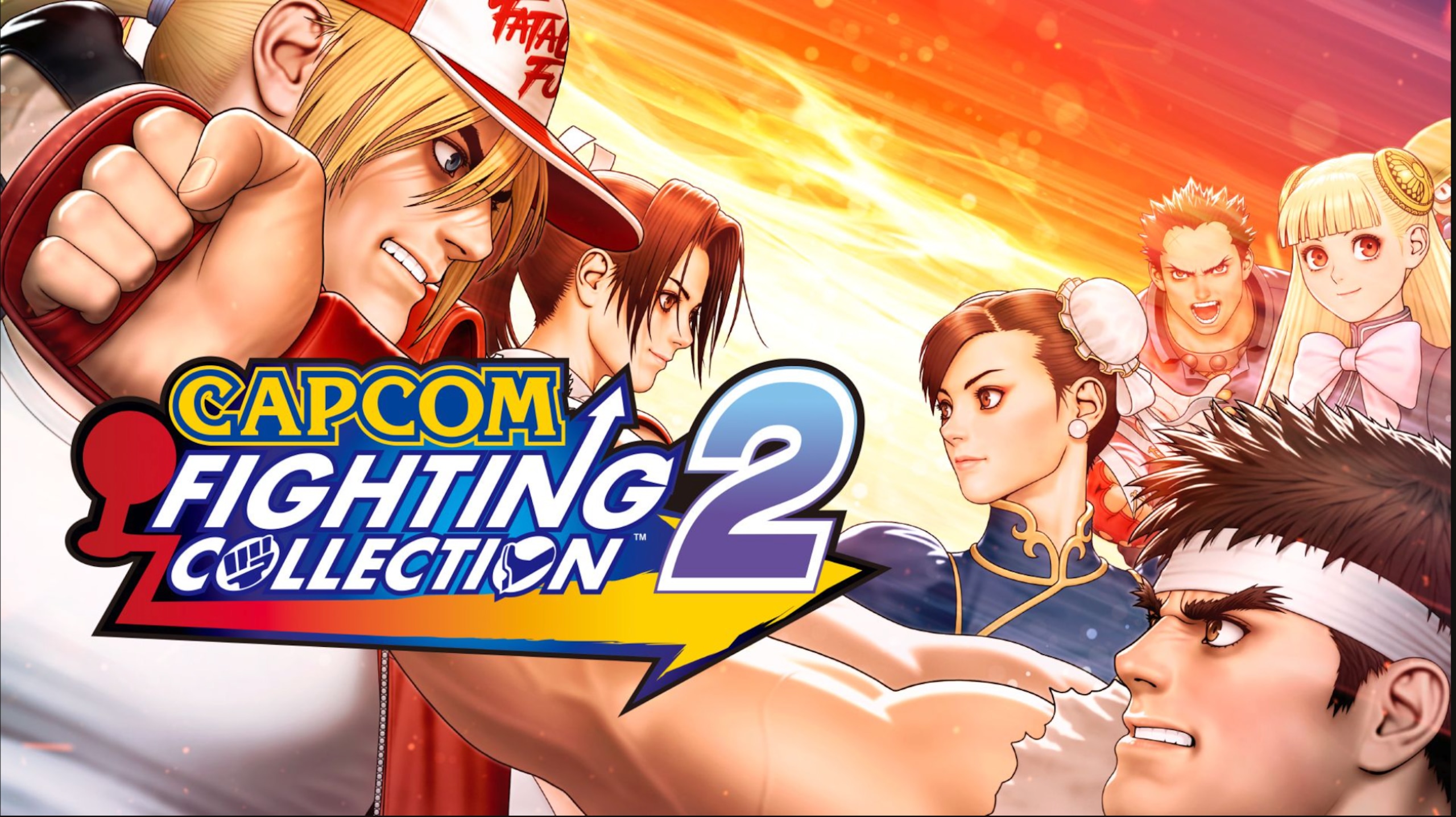

Capcom Fighting Collection 2 Review, Gameplay Impressions, Videos and Top Features

Capcom Fighting Collection 2 is the latest entry in Capcom's stellar collection series, this time bringing along some beloved entries from a fantastic era for the genre.
Composed of games released in the 1998-2004 window, Fighting Collection 2 is a straight-up wishlist many years in the making:
- Plasma Sword: Nightmare of Bilstein (1998)
- Power Stone (1999)
- Power Stone 2 (2000)
- Capcom vs. SNK: Millennium Fight 2000 Pro (2000)
- Project Justice (2000)
- Street Fighter Alpha 3 Upper (2001)
- Capcom vs. SNK 2: Mark of the Millennium 2001 (2001)
- Capcom Fighting Evolution (2004)
.jpg?w=2560 "Bills Rams Football")

Like other Campcom collection series, this one promises to faithfully port classics into a cohesive package while looping in some modern must-haves in terms of online functionality and accessibility settings.
If past entries are any sign, Fighting Collection 2 will arrive with a bang and enjoy plenty of staying power.
Graphics and Gameplay
Fighting Collection 2 is an incredible walk through the genre’s history.
There are four 2D titles, plus four 3D efforts in the package, making for a fun, colorful and expressive mix. These are sprite-heavy throwbacks in the best possible sense, with shadows faithfully painted behind the characters in some releases.
Many, of course, boast gorgeous backgrounds to the fighting stages with plenty of fun little things to see. The sound design remains faithfully retro for the most part, too, giving off an arcade vibe.
It’s a similar story on the gameplay front, where the actual play experience can vary greatly.
Each remains interesting in its own right, with players likely to gravitate toward one or the other based on personal preference. Power Stones is a fun throwback romp that leans into transformations to swing encounters in an almost party-game environment. Project Justice has a fun story mode that weaves in playing as lots of characters, keeping things much fresher than even many modern fighting game story modes.
The massive heavyweights sure to get the most play and feel the most modern are the two Capcom vs. SNK entries and Street Fighter Alpha 3 Upper.
Again the ratio system returns and still feels fresh, the basic premise being players get four points to assemble their team,. The stronger the team member, the more points they cost. Drafting a team, or so to speak, still remains a fun strategic pursuit before the actual fights.
Actual in-moment fighting feels strong across the board with problems like input lag not really present. Controls are snappy and, thankfully, customizable, so players who don’t want to handle a little old-school jank in some cases won’t have to worry about it here.
Especially in the case of the Capcom vs. SNK entries, it’s easy to see why they’ve enjoyed strong fanbases for so many years and influenced games released after them. While the initial onboarding might be a little tough for new players, it’s still as rewarding as ever to see meaningful improvement.
Story and More
Narratively and thematically, the collection is all over the place—in a great way.
Plasma Sword: Nightmare of Bilstein is a weapon-based fighter seemingly inspired by none other than Star Wars, giving it more of a Soul Calibur feel. In between pretty standard Street Figther entries here are also a few trips to high school via Project Injustice.
It isn’t just a fun trip through history in a visual sense, either. This collection, after all, includes those major external crossover games with the two Capcom vs. SNK efforts. And right there in Tier 1 in terms of hype for fans of the genre is the intercompany crossover with Evolution from 2004.
These are enhanced versions in other ways, too. Street Fighter Alpha 3 Upper, for example, loops in the extra characters who later came to home console ports.
The modernizations come in the form of must-have staples. First and foremost, there’s rollback netcode for the competitive side of things, which seeks to assure fair gameplay.
In addition to the causal modes, there are online ranked matches and leaderboards, plus a spectating feature. As a whole, it’s a robust suite that will obviously have a nice impact for the competitive side of things when it comes to organizing tournaments and casting them.
Training includes some in-depth things like input displays and even showcases hitboxes as players get into the finer details. What’s interesting, though, is that these impressive features tend to favor experienced players. Those new to fighters might have to hit YouTube to get more fundamental basics in terms of strategy like zoning, etc.
It wouldn’t be a nostalgic throwback effort without a gallery and extras to grab, either, so there’s a nice list of those. This goes heavy on accessibility, too, including one-button super moves and the like for more streamlined play.
Much of the above falls into the expected column at this point, but that’s a point of praise, not a knock.
Conclusion
Capcom just keeps delivering with these collections, pulling from an expansive backlog that spans fighting games, Mega Man and so much more. It’s an excellent way to revisit old favorites or finally see what the hype is all about.
This one follows the others in the fighting genre by weaving quality modern features into classical throwback experiences, a few of which have serious staying power and guaranteed dedicated playerbases.
Like always, not every game in the collection will be for everyone. But the entire package is a love letter to an era and genre that is worth a look, if nothing else, just to see how it paved the way into modern times.
.jpg?w=2560 "Texans Camp Football")