Lionel Messi's Continued Heartbreak with Argentina Should Not Alter His Legacy
For Lionel Messi, undoubtedly the biggest disappointment of his career to date produced one of the iconic sporting images of recent times.
In the aftermath of last year's World Cup final, one photographer captured Messi, isolated even amid the crowd, casting a wistful glance at the World Cup trophy, a prize that had agonisingly eluded his Argentina side that night.
It was an amazing, award-winning shot, capturing in an intimate moment something of the heartbreak that sports can inflict on even the very best players in the world.
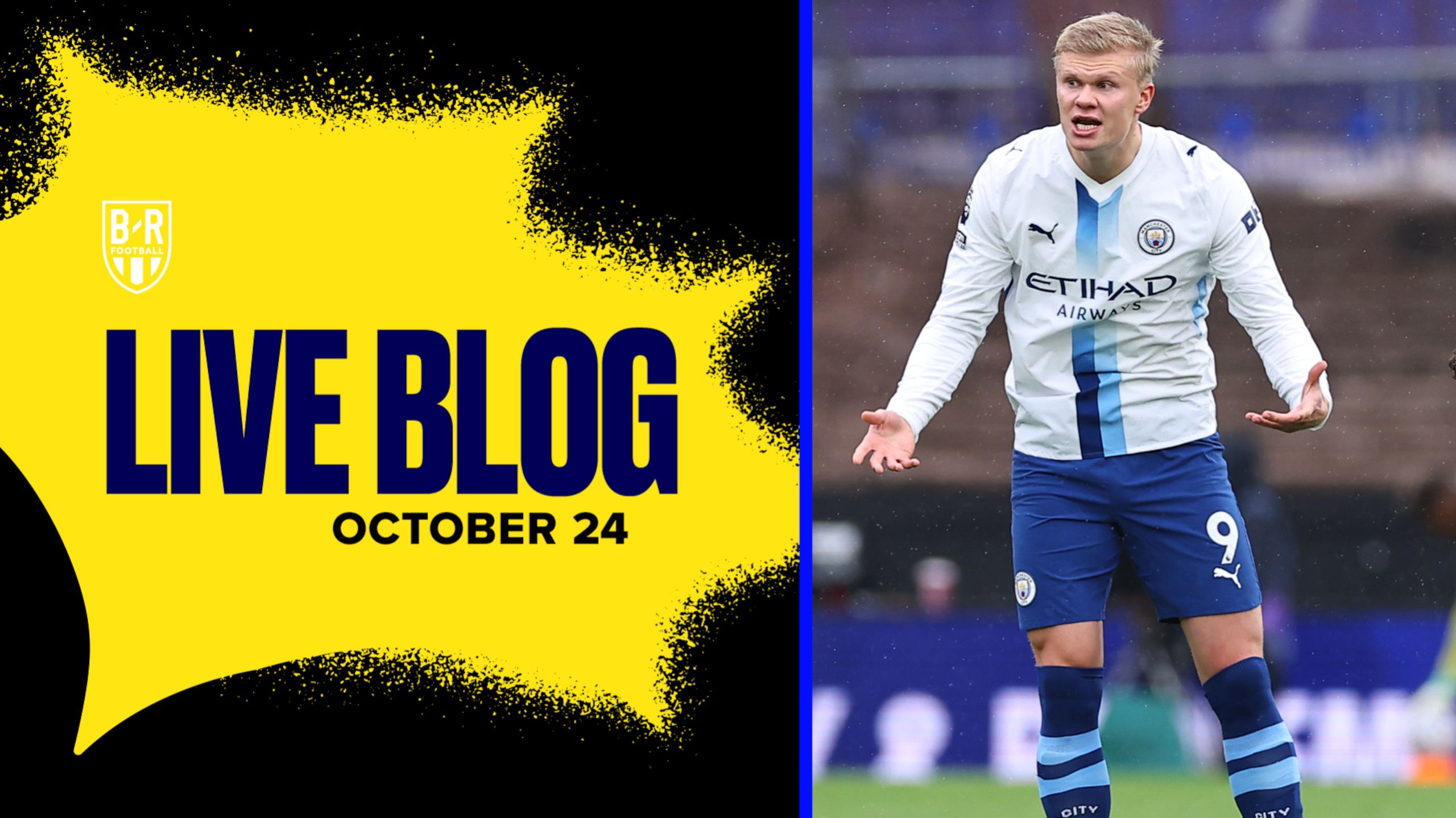


For Messi, the aftermath of the final whistle at the Maracana was little short of torture, with the forward forced to pose—through gritted teeth—for a series of staged photos as he was named player of the tournament, when clearly all he wanted to do was slip away into the night.
"Right now, nothing can console me," he told reporters afterwards, per FIFA.com.
Wind on a year to Saturday night, and Messi was forced to relive the same horrible nightmare, this time in the Copa America. On this occasion, it was Chile who took on the role previously played by Germany, the tournament hosts winning on penalties after 120 goalless minutes in Santiago.
Again, Messi was forced to stare into the middle distance as the stadium around him erupted in joy, left to contemplate another loss in the most painful of manners. This time, there was no awkward walk to receive his player of the tournament award—there have been suggestions that the 28-year-old flatly refused to go through all that again, per JJ Bull of the Telegraph—but instead, there was a selfie with a particularly intrepid young Chile fan, an imposition on his grief that Messi accepted with remarkable grace.
Barcelona's star did not speak to the press after the final, so it was left to his teammates to verbalise this latest disappointment on his behalf.
"I don't have an explanation," Javier Mascherano, who, like Messi, has played in all of Argentina's recent final defeats (including the 2007 Copa America final), added, per Miguel Delaney of the Irish Examiner. "Maybe it's me. This is torture."
From his body language on Saturday night, it seems Messi would probably agree.
"He is destroyed," Ezequiel Lavezzi told the press, via Delaney for the Independent. "Leo is one who feels these frustrations most, because he is the best and all eyes are on him."

That is not to ignore the achievement of Chile, who rode the twin advantages of home support and a favourable draw to maximum effect. Manager Jorge Sampaoli's team have had their own taste of disappointment in recent times; it is easy to forget that they could, and perhaps should, have beaten Brazil at last summer's World Cup—ultimately losing on penalties after hitting the bar towards the end of extra time.
Like Messi, they know only too well how the vagaries of fate can punch you right in the gut.
With Alexis Sanchez, Arturo Vidal, Claudio Bravo and Gary Medel leading as good a squad as La Roja have been able to put together for many generations, there were always high hopes this team could end the country's 99-year wait for another major trophy. This summer, everything came together.
"We talked about it in Brazil that we were going to win the Copa America," Sanchez, whose arrogant final penalty clinched glory for his country, said afterwards, via the National. "This is really a great generation. We deserve this."
In the final, their strategy was an unashamedly simple one, as Sampaoli acknowledged afterwards.
"We wanted to neutralise Messi," the coach said, via Delaney's Irish Examiner piece. "The idea was for us to be the on the front foot so the opposition wouldn't be able to dominate the play."
The strategy drawn up was not exactly complex. Almost from the off, the forward was kicked, hassled and harried by as many as three players at a time—with Medel in particular getting some early blows in.
"How to stop Lionel Messi, by Gary Medel. #FinalCA2015 pic.twitter.com/gVfmgOn73N
— Squawka Football (@Squawka) July 4, 2015"
Messi has grown used to such treatment over the years, but even so, he seemed to be affected by the Chilean attention, especially when the referee—perhaps a touch lenient all evening—failed to offer him any real protection. Only in the latter stages did the No. 10 start to exert some real influence on proceedings, with one fine chance he created squandered horribly by Gonzalo Higuain.
Higuain had been similarly profligate in the World Cup final and would prove to be the "villain" of the piece this time, as well. His horrendous penalty—ballooned well over the crossbar—was the first, decisive mistake of the shootout, a slip that led inexorably to Sanchez's moment of triumph and Messi's latest near-miss.
"I think today's match, Argentina should win," Argentina coach Tata Martino claimed afterwards, per Michael Huguenin of Goal.com. "We had [opportunities] at the end which should have changed the outcome of the game."

Martino cannot avoid blame for the failure, however, much as he might like to. While Sampaoli's tactical plan was clear and effective, Martino never managed to get his side into a similar groove—with Messi isolated from the play and the attacking unit never as fluid as its constituent parts would seem to allow.
It is hard to blame Messi for Argentina's failure to win—once again he was named the tournament's best player, perhaps more on reputation than performance, while he took and scored his side's first penalty in the shutout—yet it is also true that he did not reach the heights we have seen from him recently in Barcelona colours; a familiar refrain where the man from Rosario is concerned.
The flipside of Messi's brilliance at club level is that every failure he experiences internationally is inevitably analysed in the context of his individual legacy. Messi is still to win a trophy with the Albiceleste, a gap on his CV that means some simply cannot view him as a greater player than Diego Maradona (who won a World Cup for his nation) and, by extension, Pele (who won three). It is clearly a weight on the player and perhaps also now some of his teammates.
"At some point Leo is going to win something with Argentina," Lavezzi continued, via Sky Sports. "We thought this was an opportunity to make our mark, but unfortunately we could not. It hurts a lot.
"I think that we should continue on this path. We are all very good in terms of the group. We are just missing that little step to achieve something."
It is clear that Messi is desperate to win something with Argentina, telling ESPNFC before the final that he hoped "to God that my goals are being saved for the final" (Messi had scored just once prior to that in competition). And he should still have a couple of opportunities. Argentina will likely be favourites for next summer's Copa America (should it take place, to celebrate the 100-year anniversary of CONMEBOL), while, depending on fitness and desire, he could well have on influence on two further World Cups (he will turn 35 during the 2022 tournament).
It seems harsh to mark him down for his failure to win an international tournament, if only because he would have won two in the last 12 months had Higuain twice been more clinical in front of goal. Those are fine margins on which to judge the greatness of a player.
Then again, the fact Messi has never successfully replicated his form for a side other than Barcelona is a slight question mark against his reputation, creating the certain amount of doubt about whether the Barca system he has always been integrated in does more to create the conditions for his greatness than we perhaps admit.
When discussing the greatness of this player or that player, it is always going to be possible to come up with arguments like that. Pele never ventured outside Brazil during his prime, while Maradona squandered parts of his due to a hedonistic lifestyle.
While Messi's achievements outshine both those men at club level, in the international arena, he remains still to claim the tangible prizes each of those greats did. If he ever does lift the World Cup, perhaps there will no longer be any debate to be had about the greatest of all time.
Even if he doesn't, however—even if the heartbreaks continue to come in the colours of his country—his legacy does not live or die by that absence. He has achieved more than enough elsewhere to ensure that.

.jpg?w=2560 "NFL Paris Football")
.jpg?w=2560 "Trevon Diggs Cut by Seahawks")
.jpg?w=2560 "Jonathan Taylor Landing Spots")